ZR02 Slewing Drive Planetary Gearbox — Right-Angle Bevel-Planetary, 2-3 Stage

EP-ZR02 Compact Slewing Drive — 47% More Torque Than the ZR01
The EP-ZR02 shares the exact frame dimensions and ratio table with the ZR01 (7.69-114.88 across 2 and 3 stages) but delivers 47% more continuous torque: 1,100 Nm versus 750 Nm. This makes the ZR02 the logical step-up when a ZR01 application pushes beyond 80% of its rated capacity, or when an engineer wants a higher safety margin within the same installation envelope. The mechanical interfaces, mounting bolt pattern, and input/output options are interchangeable between the two models — a ZR02 drops directly into a ZR01 mounting position without modification.
This torque-to-envelope advantage makes the ZR02 the preferred choice for medium-format solar tracker systems with panel areas of 80-120 m², dual-axis antenna pedestals, packaging line rotary indexers, and industrial turntable positioners where the additional 350 Nm headroom over the ZR01 eliminates the need to de-rate for thermal or shock-load conditions.
DIN 5-6
2-3 Stages
-40 to +80 deg C
3500 об/мин
ZR02 Technical Parameters — 13 Ratio Configurations
Continuous torque at N2 x h = 100,000 hours. Torque de-rates at the highest 2-stage ratio (15.93) and the three highest 3-stage ratios (73.58+) due to increased mesh losses. All configurations share the same maximum input speed of 3,500 rpm and the same physical housing dimensions.
2-Stage — ZR02**2 (4 Ratios)
| Съотношение | Cont. Torque (Nm) | Max. Torque (Nm) | Max RPM | Pt F/M (kW) |
|---|---|---|---|---|
| 7.69 | 1,100 | 2,400 | 3,500 | 4.0 / 5.5 |
| 9.41 | 1,100 | 2,400 | 3,500 | 4.0 / 5.5 |
| 12.75 | 1,100 | 2,400 | 3,500 | 4.0 / 5.5 |
| 15.93 | 750 | 1,600 | 3,500 | 4.0 / 5.5 |
3-Stage — ZR02**3 (9 Ratios)
| Съотношение | Cont. Torque (Nm) | Max. Torque (Nm) | Max RPM | Pt F/M (kW) |
|---|---|---|---|---|
| 26.76 | 1,100 | 2,400 | 3,500 | 3.5 / 4.5 |
| 32.76 | 1,100 | 2,400 | 3,500 | 3.5 / 4.5 |
| 40.11 | 1,100 | 2,400 | 3,500 | 3.5 / 4.5 |
| 44.38 | 1,100 | 2,400 | 3,500 | 3.5 / 4.5 |
| 54.32 | 1,100 | 2,400 | 3,500 | 3.5 / 4.5 |
| 67.88 | 1,100 | 2,400 | 3,500 | 3.5 / 4.5 |
| 73.58 | 750 | 1,600 | 3,500 | 3.5 / 4.5 |
| 91.94 | 750 | 1,600 | 3,500 | 3.5 / 4.5 |
| 114.88 | 750 | 1,600 | 3,500 | 3.5 / 4.5 |
The ZR02 shares the identical 13-ratio table with the ZR01 but raises the continuous torque rating from 750 Nm to 1,100 Nm at the primary ratios (7.69-67.88), and from 410-550 Nm to 750 Nm at the de-rated high ratios (15.93, 73.58-114.88). For applications operating at or near ZR01 limits, the ZR02 provides a 47% safety margin increase without any change to the installation footprint.
Lubrication and Oil Management — Getting 20,000+ Hours from a Compact Frame
In a compact frame like the ZR02, oil volume is limited and thermal headroom is tighter than in the larger ZR models. Correct lubricant selection and oil management directly impact service life, operating temperature, and maintenance interval.
Standard: PAO Synthetic ISO VG 220
For ambient temperatures of -20 to +50 deg C. Factory-filled. Change at 500 hours (first fill), then every 4,000 hours. Provides the optimal viscosity-temperature balance for year-round outdoor operation in temperate and tropical climates.
Cold Climate: PAO Synthetic ISO VG 150
For sustained operation below -20 deg C. Lower viscosity ensures adequate oil flow to bearings at cold start. Required for Nordic, Canadian, and high-altitude installations where winter ambient regularly drops below -30 deg C.
Hot Climate: PAO Synthetic ISO VG 320
For ambient temperatures consistently above 45 deg C or enclosed environments with limited airflow. Higher base viscosity maintains adequate film thickness at elevated sump temperatures, protecting the 20CrMnTi gear tooth flanks from micro-pitting.
Oil Analysis: Condition-Based Maintenance
Take a 100 ml sample at each oil change for spectrometric particle analysis. Track iron (Fe), copper (Cu), and silicon (Si) concentrations. Iron above 150 ppm or copper above 80 ppm indicates accelerated gear or bearing wear. Silicon above 30 ppm suggests seal ingress. Trending these values over time is more valuable than any single measurement.
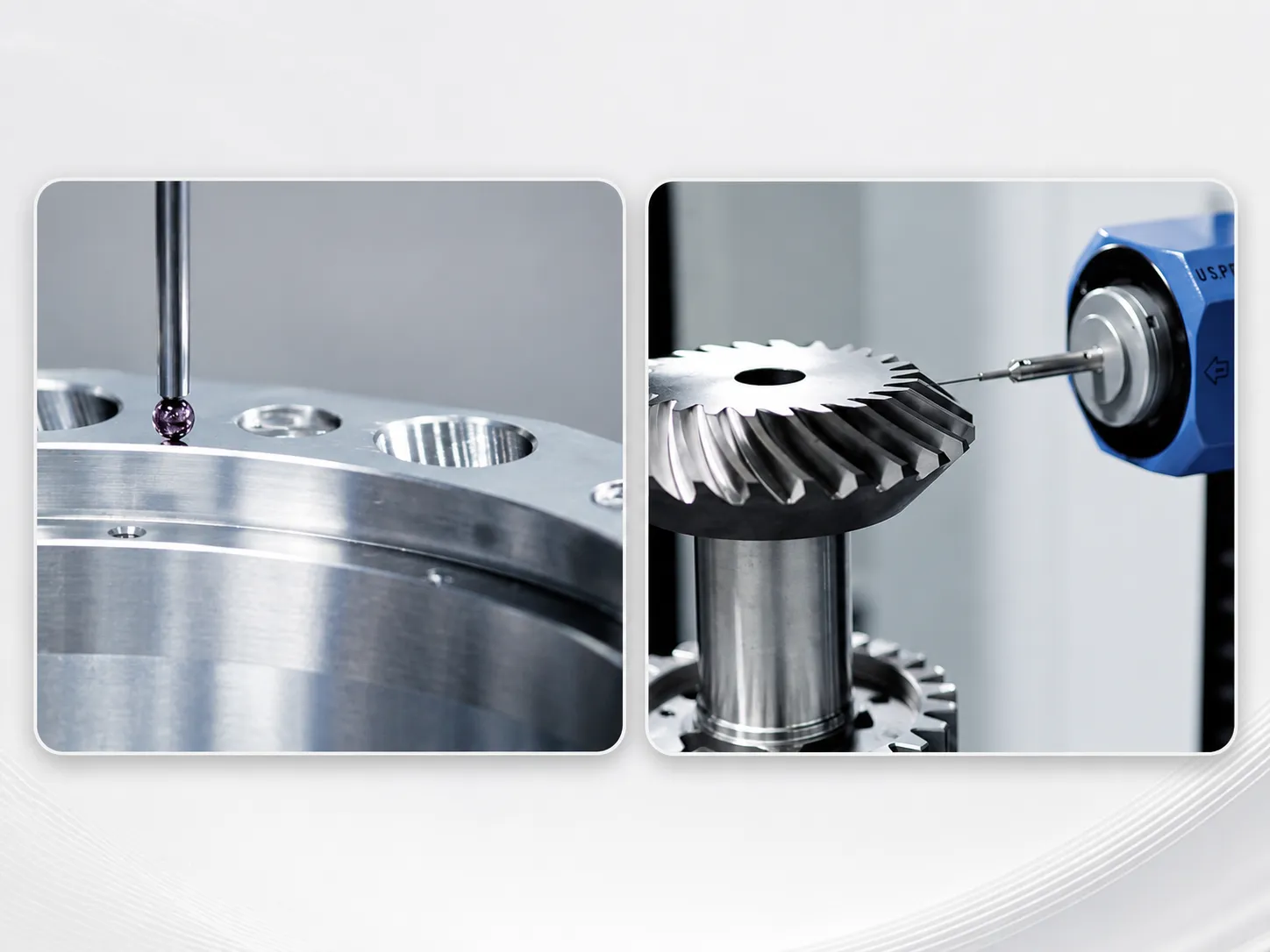
20CrMnTi gear steels hardened to HRC 58-62 — proper lubrication is critical for surface durability
Where the Extra 350 Nm Makes a Difference

Medium-Format Solar Trackers (80-120 m²)
Single-axis trackers with panel areas above 80 m² generate wind-load torques that push the ZR01 above 85% of its rated capacity during storm conditions. The ZR02 at the same ratio provides a comfortable 40-50% margin under the same loads, eliminating the need for wind-stow emergency protocols that interrupt energy generation. Dual-axis trackers with 60-90 m² panel areas also benefit from the higher peak torque (2,400 Nm) during rapid stow manoeuvres.
Radar and Antenna Pedestals
Maritime radar arrays, VSAT satellite communication dishes, and military antenna pedestals require continuous, vibration-free rotation under wind loads that vary with vessel motion and environmental conditions. The ZR02 3-stage at ratios 44:1-68:1 provides the smooth, low-backlash output these precision-pointing applications demand, while the DIN 5-6 gear accuracy and under-3-arcminute backlash enable angular positioning within the beam-pointing error budget.
Packaging and Food Processing Rotary Indexers
Bottle filling carousels, blister pack rotary tables, and food tray indexing stations require compact drives that operate cleanly in hygiene-sensitive environments. The ZR02 sealed housing eliminates external lubrication points, the IP67 rating withstands daily washdown cycles, and the stainless-steel output shaft option prevents corrosion from acidic food products and cleaning chemicals.
Industry Reference
- Solar tracking 80-120 m²
- VSAT antenna pedestals
- Maritime radar systems
- Packaging carousels
- Food line rotary indexers
- Light aerial platforms
- Automated turntable positioners
Right-Angle Bevel-Planetary vs Helical Parallel-Shaft Reducer — When to Choose Which
In the 1,000-1,500 Nm torque range, engineers often weigh the ZR02 bevel-planetary against a conventional helical parallel-shaft reducer. While helical units are well-proven in in-line applications, the slewing drive architecture offers distinct advantages when the application demands a right-angle output and compact radial envelope.
| Параметър | ZR02 Bevel-Planetary | Helical Parallel-Shaft |
|---|---|---|
| Input/output axis | Right angle (90 deg) | Parallel (0 deg) |
| Ratio per stage | 3-10 per planetary stage | 2-5 per helical stage |
| Torque density | Very high (multi-tooth mesh) | Moderate (single mesh per stage) |
| Radial size for 1,100 Nm | Compact | 2-3x larger diameter |
| Axial thrust on output | Absorbed internally | Minimal (balanced helix) |
| Outdoor sealing (IP67) | Стандартен | Typically IP55-65 |
| Unit cost at 1,100 Nm | Higher initial | Lower initial |
For in-line power transmission where input and output shafts are parallel (conveyor drives, pump drives), the helical parallel-shaft reducer remains the more cost-effective and mechanically straightforward choice. The bevel-planetary architecture earns its premium when the application requires a right-angle output, outdoor IP67 sealing, high torque density in a compact radial envelope, or the ability to mount directly to a slewing ring pinion.
Свързани продукти


Често задавани въпроси
Customer Feedback
We upgraded from ZR01 to ZR02 on a 90 MW tracker field after storm damage showed the ZR01 was operating too close to its limit on the larger table formats. The ZR02 dropped straight in — same bolts, same motor, same wiring. After a full winter-spring-summer cycle the units are performing without issues. The additional torque headroom means we no longer need to stow the panels during moderate wind events, which improved our annual yield by roughly 1.5%.
Using the ZR02 on a bottle filling carousel. The sealed housing is a huge plus in a wet washdown environment. We previously had an open gear system that needed weekly greasing and still corroded. This runs maintenance-free between oil changes. Noise is low enough that we do not need additional acoustic enclosure on the production floor.
Antenna pedestal application for maritime VSAT. The backlash specification was critical for our beam-pointing accuracy budget. Measured 2.1 arcminutes on the received unit, well within the published under-3 spec. The unit runs smoothly at very low speeds (under 1 rpm continuous azimuth scan). One minor point: the installation manual does not cover the specific torque values for the output flange bolts in our configuration. We had to request this from the factory separately.
Допълнителна информация
| Редактор | Cxm |
|---|
Свързани продукти
-
ZR45 Slewing Drive Planetary Gearbox — Right-Angle Bevel-Planetary, 3-5 Stage
-

ZR35 Slewing Drive Planetary Gearbox — Right-Angle Bevel-Planetary, 3-5 Stage
-
ZR07 Slewing Drive Planetary Gearbox — Right-Angle Bevel-Planetary, 2-4 Stage
-

ZR03 Slewing Drive Planetary Gearbox — Right-Angle Bevel-Planetary, 2-4 Stage
-
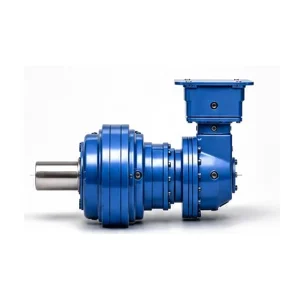
ZR24 Slewing Drive Planetary Gearbox — Right-Angle Bevel-Planetary, 2-5 Stage
-

ZR10 Slewing Drive Planetary Gearbox — Right-Angle Bevel-Planetary
-
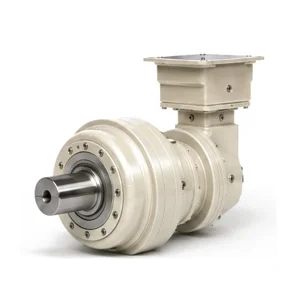
ZR06 Slewing Drive Planetary Gearbox — Right-Angle Bevel-Planetary, 2-4 Stage
-
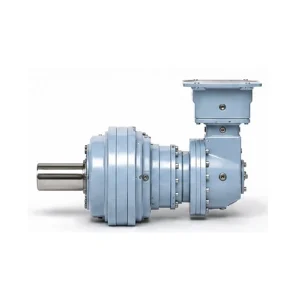
ZR01 Slewing Drive Planetary Gearbox — Right-Angle Bevel-Planetary