What Makes the Rough Terrain Crane Slewing Drive Different from Every Other Mobile Crane
The rough terrain crane (RT crane) occupies a unique position in the crane family. It is designed to drive itself across unpaved, uneven construction sites — through mud, over ruts, up slopes of 20 to 30% — and then set up to lift without the benefit of a paved, level bearing surface. The slewing drive planetary gearbox must accommodate three conditions that no other crane type routinely faces:
Unlike truck-mounted cranes (which have a separate road-driving cab and a crane-operating cab), the RT crane has a single cab mounted on the upper structure. The operator rotates with the boom during slewing. This means the operator directly experiences every speed change, every vibration, and every jolt from the slewing drive. Smooth, jerk-free rotation is not just a load-placement requirement — it is an operator-comfort and fatigue-prevention requirement, similar to aerial work vehicles.
RT cranes can lift a load and travel with it — similar to crawler cranes. But the RT crane travels on tyres across uneven, unpaved ground. The tyre-to-ground interface is less predictable than a crawler track — tyres sink into soft ground, bounce over ruts, and lose traction on wet slopes. The slewing drive must hold the upper structure stable during these ground disturbances while the operator controls boom and load simultaneously.
On rough terrain, the four outrigger pads contact ground at different heights and on surfaces with different bearing capacity. One pad may be on rock; the adjacent pad may be on soft clay. The crane may be tilted 2 to 5 degrees from level even with outriggers fully extended. The slewing drive must operate on this tilted platform — where the gravity component of the upper structure weight adds to the slewing torque when rotating uphill and subtracts when rotating downhill.
Slope Operation — How a 3-Degree Tilt Changes the Slewing Torque by 20 to 30%
On level ground, the upper structure centre of gravity is vertically above the slewing ring centre — and the gravitational component of the slewing torque is zero. The drive only needs to overcome inertia and friction. On a 3-degree slope, the centre of gravity is offset from the vertical — and gravity produces a torque component that either assists or resists the slewing motion, depending on the direction of rotation.
For a 50-tonne RT crane upper structure with the centre of gravity 1.5 metres above the slewing ring, a 3-degree tilt produces a gravitational moment of approximately 50,000 x 9.81 x 1.5 x sin(3 deg) = 38,500 N·m. If the level-ground slewing torque is 15,000 Nm, the slope adds 38,500 Nm when rotating uphill — a 257% increase — or subtracts 38,500 Nm when rotating downhill, potentially making the upper structure rotate under gravity (runaway) unless the brake or drive provides retaining torque.
| Machine Tilt | Gravity Moment (50 t upper) | Uphill Torque Increase | Downhill Risk |
|---|---|---|---|
| 0 degrees (level) | 0 Nm | Wala | Wala |
| 1 degree | 12,850 Nm | +86% | Reduced holding margin |
| 3 degrees | 38,500 Nm | +257% | Gravity-assisted runaway possible |
| 5 degrees | 64,200 Nm | +428% | Brake holding capacity may be exceeded |
Why 3 degrees matters: A 3-degree slope is barely perceptible to a person standing on it — but it produces a gravitational slewing moment that exceeds the level-ground inertia torque by 2.5 times. RT crane operators frequently set up on slopes of 1 to 5 degrees without recognising the effect on the slewing drive. The LMI (load moment indicator) must compensate for slope in the capacity calculation — and the slewing brake must hold the upper structure against the gravity moment on the worst-case slope, not just against the level-ground load.


Ground Bearing Failure — The Risk That No Other Crane Type Shares
On paved surfaces (truck cranes) or concrete pads (tower cranes), the ground bearing capacity is known and consistent. On rough terrain, the ground beneath each outrigger pad may have a different bearing capacity — and that capacity can change during the lift as the ground saturates with rain, compresses under load, or shears on a slope.
When one outrigger pad sinks into soft ground during slewing, the machine tilts. This tilt changes the stability envelope and the gravitational slewing moment simultaneously — in the worst case, increasing the tilt while adding gravitational torque in the direction that further destabilises the crane. The slewing drive does not cause this failure, but the slewing motion triggers it — because the load shifts from one side of the crane to the other during rotation, transferring weight to the weakest outrigger pad at the critical moment.
The practical lesson: RT crane operators must assess the ground bearing capacity at each outrigger position BEFORE setting up — and must use outrigger pad extensions (timber mats, steel plates) to distribute the pad load below the ground bearing limit. The slewing drive planetary gearbox cannot compensate for inadequate ground preparation — but the LMI should monitor outrigger load distribution during slewing and reduce the permitted capacity if one outrigger load exceeds the pre-set limit.
The outrigger pad size determines the ground bearing pressure. A standard RT crane outrigger pad (400 x 400 mm) under a 50-tonne machine produces a ground pressure of approximately 300 to 500 kPa. Soft clay has a bearing capacity of 50 to 100 kPa — meaning the standard pad will sink immediately. Timber mat extensions (1,200 x 1,200 mm or larger) distribute the load over 9 times the area, reducing the ground pressure to 35 to 55 kPa — within the soft clay capacity. The mat sizing calculation is based on the maximum outrigger reaction force (not the average), which occurs when the slewing drive rotates the boom and load to the position directly over one outrigger. The slewing drive torque calculation and the ground bearing calculation are therefore linked — both depend on the same load-at-angle relationship.
Three Failure Modes Specific to Rough Terrain Crane Slewing Drives
On a tilted platform, the gravitational moment on the upper structure tries to rotate it downhill. If the slope exceeds the angle at which the brake holding torque equals the gravity moment, the upper structure rotates uncontrolled when the motor is de-energised — carrying the operator, the boom, and any suspended load with it. This runaway is most dangerous when the boom is positioned perpendicular to the slope (maximum gravity moment arm) and the operator releases the slewing control expecting the brake to hold. On a 50-tonne upper structure at 5 degrees tilt, the gravity moment reaches 64,200 Nm — potentially exceeding the brake holding capacity of smaller RT cranes.
RT cranes drive across rough terrain at 5 to 20 km/h — over ruts, rocks, and construction debris. Each obstacle produces a vertical shock that is transmitted through the tyres, the chassis, and the outrigger frame to the slewing ring. The bolts connecting the slewing ring to the upper and lower structures are subjected to impact loading during travel — a condition that relaxes bolt preload over time. On RT cranes that travel frequently (daily repositioning on large construction sites), the bolt preload can fall below the clamping force threshold within 500 to 1,000 travel hours — far sooner than on cranes that remain stationary between lifts. The off-road vibration spectrum differs from highway vibration: road travel produces predominantly vertical vibration at 5 to 25 Hz, while off-road travel produces multi-axis impulse loading (vertical + lateral + rotational) at irregular intervals. This multi-axis, impulsive loading is more effective at loosening bolts than the regular, predominantly vertical vibration of highway travel — because the bolt clamp force is challenged in different directions with each impact, preventing the bolt from settling into a stable equilibrium. On RT cranes that reposition 5 to 10 times per day on rough sites, the bolt preload relaxation rate can reach 3 to 5 times the rate measured on highway-traveling truck cranes at the same total travel distance.
Because the RT crane cab is mounted on the upper structure, the operator rotates with the boom during every slewing movement. Any cogging, torque pulsation, or jerk in the slewing drive is transmitted directly to the operator — unlike truck cranes (where the operator is in a fixed cab on the chassis) or tower cranes (where the cab is at the top of the tower and isolated from the slewing mechanism). Over an 8 to 12 hour shift with 100 to 300 slewing cycles, accumulated exposure to drive-induced vibration and jerking can produce operator fatigue, reduced concentration, and slower reaction times — all of which increase the risk of operational errors during critical lifts. The vibration exposure is measurable: ISO 2631 defines whole-body vibration limits for 8-hour and 12-hour exposure periods, and RT crane slewing drives with low-quality gear mesh can exceed these limits during intensive slewing operations — particularly at low slewing speeds where the torque pulsation per tooth is most perceptible. Compliance with ISO 2631 at the operator seat position is not just a comfort issue — it is a regulatory requirement in many jurisdictions, and exceedance can result in equipment use restrictions or mandatory retrofit of vibration-damping measures.
Slewing Drive Planetary Gearbox for Rough Terrain Cranes — Frequently Asked Questions
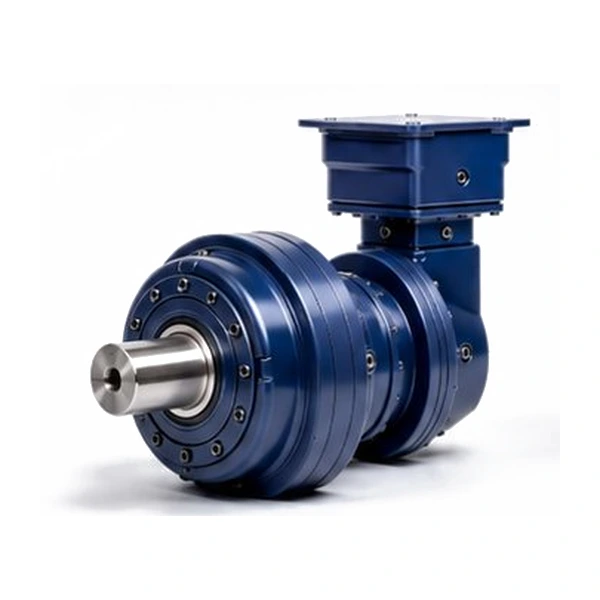
Korea Ever-Power provides RT crane slewing drive planetary gearboxes from 10,000 to 60,000 Nm with slope-rated brakes, off-road vibration resistance, and smooth-rotation gears for single-cab operator comfort. Provide your crane model for a specification.
Editor: Cxm