Wheel Drive Series — Railway Track Maintenance Equipment
Wheel Drive Planetary Gearbox for Rail Inspection Vehicles
A track geometry inspection car must maintain an exactly constant speed over hundreds of kilometres of track while laser and inertial measurement systems record rail position to sub-millimetre accuracy — any speed variation from the wheel drive corrupts the geometry data the entire inspection run was conducted to collect. The wheel drive planetary gearbox on rail inspection vehicles must deliver this speed stability while also operating on standard hi-rail wheel-on-rail or wheel-on-tyre configurations across the full range of mainline, freight, and transit network conditions being inspected.
±0.5% speed stability
Low-vibration measurement-grade mounting
IP67 ballast and weather rated
Rail inspection vehicles — track geometry cars, rail flaw detection vehicles, and hi-rail inspection trucks — perform the measurement work that underpins railway infrastructure safety, surveying track condition to identify the geometry defects, rail wear, and structural issues that require maintenance attention before they compromise safe train operation. Unlike most wheel drive applications where speed variation within a reasonable tolerance band has no functional consequence, rail inspection vehicle measurement accuracy depends directly on maintaining an extremely stable, precisely known travel speed, because the laser profilometers, inertial measurement units, and ultrasonic rail testing equipment carried by these vehicles all reference their measurements against the actual vehicle position along the track, calculated from speed and elapsed time. The wheel drive planetary gearbox propelling the inspection vehicle must therefore deliver speed control precision that exceeds the requirements of almost any other wheel drive application, while also surviving the same ballast contamination, weather exposure, and track condition variation that any railway maintenance vehicle encounters. Korea Ever-Power supplies planetary wheel drive gearboxes for rail inspection vehicle applications across hi-rail trucks, dedicated track geometry cars, and self-propelled inspection vehicles operating on mainline, freight, and transit rail networks.
Railway infrastructure asset owners depend on inspection vehicle data to prioritise maintenance spending across networks that may extend thousands of kilometres, with limited maintenance budgets requiring accurate identification of which track sections genuinely need attention versus which can safely defer maintenance to a later cycle. Inspection data corrupted by drivetrain speed instability does not merely produce a less accurate report — it can misdirect maintenance resources toward sections that do not require immediate attention while genuine defects elsewhere go unaddressed, a consequence with direct safety implications for the rail network the inspection programme exists to protect.
Rail Inspection Vehicle Types and Speed Control Requirements
Hi-Rail Inspection Trucks (4,000–8,000 Nm): Road-rail vehicles based on a standard truck chassis fitted with retractable rail wheels, capable of travelling on public roads to reach an inspection site and then engaging the rail guide wheels for on-track inspection runs at moderate speed — typically 15 to 40 km/h during active measurement. The road-rail dual-mode operation requires the wheel drive gearbox to perform reliably in both the standard highway driving mode and the precision-speed rail inspection mode, with the same drivetrain serving both functions on most hi-rail vehicle configurations.
Dedicated Track Geometry Cars (6,000–12,000 Nm): Purpose-built rail vehicles, sometimes self-propelled and sometimes hauled within a maintenance train consist, carrying comprehensive geometry measurement systems including laser profilometers, accelerometer arrays, and inertial navigation systems that measure track alignment, gauge, cross-level, and surface condition continuously as the vehicle traverses the network at inspection speeds that may range from 40 to 160 km/h depending on the network classification and inspection protocol being applied.
Rail Flaw Detection Vehicles (5,000–15,000 Nm): Specialised inspection vehicles carrying ultrasonic or electromagnetic rail flaw detection equipment that must maintain precise wheel-to-rail contact and consistent speed for the detection sensors to reliably couple to the rail and identify internal rail defects such as fatigue cracks before they propagate to a service-affecting failure. These vehicles often operate at lower speeds than geometry cars — 8 to 25 km/h — to allow adequate sensor dwell time per unit length of rail, requiring the wheel drive gearbox to provide stable, precisely controlled low-speed operation across extended inspection runs.
Speed Stability Engineering: Why ±0.5% Matters for Measurement Accuracy
Track geometry and rail flaw measurement systems calculate the position of every recorded data point along the track by integrating vehicle speed over elapsed time, meaning any speed measurement error or actual speed instability directly translates into a positional error in the recorded inspection data. A geometry defect correctly measured but assigned an incorrect track-chainage position due to speed instability can mislead maintenance crews dispatched to repair it, or worse, cause a real defect to be missed entirely if the positional error causes it to be attributed to an already-inspected and cleared section of track.
Low-Backlash Speed Transmission Fidelity
Korea Ever-Power rail inspection vehicle wheel drive gearboxes use the same sub-8 arcminute backlash specification developed for 3D warehouse and lift elevator precision applications, ensuring the motor encoder used for both speed control and distance measurement reference reflects true wheel rotation without the lost-motion error that higher-backlash gearboxes would introduce into the speed feedback loop.
Smooth Torque Delivery for Constant Velocity
Korea Ever-Power inspection vehicle gearboxes use helical planet gears with DIN 5 accuracy, minimising the gear mesh torque ripple that would otherwise introduce a periodic speed variation correlated with wheel rotation angle — a particularly problematic error mode for rail inspection because it could be misinterpreted as a periodic track geometry defect rather than recognised as a drivetrain artifact.
Precision Encoder Mounting
The motor input flange on Korea Ever-Power rail inspection gearboxes is machined for concentric encoder mounting to within 0.01 mm TIR, ensuring the speed and distance measurement encoder reads true motor and wheel rotation without the eccentricity-induced velocity ripple that a loosely-fitted encoder adapter would introduce into the speed reference signal used by the measurement system data acquisition computer.
Vibration Isolation for Sensor Integrity
The laser profilometers and inertial measurement units carried on inspection vehicles are sensitive to drivetrain-induced vibration that could be misinterpreted as track surface roughness rather than gearbox mechanical noise. Korea Ever-Power recommends elastomeric isolation mounting at the gearbox-to-bogie interface on dedicated geometry car installations, consistent with the vibration isolation approach used in other measurement-sensitive applications across the product range.
The growing adoption of autonomous and semi-autonomous inspection vehicles across major rail networks further raises the bar for wheel drive speed control precision, as these systems increasingly rely on the vehicle drivetrain to maintain commanded speed setpoints without manual operator correction, extending the precision motion control requirements already established in 3D warehouse automation and airport ground equipment into the railway inspection domain.
Korea Ever-Power Rail Inspection Vehicle Wheel Drive Selection Guide
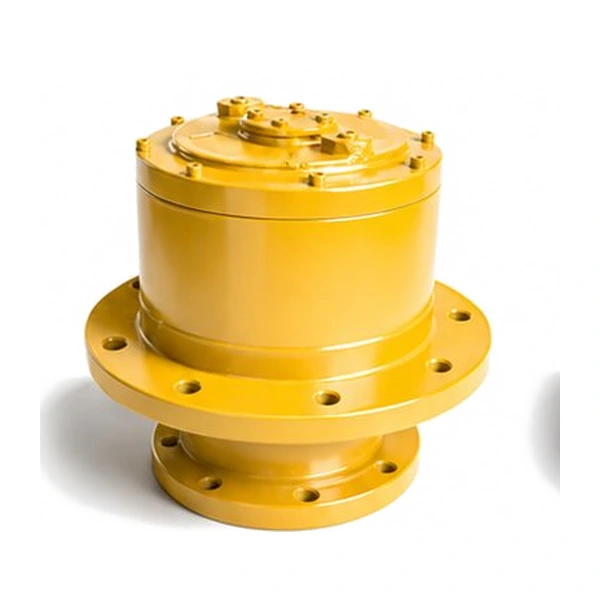
| Model | Udgangsmoment | Stadier | Vehicle Type | Modreaktion | Gear Accuracy |
|---|---|---|---|---|---|
| ZL02 | 4,000 – 8,000 Nm | 1–4 | Hi-rail inspection truck | < 8 arcmin | DIN 5 |
| 602L2 | 6,000 – 10,000 Nm | 2 | Light track geometry car | < 8 arcmin | DIN 5 |
| 607L2/L3 | 8,000 – 15,000 Nm | 2–3 | High-speed geometry car, flaw detection | < 8 arcmin | DIN 5 |
Dual-Mode Operation and Ballast Environment Resistance
Road-Rail Dual-Mode Drivetrain Demands: Hi-rail trucks transition between highway road driving and on-track rail operation multiple times per inspection assignment, with the wheel drive gearbox required to perform reliably in both modes despite their significantly different speed, load, and duty cycle characteristics. Korea Ever-Power hi-rail wheel drive gearboxes are specified to handle this dual-mode duty without compromise to either the road-speed highway capability or the precision low-speed rail inspection performance.
Ballast and Track-Side Contamination: Railway track environments expose ground-level equipment to ballast dust, fine stone particles, and the lubricants and contaminants present at rail joints, switches, and grade crossings. Korea Ever-Power rail inspection vehicle gearboxes use the same floating face cassette seal specification proven in mining and quarry applications, excluding the abrasive ballast fines that would otherwise penetrate a standard rubber lip seal during extended track-side operation.
Electromagnetic Compatibility: Rail flaw detection vehicles using electromagnetic or ultrasonic testing methods are sensitive to electrical noise that could interfere with sensor signal acquisition. While the wheel drive gearbox itself is a passive mechanical component, Korea Ever-Power can advise on motor and encoder cable routing and shielding practices to minimise any electromagnetic interference contribution from the drivetrain electrical components to the sensitive detection equipment carried by the vehicle.
Common Rail Inspection Drive Issues and Prevention
| Issue | Grundårsag | Detection | Prevention |
|---|---|---|---|
| Periodic measurement artifact | Gear tooth wear increasing mesh torque ripple amplitude — appearing in inspection data as a false periodic geometry signature | Data analysis team identifies a recurring artifact at a frequency correlating with wheel rotation rather than genuine track defects | Periodic gear mesh vibration baseline check; correlate any suspected artifact frequency against known wheel diameter and speed |
| Position drift over long runs | Backlash increase from accumulated gear wear introducing small but cumulative speed-reference error over extended inspection distances | Cross-reference check against known track survey markers shows growing positional discrepancy over a long inspection run | Periodic backlash verification; calibrate against fixed reference markers at the start and end of each inspection run |
| Ballast ingress seal wear | Standard lip seal worn by abrasive ballast dust during extended track-side operation | Oil discolouration with fine mineral particles at routine sample | Specify floating face cassette seal; inspect seal condition at scheduled vehicle maintenance intervals |
| Dual-mode transition wear — hi-rail | Frequent road-to-rail mode transitions imposing differential load and speed conditions not present in single-mode wheel drive applications | Accelerated wear pattern compared to dedicated single-mode vehicles in equivalent total operating hours | Specify dual-mode duty rating at order; inspect drivetrain condition at intervals matched to actual transition frequency rather than total hours alone |
Maintenance Strategy for Measurement-Critical Inspection Fleets
Rail inspection vehicles often operate on a planned inspection schedule that leaves limited flexibility for unplanned downtime — a missed inspection cycle on a critical network section can leave a gap in the safety surveillance record that the railway infrastructure owner must account for. Korea Ever-Power recommends a maintenance approach tailored to this scheduling constraint:
Pre-Inspection Backlash Verification: For high-value inspection runs on critical network sections, a backlash check immediately before the inspection run provides confidence that the drivetrain is within specification before committing measurement resources to that section, rather than discovering a drivetrain issue after data has already been collected and potentially compromised.
Calibration Run Correlation: Korea Ever-Power recommends that inspection vehicle operators periodically conduct a calibration run over a section of track with known, independently surveyed geometry, comparing the recorded inspection vehicle data against the reference survey to verify the complete measurement chain, including the wheel drive gearbox contribution to speed and distance accuracy, remains within the required tolerance.
Spare Gearbox Stocking for Fleet Continuity: Given the planned-schedule nature of inspection programmes, Korea Ever-Power recommends maintaining a spare wheel drive gearbox unit for fleets of dedicated inspection vehicles, enabling rapid exchange in the event of an unexpected issue without disrupting the broader network inspection schedule that depends on vehicle availability.
Why Rail Inspection Equipment Manufacturers Choose Korea Ever-Power
<8 bueminutter
Backlash specification eliminating lost-motion error in the speed and distance measurement feedback loop
DIN 5
Gear accuracy minimising mesh torque ripple that could be misread as periodic track geometry defects
0.01 mm
Encoder mount TIR verification ensuring true speed reference without eccentricity-induced velocity ripple
IP67
Floating face seal protection against ballast dust and track-side contamination on extended inspection runs
Korea Ever-Power application engineers provide free wheel drive gearbox sizing for rail inspection vehicle manufacturers and railway maintenance equipment integrators, evaluating vehicle type, inspection speed range, and measurement system sensitivity to recommend the appropriate precision specification. Contact us with your vehicle configuration, target inspection speeds, and sensor system requirements for a free application review within 48 hours.
Source Your Rail Inspection Vehicle Wheel Drive Planetary Gearbox
Whether you are specifying drives for a new track geometry car, a hi-rail inspection truck, or a rail flaw detection vehicle — Korea Ever-Power delivers low-backlash, precision speed-stable planetary wheel drive gearboxes built for the measurement accuracy that railway infrastructure inspection demands. Send us your vehicle type, inspection speed range, and sensor requirements for a free application sizing within 48 hours.
Edit by Cxm