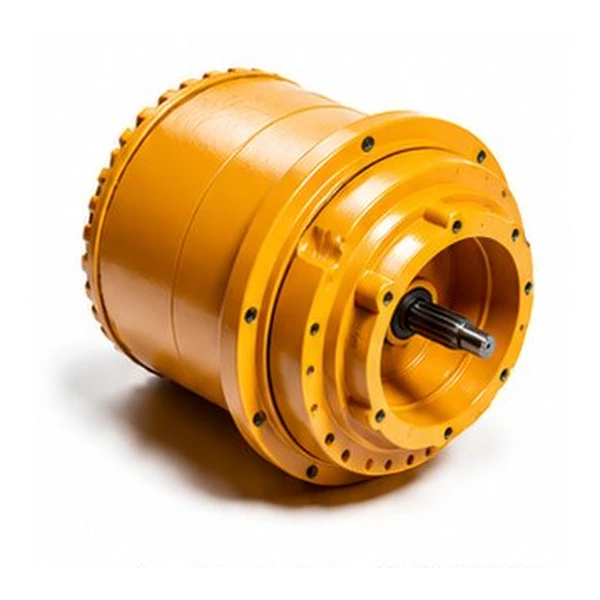
403W2 Planetarisk gearkasse med spildrev — 2-trins
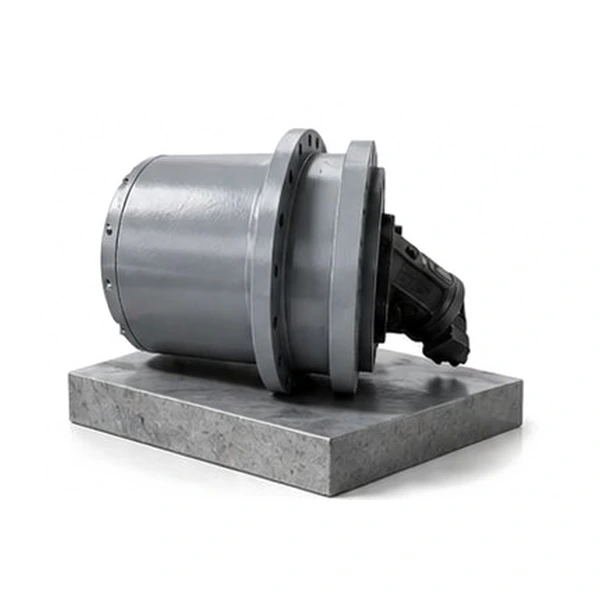
403W2 — Den bremsede tvilling: 4.000 Nm med 270 Nm inde i tromlen
Læs 402W2-siden. Læs nu denne. De to produkter deler den samme husdiameter, den samme totrins planetariske arkitektur, det samme indgangsloft på 3.500 o/min, den samme udgangseffekt på 4.000 Nm og den samme FEM M5-belastningsklassificering. Forskellen er 5 kg og et sæt friktionsskiver.
403W2 har en 270 Nm fjederpåvirket, hydraulisk udløst negativ bremse med flere skiver inde i det roterende hus. Denne bremse aktiveres i det øjeblik, det hydrauliske tryk falder – uanset om det skyldes en bevidst operatørhandling, nødstop, slangefejl eller totalt strømsvigt i systemet. Den holder tromlen, kablet og alt, der hænger på kablet, på plads, uafhængigt af eksterne komponenter. Ingen motorbremse nødvendig. Ingen modvægtsventil nødvendig. planetarisk gearkasse med spildrev i sig selv er sikkerhedssystemet.
270 Nm bremse
Forhold 15,4-40
3.500 omdr./min.
120 kg
FEM M5
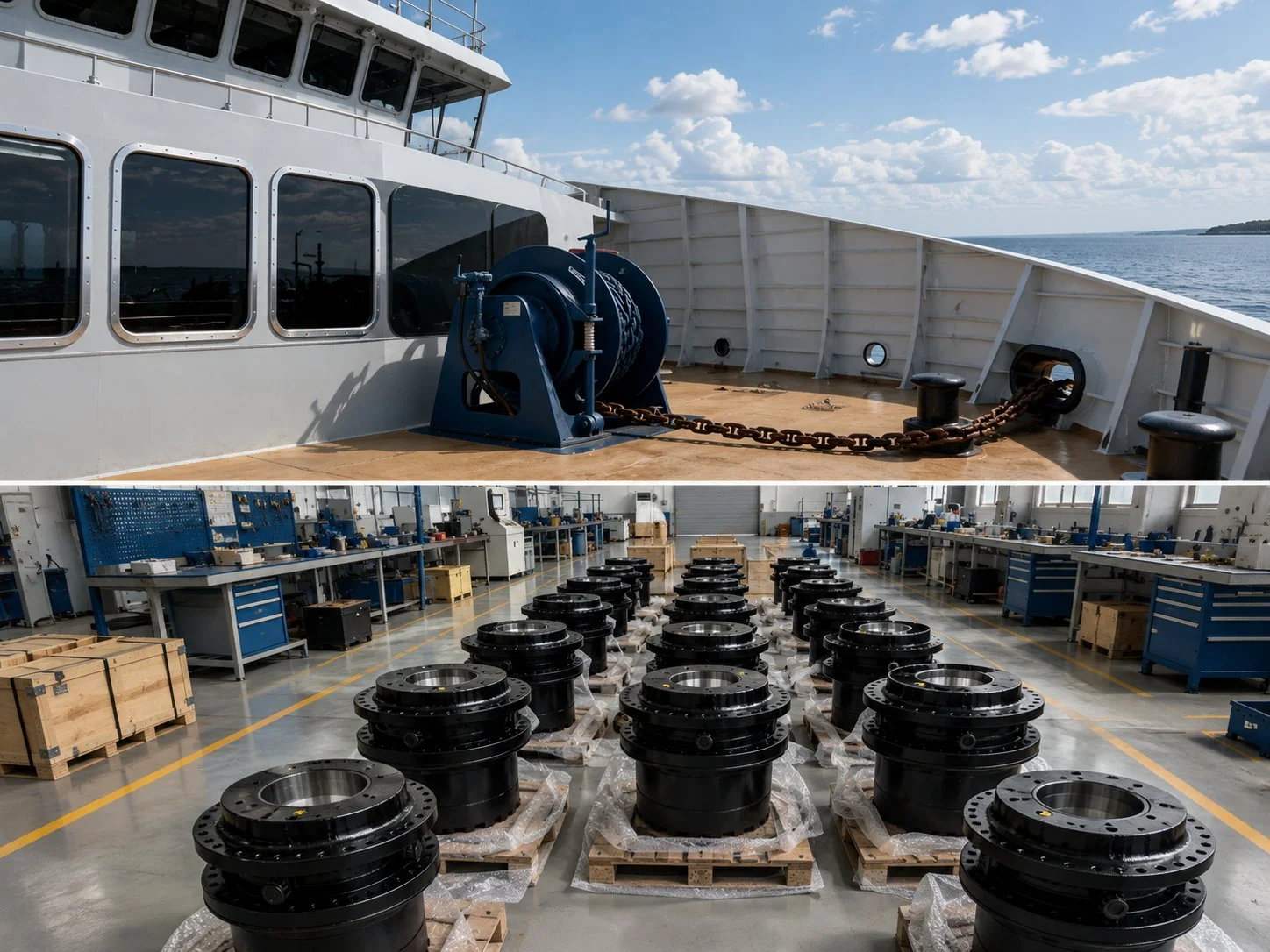
403W2 Spildrevsgearkasse — Tekniske parametre
| Nominelt udgangsmoment | 4.000 Nm |
| Gearforholdsområde | 15,4 til 40 (to-trins planetarisk) |
| Maksimal indgangshastighed | 3.500 omdr./min. |
| Maksimal udgangshastighed | 25 o/min (FEM M5 kontinuerlig drift) |
| Mekanisk effektivitet | ≥ 95% |
| Integreret parkeringsbremse | 270 Nm, flerskive, fjederpåvirket, hydraulisk udløser |
| Bremseholdning ved tromle (via udvekslingsforhold) | 4.158 - 10.800 Nm (afhængig af udvekslingsforhold) |
| Montering | Roterende husflanger (direkte tromleintegration) |
| Tørvægt | Ca. 120 kg |
| Smøring | Oliebadsprøjt, premium EP gearolie |
| Driftstemperatur | -20 til +85 grader C (tætningssæt til ekstreme klimaer er tilgængelige) |
En bremse der drejer — Negativ bremseteknik med flere skiver inde i en roterende tromle
En bremse i et hjuldrevshus sidder stille. En bremse i et spildrevshus roterer sammen med tromlen med op til 25 omdr./min. Dette roterende miljø skaber tekniske udfordringer, som en bremse med et stationært hus aldrig står over for.
Centrifugal oliehåndtering
Rotation skaber centrifugalkraft, der skubber olie udad mod husets væg. Bremseskiverne, der er placeret nær rotationscentret, skal forblive tilstrækkeligt smurte for afkøling under dynamisk bremsning, men ikke oversvømmet med olie under statisk hold - olie mellem skiverne under statisk hold ville reducere friktionskoefficienten og forringe holdemomentet. 403W2 bruger rillede separatorplader, der kanaliserer olie radialt udad under rotation, hvilket holder skivefladerne drænet under statisk indgreb, samtidig med at olien kan nå skiverne under dynamisk deceleration, når afkøling er nødvendig.
Fjederpakkeorientering
Fjederpakken, der aktiverer bremsen, skal fungere identisk uanset tromlens rotationsposition. I et stationært hus virker tyngdekraften altid i samme retning i forhold til fjedrene. I et roterende hus ændrer fjederens orientering i forhold til tyngdekraften sig kontinuerligt. 403W2 bruger en Belleville-skivefjederpakke, der er anbragt koncentrisk omkring indgangsakslen - den aksiale klemkraft er symmetrisk og upåvirket af rotationspositionen. Spiralfjedre, som kan forskydes sideværts under centrifugalbelastning, anvendes ikke.
Hydraulisk udløsning i en roterende ramme
Bremseudløserolien skal bevæge sig fra den stationære hydrauliske forsyningsledning ind i det roterende hus gennem en roterende union (drejeled) i akslens centrum. Denne roterende union er en sliddel - den forsegler højtryksolie (25-40 bar udløsertryk) mod en roterende overflade. 403W2-roterende unionen bruger kulstofgrafit-tætningsringe mod hærdede stålløb, hvilket giver en levetid på over 10.000 timer ved kontinuerlig rotation på op til 25 o/min. Inspicer roterende unionen for ekstern lækage ved hvert 2.500-timers serviceinterval.
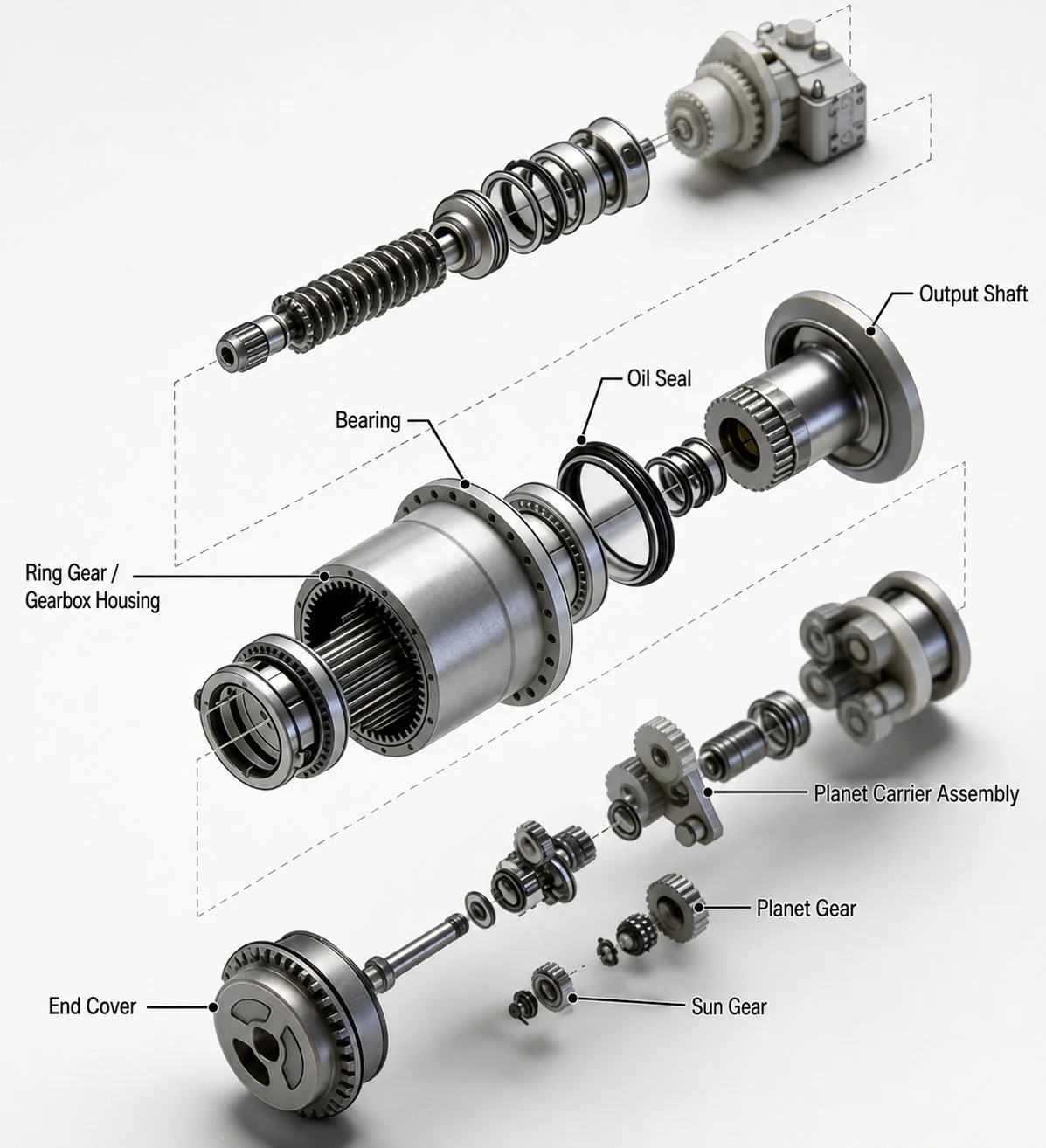
402W2 eller 403W2 — Hvad bremsen koster dig, og hvad den giver tilbage
| Kriterium | 402W2 (ingen bremse) | 403W2 (270 Nm bremse) |
|---|---|---|
| Udgangsmoment | 4.000 Nm | 4.000 Nm |
| Forholdsområde | 12.4 - 37.1 | 15.4 - 40 |
| Minimumsforhold tilgængeligt | 12.4 (hurtigere hejsning) | 15.4 |
| Maksimalt tilgængeligt forhold | 37.1 | 40 (multifunktion med højere drejningsmoment) |
| Integreret bremse | Ingen | 270 Nm flerskivebremse |
| Vægt | 115 kg | 120 kg |
| Vedligeholdelsesartikler | Olie, pakninger | Olie, pakninger, bremseskiver, roterende kobling |
| Holder lasten, hvis alle eksterne ledninger afbrydes | Ingen | Ja |
Vælg 402W2 når:
Det hydrauliske kredsløb giver allerede dobbelt uafhængig holding (modvægtsventiler + motorbremse). Systemet er klassecertificeret med ekstern bremsearkitektur. Udvekslingsforhold under 15,4 er nødvendige for høje hejsehastigheder. Adgang til vedligeholdelse af bremseskiver inde i tromlen er upraktisk (FPSO-daviter, undervandsspil).
Vælg 403W2 når:
Den gældende standard kræver en bremse i tromleenheden. Spillet skal holde en last, selvom alle hydrauliske ledninger og motorforbindelser afbrydes samtidigt. Systemet er en separat spilenhed (ikke en del af et certificeret krankredsløb). Personløft kræver det maksimale antal uafhængige holdemekanismer.
4.000 Nm spildrev med integreret bremse — Bygget til de værst tænkelige scenarier

Hjælpehejse til tårnkraner
Sekundære hejsemekanismer på tårnkraner, der håndterer lettere belastninger (1-3 tons) til værktøjskurve, betoncontainere og personplatforme. Tårnkranstandarder (EN 14439, ASME B30.3) kræver, at hejsen holder lasten uafhængigt af den hydrauliske forsyning. Den integrerede bremse 403W2 opfylder dette krav uden at tilføje en separat tromlebremse til det allerede pladsbegrænsede tårnhoved. drejedrev håndterer kranens rotation, og hjultræk fremdriver vognens bevægelse.
Offshore piedestalkranhejs
Piedestalkraner på offshoreplatforme håndterer godsoverførsler på 3-5 tons mellem forsyningsskibe og platformdækket. Disse kraner opererer i søforhold, hvor lasten svinger uforudsigeligt, hvilket genererer dynamiske momentstigninger ved tromlen. 403W2-bremsen giver et uafhængigt holdepunkt, som kranføreren kan aktivere øjeblikkeligt ved at udløse bremseudløsertrykket - hurtigere end nogen modvægtsventil eller motorbremserespons. I nødsituationer, hvor et forsyningsskib uventet adskiller sig fra platformen, forhindrer denne indkoblingshastighed lasten i at svinge ind i platformstrukturen.
Vinsjer til minedriftsskakter
Servicespil i minedriftsskakter, der sænker værktøj, pumper, ventilationskanaler og forsyninger ned til underjordiske arbejdsniveauer i dybder på 50-200 meter. Skaktmiljøet er vådt, støvet og fjernt fra overfladevedligeholdelsesfaciliteter. Det forseglede 403W2-hus og den integrerede bremse giver en selvstændig hejseenhed, der ikke er afhængig af eksterne bremsekomponenter, der er udsat for skaktatmosfæren. Minesikkerhedsforskrifter i de fleste jurisdiktioner kræver, at ethvert spil, der opererer i en lodret skakt, skal have et internt mekanisk hold - 403W2 har dette i gearkassen.
På tværs af planetgearkasser
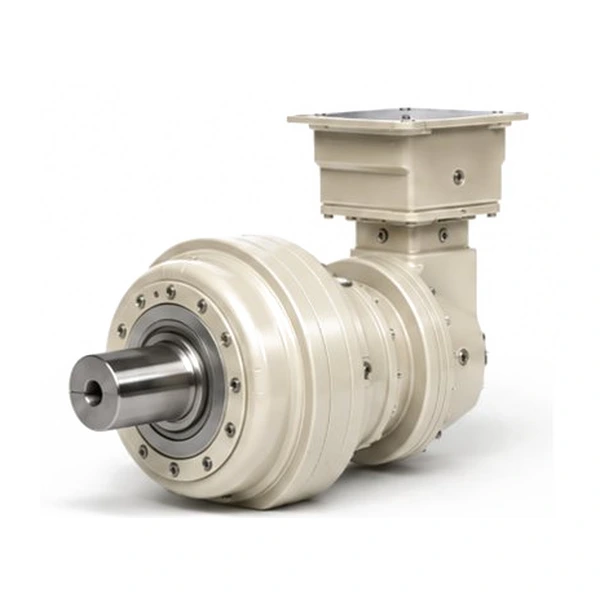

Planetgearkasse med spildrev — Ofte stillede spørgsmål om integreret bremseteknik
Feltrapporter
Hjælpehejs på en tårnkran med løftearm, 2,5 tons SWL. 403W2 med udvekslingsforhold 25 erstattede en konkurrerende enhed, der ikke havde bestået EN 14439 bremseholdetesten efter 8.000 timer - skivestakken var slidt ud over minimumstykkelsen, og fjederkraften var forringet. 403W2 Belleville-fjederdesignet opretholder ensartet klemkraft over et bredere skiveslidområde end konkurrerende spiralfjederdesign. Efter 6.000 timer på 403W2 er bremsetestresultaterne identiske med aflæsningerne fra dag ét. Vi specificerer 403W2 til alle nye kraner i produktserien.
Kranhejs på en jack-up borerig, der opererer i Den Arabiske Golf. 403W2 med udvekslingsforhold 30 håndterer 3-tons lastoverførsler i søforhold op til 1,5 meter signifikant bølgehøjde. Under en nylig nødfrakobling af fartøjet sænkede operatøren bremseudløsertrykket, og 403W2-bremsen aktiveredes på under 300 millisekunder - hvilket stoppede en 2,8-tons last, der var midt i svinget mellem forsyningsfartøjet og platformen. Lasten stoppede præcist uden kabelstød. Denne ene hændelse begrundede beslutningen om at specificere en intern bremse i stedet for den bremsefri 402W2. De eksterne modvægtsventiler ville også have holdt, men hastigheden af gearkassebremsens aktivering gav operatøren øjeblikkelig kontrol, som det hydrauliske hold ikke kunne matche.
Servicespil i en guldmineskakt, 150 meter dyb, der sænker pumper og ventilationsudstyr til arbejdsniveau. 403W2 med udvekslingsforhold 35 håndterer belastninger på op til 1.200 kg ved 10 m/min. Den integrerede bremse er essentiel - vores minesikkerhedsmyndighed vil ikke certificere nogen vertikale akselspil uden et internt mekanisk hold. Ydelsen er pålidelig, og det forseglede hus håndterer våde skaktforhold uden vandindtrængning efter 14 måneder. De 4 stjerner skyldes, at den roterende union begyndte at vise ekstern udsivning efter cirka 4.500 timer - tidligere end specifikationen på 10.000+ timer. Udskiftet under garanti på 2 dage. Skaktmiljøet (høj luftfugtighed, fint kvartsstøv) kan have fremskyndet tætningens slid. Vi inspicerer nu unionen med intervaller på 2.000 timer i stedet for 2.500.
Yderligere information
| Redaktør | Cxm |
|---|
Relaterede produkter
-
ZL95 Planetgearkasse med spildrev
-
ZL85 Planetgearkasse med spildrev
-

415W3 Planetarisk gearkasse med spildrev
-
414W3 Planetarisk gearkasse med spildrev
-
413W3 Planetarisk gearkasse med spildrev
-
406W planetarisk gearkasse med spildrev
-

405,4W planetarisk gearkasse med spildrev
-
402W2 Planetarisk gearkasse med spildrev