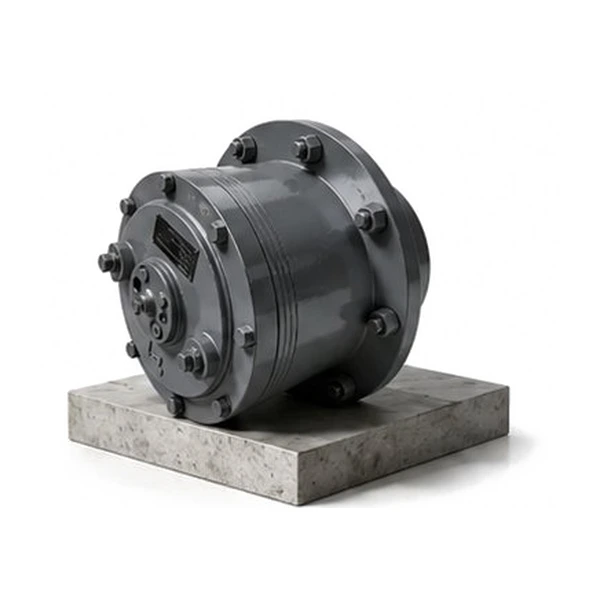
405W planetarisk gearkasse med spildrev
7,000 Nm
Ratios 20 to 80. One housing.
The 4:1 ratio spread means a crane OEM can specify the 405W across an entire product line — from the fast-cycle harbour crane at ratio 20 to the precision offshore auxiliary at ratio 80 — without changing the drum housing, the mounting interface, or the maintenance procedures.
≥ 95% Eff.
25 RPM Out
-20 to +85 deg C
The EP-405W sits at the centre of the planetarisk gearkasse med spildrev catalogue: powerful enough for serious crane hoisting (5-15 tonne SWL depending on drum diameter), compact enough for mobile crane installations where every kilogram counts, and flexible enough to serve multiple crane models from a single part number. Below it, the 403W2 (4,000 Nm) handles lighter duties. Above it, the 405.4W (5,500 Nm, narrower ratio range) and the 406 family (12,500-17,500 Nm) serve specialised heavy-duty applications where the 405W torque is insufficient.
405W Winch Drive Planetary Gearbox — Technical Parameters
| Nominelt udgangsmoment | 7,000 Nm |
| Gearforholdsområde | 20 to 80 (two-stage planetary) |
| Maksimal indgangshastighed | 3.500 omdr./min. |
| Maksimal udgangshastighed | 25 o/min (FEM M5 kontinuerlig drift) |
| Mekanisk effektivitet | ≥ 95% |
| Parkeringsbremse | 270 Nm, flerskive, fjederpåvirket, hydraulisk udløser |
| Bremseholdning ved tromle (via udvekslingsforhold) | 5,400 Nm (r=20) to 21,600 Nm (r=80) |
| Montering | Roterende husflanger (direkte tromleintegration) |
| Tørvægt | Approx. 145 kg |
| Smøring | Oliebadsprøjt, premium EP gearolie |
| Driftstemperatur | -20 to +85 deg C (Viton seal kits available) |
One Gearbox, Multiple Crane Models — How the 20-80 Ratio Spread Changes OEM Economics
A crane manufacturer that offers a 5-tonne, 8-tonne, and 12-tonne SWL model typically needs three different winch drive gearboxes — each with its own part number, its own spare parts inventory, its own maintenance training, and its own supply chain lead time. The 405W ratio range changes this equation.
| Crane Model | SWL | Drum PCD | Target Hoist Speed | 405W Ratio | Brake Hold (SF) |
|---|---|---|---|---|---|
| Fast harbour crane | 5 t | 300 mm | 40 m/min | 20 | SF = 2.2 |
| General cargo crane | 8 t | 350 mm | 25 m/min | 40 | SF = 3.1 |
| Heavy-lift offshore aux. | 12 t | 400 mm | 12 m/min | 80 | SF = 3.7 |
FEM M5 at 7,000 Nm — What the Duty Classification Actually Controls
FEM classification is not just a label — it defines the number of load cycles, the load spectrum, and the thermal capacity that the winch drive is designed to sustain over its service life. Using a FEM M5 gearbox in a FEM M8 application will result in premature gear and bearing fatigue.
M3-M4: Light Duty
Occasional use, low average load factor. Typical: warehouse overhead cranes used a few times per day, boat yard travel lifts, seasonal agricultural hoists. The 405W is overspecified for these applications — the lighter 400W1 or 401W1 at lower torque is more cost-effective unless the drum torque exceeds their capacity.
M5: Medium-Heavy Duty (405W rated)
Sustained operation at 50-100% load for up to 1 million load cycles over the design life. This covers: mobile cranes on construction sites (100-400 cycles/day), offshore auxiliary cranes (50-200 cycles/day), harbour cranes in moderate-throughput ports. The 405W gears, bearings, and brake are sized for this thermal and fatigue loading.
M6-M8: Heavy to Very Heavy Duty
High-cycle, high-load applications: container terminal quay cranes (500+ cycles/day at near-rated load), steelworks ladle cranes, continuous-process material handling. The 405W at FEM M5 must be derated for these applications — reduce the continuous torque by 15-25% depending on the exact M-class. Or step up to a larger model (406AW at 12,500 Nm) with thermal capacity to sustain the heavier duty cycle at 405W torque levels.
7,000 Nm Winch Drive — The Mid-Range That Covers Most Crane Hoists

Mobile Construction Cranes (5-15 t SWL)
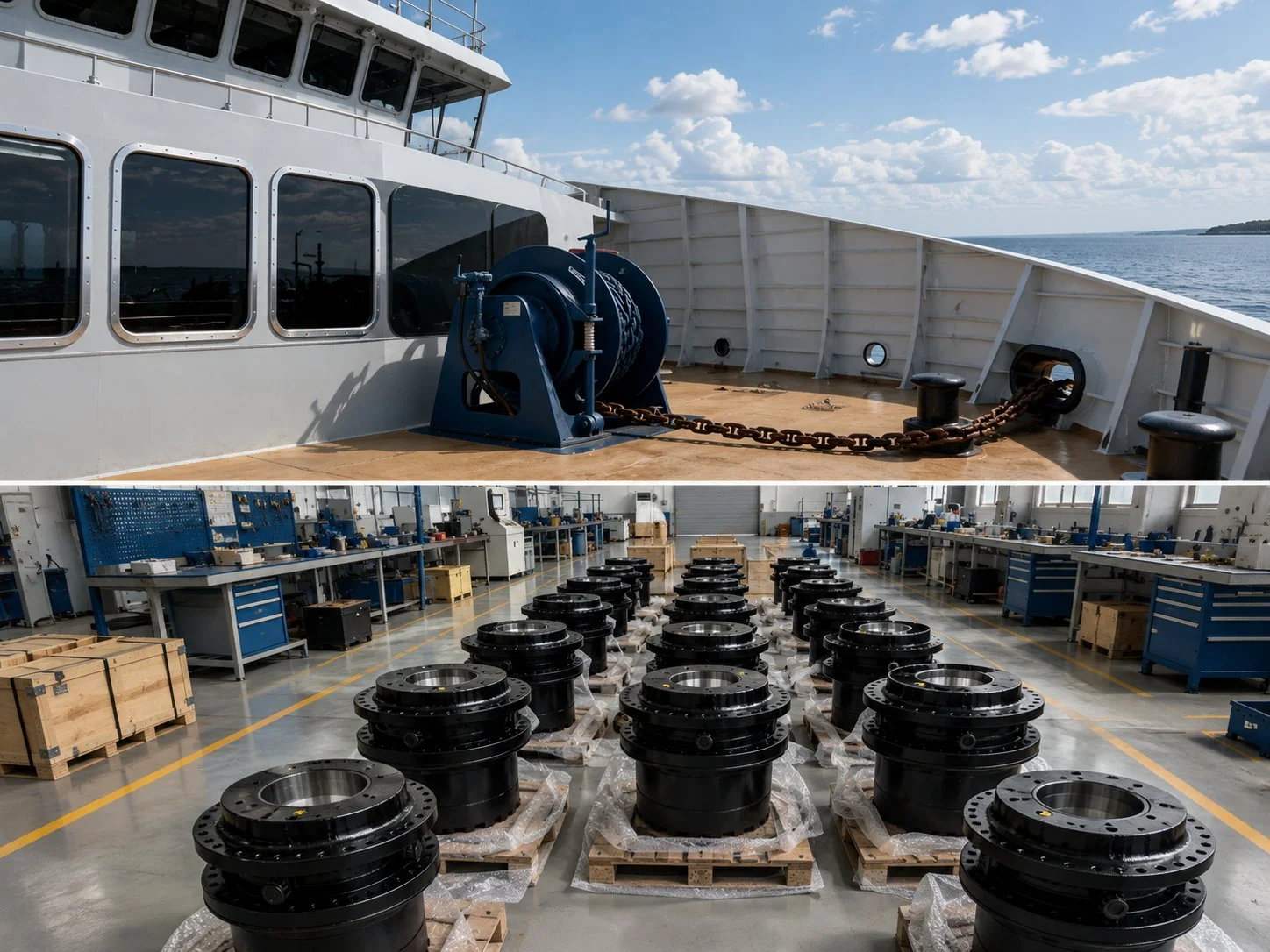
Rough-terrain cranes, truck-mounted cranes, and crawler cranes in the 5-15 tonne lifting class. The 405W at ratio 25-50 provides the hoisting torque for these machines, while the wide ratio range allows the crane OEM to offer different line speeds (fast-cycle for general construction vs slow-precise for steel erection) using the same gearbox housing. The drejedrev planetgearkasse handles the superstructure rotation, and the hjultræk propels the carrier.
Offshore Auxiliary and Platform Cranes
Pedestal-mounted auxiliary cranes on offshore platforms, FPSOs, and wind turbine installation vessels handling 3-10 tonne cargo transfers. The 405W at ratio 60-80 provides the high brake multiplication (up to 21,600 Nm at the drum) needed for safe load holding during vessel motion, while the sealed, corrosion-resistant housing survives the marine environment. The DNV/Lloyd/ABS classification survey process is simpler with a single well-documented gearbox model than with a bespoke unit — the 405W type approval data package is available on request from Koreas evige magt.
Harbour and Shipyard Cranes
Portal cranes, level-luffing cranes, and shipyard gantry cranes handling 5-12 tonne general cargo at moderate cycle rates (100-300 lifts per shift). The 405W at ratio 20-30 provides the fast hoist speed (30-50 m/min) these cranes need for productive cargo throughput, while the FEM M5 rating covers the sustained duty without overheating. For higher cycle rates approaching container terminal intensity, step up to the 406AW (12,500 Nm) or 406W (13,000 Nm) with greater thermal mass and higher brake capacity.
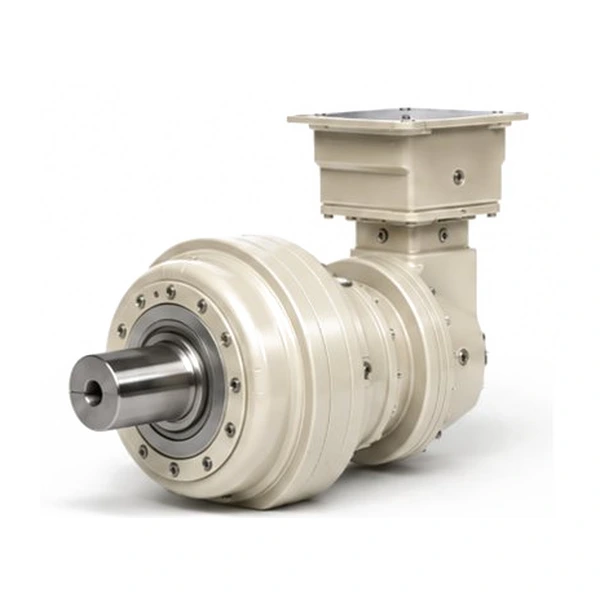
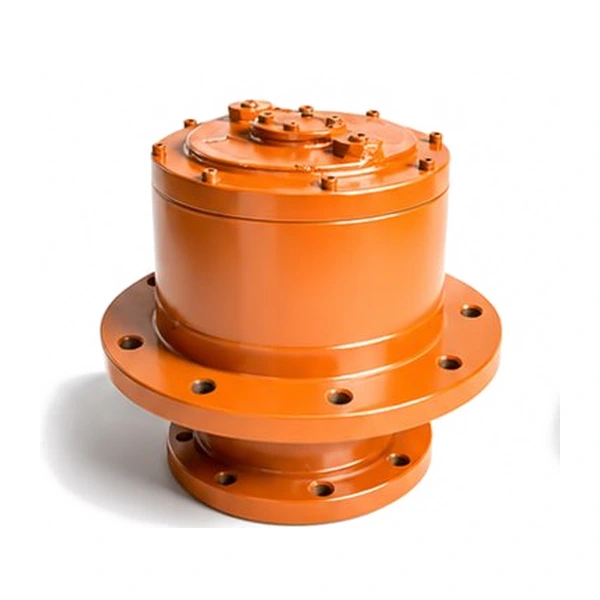
Adjacent Winch Drives and Complementary Products
Winch Drive Planetary Gearbox — Mid-Range Crane Hoist FAQ
Feltrapporter
Standardised the 405W across three rough-terrain crane models: 8 t (ratio 30), 10 t (ratio 45), and 12 t (ratio 65). Before the 405W, we used three different gearbox part numbers from two suppliers with three different seal kits and three different maintenance manuals. Now it is one part number, one spare parts kit, one maintenance procedure. The annual spare parts holding cost dropped by 55%. The 405W runs quieter than the previous units at equivalent speed and the brake engagement consistency across all 120 units delivered so far has been excellent — zero brake holding test failures during our quality incoming inspection.
Auxiliary hoist on a DNV-certified platform crane, 8 t SWL. The 405W type approval documentation was complete and well-structured — the material certificates, gear calculation reports, and brake test data were formatted in a way that our surveyors could verify without requesting supplementary information. The unit passed the factory acceptance test and the onboard commissioning survey in one visit each. From a classification perspective, the 405W is a straightforward approval — the product documentation quality shortened our review cycle by approximately 3 weeks compared to units from other suppliers where we routinely request missing data.
Portal harbour crane, 10 t SWL, 405W at ratio 25. The crane operates at approximately 200 lifts per 8-hour shift handling general cargo. Performance and reliability are good — 11 months in service, oil analysis clean, brake test within spec. The 4-star is a FEM classification observation: our crane operates at the upper boundary of M5 duty intensity (approaching M6 cycle counts). At our current lift rate, we expect to reach the M5 design cycle count approximately 2 years earlier than the originally projected 15-year service life. We are now discussing with Ever-Power whether a torque derating or an earlier overhaul schedule is the better path. Having FEM M5/M6 boundary guidance in the product documentation would have highlighted this consideration during the specification phase.
Yderligere information
| Redaktør | Cxm |
|---|
Relaterede produkter
-
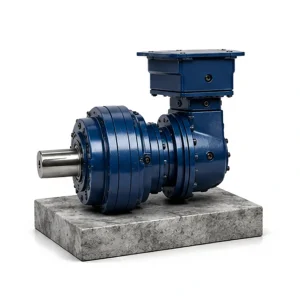
ZR55 Planetgearkasse med spildrev — Retvinklet
-
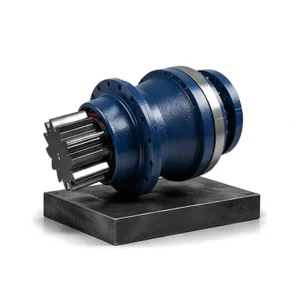
ZL95 Planetgearkasse med spildrev
-
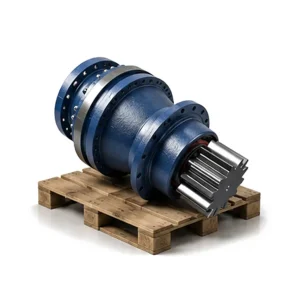
ZL75 Winch Drive Planetary Gearbox
-

417W3 Planetarisk gearkasse med spildrev
-

415W3 Planetarisk gearkasse med spildrev
-

406BW3 Planetarisk gearkasse med spildrev
-
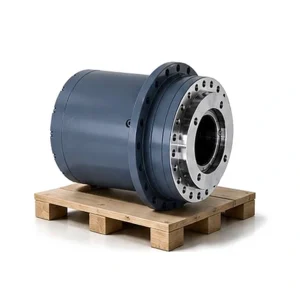
406W planetarisk gearkasse med spildrev
-

405,4W planetarisk gearkasse med spildrev