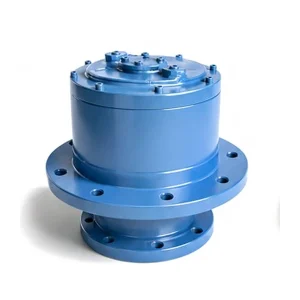
609L2, L3 Planetary Wheel Drive Gearbox
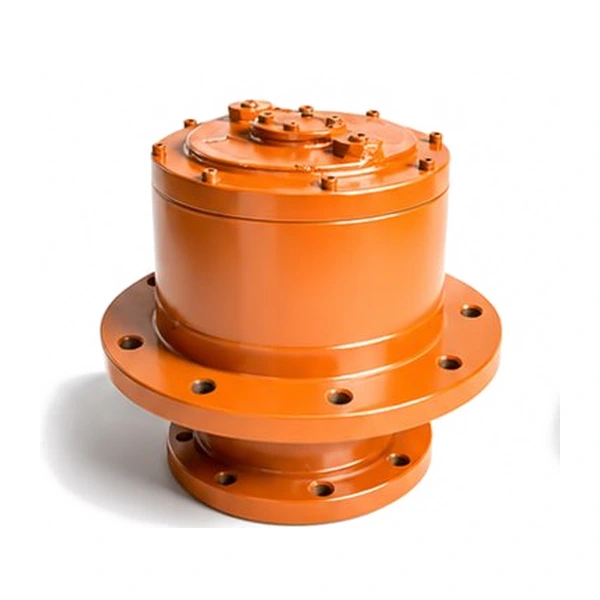
609L2 / L3 — The Widest Ratio Spread in the Heavy-Duty Wheel Drive Range
A 4.3:1 ratio spread within a single planetary wheel drive gearbox family means that the EP-609 can be configured for a 35-tonne mining truck roading at 18 km/h on ratio 33 — and for a heavy-lift modular transporter creeping at 1.5 km/h on ratio 142 — without changing the output flange, wheel mounting interface, or brake system. For equipment fleet operators running diverse vehicle types across multiple sites, this means one spare parts programme, one maintenance training package, and one procurement contract for machines with fundamentally different speed and torque requirements.
Available in both L2 (two-stage, lower ratios) and L3 (three-stage, full ratio range) configurations. The L2 provides higher efficiency at ratios from 33 to approximately 50. The L3 extends the ratio range to 142 and accepts smaller, higher-speed hydraulic motors. Integral parking brake from 300 to 600 Nm with manual declutch for emergency towing.
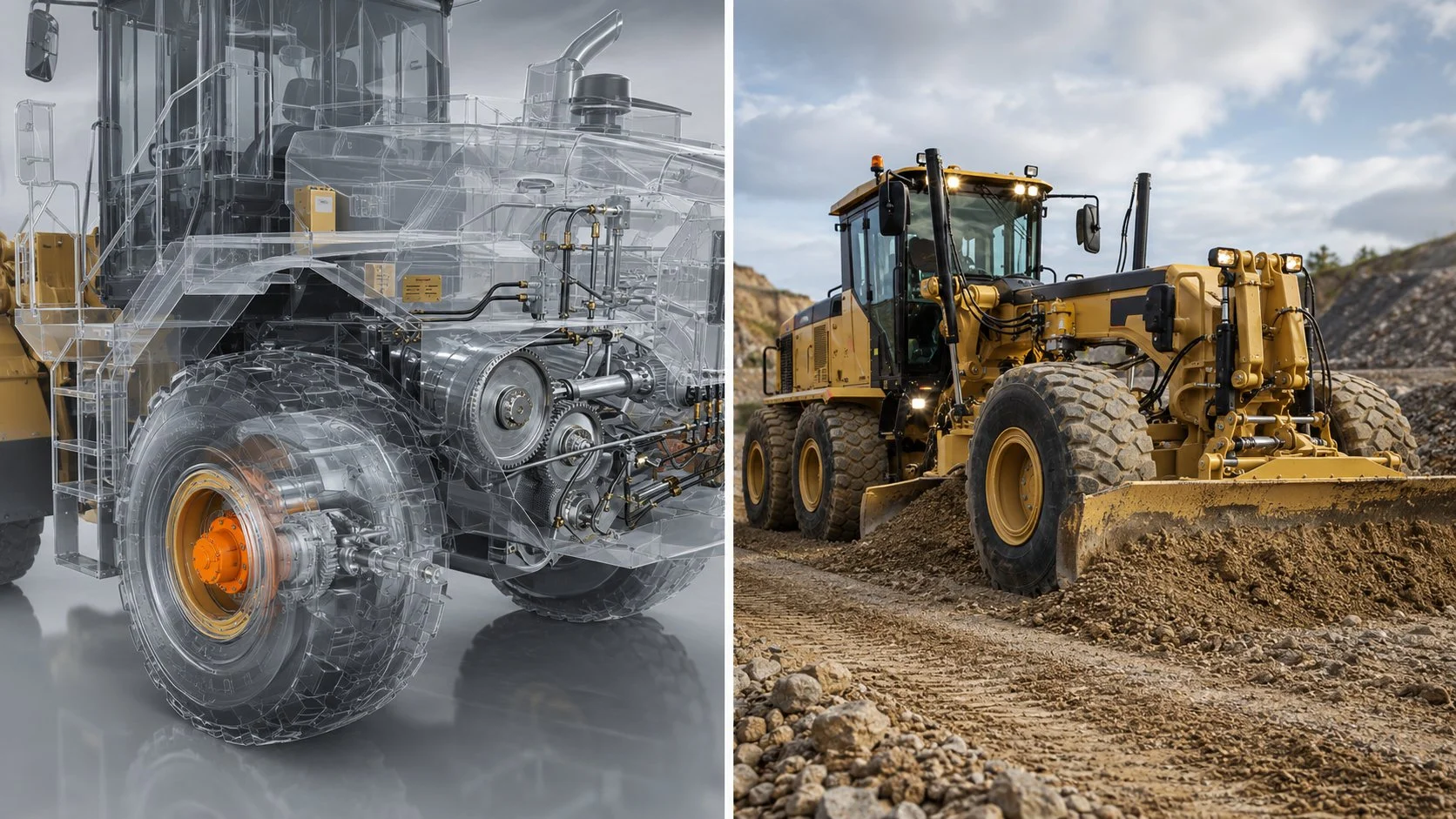
L2 / L3
3,000 RPM
-25 til +85 grader C
609L2 / L3 Planetary Wheel Drive — Technical Parameters
| Output torque (rated max) | 23,000 Nm |
| Gearforholdsområde | 33 to 142 (L2: lower ratios / L3: full range) |
| Configuration options | L2 (2-stage) or L3 (3-stage) |
| Maksimal indgangshastighed | 3,000 rpm |
| Mekanisk effektivitet | ≥ 94% |
| Parkeringsbremse | 300 - 600 Nm, spring-applied, hydraulic release |
| Emergency towing | Manual declutch (free-wheel disconnect) |
| Wheel mounting | Rotating flange, SAE/ISO bolt circle |
| Tørvægt | Approx. 220 kg |
| Smøring | Oil bath splash, API GL-5 EP gear oil |
| Driftstemperatur | -25 to +85 deg C (Viton seals available) |
| Gearmateriale | Carburised alloy steel, CNC ground, HRC 58-62 |
Beyond Peak Torque — Verifying the 609 Against Your Actual Duty Cycle
A wheel drive planetary gearbox rated at 23,000 Nm does not mean every application generating 23,000 Nm is a suitable match. The gearbox rating assumes a specific relationship between peak torque, average torque, and duty cycle duration. Verifying that your application falls within the design envelope is the most important step in the specification process — and the one most frequently skipped.
① Define your torque histogram
Record or estimate the percentage of operating time spent at each torque level. A mining truck might spend 30% of its cycle at full torque (loaded uphill), 40% at 50% torque (empty return), 20% at 10% torque (idling at load/dump), and 10% at zero torque (standing). The weighted average — the RMS torque — is the number that determines gear and bearing fatigue life, not the peak.
② Calculate the equivalent continuous torque
T(eq) = square root of (sum of T(i) squared x t(i) / t(total)). For the mining truck example: T(eq) = sqrt(23,000² x 0.30 + 11,500² x 0.40 + 2,300² x 0.20) = sqrt(158,700,000 + 52,900,000 + 1,058,000) = approximately 14,580 Nm. This equivalent continuous torque must be below the 609 rated continuous capacity for the target bearing life (typically 20,000 hours L10).
③ Verify thermal capacity
Calculate the average input power: P(avg) = T(eq) x output speed x 2 x 3.14 / 60 / efficiency. The heat generated is P(avg) x (1 - efficiency). This heat must be dissipated by the 220 kg housing through natural convection. If the calculated sump temperature exceeds 80 deg C, either the duty cycle is too severe for the 609 frame (step up to the 610) or the thermal management must be supplemented with oil cooling or forced-air ventilation of the housing.
A machine that touches 23,000 Nm for 10% of its cycle and averages 12,000 Nm is a comfortable fit for the 609. A machine that sustains 23,000 Nm for 60% of its cycle may need the 610 (30,000 Nm) despite never exceeding the 609 peak rating. The duty cycle, not the peak torque, determines the correct model.
One Wheel Drive Part Number for the Entire Fleet — How Wide Ratios Enable Standardisation
Mining and port operations run mixed fleets: haulers, loaders, cranes, and support vehicles with different speed requirements but overlapping torque demands. The 609 ratio range from 33 to 142 is wide enough to cover most of these applications within a single gearbox family, which creates measurable procurement and maintenance advantages.
Spare Parts Reduction
All 609 variants share the same output seals, input seals, breather valves, and brake assemblies. A fleet running three different ratio configurations (for example, 33 for trucks, 75 for loaders, and 108 for cranes) carries one seal kit, one brake assembly, and one oil specification. Compare this to three different gearbox brands, each with unique seals, brakes, and oil types — the inventory saving is immediate and significant.
Training Simplification
Maintenance technicians trained on the 609 can service every vehicle in the fleet that uses it. The oil change procedure, brake inspection method, declutch operation, and seal replacement technique are identical across all ratio configurations. On a remote mining site where technician specialisation is a luxury, this standardisation directly reduces the risk of maintenance errors caused by unfamiliarity with multiple drive brands.
Procurement Leverage
Consolidating all wheel drive procurement under one model family increases the order volume per supplier, which improves pricing, lead time priority, and technical support responsiveness. A fleet consuming 40 units per year across three ratio configurations has more commercial leverage than one ordering 12 units from three separate suppliers. Contact Koreas evige magt for fleet volume pricing structures.
Failure Mode Tracking
When the entire fleet uses the same planetary wheel drive gearbox family, oil analysis data, vibration trends, and failure modes can be compared across all machines. A seal failure pattern appearing on the loaders but not the trucks reveals an application-specific issue (for example, chemical exposure from the loader bucket) rather than a product defect — intelligence that is impossible to extract when every machine type uses a different drive brand.
23,000 Nm Wheel Drive Applications — Where Fleet Standardisation Pays Off
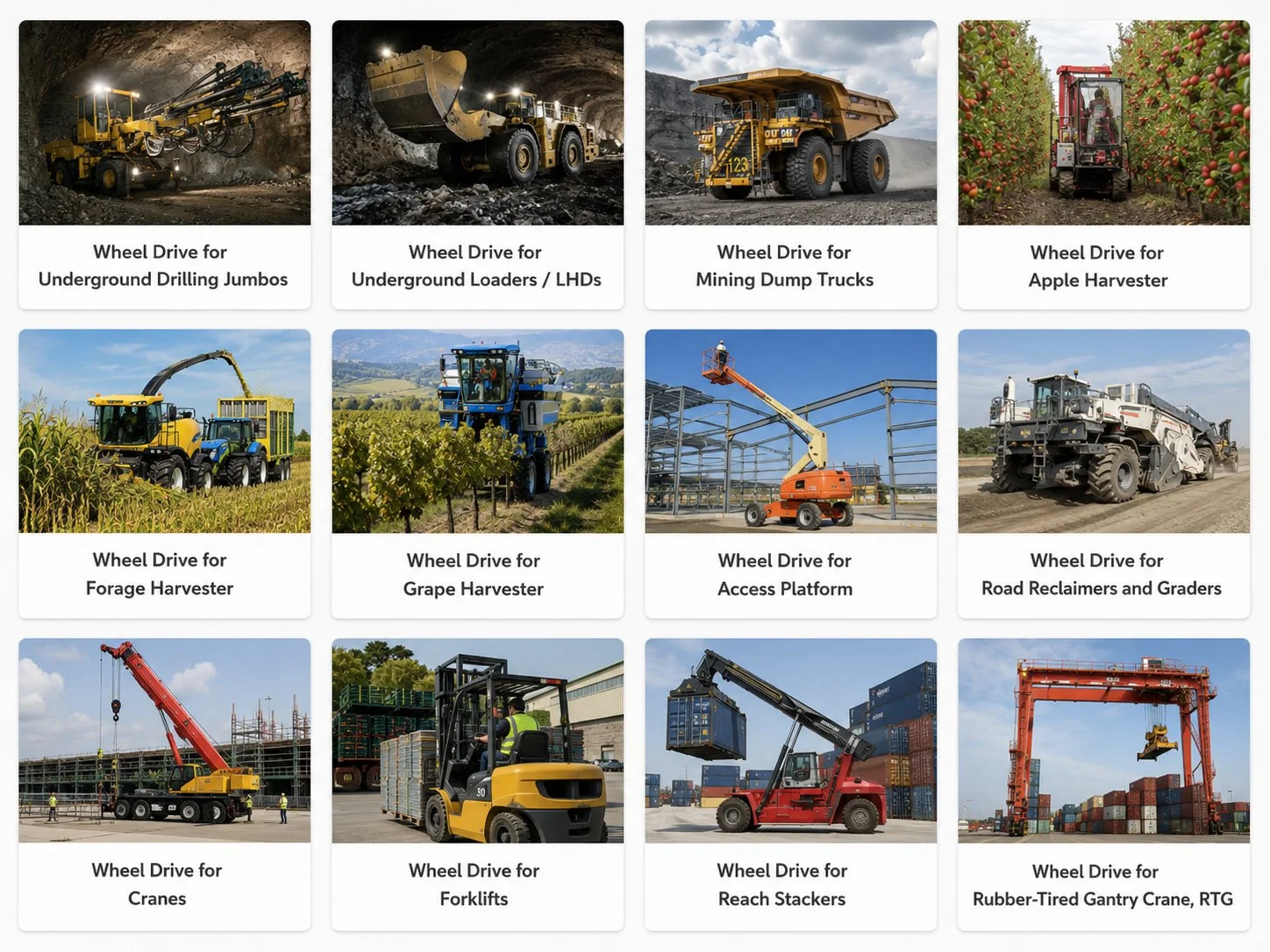
Mining Rigid-Frame Trucks (30-50 t Payload)
Production haul trucks climbing 15-20% loaded grades at 8-12 km/h for 10-hour shifts. The 609L2 at lower ratios (33-50) provides the speed for long, moderate-grade haul roads, while the 609L3 at higher ratios (75-142) suits short, steep pit ramps. The 600 Nm brake multiplied through the gear ratio provides holding torque that exceeds tyre adhesion on any grade the truck can physically climb. Multiple track drive gearboxes complement the 609 on ancillary crawler equipment within the same mining fleet.
Port Reach Stackers and Container Handlers
Reach stackers handling 30-45 tonne containers require 20,000-23,000 Nm of wheel torque to accelerate loaded from a standing start on the quay apron. The 609L2 at ratio 33-40 provides the 15-20 km/h inter-stack travel speed these machines need for productive container throughput, while the full 23,000 Nm is available for the initial breakaway from standstill with a loaded container at maximum boom extension. The drejedrev planetgearkasse handles the boom swing on the same hydraulic platform.
Heavy Mobile Cranes (50-100 t Lifting)
All-terrain and rough-terrain cranes with lifting capacities of 50-100 tonnes require high wheel torque for both road travel and on-site creep positioning under load. The 609L3 at ratio 75-108 provides the controlled low-speed movement these cranes need when driving under load to set steel beams or position heavy industrial equipment onto foundations. The 4.3:1 ratio range within the 609 family means the crane OEM can offer road-speed and site-speed variants without changing the chassis design.
Adjacent Models and Complementary Drives
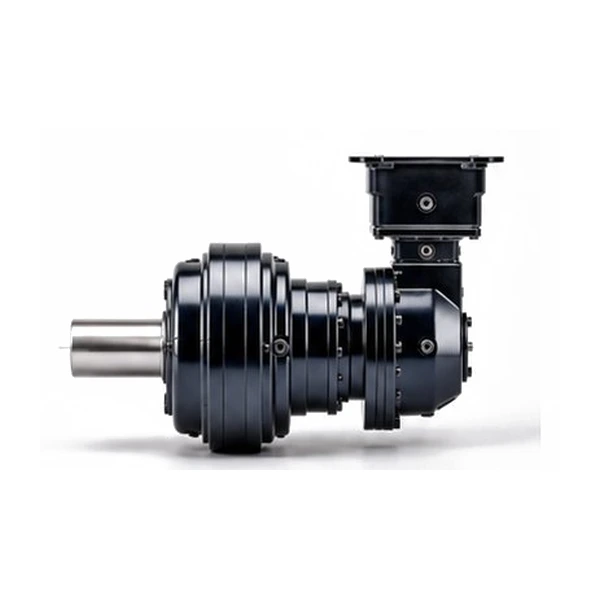
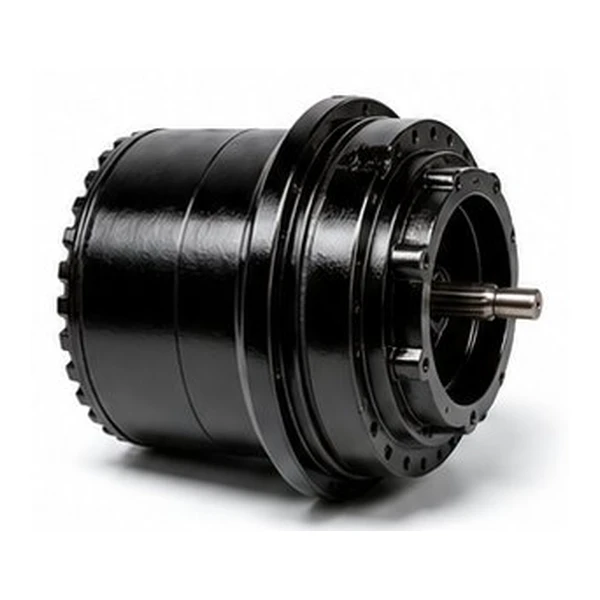

Heavy-Duty Planetary Wheel Drive Gearbox — Specification FAQ
Feltrapporter
We standardised on the 609 across our fleet: ratio 45 for the 40-tonne haul trucks, ratio 80 for the water carts, and ratio 33 for the service vehicles. One seal kit, one brake assembly, one oil specification, one training package. When a truck wheel drive needed an emergency seal replacement at 2 AM during a night shift, the technician had done the exact same job on a water cart the week before. It took 90 minutes instead of the 4 hours it would have taken with an unfamiliar brand. That is the value of standardisation.
Reach stacker fleet, 8 units, 609L2 ratio 38. The machines handle 40-tonne containers on a busy multi-user terminal. The 609 replaced a European brand that was discontinued. Ever-Power matched the mounting dimensions within 48 hours of receiving the old drawing. Oil analysis at 4,000 hours trending shows lower iron particle counts than the previous brand at the same interval. Operator feedback: smoother breakaway from standstill with a loaded container. We have placed a follow-up order for four additional units.
70-tonne all-terrain crane, 609L3 ratio 95. The prototype performed well through our entire certification test programme including the 30% grade climb test at full counterweight. The crane roads at 12 km/h and creeps at 2 km/h under load — both within specification. The 4-star rating reflects our one concern: the 609 is the heaviest wheel drive we have used on this platform (220 kg vs 195 kg for the previous supplier), and the additional 25 kg per corner raised our total vehicle weight by 200 kg, which we had to recover from other components to meet our axle load certification limit. The weight is not a product flaw — it reflects the additional bearing capacity — but lighter would be better if the torque and durability can be maintained.
Yderligere information
| Redaktør | Cxm |
|---|
Relaterede produkter
-
ZL24 Wheel Drive Planetary Gearbox
-
ZL01 Wheel Drive Planetary Gearbox
-
613L3 Planetary Wheel Drive Gearbox Reducer
-
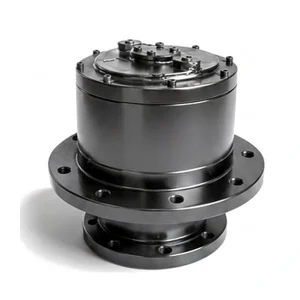
607L2, L3 Planetary Wheel Drive Gearbox Reducer
-
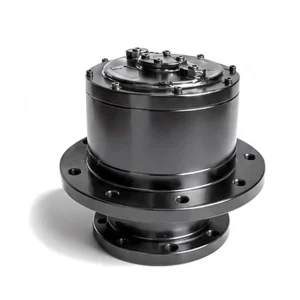
606L2, L3 Planetary Wheel Drive Gearbox Reducer
-
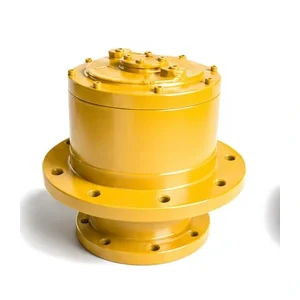
602L2 Planetary Wheel Drive Gearbox Reducer
-
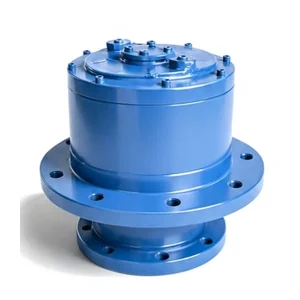
603L2B Planetary Wheel Drive Gearbox Reducer — 2-Stage
-
603L2A Planetary Wheel Drive Gearbox Reducer — 2-Stage