ZR120 Winch Drive Planetary Gearbox — Right-Angle
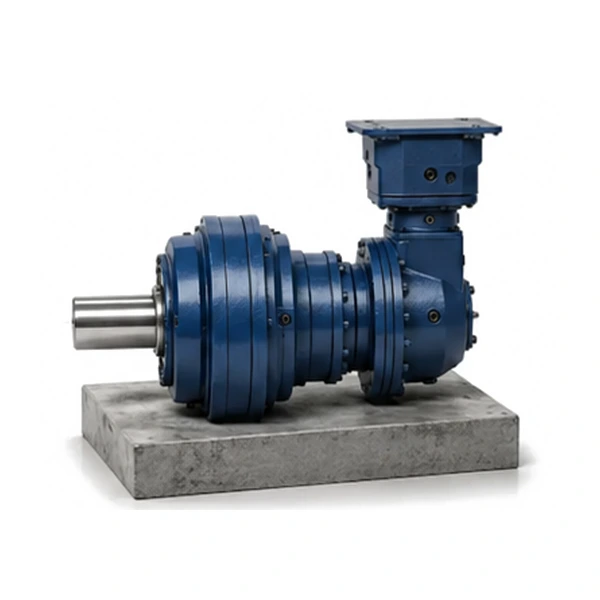
3,000 RPM
95% MEGA-CLASS
ZR120 — 133,000 Nm
Three stages. Three thousand RPM. Near-mega-class from a perpendicular motor.
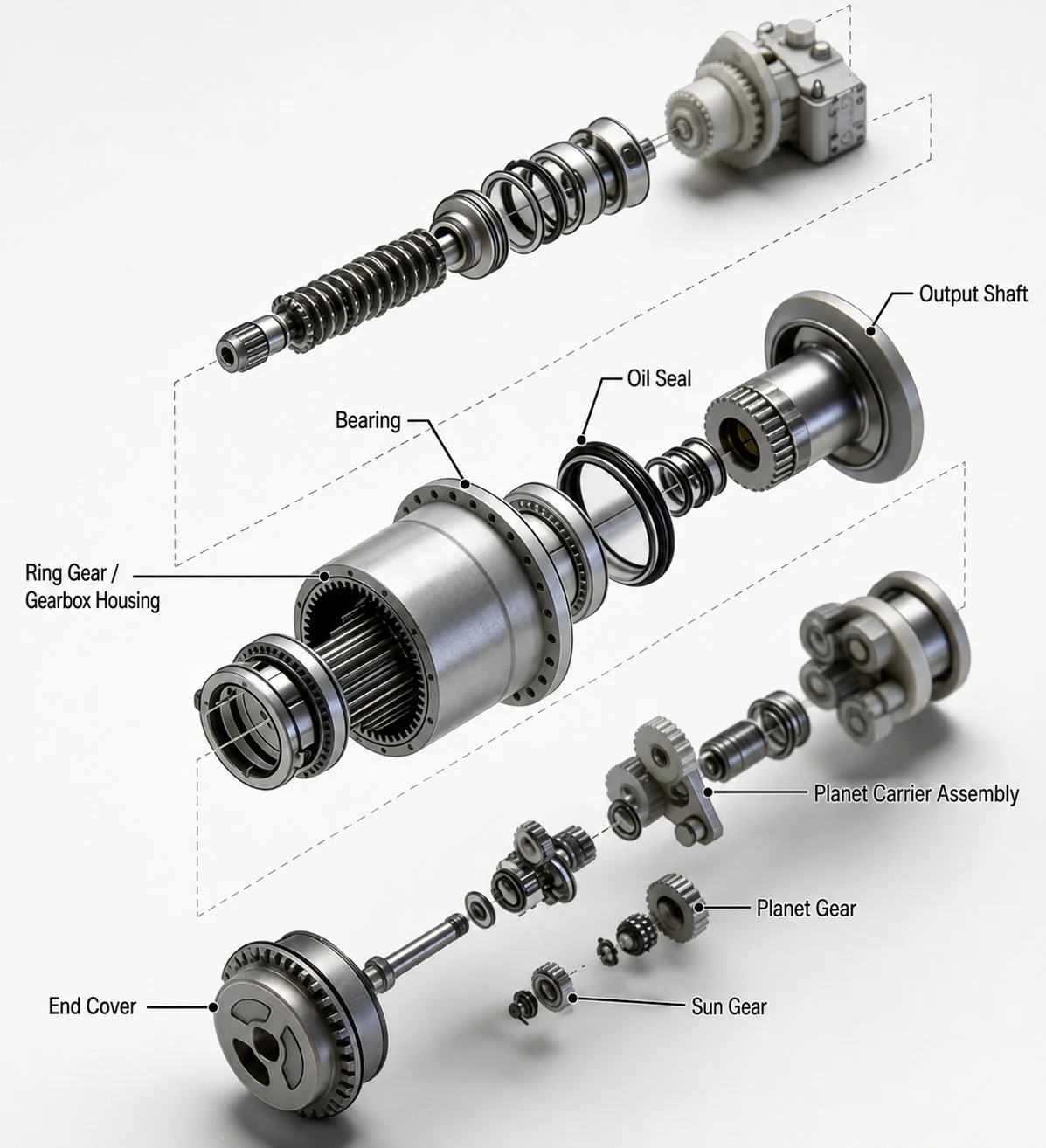
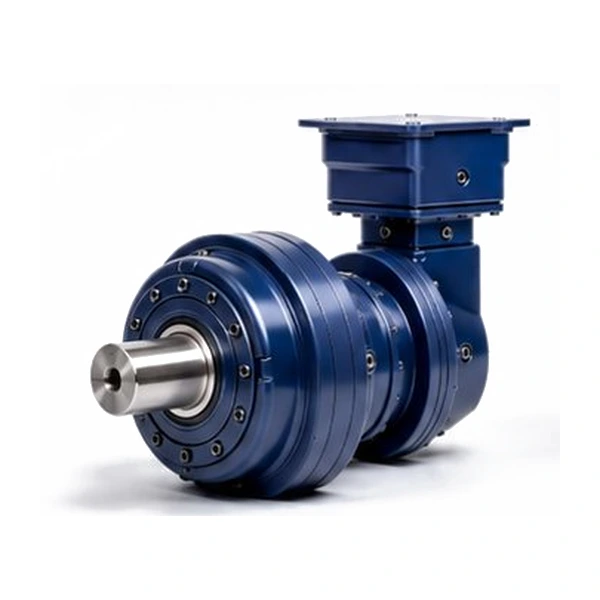
The EP-ZR120 is the fifth model in the right-angle Planetengetriebe für Seilwindenantrieb series and the first to cross both thresholds: minimum 3 stages (bevel + 2 planetary), and 3,000 rpm input speed. The 2-stage compact option that the ZR55-ZR95 offered is no longer available — the bevel gear at 133,000 Nm cannot sustain the tooth loading required for a 2-stage torque path at the 100,000-hour design life. The additional planetary stage distributes the torque more evenly through the gear train, reducing the bevel tooth stress from 98% to approximately 75% of the endurance limit and restoring the safety margin. The cost: approximately 80 mm of additional axial length behind the drum.
ZR120 Right-Angle Winch Drive Planetary Gearbox — Technical Parameters
| Continuous torque (N2xh=100,000) | 133,000 Nm (95% of 414W3) |
| Peak torque | 280,000 Nm (exceeds 417W3 continuous) |
| Input configuration | Right-angle (90 deg helical bevel + planetary) |
| Maximum input speed | 3,000 rpm (first ZR at 3,000) |
| Available stages | 3-5 (first ZR with 3-stage minimum) |
| Thermal power (Pt) | 27 - 100 kW |
| Gear type | Helical bevel + helical planetary, DIN 5-6 |
| Integrated brake / Sealing | None / IP67+ FKM |
| Housing / Gear material | QT600-3 / 20CrMnTi HRC 58-62 |
3-Stage Minimum — What the Additional Planetary Stage Provides at 133,000 Nm
The ZR95 was the last model to offer 2-stage (bevel + 1 planetary). The ZR120 mandates 3 stages (bevel + 2 planetary). The difference is one additional planetary stage — but the engineering consequences extend beyond the 80 mm of extra housing length.
The additional planetary stage provides more reduction before the torque reaches the bevel. At a given output torque (133,000 Nm), the bevel input torque at 3-stage is lower than at 2-stage because the first two planetary stages have already multiplied the motor torque. Lower bevel input torque = lower bevel tooth stress = longer bevel gear life. The bevel tooth stress at 3-stage drops from 98% (the unacceptable 2-stage level) to approximately 75% of the endurance limit — restoring the design margin to comfortable levels.
The 3-stage minimum means the ZR120 minimum achievable ratio is higher than the ZR95 2-stage minimum. Where the ZR95 at 2-stage could reach ratios as low as 15, the ZR120 at 3-stage starts at approximately 50. For applications needing low ratios (fast drum speeds, direct-drive-like operation), the ZR95 at 115,000 Nm with 2-stage offers lower ratios than the ZR120 at 133,000 Nm with 3-stage. The ratio range is a design trade-off with the stage count.
Three stages distribute the total ratio across more gear meshes — each individual mesh carries a lower per-stage load. This reduces the contact stress on every gear in the train, not just the bevel. The result is more uniform wear across the gear train and a more predictable maintenance profile — the gears and bearings wear at similar rates rather than the bevel wearing faster than the planetary. For maintenance planning, this means the entire gear train can be inspected and overhauled on the same schedule. Contact Korea Ever-Power for overhaul scheduling at your specific duty profile.
3,000 RPM — The Final Speed Step and the Global Motor Standard
The ZR series input speed has stepped down through the range: 3,300 (ZR55) → 3,100 (ZR75-ZR95) → 3,000 (ZR120-ZR200). At 3,000 rpm, the ZR120 reaches the final speed level — shared with the ZR150 and ZR200. This is not coincidental: 3,000 rpm is the synchronous speed of a 2-pole motor at 50 Hz — the single most common motor speed in global industrial and marine practice.
At 3,000 rpm, the ZR120 accepts any standard 2-pole motor at 50 Hz without speed derating or VFD frequency limiting. The motor runs at its rated speed, at rated voltage, at rated efficiency. No power derating, no thermal derating, no bearing speed limit concern. For installations where the electrical supply is 50 Hz (Europe, Asia, Africa, South America, Australia, the Middle East — approximately 70% of the global electrical grid), the ZR120 at 3,000 rpm is the zero-compromise motor match.
For 60 Hz electrical systems (North America, parts of South America, Japan, South Korea): a 2-pole motor at 60 Hz runs at 3,600 rpm synchronous — exceeding the 3,000 rpm limit. Solution: the VFD limits the motor frequency to 50 Hz (3,000 rpm), or a 4-pole motor at 60 Hz (1,800 rpm) is selected. Both are standard configurations. For marine vessels with 60 Hz generators, the VFD frequency limit is a single parameter change. The ZR120 is compatible with every global electrical standard through standard motor and VFD practice.
133,000 Nm Right-Angle — Near-Mega-Class Torque from a Perpendicular Motor

Heavy Electric Cranes in Constrained Geometry (80-120 t)
Electric cranes at 80-120 tonne SWL where the machinery room constrains the coaxial geometry. The ZR120 delivers 95% of the 414W3 mega-class continuous from a right-angle motor mount. The slewing drive Und wheel drive complete the all-electric crane system. The 280,000 Nm peak exceeds the 417W3 mega-class continuous — absorbing transient overloads from grab operations, subsea deployment, and emergency stops.
Heavy Marine Anchor Handling and Mooring Winches
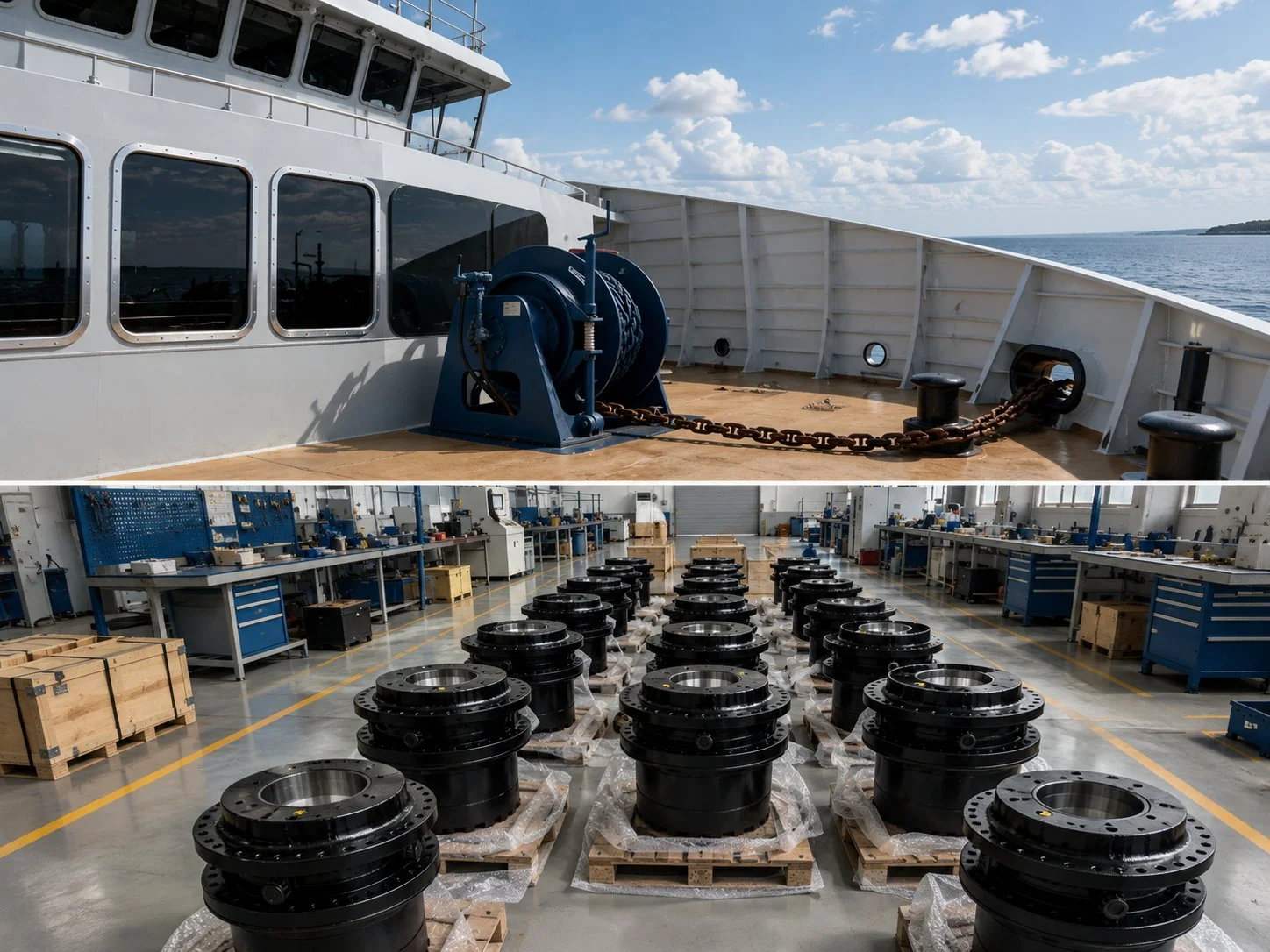
Main anchor handling and permanent mooring winches on AHTS vessels, FPSOs, and semi-submersible platforms where the drum axis runs athwartship. The ZR120 at 133,000 Nm provides the anchor chain tension and mooring line holding capacity that the 414W3 mega-class traditionally served — from an electric platform with regen, DIN 5-6 precision, and IP67+ sealing for the deck-mounted marine environment.
Electric Mining Main Production Winders (500-800 m)
Main production winders on mine headframes where the motor mounts perpendicular to the drum. The ZR120 at 133,000 Nm with 600-900 kW motors at 3,000 rpm provides the winding torque for 500-800 metre shafts with 15-22 tonne skip loads. Regen recovery 20-35%. The 3,000 rpm speed matches the standard mine electrical infrastructure — 2-pole motors, 50 Hz supply, standard VFD — without special motor procurement.
The ZR Right-Angle and ZL Coaxial Families
Right-Angle Winch Drive Planetary Gearbox — ZR120 3-Stage FAQ
Field Reports
100 t offshore platform crane, hydraulic-to-electric conversion. The machinery room offered 480 mm behind the drum — enough for the ZR120 at 3-stage (465 mm installed depth) but not enough for the ZR95 at the required 4-stage ratio (510 mm). The ZR120 at ratio 100, 3-stage, 800 kW motor delivered 133,000 Nm — 95% of the 414W3 that the crane originally used. The 5% torque reduction was approved by the classification society because the crane's maximum operating torque (measured from 3 years of load recorder data) was 118,000 Nm — well within the ZR120 capacity. The conversion eliminated the HPU and 180 metres of hydraulic hose. Regen recovery: 21% over 10 months. The crane is now the largest right-angle electric crane conversion in the North Sea fleet.
Permanent mooring winch on an FPSO, ZR120 at ratio 80, 3-stage, 600 kW AC motor at 3,000 rpm. The winch maintains constant tension on 8 mooring lines at 40-70% of continuous rating (53,000-93,000 Nm) for months at a time. The ZR120 3-stage thermal distribution at this sustained duty keeps the oil temperature stable at 62-68 deg C in the tropical environment (32 deg C ambient) — well within limits. The 280,000 Nm peak absorbed a sudden squall event that produced 2.6x line tension on the windward mooring point — the highest transient the vessel has experienced since commissioning. The winch system automatically adjusted the line length through the VFD speed control to restore the target tension within 8 seconds.
Main production winder at a 720-metre gold mine, ZR120 at ratio 280, 4-stage, 750 kW AC motor at 3,000 rpm mounted vertically. Skip weight 20 tonnes; rope weight at full depth 3,800 kg. Sustained drum torque during loaded hoist: 124,000 Nm — 93% of ZR120 continuous. Regen recovery: 26% of hoist energy (USD 380,000 annual saving at current electricity rates). The 4-star reflects a motor alignment observation: at 3,000 rpm through the right-angle bevel, the alignment tolerance between the motor shaft and the bevel input shaft is tighter than at the 3,100 rpm models — the laser alignment required two iterations during commissioning instead of the typical one. For ZR120 installations at 3,000 rpm, specifying laser alignment with a 0.02 mm tolerance (instead of the 0.05 mm standard for the 3,100 rpm models) would reduce the commissioning alignment time.
Zusätzliche Informationen
| Editor | Cxm |
|---|
Ähnliche Produkte
-
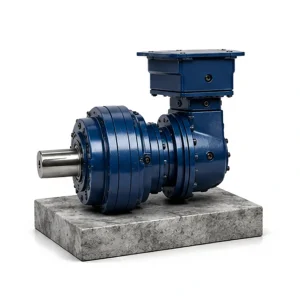
ZR55 Winch Drive Planetary Gearbox — Right-Angle
-
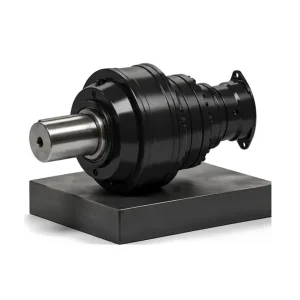
ZL200 Windenantrieb Planetengetriebe
-
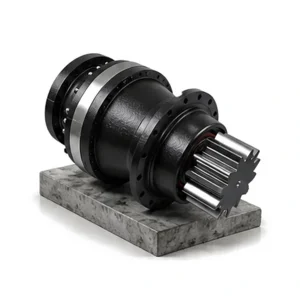
ZL55 Planetengetriebe für Seilwindenantrieb – 1-5 Stufen
-
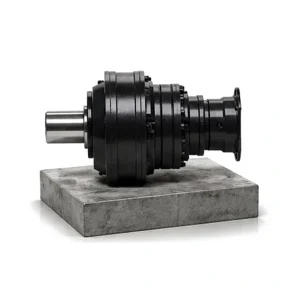
ZL35 Planetengetriebe für Seilwindenantrieb – 1-4 Stufen
-

416W3 Windenantrieb Planetengetriebe Untersetzungsgetriebe
-
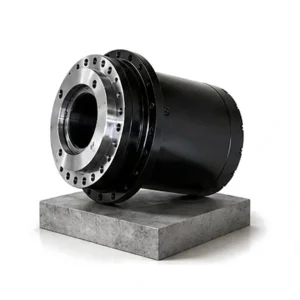
414W3 Winch Drive Planetary Gearbox Reducer
-
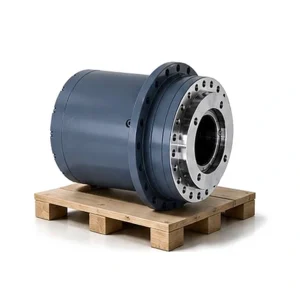
406W Windenantrieb Planetengetriebe Untersetzungsgetriebe
-

405,4-W-Windenantrieb-Planetengetriebe