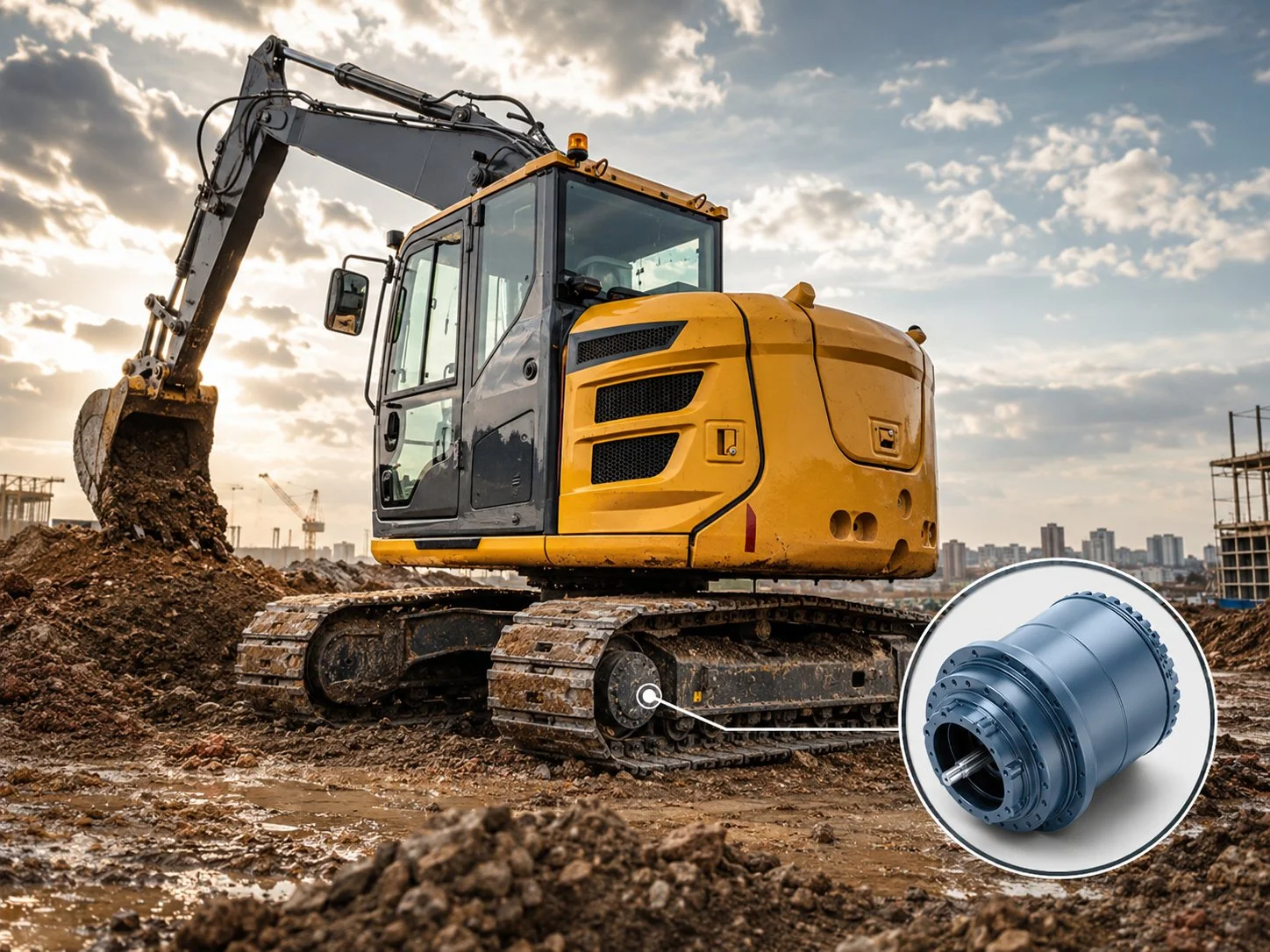
Vom Hydraulikmotor zum Kettenrad – Wie ein Planetengetriebe mit Kettenantrieb einen Bagger antreibt
Der Kraftfluss in jedem Hydraulikbagger folgt dem gleichen Schema: Ein Dieselmotor treibt eine Verstellpumpe an, die Pumpe fördert das Öl durch ein Wegeventil, das Ventil leitet es zu einem am Fahrwerk montierten Fahrmotor, der mit 2.000 bis 3.500 U/min und einem Drehmoment von 200 bis 800 Nm dreht. Dieses Motordrehmoment reicht bei Weitem nicht aus, um eine tonnenschwere Maschine durch Schlamm zu bewegen. Planetengetriebe mit Kettenantrieb füllt die Lücke.
Im Inneren der Kettenradnabe – einer Aussparung mit typischerweise 400 bis 600 mm Durchmesser – reduziert das Planetengetriebe die Motordrehzahl um den Faktor 40:1 bis 120:1 und erhöht gleichzeitig das Drehmoment um denselben Faktor. Aus einem Motordrehmoment von 500 Nm bei 3.000 U/min werden durch eine zweistufige Planetengetriebeuntersetzung von 80:1 40.000 Nm bei 37 U/min. Dieses Drehmoment von 40.000 Nm treibt das Antriebskettenrad an, welches wiederum die Kette in den Antrieb eingreift. Die Kette drückt gegen den Boden und bewegt so die gesamte Maschine vorwärts.
Warum Planetengetriebe statt Stirn- oder Schneckengetriebe? Platzmangel. Der Kettenantrieb muss in die Nabe des Kettenrads passen. Ein Planetengetriebe verteilt die Last auf drei oder vier gleichzeitig kämmende Planetenräder und bietet so die höchste Drehmomentdichte – Newtonmeter pro Kilogramm – aller Getriebearten. Ein Stirnradgetriebe mit einem Übersetzungsverhältnis von 80:1 bräuchte vier Stufen und das Drei- bis Vierfache des Volumens. Ein Schneckengetriebe mit einem Übersetzungsverhältnis von 80:1 würde 401 TP³T der Eingangsleistung als Wärme verlieren. Das Planetengetriebe erreicht das Übersetzungsverhältnis in zwei oder drei Stufen mit einem Wirkungsgrad von 94 bis 971 TP³T in einem Gehäuse, das direkt am Fahrgestellrahmen verschraubt wird.

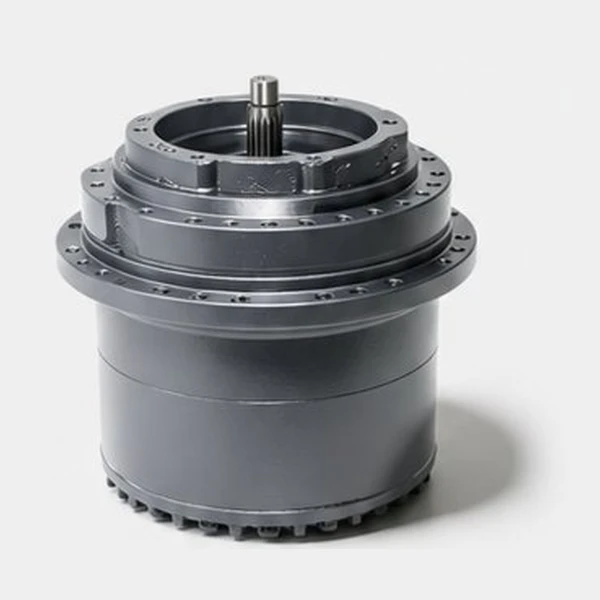
Typischer Kettenantrieb eines Baggers: Der Hydraulikmotor ist oben angeschraubt; die Planetengetriebestufen befinden sich im Inneren des Gehäuses; der Abtriebsträger treibt die Kettenradnabe an.
Gegenrotation – Der Lastfall, der die Kettenantriebstechnik von Baggern definiert
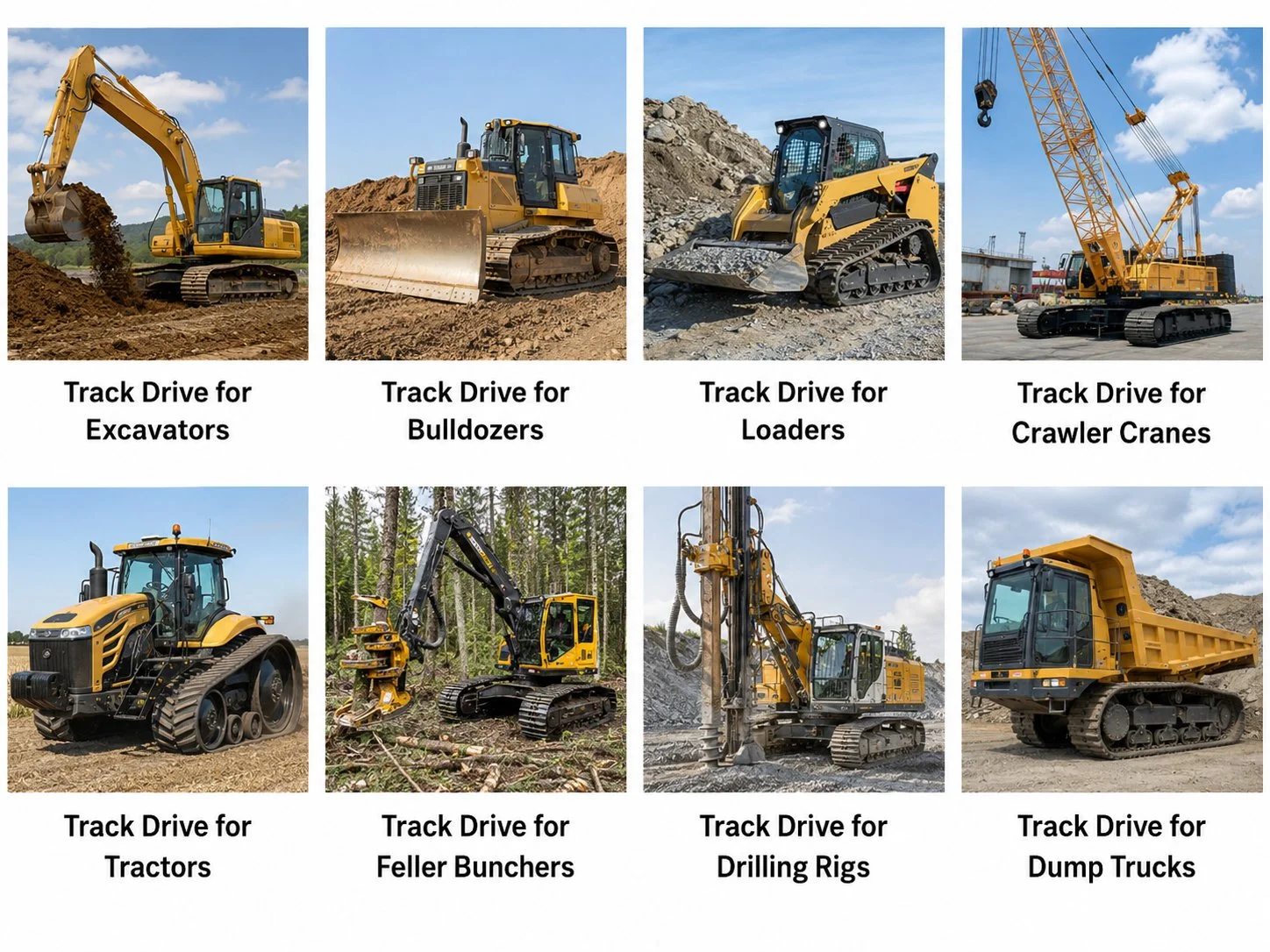
Alle Kettenfahrzeuge – Bulldozer, Raupenkrane, Kompaktlader – nutzen Kettenantriebe. Doch nur Bagger benötigen routinemäßig beide Antriebe, die gleichzeitig mit vollem Drehmoment in entgegengesetzte Richtungen arbeiten. Dieses gegenläufige Drehmanöver wendet die Maschine auf der Stelle: Der Fahrer steuert die linke Kette vorwärts und die rechte rückwärts, und der Bagger dreht sich innerhalb seiner eigenen Kettenspur.
Mechanisch gesehen stellt die Gegenrotation die extremste Belastung dar, der ein Planetengetriebe mit Kettenantrieb ausgesetzt sein kann:
Die Maschine steht während der Drehung still – es gibt kein Drehmoment, das die Rotation unterstützt. Jeder Fahrmotor erreicht seinen maximalen Druck (Blockierdrehmoment), und das Planetengetriebe überträgt diese Spitzenlast während der gesamten Drehung kontinuierlich auf das Kettenrad.
Jeder Planetenradzahn wird beim Vorwärtsfahren an einer Flanke und beim Rückwärtsfahren an der gegenüberliegenden Flanke belastet. Über eine Maschinenlebensdauer von 15 Jahren bei 300 Umdrehungen pro Schicht und 300 Schichten pro Jahr überstehen die Zähne 1,35 Millionen vollständige bidirektionale Lastwechsel.
Die Planetenzapfenlager erfahren an jedem Drehpunkt eine Umkehr der vollen radialen Lastrichtung. Die Lagerrollen müssen ihre Kontaktzone auf der gegenüberliegenden Seite der Laufbahn neu herstellen – ein Ermüdungszustand, der bei Nadellagern in unidirektionalen Antrieben nicht auftritt.
Durch die abrupte Drehmomentumkehr wird das Ölvolumen im Inneren gegen eine Dichtlippe gedrückt und kehrt den Druck innerhalb von Millisekunden auf die andere Seite um. Eine für unidirektionale Rotation ausgelegte Dichtung verliert daher bereits nach wenigen Monaten im Baggerbetrieb Öl.
Technische Auswirkungen: Ein Kettenantrieb mit einer Nennleistung von 40.000 Nm im unidirektionalen Dauerbetrieb – geeignet für Förderbänder, Winden oder Radantriebe – wird im Baggerbetrieb vorzeitig ausfallen, wenn die Berechnung der Planetenradbiegung nicht auf bidirektionale Ermüdung bei gleichem Drehmoment validiert wurde. Die gegenläufige Drehrichtung des Baggers führt zu Belastungen, die bei dieser Frequenz in keiner anderen Kettenmaschinenanwendung auftreten.
Auswahl eines Kettenantriebs nach Baggergewichtsklasse – Drehmoment, Geschwindigkeit, Übersetzung und Steigfähigkeit
Die Spezifikationen für den Kettenantrieb eines Baggers hängen primär vom Betriebsgewicht der Maschine ab – dieses bestimmt sowohl das für Steigungen erforderliche Drehmoment als auch das Drehmoment bei Gegenrotation. Die folgende Tabelle ordnet die fünf Standard-Gewichtsklassen von Baggern den entsprechenden Kettenantriebsparametern zu.
| Gewichtsklasse | Maschine (t) | Ausgangsdrehmoment (Nm) | Reisegeschwindigkeit | Verhältnisbereich | Phasen | Steigbarkeit |
|---|---|---|---|---|---|---|
| Mini | 1,5 – 8 | 5.000 – 15.000 | 2,5 – 4,5 km/h | 40 – 65:1 | 2 | 30 – 35% |
| Klein | 8 – 15 | 15.000 – 28.000 | 3,0 – 5,0 km/h | 55 – 80:1 | 2 – 3 | 30 – 35% |
| Medium | 15 – 30 | 28.000 – 50.000 | 3,5 – 5,5 km/h | 65 – 90:1 | 2 – 3 | 30 – 35% |
| Groß | 30 – 50 | 50.000 – 80.000 | 3,5 – 5,5 km/h | 75 – 100:1 | 3 | 25 – 30% |
| Bergbau | 50 – 90 | 80.000 – 140.000 | 3,0 – 4,5 km/h | 90 – 120:1 | 3 | 20 – 25% |
Die Steigfähigkeit ist die maximale Steigung, die der Bagger bei Betriebsgewicht ohne Kettenschlupf bewältigen kann. Die tatsächliche Steigfähigkeit wird durch den niedrigeren der beiden folgenden Werte begrenzt: verfügbares Getriebedrehmoment oder Kettenreibungskoeffizient (typischerweise 0,5–0,7 auf Lehm, 0,8–1,0 auf Schotter).
Steigfähigkeitsberechnung – Dimensionierung des Kettenantriebs für einen 35-Tonnen-Bagger
Das folgende Beispiel veranschaulicht die vollständige Drehmomentberechnung für einen mittelgroßen Bagger. Diese Berechnung sollte jeder Konstrukteur eines Erstausrüsters und jeder Fuhrparkmanager überprüfen, bevor er einen Ersatzkettenantrieb auswählt – und genau diese Berechnung wird am häufigsten zugunsten der einfachen Verwendung der Originalteilenummer ausgelassen.
Ohne den SF-Multiplikator von 2,0 spezifiziert der Ingenieur ein Getriebe mit einer Nennleistung von 17.365 Nm – ein Getriebe der 20.000-Nm-Klasse. Während der ersten Schicht im gegenläufigen Betrieb erreicht das tatsächliche Drehmoment einen Spitzenwert von 35.000 Nm (volles Motorblockierdrehmoment in beide Richtungen). Das Getriebe arbeitet an jedem Drehpunkt mit 175% seiner Nennleistung. Nach mehreren tausend solcher Zyklen tritt an beiden Zahnflanken der Planetenräder Oberflächenermüdung auf, das Zahnflankenspiel nimmt zu, und die Maschine beginnt, bei geradliniger Fahrt zur Seite zu ziehen. Dieses Ausfallmuster tritt typischerweise zwischen 3.000 und 5.000 Betriebsstunden auf – weit vor der angestrebten Lebensdauer von 10.000 Stunden.
Zweigang-Fahrantrieb – Warum die meisten Bagger über 8 Tonnen über einen hohen/niedrigen Gang im Kettenantrieb verfügen
Ein einstufiger Kettenantrieb steht vor einem grundlegenden Zielkonflikt: Ein hohes Untersetzungsverhältnis liefert maximales Drehmoment für Steigungen und Gegendrehungen, begrenzt aber die Höchstgeschwindigkeit, während ein niedriges Verhältnis zwar höhere Fahrgeschwindigkeiten ermöglicht, aber nicht das für Planierarbeiten benötigte Drehmoment erzeugt. Die meisten Bagger über 8 Tonnen lösen dieses Problem mit einem Zweigangmechanismus, der direkt in das Planetengetriebegehäuse integriert ist.
Übersetzungsverhältnis 80–120:1. Maximales Drehmoment. Geeignet für Steigungen, gegenläufige Drehbewegungen und Arbeiten auf weichem oder lockerem Untergrund. Fahrgeschwindigkeit typischerweise 2,5–3,5 km/h. Dieser Gang wird vom Bagger bei Aushubarbeiten verwendet – für kurze, langsame Positionierbewegungen zwischen den Löffelzyklen.
Übersetzungsverhältnis 40–60:1. Reduziertes Drehmoment, aber höhere Kettenraddrehzahl. Geeignet für Fahrten auf ebener Strecke zwischen Arbeitsplätzen – z. B. für die Durchfahrt von einem Ende einer Baustelle zum anderen. Die Fahrgeschwindigkeit beträgt typischerweise 4,5–5,5 km/h. Ein automatisches Herunterschaltventil schaltet in den niedrigen Gang, sobald der Druck des Fahrmotors einen Schwellenwert überschreitet, und schützt so das Getriebe vor Drehmomentüberlastung.
Der Zweigangmechanismus arbeitet mit einem Hydraulikkolben im Planetengetriebegehäuse, der ein Sonnenradset verschiebt und so entweder den Getriebestrang mit der höheren oder der niedrigeren Übersetzung einlegt. Diese integrierte Geschwindigkeitsänderungsfähigkeit ist einzigartig für Gleisantriebe. Im Gegensatz dazu Planetengetriebe mit Schwenkantrieb Bei der Drehung des Oberwagens eines Baggers, die mit einem festen Übersetzungsverhältnis erfolgt, da sich die erforderliche Schwenkgeschwindigkeit nicht mit dem Gelände ändert, muss sich der Kettenantrieb innerhalb derselben Schicht an zwei grundlegend verschiedene Betriebsarten anpassen.
Abgedichtet für das Fahrwerk – Warum die Dichtungen des Kettenantriebs von Baggern wichtiger sind als bei jeder anderen Getriebeanwendung
Der Kettenantrieb eines Baggers arbeitet unter den härtesten Bedingungen aller Planetengetriebe. Die Kettenradnabe befindet sich auf Bodenhöhe und ist während der gesamten Lebensdauer der Maschine teilweise oder vollständig in Schlamm, Wasser, Sand und abrasivem Schlamm eingetaucht. Keine andere Getriebeanwendung ist dieser Kombination aus kontinuierlichem Eintauchen und bidirektionaler Rotation mit hohem Drehmoment ausgesetzt.
Die für Kettenantriebe einzigartige Metall-auf-Metall-Flachdichtung besteht aus zwei gehärteten Stahlringen, die auf optische Planheit (0,3–0,9 Lichtstreifen) geläppt und durch elastische O-Ringe zusammengepresst werden. Die Dichtung rotiert mit dem Kettenrad und hält dabei den Anpressdruck gegen die stationäre Gehäusefläche aufrecht. Diese Konstruktion ermöglicht das vollständige Eintauchen in abrasive Suspensionen – etwas, das keine elastische Lippendichtung länger als einige hundert Stunden übersteht.
Im Gegensatz zu Präzisionsgetrieben mit gekapseltem Fettschmiersystem verwenden Kettenantriebe von Baggern eine Ölbadschmierung – typischerweise 1,5 bis 4,0 Liter 75W-90 oder 80W-90 GL-5 Getriebeöl. Das Öl dient sowohl der Schmierung als auch der Kühlung. Ölwechselintervall: 1.000 bis 2.000 Betriebsstunden oder jährlich. Bei jedem Ölwechsel ist das abgelassene Öl auf Wasserverunreinigungen (milchiges Aussehen) und Metallpartikel (Indikator für Lager- oder Getriebeverschleiß) zu prüfen.
Thermische Belastungen – vom Kaltstart im Morgengrauen bis zu 80–100 °C unter Volllast – verursachen interne Druckänderungen. Ein Entlüftungsventil oder ein Druckausgleichsventil verhindert das Durchbrennen der Dichtung während der Aufwärmphase und das Eindringen von Verunreinigungen durch Unterdruck während der Abkühlphase. Positionieren Sie das Entlüftungsventil in jeder Einbaulage oberhalb des maximalen Ölstands, um Ölaustritt zu vermeiden.
Drei Ausfallursachen für 80% Austausche von Baggerkettenantrieben
Abgenutzte oder beschädigte Dichtflächen, falsche Anzugsspannung oder der Aufprall von Steinen und Geröll lassen Grundwasser und Schlamm in das Ölbad eindringen. Das Wasser emulgiert das Getriebeöl (milchiges Aussehen an der Ablassschraube), zerstört den Schmierfilm und verursacht Korrosion an den Lagerflächen. Innerhalb von 500 bis 1500 Betriebsstunden nach Wassereintritt kommt es zu Lagerschäden.
Unterdimensionierte Kettenantriebe – bei denen der Betriebsfaktor für bidirektionale Belastung nicht berücksichtigt wurde – weisen eine beschleunigte Nadellagerermüdung an den Planetenzapfen auf. Die Lager erfahren an jedem gegenläufigen Drehpunkt eine vollständige radiale Lastumkehr. Symptome sind zunehmende Laufgeräusche, metallische Partikel in Ölproben und wachsendes Spiel an der Kettenradnabe.
Verdichteter Schlamm zwischen den Kettenplatten erhöht die effektive Kettenspannung um 20–401 TP3T über den Auslegungswert. Das Kettenrad muss stärker ziehen, um die Kettenplatten in Eingriff zu bringen, was zu einer pulsierenden Überlastung der Hohlradzähne bei der Eingriffsfrequenz des Kettenrads führt. Nach monatelangem Betrieb unter Lehmbedingungen bilden sich sichtbare Grübchen an den Flanken der Hohlradzähne.
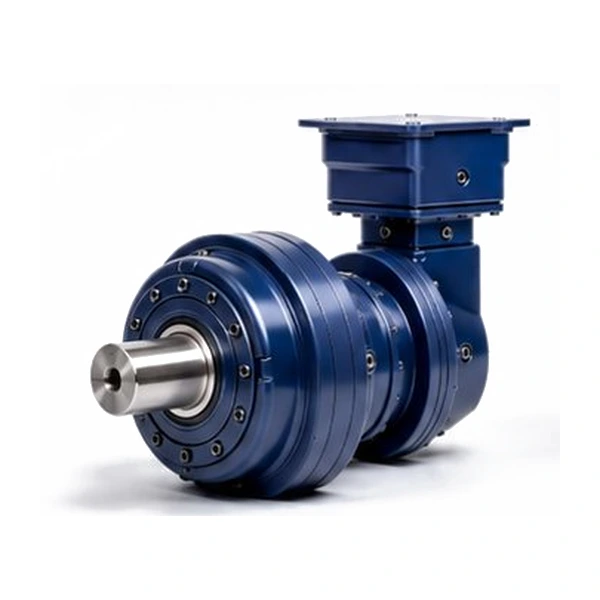
Korea Ever-Power Planetengetriebe-Produktlinien für Baggeranwendungen

Planetengetriebe für Kettenantrieb bei Baggern – Häufig gestellte Fragen
Korea Ever-Power bietet Planetengetriebe für Kettenantriebe von Baggern mit Drehmomenten von 5.000 bis 140.000 Nm – von Minibaggern bis hin zu Bergbaumaschinen. Geben Sie einfach Ihr Maschinenmodell, das Betriebsgewicht und die aktuelle OEM-Teilenummer an, und wir erstellen Ihnen kostenlos eine passende Empfehlung.
Herausgeber: Cxm