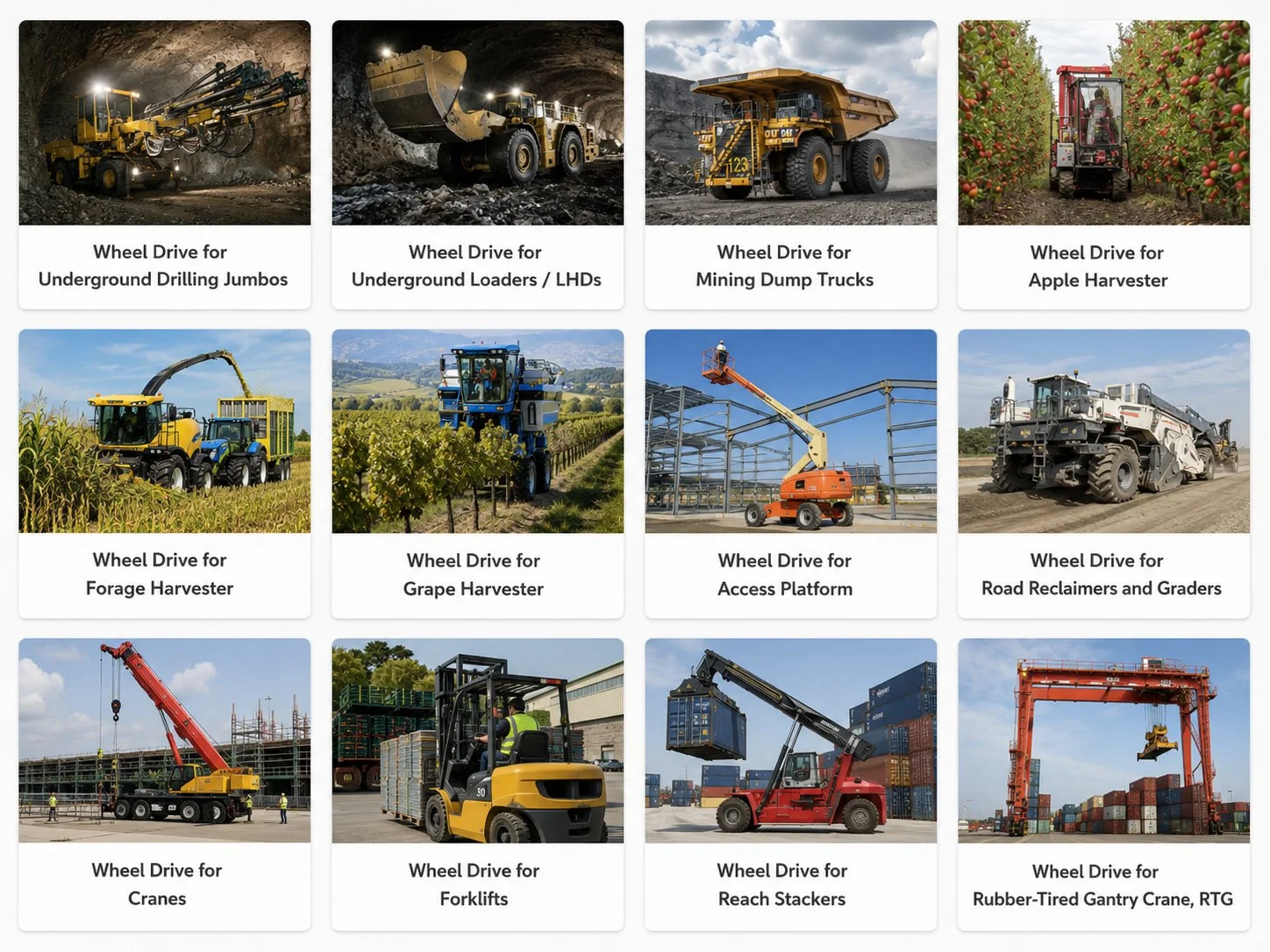
The V-Cycle — The Most Demanding Repetitive Duty in Mobile Equipment
The wheel loader V-cycle defines the Planetengetriebe mit Radantrieb duty like no other application. In a typical 25 to 35-second cycle, the machine: (1) drives forward into the material pile at 5 to 10 km/h under full throttle — the bucket penetrates the pile and the wheels push the 15 to 40-tonne machine against the material resistance; (2) fills the bucket (2 to 5 seconds of near-stall thrust); (3) reverses out of the pile at 8 to 12 km/h; (4) turns 60 to 120 degrees toward the dump target; (5) drives forward to the truck or hopper at 10 to 15 km/h; (6) dumps the bucket; (7) reverses and turns back toward the pile. This sequence repeats 200 to 400 times per 8-hour shift — accumulating 1,600 to 3,200 direction changes per shift.
The torque profile during each cycle is extreme. During pile penetration (Phase 1), the wheel drive delivers maximum torque — often reaching the hydraulic relief pressure — for 3 to 8 seconds while the bucket digs into the material. The torque then reverses to full reverse (Phase 3) within 1 to 2 seconds as the operator shifts from forward to reverse. This forward-to-reverse transition produces a torque-reversal impact on the gear teeth that is 1.5 to 2.5 times the steady-state loading — because the gear mesh must traverse the backlash zone under full reversal load.
Over a 4,000-hour annual duty at 400 reversals per hour, the total reversal count reaches 1.6 million per year — far exceeding any other wheel drive application (the wheel dozer at 240,000 reversals per year is a distant second). This reversal-fatigue loading is the primary life-limiting factor on wheel loader planetary gearboxes — and the gear tooth root stress must be calculated for the reversal-impact case, not the steady-state case, when determining the minimum acceptable gear module and material grade.
The cycle time also drives the thermal profile. The wheel drive never reaches thermal equilibrium — it heats during the pile-penetration thrust (maximum torque, maximum heat generation), partially cools during the reverse and dump phases (moderate torque, reduced heat generation), and heats again at the next pile penetration. This thermal cycling — 400 heat-cool cycles per shift — produces thermal fatigue stress on the seal material and the housing gasket that standard steady-state thermal analysis does not capture. The seal material must be rated for the peak cycle temperature (which can be 10 to 20 degrees C above the steady-state average) — not just the average operating temperature.
The V-cycle productivity is measured in tonnes loaded per hour — and this metric is directly affected by the wheel drive performance. A wheel drive that delivers smooth, rapid forward-reverse transitions (less than 1.5 seconds from full forward to full reverse) saves 0.5 to 1.0 seconds per cycle compared to a drive with slower transitions (2.0 to 3.0 seconds). At 400 cycles per shift, this saves 200 to 400 seconds per shift — equivalent to 6 to 12 additional loading cycles, or 15 to 60 additional tonnes loaded. Over a 250-day working year, the cumulative productivity advantage of a fast-transitioning wheel drive reaches 3,750 to 15,000 tonnes — a significant margin that justifies the premium specification.
The operator experience during the V-cycle is also affected by the wheel drive quality. A smooth, responsive drive that transitions cleanly from forward to reverse allows the operator to develop a consistent working rhythm — loading at a steady pace for the entire shift without fatigue from jerky, unpredictable drive behaviour. Operators working with smooth wheel drives report 15 to 25% less fatigue at the end of a shift compared to operators working with drives that exhibit cogging, hesitation, or harsh transitions — and reduced operator fatigue translates directly to fewer operational errors, fewer accidental impacts with the truck or hopper, and longer equipment life.
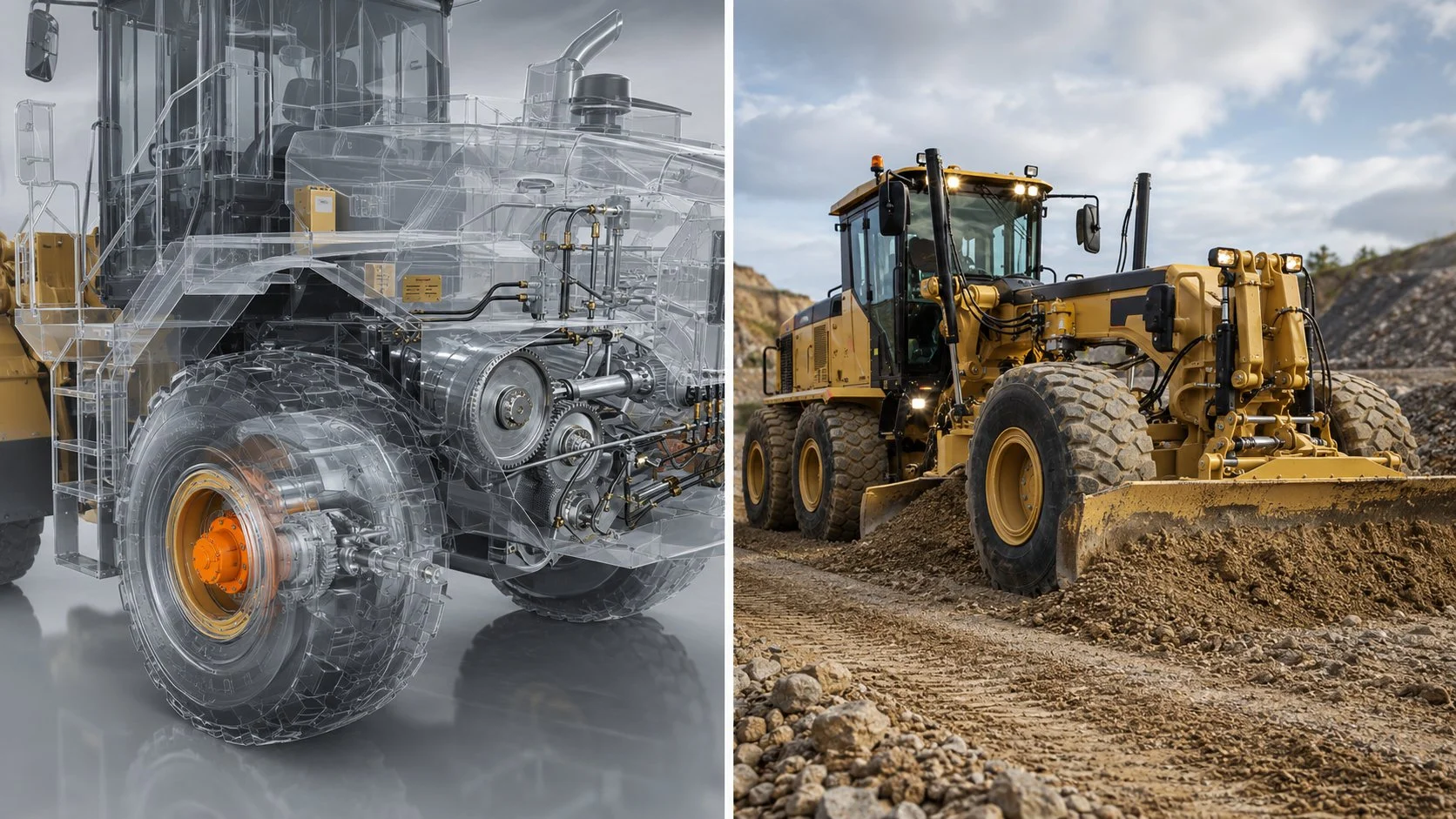
Bucket Penetration Thrust — Where the Wheel Drive Meets the Material Pile
When the bucket tip enters the material pile, the wheel drive must push the entire machine weight (15 to 40 tonnes) forward against the pile resistance — which varies from 30 to 60 kN (loose gravel) to 80 to 200 kN (compacted soil or wet sand). The bucket cutting edge and teeth penetrate the material; the lift cylinders begin to curl the bucket upward; and the wheel drive maintains forward thrust to fill the bucket. If the wheel drive cannot maintain sufficient thrust, the bucket skims across the pile surface without filling — reducing the payload per cycle by 20 to 40% and proportionally reducing the machine productivity.
The differential lock is engaged during pile penetration to prevent the lightly loaded wheel (the one on the slippery side of the pile approach) from spinning while the heavily loaded wheel pushes effectively. On loose material piles (sand, gravel, coal), the traction coefficient can vary from 0.3 to 0.7 across the pile face — and an open differential allows the low-traction wheel to spin freely, wasting 50% of the available drive power. A locked differential forces both wheels to turn at the same speed — distributing the thrust equally regardless of the traction variation. The wheel drive must accommodate differential-lock engagement under full torque without producing a shock that jerks the machine or damages the driveline.
Der Planetengetriebe mit Radantrieb on a wheel loader must also interface with a powershift or hydrostatic transmission that provides the forward-reverse gear changes within the V-cycle. Powershift transmissions change gears under load (without releasing the torque) — and the gear-change shock is transmitted through the planetary gearbox to the wheels. Each gear change produces a torque transient of ±20 to 40% of the running torque — adding to the reversal-induced fatigue loading. The gearbox must withstand both the reversal impacts and the powershift transients simultaneously — a combined loading case that is unique to powershift-equipped wheel loaders.
The material type affects the wheel drive duty intensity. Loading quarry rock (15 to 20 kN/m3 bucket resistance) generates 40 to 60% higher penetration thrust than loading sand (8 to 12 kN/m3) or coal (5 to 8 kN/m3). A wheel loader that is rated for sand loading at 400 cycles per shift may be limited to 250 cycles per shift on quarry rock — not because the bucket is smaller but because the wheel drive and driveline fatigue budget is consumed faster at the higher thrust loading. The wheel drive specification should be matched to the hardest material the loader will regularly handle — not the average or the most common material — because a single month of quarry-rock loading at excessive cycle rates can consume the fatigue margin that was intended for a full year of sand loading.
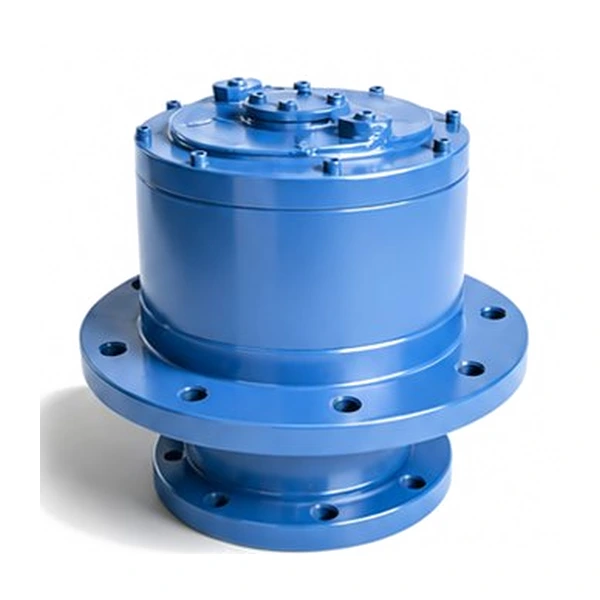
Three Failure Modes Specific to Wheel Loader Drives
Each forward-reverse direction change produces a torque-reversal impact at 1.5 to 2.5 times the steady-state tooth loading. At 1.6 million reversals per year, the cumulative impact-fatigue damage on the gear tooth root can initiate micro-cracks within 4,000 to 8,000 hours on standard industrial gears — even if the steady-state torque is well within the gear rating. The micro-cracks propagate along the tooth root radius and eventually cause tooth breakage — a catastrophic failure that immobilises the machine and requires complete gearbox replacement (USD 5,000 to 20,000 for the gearbox plus USD 2,000 to 5,000 in downtime). The fatigue-crack initiation site is almost always at the tooth root fillet radius — the geometric stress concentration where the bending stress from the tooth load reaches its maximum value. A larger fillet radius (achieved through protuberance tooling or grinding) reduces the stress concentration factor by 15 to 25% — extending the reversal-fatigue life by 40 to 80%. This geometric optimization is standard on wheel loader gear specifications but is often omitted on general-purpose industrial gears — which is why using industrial-catalogue gearboxes on wheel loaders invariably results in premature tooth-root failure.
The V-cycle thermal pattern (heat during pile thrust, cool during reverse and dump) produces 400 thermal cycles per shift — each swinging the seal temperature by 10 to 20 degrees C. Over 1,000 operating hours, the total thermal cycle count reaches approximately 50,000 — and the repeated expansion and contraction of the seal material produces thermal fatigue cracking at the seal lip contact zone. Standard NBR seals develop thermal-fatigue micro-cracks at 3,000 to 5,000 hours on loaders — significantly earlier than the 6,000 to 8,000 hours achieved on steady-state machines at the same average temperature. FKM seals with superior thermal-fatigue resistance extend this to 5,000 to 8,000 hours.
When the differential lock is engaged while one wheel is spinning (common during pile approach on loose material), the lock forces the spinning wheel to match the speed of the gripping wheel — producing a sudden torque spike of 2 to 4 times the running torque through the half-shaft and output bearing on the previously spinning side. Repeated differential-lock engagement under these conditions (50 to 200 times per shift on loose-material loading duty) produces torsional fatigue in the half-shaft and impact loading on the output bearing that can initiate failure within 2,000 to 4,000 hours. Limited-slip differentials (which apply locking torque progressively rather than instantaneously) reduce the engagement shock by 60 to 80% — extending the half-shaft and bearing life proportionally.
Application Spectrum — From Compact Skid-Steer to 75-Tonne Quarry Loader
Wheel loaders range from 3-tonne compact machines (used in landscaping, agriculture, and municipal work) to 75-tonne quarry and mining loaders (used for blasting-face loading and large stockpile management). The wheel drive torque range spans from 3,000 Nm (compact) to 60,000+ Nm (mining) — a 20:1 range that is covered by scaling the same planetary gearbox architecture through different gear module sizes, bearing dimensions, and housing diameters.
The duty intensity also scales with machine size. A 20-tonne production loader on quarry face loading can cycle at 35 to 45-second intervals for 8 to 10 hours per day — the most intense V-cycle duty. A 5-tonne compact loader on mixed municipal work (loading, snow clearing, sweeping) cycles much less frequently (50 to 100 cycles per day) with lower peak torques. The wheel drive specification must match the actual application duty — not just the machine size — because a 20-tonne loader on low-intensity stockpile shuffling uses its gearbox very differently from a 20-tonne loader on high-intensity quarry production loading, even though the machines are mechanically identical.
Häufig gestellte Fragen
Korea Ever-Power provides wheel loader drives from 8,000 to 60,000 Nm with 1.6M reversal/year fatigue rating, powershift compatibility, and differential-lock-rated output.
Herausgeber: Cxm