Planetary winch drive gearboxes for forestry skidder winches, yarder drums, log haulers and cable logging systems. IP67, shock-rated, 1,000-50,000 Nm. Free sizing. –>
Winch Drive Series — Forestry & Land-Based Industrial Equipment
Winch Drive Planetary Gearbox for Forestry & Logging Winch
Cable logging systems, skidder winches, and yarder drums operate in the most abrasive and shock-loaded environment of any land-based winch application — pulling logs weighing 5 to 30 tonnes through dense forest terrain over distances of 300 to 1,500 metres, on gradients up to 60 degrees, with stumps, rocks, and terrain obstacles generating unpredictable shock loads at every pull. The planetary winch drive gearbox at the core of these systems must absorb these shocks without tooth fracture, repel mud, bark, and wood chip contamination from every seal interface, and continue operating reliably through multi-shift harvesting schedules in conditions where gearbox servicing means shutting down production in remote terrain far from any workshop facility.
IP67 forestry-grade sealing
3.5x shock load rating
-40°C to +55°C operating range
Forestry winch systems are among the most demanding mechanical applications on land — combining the high sustained pull forces of mining haulage with the shock loading of construction equipment and the contamination exposure of agricultural machinery, all in remote terrain where equipment failure has severe operational and safety consequences. A forest harvesting cable system that fails mid-pull on a steep slope can cause uncontrolled log movement that endangers the entire harvesting crew. Korea Ever-Power supplies planetary winch drive gearboxes for the complete range of forestry and logging winch applications — from compact skidder arch winches through the large yarder drums used in high-lead cable logging — with shock ratings, forestry-grade contamination sealing, and wide temperature range operation as the baseline specification for every unit supplied to forestry service.
Forestry Winch Applications: From Skidder to Yarder
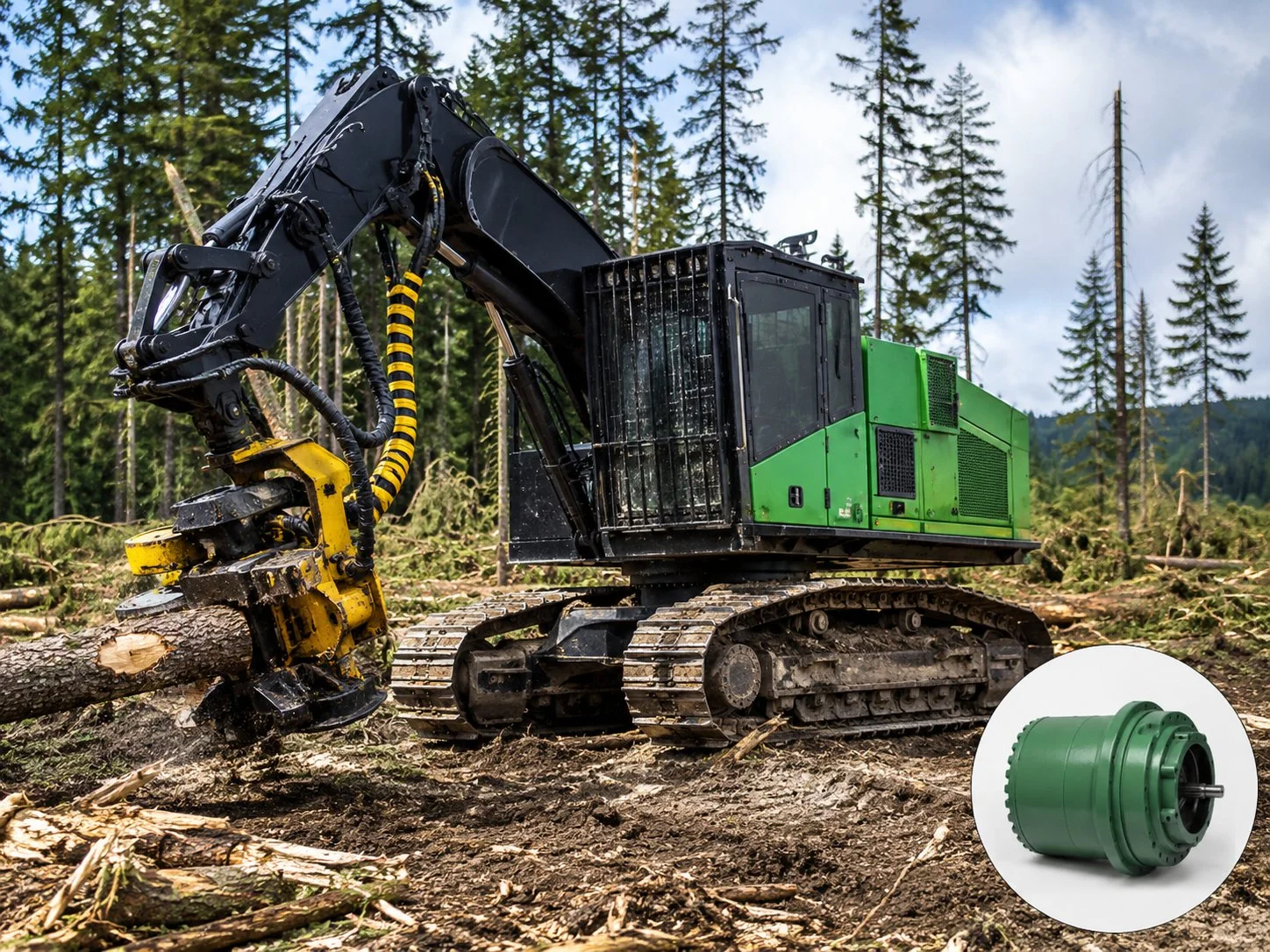
Skidder and Forwarder Winches (1,000–8,000 Nm): Cable skidders and forwarders are the primary ground-based log extraction vehicles in most commercial forestry operations. The skidder uses a rear-mounted arch winch to pull logs from the felling site to the forest road, dragging them across the ground over distances of 50 to 300 metres. The winch drum pull force is 50 to 150 kN and the cable speed is 20 to 60 m/min. The gearbox is mounted directly behind the rear axle on a vehicle that pitches, rolls, and articulates through terrain angles of up to 35 degrees, exposing the gearbox to continuous mud spray from the rear tyres and intermittent rock and stump impacts on its lower housing surface. IP67 sealing and a robust lower housing wall thickness — minimum 12 mm cast iron — are mandatory specifications for skidder winch gearboxes. Line pull shock events during log snag and release cycles generate instantaneous torque spikes of 2.5 to 3.5 times the rated pull, requiring gear teeth ground to DIN 6 accuracy with a compressive residual stress surface layer from the carburising and shot-peening process.
Cable Yarder Drums (5,000–50,000 Nm): Cable yarder systems are used in steep-slope forestry where ground-based skidders cannot operate — gradients above 35 to 40 degrees require aerial cable yarding where logs are lifted clear of the ground and transported to the landing on a suspended cable. The yarder sits at the landing (a cleared area at the top or bottom of the logging slope) and controls the mainline and haulback cables that pull the carriage carrying the logs. Yarder drum torque requirements range from 5,000 Nm (small tower yarder, 200-metre pull distance) to 50,000 Nm (large running skyline system, 1,500-metre pull distance with 30-tonne turn weight). The yarder drum gearbox operates at near-continuous duty during the harvesting shift — each pull cycle takes 3 to 8 minutes and the yarder makes 15 to 25 pull cycles per hour, accumulating 120 to 200 cycles per 8-hour shift. This high-duty-cycle operation requires oil change intervals optimised for forestry drum duty rather than the standard industrial intervals used in lower-utilisation applications.
Feller Buncher and Harvester Winches (2,000–12,000 Nm): Tracked feller bunchers use a front-mounted boom with a disc saw or shear head that cuts and bunches trees for subsequent skidding. Some feller buncher designs incorporate a pull-back winch on the boom that prevents the cut tree from falling in an uncontrolled direction on steep terrain — a safety critical application where the winch must hold the tree during the cutting sequence and control its fall direction. The pull-back winch operates in short, high-frequency cycles — 20 to 40 seconds per tree — and the gearbox is mounted on the rotating boom that swings through 180 degrees during each cycle, requiring equal lubrication performance at all boom angles. Korea Ever-Power planetary gearboxes for feller buncher boom winch duty include a 360-degree oil distribution system that maintains adequate oil film at planet bearings regardless of boom angle.
Shock Load Engineering: Why Forestry Winches Need 3.5x Rated Torque Capacity

The shock loading environment of forestry cable logging is fundamentally different from any other winch application. In marine winch applications, shock loads arise from wave action and vessel motion — predictable in frequency and character, and usually limited to 2 to 3 times rated load for brief durations. In forestry cable logging, shock loads arise from log snag events — a log being pulled along the ground catches on a stump or root system and decelerates from full cable speed to zero velocity within the time it takes the cable to go taut. The energy stored in the cable at full pull speed is released as an impulsive tensile load that can reach 4 to 5 times the rated winch line pull in a single millisecond-duration spike.
Gear Tooth Root Bending Strength
The impulsive shock load in a log snag event loads the gear tooth root in bending at a strain rate orders of magnitude higher than in standard rated-torque operation. At high strain rates, the apparent yield strength of steel increases — but so does the brittleness of the heat-affected zone at the tooth root if the carburising and tempering process leaves a carbide network rather than a fine martensitic structure. Korea Ever-Power forestry winch gearboxes specify a low-temperature tempering step at 160 to 180°C after quenching, dissolving any carbide network while maintaining surface hardness at 60 to 62 HRC, maximising impact resistance at the tooth root.
Shot Peening for Compressive Residual Stress
After heat treatment and grinding, all forestry winch gearbox planet and sun gears undergo shot peening on the tooth root fillet area — the highest-stress location during bending overload. Shot peening introduces compressive residual stresses of 400 to 600 MPa in the surface layer, which must be overcome by any tensile bending stress before crack initiation can begin. This compressive pre-stress layer increases the allowable tooth root bending fatigue stress by 20 to 35% compared to unpeened gears, directly extending the fatigue life under repeated shock load cycles accumulated over a logging season.
Torque Limiting Input Coupling
For yarder drum and large skidder applications where the snag shock torque can exceed 4 times rated, Korea Ever-Power recommends a shear-element torque limiting coupling between the hydraulic motor and gearbox input shaft. The shear coupling is sized to transmit 3.0 times rated torque continuously and to fracture the shear element at 3.5 times rated torque, protecting the gear set from the 4 to 5 times rated impulsive loads that would otherwise occur during severe snag events. The shear element is a replaceable component that can be exchanged in the field in less than 30 minutes without special tools.
Accumulated Shock Cycle Rating
Korea Ever-Power forestry winch gearboxes are rated for a minimum of 50,000 shock cycles at 3.5 times rated torque before scheduled gear tooth fatigue inspection — equivalent to approximately three logging seasons of 200 operating days each at the upper bound of the shock cycle frequency observed in high-production cable logging operations. This rating is based on gear tooth fatigue calculations using the shot-peened tooth root bending strength and verified by accelerated fatigue testing on a dedicated shock load test bench.
Korea Ever-Power Forestry Winch Drive Selection Guide

| Modell | Ausgangsdrehmoment | Phasen | Verhältnisbereich | Forestry Application | Shock Rating | Seal |
|---|---|---|---|---|---|---|
| ZL55 | 500 – 2,000 Nm | 1–5 | 3.7 – 3,497 | Skidder arch, small boom winch | 3.0x rated | IP67 FKM |
| ZR75 | 1,500 – 6,000 Nm | 2–5 | 5.1 – 4,884 | Feller buncher, forwarder winch | 3.0x rated | IP67 FKM |
| 407AW | 3,000 – 10,000 Nm | 2–3 | 50 – 1,200 | Small tower yarder, swing yarder | 3.5x rated | IP67 FKM |
| 414W3 | 8,000 – 22,000 Nm | 3 | 100 – 2,500 | Medium tower yarder, high-lead system | 3.5x rated | IP67 FKM |
| 417W3 | 15,000 – 35,000 Nm | 3 | 100 – 2,500 | Large tower yarder, running skyline | 3.5x rated | IP67 FKM |
| 419W3 | 25,000 – 50,000 Nm | 3–4 | 200 – 5,000 | Heavy skyline, mobile grapple yarder | 3.5x rated | IP67 FKM |
Temperature Range and Environmental Sealing for Forest Operations
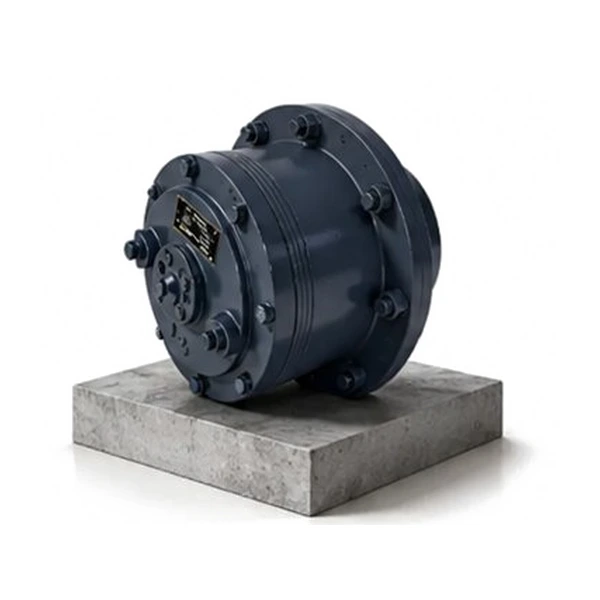
Hydraulic and Electric Drive Integration for Forestry Winch Systems
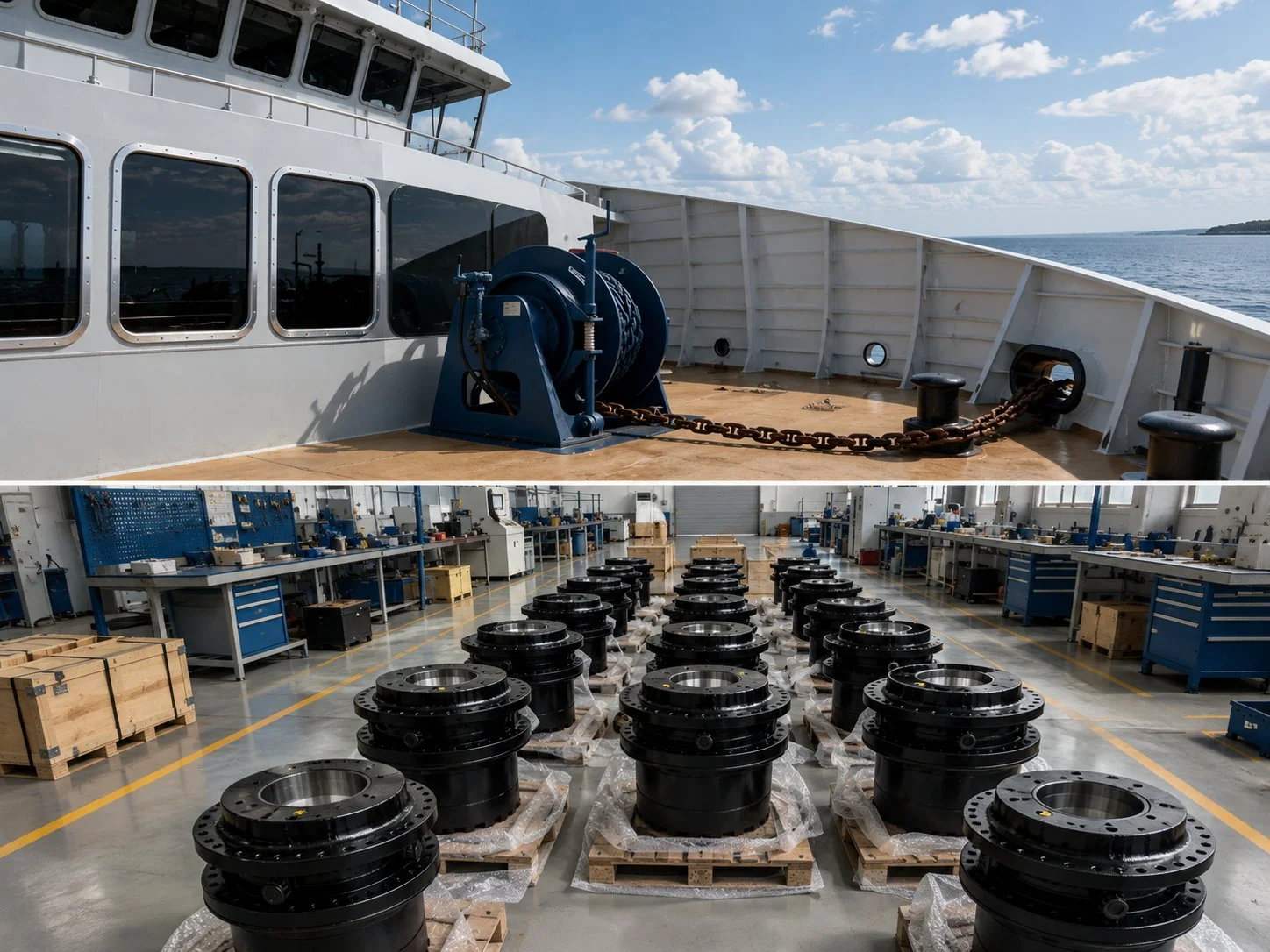
Hydraulic Drive (Standard for Mobile Forestry Equipment): The vast majority of skidders, forwarders, and mobile yarders use diesel-hydraulic drive — the vehicle diesel engine powers a hydraulic pump that feeds the winch hydraulic motor. Variable-displacement piston motors provide the combination of high starting torque for initial log engagement and adequate free-spool speed for cable retrieval without changing the gear ratio. SAE B and SAE C two-bolt flange connections are standard for skidder and forwarder winch motors (25 to 160 cc/rev displacement). Large yarder drums use SAE D and SAE E four-bolt flanges for the 250 to 500 cc/rev motors that provide the sustained power needed for 1,500-metre cable runs. Korea Ever-Power forestry winch gearboxes are available with all SAE flange sizes and include a separate case drain isolation port to prevent cross-contamination of hydraulic and gear oil at the motor interface.
Electric Drive (Growing for Fixed Yarder Installations): Tower yarders at permanent logging landings — particularly in European and Scandinavian forestry where land access and environmental regulations favour fixed-infrastructure cable systems — are increasingly electric-powered, drawing power from grid connection or from diesel-generator sets. Electric yarder drives provide more precise cable speed control, particularly important for carriage deceleration during landing approach, and recover braking energy into the electrical system during controlled log lowering. Korea Ever-Power planetary winch drive gearboxes for electric yarder applications include IEC B5 input flanges in frames IEC 160 to IEC 280 for the 37 to 160 kW motors used in tower yarder service, with integrated encoder mounting for speed feedback to the VFD controller.
Load Sensing Hydraulic Control: Modern forestry winch systems use load-sensing hydraulic circuits where the pump displacement varies continuously with the actual load demand — reducing fuel consumption by 20 to 35% compared to fixed-displacement pump systems. The winch drive gearbox in a load-sensing system experiences a wider range of input torque and speed combinations than in a fixed-displacement system, as the motor operates across its full speed range from stall (maximum torque, zero speed) to free-spool (minimum torque, maximum speed) within each pull cycle. Korea Ever-Power forestry gearbox ratings account for this variable-condition operation by specifying the continuous rating at maximum sustained pull speed rather than at the stall condition, where thermal loading rather than gear strength governs the safe operating limit.
Remote Serviceability: Designed for the Forest, Not the Workshop
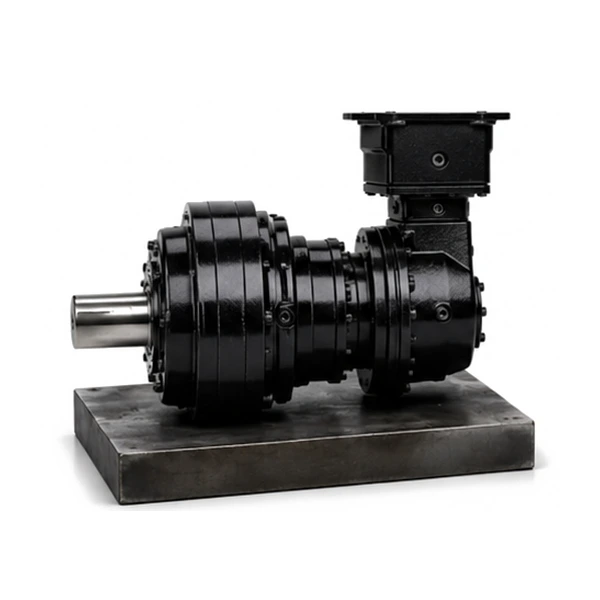
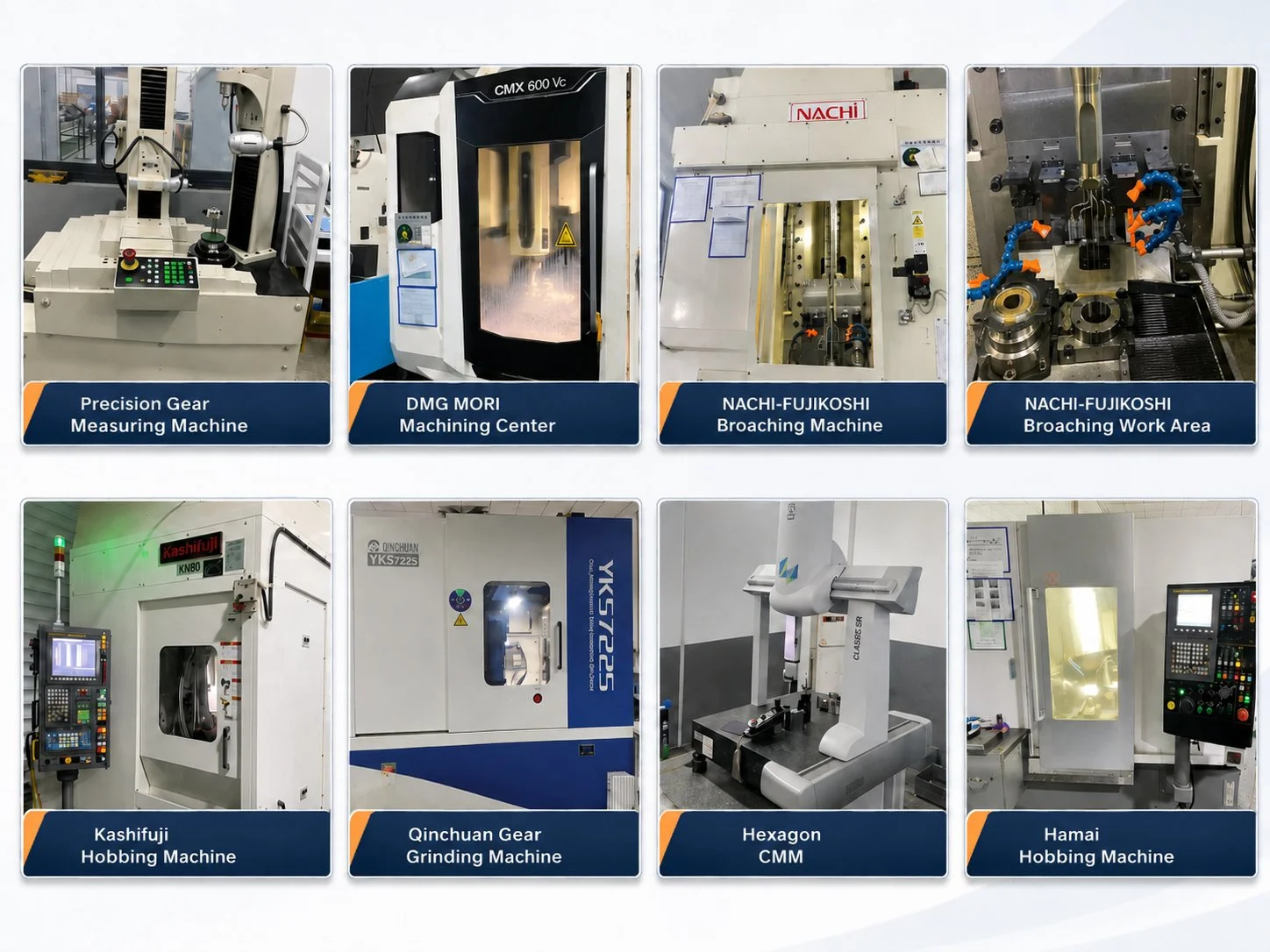
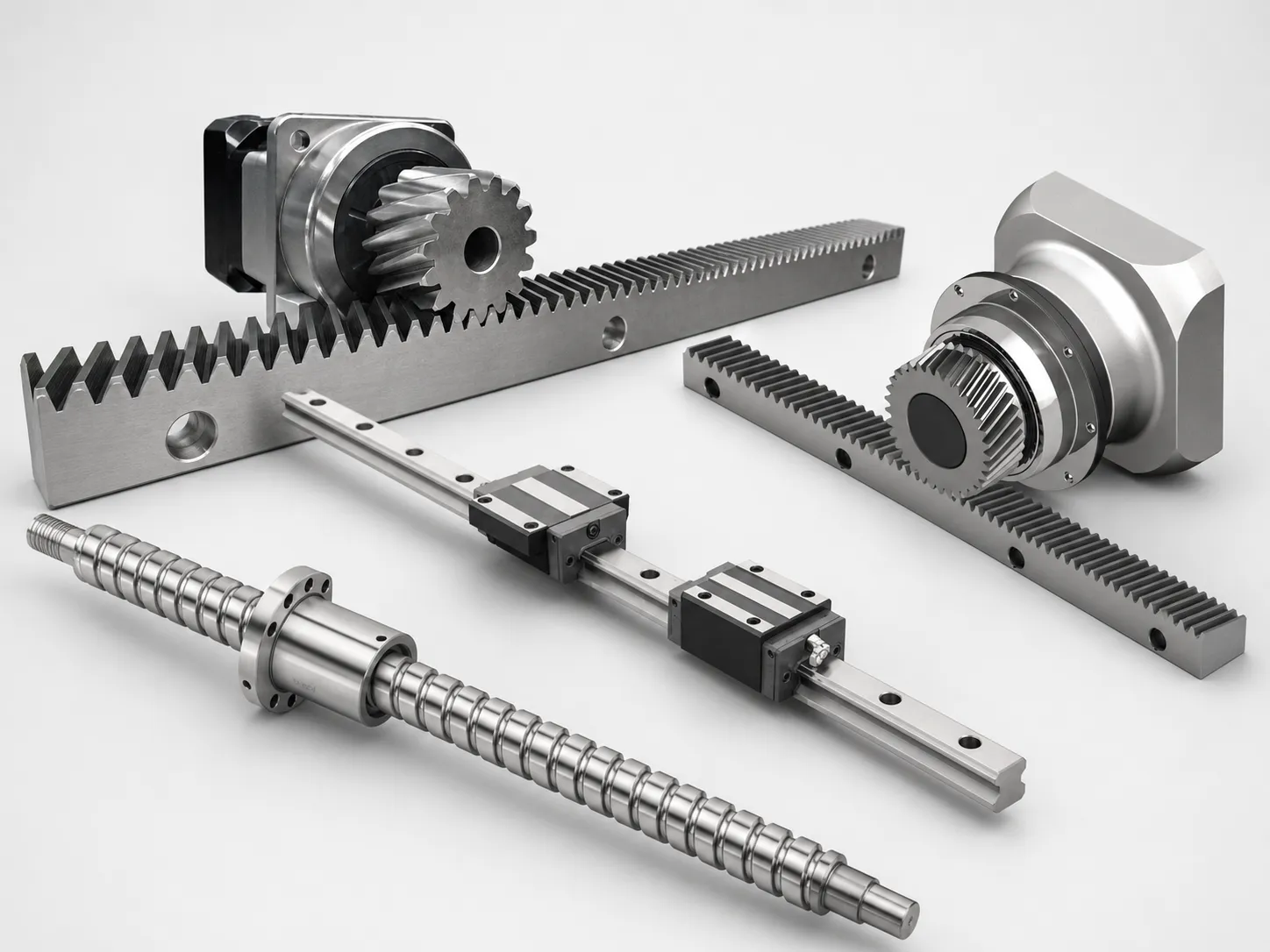
Testing and Manufacturing Quality for Forestry Service
Common Forestry Winch Gearbox Failures and Prevention
| Fehlermodus | Grundursache | Detection | Prevention |
|---|---|---|---|
| Planet gear tooth fracture — snag | Log snag shock exceeding 4x rated — no torque limiting coupling fitted; non-shot-peened tooth root | Sudden loss of drum drive; metallic grinding noise; large fragments at drain plug | Fit shear element torque limiter rated at 3.5x; specify shot-peened gears; never exceed rated line pull |
| Lip seal failure — silica ingress | Standard rubber lip seal worn by silica-bearing forest mud on output shaft — groove worn in shaft under seal lip | Oil film on output shaft; silica particles in oil sample at service; accelerating oil loss | Specify FKM floating face cassette seal on all forestry units; inspect seal outer face at every 250 h service |
| Cold-start bearing damage | Mineral oil too viscous at -30°C to reach planet bearings during first 2 minutes of operation — bearing damage from insufficient lubrication film | Elevated metallic debris in oil after winter campaigns; bearing noise at partial load | Specify PAO synthetic oil with pour point below -50°C; allow 3-minute no-load warm-up before full pull in temperatures below -20°C |
| Overextended oil change — wear | High-cycle yarder operation generating additive depletion faster than standard 1,000 h interval — EP additive breakdown allowing micro-pitting | Fine metallic particles in oil sample; gear noise at pull speed increasing over season | Change oil at 500 h in yarder drum applications; use oil analysis to verify additive levels rather than relying on fixed intervals |
| Brake drag — log suspended | SAHR brake partially engaging during haul due to low hydraulic release pressure — hydraulic leak or pump pressure falling below the brake release threshold | Gearbox housing heat during haul; burning smell from brake area; reduced haul speed at rated pressure | Verify hydraulic release pressure at brake port meets minimum specification; inspect hydraulic circuit for leaks at each 500 h service |
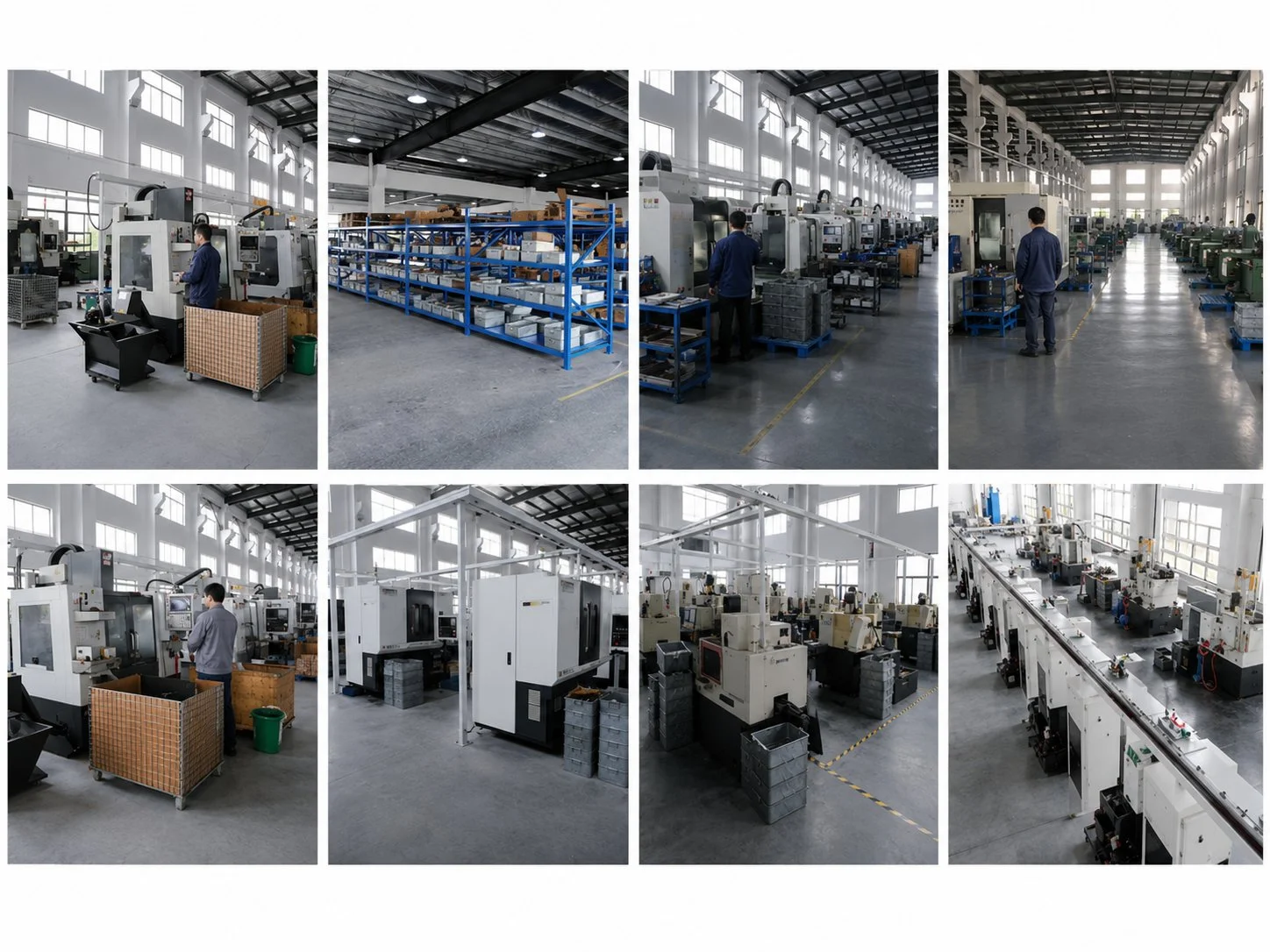
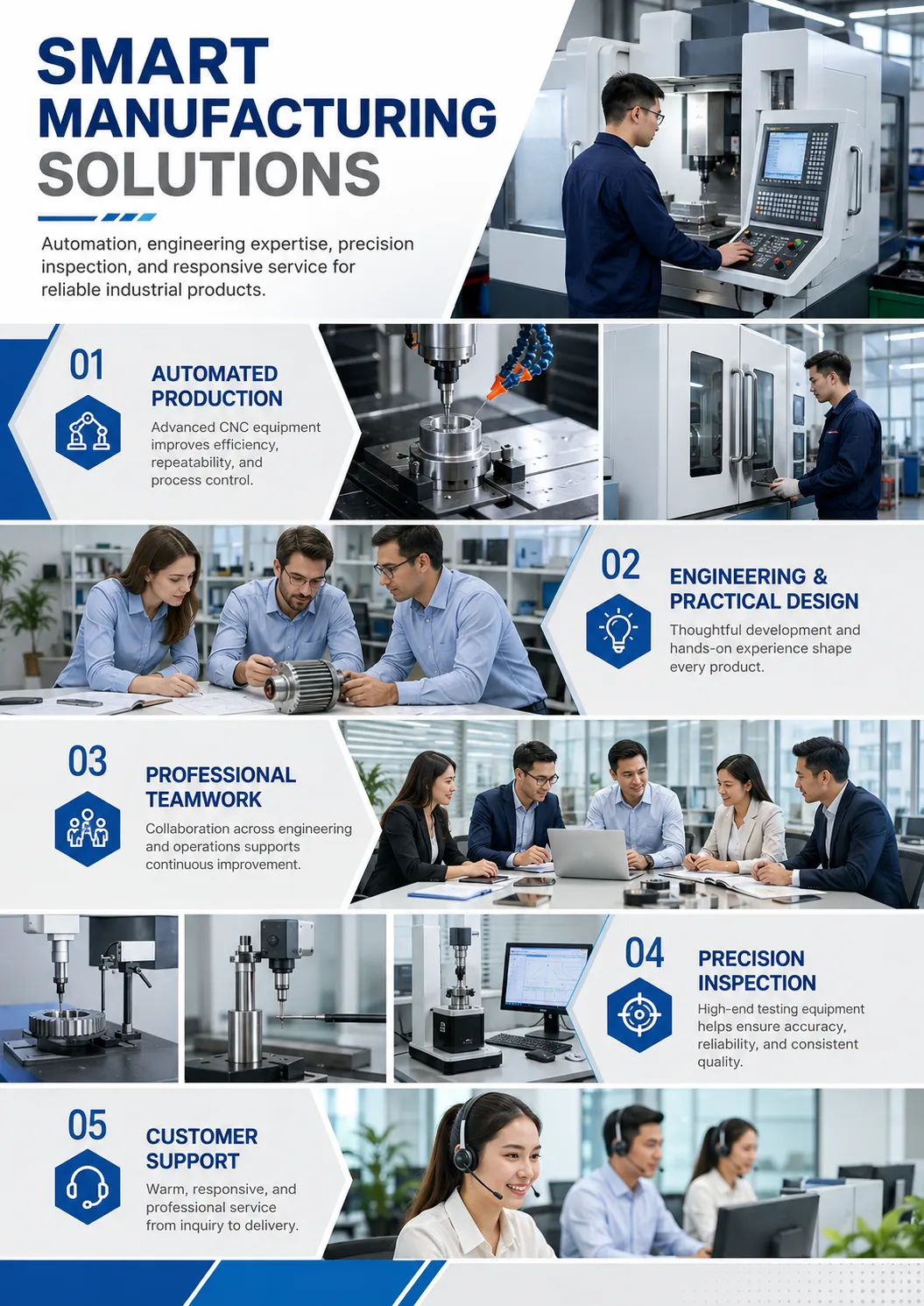
Why Forestry Equipment OEMs and Logging Contractors Choose Korea Ever-Power
Source Your Forestry Winch Drive Planetary Gearbox
Whether you are designing a new skidder, yarder, or cable logging system, sourcing replacement winch drive gearboxes for your logging fleet, or specifying drives for an electric yarder installation — Korea Ever-Power delivers shock-rated, forestry-grade planetary winch drive gearboxes built for the realities of commercial logging. Send us your pull force, cable distance, terrain gradient, motor type, and climate zone for a free application sizing, shock load rating calculation, and oil grade recommendation within 48 hours.
Edit by Cxm