611L2, L3 Reductor de caja de engranajes de transmisión de rueda planetaria
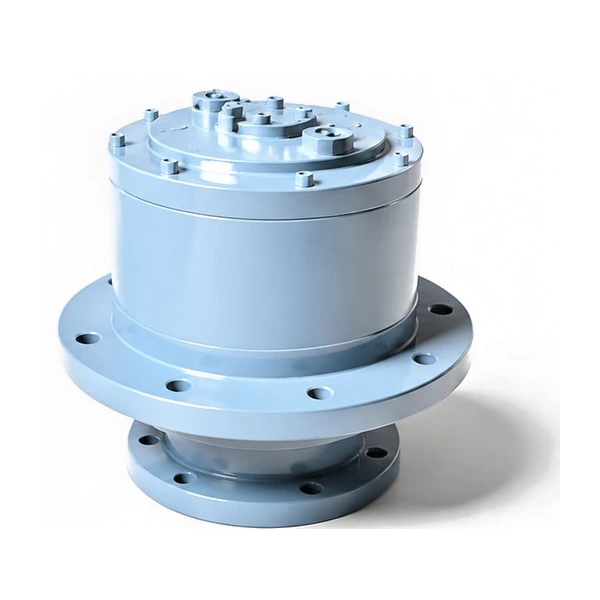
611L2 / L3 — 36,000 Nm Within a Six-Point Ratio Window
The EP-611 breaks the pattern of every other model in the planetary wheel drive gearbox catalogue. Instead of offering a wide ratio spread to accommodate many machine types, it concentrates all available ratios within a 41-to-47 band — a total spread of just 14.6%. This is not a limitation. It is a design decision that produces measurable advantages for the specific machines the 611 serves.
When a gearbox family spans a wide ratio range (like the 610 at 20-111), some ratios inevitably operate further from the gear set design centre than others — meaning tooth contact patterns, load distributions, and thermal behaviours differ across the range. The 611 eliminates this variance. Every ratio from 41 to 47 produces nearly identical tooth stress, bearing load distribution, and oil flow behaviour, because the internal gear geometry barely changes across the window. The result is predictable, repeatable performance regardless of which specific ratio is installed.
300-800 Nm Brake
290 kg
3,000 RPM
-25 to +85 deg C
—
47

611L2 / L3 Heavy-Duty Wheel Drive — Technical Parameters
| Par de salida (máximo nominal) | 36,000 Nm |
| Gear ratio range | 41 to 47 (narrow-band optimised) |
| Configuration options | Multi-stage planetary (L2 / L3) |
| Velocidad máxima de entrada | 3,000 rpm |
| Eficiencia mecánica | ≥ 94% |
| freno de estacionamiento | 300 - 800 Nm, spring-applied, hydraulic release |
| Remolque de emergencia | Desembrague manual (desconexión de rueda libre) |
| Montaje de ruedas | Brida giratoria, círculo de pernos SAE/ISO |
| Peso seco | Approx. 290 kg |
| Lubricación | Salpicadura de baño de aceite, aceite para engranajes API GL-5 EP |
| Temperatura de funcionamiento | -25 to +85 deg C (Viton seals available) |
| Material de engranajes | Acero aleado carburizado, rectificado CNC, HRC 58-62 |
The Narrow-Band Advantage — Why 41-47 Outperforms a Wider Range at This Torque
Consistent Tooth Contact Pattern
In a wide-range gearbox, the tooth contact pattern changes significantly between the lowest and highest ratio because different sun/planet/ring gear combinations are used. In the 611, the gear geometry variation from ratio 41 to ratio 47 is so small that the contact pattern — verified by marking compound during factory testing — is virtually identical across all variants. This means every 611 unit leaving the factory performs at the same noise level, the same efficiency, and the same tooth stress distribution.
Optimised Bearing Preload
Output bearing preload is set during factory assembly to match the expected load profile. In wide-range gearboxes, the bearing preload is necessarily a compromise between the light loads at low ratios and the heavy loads at high ratios. The 611 bearing preload is optimised for a single narrow load window (the loads at ratios 41-47), which means the bearings operate closer to their ideal preload condition at every ratio point, directly extending the L10 fatigue life.
Predictable Thermal Behaviour
The thermal power dissipation of a planetary gearbox depends on the input speed and the efficiency at that ratio. With all 611 ratios within 14.6% of each other, the thermal dissipation varies by less than 15% across the entire range — compared to 200-300% variation in a wide-range model. This allows precise oil cooler sizing and sump temperature prediction without the safety margins that wide-range drives demand.
Wide-range gearboxes serve many applications adequately. Narrow-band gearboxes serve one application class exceptionally. The 611 is designed for engineers who know exactly what speed and torque their machine needs and want the gearbox to deliver at its absolute best — not its statistical average.
Motor Displacement Sensitivity — What Each Ratio Point Changes in Your Hydraulic System
Within the 41-47 window, each ratio step corresponds to a specific motor displacement change for the same ground speed target. The differences are small in absolute terms but meaningful in hydraulic system design where pump flow, motor torque, and system pressure must balance precisely.
| Relación | Output Speed (rpm) | Ground Speed (750 mm tyre) | Motor for 15 km/h target | System Pressure at 36,000 Nm |
|---|---|---|---|---|
| 41 | 61.0 | 17.2 km/h | 58 cc/rev at 2,160 rpm | 302 bar |
| 43 | 58.1 | 16.4 km/h | 55 cc/rev at 2,268 rpm | 288 bar |
| 44 | 56.8 | 16.0 km/h | 54 cc/rev at 2,317 rpm | 282 bar |
| 45 | 55.6 | 15.7 km/h | 52 cc/rev at 2,369 rpm | 276 bar |
| 47 | 53.2 | 15.0 km/h | 50 cc/rev at 2,480 rpm | 264 bar |
Reference: 2,500 rpm maximum motor speed, 125 L/min pump flow, 750 mm tyre rolling radius. System pressure = motor input torque / (motor displacement x 0.01 / (2 x 3.14)). The 38-bar pressure difference between ratio 41 and ratio 47 is the engineering trade-off: higher ratio = lower system pressure for the same wheel torque = longer pump and motor service life at the cost of slightly lower maximum ground speed.
36,000 Nm Wheel Drive — Machines That Need One Ratio Done Perfectly

Ultra-Heavy Wheel Loaders (25-35 Tonne)
Production loaders with 5-8 m³ buckets filling 70-100 tonne haul trucks. These machines operate at a fixed cycle: penetrate stockpile, fill, reverse, drive to truck, dump, return. The optimal ground speed for this cycle is 12-17 km/h — exactly the range that ratios 41-47 produce at the typical motor speeds used in this loader class. There is no benefit to a wider ratio range because the machine never operates outside this speed envelope during production loading.
Concrete Pump Trucks (Heavy-Chassis)
Large truck-mounted concrete pumps on 8x4 or 10x4 chassis with GVWs of 40-50 tonnes. These vehicles drive to the construction site at moderate speed (15-18 km/h on access roads) and then hold position on the outriggers while pumping. The 611 at ratio 43-45 provides the travel speed, and the 800 Nm brake holds the 50-tonne vehicle on any grade during boom slewing operations. The narrow ratio band means the hydraulic system pressure at full tractive effort is predictable to within 20 bar across all 611 variants.
Airport Rescue and Firefighting Vehicles (ARFF)
ARFF vehicles in the 35-45 tonne class must accelerate to 80 km/h within strict ICAO response time limits on paved runways, then operate at low speed on unpaved overrun areas. The 611 at ratio 41 with a high-speed variable-displacement motor provides the unique combination of high top speed and 36,000 Nm of off-road traction that ARFF operations demand. The narrow ratio window ensures that the pressure and flow characteristics remain within the motor and pump certification limits across the entire fleet, simplifying ARFF vehicle type approval.
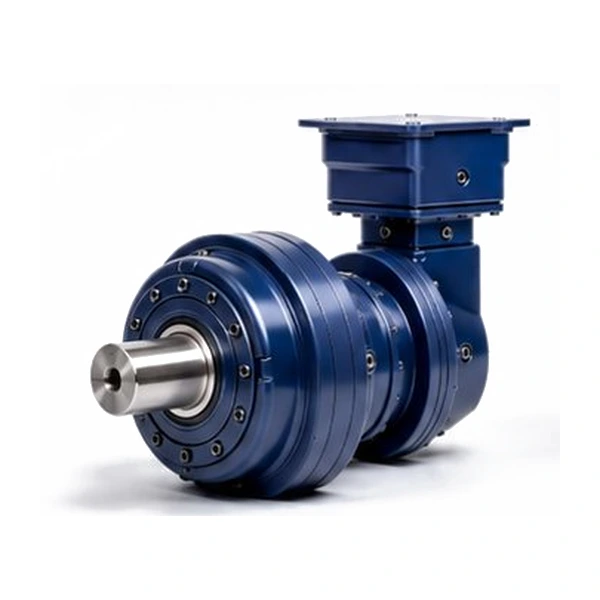
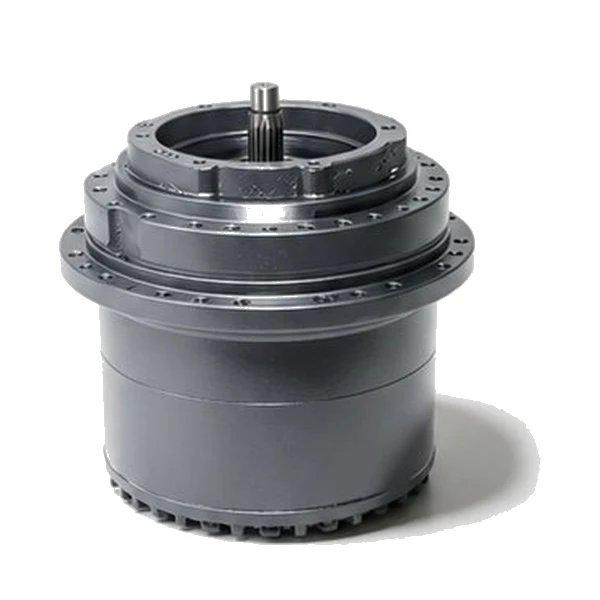
Adjacent Models in the Planetary Gearbox Range

Planetary Wheel Drive Gearbox — Narrow-Band Engineering FAQ
Informes de campo
28-tonne production loader, 611 ratio 44. The machine fills 80-tonne haul trucks from a gold-ore stockpile at 180 cycles per 10-hour shift. We ran the 611 alongside the outgoing European-brand drives for 6 months of parallel operation. Oil analysis, noise measurements, and sump temperatures were comparable at every data point. The 611 won the commercial evaluation because the per-unit price was 35% lower and the lead time was 5 weeks versus 14 for the European option. After 4,800 hours total fleet operation across 6 units, zero unscheduled replacements.
46-tonne concrete pump chassis, 611 ratio 43, 800 Nm brake. What convinced us was the narrow ratio band argument: we run a single hydraulic system design across three pump boom lengths (32 m, 38 m, 42 m) on the same chassis. With the 611, the system pressure at full tractive effort varies by less than 15 bar regardless of which boom is installed (the weight difference changes the load, not the ratio). This simplified our hydraulic certification from three separate tests to one. Mechanically faultless after 2,200 hours in the field.
ARFF rapid intervention vehicle, 38 tonnes GVW, 611 ratio 41. The vehicle meets the ICAO Category 9 response time requirement (1,000 metres in 180 seconds from standstill) comfortably. Off-road traction on grass overrun areas is excellent. The 4-star rating reflects our certification experience: the 611 product documentation did not include a fatigue analysis certificate in a format that our aviation regulator accepted directly — we had to commission a supplementary FEA report at our cost. For aviation applications where regulatory documentation is as important as mechanical performance, having a pre-packaged aviation certification document set would have saved us 8 weeks and significant engineering consultancy fees.
Información adicional
| Editor | Cxm |
|---|
Productos relacionados
-
Caja de cambios planetaria de tracción a las ruedas ZL24
-
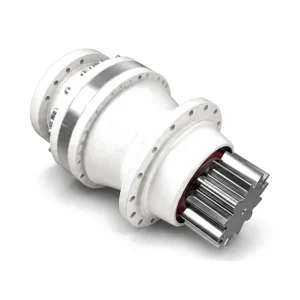
ZL02 Wheel Drive Planetary Gearbox
-
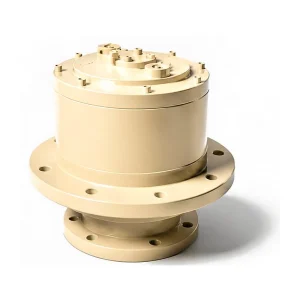
613L3 Planetary Wheel Drive Gearbox Reducer
-
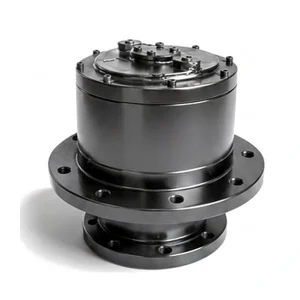
607L2, L3 Reductor de caja de engranajes de transmisión de rueda planetaria
-
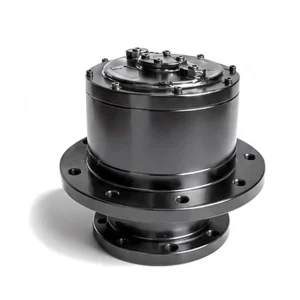
606L2, L3 Reductor de caja de engranajes de transmisión de rueda planetaria
-
Reductor de caja de engranajes de transmisión de rueda planetaria 605L2
-
Reductor de engranajes de transmisión planetaria 603L2B — 2 etapas
-

Caja de cambios de transmisión planetaria 601L1A — Una etapa