Wheel Drive Series — Port & Logistics Equipment
Wheel Drive Planetary Gearbox for Automated Guided Vehicles, AGVs
Automated guided vehicles in container terminals, high-bay warehouses, and automotive assembly plants operate without a human driver — which means the traction drive gearbox must deliver absolute positioning repeatability, zero-backlash torque transmission for encoder-based position control, and a maintenance-free service life measured in years rather than months across continuous 24-hour operation cycles.
The automation of horizontal transport in container terminals and large-scale warehousing has driven a fundamental rethink of what a traction drive gearbox must deliver. A human-driven forklift tolerates minor speed variation between its driven wheels because the operator can feel and compensate in real time. An automated guided vehicle has no such feedback loop — its position control system depends entirely on the mathematical relationship between motor encoder counts and wheel rotations, which means any backlash, slip, or ratio inconsistency in the planeettavaihteisto translates directly into positioning error accumulation over distance. Korea Ever-Power supplies planetary wheel drive gearboxes for the full AGV spectrum — from 500 kg payload warehouse AMRs using ZL01 units through 70-tonne payload port terminal AGVs using heavy EP-WD series drives — with low-backlash planetary stages, encoder-compatible motor interfaces, and IP67 protection as standard specifications.
AGV Categories and Their Traction Drive Requirements
The term “AGV” covers a wide range of automated vehicle types, each with distinct drive requirements. Understanding the differences between categories is the first step in matching the correct planetary drive specification to the application:
Warehouse AMRs and Light AGVs (payload 100 kg – 2,000 kg): Autonomous mobile robots and light automated guided vehicles in e-commerce fulfilment centres, pharmaceutical warehouses, and electronics manufacturing plants. These vehicles navigate autonomously using LIDAR, vision systems, or magnetic track guidance at speeds of 1.5 to 2.5 m/s. Drive wheel torque requirements are modest — 200 to 2,000 Nm per wheel — but positioning accuracy demands are high: typical waypoint repeatability of ±5 mm at speeds up to 1.5 m/s. The ZL01 series hub-mount planetary gearbox, with its ultra-compact envelope, ratios from 3.48:1 to 2,702:1, and direct servo motor flange compatibility, is the standard specification for this category. The zero-backlash planetary stage enables closed-loop position control without hunting or oscillation at waypoints.
Medium-Duty AGVs (payload 2,000 kg – 15,000 kg): Automated tugger trains, heavy pallet AGVs, and automated assembly line carriers in automotive and heavy manufacturing plants. These vehicles travel at speeds of 0.5 to 1.5 m/s over longer distances — autom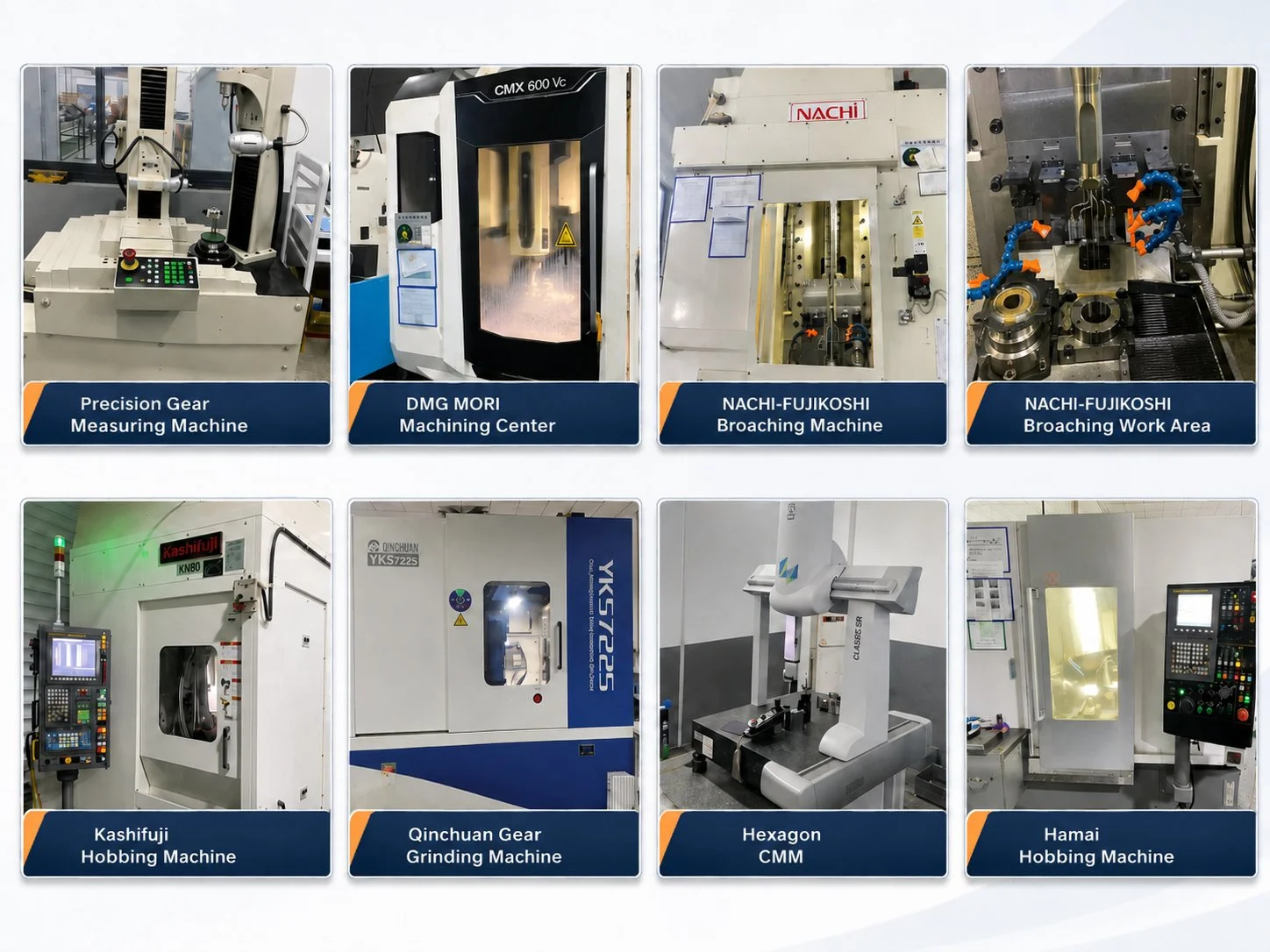 otive assembly lines may be 400 to 800 metres long — and must maintain precise speed matching between the tractor AGV and any trailer units in the train. Drive wheel output torques range from 2,000 to 15,000 Nm. The ZL02 series provides the right torque range and ratio flexibility for this category, with the added capability of multi-ratio selection within a single housing to adapt to different plant floor gradients and payload ranges without changing the motor or wheel specification.
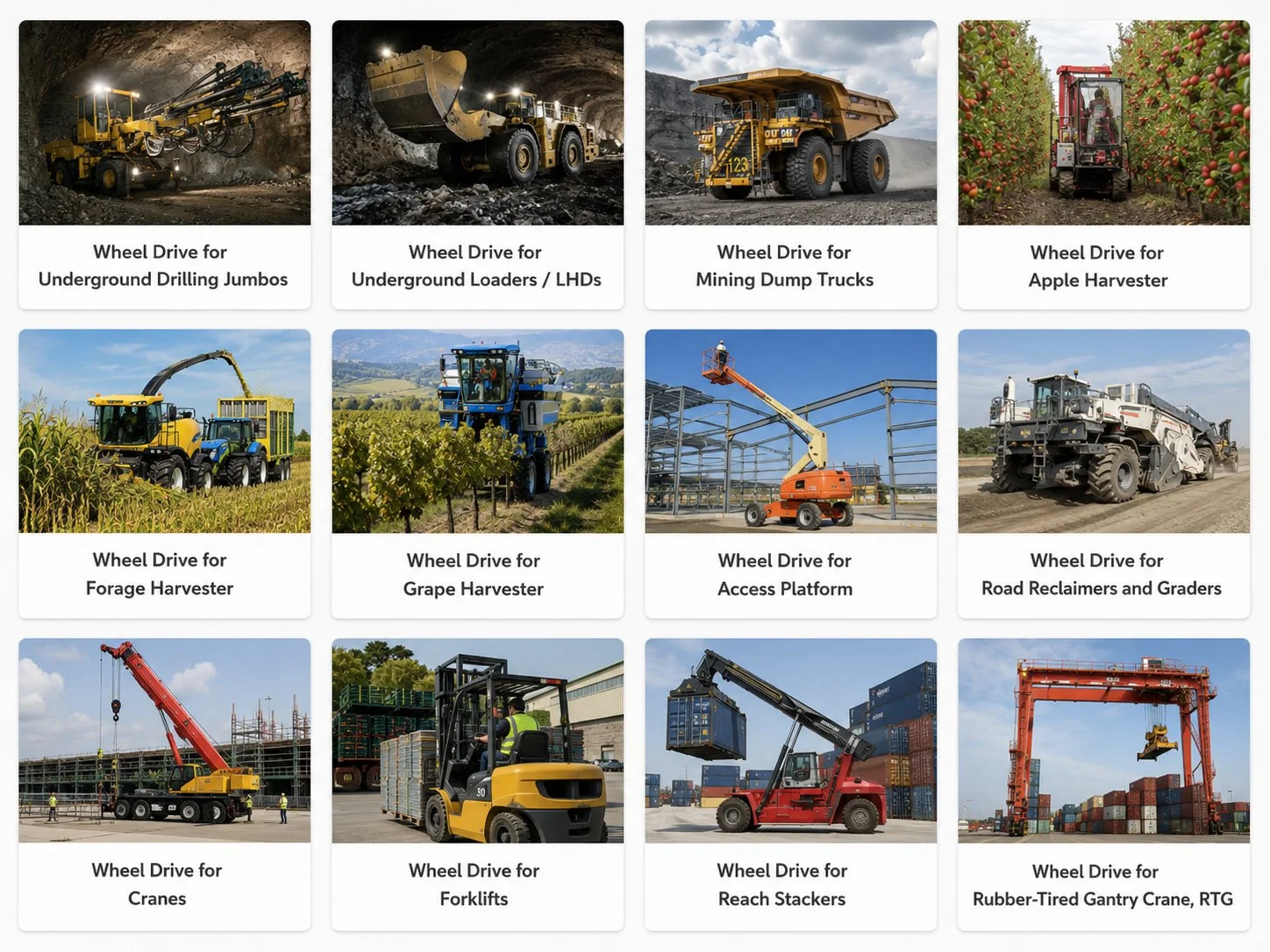
Port Terminal AGVs (payload 20,000 kg – 70,000 kg): Automated container transport vehicles operating between the quayside ship-to-shore crane and the yard stacking crane in fully automated container terminals. Port AGVs carry 20-foot and 40-foot containers — each container weighing up to 30 tonnes — at travel speeds of 5 to 6 m/s across paved terminal surfaces covering distances of 200 to 600 metres between crane pick-up and set-down points. Drive wheel output torques reach 50,000 to 120,000 Nm per driven wheel. The ZL24 and EP-WD-80 series serve this application, with marine-grade FKM seals and corrosion-resistant coatings standard for the quayside environment.
Korea Ever-Power AGV Drive Selection Guide
| Malli | Lähtömomentti | Suhdealue | AGV Category | Takaisku |
|---|---|---|---|---|
| ZL01 | 700 – 1,500 Nm | 3.48 – 2,702 | Warehouse AMR / light AGV | < 8 arcmin |
| ZL02 | 1,500 – 3,000 Nm | 3.48 – 2,702 | Medium-duty AGV / tugger | < 8 arcmin |
| 611L2/L3 | 8,000 – 28,000 Nm | 18 – 35 | Heavy industrial AGV | < 12 arcmin |
| ZL24 | 21,000 – 50,500 Nm | 4 – 2,319 | Port AGV / heavy carrier | < 12 arcmin |
| EP-WD-80 | 80,000 Nm | 12 – 28 | Port AGV 70-tonne payload | < 15 arcmin |
Backlash Control: The Critical Difference Between AGV and Standard Industrial Drives
Backlash — the angular free play between the input and output of a gearbox when the direction of torque reverses — is the single most important specification for any drive used in position-controlled automated vehicles. In a conventional industrial gearbox, backlash of 20 to 40 arcminutes is acceptable because the gearbox is used in speed-controlled applications where position accuracy is not critical. In an AGV traction drive, even 15 arcminutes of backlash creates measurable positioning errors:
Consider a warehouse AMR with a 250 mm diameter drive wheel and a gearbox ratio of 20:1. At the output shaft, 15 arcminutes of backlash corresponds to a wheel rotation of 15/60 degrees = 0.25 degrees. With a 250 mm wheel diameter, this corresponds to a linear positioning error of (0.25/360) x (π x 250) = 0.545 mm at the point of torque reversal. If the AMR stops and reverses direction 50 times during a picking cycle, and the dead-reckoning position system does not compensate for this lost motion, the accumulated positioning error after 50 direction changes is potentially 27 mm — well outside the ±5 mm repeatability typically required for reliable bin picking at a warehouse rack face.
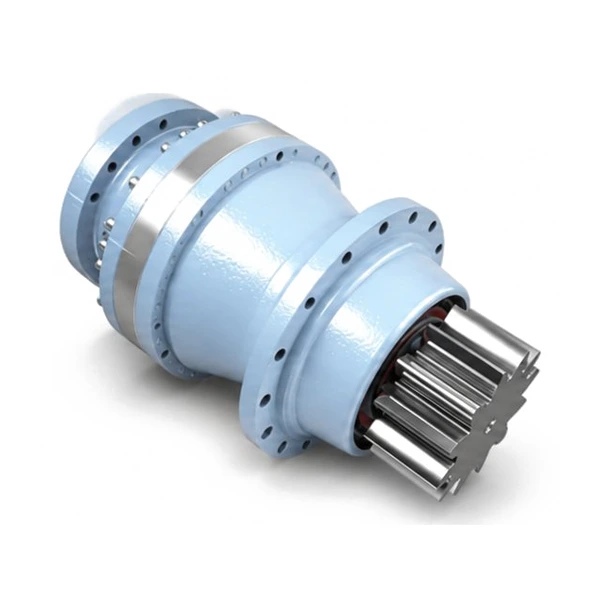
How Korea Ever-Power Achieves Low Backlash: The primary backlash source in a planetary gearbox is the clearance between planet gear teeth and the sun gear and ring gear tooth profiles. Korea Ever-Power achieves the sub-8 arcminute backlash specification for ZL01 and ZL02 AGV drives through three manufacturing controls: (1) tight tooth thickness tolerance grinding — all sun and planet gears are ground to DIN 5 tooth thickness tolerance rather than the DIN 7 or DIN 8 used for standard industrial gearboxes; (2) matched planet set assembly — planet gears are measured for tooth thickness and assembled in matched sets so that all three planets in a carrier engage simultaneously with minimum clearance; (3) planet carrier pin position tolerance — the planet pin bore positions are machined to ±0.005 mm positional tolerance to ensure equal load sharing between planets and eliminate the differential backlash that arises when one planet is loaded before the others.
Backlash Versus Preload — The AGV Trade-Off: Some precision gearbox manufacturers eliminate backlash entirely by applying a spring preload between the planetary stages — creating zero-backlash at the cost of continuous friction loss and accelerated tooth wear. Korea Ever-Power AGV drives use controlled low-backlash rather than preloaded zero-backlash design, because the preload approach imposes a constant parasitic torque loss of 3 to 8% of rated torque that directly reduces battery runtime in battery-powered AMRs. For a fleet of 100 AMRs operating 20 hours per day, this efficiency difference translates to significant annual energy cost and battery replacement frequency.
Motor and Encoder Interface: Servo, BLDC, and Stepper Motor Integration
AGV traction motors span three technology families, each with distinct interface requirements for the hub-mount planetary gearbox:
Servo Motors with Absolute Encoders: The standard for high-performance warehouse AMRs and all port terminal AGVs. AC servo motors provide precise torque control at all speeds including zero-speed holding, and the absolute encoder on the motor shaft provides the position feedback that the AGV navigation controller uses for dead-reckoning. Korea Ever-Power ZL01 and ZL02 gearboxes are supplied with servo motor adaptor flanges compatible with all major servo motor manufacturers — IEC B5 frames from 60 mm to 160 mm — with encoder cable routing provisions in the housing to prevent cable chafing against the rotating input shaft.
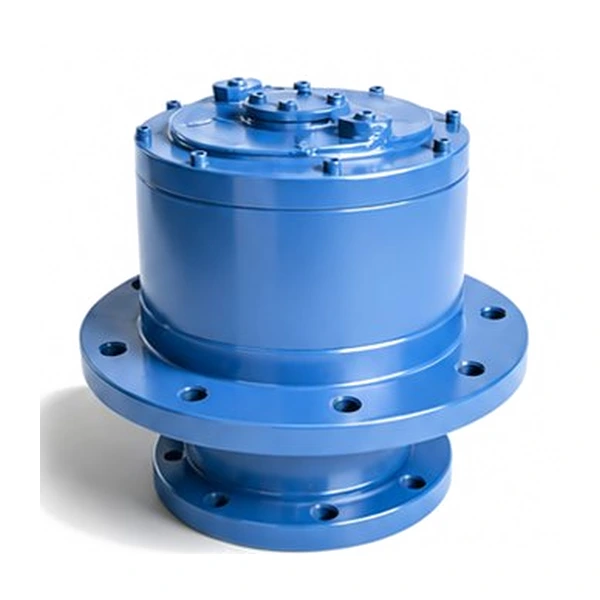
BLDC Hub Motors: For the lightest AMR category (payload below 500 kg), brushless DC hub motors are often integrated directly into the drive wheel, with the planetary gearbox built into the hub assembly. Korea Ever-Power ZL01 units are available in hub-integrated configuration — the gearbox housing doubles as the wheel hub flange — eliminating the external motor-to-gearbox mounting hardware and reducing the total drive module weight by 15 to 20% compared to a separate motor-plus-gearbox assembly.
Hydraulic Motors (Port AGVs): Some heavy port AGV designs retain hydraulic drive for the traction wheels, using a diesel-hydraulic power pack or battery-electric hydraulic pump. Hydraulic motors interface with the hub-mount planetary gearbox via SAE two-bolt or four-bolt flange standards. Korea Ever-Power heavy WD units for port AGV applications are available with SAE A, B, and C flange input standards in addition to IEC metric flanges.
Differential Steering and Omnidirectional Drive Configurations

Modern AGVs use three primary steering architectures, and the wheel drive gearbox specification must be matched to the steering approach:
Differential Drive (Two-Wheel): The most common configuration for warehouse AMRs — two independently driven wheels on a common axis, with passive castor wheels front and rear. Turning is achieved by driving the two wheels at different speeds: equal and opposite speeds produce on-the-spot rotation, while proportional speed differences produce radius turns. This configuration requires absolutely matched gearbox ratios between the left and right drive units — any ratio difference causes the vehicle to drift from its intended path during straight-line travel, accumulating heading error that eventually triggers a navigation correction and momentary stop. Korea Ever-Power supplies matched-pair ZL01 and ZL02 sets for differential drive AMRs, with left and right units verified to ±0.03% ratio match on a precision rotation bench before shipment.
Steered Single Drive Wheel: Common for heavy-payload AGVs and tugger trains — a single driven and steered wheel in the centre of the vehicle provides both traction and steering, with passive load wheels at the corners. The hub-mount gearbox rotates with the steering column, so the motor cable and any encoder cable must accommodate 360-degree steering rotation through a cable slip ring. Korea Ever-Power WD units for steered drive wheel applications are supplied without fixed cable routing provisions, with the housing designed for slip ring bracket attachment at the steering column interface.
Mecanum and Omnidirectional Wheels: High-end AMRs and automated assembly carriers use mecanum wheels — each wheel has 45-degree rollers that, when combined with independent speed and direction control of four wheels, allows the vehicle to move in any direction without rotating. Each mecanum wheel requires its own hub-mount planetary gearbox and servo motor. The gearbox specification for mecanum drive is identical to standard differential drive — low backlash, servo motor interface, matched ratio — but the four units must be matched to an even tighter ratio tolerance of ±0.02% to avoid unwanted lateral drift during pure-lateral travel commands.
Port Terminal AGVs: High-Payload, High-Cycle, Marine-Environment Operation
Port terminal AGVs operate in conditions that combine the most demanding aspects of both warehouse and marine environments: heavy payloads, high daily duty cycles, outdoor marine conditions, and the need for precise positioning at the crane delivery point to within ±50 mm — tight enough to allow the spreader to land accurately on the container on the AGV platform.
Tyre and Surface Conditions: Port AGVs use large-diameter solid rubber tyres — typically 1,200 to 1,600 mm overall diameter — running on concrete or asphalt terminal surfaces. The solid tyre generates significant traction force variation as it warms up from cold (hard, low friction) to operating temperature (softer, higher friction). The drive gearbox must accommodate the resulting variation in required drive torque without entering wheel-spin or stall conditions. Korea Ever-Power EP-WD units for port AGVs include thermal torque rating curves — specifying the maximum continuous and peak torque at ambient temperatures from -10°C to +45°C — enabling the AGV control system to apply appropriate torque limits for the prevailing ambient conditions.
Automated Charging Interface: Port AGVs use opportunity charging — automated battery contact charging at designated charging stations between container movements — which means the AGV must position precisely enough for the charging contact to engage reliably. The traction drive gearbox contributes to this positioning precision through its backlash and ratio accuracy specifications. Korea Ever-Power EP-WD units for port AGV applications are supplied with a dedicated charging station approach specification — guaranteed positioning repeatability of ±20 mm at charging approach speeds of 0.3 m/s — verified during factory acceptance testing.
Cross-Terminal Consistency: A port operating 50 to 200 AGVs requires all units to behave identically under the same control commands. Korea Ever-Power supplies port AGV drive gearboxes in fleet-matched batches — all units within a fleet order ground to the same ratio, verified individually, and documented with a fleet conformance certificate. This eliminates the per-vehicle tuning that variable gearbox ratios would otherwise require in the AGV navigation software.
Gearbox Efficiency and Its Impact on AGV Battery Runtime
In battery-powered AGVs, gearbox mechanical efficiency is a direct operational cost factor. A fleet of 100 AMRs each drawing 2 kW average traction power for 20 hours per day accumulates 4,000 kWh of daily energy consumption in traction alone. A gearbox with 92% mechanical efficiency wastes 320 kWh per day in heat; a gearbox with 96% efficiency wastes only 160 kWh per day — a saving of 58,400 kWh per year in a fleet of this size, equivalent to approximately 58 tonnes of CO₂ in a grid-average electricity market.
Korea Ever-Power achieves 95 to 97% mechanical efficiency in the ZL01 and ZL02 AGV drive series through four design choices: helical planet gears rather than straight-cut spur gears (reducing tooth engagement noise and sliding friction); precision-ground gear tooth profiles (minimising the profile form error that increases friction during meshing); synthetic gear oil rated for low-viscosity operation across the full -20°C to +80°C operating temperature range (reducing churning losses particularly at cold start); and angular contact ball bearings on the sun gear input shaft rather than deep-groove bearings (reducing the bearing drag torque at the high-speed input stage where it is most significant in efficiency terms).
The efficiency advantage compounds with regenerative braking. A ZL01 drive transmitting regenerative braking torque from wheel to motor at 96% efficiency returns 96% of the available kinetic energy to the motor controller DC bus. A comparable drive at 92% efficiency returns only 92% — a 4 percentage point difference that, across a high-cycle AMR performing 500 start-stop cycles per shift, meaningfully extends the interval between opportunity charges.
Why AGV Integrators and Fleet Operators Choose Korea Ever-Power
<8 kaariminuuttia
Guaranteed backlash specification on ZL01 and ZL02 AGV drives — verified on every unit by precision rotation bench before shipment
±0.03%
Matched-pair ratio tolerance for differential drive AMR sets — eliminating straight-line heading drift from ratio mismatch between left and right drives
95–97%
Mechanical efficiency of ZL01/ZL02 AGV drives — maximising battery runtime and reducing fleet energy cost and charging frequency
Fleet
Fleet-matched batch supply with fleet conformance certificate — all units within a single AGV fleet order verified to the same ratio, documented and traceable
For AGV integrators designing multi-product platforms — the same vehicle body fitted with different gearbox ratios for different customer duty cycles — Korea Ever-Power offers multi-ratio stocking programmes. A single ZL01 housing can be assembled with different planet carrier and sun gear sets to produce ratios from 5:1 to 2,702:1, enabling the integrator to maintain one spare parts stock for multiple vehicle models. For further information on the full hub-mount planetary drive family, see our full wheel drive planetary gearbox range including models for reach stackers, RTG cranes, and heavy forklifts in the same terminal environment.
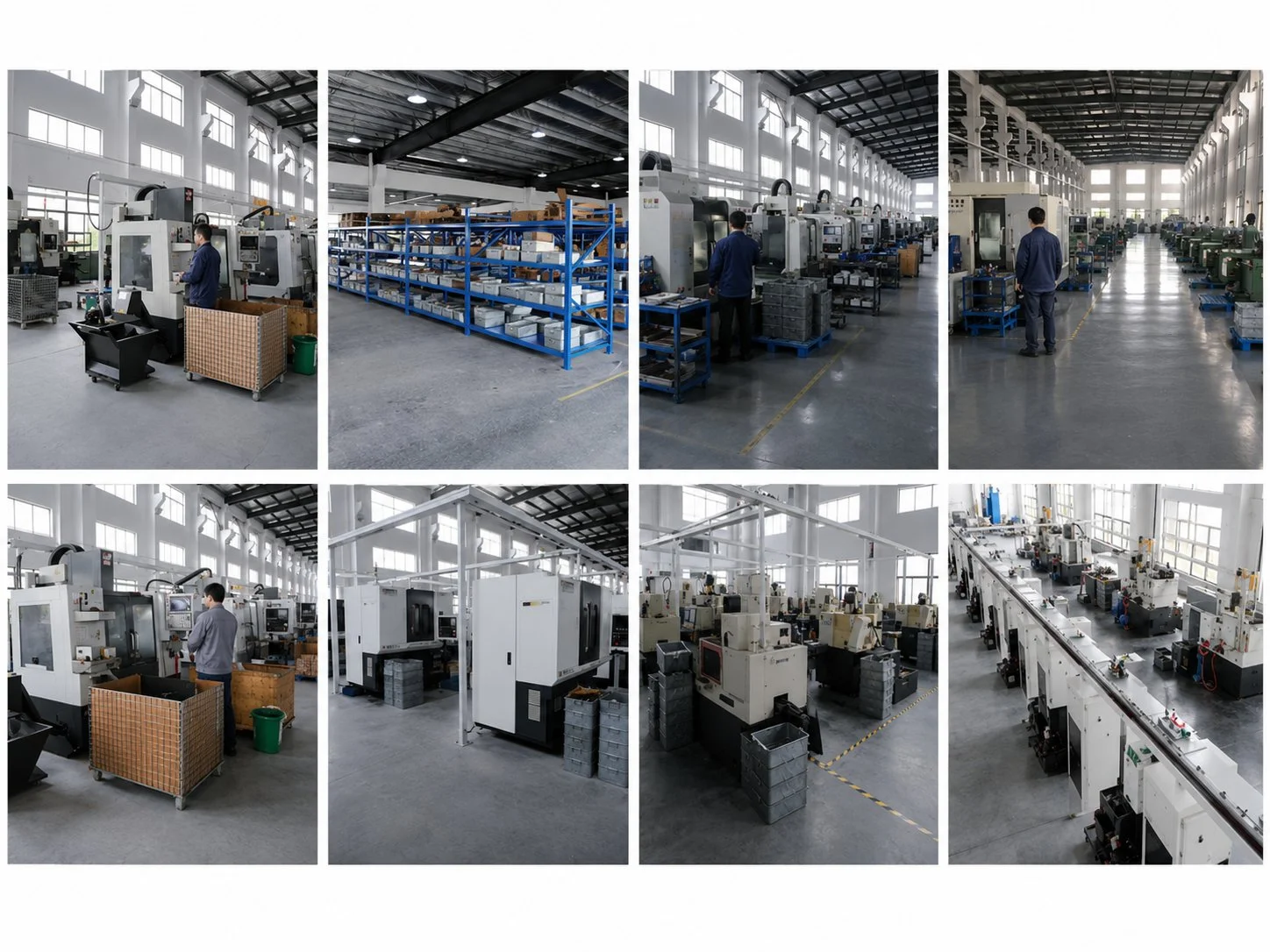
Source Your AGV Wheel Drive Planetary Gearbox
Whether you are designing a new AMR platform, specifying replacement drives for an operating AGV fleet, or engineering a port terminal automated vehicle system — Korea Ever-Power has the low-backlash planetary drive engineering and fleet-matched manufacturing capability to deliver. Send us your payload, speed, motor, and steering architecture data for a free application sizing review and matched-pair specification within 48 hours.
Edit by Cxm