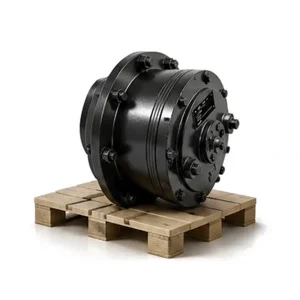
Réducteur planétaire pour entraînement de treuil 400W1

400W1 — Where the Winch Drive Catalogue Begins
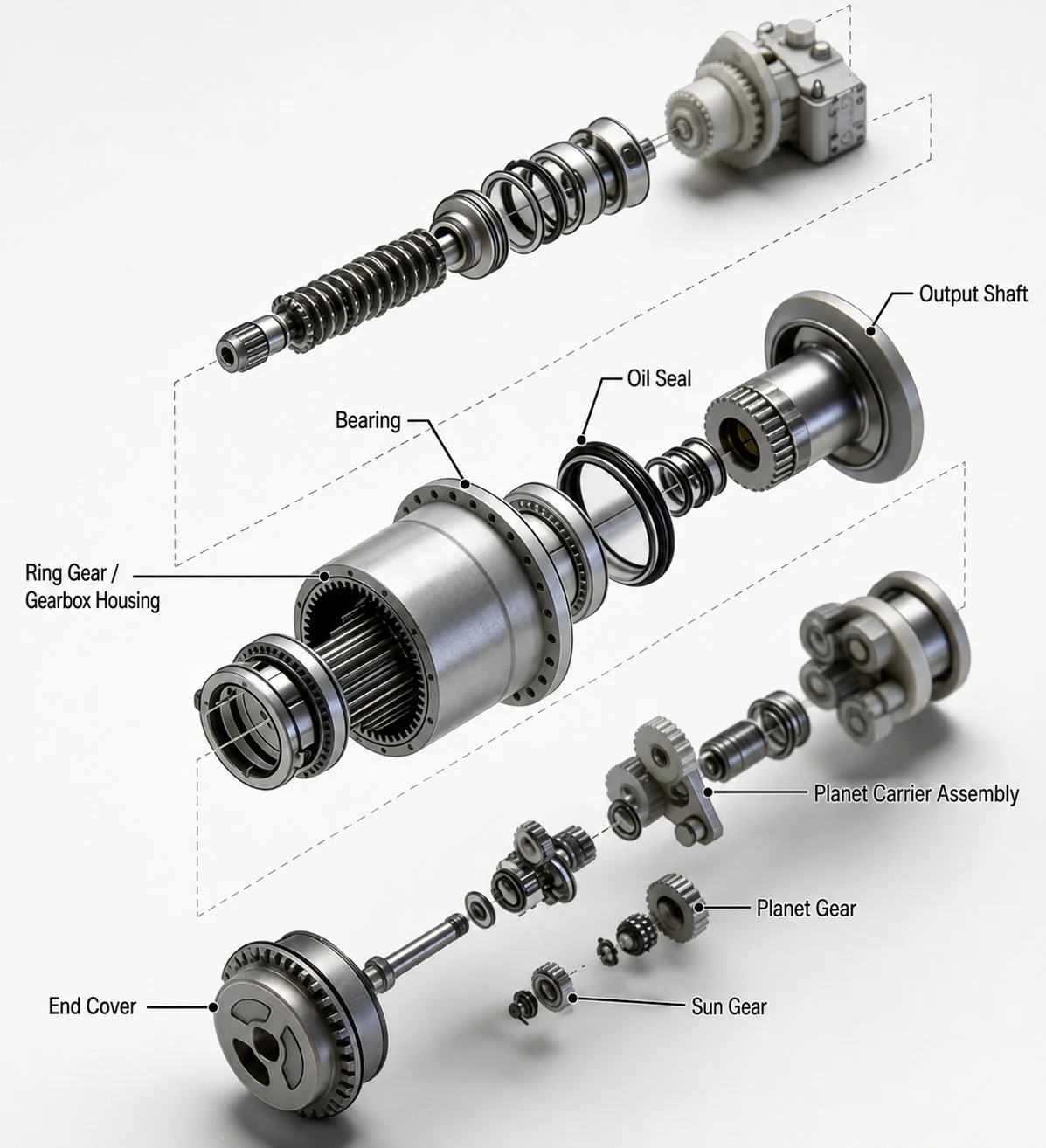
UN winch drive planetary gearbox does something no other gearbox type in the catalogue does: it sits inside the cable drum, rotating with it. The housing flanges bolt to the drum cheek plates, the output shaft becomes the drum axis, and the motor drives the input from the centre. From outside, all you see is a drum turning on its shaft. Inside, a planetary gear train is doing the work — converting high-speed, low-torque motor rotation into the slow, powerful drum rotation that lifts loads against gravity.
The EP-400W1 is the lightest unit in this range: 870 Nm output torque, a single planetary stage at 6.09:1, and an integral 130 Nm spring-applied parking brake that holds the load in the air when the motor stops. At 45 kg and 96% efficiency, it serves the winches where compact size and high efficiency matter more than raw pulling power — and where the FEM M5 duty classification confirms the drive is rated for sustained, repetitive lifting cycles rather than occasional use.
96% Efficiency
1,000 RPM
25 RPM Out
400W1 Winch Drive Planetary Gearbox — Full Specification
| Couple de sortie nominal | 870 Nm |
| Gear ratio | 6.09 : 1 (single planetary stage) |
| vitesse d'entrée maximale | 1,000 rpm |
| Maximum output speed | 25 rpm (FEM M5 continuous duty) |
| efficacité mécanique | ≥ 96% |
| Frein de stationnement | 130 Nm, spring-applied, hydraulic release |
| Montage | Rotating housing flanges (internal drum integration) |
| poids sec | Approx. 45 kg |
| Lubrification | Oil bath splash, EP gear oil |
| Température de fonctionnement | -20 to +80 deg C (special seals available) |
Line Pull, Drum Diameter, and Torque — The Three Numbers That Size a Winch Drive
Every winch drive planetary gearbox selection starts with the same equation. If you know these three values, you know whether the 400W1 is the right drive — or whether you need to step up to a larger model in the range.
Determine the line pull
The maximum force in the cable at the first layer on the drum. For a simple vertical lift: line pull = load weight x gravity x safety factor. For a 500 kg personnel hoist with a 4:1 safety factor: line pull = 500 x 9.81 x 4 = 19,620 N. For angled pulls, multiply by the fleet angle correction factor.
Measure the drum pitch circle diameter
The PCD is the diameter measured to the centre of the cable on the first (innermost) layer. PCD = drum barrel diameter + cable diameter. For a 200 mm barrel with 10 mm cable: PCD = 210 mm, radius = 0.105 m. The first layer produces the highest torque because the lever arm is shortest — all subsequent layers increase the PCD and reduce the effective line pull per unit of gearbox torque.
Calculate the required gearbox torque
T = line pull x PCD radius. For the example above: T = 19,620 x 0.105 = 2,060 Nm. This exceeds the 400W1 rating of 870 Nm — step up to the 401W1 (1,300 Nm) or 402W2 (4,000 Nm) depending on the required safety margin. If the calculation yields under 870 Nm, the 400W1 is the correct model.
At 870 Nm maximum, the 400W1 handles line pulls up to approximately 8,300 N (850 kg) on a 210 mm PCD drum, or up to approximately 5,800 N (590 kg) on a 300 mm PCD drum. For heavier loads or larger drums, the next model up is the 401W1 at 1,300 Nm.
Inside the Drum — How a Winch Drive Planetary Gearbox Actually Works
Unlike a wheel drive or a réducteur planétaire à entraînement de rotation that mounts on a stationary structure and rotates the load, a winch drive rotates WITH the load. Understanding this difference is essential for correct integration.
The Housing Rotates
The 400W1 housing flanges bolt to the drum cheek plates. When the motor drives the input shaft, the ring gear (fixed to the housing) reacts against the planet carrier, and the housing — along with the entire drum — rotates around the stationary output shaft. The drum and gearbox are one rotating assembly. The motor and its hydraulic connections remain stationary, feeding power through a rotary interface at the shaft centre.
The Output Shaft Is Fixed
The output shaft of the 400W1 does not rotate — it is the axle that the drum pivots around. This shaft is anchored to the winch frame structure and carries the full weight of the drum plus cable plus load as a bending load. The shaft diameter and bearing arrangement must be sized for this combined load, not just the torque. Provide the maximum cable capacity and drum weight to Ingénierie Ever-Power de Corée for shaft load verification.
The Brake Holds the Load in the Air
The 130 Nm spring-applied brake engages automatically when hydraulic pressure is removed — holding the drum (and the suspended load) in position. This is a safety-critical function: if the motor loses power while a load is suspended, the brake must prevent uncontrolled descent. The 130 Nm brake through the 6.09 ratio produces approximately 792 Nm of holding torque at the drum — verify that this exceeds the torque generated by the maximum suspended load at the drum PCD radius.
Oil Stays Inside While Rotating
The oil-bath lubrication system must function with the housing rotating continuously — not stationary like a wheel drive. The 400W1 seal arrangement is specifically designed for rotating-housing duty, with the output shaft seal running against the stationary shaft and the input seal accommodating the relative rotation between the motor and the drum. Standard wheel drive seals are not interchangeable — always order seals designated for the W (winch) series.
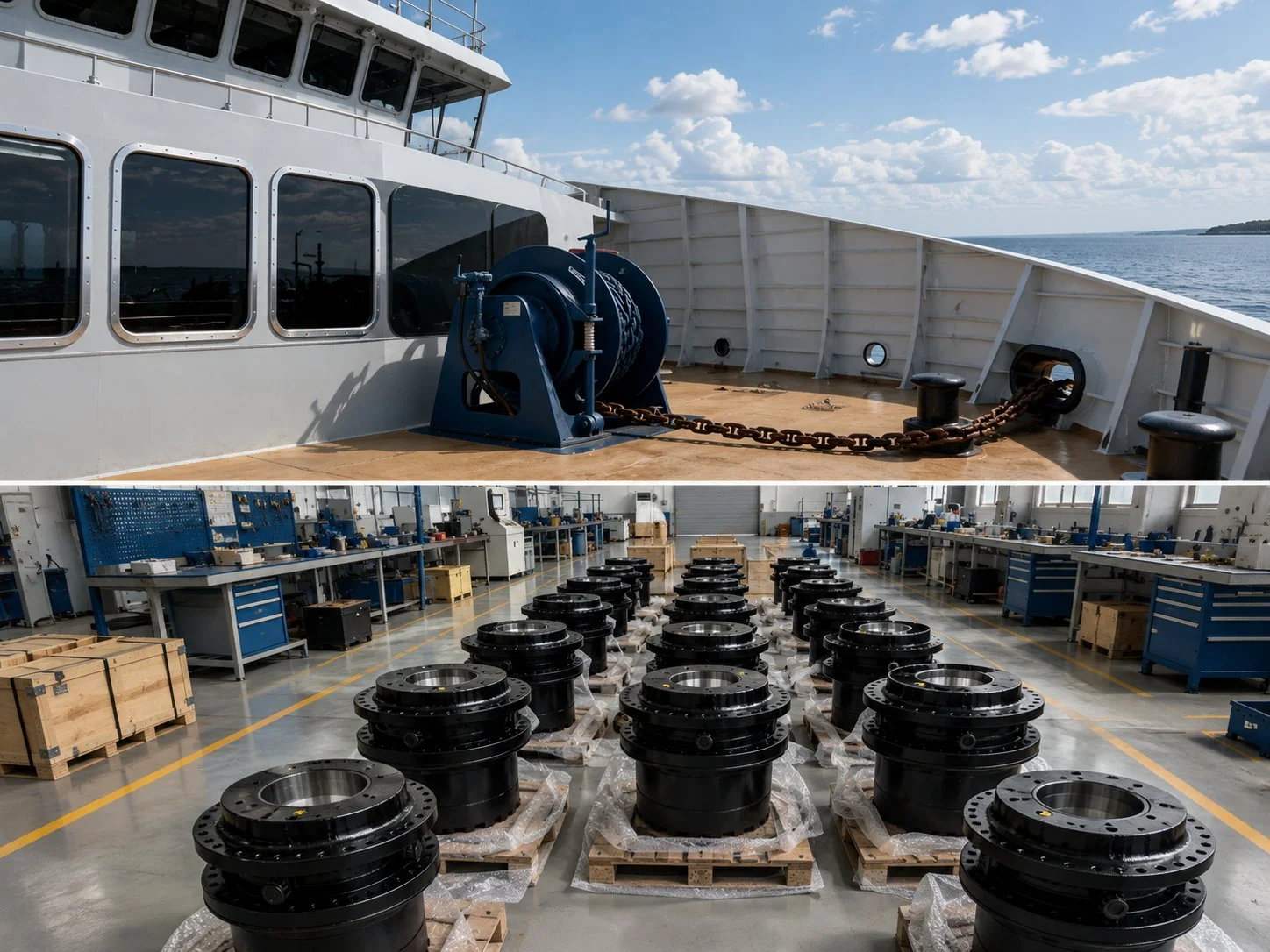
Compact Winch Drive Applications in the 870 Nm Class

Construction Personnel Hoists
Small capacity personnel and material hoists on construction sites, lifting 200-400 kg at 10-20 m/min through 2-6 floors. The 400W1 single-stage provides the compact diameter needed to fit inside the narrow drum housings these hoists use, and the 130 Nm fail-safe brake ensures the platform holds at any floor level when the operator releases the control lever. The FEM M5 duty rating covers the 200-400 cycle-per-day usage profile of a busy construction site.
Marine Davits and Lifeboat Winches
Davit winches for lifeboat launching and recovery on offshore platforms, workboats, and small vessels. The 400W1 at 45 kg meets the space and weight constraints of marine davit installations, and the sealed oil-bath housing resists the salt spray, humidity, and deck wash water that destroy open-gear winch mechanisms within months. The -20 to +80 deg C range covers North Sea to tropical waters without seal modification.
Utility Cable Tensioners and Small Cranes
Cable tensioning winches for power line stringing, fibre optic installation, and pipeline pull-in operations. The controlled, low-speed output (maximum 25 rpm) provides the precise cable tension management these operations demand, and the single-stage 96% efficiency means less hydraulic power is wasted as heat during the sustained, low-speed pulling cycles that cable tensioning involves. The réducteur planétaire à chenilles propels the cable-stringing crawler on the same utility installation project.
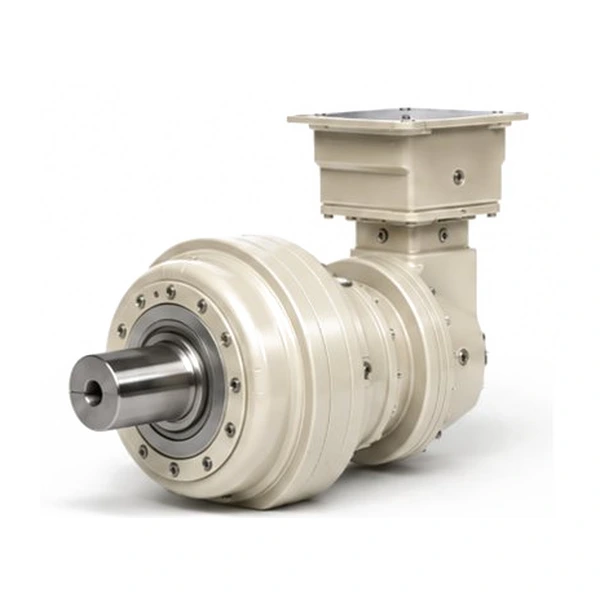
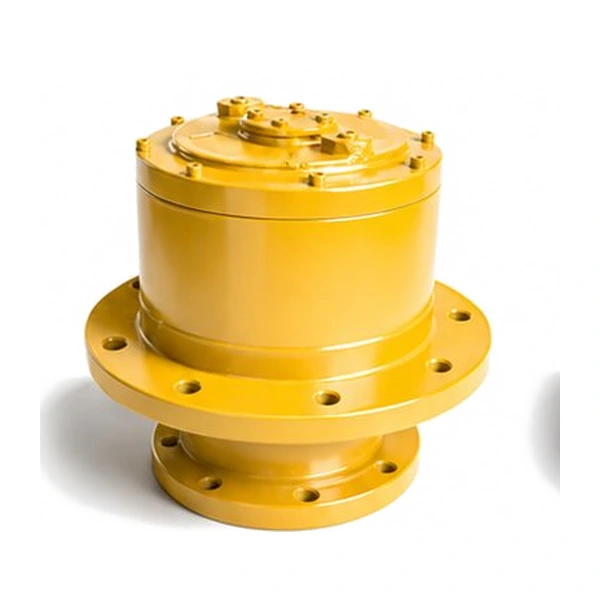
Across the Planetary Gearbox Range

Winch Drive Planetary Gearbox — Frequently Asked Questions
Rapports de terrain
Personnel and materials hoist on a 14-storey residential tower. The 400W1 has run approximately 250 cycles per day for 9 months — lifting an average of 300 kg of materials and crew up to 42 metres. No issues with the drive, the brake engagement is crisp and consistent, and the oil has stayed clean at the 2,000-hour sample. The previous worm-gear winch on the same hoist required a motor twice the size and ran noticeably hotter. The 400W1 solved both problems.
Lifeboat davit winch on a North Sea supply vessel. The 400W1 has survived 18 months of continuous salt spray exposure with the original seals intact. We launch and recover the rescue boat twice weekly for drills plus the mandatory annual certification test under full load. The sealed housing was the primary reason for selecting a planetary drive over the open-gear davit winch the vessel was originally fitted with — the open gears corroded within one season despite weekly greasing. The 400W1 has required zero maintenance other than the oil change at 12 months.
Cable tensioner for fibre optic line stringing. The 400W1 provides smooth, controllable tension at 5-15 m/min pulling speed, which is exactly the range our fibre splice technicians need. The 4-star rating is because we initially mis-calculated the required torque using the first-layer drum PCD instead of the outer-layer PCD — and the 400W1 was undersized for the last 3 layers of cable. We should have ordered the 401W1 from the start. Not a product issue — purely a user sizing error. Ever-Power technical support caught the mistake during a follow-up call and arranged the swap promptly.
Informations complémentaires
| Éditeur | Cxm |
|---|
Produits associés
-
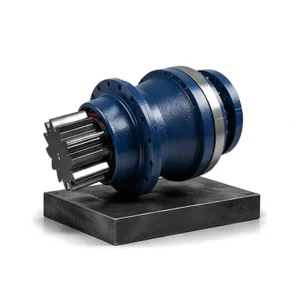
ZL95 Winch Drive Planetary Gearbox
-
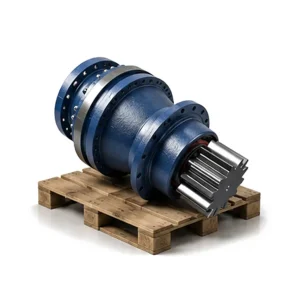
ZL75 Winch Drive Planetary Gearbox
-
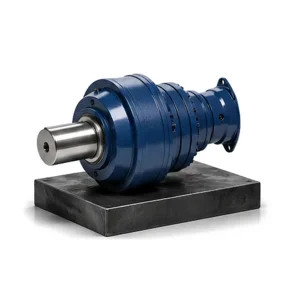
ZL45 Winch Drive Planetary Gearbox — 1-4 Stage
-

Réducteur planétaire pour entraînement de treuil 415W3
-
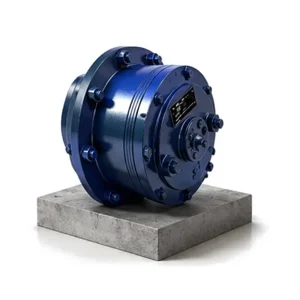
Réducteur planétaire pour entraînement de treuil 407W3
-
Réducteur planétaire pour entraînement de treuil 407AW
-

Réducteur planétaire pour entraînement de treuil 405,4 W
-

Réducteur planétaire pour treuil de 405 W