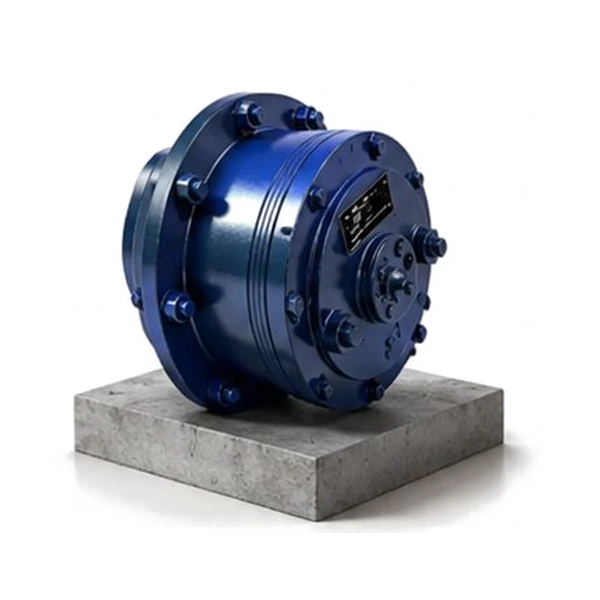
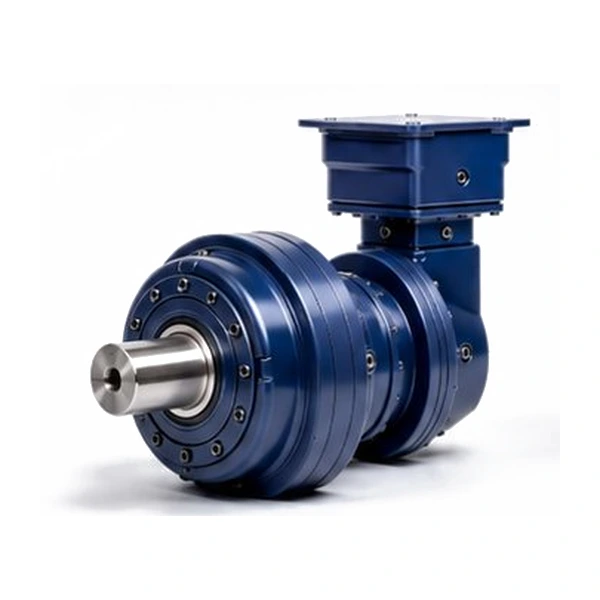
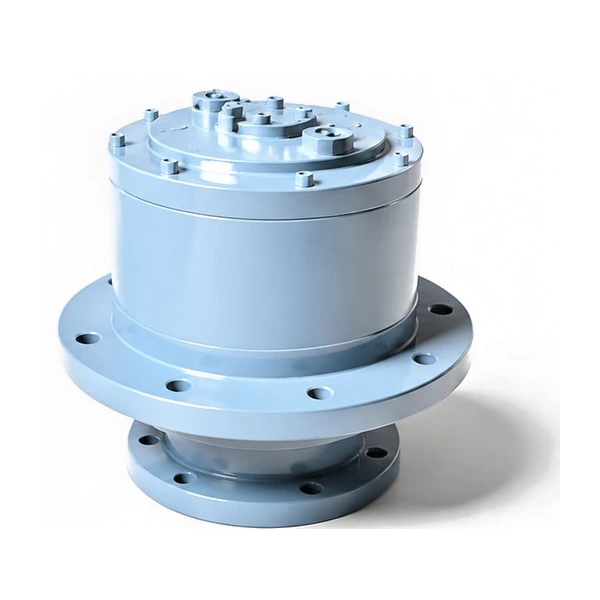
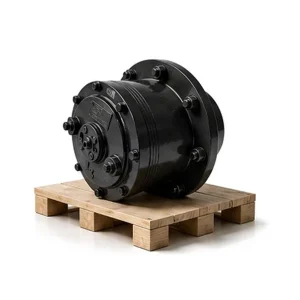
Réducteur planétaire pour entraînement de treuil 407W3
26,000 Nm
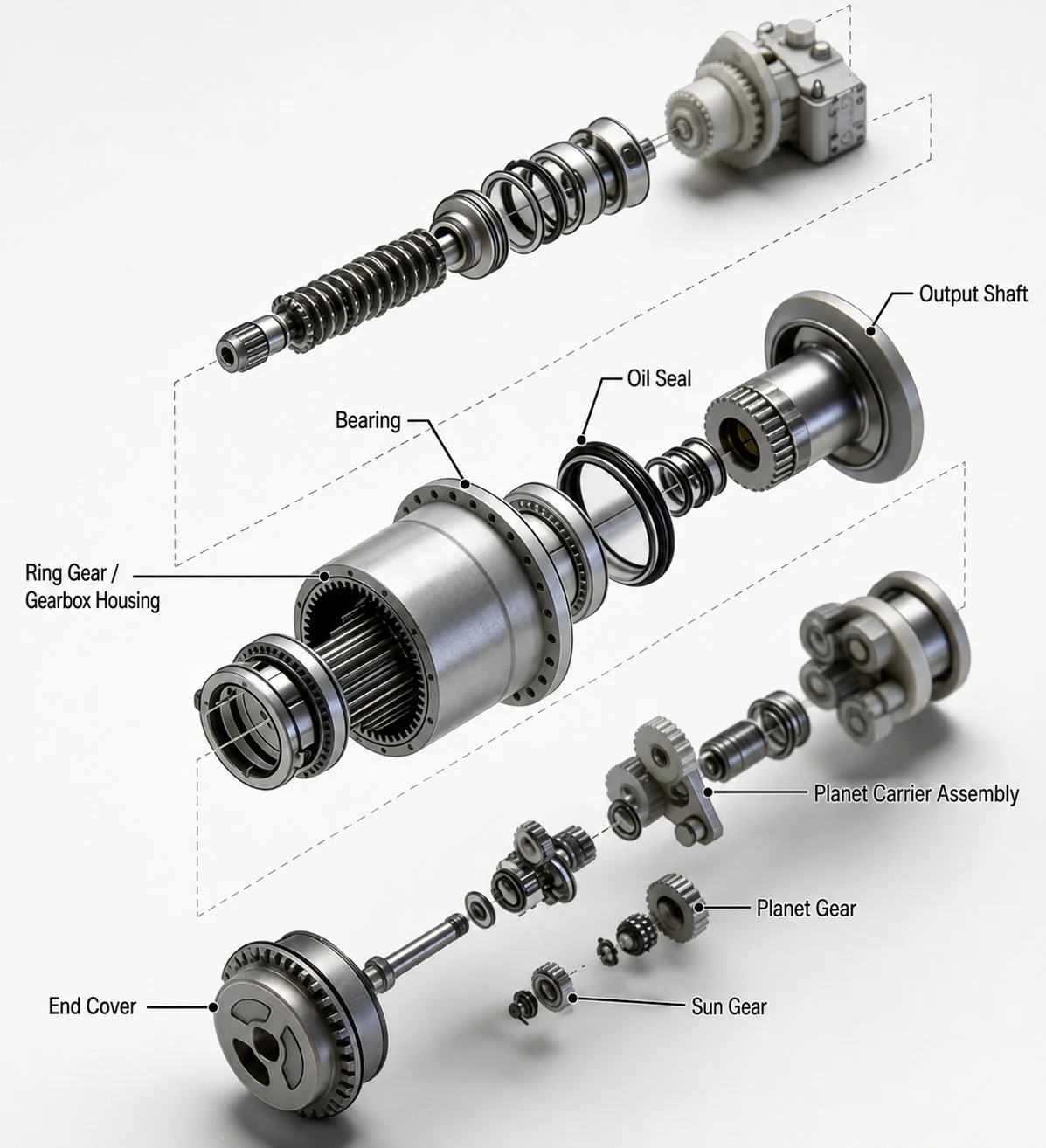
The EP-407W3 marks the boundary where single-motor hydraulic winch drive systems reach their natural limit. Above 26,000 Nm, the motor displacement needed to produce the input torque at practical system pressures exceeds the capacity of most standard axial piston motor frames — and the design transitions to dual-motor configurations or to the larger 410 housing family.
95% Eff.
3,500 RPM
-20 to +85 deg C
The 407W3 sits opposite the 407AW in the same family: where the 407AW (18,000 Nm) offers selectable brake torque and a wider ratio range, the 407W3 locks in the maximum — 26,000 Nm torque, 530 Nm brake, ratios 63-136 — and delivers it through three stages with no options to configure. This is the model for crane designers who have already determined that 26,000 Nm is the target and 530 Nm is the brake. No selection. No compromise. The 407 housing at its absolute capacity.
407W3 Winch Drive Planetary Gearbox — Technical Parameters
| Couple de sortie nominal | 26,000 Nm |
| Plage de rapports de transmission | 63 to 136 (three-stage planetary) |
| vitesse d'entrée maximale | 3,500 rpm |
| Maximum output speed | 25 rpm (FEM M5 continuous duty) |
| efficacité mécanique | ≥ 95% |
| Frein de stationnement | 530 Nm, multi-disc, spring-applied, hydraulic release |
| Brake at drum (ratio-dependent) | 33,390 Nm (r=63) to 72,080 Nm (r=136) |
| Montage | Rotating housing flanges |
| poids sec | Approx. 310 kg |
| Lubrification | Oil bath splash, EP gear oil |
| Température de fonctionnement | -20 to +85 deg C |
The Single-Motor Boundary — Why 26,000 Nm Is Where Hydraulic Architecture Changes
At 26,000 Nm output through ratio 100, the motor input torque is 260 Nm. At 350 bar system pressure (a standard maximum for mobile hydraulics), a fixed-displacement motor needs approximately 470 cc/rev to produce 260 Nm. Variable-displacement motors in this displacement class weigh 80-120 kg and are the largest single-shaft units most motor manufacturers offer. Above this displacement, the catalogue typically transitions to dual-motor packages or to radial piston motors with fundamentally different mounting geometries.
This means the 407W3 at 26,000 Nm is the last torque level where a crane designer can use a single standard axial piston motor driving a single winch drive gearbox through a single input shaft. Above 26,000 Nm — starting with the 410W3 at 37,500 Nm — the practical architecture shifts to either dual motors on a Y-adapter driving one gearbox, or to the larger ZL/ZR winch drive series with high-speed electric motors replacing the hydraulic circuit entirely.
Motor sizing at 26,000 Nm
Ratio 63: motor torque = 413 Nm → ~740 cc/rev at 350 bar → exceeds single-motor range
Ratio 100: motor torque = 260 Nm → ~470 cc/rev at 350 bar → upper limit of single motor
Ratio 136: motor torque = 191 Nm → ~345 cc/rev at 350 bar → comfortably single motor
407W3 or 410W3 — When to Step to the Next Housing Frame
The 407W3 at 26,000 Nm and the 410W3 at 37,500 Nm are the two models that bracket the heavy crane hoist segment. The gap between them — 11,500 Nm — is the largest single step in the 4xxW catalogue. Choosing between them requires understanding what each housing frame provides beyond the torque number.
| Paramètre | 407W3 | 410W3 |
|---|---|---|
| Couple | 26,000 Nm | 37,500 Nm (+44%) |
| Rapports | 63 - 136 | 62 - 177 |
| Frein | 530 Nm | 530 Nm |
| Poids | 310 kg | 390 kg |
| Single-motor feasibility | Yes (at r ≥ 90) | Dual-motor typical |
| Drum housing compatibility | 407 bolt pattern | 410 bolt pattern (larger) |
Stay with the 407W3 when:
The calculated drum torque falls within the 26,000 Nm capacity with adequate safety factor. The single-motor hydraulic architecture is preferred for simplicity. The drum housing is already designed for the 407 frame. Weight matters — the 80 kg difference (310 vs 390) affects crane head weight and structural loading.
Step up to the 410W3 when:
The torque requirement exceeds 26,000 Nm at any cable layer. The application needs ratios above 136 (the 410W3 extends to 177). The crane is a new build and the drum can be designed from scratch around the 410 frame. A dual-motor configuration is already planned for other reasons (redundancy, speed range).
26,000 Nm — The Last Stop for Single-Motor Heavy-Lift Hoisting
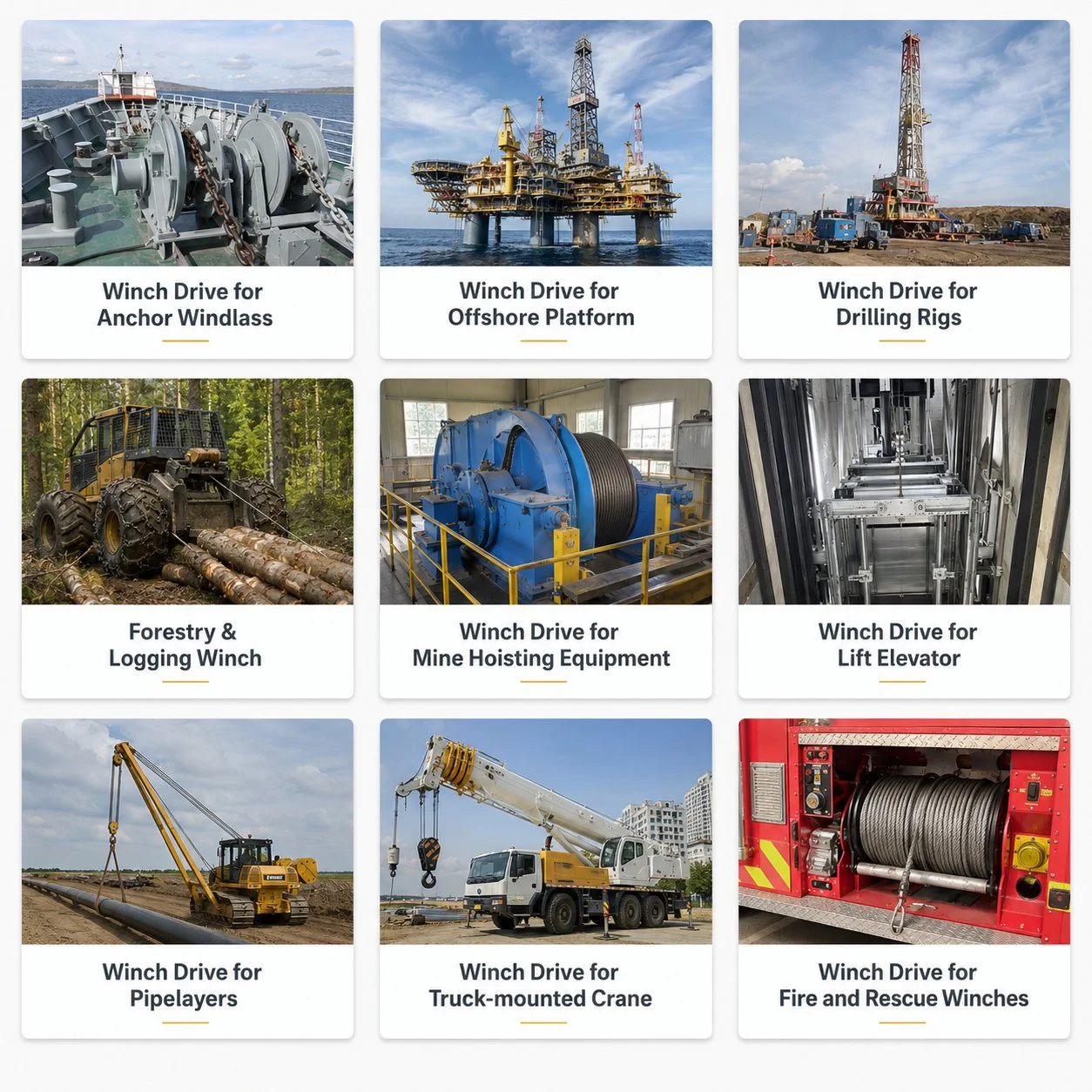
Heavy-Lift Offshore Cranes (25-40 t SWL)
Main hoist on offshore heavy-lift cranes handling large subsea structures, drilling equipment modules, and platform deck components. The 407W3 at ratio 100-136 provides the torque for 25-40 tonne lifts on 500-600 mm PCD drums with 8-12 part reeving. The 530 Nm fixed brake delivers up to 72,080 Nm of drum holding torque — sufficient for the most demanding offshore classification requirements. The réducteur planétaire à entraînement de rotation handles the crane rotation on the same heavy-lift platform.
Large Harbour Portal Cranes
Rail-mounted portal cranes at major ports handling 20-30 tonne general cargo lifts at moderate cycle rates (80-150 lifts per shift). The 407W3 at ratio 80-100 provides the main hoist torque, and the single-motor configuration keeps the hydraulic system compact enough to fit within the portal crane machinery house. For harbour cranes approaching container terminal intensity, the 407W3 FEM M5 rating may require derating — consult La Corée toujours puissante for an M6 duty capacity verification.
Shipyard Main Assembly Cranes
Main hoist mechanisms on shipyard gantry cranes positioning 15-25 tonne hull sections, engine blocks, and superstructure modules. The 407W3 at ratio 100-136 delivers the slow, controlled hoisting that heavy steel positioning demands, while the 530 Nm brake provides the holding margin for loads that may hang suspended for minutes while welders tack the section in place. The wheel drive handles the gantry rail travel on the same crane.
The Heavy-Duty Tier and Complementary Drives
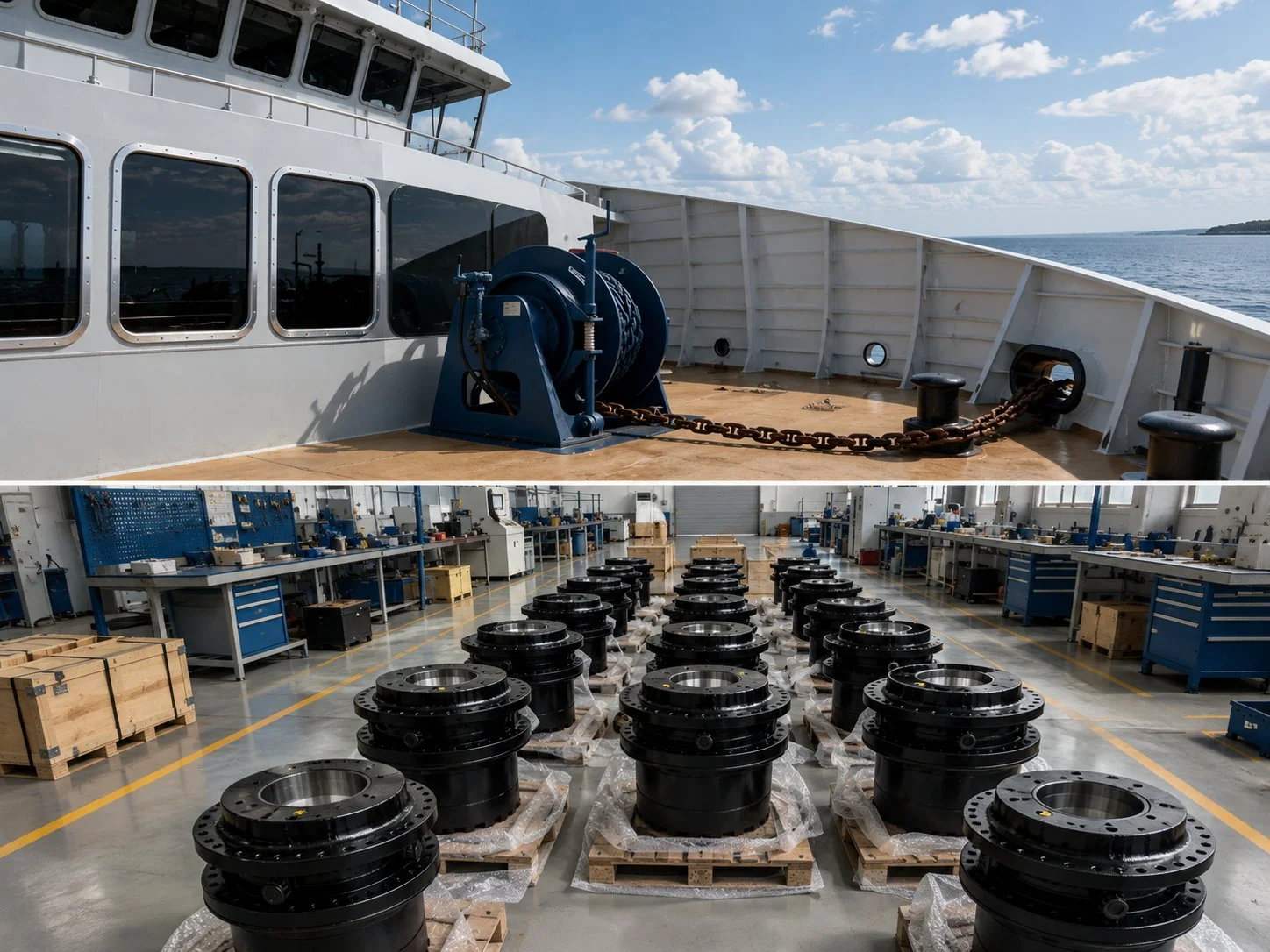
Winch Drive Planetary Gearbox — Heavy-Duty Single-Motor Hoist FAQ
Rapports de terrain
40 t SWL subsea crane, main hoist, 407W3 at ratio 120 with a 500 cc/rev variable-displacement motor. The single-motor architecture keeps the crane head weight 95 kg lighter than the dual-motor configuration the previous design used at the same torque level — which recovered 2.3 tonnes of crane structural capacity at maximum boom length. The DNV-GL survey accepted the brake holding calculation at SF = 2.2 on the first review. After 8,000 hours including two major subsea deployment campaigns, oil analysis shows no bearing distress and the brake test results are within 3% of the factory acceptance data.
Shipyard gantry crane, 25 t main hoist, 407W3 at ratio 110. The crane positions engine blocks and stern sections at controlled speed — the welders report consistent first-approach accuracy within 5 mm. We evaluated the 410W3 at 37,500 Nm during the design phase but the 407W3 provided adequate torque margin at 26,000 Nm and saved 80 kg of gantry head weight, which simplified the trolley rail structural design. The 530 Nm brake holds 25-tonne loads in position for up to 30 minutes during tack welding without any drift. Twelve months in service, zero unscheduled maintenance events.
Portal harbour crane, 20 t SWL, 407W3 at ratio 85, approximately 120 lifts per shift. The mechanical performance passes every annual inspection without comment. The 4-star reflects a duty-cycle question that came up during our 3-year statutory inspection: the crane is approaching 15,000 hours at what we now believe is closer to FEM M6 intensity than the original M5 specification. The oil analysis trends are still clean but the bearing vibration baseline has increased by 8% from the commissioning readings — within normal limits but tracking upward. We are now working with Ever-Power on a revised overhaul forecast. For heavy-cycle harbour applications, having a published M5/M6 crossover point based on actual cycle counts per hour would help port engineers like me schedule inspections proactively rather than reactively.
Informations complémentaires
| Éditeur | Cxm |
|---|
Produits associés
-
Réducteur planétaire pour treuil ZL200
-
Réducteur planétaire pour treuil ZL120
-
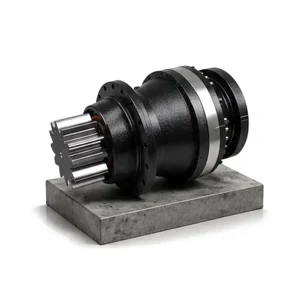
Réducteur planétaire pour treuil ZL85
-
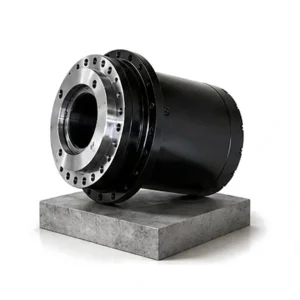
414W3 Winch Drive Planetary Gearbox Reducer
-
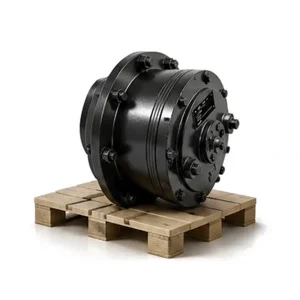
Réducteur planétaire pour entraînement de treuil 407AW
-
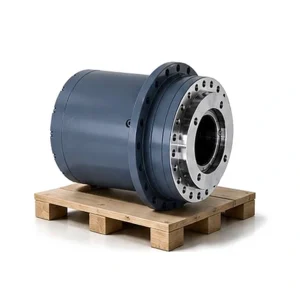
Réducteur planétaire pour treuil 406W
-
Réducteur planétaire pour entraînement de treuil 406AW
-

Réducteur planétaire pour entraînement de treuil 405,4 W