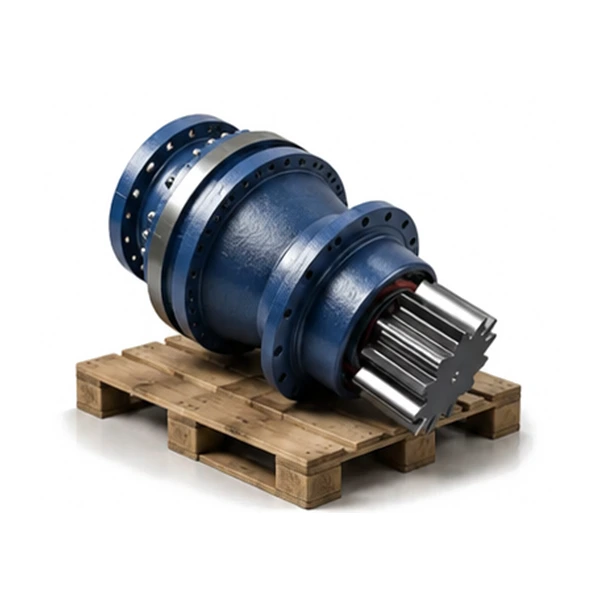
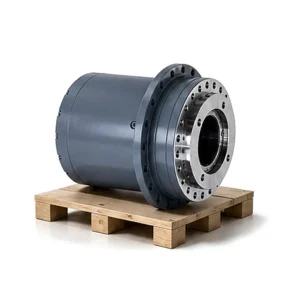
ZL75 Winch Drive Planetary Gearbox
PEAK EXCEEDS MEGA-CLASS
70,000 / 175,000
Continuous / Peak. The ratio reverses.
The EP-ZL75 winch drive planetary gearbox enters a new housing class that restores the high peak-to-continuous ratio — 2.5:1 instead of the ZL55 2.04:1 — by using a housing diameter and gear module that provide substantial headroom above the 70,000 Nm continuous rating. The result is a peak capacity of 175,000 Nm: higher than the 414W3 mega-class at 140,000 Nm continuous, from a gearbox that weighs a fraction of the mega-class housing.
The ZL75 is the fifth model in the ZL electric winch drive series and the one that most new-build electric crane projects converge on. At 70,000 Nm, it covers the 40-60 tonne SWL class — the largest segment of the global crane market by unit volume — with an electric-native architecture. The 175,000 Nm peak (2.5:1) means a 40 t crane designed around the ZL75 continuous rating has enough transient headroom to handle a 60 t emergency overload without exceeding the gearbox peak capacity — the kind of margin that crane OEMs use to simplify their model range by covering two SWL classes with one gearbox specification.
ZL75 Electric Winch Drive Planetary Gearbox — Technical Parameters
| Continuous torque (N2xh=100,000) | 70,000 Nm |
| Couple maximal | 175,000 Nm (2.5x continuous) |
| Plage de rapports de transmission | 4 to 1,502 (1-5 stages) |
| vitesse d'entrée maximale | 4,000 rpm |
| Thermal power (Pt) | 24 - 86 kW (varies by stage count) |
| Gear type | Helical planetary, 3-planet, DIN 5-6 |
| Integrated brake | None (motor brake or external brake) |
| Scellage | Multi-lip FKM, IP67+ |
| Logement | Ductile iron QT600-3 |
| Matériel d'équipement | 20CrMnTi, HRC 58-62 |
175,000 Nm Peak — When the ZL75 Transient Capacity Exceeds the 4xxW Mega-Class Continuous
The 4xxW 414W3 — the entry point to the mega-class — delivers 140,000 Nm continuous and weighs 1,250 kg. The ZL75 delivers 175,000 Nm peak at a fraction of that weight. The comparison reveals a fundamental difference in how the two architectures handle extreme loads.
ZL75 at 175,000 Nm Peak
Handles transient events — grab crane impacts, snatch loads, emergency stops — that reach 175,000 Nm for sub-10-second durations. The gear teeth absorb these peaks through their bending strength margin above the 70,000 Nm continuous fatigue limit. Between peaks, the gears recover and cool. This is electric winch duty: high peaks separated by periods at or below continuous load.
414W3 at 140,000 Nm Continuous
Sustains 140,000 Nm for hours or days without rest — the defining characteristic of mining production winders and AHTS anchor handling where the load never drops below 80% of rated for entire shifts. The ZL75 cannot sustain 140,000 Nm continuously — its continuous limit is 70,000 Nm. The mega-class exists for applications where the sustained load exceeds what any ZL model can deliver at continuous rating.
For crane OEMs designing a 50 t SWL crane: the ZL75 at 70,000 Nm continuous handles the rated hoist load, and the 175,000 Nm peak handles the 2.5x dynamic overloads from grab operations, spreader snatch, and emergency stops. No 4xxW mega-class gearbox is needed unless the crane must sustain loads above 70,000 Nm for extended periods — which a standard crane cycle (30-60 seconds per lift) never demands. The ZL75 delivers crane-class performance at a fraction of the mega-class weight and cost.
The 40-60 t Sweet Spot — Why the ZL75 Is the Most Specified ZL Winch for New-Build Cranes
The 40-60 tonne SWL range represents the single largest segment of the heavy crane market: offshore platform cranes, construction cranes for high-rise and infrastructure projects, harbour cranes, and shipyard cranes. The ZL75 at 70,000 Nm covers this entire class.
| Crane Class | SWL | ZL75 Ratio | Moteur | Line Speed |
|---|---|---|---|---|
| Offshore platform crane | 40 t | 80-120 | 400 kW | 15-25 m/min |
| Heavy construction tower crane | 45 t | 100-150 | 350 kW | 10-20 m/min |
| Harbour portal crane | 50 t | 80-100 | 500 kW | 20-35 m/min |
| Shipyard gantry crane | 60 t | 120-180 | 500 kW | 8-15 m/min |
One ZL75 product designation serves all four crane classes — the only difference is the ratio and motor power. Spare parts, maintenance training, and engineering documentation are common across the fleet. For a crane OEM producing across these classes, the ZL75 reduces the winch drive part numbers from four (one per crane model) to one. Contact La Corée toujours puissante for application-specific motor and ratio recommendations.
70,000 Nm — The Electric Winch Drive That Covers the Largest Crane Market Segment

All-Electric Offshore Platform Cranes (40-60 t)
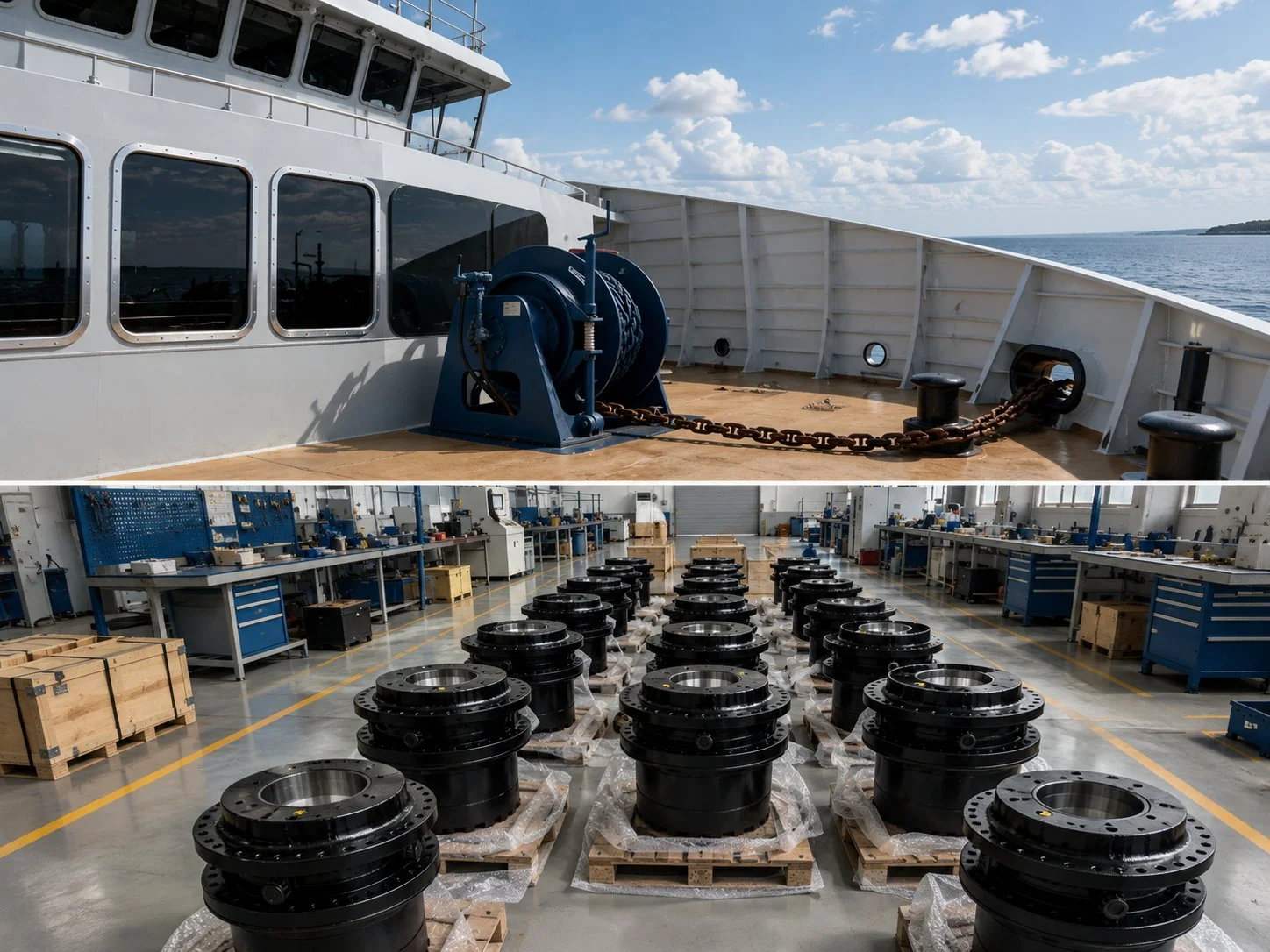
The ZL75 at ratio 80-120, 2-3 stage, with 350-600 kW electric motors replaces the entire 410W3-413W3 hydraulic tier for new-build offshore cranes. The 175,000 Nm peak handles the dynamic load amplification from vessel motion (DAF 1.3-2.0) without derating the continuous capacity. The slewing drive et wheel drive complete the all-electric crane package from the same supplier.
Electric Construction and Shipyard Cranes
Heavy tower cranes, luffing-jib cranes, and shipyard gantry cranes in the 45-60 tonne class. The ZL75 at ratio 100-180 provides the hoist torque for steel erection, hull section positioning, and heavy modular construction where the crane operates near residential areas or inside buildings under construction. Helical gear noise (60-66 dB(A) at 1 m) keeps the crane within urban construction noise limits that hydraulic cranes at this capacity cannot meet.
Electric Mining Main Production Hoists
The ZL75 at ratio 200-600, 3-4 stage, with 300-600 kW AC motors provides the production winding torque for mines at 300-600 metre depths with 15-25 tonne skip loads. At these shaft depths, the combined skip and rope weight falls within the ZL75 continuous capacity, and the 175,000 Nm peak absorbs the skip-loading impact at the bottom of the shaft. Regen braking during skip descent returns 20-35% of the potential energy to the mine electrical grid.
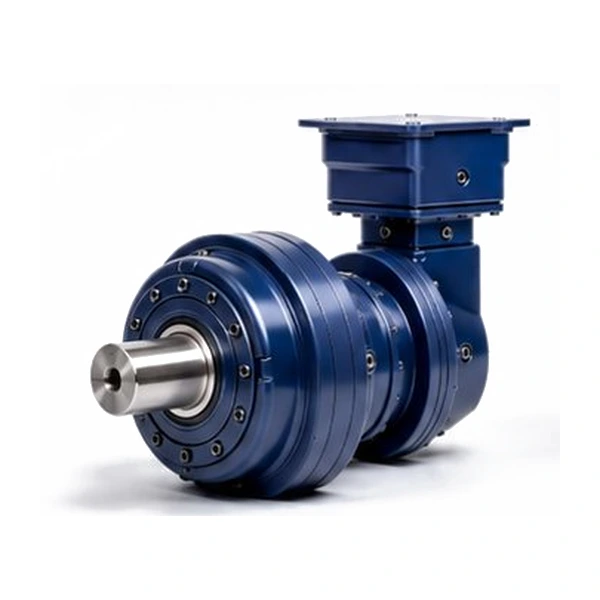
The ZL Electric Winch Drive Family

Electric Winch Drive Planetary Gearbox — ZL75 Heavy Crane FAQ
Rapports de terrain
50 t all-electric offshore construction vessel crane, ZL75 at ratio 90, 2-stage, 500 kW PMSM. This is the crane that convinced our board to standardise on all-electric for the next generation of offshore cranes. The 175,000 Nm peak absorbed the classification test drop — 55 t at 1.25x dynamic factor — without the VFD recording any overcurrent fault. Noise in the operator cabin during full-load hoisting: 48 dB(A). The vessel electrical system recovered 24% of the crane energy consumption through regen over the first 6 months. The ZL75 is now our standard main hoist drive for the 40-60 t electric crane family — 8 units ordered across 3 vessel contracts.
The ZL75 replaced three separate gearbox part numbers across our 40 t, 50 t, and 60 t crane range — all now use the ZL75 at different ratios. Spare parts inventory: reduced from 3 kits to 1. Field service training: one programme instead of three. The 40 t crane operates at approximately 55% of the ZL75 continuous capacity with a projected overhaul interval of 30,000+ hours. The 60 t crane operates at approximately 95% continuous with a projected interval of 20,000 hours. Both are acceptable business cases. The single-gearbox strategy saves our factory approximately EUR 120,000 per year in parts logistics and training costs across the three crane models.
Main production winder at a 480-metre copper mine, ZL75 at ratio 300, 4-stage, 450 kW AC motor with VFD. The skip carries 20 tonnes of ore; rope weight at full depth is 2,400 kg. Sustained drum torque during loaded hoist: 55,000 Nm — 79% of the ZL75 continuous rating. Regen recovery during empty skip descent: 28% of the hoist energy, measured at 18.5 kWh per cycle. The mine electrical bill has dropped by 14% since the ZL75 replaced the previous hydraulic winder. The 4-star reflects a commissioning expectation: the mine safety inspector expected an integrated in-drum brake (as per the 4xxW tradition). The ZL75 does not have one. We satisfied the inspector with a motor electromagnetic brake plus an external drum calliper — both independently rated for full load hold. The approval process took 6 weeks longer than it would have with an in-drum brake. For mines transitioning from 4xxW to ZL, briefing the mine inspector on the ZL braking philosophy before the gearbox arrives would prevent this delay.
Informations complémentaires
| Éditeur | Cxm |
|---|
Produits associés
-
ZR75 Winch Drive Planetary Gearbox — Right-Angle
-
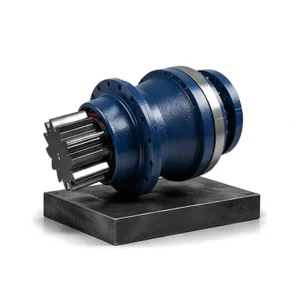
ZL95 Winch Drive Planetary Gearbox
-
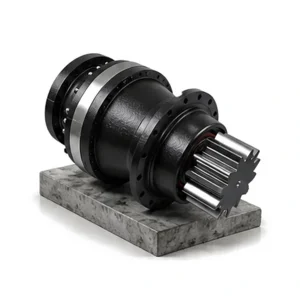
ZL55 Winch Drive Planetary Gearbox — 1-5 Stage
-
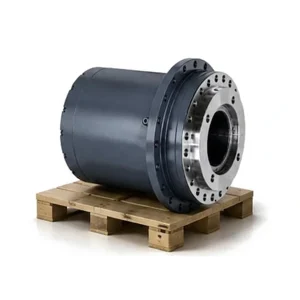
Réducteur planétaire pour entraînement de treuil 419W3
-

Réducteur planétaire pour entraînement de treuil 416W3
-
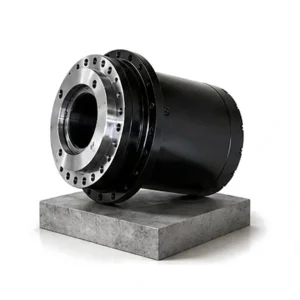
414W3 Winch Drive Planetary Gearbox Reducer
-

Réducteur planétaire à 2 étages pour entraînement de treuil 403W2
-
Réducteur planétaire pour entraînement de treuil 402W2