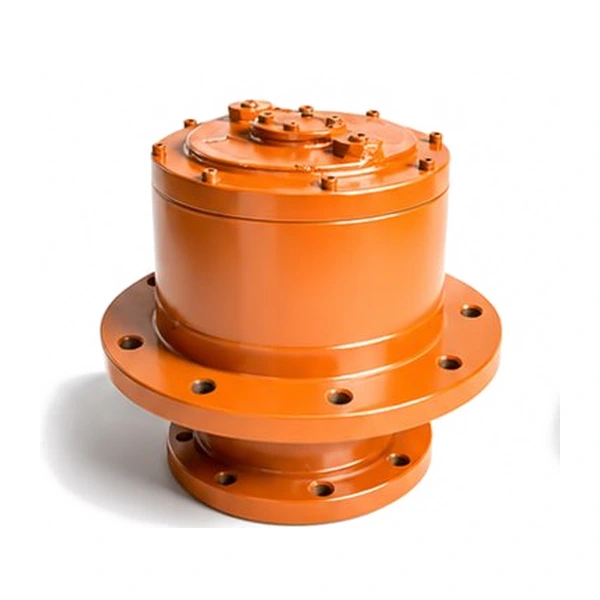
406BW3 Penggerak Winch Gearbox Reducer Planetary

406BW3 — The 406 Family Heavy-Duty Specialist
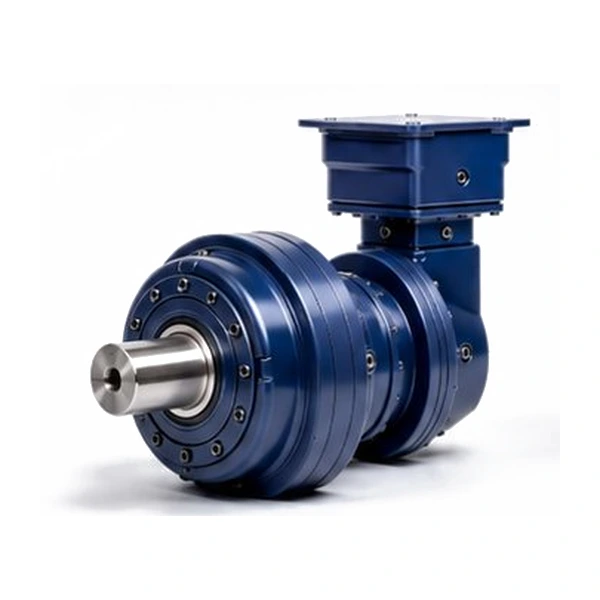
The 406AW covers every speed. The 406W serves production volume. The EP-406BW3 handles the loads that break the other two. At 17,500 Nm — 40% more torque than the 406W and 4,500 Nm beyond what the 406AW can deliver — the 406BW3 is the winch drive planetary gearbox for machines where the hoist duty is violent: grab cranes slamming clamshells into bulk piles, scrap magnets jerking ferrous debris off stockpiles, dredger buckets tearing through river sediment.
The three-stage architecture provides the torque headroom that two stages geometrically cannot achieve within the 406 housing diameter. The price is weight (270 kg versus 240 for the 406W) and a narrower ratio window (63-136 versus 28-140). But for grab crane applications, the narrow ratio range is irrelevant — the grab cycle operates within a fixed speed envelope that 63-136 covers entirely, and the additional 4,500 Nm of torque is the difference between a gearbox that survives the shock loads and one that doesn't.
3,500 RPM
95% Eff.
406BW3 Winch Drive Planetary Gearbox — Technical Parameters
| Torsi keluaran terukur | 17,500 Nm |
| Gear ratio range | 63 to 136 (three-stage planetary) |
| Maximum input speed | 3,500 rpm |
| Maximum output speed | 25 rpm (FEM M5 continuous duty) |
| Mechanical efficiency | ≥ 95% |
| Rem parkir | 430 Nm, multi-disc, spring-applied, hydraulic release |
| Brake at drum (ratio-dependent) | 27,090 Nm (r=63) to 58,480 Nm (r=136) |
| Pemasangan | Rotating housing flanges |
| Berat kering | Approx. 270 kg |
| Pelumasan | Oil bath splash, EP gear oil |
| Suhu pengoperasian | -20 to +85 deg C |
How the Third Stage Delivers 40% More Torque Within the Same Housing Diameter
The 406W two-stage design delivers 13,000 Nm. The 406BW3 three-stage design delivers 17,500 Nm. Both use the same housing diameter class. The third stage does not simply multiply more — it redistributes the internal loading in a way that unlocks torque capacity the two-stage geometry cannot reach.
Lower per-stage torque
In a two-stage design at ratio 100, the first stage carries approximately ratio 10 and the second carries ratio 10 — the first stage sees the full 13,000 Nm divided by 10 = 1,300 Nm at the sun gear. In a three-stage design at the same total ratio 100, each stage contributes approximately ratio 4.6 — the first stage sees 17,500 / 4.6 = 3,804 Nm spread across a wider gear face at lower tooth stress. The three-stage distribution allows higher total torque without exceeding the tooth bending limit of any individual stage.
Lower bearing radial loads
Each planetary stage generates radial loads on the output bearing proportional to the tangential gear forces. With three stages distributing the total ratio, the tangential forces per stage are lower — reducing the radial bearing loads by approximately 25-35% compared to a two-stage design at the same total torque. This extends bearing L10 life and allows the 406BW3 to sustain the repeated shock loads of grab crane duty without premature bearing fatigue.
Greater thermal mass
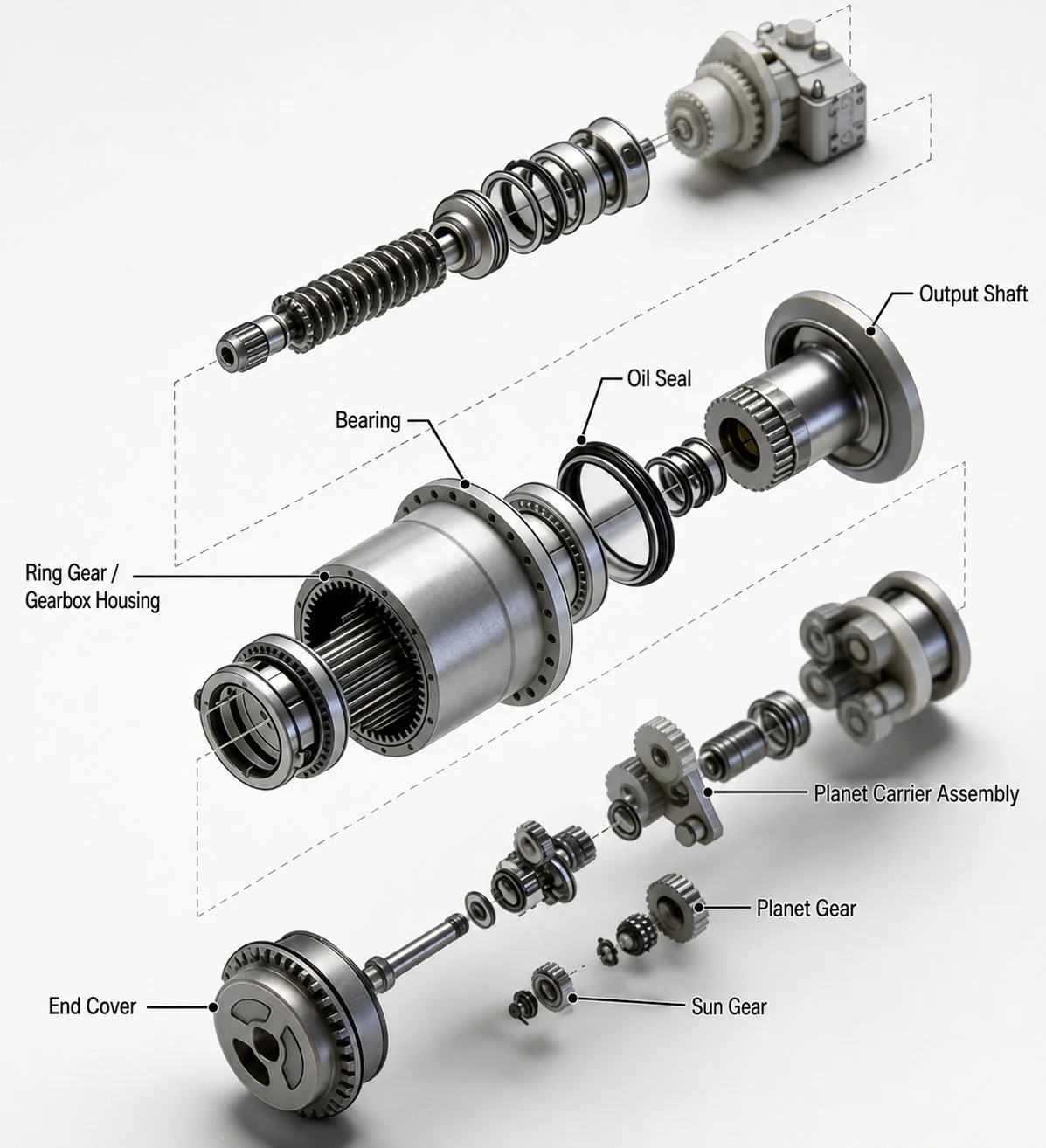
The three-stage gear train contains 50% more steel mass than the two-stage equivalent — 9 planet gears instead of 6, 3 sun gears instead of 2, 3 carriers instead of 2. This additional mass absorbs and distributes heat during high-duty-cycle operation, slowing the oil temperature rise during sustained grab crane cycling. The 270 kg total weight is not wasted — it is thermal capacity that keeps the oil below the 85 deg C limit during the most demanding operations the 406 housing can support.
The Grab Crane Duty Cycle — Why 17,500 Nm Is the Right Number
Grab cranes do not lift and lower — they slam, tear, grab, and jerk. The torque profile of a grab crane hoist cycle is fundamentally different from a general cargo crane, and the 406BW3 exists because the 406W cannot survive this profile at production duty rates.
| Cycle Phase | Lamanya | Torque Character | Peak / Rated |
|---|---|---|---|
| Free-fall drop | 3-5 sec | Zero (gravity-driven) | 0% |
| Grab impact and closure | 1-3 sec | Extreme shock spike | 180-250% |
| Loaded hoist | 10-25 sec | Sustained high load | 80-100% |
| Slew to discharge | 5-10 sec | Moderate (holding) | 40-60% |
| Open and dump | 2-4 sec | Reversal spike | 50-80% |
| Return swing + lower | 8-15 sec | Light (empty grab weight) | 15-25% |
When the grab strikes the bulk pile and begins closing, the hoist cable goes from slack to maximum tension in under one second. This produces a torque spike of 180-250% of rated continuous load. The 406W at 13,000 Nm would see spikes of 23,400-32,500 Nm — well beyond its 2x peak capacity of 26,000 Nm. The 406BW3 at 17,500 Nm absorbs the same grab impact within its 2x peak capacity of 35,000 Nm, keeping the transient within the safe operating envelope.
17,500 Nm — The Winch Drive for Machines That Slam, Tear, and Grab
Hydraulic Grab and Clamshell Cranes
Harbour cranes handling coal, iron ore, grain, and woodchips with 5-12 m³ hydraulic grabs at cycle rates of 15-30 per hour. The 406BW3 at ratio 80-110 provides the torque to hoist a loaded grab (8-15 tonnes including grab weight) at 10-18 m/min while absorbing the 250% shock spikes during grab impact. The slewing drive rotates the crane between the ship hold and the hopper, and the wheel drive repositions the crane along the quay.
Scrap Yard Magnet and Grapple Cranes
Overhead cranes and mobile cranes handling ferrous scrap with electromagnets or hydraulic grapples at 20-40 cycles per hour. The scrap handling duty produces torque reversals (magnet engages, load jerks off the pile, cable snaps taut) that are more violent than grab crane impacts because the load engagement is less predictable — a tangled steel beam separating from a scrap pile generates shock loads that defy calculation. The 406BW3 17,500 Nm with 2x peak headroom provides the margin these unpredictable loads demand.
Dredger Bucket Hoists
Clamshell and grab dredgers excavating river silt, harbour mud, and marine sediment with 3-8 m³ buckets. The dredging cycle is slower than harbour crane grab work (8-15 cycles per hour) but the individual shock loads are more severe because the bucket penetrates the seabed under gravity and then tears material loose during closure. The 406BW3 at ratio 100-136 provides both the torque for loaded hoist through water and the shock absorption for bucket impact at the excavation interface.
The 406 Family and Beyond
Winch Drive Planetary Gearbox — Heavy-Duty Grab Crane FAQ
Field Reports
Coal handling grab crane, 10 t grab capacity, 22 cycles per hour, 16 hours per day. The 406BW3 at ratio 85 replaced a 406W that was showing bearing distress at 9,000 hours — the shock loading during grab closure was exceeding the 406W peak capacity 6-8 times per hour. The 406BW3 has completed 7,500 hours of identical duty with oil analysis trending clean and no vibration increase. The 40% torque headroom turned a survival situation into a comfortable operating margin. Brake disc replacement at 10,500 hours — slightly ahead of the 12,000-hour target, consistent with our cycle rate. Same brake kit as the 406W units on our auxiliary hoists.
Overhead magnet crane in a ferrous scrap processing yard. The 406BW3 at ratio 100 handles a 4-tonne electromagnet lifting unpredictable loads — sometimes a single 3-tonne beam tears free, sometimes a tangled mass of 800 kg separates in stages. The torque spikes from beam separation are brutal and unmeasurable in advance. After 11 months of 3-shift operation, the gearbox has not complained. Our previous supplier drive (rated at 14,000 Nm) lasted 7 months before the first-stage sun gear failed from repeated overload. The 17,500 Nm of the 406BW3 absorbs what the scrap pile throws at it.
Clamshell dredger, 6 m³ bucket, 12 cycles per hour. The 406BW3 at ratio 120 handles the bucket impact and loaded hoist through 8 metres of water at 6 m/min. Performance is solid and the three-stage gear noise is acceptable in the dredger engine room environment. The 4-star is a thermal observation: during sustained summer operation (35 deg C ambient, 12-hour shifts), the oil temperature reaches 78 deg C — close to the 85 deg C limit. We installed an external oil cooler with a thermostat bypass, which capped the temperature at 65 deg C. For grab and dredger applications in hot climates, the 406BW3 product specification should include a thermal power derating chart or a recommendation for external cooling above 30 deg C ambient.
Informasi Tambahan
| Editor | Cxm |
|---|
Produk terkait
-
ZR75 Winch Drive Planetary Gearbox — Right-Angle
-
ZL200 Winch Drive Planetary Gearbox
-
ZL120 Winch Drive Planetary Gearbox
-
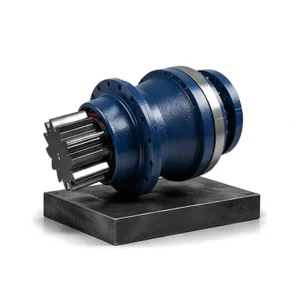
ZL95 Winch Drive Planetary Gearbox
-
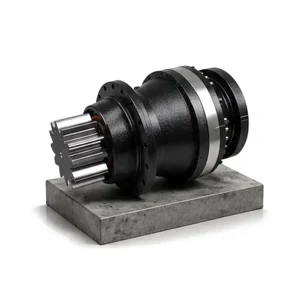
ZL85 Winch Drive Planetary Gearbox
-

403W2 Penggerak Winch Gearbox Reducer Planetary — 2-Tahap
-
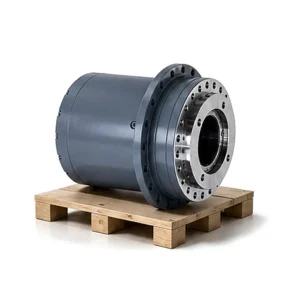
Penggerak Winch 402W2 Gearbox Reducer Planetary
-
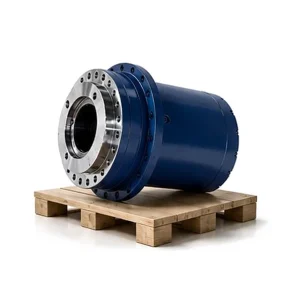
Penggerak Winch 400W1 Gearbox Reducer Planetary