606L2, L3 Planetary Wheel Drive Gearbox Reducer
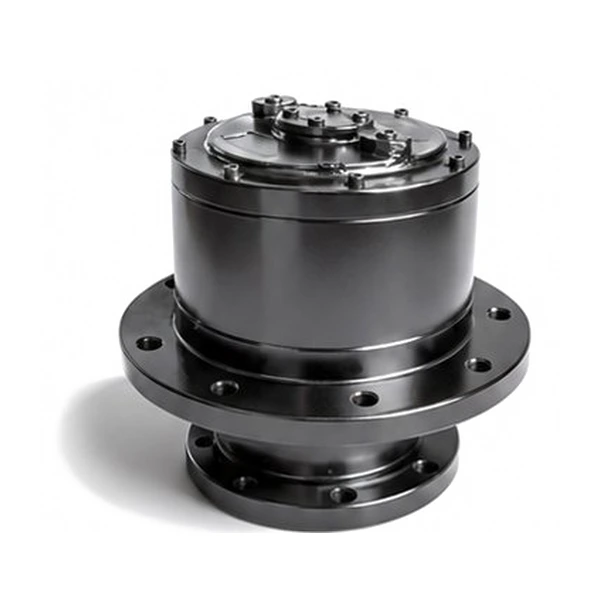
606L2 / L3 — Choose Your Architecture, Keep the Same 12,000 Nm
Ratios 30, 35, 43. Shorter housing, higher thermal capacity, maximum efficiency. For machines that prioritise speed and continuous duty cycle over extreme reduction.
Ratios 30, 35, 43, 68, 79. Full ratio coverage including high-reduction creep speeds. Accepts smaller-displacement, higher-speed motors for lower motor cost.
The EP-606 crosses the 10,000 Nm threshold in the planetary wheel drive gearbox range and introduces a capability that no smaller model offers: the same torque output in two different internal architectures. This matters because machine designers face a fundamental trade-off between the number of planetary stages and the motor they can use. More stages mean higher reduction per stage, which means the motor can be smaller, spin faster, and cost less — but the additional gear mesh reduces efficiency by 1-2% per stage and lengthens the housing.
The 606 L2/L3 choice lets engineers resolve this trade-off at the specification stage rather than after commitment. At ratios 30-43, both variants are available and the choice is purely about housing length, motor preference, and thermal duty. At ratios 68 and 79, only the L3 provides the necessary reduction — these high ratios are geometrically impossible in a two-stage planetary arrangement at this torque class.

300-800 Nm Brake
165 kg
3,000 RPM
606L2 / L3 Wheel Drive Gearbox — Technical Parameters
| Output torque (rated max) | 12,000 Nm |
| Rasio gigi | 30 | 35 | 43 | 68 | 79 |
| Configuration options | L2 (2-stage): ratios 30, 35, 43 · L3 (3-stage): ratios 30, 35, 43, 68, 79 |
| Kecepatan input maksimum | 3.000 rpm |
| Efisiensi mekanis | ≥ 94% |
| Parking brake range | 300 - 800 Nm, spring-applied, hydraulic release (multiple disc options) |
| Emergency towing | Manual declutch (free-wheel disconnect) |
| Wheel mounting | Rotating flange, SAE/ISO bolt circle |
| Berat kering | Approx. 165 kg (varies by L2/L3 and brake option) |
| Pelumasan | Oil bath splash, API GL-5 EP gear oil |
| Suhu pengoperasian | -25 to +85 deg C (Viton seals available) |
| Gear material | Carburised alloy steel, CNC ground, HRC 58-62 |
Two Stages or Three — How to Choose the Right Wheel Drive Architecture
| Decision Factor | 606L2 (Two-Stage) | 606L3 (Three-Stage) |
|---|---|---|
| Available ratios | 30, 35, 43 | 30, 35, 43, 68, 79 |
| Efficiency at ratio 35 | ~95% | ~94% |
| Housing axial length | Shorter | Longer (additional stage) |
| Thermal power capacity | Higher (fewer mesh losses) | Lower |
| Motor displacement needed | Larger (lower ratio) | Smaller at high ratios |
| Max ground speed (600 mm tyre) | 22.6 km/h at ratio 30 | 8.6 km/h at ratio 79 |
| Best suited for | Fast travel, continuous duty | Heavy traction, steep grades |
Choose L2 when:
Your target ratio is 30, 35, or 43. Continuous-duty applications where thermal capacity matters (loaders cycling 8+ hours at full load). Chassis designs where the shorter housing provides critical tyre clearance. Machines that need maximum travel speed for road transit.
Choose L3 when:
Your target ratio is 68 or 79 (L2 cannot reach these). Your hydraulic system uses high-speed, small-displacement motors that benefit from the additional gear reduction. Machines operating primarily at low speeds on steep terrain where the 1% efficiency difference is less important than the traction force delivered.
300 to 800 Nm — Selecting the Right Brake for a 12,000 Nm Wheel Drive
The 606 offers the widest brake torque range in the planetary wheel drive catalogue. The correct size depends on the vehicle weight, the steepest grade the machine must park on, the tyre radius, and the number of driven wheels. The chart below provides starting-point recommendations — final verification requires a vehicle-specific grade-holding calculation.
| Vehicle Class | GVW | Max Park Grade | Brake (Nm) | Rationale |
|---|---|---|---|---|
| Yard loader, flat site | 12-15 t | 5% | 300 | Minimal grade, 4WD, ample ratio multiplication |
| General construction loader | 15-18 t | 15% | 500 | Moderate grades, mixed terrain |
| Quarry / mining hauler | 18-25 t | 20% | 650 | Steep ramps, loaded on grade, safety-critical |
| ADT / steep-site earthmover | 20-28 t | 25%+ | 800 | Maximum holding force, regulatory compliance |
Brake holding torque at the wheel = brake torque x gear ratio. At ratio 43 with 800 Nm brake: 800 x 43 = 34,400 Nm per wheel. For a 25-tonne machine with 600 mm tyre radius and 4WD: total holding force = (34,400 / 0.6) x 4 = 229,333 N, holding the vehicle on a gradient of approximately 229,333 / (25,000 x 9.81) = 93%. In practice, tyre-to-ground adhesion limits the holdable grade to approximately 30-40% on gravel — the brake capacity significantly exceeds the traction limit, which is the correct engineering outcome.
Heavy Wheel Drive Applications — 12,000 Nm and Above
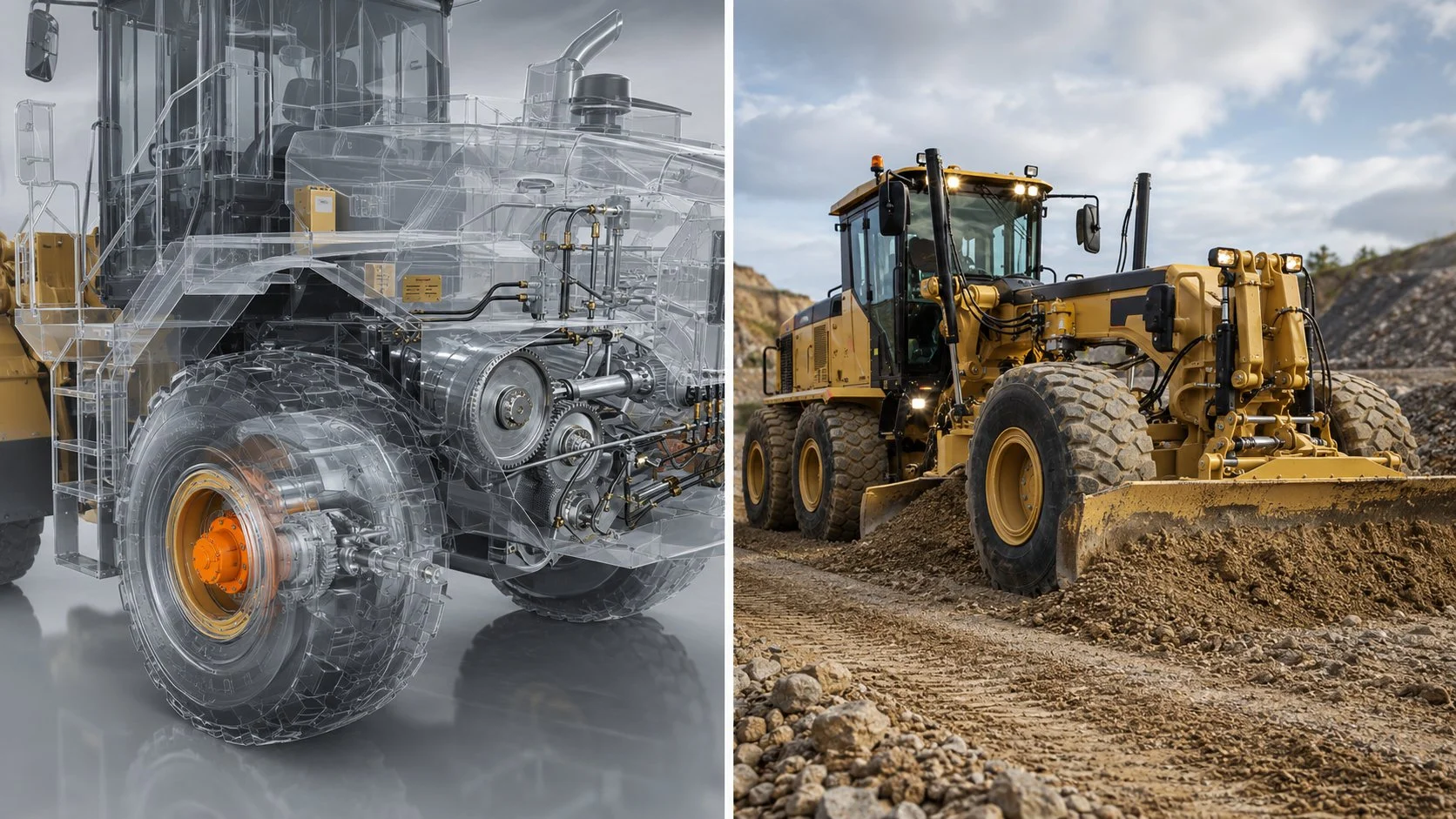
Large Wheel Loaders (12-18 Tonne)
Production loaders in quarries, sand pits, and recycling yards that fill 2.5-4.0 m³ buckets at 150-200 cycles per shift. The 606L2 at ratio 35 or 43 balances stockpile penetration speed with loaded carry speed. The L2 configuration is preferred here because the continuous-duty cycle demands maximum thermal headroom. The 500-650 Nm brake option handles the 15-20% ramp grades typical of quarry haul roads.
Articulated Dump Trucks (ADTs)
ADTs in the 20-28 tonne payload class navigate steep, wet haul roads that would stop a rigid-frame truck. The 606L3 at ratio 68 or 79 provides the creep-speed traction these machines need on 20-25% loaded uphill grades. The 800 Nm brake option is essential for ADTs because the machine must hold safely on any grade it can climb while fully loaded with the engine off — a regulatory requirement in most mining jurisdictions.
Heavy Forklifts and Container Handlers
15-25 tonne capacity forklifts for steel coil handling, timber yard operations, and container depots. The 606L2 at ratio 30 or 35 provides the 15-20 km/h travel speed these machines need for productive yard transit, while the full 12,000 Nm is available for climbing loading ramps with a fully loaded mast. The gearbox planet penggerak putar handles the mast tilt and sideshift functions on the same hydraulic platform.
Across the Planetary Gearbox Range

Planetary Wheel Drive Gearbox — Dual-Configuration FAQ
Laporan Lapangan
Six 606L2 units at ratio 43 on our 15-tonne production loaders. These machines run 10-hour shifts, 6 days a week, filling haul trucks from a granite stockpile. After 14 months and roughly 3,600 hours per unit, no bearing issues, no seal leaks, and the brake disc inspection at 3,000 hours showed minimal wear. The oil analysis trending is clean. The L2 was the right call for this application — continuous duty at 43:1 needs the thermal headroom that the shorter two-stage housing provides.
We prototyped both the 606L2 at ratio 43 and the 606L3 at ratio 68 on our 25-tonne ADT platform during the development phase. Ever-Power supplied one of each for back-to-back testing on the same vehicle. The L3 at 68 won because our haul roads in the target market (West African gold mining) average 22% grade and the extra reduction meant we could use a smaller pump without sacrificing loaded hill-climb speed. The L2 at 43 went into our flat-terrain quarry variant. Same vehicle, two spec sheets, one wheel drive family.
Steel coil handling forklift, 20-tonne capacity, 606L2 ratio 30. The drive handles the 16% ramp into our warehouse with a loaded coil without any hesitation. The 500 Nm brake holds on the ramp with engine off. The 4-star is because our chassis design left very tight clearance between the 606 housing and the inner fender, and the L2 barely fits — the L3 would not have cleared. It would help if the product data sheet included a clear dimensional envelope drawing so we could have verified this before the first prototype. The drive itself is performing well.
Informasi Tambahan
| Editor | Cxm |
|---|
Produk terkait
-
ZL02 Wheel Drive Planetary Gearbox
-
613L3 Planetary Wheel Drive Gearbox Reducer
-
611L2, L3 Planetary Wheel Drive Gearbox Reducer
-

615L3 Planetary Wheel Drive Gearbox Reducer — 3-Stage
-
609L2, L3 Planetary Wheel Drive Gearbox
-
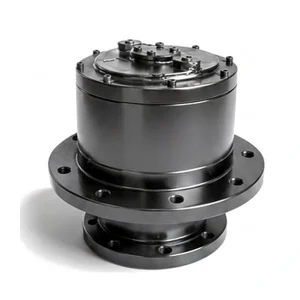
607L2, L3 Planetary Wheel Drive Gearbox Reducer
-
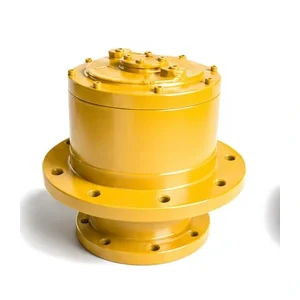
602L2 Planetary Wheel Drive Gearbox Reducer
-
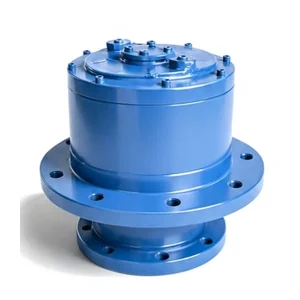
603L2B Planetary Wheel Drive Gearbox Reducer — 2-Stage