Wheel Drive Series — Municipal Waste Collection Equipment
Wheel Drive Planetary Gearbox for Refuse Compactor Trucks
A residential refuse collection truck stops and starts at every house on its route — accumulating 800 to 1,200 brake-and-launch cycles in a single working day, every working day, for the 7 to 10 year service life of the vehicle. No other wheel drive application outside specialised industrial equipment imposes this combination of extreme cycle frequency, corrosive leachate exposure, and continuous urban stop-start duty on the drive axle gearbox.
1,000+ stop-start cycles/day
Leachate corrosion resistant
IP67 sealing standard
Municipal refuse collection is a duty cycle unlike any other application in the wheel drive product range — not because of extreme torque or extreme environment in isolation, but because of the sheer repetition of full-cycle braking and acceleration events that a single collection route imposes day after day. A residential collection truck servicing 800 to 1,200 stops per route brakes to a stop, allows the loading crew to empty bins into the hopper, then accelerates back to the next collection point — a complete drivetrain cycle repeated well over a thousand times in a single working shift, 250 or more working days per year, for a vehicle service life that may extend 7 to 10 years before replacement. The wheel drive planetary gearbox on every refuse truck drive axle must absorb this extraordinary cycle count while also tolerating the corrosive leachate fluid that drains from compacted waste and inevitably finds its way onto the vehicle undercarriage during collection and at the transfer station discharge point. Korea Ever-Power supplies planetary wheel drive gearboxes for refuse collection vehicle applications across the full range from light commercial collection trucks through heavy municipal compactor vehicles and roll-off container handling trucks.
The economic case for purpose-engineered refuse collection vehicle gearboxes rests on a straightforward calculation: a municipal fleet of 50 collection trucks, each accumulating 1,000 stop-start cycles per working day, generates 50,000 drivetrain launch events daily across the fleet. A gearbox specification that falls short of the actual cycle demand by even a modest margin translates into accelerated replacement across the entire fleet simultaneously, since all vehicles in a homogeneous fleet experience broadly similar route duty profiles and will approach their fatigue limit within a similar timeframe. This fleet-wide failure clustering risk is the primary reason municipal procurement specifications increasingly call out explicit cycle-count fatigue verification rather than relying on the generic torque rating that sufficed for lower-cycle commercial vehicle applications.
Refuse Collection Vehicle Classes and Drive Duty Profiles
Residential Rear-Loading Compactor Trucks (6,000–14,000 Nm): The most common refuse collection vehicle, serving residential neighbourhoods with the highest stop frequency of any waste collection vehicle type — a typical route may include 800 to 1,200 individual collection stops in a single shift, with the truck creeping forward a few metres between each stop or grouped stop cluster. Drive axle torque of 6,000 to 14,000 Nm provides adequate launch acceleration from each stop while keeping the gearbox within a compact envelope suitable for the medium-duty truck chassis these vehicles use.
Commercial Front-Loading Compactor Trucks (10,000–20,000 Nm): Front-loading trucks service commercial dumpsters using a hydraulic arm system, typically making fewer but heavier-load stops than residential collection — 60 to 150 stops per route, with each dumpster lift cycle imposing significant hydraulic load on the chassis in addition to the drivetrain demands of inter-stop travel. Higher drive axle torque of 10,000 to 20,000 Nm accommodates the heavier gross vehicle weight that commercial waste volumes require, while still delivering adequate launch performance for the frequent stop-start pattern of commercial route service.
Roll-Off and Heavy Municipal Vehicles (14,000–25,000 Nm): Roll-off trucks that transport large open-top containers to and from construction sites and industrial facilities, and heavy municipal vehicles handling bulky waste or operating at transfer stations, represent the upper torque range of refuse collection vehicle drive axles. These vehicles experience lower stop-frequency duty cycles than residential or commercial route trucks but impose higher peak loads during container loading and unloading operations, requiring drive axle torque of 14,000 to 25,000 Nm to handle the combination of heavy gross vehicle weight and the traction demands of manoeuvring at construction sites and waste transfer facilities.
High-Cycle Stop-Start Engineering: Surviving 1,000+ Cycles Per Day
A residential refuse collection route generates a stop-start cycle frequency that exceeds almost every other commercial vehicle application — more frequent than urban delivery vans, more frequent than school bus routes, and approaching the cycle intensity of dedicated industrial high-cycle equipment like ASRS hoist drives, but transmitted through a vehicle drivetrain rather than a fixed installation gearbox.
Gear Tooth Fatigue at Million-Cycle Counts
At 1,000 stop-start cycles per day, 250 working days per year, and a 7-year vehicle service life, a single drive axle gearbox accumulates 1.75 million complete launch cycles. Korea Ever-Power refuse truck wheel drive gearboxes use case-hardened, shot-peened gear teeth rated for this elevated cycle count, with fatigue calculations performed against the actual stop-start duty pattern rather than the lower cycle counts typical of standard highway truck axle applications.
Planet Bearing Endurance Under Repeated Acceleration
Each launch cycle imposes a brief period of elevated torque on the planet bearings as the vehicle accelerates from a complete stop, distinct from the steady lower-torque condition during constant-speed travel. The repeated transition between these load states across more than a thousand cycles daily places particular demand on planet bearing fatigue life, which Korea Ever-Power sizes against the actual launch-cycle load spectrum rather than a simplified average-torque assumption.
Seal Cycle Endurance
The repeated low-speed creep and full-stop pattern of refuse collection imposes a different seal wear mechanism than continuous highway operation — the seal lip experiences more direction reversals and dwell periods at the same shaft position, conditions that can accelerate localised wear at standard rubber lip seals. Korea Ever-Power specifies floating face cassette seals for refuse truck applications, which maintain consistent sealing performance regardless of the repeated stop-start motion pattern.
Heat Accumulation From Frequent Launches
Each launch event generates a brief heat pulse in the gear mesh and bearings from the elevated torque transmission, and at the cycle frequency of refuse collection these pulses can accumulate faster than the gearbox sheds heat between cycles, particularly during slow residential route service where the vehicle never reaches the steady airflow conditions of highway-speed travel. Korea Ever-Power refuse truck gearbox thermal design accounts for this elevated heat accumulation rate inherent to high-frequency low-speed stop-start operation.
Korea Ever-Power Refuse Collection Vehicle Wheel Drive Selection Guide
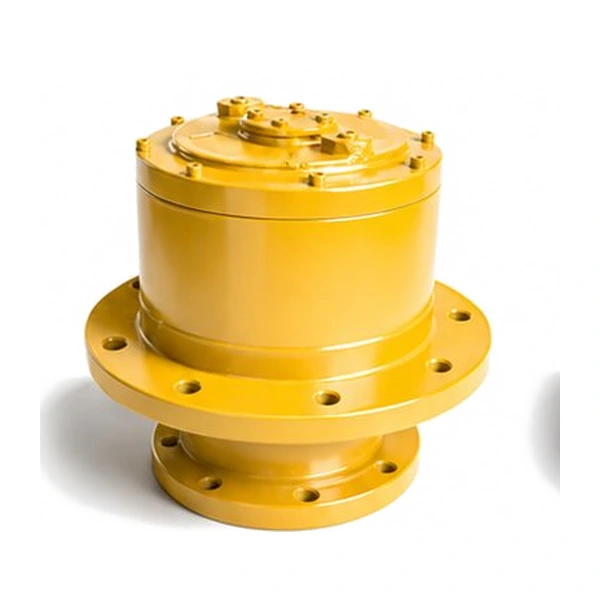
| Model | Torsi Keluaran | Tahapan | Vehicle Class | Cycle Rating | Segel |
|---|---|---|---|---|---|
| 602L2 | 6,000 – 12,000 Nm | 2 | Residential rear-loader | 2.0M cycles | IP67 FKM |
| 603L2A | 8,000 – 14,000 Nm | 2 | Heavy residential rear-loader | 2.0M cycles | IP67 FKM |
| 607L2/L3 | 12,000 – 20,000 Nm | 2–3 | Commercial front-loader | 1.0M cycles | IP67 FKM |
| 609L2/L3 | 14,000 – 25,000 Nm | 2–3 | Roll-off, heavy municipal | 0.5M cycles | IP67 FKM |
Leachate Corrosion Resistance: A Different Chemical Challenge Than Salt or Mud
Leachate — the liquid that drains from compacted organic waste — presents a distinct chemical corrosion challenge compared to the salt brine, forest mud, or marine exposure already addressed elsewhere in the Korea Ever-Power product range. Leachate is acidic, contains dissolved organic acids and decomposition byproducts, and frequently contacts the vehicle undercarriage during compaction operations and at waste transfer station discharge points where the truck body is raised to empty its load.
Acid-Resistant Coating Specification: Korea Ever-Power refuse collection vehicle gearboxes use an epoxy coating system selected for resistance to the organic acid chemistry of waste leachate, distinct from the chloride-resistant formulation specified for snowplow truck and marine applications, providing the correct chemical resistance for this specific exposure type rather than a generic corrosion-resistant coating that may not address leachate-specific degradation mechanisms.
Seal Compound Compatibility: The FKM seal compounds specified throughout the Korea Ever-Power product range provide good general chemical resistance, including resistance to the organic acid exposure of refuse leachate, without requiring a specialised seal compound beyond the standard marine and industrial-grade FKM already used for other demanding sealing applications.
Wash-Down Resistance: Municipal refuse fleets typically wash down vehicles at the end of each shift to remove accumulated waste residue and odour-causing organic material, exposing the gearbox to high-pressure wash-down with detergent solutions on a daily basis — far more frequent wash-down exposure than most other wheel drive applications experience. Korea Ever-Power refuse truck gearbox sealing is rated for daily high-pressure wash-down without IP rating degradation across the vehicle service life.
Common Refuse Truck Wheel Drive Failures and Prevention
| Failure Mode | Root Cause | Detection | Prevention |
|---|---|---|---|
| Gear tooth fatigue — premature | Standard highway-duty gearbox specified without accounting for the elevated daily stop-start cycle count of residential route service | Gear noise increase well before the expected vehicle service interval; metallic debris at routine oil check | Specify gearbox fatigue rating against actual route cycle count, not standard highway truck duty assumptions |
| Seal degradation — leachate exposure | Standard NBR seal degraded by sustained organic acid exposure from leachate contact at compaction and transfer station operations | Oil discolouration at routine sample; seal swelling visible at inspection | Specify FKM seal compound for leachate resistance; rinse undercarriage daily at end of shift wash-down |
| Oil overheating — slow residential service | Heat accumulation from frequent launch cycles exceeding the natural convection cooling available at slow residential route speeds | Oil temperature trending high on routine fleet telematics monitoring; accelerated oil oxidation at sample analysis | Verify gearbox thermal rating against actual route cycle frequency; consider auxiliary cooling for highest-density urban routes |
| Coating breakdown — wash-down chemicals | Standard industrial paint degraded by daily detergent wash-down combined with leachate organic acid exposure | Coating delamination visible at routine fleet inspection; substrate corrosion beginning at breach points | Specify leachate and detergent-resistant epoxy coating system; inspect coating condition during periodic fleet maintenance |
Fleet Maintenance Strategy for High-Vehicle-Count Municipal Operations
Municipal refuse fleets typically operate larger vehicle counts than most other commercial fleet categories, with maintenance departments managing dozens to hundreds of vehicles using a limited specialist maintenance workforce. Korea Ever-Power gearbox design for this application category prioritises maintenance simplicity at fleet scale:
Standardised Oil Change Intervals Across Fleet: Korea Ever-Power recommends a standardised oil change interval for refuse collection vehicle gearboxes regardless of individual vehicle route assignment, simplifying fleet maintenance scheduling compared to route-specific intervals that would require tracking individual vehicle cycle counts against a variable service schedule.
Common Parts Across Vehicle Classes: Where fleet composition includes both residential and commercial collection vehicle classes, Korea Ever-Power gearbox model selection can be coordinated to maximise common seal, bearing, and brake component parts across the fleet, reducing the spare parts inventory complexity for maintenance departments managing mixed vehicle class fleets.
Telematics Integration: Korea Ever-Power gearboxes include oil temperature sensor port provisions compatible with standard fleet telematics systems, enabling municipal fleet managers to monitor gearbox thermal condition across the entire fleet remotely and identify vehicles approaching abnormal operating parameters before a roadside failure interrupts route service.
Why Municipal Fleets and Truck Body Manufacturers Choose Korea Ever-Power
1.75M
Verified launch cycle fatigue rating for residential collection routes — matched to actual 7-year service life stop-start cycle accumulation
Leachate
Specific acid-resistant coating chemistry distinct from chloride or marine protection — matched to actual waste decomposition chemistry
Daily wash
IP67 sealing rated for daily high-pressure detergent wash-down across the full vehicle service life without degradation
Sealed
Sealed-for-life output bearings reducing periodic greasing burden for fleet maintenance teams managing high vehicle counts
Korea Ever-Power application engineers provide free wheel drive gearbox sizing for refuse collection fleet programmes, evaluating route stop density, vehicle weight class, and waste type to recommend the appropriate cycle fatigue rating and corrosion protection level. Contact us with your route type, vehicle weight class, and daily stop count for a free application review within 48 hours.
Source Your Refuse Truck Wheel Drive Planetary Gearbox
Whether you are specifying drive axles for new refuse collection truck bodies, replacing gearboxes across an aging municipal fleet, or upgrading to higher-cycle-rated units for high-density urban routes — Korea Ever-Power delivers high-cycle, leachate-resistant planetary wheel drive gearboxes built for the realities of waste collection service. Send us your route type, vehicle weight class, and daily stop count for a free application sizing within 48 hours.
Edit by Cxm