Winch Drive Series — Emergency Response & Fire Apparatus Equipment
Winch Drive Planetary Gearbox for Fire and Rescue Winches
A fire apparatus winch must work the first time, every time, regardless of how long it has sat unused in a fire station bay since its last call-out — there is no warm-up period, no gradual load build-up, and no tolerance for hesitation when a rescue or vehicle recovery operation depends on it. The winch drive planetary gearbox behind a fire apparatus recovery winch, water rescue winch, or aerial ladder positioning drive must combine instant readiness after months of standby, robust shock load tolerance for emergency-scene conditions, and absolute reliability under the public safety scrutiny that every fire department equipment failure attracts.
NFPA 1901 / EN 1846 compliant
IP67 standby-ready sealing
-30°C to +55°C instant response
Fire and rescue apparatus winches occupy a unique position in the winch drive product family — unlike most industrial winches that operate frequently and accumulate predictable duty cycles, a fire apparatus winch may sit completely idle for weeks or months between emergency call-outs, then be required to perform flawlessly at full rated capacity on the very first activation, often in adverse weather, at night, and under the time pressure of an active emergency. This standby-readiness requirement, combined with the structural and safety standards that govern fire apparatus design (NFPA 1901 in North America, EN 1846 in Europe, and equivalent national standards elsewhere), places fire and rescue winch drives in a distinct engineering category. Korea Ever-Power supplies planetary winch drive gearboxes for fire apparatus recovery winches, water and ice rescue winches, aerial ladder and platform positioning drives, and heavy rescue vehicle stabiliser and extrication support winches — engineered for the instant-readiness, all-weather reliability, and structural certification that emergency service equipment demands.
Fire and Rescue Apparatus Winch Applications
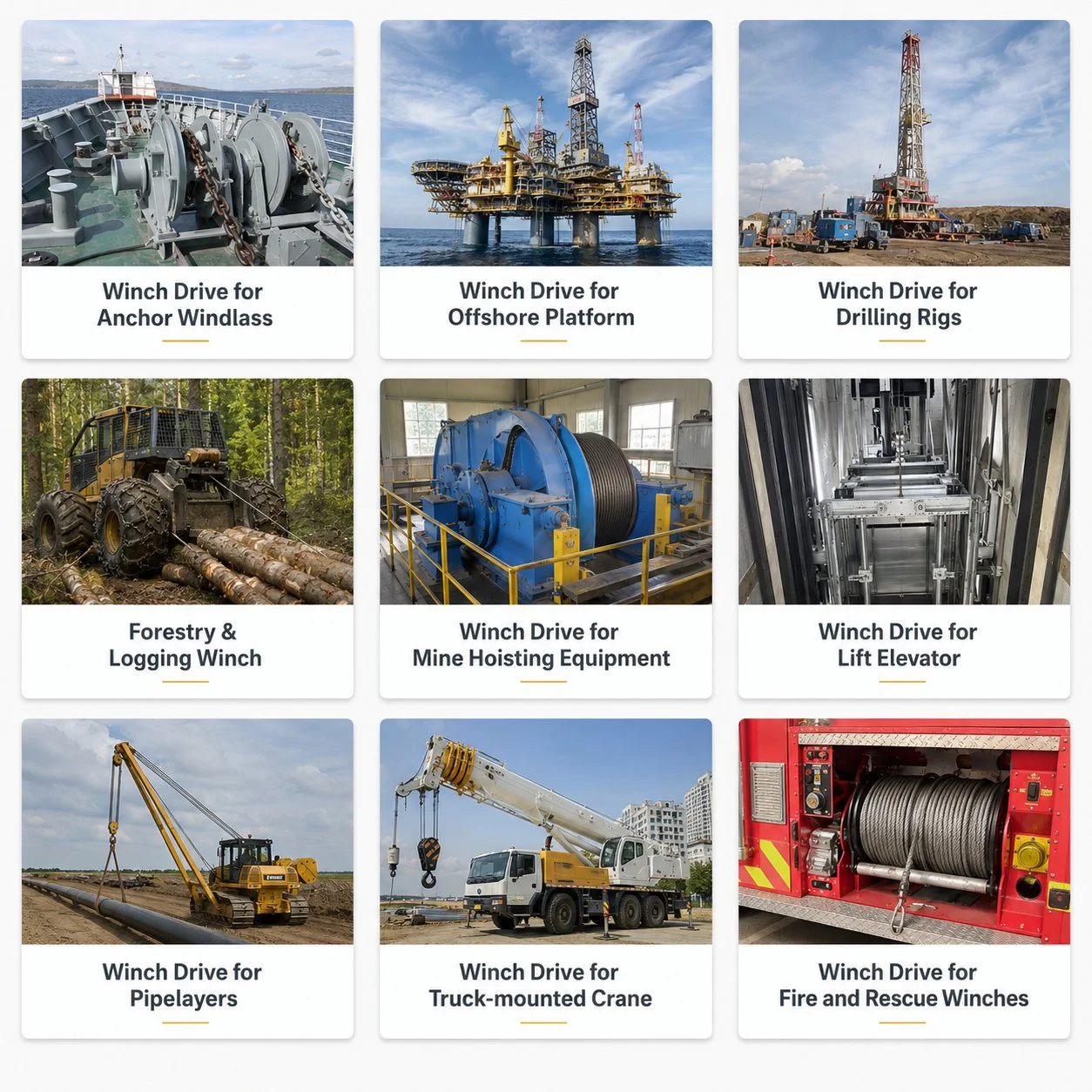
Vehicle Recovery and Extrication Support Winches (1,500–10,000 Nm): Fire apparatus and heavy rescue vehicles carry front or rear-mounted winches for self-recovery from off-road or accident-scene positions, for stabilising crashed vehicles during extrication operations, and for clearing debris that obstructs access to a rescue scene. Line pull requirements range from 50 to 150 kN depending on apparatus weight class, with the winch needing to develop full rated pull immediately from a cold, unused state — there is no opportunity for a gradual load build-up when a winch is being used to stabilise a vehicle with a trapped occupant. The gearbox must deliver consistent torque output regardless of how long the apparatus has been parked, in temperatures ranging from arctic winter standby to desert summer heat, and the holding brake must engage instantly and reliably to prevent any uncontrolled load movement during a stabilisation operation where a shifting vehicle could injure rescue personnel or the victim.
Water and Ice Rescue Winches (500–3,000 Nm): Specialised water rescue and ice rescue apparatus use smaller winches to retrieve rescue sleds, inflatable boats, or victims directly from water or ice surfaces. These winches operate in direct water exposure — both from the rescue environment itself and from routine equipment washdown after every deployment — and must function reliably after exposure to fresh water, salt water (coastal departments), and the freeze-thaw cycling that ice rescue operations inherently involve. The compact size of these systems, typically mounted on a sled, boat, or portable frame rather than the main apparatus, places a premium on the torque density and minimal weight that the planetary gearbox architecture provides.
Aerial Ladder and Platform Positioning Drives (2,000–8,000 Nm): Aerial ladder trucks and aerial platform (tower ladder) apparatus use winch-type drives for ladder extension, platform leveling, and auxiliary boom positioning functions in addition to the primary hydraulic ram systems that provide the main aerial movement. These positioning winches must operate with precision under the structural load and dynamic conditions of an extended aerial device — often at full extension height of 30 to 50 metres above ground, where any uncontrolled motion has serious safety implications for the firefighter operating at the tip of the aerial device. EN 1846 and NFPA 1901 both impose specific structural integrity and redundant safety requirements on aerial device drive systems that exceed standard industrial winch specifications.
Standby Readiness: Engineering for Months of Idle Time Then Instant Performance

The defining engineering challenge of fire and rescue apparatus winches is the combination of extended idle standby periods with the absolute requirement for instant, full-capacity performance when called upon — a duty profile fundamentally different from any continuous or cyclic-duty industrial application:
Corrosion-Resistant Standby Protection
A winch sitting idle in a fire station bay for months is exposed to the same temperature cycling and humidity variation as a vessel in port, but without the regular operation that would otherwise circulate oil and maintain a protective film on internal gear and bearing surfaces. Korea Ever-Power fire apparatus gearboxes use the same rust-inhibitor-enhanced synthetic gear oil specified for FPSO long-term storage mooring winches, maintaining corrosion protection on internal components through extended standby periods without requiring periodic exercising of the equipment.
Wide Temperature Instant Response
A fire apparatus stationed in a northern climate must be ready for full-capacity winch operation immediately after an unheated overnight period at -30°C — there is no time for a warm-up run when responding to an emergency call. Korea Ever-Power fire apparatus gearboxes are filled with low-pour-point PAO synthetic oil rated to maintain adequate planet bearing lubrication film within seconds of cold-start, without the multi-minute warm-up protocol acceptable in planned industrial operations.
Zero-Hesitation Brake Release
The SAHR holding brake on a fire apparatus winch must release smoothly and immediately on the first activation command, without the sticking or delayed response that can occur in brakes that have been static for extended periods. Korea Ever-Power fire apparatus brake assemblies use a low-static-friction disc surface treatment and a hydraulic release circuit with minimal seal compression set, both contributing to consistent first-activation release performance after standby periods of months.
Routine Test Cycle Without Wear Penalty
Most fire departments include a periodic functional test of the apparatus winch — typically monthly or quarterly — as part of routine apparatus maintenance, exercising the winch through a short cycle to verify readiness. Korea Ever-Power fire apparatus gearboxes are designed so that this low-frequency functional test cycle imposes negligible cumulative wear over the apparatus service life, which is typically 15 to 20 years for front-line fire apparatus.
Korea Ever-Power Fire and Rescue Winch Drive Selection Guide
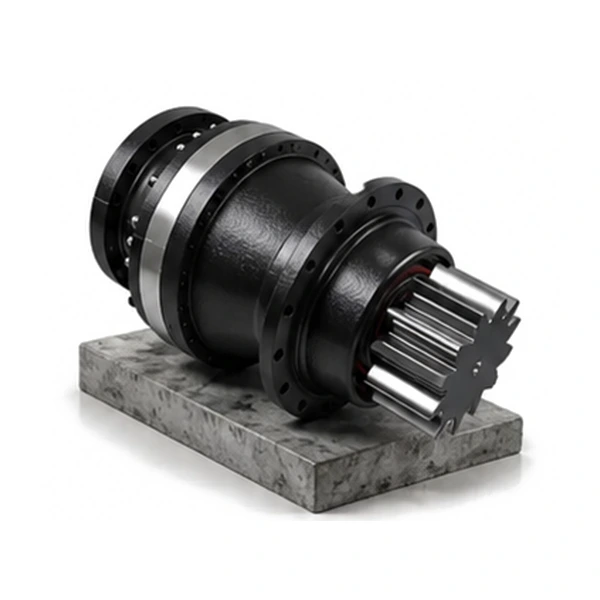
| Modello | Coppia di uscita | Fasi | Ratio Range | Apparatus Application | Foca | Intervallo di temperatura |
|---|---|---|---|---|---|---|
| ZL55 | 500 – 2,000 Nm | 1–5 | 3.7 – 3,497 | Water/ice rescue, small positioning | IP67/IP68 | -30°C – +55°C |
| ZR75 | 1,500 – 6,000 Nm | 2–5 | 5.1 – 4,884 | Aerial ladder positioning, recovery | IP67 | -30°C – +55°C |
| 407AW | 2,000 – 10,000 Nm | 2–3 | 50 – 1,200 | Heavy recovery, extrication support | IP67 | -30°C – +55°C |
NFPA 1901 and EN 1846: Fire Apparatus Equipment Standards
Field Reliability: Apparatus Bay Maintenance and Emergency-Scene Robustness
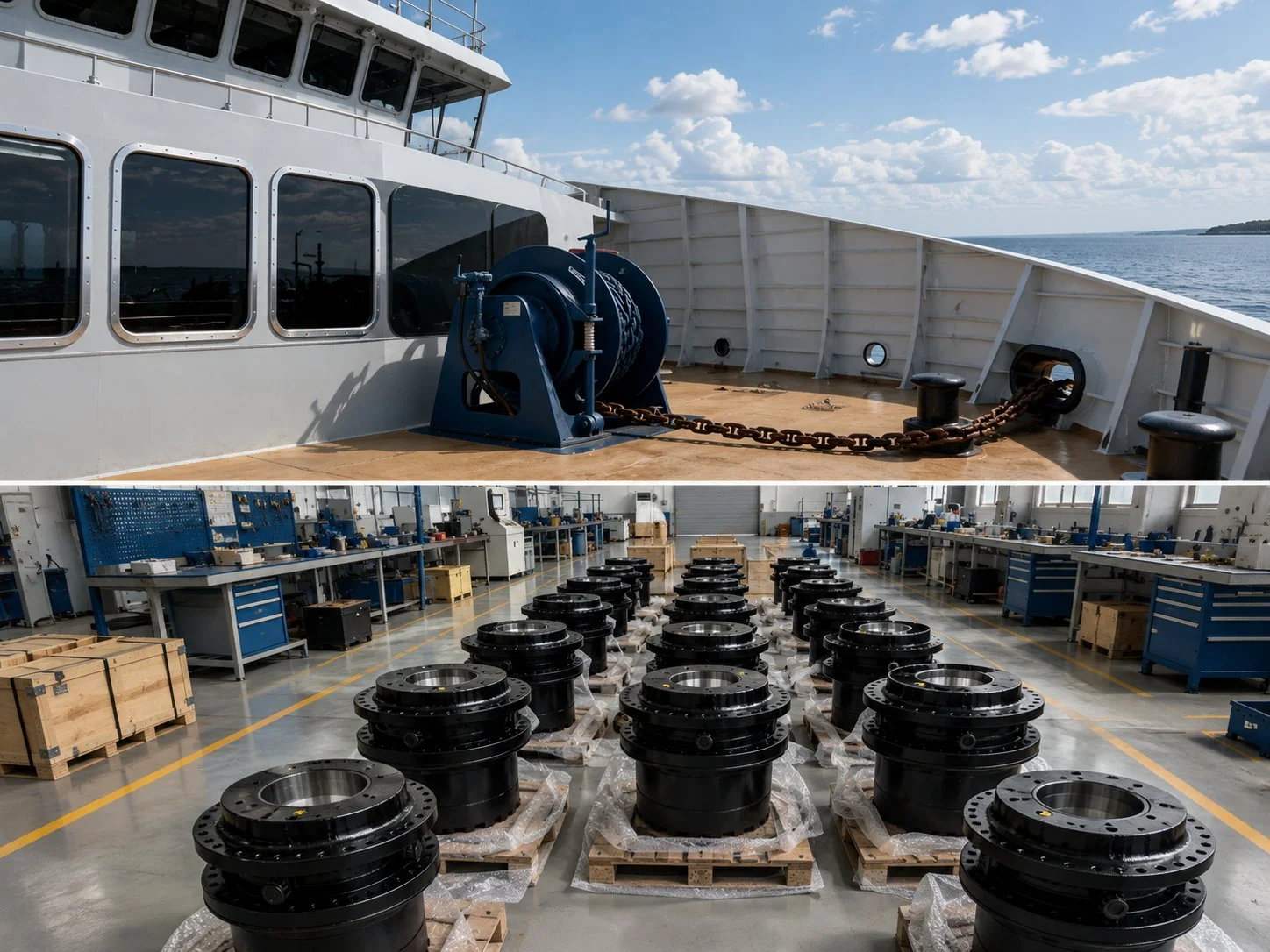
Fire department apparatus maintenance is typically performed by department mechanics or contracted fleet maintenance providers who service a wide variety of apparatus types and may not have specialised winch drive expertise. Korea Ever-Power designs fire apparatus gearboxes for maintenance simplicity consistent with this service environment:
Annual Oil Change with Standard Tools: Korea Ever-Power recommends annual oil change for fire apparatus winch gearboxes — a conservative interval reflecting the low operating hours but extended calendar time between services typical of standby equipment. The oil change uses a standard drain plug, fill port, and dipstick arrangement requiring no specialised tools beyond what a general apparatus maintenance bay already stocks.
Visual Brake Check During Apparatus Inspection: The integrated SAHR brake disc condition can be assessed visually through an inspection port without disassembly, allowing the brake to be checked as part of the routine apparatus daily or weekly inspection checklist that most fire departments already perform on all apparatus systems, without requiring a separate specialised winch maintenance procedure.
Emergency-Scene Robustness: Beyond planned maintenance, the fire apparatus winch gearbox must tolerate the unpredictable conditions of an actual emergency-scene deployment — operation in heavy rain, contact with debris and contamination at accident or fire scenes, and operation by personnel under high-stress conditions who may not follow ideal operating procedures. Korea Ever-Power fire apparatus gearboxes use the same FKM floating face seal and robust housing design specified for forestry and mining applications, providing the contamination resistance and impact tolerance needed for reliable performance regardless of the conditions encountered at the emergency scene.
Testing for Standby-to-Instant-Performance Reliability
Common Fire Apparatus Winch Gearbox Issues and Prevention
| Failure Mode | Root Cause | Detection | Prevention |
|---|---|---|---|
| Brake sticking — extended standby | Standard brake disc material developing static adhesion after months without engagement cycling | Delayed or sluggish brake release on first activation; reported during periodic functional test | Specify low-static-friction disc treatment; conduct monthly functional test cycle per department procedure |
| Oil gelling — extreme cold standby | Standard oil grade exceeding viscosity limit at -30°C overnight apparatus bay temperature in unheated stations | Sluggish initial winch response on cold-weather call-out; resolves after brief operation as oil warms | Specify low-pour-point PAO oil for apparatus stationed in cold climate regions; verify climate rating matches deployment region |
| Internal corrosion — long idle period | Standard gear oil without rust inhibitor enhancement allowing condensation corrosion during extended apparatus storage | Rust visible at internal components during annual oil change inspection; metallic debris in old oil | Specify rust-inhibitor enhanced synthetic gear oil for standby equipment; annual oil change regardless of low operating hours |
| Seal damage — emergency-scene debris | Debris impact or rope/cable wrapping incident at an accident scene damaging the output shaft seal area | Oil loss noticed at post-incident equipment check; visible damage at seal area | Post-deployment inspection of winch after every significant call-out use; FKM floating face seal provides damage tolerance beyond standard lip seals |
| Salt corrosion — coastal department | Standard industrial coating insufficient for coastal salt air exposure on apparatus stationed near the sea | Surface corrosion at housing exterior visible during apparatus washing and inspection | Specify marine-grade C5-M coating for apparatus stationed within 10 km of coastline; rinse with fresh water after salt water rescue deployments |
Why Fire Apparatus Manufacturers and Fire Departments Choose Korea Ever-Power
Source Your Fire and Rescue Winch Drive Planetary Gearbox
Whether you are specifying winch drives for a new fire apparatus build, sourcing replacement gearboxes for an operating fleet, or upgrading rescue equipment to current NFPA 1901 or EN 1846 requirements — Korea Ever-Power delivers instant-readiness, all-weather rated planetary winch drive gearboxes built for the standby-to-emergency-response reality of fire and rescue service. Send us your apparatus type, winch application, deployment climate, and applicable standard for a free compliance review and gearbox specification within 48 hours.
Edit by Cxm