Riduttore epicicloidale per verricello 403W2 a 2 stadi
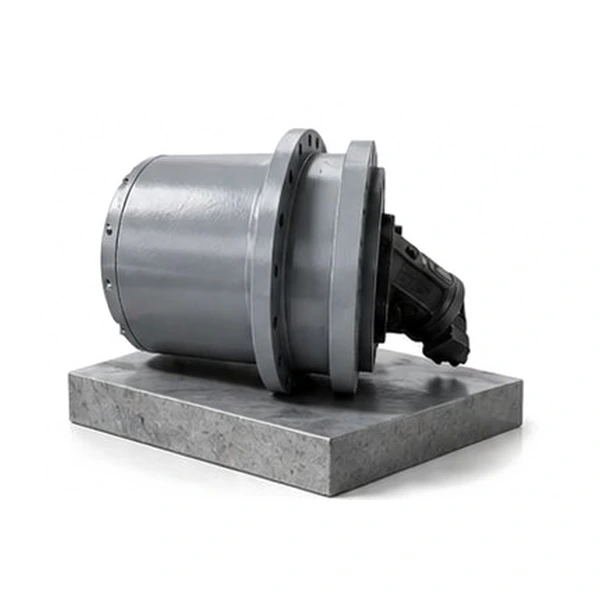
403W2 — The Braked Twin: 4,000 Nm with 270 Nm Inside the Drum
Read the 402W2 page. Now read this one. The two products share the same housing diameter, the same two-stage planetary architecture, the same 3,500 rpm input ceiling, the same 4,000 Nm output rating, and the same FEM M5 duty classification. The difference is 5 kg and a set of friction discs.
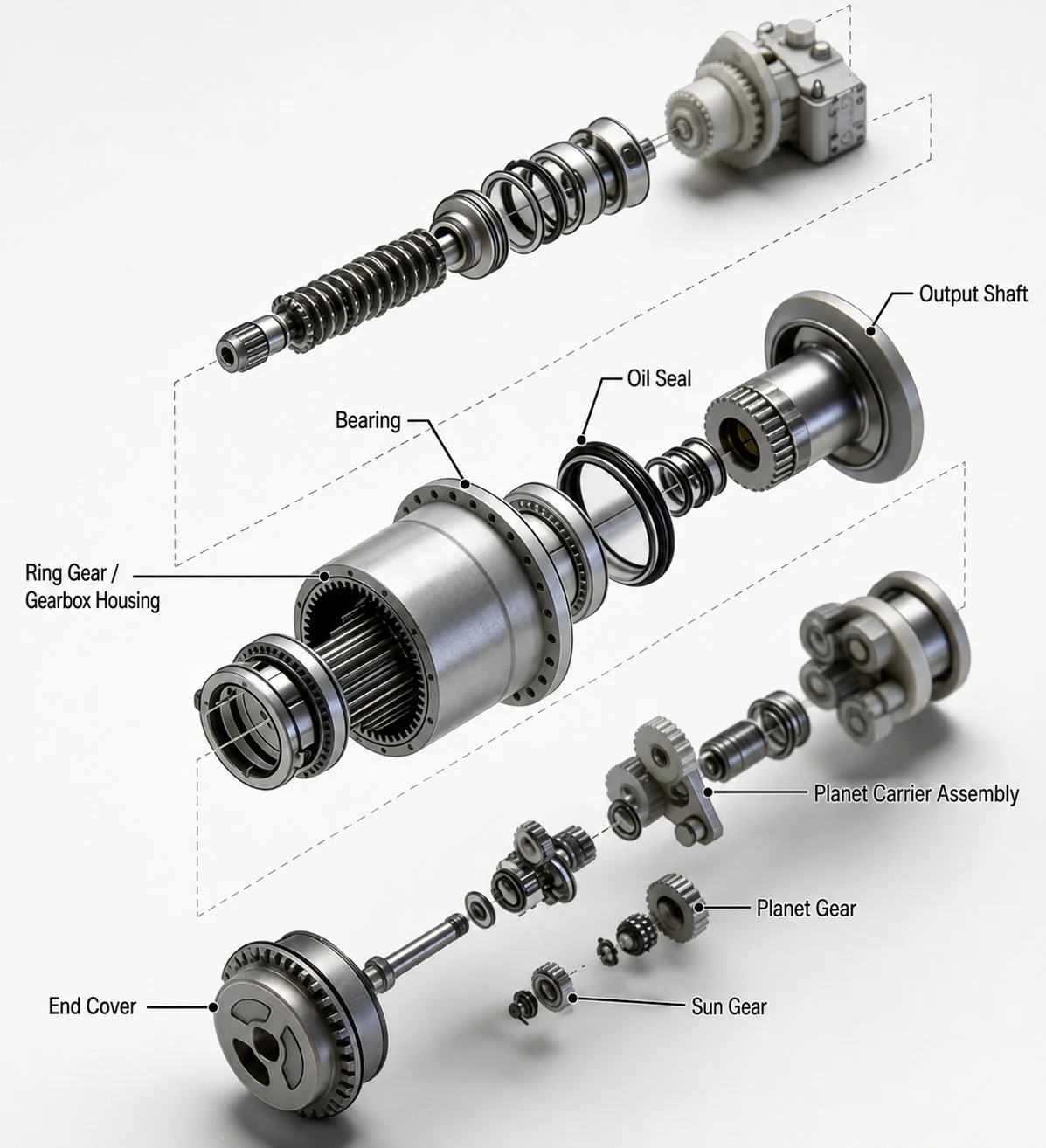
The 403W2 adds a 270 Nm spring-applied, hydraulically released multi-disc negative brake inside the rotating housing. This brake engages the moment hydraulic pressure drops — whether by deliberate operator action, emergency shutdown, hose failure, or total system power loss. It holds the drum, the cable, and whatever is hanging on the cable in position, independently of any external component. No motor brake needed. No counterbalance valve needed. The riduttore epicicloidale per azionamento verricello itself is the safety system.
270 Nm Brake
Ratios 15.4-40
3,500 RPM
120 kg
FEM M5
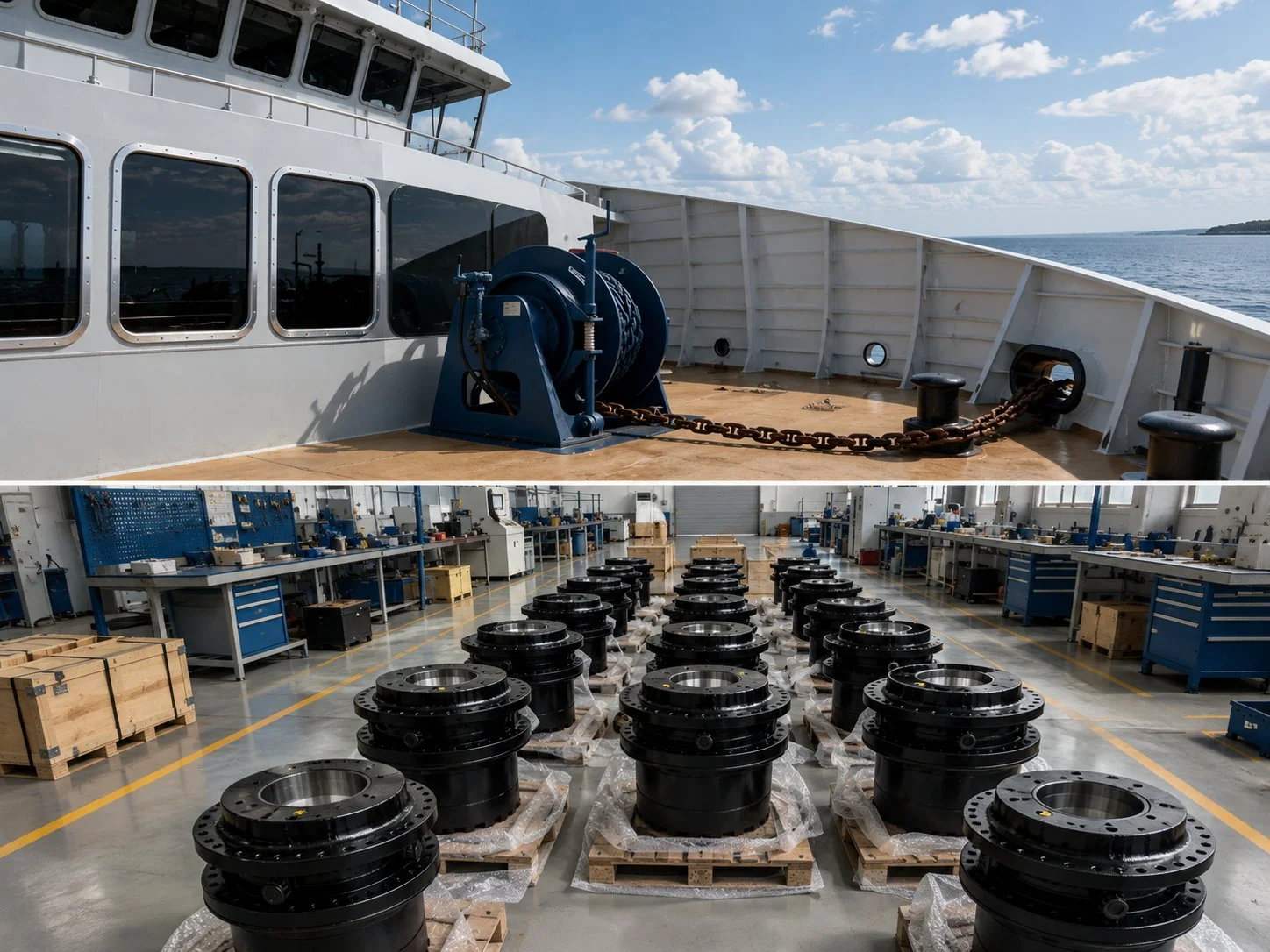
403W2 Winch Drive Gearbox — Technical Parameters
| Coppia di uscita nominale | 4.000 Nm |
| Gamma di rapporti di trasmissione | 15.4 to 40 (two-stage planetary) |
| Velocità massima di ingresso | 3.500 giri al minuto |
| Velocità massima di uscita | 25 rpm (FEM M5 continuous duty) |
| efficienza meccanica | ≥ 95% |
| Freno di stazionamento integrato | 270 Nm, multi-disc, spring-applied, hydraulic release |
| Brake holding at drum (via ratio) | 4,158 - 10,800 Nm (ratio dependent) |
| Montaggio | Rotating housing flanges (direct drum integration) |
| peso secco | Approx. 120 kg |
| Lubrificazione | Oil bath splash, premium EP gear oil |
| Temperatura di esercizio | -20 to +85 deg C (extreme climate seal kits available) |
A Brake That Spins — Multi-Disc Negative Brake Engineering Inside a Rotating Drum
A brake inside a wheel drive housing sits still. A brake inside a winch drive housing rotates with the drum at up to 25 rpm. This rotating environment creates engineering challenges that a stationary-housing brake never faces.
Centrifugal Oil Management
Rotation creates centrifugal force that pushes oil outward toward the housing wall. The brake discs, located near the centre of rotation, must remain adequately lubricated for cooling during dynamic braking but not flooded with oil during static hold — oil between the discs during static hold would reduce the friction coefficient and degrade the holding torque. The 403W2 uses grooved separator plates that channel oil radially outward during rotation, keeping the disc faces drained during static engagement while allowing oil to reach the discs during dynamic deceleration when cooling is needed.
Spring Pack Orientation
The spring pack that applies the brake must function identically regardless of the drum rotational position. In a stationary housing, gravity always acts in the same direction relative to the springs. In a rotating housing, the spring orientation with respect to gravity changes continuously. The 403W2 uses a Belleville disc spring stack arranged concentrically around the input shaft — the axial clamping force is symmetric and unaffected by the rotational position. Coil springs, which can shift laterally under centrifugal load, are not used.
Hydraulic Release in a Rotating Frame
The brake release oil must travel from the stationary hydraulic supply line into the rotating housing through a rotary union (swivel joint) at the shaft centre. This rotary union is a wear item — it seals high-pressure oil (25-40 bar release pressure) against a rotating surface. The 403W2 rotary union uses carbon-graphite sealing rings against hardened steel races, providing 10,000+ hour service life at up to 25 rpm continuous rotation. Inspect the rotary union for external leakage at every 2,500-hour service interval.
402W2 or 403W2 — What the Brake Costs You and What It Gives Back
| Criterio | 402W2 (no brake) | 403W2 (270 Nm brake) |
|---|---|---|
| Coppia di uscita | 4.000 Nm | 4.000 Nm |
| Intervallo di rapporto | 12.4 - 37.1 | 15.4 - 40 |
| Minimum ratio available | 12.4 (faster hoisting) | 15.4 |
| Maximum ratio available | 37.1 | 40 (higher torque multi.) |
| Integrated brake | Nessuno | 270 Nm multi-disc |
| Peso | 115 kg | 120 kg |
| Maintenance items | Oil, seals | Oil, seals, brake discs, rotary union |
| Holds load if all external lines severed | NO | SÌ |
Choose the 402W2 when:
The hydraulic circuit already provides dual-independent holding (counterbalance valves + motor brake). The system is class-certified with external braking architecture. Ratios below 15.4 are needed for fast hoisting speeds. Brake disc maintenance access inside the drum is impractical (FPSO davits, subsea winches).
Choose the 403W2 when:
The applicable standard requires a brake within the drum assembly. The winch must hold a load even if all hydraulic lines and motor connections are severed simultaneously. The system is a standalone winch unit (not part of a certified crane circuit). Personnel lifting requires the maximum number of independent holding mechanisms.
4,000 Nm Winch Drive with Integral Brake — Built for Worst-Case Scenarios

Tower Crane Auxiliary Hoists
Secondary hoist mechanisms on tower cranes that handle lighter loads (1-3 tonnes) for tool baskets, concrete skips, and personnel platforms. Tower crane standards (EN 14439, ASME B30.3) require the hoist to hold the load independently of the hydraulic supply. The 403W2 integral brake satisfies this requirement without adding a separate drum brake to the already space-constrained tower head. The azionamento di rotazione handles the crane rotation, and the wheel drive propels the trolley travel.
Offshore Pedestal Crane Hoists
Pedestal-mounted cranes on offshore platforms handling 3-5 tonne cargo transfers between supply vessels and the platform deck. These cranes operate in sea states where the load swings unpredictably, generating dynamic torque spikes at the drum. The 403W2 brake provides an independent holding point that the crane operator can engage instantaneously by dumping brake release pressure — faster than any counterbalance valve or motor brake response. In emergency situations where a supply vessel separates unexpectedly from the platform, this speed of engagement prevents the load from swinging into the platform structure.
Mining Shaft Service Winches
Service winches in mining shafts that lower tools, pumps, ventilation ducting, and supplies to underground work levels at depths of 50-200 metres. The shaft environment is wet, dusty, and remote from surface maintenance facilities. The 403W2 sealed housing and integral brake provide a self-contained hoisting unit that does not depend on external braking components exposed to the shaft atmosphere. Mine safety regulations in most jurisdictions require that any winch operating in a vertical shaft must have an internal mechanical hold — the 403W2 provides this within the gearbox.
Nell'intera gamma di riduttori epicicloidali
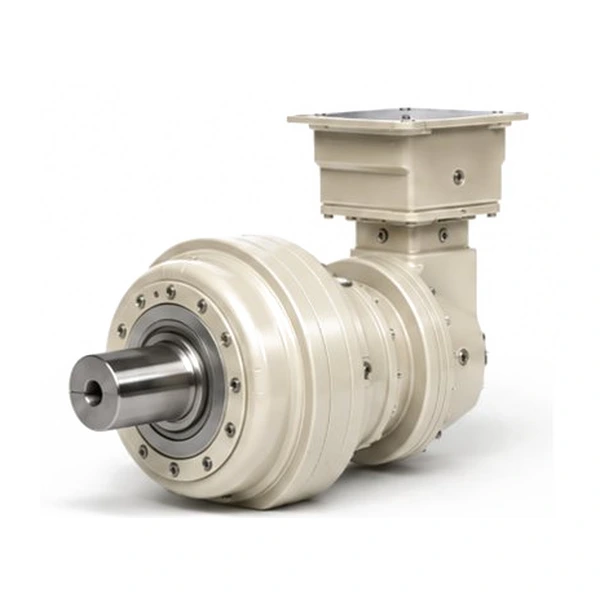
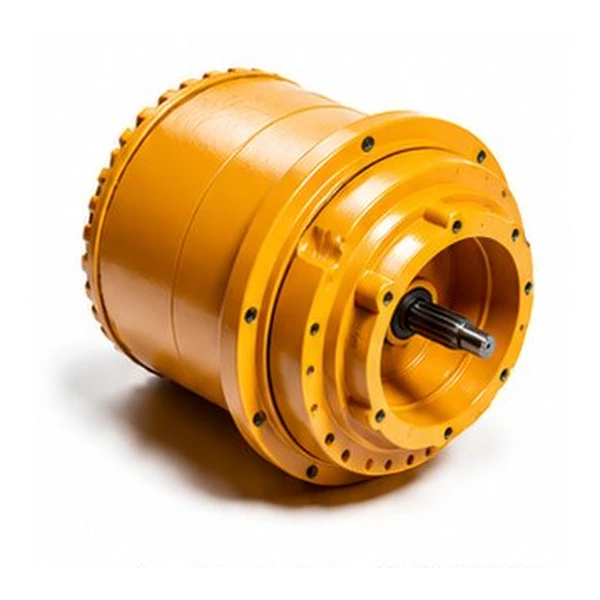

Winch Drive Planetary Gearbox — Integrated Brake Engineering FAQ
Rapporti sul campo
Auxiliary hoist on a luffing jib tower crane, 2.5-tonne SWL. The 403W2 at ratio 25 replaced a competitor unit that had failed the EN 14439 brake holding test after 8,000 hours — the disc stack had worn beyond the minimum thickness and the spring force had degraded. The 403W2 Belleville spring design maintains consistent clamping force over a wider disc wear range than the competitor coil spring design. After 6,000 hours on the 403W2, the brake test results are identical to the day-one readings. We are specifying the 403W2 for all new cranes in the product range.
Pedestal crane hoist on a jack-up drilling rig operating in the Arabian Gulf. The 403W2 at ratio 30 handles 3-tonne cargo transfers in sea states up to 1.5 metres significant wave height. During a recent emergency vessel disconnect, the operator dumped the brake release pressure and the 403W2 brake engaged in under 300 milliseconds — halting a 2.8-tonne load that was mid-swing between the supply vessel and the platform. The load stopped cleanly with no cable shock. This single event justified the decision to specify an internal brake over the brake-free 402W2. The external counterbalance valves would also have held, but the speed of the gearbox brake engagement gave the operator instantaneous control that the hydraulic hold could not match.
Service winch in a gold mine shaft, 150 metres deep, lowering pumps and ventilation equipment to working levels. The 403W2 at ratio 35 handles loads up to 1,200 kg at 10 m/min. The integral brake is essential — our mine safety authority will not certify any vertical shaft winch without an internal mechanical hold. Performance is reliable and the sealed housing handles the wet shaft conditions without any water ingress after 14 months. The 4-star is because the rotary union started showing external seepage at approximately 4,500 hours — earlier than the 10,000+ hour specification. Replaced under warranty in 2 days. The shaft environment (high humidity, fine quartz dust) may have accelerated the seal wear. We now inspect the union at 2,000-hour intervals instead of 2,500.
Informazioni aggiuntive
| Redattore | Cxm |
|---|
Prodotti correlati
-
ZL150 Winch Drive Planetary Gearbox — 1-5 Stage
-
Riduttore epicicloidale per verricello ZL85
-
ZL75 Winch Drive Planetary Gearbox
-
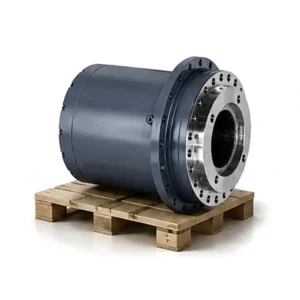
413W3 Winch Drive Planetary Gearbox Reducer
-

Riduttore epicicloidale per verricello 406BW3
-
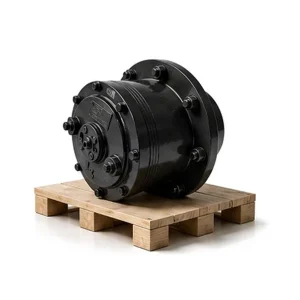
Riduttore epicicloidale per verricello 406AW
-

Riduttore epicicloidale per verricello da 405,4 W
-
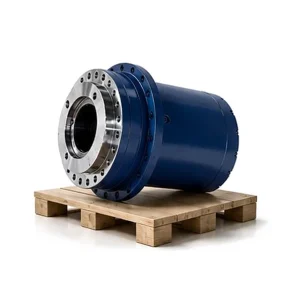
Riduttore epicicloidale per verricello 400W1