Winch Drive Series — Entertainment Rigging & Stage Automation Equipment
Winch Drive Planetary Gearbox for Theater Rigging Winches
A flying performer suspended above the stage trusts the winch drive gearbox above them with their physical safety on every single performance — the same gearbox that lowers a 2-tonne scenic batten on cue must also, in some productions, fly an actor at controlled speed through the air in full view of a live audience. Theater rigging winches carry the most direct life-safety responsibility of any application in the Korea Ever-Power product range outside mine hoisting equipment.
ANSI E1.6 / E1.43 compliant
Dual fail-safe brake for performer flying
<40 dB(A) silent operation
Theater rigging — the system of winches, wire ropes, and battens that fly scenery, lighting equipment, and in specialised productions, performers themselves, above the stage — represents an application category where the Korea Ever-Power winch drive gearbox carries direct responsibility for human safety in a manner that few other entertainment industry applications share. A fly system in a Broadway theater or major opera house may include 40 to 90 individually motorised line sets, each capable of flying scenery weighing hundreds of kilograms to thousands of kilograms in and out of view on a precisely timed cue, often while stage crew and performers move beneath the flown elements. Performer flying systems — used in productions ranging from circus arts to specialised theatrical and opera staging — go further, attaching the winch drive system directly to a harness worn by a performer who is lifted, moved, and controlled through the air as a choreographed element of the live performance. The winch drive planetary gearbox in both applications must deliver the silent operation and precise cue timing already established for stage rotating platforms, combined with the dual-redundant fail-safe braking that the safety-critical nature of overhead rigging and performer flying demands. Korea Ever-Power supplies planetary winch drive gearboxes for theater fly system line sets, automated rigging winches, and performer flying applications across venues from regional theaters through major touring productions and permanent installation venues.
The transition from manual counterweight rigging to motorised, computer-controlled fly systems has accelerated across the theater industry over the past two decades, driven by the precision, repeatability, and choreographic possibilities that automated control offers over traditional hand-operated systems. This transition has also fundamentally changed the engineering responsibility resting on the winch drive equipment — a manual counterweight system relies on a trained rigger physically feeling the load through a hand line, providing an inherent human-in-the-loop safety check that automated systems must replace through mechanical and electronic redundancy designed directly into the winch drive gearbox and its control system.
Theater Rigging Applications: Fly Systems and Performer Flying

Motorised Fly System Line Sets (1,000–4,000 Nm): The most common theater rigging application, a motorised line set replaces the traditional hand-operated counterweight fly system with an individually motorised winch on each batten, allowing precise, repeatable scenery and lighting positioning controlled by a show automation system rather than manual counterweight operation. A large venue may install 40 to 90 line sets across the stage house, each capable of independent positioning and speed control, with batten loads ranging from a few hundred kilograms for lightweight scenic elements to several tonnes for large architectural set pieces or full lighting rigs.
Automated Rigging for Complex Scenic Moves (2,000–6,000 Nm): Beyond simple vertical fly motion, advanced productions use automated rigging winches to execute complex choreographed scenic moves — flying set pieces along curved or compound paths, synchronising multiple line sets for elements that must move together, or executing rapid scene transitions that would be impossible with manual counterweight rigging. These applications demand the same precise, repeatable cue-based motion control established for stage rotating platforms, applied here to vertical and combined-motion flying rather than rotation.
Performer Flying Systems (500–3,000 Nm): The most safety-critical theater rigging application, where the winch drive system is connected directly or through an intermediate track system to a harness worn by a live performer, who is lifted and moved through the air as a scripted element of the production. Performer weight plus harness and rigging hardware typically totals 80 to 150 kg per flying point, but the safety design factor and redundancy requirements for this load are substantially higher than for scenic flying, reflecting the direct life-safety consequence of any system failure while a performer is airborne.
Dual Fail-Safe Braking: The Foundation of Overhead Rigging Safety
Entertainment industry safety standards — ANSI E1.6 (Powered Hoist Systems) and ANSI E1.43 (Entertainment Technology — Performer Flying Systems) in the United States, with equivalent standards governing theater rigging safety in other jurisdictions — impose specific design factor and redundancy requirements that exceed even the demanding standards applied to mobile crane hoists and mine hoisting equipment elsewhere in the Korea Ever-Power product range, reflecting the unique risk profile of overhead rigging operating directly above people on a stage.
Dual Independent Brake Architecture
Korea Ever-Power performer flying winch gearboxes use the same dual independent brake architecture established for mine hoisting equipment — a primary SAHR brake on the input shaft and a secondary independent brake on the output shaft, each individually capable of holding the rated performer load with margin, ensuring that a single brake failure does not result in uncontrolled performer descent.
Elevated Design Factor
ANSI E1.43 requires a minimum design factor of 8 to 10 on the working load of performer flying rigging components, substantially exceeding the 1.5 to 3.0 design factors used in crane and industrial winch applications. Korea Ever-Power performer flying gearboxes are designed and verified to this elevated standard, with structural components rated well beyond the maximum performer load to provide the conservative margin that direct human suspension demands.
Overspeed and Overload Protection
Both fly system line sets and performer flying winches include overspeed and overload monitoring that triggers automatic brake engagement if the system detects motion or load conditions outside the programmed safe operating envelope, providing an additional protection layer beyond the dual mechanical brake redundancy, consistent with the overspeed protection philosophy established for mine hoisting equipment.
Documented Inspection and Test Records
ANSI E1.43 and equivalent standards require periodic inspection and load testing of performer flying equipment with documented records maintained throughout the equipment service life, similar in principle to the statutory maintenance register required for mine hoisting equipment. Korea Ever-Power provides the test documentation package needed to support this ongoing certification and inspection requirement.
Korea Ever-Power Theater Rigging Winch Drive Selection Guide
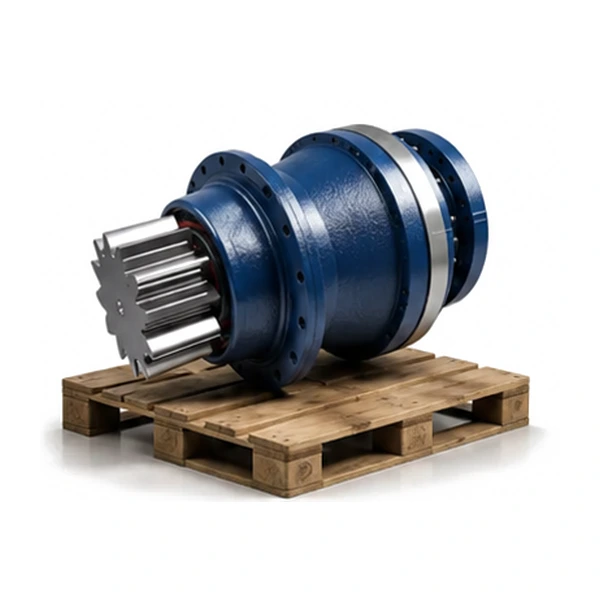
| モデル | 出力トルク | ステージ | 応用 | Brake Config | Design Factor |
|---|---|---|---|---|---|
| ZL30 | 500 – 2,000 Nm | 1–4 | Light scenic line set, small batten | Single SAHR | 3.0x |
| ZL30 PF | 500 – 1,500 Nm | 1–4 | Performer flying — single point | Dual SAHR | 8.0x |
| ZR55 | 2,000 – 6,000 Nm | 2–5 | Heavy scenic batten, automated rig | Single SAHR | 3.0x |
| ZR55 PF | 1,500 – 3,000 Nm | 2–5 | Performer flying — multi-point, complex moves | Dual SAHR | 8.0x |
Silent Operation and Precise Cue Timing for Live Performance
Theater rigging winches share the same silent-operation and precise-cue-timing requirements established for stage rotating platforms, with the added consideration that fly system motion often occurs directly above or near the audience, with less acoustic separation than a stage floor revolve enjoys from the seating area in some theater configurations.
Helical Gear Mesh and Isolated Mounting: Korea Ever-Power theater rigging gearboxes use the same helical gear mesh and elastomeric isolation mounting approach established for stage rotating platforms, reducing the gear mesh noise and structure-borne vibration transmission that would otherwise be audible to an audience during silent scenic transitions or performer flying sequences.
Synchronised Multi-Point Motion for Performer Flying: Complex performer flying sequences involving multiple suspension points moving in choreographed coordination require the same matched-set ratio synchronisation established for wind turbine yaw drives and cable-laying vessel capstans, ensuring all flying points track the programmed motion profile in precise coordination without one point lagging or leading relative to the others, which could generate an unsafe loading condition on the performer harness.
Smooth Acceleration for Performer Comfort and Safety: Performer flying motion profiles use carefully designed acceleration and deceleration curves to avoid the jerk and g-force spikes that could cause discomfort or loss of performer orientation control during a flying sequence. The low-backlash gearbox specification ensures the actual mechanical motion faithfully tracks the programmed smooth motion profile without the judder that backlash-induced lost motion would otherwise introduce at direction changes.
Common Theater Rigging Drive Issues and Prevention
| Issue | Root Cause | Detection | Prevention |
|---|---|---|---|
| Secondary brake holding torque drift | Brake disc surface wear gradually reducing holding capacity below the redundant safety margin requirement | Periodic independent brake hold test shows reduced margin against the rated performer or scenic load | Test each brake independently per the ANSI inspection schedule; replace disc packs proactively at the manufacturer interval |
| Synchronisation drift — multi-point flying | Gear wear in one of several synchronised drives introducing small ratio deviation from its matched set | Visible lag or lead in one flying point relative to others during a programmed multi-point move | Periodic ratio verification across the matched drive set; replace as a matched group rather than individually |
| Noise increase mid-run | Gear wear or isolation mount degradation during an extended production run accumulating thousands of cycles | House noise reported by stage management or audible during technical rehearsal | Periodic noise check at house seating positions; inspect isolation mounts at scheduled maintenance windows |
Touring Productions and Rental Fleet Considerations
Large-scale touring productions and specialised flying effects companies often own or lease portable rigging systems that travel between venues for individual productions or limited engagements, sharing the repeated installation and transport demands already established for touring stage rotating platform equipment, with the added complexity of performer safety certification that must be verified at every new venue installation.
Re-Commissioning at Each Venue: ANSI E1.43 and equivalent standards require that performer flying systems undergo a full safety verification and load test at each new venue installation, not merely a visual inspection, before the system is approved for use with performers. Korea Ever-Power touring rigging gearboxes are designed for repeatable installation with consistent performance characteristics from venue to venue, supporting efficient re-commissioning without requiring component replacement or significant rework at each tour stop.
Transport Durability: Touring rigging equipment experiences the same repeated truck transport vibration and shock loading as touring stage platform drives, and Korea Ever-Power applies the same vibration qualification approach to ensure precision alignment and dual-brake performance are retained despite the repeated transport cycle a long tour schedule imposes.
Rental Fleet Utilisation Tracking: Rental rigging companies serving multiple productions across a calendar year accumulate cycle counts and load history that may differ significantly from a single resident venue installation. Korea Ever-Power recommends rental fleet operators maintain cumulative cycle and load logs for each gearbox unit, supporting scheduled component replacement decisions based on actual accumulated duty rather than calendar time alone.
Why Theater Rigging Manufacturers and Venues Choose Korea Ever-Power
8.0x
Design factor for performer flying applications per ANSI E1.43, verified through component-level structural analysis
Dual SAHR
Independent brake architecture for performer flying — eliminating single-point-of-failure risk to performer safety
<40 dB(A)
Noise specification for silent scenic transitions and performer flying sequences in live performance venues
ANSI E1.6
Compliant design for motorised fly system line sets, with full documentation supporting venue safety certification
Korea Ever-Power application engineers, with our winch drive planetary gearbox range, work with theater rigging system integrators and venue technical directors to specify winch drive gearboxes matched to the safety classification, noise, and precision requirements of professional entertainment rigging. Contact us with your application type (scenic or performer flying), maximum load, number of synchronised points, and venue type for a free application sizing and ANSI compliance review within 48 hours.
Source Your Theater Rigging Winch Drive Planetary Gearbox
Whether you are specifying drives for a new theater fly system, an automated rigging upgrade, or a performer flying system for a touring or resident production — Korea Ever-Power delivers silent-operation, ANSI-compliant planetary winch drive gearboxes with the dual fail-safe braking that overhead rigging and performer flying safety demands. Send us your application type, maximum load, and venue requirements for a free application sizing proposal within 48 hours.
Edit by Cxm