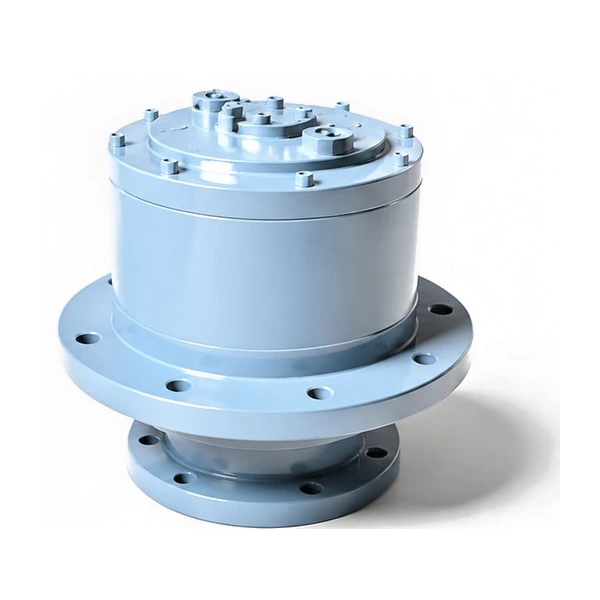
406W Winch Drive Planetary Gearbox Reducer
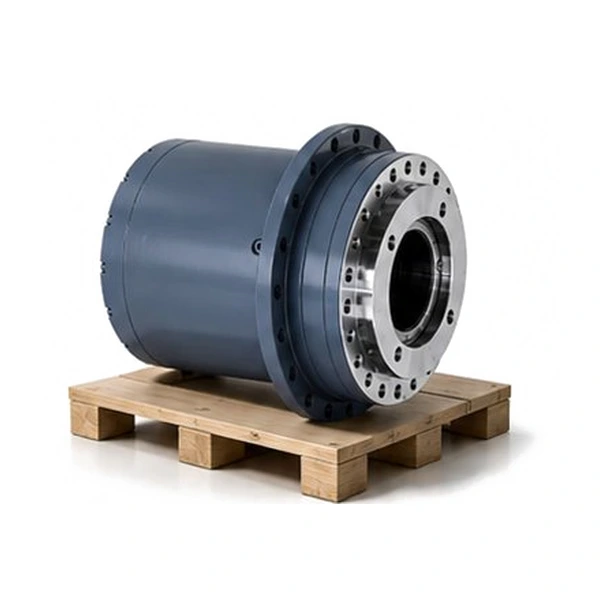
406W — The Production Standard
13,000 Nm. Ratios 28-140. Pure two-stage. The winch drive planetary gearbox that crane OEMs specify when the hoist speed is known, the duty cycle is defined, and the priority is consistent, repeatable performance across a production fleet.
95% Eff.
3,500 RPM
-20 to +85 deg C
The 406W occupies the middle position in the 406 family — 500 Nm more torque than the wide-range 406AW (12,500 Nm) and 4,500 Nm less than the heavy-duty 406BW3 (17,500 Nm). Its ratio range of 28-140 covers 95% of production crane hoist speed requirements without the three-stage complexity that the 406AW needs for its extreme ratios. For the crane OEM who knows exactly what speed the winch must run and wants the fewest possible failure modes between the motor and the drum, the 406W is the answer.
406W Winch Drive Planetary Gearbox — Technical Parameters
| 定格出力トルク | 13,000 Nm |
| Gear ratio range | 28 to 140 (two-stage planetary only) |
| Maximum input speed | 3,500 rpm |
| Maximum output speed | 25 rpm (FEM M5 continuous duty) |
| Mechanical efficiency | ≥ 95% |
| Parking brake | 430 Nm, multi-disc, spring-applied, hydraulic release |
| Brake at drum (ratio-dependent) | 12,040 Nm (r=28) to 60,200 Nm (r=140) |
| Mounting | Rotating housing flanges |
| Dry weight | Approx. 240 kg |
| 潤滑 | Oil bath splash, EP gear oil |
| 動作温度 | -20 to +85 deg C |
Two-Stage Purity — Why Fewer Stages Means Higher Reliability at Production Volume
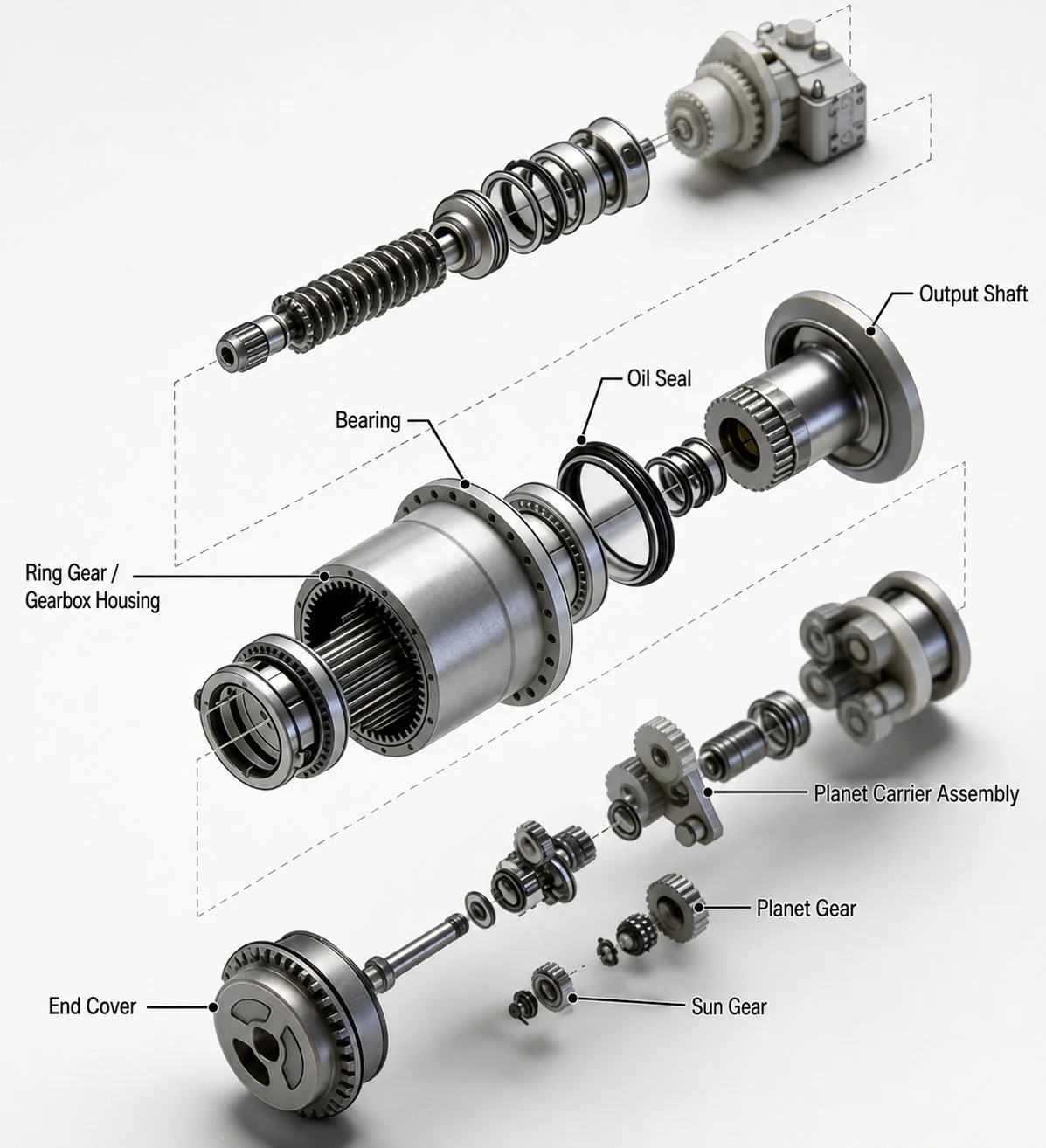
Every additional planetary stage adds three planet gears, one sun gear, one ring gear segment, two sets of planet bearings, and one carrier assembly. Each of those components introduces a potential failure mode — a gear tooth that could pit, a bearing that could spall, a carrier pin that could fatigue. The 406W eliminates an entire stage compared to the 406AW three-stage variants and the 406BW3.
For a single prototype crane, the reliability difference between two and three stages is academic. For a production run of 200 cranes — each running 4,000 hours per year for 15 years — the statistical effect is measurable. Fewer components means fewer opportunities for manufacturing variation to produce an outlier unit, fewer surfaces for wear particles to generate, and fewer items on the overhaul inspection list. The 406W two-stage architecture is the production engineer's preference when the ratio requirement falls within 28-140.
Component count comparison
The three-stage design has 50% more rotating components. Each one is a maintenance item and a potential failure initiator.
Hoist Speed by Cargo Type — Matching the 406W Ratio to What the Crane Actually Lifts
The "correct" hoist speed is not a gearbox specification — it is a cargo handling requirement. Different cargo types demand different speeds, and the 406W ratio range covers the full spectrum of production crane operations.
| Cargo Type | Target Speed | 406W Ratio | Motor Speed | Handling Priority |
|---|---|---|---|---|
| General construction cargo | 30-50 m/min | 28-40 | 2,500-3,500 | Cycle speed |
| Offshore supply vessel cargo | 15-30 m/min | 50-80 | 2,000-3,000 | Load control |
| Heavy structural steel | 8-15 m/min | 80-110 | 1,500-2,500 | Precision placement |
| Heavy lift / module setting | 3-8 m/min | 110-140 | 1,000-2,000 | Creep positioning |
Reference: 400 mm PCD drum, 45 cc/rev motor. Actual speeds depend on pump flow, motor displacement, and reeving arrangement. Contact 韓国エバーパワー with your specific motor and pump specification for verified speed calculations at each ratio point.
13,000 Nm — The Winch Drive That Most Crane Production Lines Converge On

Production Mobile Cranes (15-30 t SWL)
All-terrain, rough-terrain, and truck-mounted cranes manufactured in annual volumes of 50-500 units. The 406W at ratio 40-60 provides the main hoist torque for these cranes at production-friendly consistency — every unit off the assembly line performs identically because every 406W uses the same two-stage architecture with the same component count. The slewing drive handles superstructure rotation, and the wheel drive propels the carrier — all from the same Korea Ever-Power catalogue.
Standard Offshore Platform Cranes
Class-certified pedestal and knuckle-boom cranes in the 10-20 t SWL range — the most common offshore crane size class globally. The 406W at ratio 60-100 provides the hoisting torque and the 430 Nm brake provides the holding capacity for standard supply vessel cargo transfer and module handling. The pure two-stage architecture simplifies the classification documentation because the internal gear train has fewer components to document, inspect, and certify during the factory acceptance test.
Tower Crane Main Hoists
Main hoist mechanisms on construction tower cranes with tip loads of 2-5 tonnes and maximum loads of 10-15 tonnes. The 406W at ratio 80-140 provides the torque for heavy-load, slow-speed lifting at maximum radius and the motor can be overspeeded at light loads for faster cycle times at minimum radius. The two-stage architecture keeps the axial length shorter than a three-stage equivalent, allowing the hoist drum to fit within the standard tower crane machinery platform width without structural modification.
Adjacent Models and Complementary Drives
Winch Drive Planetary Gearbox — Production Crane Hoist FAQ
Field Reports
Main hoist on a 25 t all-terrain crane, annual production volume 120 units. The 406W at ratio 55 has been our standard hoist drive for the current model generation — 480 units delivered across 4 years. Incoming QC rejects: zero. Field warranty claims on the winch drive: 4 (all seal-related, all within the first 500 hours, all traced to a specific silicone sealant batch that has since been replaced). The two-stage architecture produces the most consistent dynamometer test results of any gearbox we source — unit-to-unit torque variation is less than 2%, which is half the tolerance we see on competing three-stage drives.
15 t SWL offshore crane, 406W at ratio 70. The classification process was the smoothest gearbox approval we have handled this year. The two-stage internal drawing is simple enough that our surveyor could verify the tooth count, module, and material specification during the factory witness test in one session. Three-stage units from other suppliers typically require two sessions because the additional stage components increase the inspection scope. The 406W type-approval certificate is now our reference standard for crane hoist drives in this torque class.
Main hoist on a luffing-jib tower crane, 12 t maximum capacity, 406W at ratio 90. Mechanical performance is excellent — the crane has completed 14 months on a high-rise project with an average of 180 lifts per day. The 4-star is a wish-list item: a factory-supplied commissioning data sheet recording the as-built dynamometer torque, brake holding torque, and oil charge volume would give me a unit-specific baseline to compare against during the annual thorough examination. Currently I use the generic product specification as the baseline, which has slightly wider tolerances than the individual unit actually exhibits. A unit-specific birth certificate would make condition monitoring more precise and potentially extend the interval between invasive inspections.
追加情報
| エディタ | Cxm |
|---|
関連製品
-

416W3 Winch Drive Planetary Gearbox Reducer
-
413W3 Winch Drive Planetary Gearbox Reducer
-
410W3 Winch Drive Planetary Gearbox Reducer
-
407W3 Winch Drive Planetary Gearbox Reducer
-
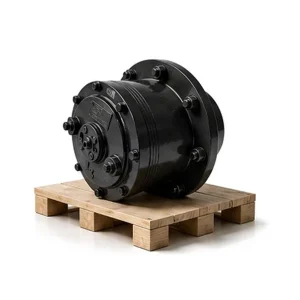
406AW Winch Drive Planetary Gearbox Reducer
-

405.4W Winch Drive Planetary Gearbox Reducer
-

405W Winch Drive Planetary Gearbox Reducer
-
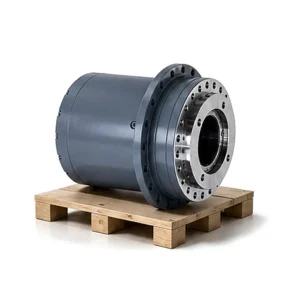
402W2 Winch Drive Planetary Gearbox Reducer