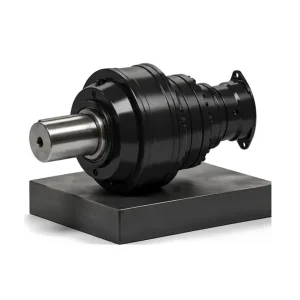
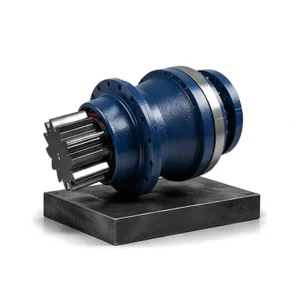
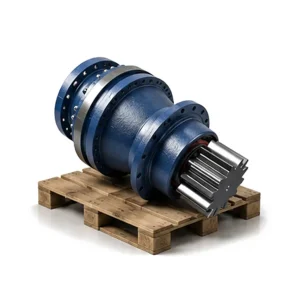
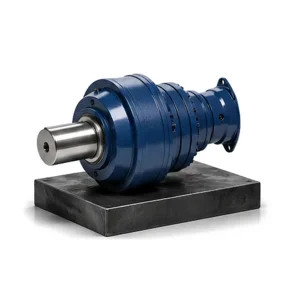
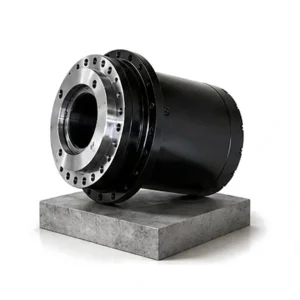
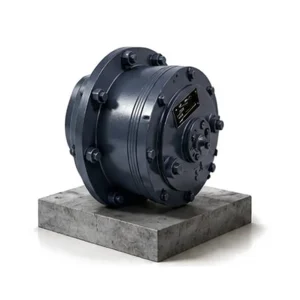
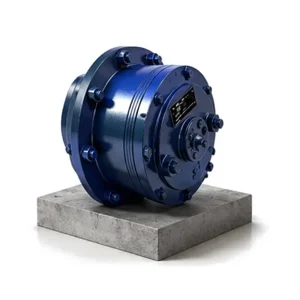
ZL85 윈치 구동 유성 기어박스
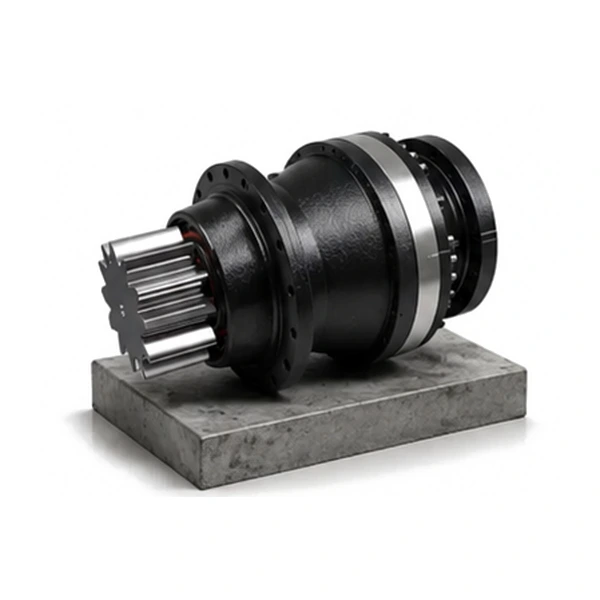
PEAK = 416W3 CONTINUOUS
ZL85 — 88,000 Nm
0.8 m/min. 13 mm per second. One revolution every 70 seconds.
The EP-ZL85 breaks two records simultaneously. The five-stage maximum ratio of 3,509 surpasses the ZL35 record of 2,397 by 46% — making it the slowest drum rotation achievable from any standard-catalogue 윈치 구동 유성 기어박스. And the 200,000 Nm peak torque matches the continuous rating of the 4xxW 416W3 — the second-largest model in the hydraulic mega-class — from an electric platform that weighs a fraction of the 1,850 kg mega-class housing. For crane OEMs and winch system designers, the ZL85 is the model where the electric ZL series stops being a lighter alternative to the 4xxW and starts being a genuine replacement for it across the 50-80 tonne SWL range.
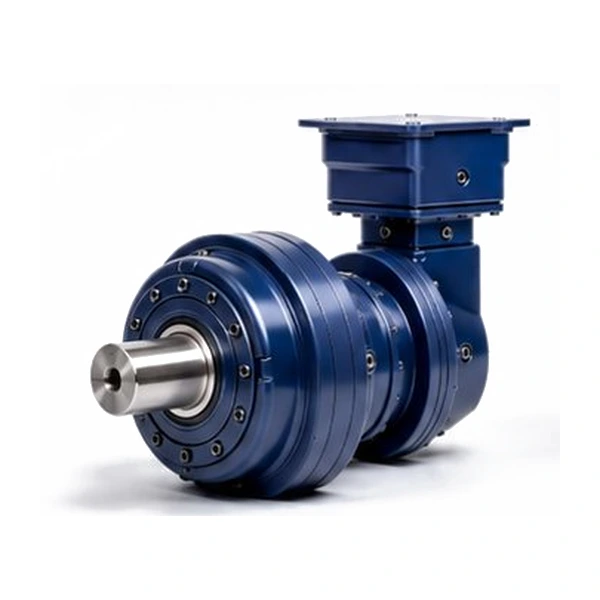
ZL85 Electric Winch Drive Planetary Gearbox — Technical Parameters
| Continuous torque (N2xh=100,000) | 88,000 Nm |
| Peak torque | 200,000 Nm (2.27x continuous) |
| 기어비 범위 | 4.05 to 3,509 (1-5 stages, catalogue maximum ratio) |
| 최대 입력 속도 | 4,000 rpm |
| Thermal power (Pt) | 26 - 90 kW (varies by stage count) |
| Gear type | Helical planetary, 3-planet, DIN 5-6 |
| Integrated brake | None (motor brake or external brake) |
| Sealing | Multi-lip FKM, IP67+ |
| 주택 | Ductile iron QT600-3 |
| 기어 재질 | 20CrMnTi, HRC 58-62 |
Ratio 3,509 — The New Catalogue Maximum and What 13 mm/sec Enables
The ZL35 held the previous record at ratio 2,397. The ZL85 at five-stage ratio 3,509 extends this by 46% — producing drum speeds so slow that the cable movement is measured in millimetres per second rather than metres per minute.
Nuclear fuel assemblies are lowered into reactor pools at speeds below 5 mm/sec to prevent fuel rod damage and to allow real-time gamma monitoring during the descent. At ratio 3,509 with a 1,000 rpm motor on a 250 mm PCD drum: line speed = 0.22 m/min = 3.7 mm/sec. The motor encoder at 10,000 PPR through ratio 3,509 produces 35,090,000 pulses per drum revolution — each pulse corresponding to 22 microns of cable travel. This resolution exceeds the positional accuracy required by nuclear fuel handling procedures.
Full-ocean-depth research instruments (hadal zone landers, abyssal sediment corers) deployed to 6,000-11,000 metres at controlled descent speeds below 1 m/min through the entire water column. At ratio 3,509 with a 2,000 rpm motor on a 300 mm PCD drum: 0.54 m/min. The 88,000 Nm continuous torque handles the combined instrument weight (500-2,000 kg) plus the cable weight at full depth (5,000-15,000 kg for deep-ocean wire). The IP67+ sealing withstands the marine deck environment on research vessels.
Cable-stayed bridge strand tensioning, high-voltage overhead line sagging, and industrial cable pre-tensioning systems where the cable must be pulled to a precise tension (measured in kN) and held. The ZL85 at ratio 2,000-3,509 provides the mechanical advantage to apply tension with millimetre-level control using a standard electric motor — the high ratio converts small motor torque adjustments into correspondingly small cable force changes, enabling the operator to dial in the exact tension without overshooting. Contact 한국 에버파워 for tensioning system integration details.
Peak 200,000 Nm — The Electric ZL85 Matches the 416W3 Mega-Class Continuous
The 4xxW 416W3 delivers 200,000 Nm continuously at 1,850 kg with a 1,800 Nm integrated brake. The ZL85 delivers 200,000 Nm as a peak at a fraction of that weight, without an internal brake, from an electric-optimised platform. The numbers match; the applications diverge.
| 매개변수 | 416W3 (Hydraulic) | ZL85 (Electric) |
|---|---|---|
| 200,000 Nm is... | Continuous (all day) | Peak (sub-10 sec) |
| 마디 없는 | 200,000 Nm | 88,000 Nm |
| Int. brake | 1,800 Nm | 없음 |
| Gear accuracy | 기준 | DIN 5-6 |
| Regen braking | N/A | Full VFD |
| Max ratio | 300 | 3,509 |
| ~에 가장 적합함 | Sustained mining/AHTS at 200kNm | Electric cranes 50-80t + precision |
The ZL85 peak matching the 416W3 continuous means the electric ZL series has reached the transient capacity of the second-largest 4xxW model. For any crane or winch where the 200,000 Nm loads are transient events (lifts, shock loads, emergency stops) rather than sustained hours-long holds, the ZL85 provides the same torque capacity as the 416W3 mega-class — from an electric platform with regen, DIN 5-6 precision, and ratios up to 3,509 that the 4xxW catalogue cannot offer.
88,000 Nm — From Heavy Electric Cranes to Deep-Ocean Precision
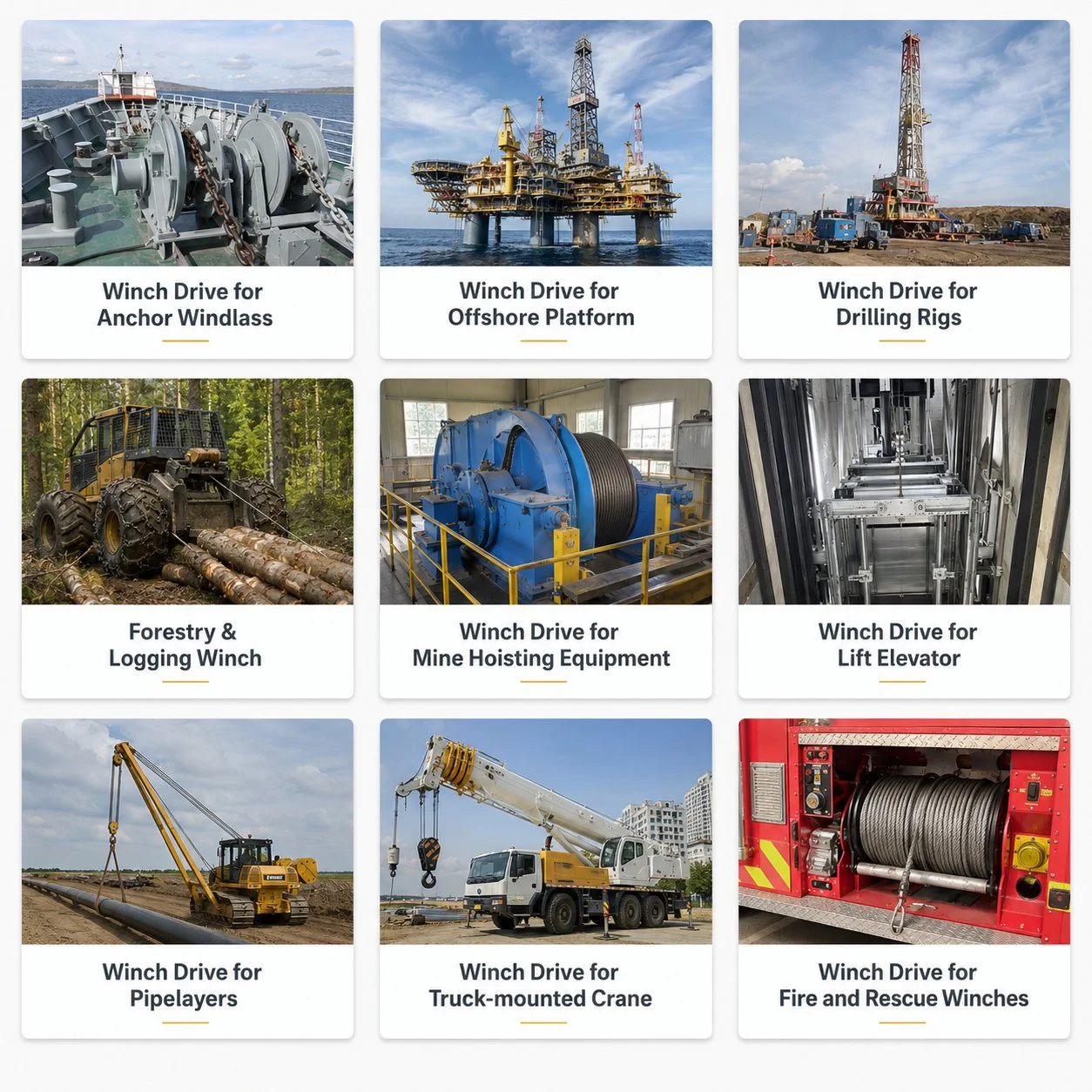
Heavy Electric Cranes (50-80 t SWL)
All-electric cranes at the upper boundary of the mobile and offshore market. The ZL85 at ratio 80-180, 2-3 stage, paired with 400-800 kW electric motors covers the 50-80 tonne SWL range with one product. The 200,000 Nm peak absorbs the dynamic overloads from heavy grab operations, container handling, and subsea deployment that define this crane class. The 선회 구동 장치 그리고 휠 구동 complete the platform from the same ZL architecture.
Deep-Ocean and Full-Depth Winch Systems
Research vessel and military deep-ocean winches deploying instruments, sensors, and recovery systems to 6,000-11,000 metres. The ZL85 at ratio 2,000-3,509 (5-stage) provides the ultra-slow descent speed (0.3-0.8 m/min) that deep-ocean protocols require, while the 88,000 Nm continuous handles the instrument weight plus the full cable weight at maximum depth — which can exceed 15,000 kg for full-ocean-depth wire. The DIN 5-6 accuracy plus motor encoder enables depth-position control within centimetres at any point in the water column.
Nuclear and High-Consequence Handling
Fuel handling machines, spent fuel cask cranes, and decommissioning equipment in nuclear power stations where the load must move at precisely controlled sub-centimetre-per-second speeds and the winch must operate in radiation environments that degrade hydraulic seals faster than gear steel. The ZL85 all-metal gear train is inherently more radiation-tolerant than the elastomeric seals in hydraulic systems — the FKM seals in the ZL85 are the most radiation-sensitive components and can be replaced at scheduled intervals.
The ZL Electric Winch Drive Family

Electric Winch Drive Planetary Gearbox — ZL85 Record-Ratio FAQ
현장 보고서
70 t all-electric offshore construction vessel crane, ZL85 at ratio 120, 2-stage, 700 kW PMSM. The crane completed a 65-tonne subsea template installation at 300 metres water depth — the heaviest electric crane lift to date on this vessel class. The 200,000 Nm peak absorbed the dynamic amplification (DAF 1.6) during the splash zone transit without a single VFD fault. Total crane energy consumption for the 4-hour installation sequence: 280 kWh, of which 68 kWh was recovered through regen during lowering. The hydraulic crane this system replaced consumed approximately 520 kWh equivalent in diesel fuel for the same operation. Energy saving: 46%.
Full-ocean-depth hadal zone lander deployment winch on a research vessel. ZL85 at ratio 3,200, 5-stage, 25 kW servo motor. The winch deployed a 1,200 kg instrument package to 8,200 metres in the Kermadec Trench at a controlled descent speed of 0.6 m/min. Total descent time: approximately 228 hours (9.5 days) of continuous operation. The motor maintained 1,920 rpm throughout — well within its thermal and torque operating band — while the drum turned at 0.6 rpm. Depth accuracy at touchdown: 1.2 metres at 8,200 m, measured by acoustic transponder. This is the deepest deployment our programme has achieved with a standard-catalogue winch drive. The ZL85 ratio 3,509 capability means we have headroom for the 10,000+ metre campaigns planned for next year.
Fuel handling machine main hoist at a pressurised water reactor. ZL85 at ratio 2,800, 5-stage, 15 kW servo motor. The winch lowers fresh fuel assemblies into the reactor pool at 3.5 mm/sec — within the nuclear safety authority requirement of less than 5 mm/sec. Positional accuracy measured by underwater camera: within 2 mm of the target grid position. The all-electric drive eliminated the hydraulic oil contamination risk in the fuel pool area — a major operational advantage over the previous hydraulic fuel handling machine. The 4-star is a qualification process observation: the nuclear safety authority required 18 months of qualification testing and documentation review before accepting the ZL85 for safety-related fuel handling duty. This timeline is inherent to nuclear regulation, not a product deficiency — but OEMs planning nuclear fuel handling projects should include this qualification lead time in the project schedule from the outset.
추가 정보
| 편집자 | Cxm |
|---|