EP-SE418T3 Triple-Stage Track Drive Planetary Gearbox
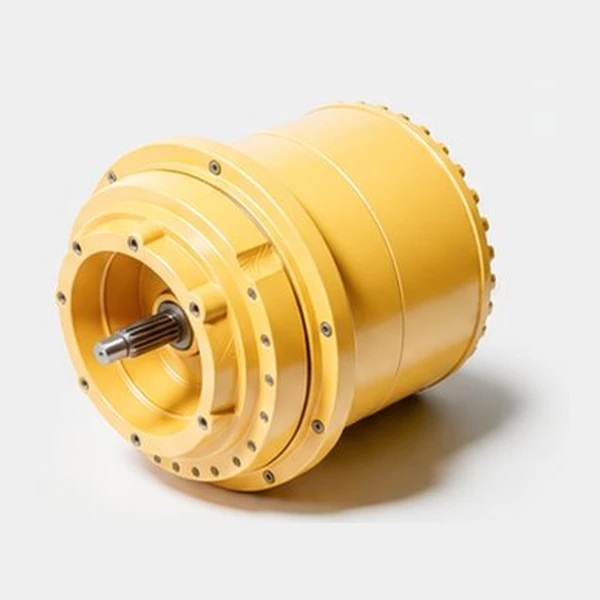
From SE413T3 through EP-SE417T3 track drive planetary gearbox, every large-capacity SE unit carries a >93% efficiency rating — a slight reduction from the >94% of smaller T3 units. EP-SE418T3 is rated at >94% — higher than its immediate predecessor despite being the most powerful unit in the SE series on this site. This is not a specification anomaly: at 270,000 N·m and 2,200 kg, the gear pitch circle diameters are substantially larger than in EP-SE417T3. Larger pitch diameters at 3,000 rpm mean lower pitch-line velocity at the gear mesh. Lower pitch-line velocity reduces hydrodynamic friction in the elastohydrodynamic oil film at each tooth contact, directly raising gear mesh efficiency. Additionally, EP-SE418T3’s ratio range starts at i=166 (versus i=123 for EP-SE417T3), enabling more uniform stage-by-stage reduction across all three planetary stages, which reduces the peak torque in the highest-loaded stage and the associated friction loss there.
EP-SE418T3 — Triple-Stage Track Drive Planetary Gearbox | 270,000 N·m, i=166–364, >94%, 2,200 kg
O EP-SE418T3 is a triple-stage track drive planetary gearbox producing 270,000 N·m from a 3,000 rpm motor input across i=166–364. Its ratio range starts at i=166 — reflecting the reality that the machines this unit serves never need to travel faster than approximately 0.85 km/h at 3,000 rpm motor input. At 2,200 kg, installation requires a ≥5,000 kg rated crane.
Especificações técnicas
① Parâmetros principais
| Parâmetro | Especificação |
|---|---|
| Torque de saída nominal | 270,000 N·m — highest in SE series on this site |
| Taxa de redução (i) | 166 – 364 (Triple-Stage T3) |
| Configuração da unidade | Triple-Stage Planetary T3 (rotating outer housing) |
| Velocidade máxima de entrada | 3,000 rpm |
| Output Speed at i=166 (3,000 rpm) | ~18.1 rpm — fastest output in this unit (~0.85 km/h at r=800mm) |
| Output Speed at i=364 (3,000 rpm) | ~8.24 rpm — minimum output speed |
| Eficiência | > 94% — higher than EP-SE413T3 through SE417T3 (all at >93%) |
| Spring Brake Torque | 2,000 N·m (spring-applied / hydraulically released) |
| Brake Output-Equiv. at i=364 | 728,000 N·m per drive |
| Pressão de liberação do freio | 15–30 bar pilot (confirm with Korea Ever-Power dimensional drawing) |
| Material de construção | Ferro fundido nodular (grafite esferoidal) |
| Montagem | Rotating outer housing flange — direct sprocket mount (ISO/SAE) |
| Peso seco | ~2,200 kg (≥5,000 kg rated crane required for installation) |
| Oil Volume (approx.) | 60–80 litres (confirm exact from dimensional drawing) |
| Lubrificação | Oil bath splash — API GL-5; VG 150 (<+15°C) / VG 220 (>+15°C) |
| Focas | Dual-cone floating metal face seals (lifetime; Viton optional) |
| Temperatura de operação | −25°C a +90°C |
| Intervalos de troca de óleo | First at 150 h; every 1,000 h or annually thereafter |
② 2,000 N·m Brake at i=166–364 — Effectiveness Table
| Razão (i) | Output speed (3,000 rpm) | Brake equiv. / drive | Holds @ 15° (r=800mm, 2 drives) |
|---|---|---|---|
| i = 166 | ~18.1 rpm | 332,000 N·m | ~327 t |
| i ≈ 230 | ~13.0 rpm | 460,000 N·m | ~453 t |
| i ≈ 295 | ~10.2 rpm | 590,000 N·m | ~581 t |
| i = 364 max | ~8.24 rpm | 728,000 N·m | ~717 t |
W = (2 × brake_equiv) ÷ (sin 15° × 0.80). At i=166 (minimum ratio), the brake equivalent is already 332,000 N·m per drive — higher than EP-SE415T3's maximum of 258,000 N·m. This confirms that even at EP-SE418T3's fastest operating ratio, the spring brake hold exceeds the full capability of lighter SE units.
③ SE417T3 vs SE418T3 — Where the Differences Lie
| Parâmetro | EP-SE417T3 | EP-SE418T3 ★ | Delta |
|---|---|---|---|
| Torque | 220,000 N·m | 270,000 N·m | +22.7% |
| Eficiência | >93% | >94% | +1 pt ↑ (unusual) |
| Min ratio | i=123 | i=166 | +35% (slower max speed) |
| Max ratio | i=365 | i=364 | ≈ same |
| Freio de mola | 2,000 N·m | 2,000 N·m | — |
| Peso seco | ~1,450 kg | ~2,200 kg | +52% ← SE series max |
EP-SE418T3 is the fifteenth model in the Korea Ever-Power SE series covered on this site, the most powerful track drive planetary gearbox presented here, and the only unit in the series where efficiency increases from its predecessor — >94% versus SE413T3–SE417T3’s >93%. It is also the heaviest at 2,200 kg, the first requiring a ≥5,000 kg crane for installation, and the only SE unit on this site with a minimum ratio as high as i=166 — reflecting that the 3,000–7,000+ tonne machines it serves simply do not need faster travel than 18 rpm at the sprocket. The 207× torque span from SE400T1 (1,300 N·m) to SE418T3 (270,000 N·m) represents fifteen models in a consistent rotating-housing planetary gearbox architecture. Korea Ever-Power provides motor displacement calculation, ratio selection, brake adequacy confirmation (including counterbalance valve requirements for very heavy machines), and dimensional cross-reference against the incumbent drive, all in a single same-day engineering response, at no charge, before any order commitment. The SE series extends beyond EP-SE418T3 for very specialised applications — contact Korea Ever-Power for requirements above 270,000 N·m.
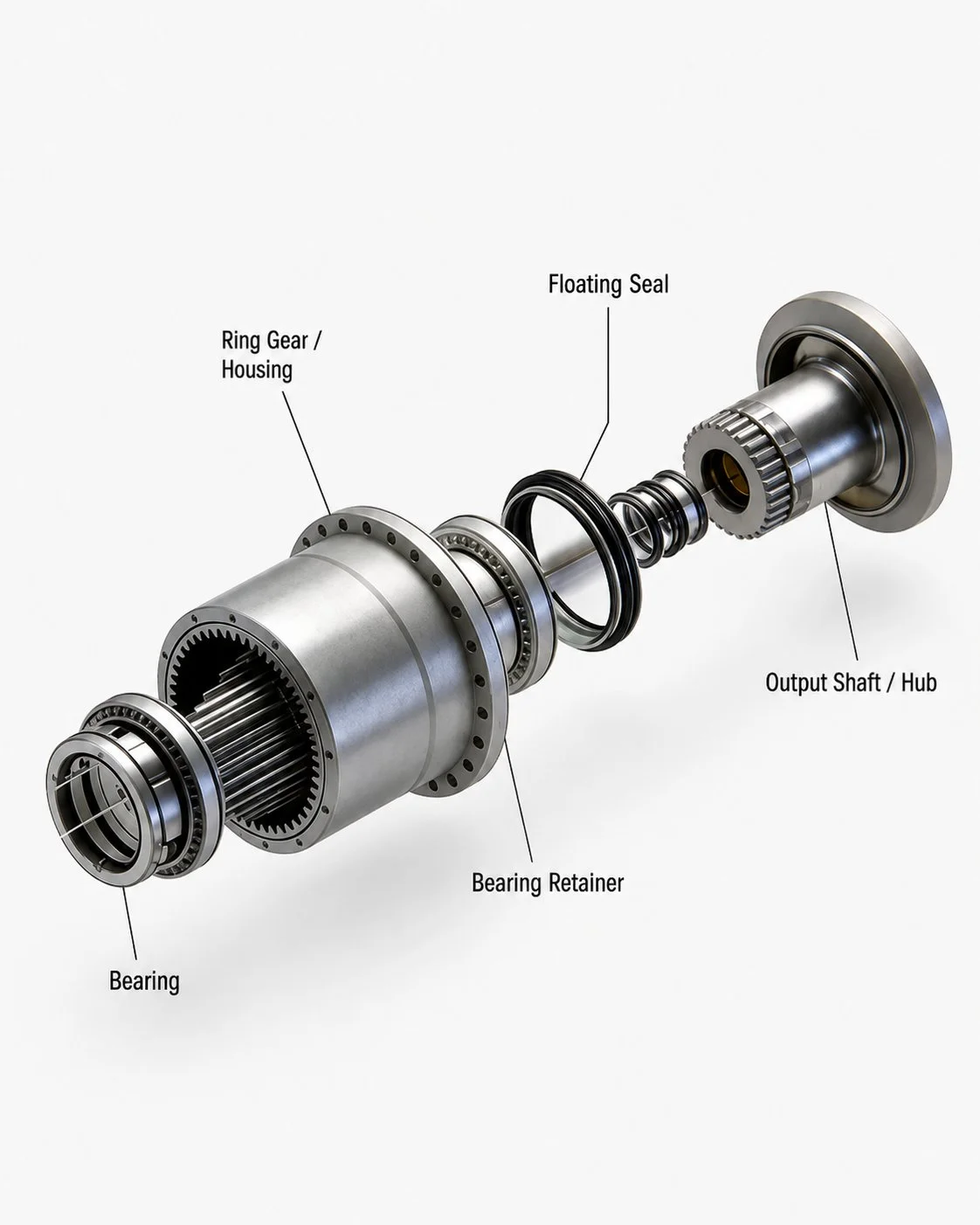
>94% Efficiency at the Highest Torque — Why Larger Gears Can Be More Efficient
In the SE series efficiency record from SE400T1 through SE415T3 and SE417T3, a pattern appears: as torque increased into the very large T3 class (SE413T3 through SE417T3), efficiency settled at >93% — slightly below the >94% of smaller T3 units like SE406BT3, SE407T3, and SE410T3. EP-SE418T3 breaks this pattern: at 270,000 N·m, efficiency recovers to >94%. Three independent physical mechanisms explain why this is not a specification error.
Gear mesh efficiency in a planetary set is primarily governed by pitch-line velocity at the tooth contact. As pitch-line velocity increases, hydrodynamic friction in the elastohydrodynamic oil film (EHL film) at the gear contact increases non-linearly — and efficiency decreases. At 270,000 N·m, EP-SE418T3's gear pitch circle diameters are larger than in EP-SE417T3's 220,000 N·m final stage. At the same 3,000 rpm motor input, the larger final-stage gears rotate more slowly (lower angular speed), producing a lower pitch-line velocity at the tooth mesh. The reduced pitch-line velocity means reduced EHL film viscous shear losses, directly improving mesh efficiency above the level achievable in SE417T3's smaller, faster-rotating gears.
EP-SE418T3's ratio range begins at i=166, compared to i=123 for EP-SE417T3. A minimum ratio of i=166 means the three stages collectively reduce speed by 166-fold at minimum. This higher minimum ratio allows each of the three stages to be designed with a more uniform individual stage ratio — each stage reducing speed by approximately i^(1/3) = 5.5×, versus the uneven distribution needed when the minimum ratio is only i=123 (where one stage must provide a small reduction to reach the i=123 end of the range). More uniform stage ratios eliminate the efficiency penalty from having one stage operating far outside its optimal reduction ratio, contributing to the overall efficiency improvement.
Larger gear modules (tooth size) increase the contact ratio — the fraction of time two teeth are in simultaneous contact. Higher contact ratio distributes the transmitted load across more tooth pairs simultaneously, reducing the load per tooth and the associated sliding speed at the tooth root and tip where friction is highest. At 270,000 N·m, EP-SE418T3's final stage gear module is larger than in EP-SE417T3, producing a higher contact ratio and lower specific sliding velocity across the tooth profile. Combined with the lower pitch-line velocity from Mechanism 1, this produces measurably lower total mesh friction loss, returning the efficiency specification to the >94% level achievable at this scale.
2,200 kg — The Scale Engineering of the SE Series Maximum
EP-SE418T3 at 2,200 kg is the heaviest track drive unit in the Korea Ever-Power SE series covered on this site. The +750 kg increase over EP-SE417T3 (+52%) reflects four compounding engineering factors that scale non-linearly with torque at the 270,000 N·m level.
Gear tooth bending strength scales with the square of the tooth module (module^2 × face width). To increase rated torque by 22.7% from 220,000 to 270,000 N·m at the final stage, the product of module^2 and face width must increase proportionally. If module increases (larger teeth), pitch circle diameter increases, housing diameter increases, and mass increases by roughly the cube of the linear dimension scale factor. This dimensional cascade means that a 22.7% torque increase requires a housing cross-section increase of approximately 7–10% in diameter, which at 2,200 kg of nodular cast iron produces a disproportionally large mass increase. This is the primary explanation for the +750 kg step, not an inefficiency in the design.
The taper roller bearings at the drum-spindle interface must be sized for the bearing loads imposed by the machines this unit serves — 3,000–7,000+ tonne platforms imposing 700–1,000+ kN combined radial and axial loads. At this load class, the bearing bore diameter must increase substantially above EP-SE417T3's already-large bearings. Larger bore requires more housing material around the bore — thick walls in nodular cast iron for load path integrity. This bearing-driven housing enlargement adds several hundred kilograms independently of the gear set scaling.
The minimum ratio i=166 (vs i=123 for EP-SE417T3) means the three stages are configured for a higher minimum ratio. This different stage configuration, combined with the larger gear cross-sections for 270,000 N·m, produces a different housing axial length and diameter distribution than SE417T3. The 60–80 litre oil volume estimate (versus approximately 40–55 litres for EP-SE417T3) reflects the larger sump volume inside the 2,200 kg housing, which contributes to the lubrication film quality that supports the >94% efficiency specification.
SE SERIES WEIGHT AT PEAK
SE407T3: 350 kg
SE410T3: 420 kg
SE413T3: 420 kg
SE414T3: 680 kg
SE415T3: 850 kg
SE417T3: 1,450 kg
SE418T3: 2,200 kg ★
Applications — 3,000 to 7,000+ Tonne Machine Class
EP-SE418T3 at 270,000 N·m serves the absolute highest tier of crawler drive engineering — machines where even EP-SE417T3's 220,000 N·m is insufficient, and where i=166 as the minimum ratio reflects that no machine at this weight class needs to travel faster than approximately 0.85 km/h.
Very Large Walking Draglines — 5,000–7,000+ Tonne Class
The world's largest walking draglines — machines with bucket capacities of 100–170 cubic metres and operating weights exceeding 5,000 tonnes — include models with crawler-type propulsion systems that require EP-SE418T3 for the travel propel drives. These machines move infrequently (typically every few weeks between panel moves) but generate enormous tractive force requirements on mine bench surfaces. At 270,000 N·m per drive with i=200–280, EP-SE418T3 handles the required tractive force for these machines at their steepest operational gradients with adequate safety margin that EP-SE417T3 at 220,000 N·m cannot provide. The >94% efficiency is operationally significant at this scale: 1% efficiency improvement in a machine with multi-megawatt hydraulic propel power translates to tens of kilowatts less heat in each drive, reducing housing surface temperature and extending oil change intervals on machines with access-constrained maintenance. For a machine with 12 propel drives at full power, the difference between >93% and >94% efficiency per drive is roughly 10–15 kW less heat per drive — approximately 120–180 kW less total propel system heat — measurable as lower main pump outlet temperatures and longer filter change intervals in the hydraulic system.
TBM Main Drive Propel Rings — 22m+ Bore Diameter
TBMs in the very largest bore diameter class — 22–16 metre machines being used for the widest motorway tunnels, large waterway crossings, and major underground infrastructure projects — generate per-unit propel drive load requirements that may exceed EP-SE417T3's 220,000 N·m in very hard rock with high thrust requirements. EP-SE418T3 at i=180–230 provides the required thrust with adequate margin for very hard granite and quartzite geology where the per-unit thrust load at 270,000 N·m per unit is the design governing factor. The >94% efficiency is directly relevant for TBM propel drives, which operate at near-continuous duty for months at a time: lower heat generation per kilowatt reduces thermal management requirements in the confined tunnel propel ring environment.
Ultra-Heavy Rope Shovels — Very Largest Production Class
The very largest electric rope shovels — machines with dipper capacities exceeding 100 cubic metres and operating weights approaching 2,000 tonnes — may require EP-SE418T3 for the crawler propel drives when site conditions produce drive torque requirements that exceed EP-SE417T3's 220,000 N·m capacity with adequate safety margin. At very high-gradient mine bench access roads or on soft saturated ore floor, the tractive force demand at these machine weights can approach the EP-SE417T3 limit, and EP-SE418T3 provides the additional 22.7% torque capacity needed to maintain the required engineering safety factor. Korea Ever-Power calculates the specific drive torque requirement for any rope shovel specification same day.
Extreme-Scale Marine and Offshore Crawler Systems
The largest offshore and marine heavy crawler platforms — systems moving the heaviest offshore platform deck sections, large jacket structures, and specialised marine infrastructure components of 3,000–5,000+ tonne payload — require EP-SE418T3 when total system weight exceeds EP-SE417T3's service envelope. These systems operate in salt water immersion and highly corrosive marine atmospheres. EP-SE418T3's 60–80 litre oil volume provides a larger contamination buffer in salt water environments, and the dual-cone floating metal face seals sustain full immersion without oil contamination. Auxiliary winch and tensioner equipment on these platforms use redutores de engrenagem helicoidal for self-locking cable drum hold, independent of the EP-SE418T3 travel drives.
Specialised Heavy Industrial and Defence Platforms
EP-SE418T3 also serves specialised tracked platforms above 3,000 tonnes in defence, heavy industrial transport, nuclear power plant construction, and major civil infrastructure projects where the combination of machine weight, site gradient, and required safety factor produces drive torque demands that require 270,000 N·m per unit. The >94% efficiency reduces thermal signature in sensitive environments, and the robust dual-cone face seal system sustains contaminated environments without maintenance-intensive seal replacement programmes.
Large-Scale Land Development and Major Infrastructure
Ultra-large tracked platforms for major dam construction, large coastal land reclamation projects, and major port infrastructure development at the extreme upper weight range require EP-SE418T3 when combined equipment weight and site resistance exceed the EP-SE417T3 service envelope. The downstream agricultural and land development gearboxes for the heavy earth-working implement drives operate on separate PTO circuits independent of the EP-SE418T3 travel drives.
Por que a Coreia Ever-Power
Motor Selection, Ratio, Brake — Same Day
EP-SE418T3's 3,000 rpm maximum applies, and motor displacement must be sized for this limit. Korea Ever-Power's same-day engineering response covers: motor displacement for your hydraulic power at 3,000 rpm; ratio from i=166–364; 2,000 N·m brake adequacy including counterbalance valve requirements; and dimensional cross-reference against your incumbent drive. For EP-SE418T3 versus EP-SE417T3 boundary applications, Korea Ever-Power calculates both simultaneously and provides a comparison document — no charge, before any order commitment.
Pre-Assembled and Tested at 2,200 kg
Korea Ever-Power provides EP-SE418T3 pre-assembled with matched large-displacement motor (3,000 rpm maximum), overcenter valve, and pressure relief valve. The 2,000 N·m brake is function-verified before shipping. At 2,200 kg requiring a ≥5,000 kg crane at the installation site, a pre-assembled and brake-verified unit arriving as a complete tested assembly is not just convenient — it is the practical approach. The unit arrives ready for a single crane lift into the chassis bore and hydraulic line connection, eliminating all on-machine motor fitting and brake commissioning.
Stage-Level Parts — 2,200 kg Serviced
Korea Ever-Power stocks all EP-SE418T3 internal components by stage: Stage 1, 2, and 3 sun gear and planet set assemblies; 2,000 N·m brake disc pack (friction discs, separator plates, O-ring kit); dual-cone floating face seal kits; taper bearing sets per bearing position; housing O-ring kits. At 2,200 kg and 270,000 N·m, returning the unit to a factory for any component-level repair is practically impossible without a 100+ tonne crane relocation operation. Stage-level in-situ repair with Korea Ever-Power components is the only viable maintenance approach at this scale. For operators running multiple EP-SE418T3 units at the same site, Korea Ever-Power’s same-day oil sampling guidance and stage-specific wear signature interpretation service allows the maintenance team to identify which units require attention and what components to pre-position, well ahead of any failure event. This forward-looking maintenance approach is especially important at 2,200 kg per unit, where an unplanned failure with no components on hand means a multi-week crane and logistics operation under any circumstances.
12/18-Month Warranty
12 months from commissioning or 18 months from shipment, covering all three planetary stages, the 2,000 N·m brake assembly, and the floating face seals. Warranty parts dispatched from Korea Ever-Power stock — no requirement to return the 2,200 kg unit. For OEM fleet buyers stocking EP-SE418T3 before machine assembly, warranty begins at commissioning.
Stock and Framework Supply
Standard configurations from stock in 7–14 days. Pre-assembled packages: 30–45 days. At 2,200 kg and this torque class, an unplanned drive failure in a 5,000-tonne dragline or 22-metre TBM represents catastrophic project cost. Korea Ever-Power discusses reserved production capacity, consignment stock, and framework supply terms for the largest fleets at this scale. Contact Korea Ever-Power with fleet details and annual volume for emergency response planning and framework pricing.
−25°C to +90°C — 2,200 kg Thermal Mass
At 2,200 kg nodular iron, the thermal mass is approximately 1,100 kJ per degree — the highest in the SE series on this site. Despite the >94% efficiency recovery, any absolute heat generation at 270,000 N·m scale is substantial; the 2,200 kg housing absorbs it most slowly, providing the longest thermal run-up time and greatest resistance to temperature peaks. For high-ambient and high-duty-cycle operation, Korea Ever-Power provides thermal assessment on request at no charge. At 2,200 kg of nodular cast iron with a surface area proportional to the unit's physical scale, EP-SE418T3 also dissipates heat more effectively by natural convection than lighter SE units at the same housing temperature, reducing the effective thermal resistance to ambient relative to the heat generated per kilowatt of power transmitted. This contributes to maintaining housing surface temperature below the +90°C limit even in high-ambient environments with sustained maximum travel duty cycles, without additional cooling measures in most standard applications.
Revisões de Campo
We supply propel drive systems for the world's largest walking draglines, including crawler-based machines in the 5,000–6,500 tonne operating weight class at major coal and copper mines. Korea Ever-Power confirmed EP-SE418T3 for our largest platform after calculating that the required drive torque per unit at 5,800 tonnes on our worst-case access ramp configuration exceeded EP-SE417T3's 220,000 N·m capacity with the safety factor our engineering specification mandates. At i=215 for our standard operational ratio, the spring brake provides 2,000 × 215 = 430,000 N·m per drive mechanical hold — verified at our 8° acceptance gradient slope test with full machine weight. We also confirmed the >94% efficiency specification: our hydraulic oil temperature monitoring showed a measurable reduction in main pump outlet temperature compared to the EP-SE417T3 installations on our lighter machines, consistent with the higher efficiency reducing heat input to the hydraulic system. At 1,200 hours across four units at our Pilbara iron ore operation, zero failures.
Our largest project involved a 22.5-metre bore diameter mixed-ground TBM for a major river crossing in Hubei Province. The propel ring contained 48 individual drive units. Our ground load model for the hardest limestone strata sections required 250,000 N·m per unit with a 1.1× service factor — 275,000 N·m per unit required, which exceeded EP-SE417T3's 220,000 N·m by a substantial margin. Korea Ever-Power confirmed EP-SE418T3 at i=185 for our advance rate requirement. The efficiency specification of >94% was critical for our ventilation design — 48 drives operating continuously in a 22.5-metre tunnel generate substantial heat, and even 1% lower efficiency would have required additional ventilation capacity in our tunnel design. At 1,400 hours of continuous tunnelling through 4.8 km of tunnel (including 1.2 km of hard limestone at maximum thrust), zero EP-SE418T3 failures across all 48 drives. Korea Ever-Power's 7-14 day stock availability was the deciding factor in our component supplier selection — our project schedule required guaranteed spare unit availability within a 2-week window throughout the tunnelling programme. We keep four complete EP-SE418T3 units on-site at the tunnel portal as operational reserves, which Korea Ever-Power replenishes from stock within 14 days each time we consume one. This just-in-time reserve system — enabled by Korea Ever-Power's consistent stock availability — allowed us to reduce our initial stock holding from eight to four units without increasing project risk, reducing our upfront capital commitment by approximately half while maintaining full operational resilience.
We operate tracked crawler platforms for moving very large pre-assembled topsides sections at our offshore fabrication yard near Campos. Our largest platform moves topsides up to 4,200 tonnes from the fabrication hall to the quayside for load-out. Korea Ever-Power specified EP-SE418T3 at i=248 for our 16 travel drives after confirming that our maximum site gradient combined with the heaviest topside load and a 1.25× dynamic factor produced a per-unit drive torque of 258,000 N·m — above EP-SE417T3's capacity. The 2,000 N·m brake at i=248 provides 2,000 × 248 = 496,000 N·m per drive hold, giving us 2.1× safety factor against the maximum tractive force at our steepest yard gradient. Operating in a salt-laden, high-humidity coastal environment with regular high-pressure wash-down, the dual-cone floating face seals have shown zero oil contamination from water ingress in 2,500 hours across our 16 drives over three years of yard operation. The >94% efficiency has contributed to our platform's hydraulic oil staying 4–6°C cooler than our previous European-supplied drives, measurably extending hydraulic component service life.
Korea Ever-Power — Portfólio completo de acionamentos
EP-SE418T3 at 270,000 N·m is the highest-rated track drive planetary gearbox in the Korea Ever-Power SE series presented on this site. Korea Ever-Power's manufacturing capability extends above this level for very specialised applications. Contact Korea Ever-Power for requirements above 270,000 N·m.
Caixas de Engrenagens Planetárias para Acionamento por Esteira — Série SE Completa
SE400T1 (1,300 N·m, T1, 35 kg) through SE418T3 (270,000 N·m, T3, 2,200 kg) — a 207× torque span across fifteen models in one consistent rotating-housing planetary gearbox architecture, and the only series where the highest-torque unit achieves a higher efficiency specification than the preceding five models. Korea Ever-Power SE series capability extends beyond EP-SE418T3 for the most specialised applications. Contact Korea Ever-Power for requirements above 270,000 N·m.
High Precision Planetary Gearboxes
P0 ≤1 arcmin to P2. EP-TM, EP-TNF, EP-TEG series. The Korea Ever-Power planetary gearbox range: from semiconductor EFEM precision drives to 270,000 N·m extreme heavy-duty crawlers — one engineering platform across the full torque spectrum.
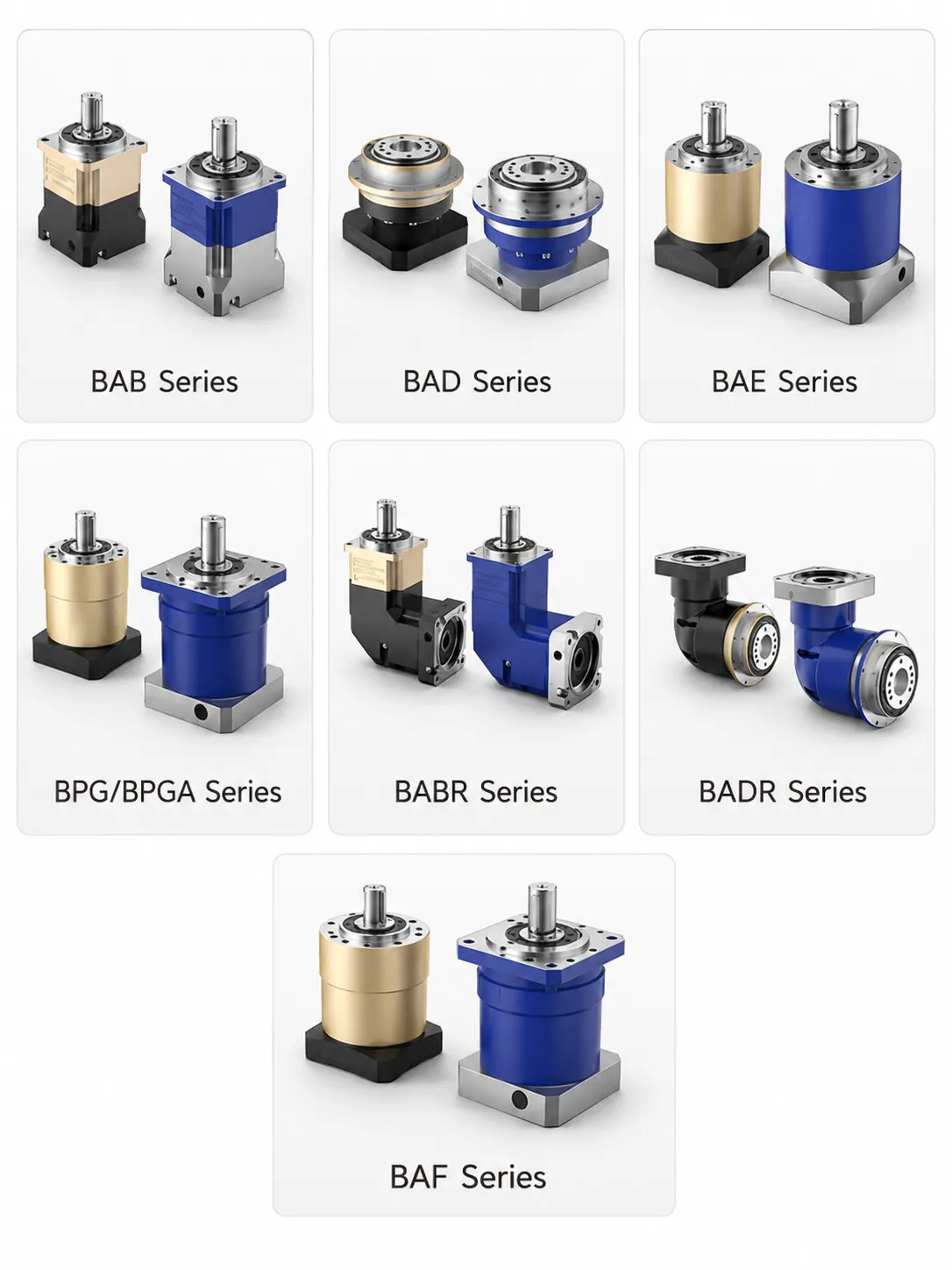
Guincho, giro e acionamento por rodas
Marine winch drives, offshore platform hoist gearboxes, excavator swing slewing drives, wheel drives. Complete heavy-duty industrial transmission portfolio at this torque class and above.
Perguntas frequentes técnicas
Specify EP-SE418T3 — Motor, Ratio, Efficiency Analysis, and Dimensional Fit Confirmed Before Order
Provide machine weight, gradient, circuit power, and incumbent drive model. Korea Ever-Power returns motor displacement for 3,000 rpm max, ratio from i=166–364, brake and counterbalance adequacy, and dimensional match — same day, no charge.
270,000 N·m · i=166–364 · Triple-Stage T3 · 2,000 N·m brake · >94% · 3,000 rpm max · −25°C to +90°C · ~2,200 kg
Informação adicional
| Editor | Cxm |
|---|
Produtos relacionados
-

Caixa de Engrenagens Planetárias de Acionamento por Trilho de Três Estágios EP-SE416T3
-
Caixa de Engrenagens Planetárias de Acionamento por Trilho de Três Estágios EP-SE415T3
-
Caixa de Engrenagens Planetárias de Acionamento por Trilho de Três Estágios EP-SE414T3
-
EP-SE413T3 Triple-Stage Track Drive Planetary Gearbox
-
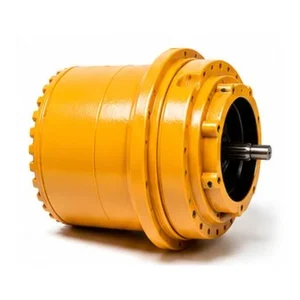
EP-SE410T3 Triple-Stage Track Drive Planetary Gearbox
-
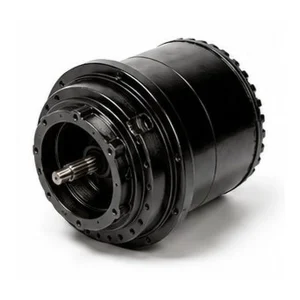
EP-SE406AT Multi-Stage Track Drive Planetary Gearbox
-
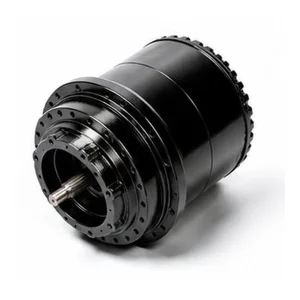
EP-SE402T2 Double-Stage Track Drive Planetary Gearbox
-
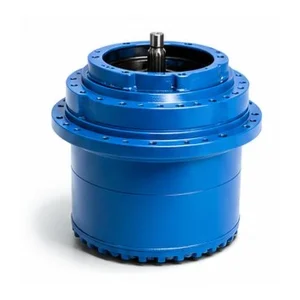
EP-SE401T1 Single-Stage Track Drive Planetary Gearbox