Winch Drive Series — Marine & Offshore Equipment
Winch Drive Planetary Gearbox for Tugger Winch
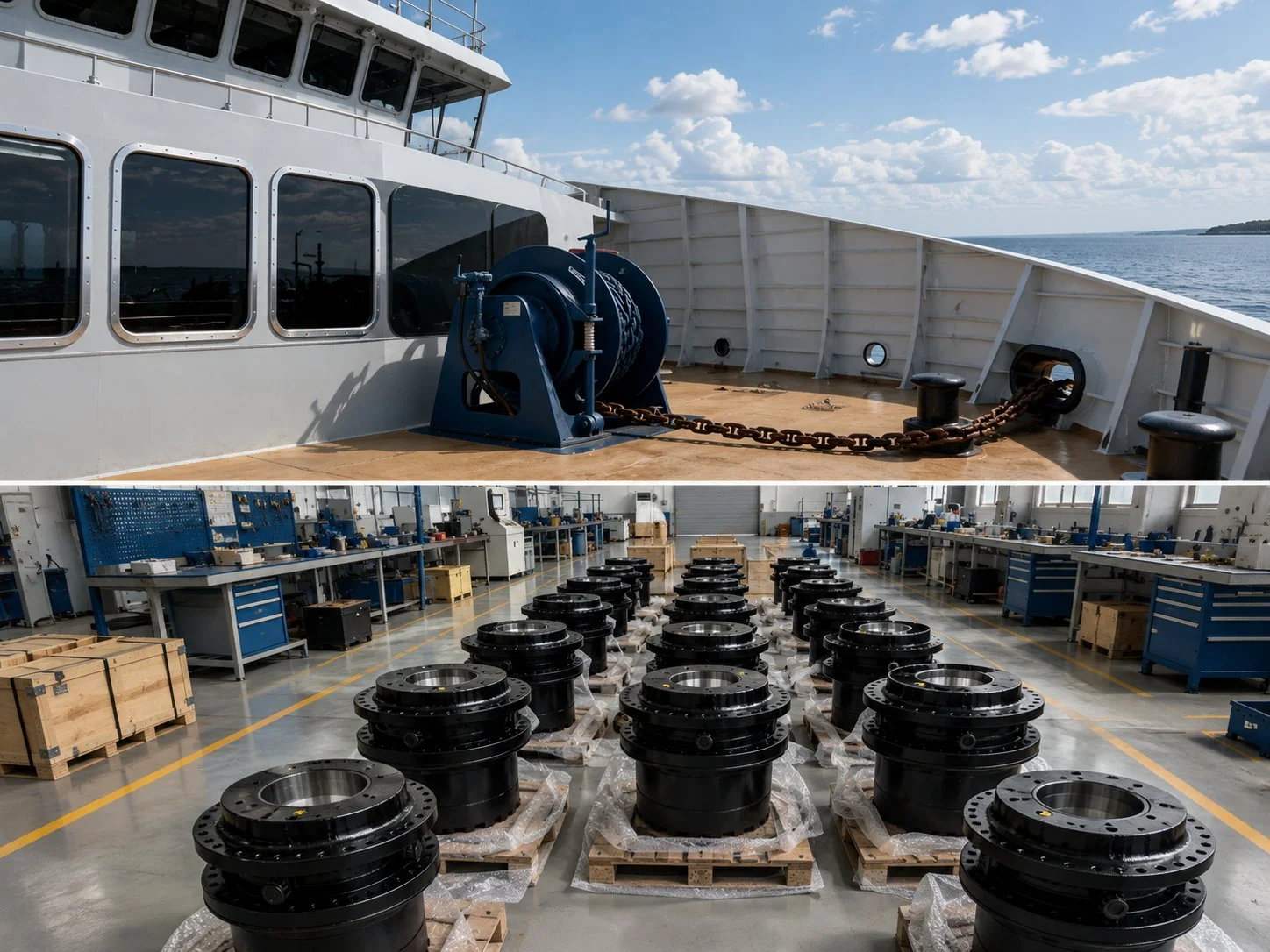
Tugger winches are the workhorses of every vessel deck — used for line handling, cargo positioning, mooring operations, and towing assistance in conditions ranging from harbour berths to offshore platforms in extreme weather. The winch drive planetary gearbox behind each tugger winch drum must deliver fast, controllable line speed with high starting torque, survive continuous wash-down and salt spray, and hold loaded lines statically without brake creep across watch changes lasting 12 hours or more.
IP67 / IP68 marine seal
High-speed line handling to 60 m/min
SAE / IEC motor interface
The tugger winch is one of the most frequently operated pieces of deck machinery on any working vessel — executing dozens of line-handling cycles per day during cargo operations, port calls, and mooring manoeuvres. Unlike anchor windlasses that operate in relatively long infrequent cycles, a tugger winch may be engaged and disengaged hundreds of times during a single port call, placing severe demands on the holding brake, the input shaft seal, and the gear lubrication film at low-speed high-torque starts. Korea Ever-Power supplies planetary winch drive gearboxes for tugger winch applications on commercial vessels, offshore platforms, drillships, and shipyard lifting gantries — covering output torques from 500 Nm for small deck tuggers through 30,000 Nm for heavy offshore mooring and towing assist winches, with marine-grade engineering as the baseline specification across the entire range.
Tugger Winch Applications: Vessel Types and Operating Demands
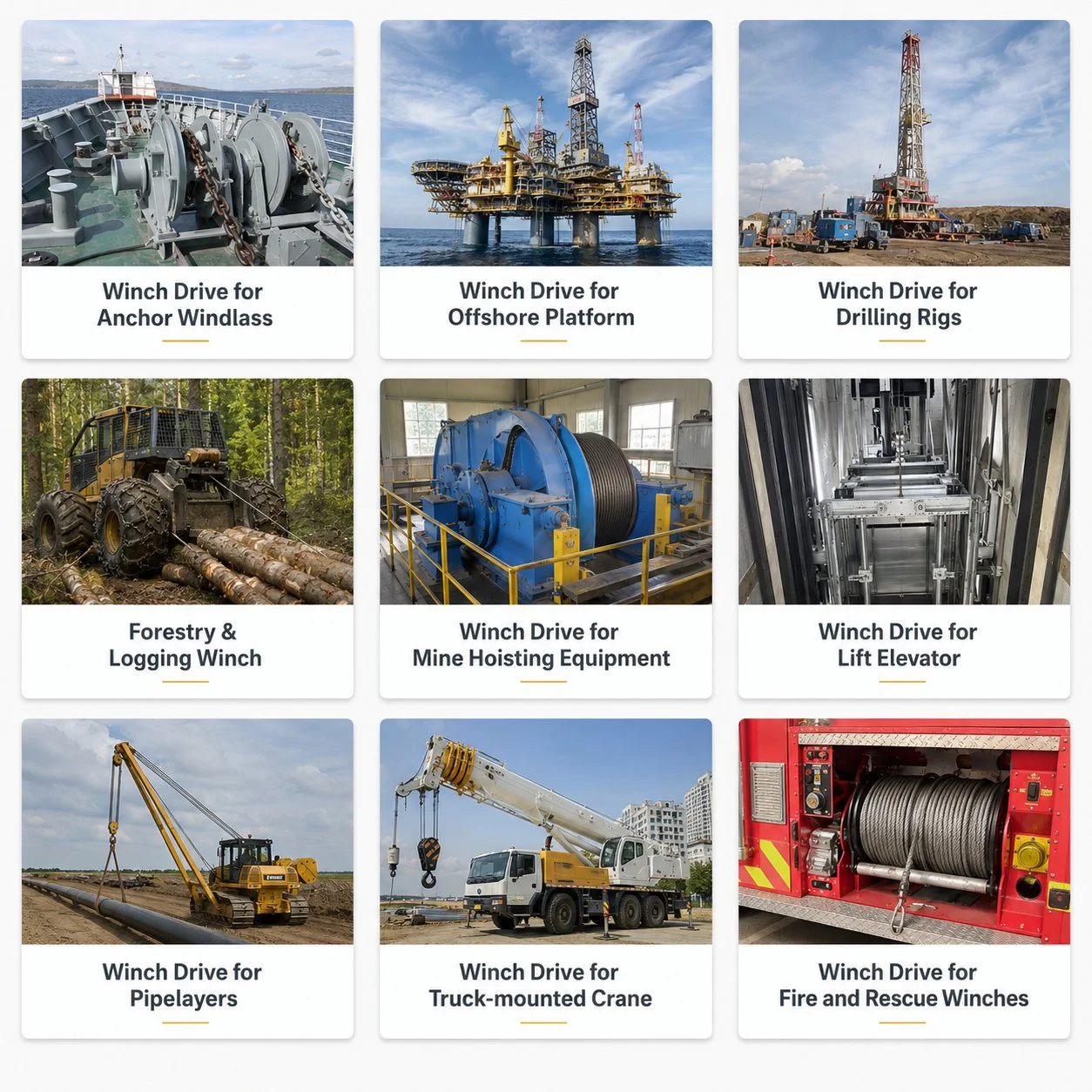
Commercial Vessel Deck Tuggers (500–5,000 Nm): Cargo ships, bulk carriers, container vessels, and tankers carry multiple tugger winches — typically four to eight units — for line handling during port calls and mooring operations. These winches pull mooring lines from fairleads to bollards, take up slack during tidal rises, and provide the controlled tension needed for safe berthing in adverse current and wind conditions. Line pull of 5 to 50 kN, line speed of 20 to 40 m/min. The duty cycle is intense during port calls — the winch may make 50 to 100 haul-and-pay cycles in a four-hour mooring operation — but the vessel then proceeds to sea and the winch is idle for the voyage. This cycle pattern imposes a demanding start-under-load requirement: after sitting idle at sea temperature, the gearbox must start immediately at full torque without the warm-up period that would be expected in a plant machinery context.
Offshore Platform and Jackup Rig Tuggers (3,000–15,000 Nm): Fixed and mobile offshore platforms use heavy tugger winches for pipe handling, equipment positioning, and emergency towing operations. These applications are characterised by intermittent high-torque demands — a single pipe joint may weigh 8 to 15 tonnes and require precise controlled lowering or lifting across a moonpool or over the platform edge. Line pull of 30 to 150 kN, line speed of 10 to 25 m/min (slower than vessel deck tuggers due to the precision positioning requirement). The marine environment on an offshore platform is more aggressive than a vessel deck — continuous salt spray, high-pressure wash-down after drilling operations, and potential chemical contamination from drilling fluid spills.
Offshore Construction Vessel and Pipelaying Vessel Tuggers (8,000–30,000 Nm): The largest tugger winch applications are found on offshore construction vessels (OCVs) and pipelaying vessels, where tugger winches assist with pipe tensioning, abandonment and recovery (A&R) operations, and controlled lowering of subsea structures. These winches operate in water depths to 3,000 metres, often with dynamic positioning (DP) vessels requiring absolute control over the load at every point in the lowering operation. Line pull up to 300 kN, controlled speed from 0.1 m/min (subsea structure positioning) to 30 m/min (free-hanging wire retrieval). The gearbox ratio must be selected to cover this wide speed range with a single motor-gearbox combination, requiring ratios in the range of 100:1 to 800:1 with the winch drum diameter as the defining constraint.
Planetary Drive Architecture for Tugger Winch: Why High-Stage Ratios Matter

The tugger winch gearbox ratio is the parameter that most directly determines the balance between line speed and line pull for a given motor. A lower ratio produces higher line speed but lower line pull; a higher ratio produces lower line speed but higher line pull. Since most tugger winch applications require both fast free-spooling speed and high-torque slow-speed positioning capability, the gearbox ratio must be carefully optimised against the motor torque-speed characteristic:
Hydraulic Motor Tuggers: Hydraulic motors for tugger winch applications are typically fixed-displacement axial piston motors with rated speeds of 300 to 1,500 rpm and rated torques of 50 to 500 Nm. The line speed at maximum motor speed and the line pull at maximum motor torque define the operating envelope. At a winch drum diameter of 400 mm and a motor speed of 1,000 rpm, a gearbox ratio of 100:1 produces a line speed of (π x 0.4 x 1,000/100) / 60 = approximately 21 m/min — suitable for active line handling. The same gearbox at maximum motor torque of 200 Nm produces a line pull of (200 x 100) / 0.2 = 100,000 N = 100 kN — adequate for heavy mooring line tensioning.
Electric Motor Tuggers: Electric tugger winches use AC induction or permanent magnet motors controlled by VFDs, providing continuously variable speed from creep to full speed. The VFD enables constant torque from zero speed to base speed, and constant power from base speed to maximum speed — a torque-speed characteristic that is inherently well-matched to tugger winch duty without the two-speed gearbox that some hydraulic tuggers require. The gearbox ratio for electric tugger drives is therefore typically lower than for hydraulic motor drives, as the VFD provides the speed reduction at low speed that a hydraulic motor achieves by running at reduced flow. Korea Ever-Power planetary gearboxes for electric tugger applications are supplied with IEC B5 flanges in frames IEC 90 to IEC 200 and integrated speed sensor provisions for VFD feedback.
Korea Ever-Power Winch Drive Range — Tugger Winch Selection Guide
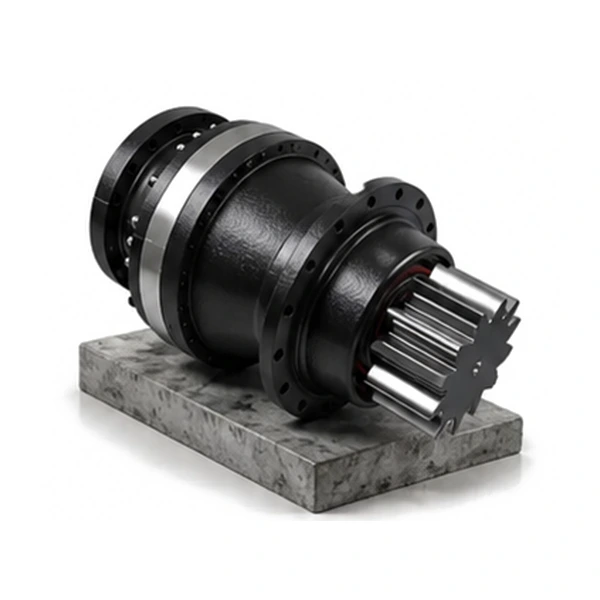
| Модель | Выходной крутящий момент | Этапы | Диапазон соотношений | Типичное применение | Входной фланец | Seal Grade |
|---|---|---|---|---|---|---|
| ZL55 | 500 – 2,000 Nm | 1–5 | 3.7 – 3,497 | Light deck tugger, vessel mooring | SAE / IEC | IP67 |
| ZR75 | 1,500 – 6,000 Nm | 2–5 | 5.1 – 4,884 | Mid-range deck tugger, bulk carrier | SAE / IEC | IP67 |
| 407AW | 3,000 – 10,000 Nm | 2–3 | 50 – 1,200 | Platform tugger, pipe handling | SAE B/C / IEC | IP68 FKM |
| 414W3 | 8,000 – 22,000 Nm | 3 | 100 – 2,500 | AHTS towing assist, OCV A&R | SAE C/D / IEC | IP68 FKM |
| 417W3 | 15,000 – 30,000 Nm | 3 | 100 – 2,500 | Heavy offshore tugger, pipelaying | SAE D / IEC | IP68 FKM |
Holding Brake Design for High-Cycle Tugger Duty
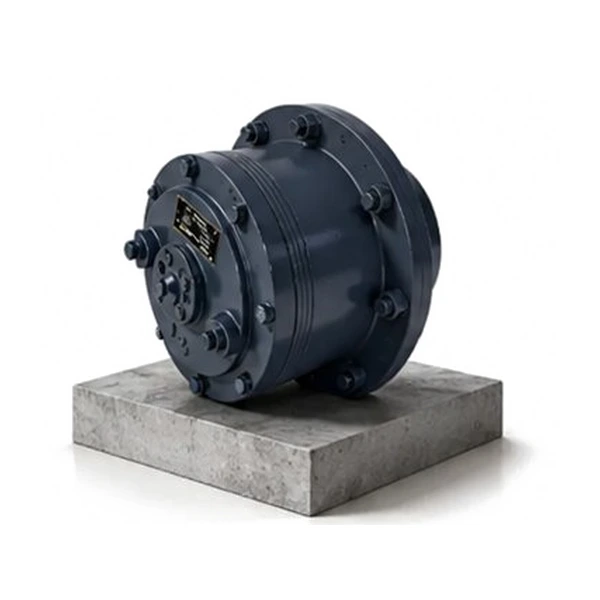
Marine Sealing and Environmental Protection for Deck Tugger Winches
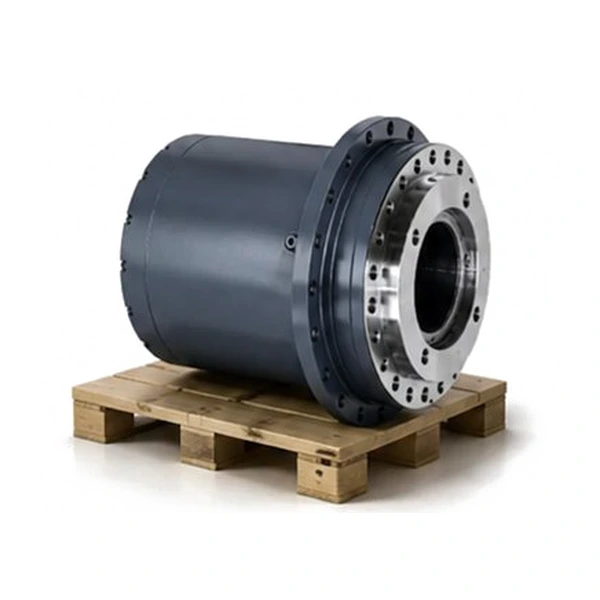
Offshore Platform Tugger Winches: ATEX Zones and Hazardous Area Requirements
Tugger winches on oil and gas production platforms, FPSOs, and drillships operate in potentially explosive atmospheres — the deck areas adjacent to wellheads, pipe manifolds, and hydrocarbon processing equipment are classified as Zone 1 or Zone 2 hazardous areas under IEC 60079. This classification imposes additional requirements on the tugger winch gearbox beyond the standard marine sealing and corrosion specifications:
Surface Temperature Limitation: In Zone 1 and Zone 2 ATEX areas, the maximum surface temperature of any equipment — including gearbox housings — must not exceed the ignition temperature of the most likely hydrocarbon gas present, minus a safety margin. For most offshore hydrocarbon environments, the applicable temperature class is T4 (maximum surface temperature 135°C). Korea Ever-Power offshore tugger winch gearboxes are thermally rated against the T4 class — the gear mesh efficiency and lubricant specification are selected together to ensure that at maximum rated load and rated ambient temperature, the gearbox external surface temperature remains below 120°C, providing 15°C of margin below the T4 limit.
Spark-Free Breather: The breather-desiccant assembly on an ATEX-rated gearbox must not generate sparks during normal operation or under pressure surge conditions. Korea Ever-Power offshore-rated winch drive gearboxes are fitted with a stainless steel flame arrester on the breather outlet — preventing any internal ignition source from propagating to the external atmosphere through the breather path.
Hydraulic Fluid Compatibility: Many offshore platforms use fire-resistant hydraulic fluids rather than standard mineral oil in their deck machinery hydraulic circuits, to reduce fire risk in the event of hydraulic line rupture near ignition sources. Korea Ever-Power SAHR brake release circuits on offshore-rated winch drive gearboxes are compatible with HFDU (water-glycol) and HFDR (phosphate ester) fire-resistant hydraulic fluids, with the internal hydraulic circuits manufactured from stainless steel and PTFE-lined hose rather than standard carbon steel to prevent corrosive attack from these fluids.
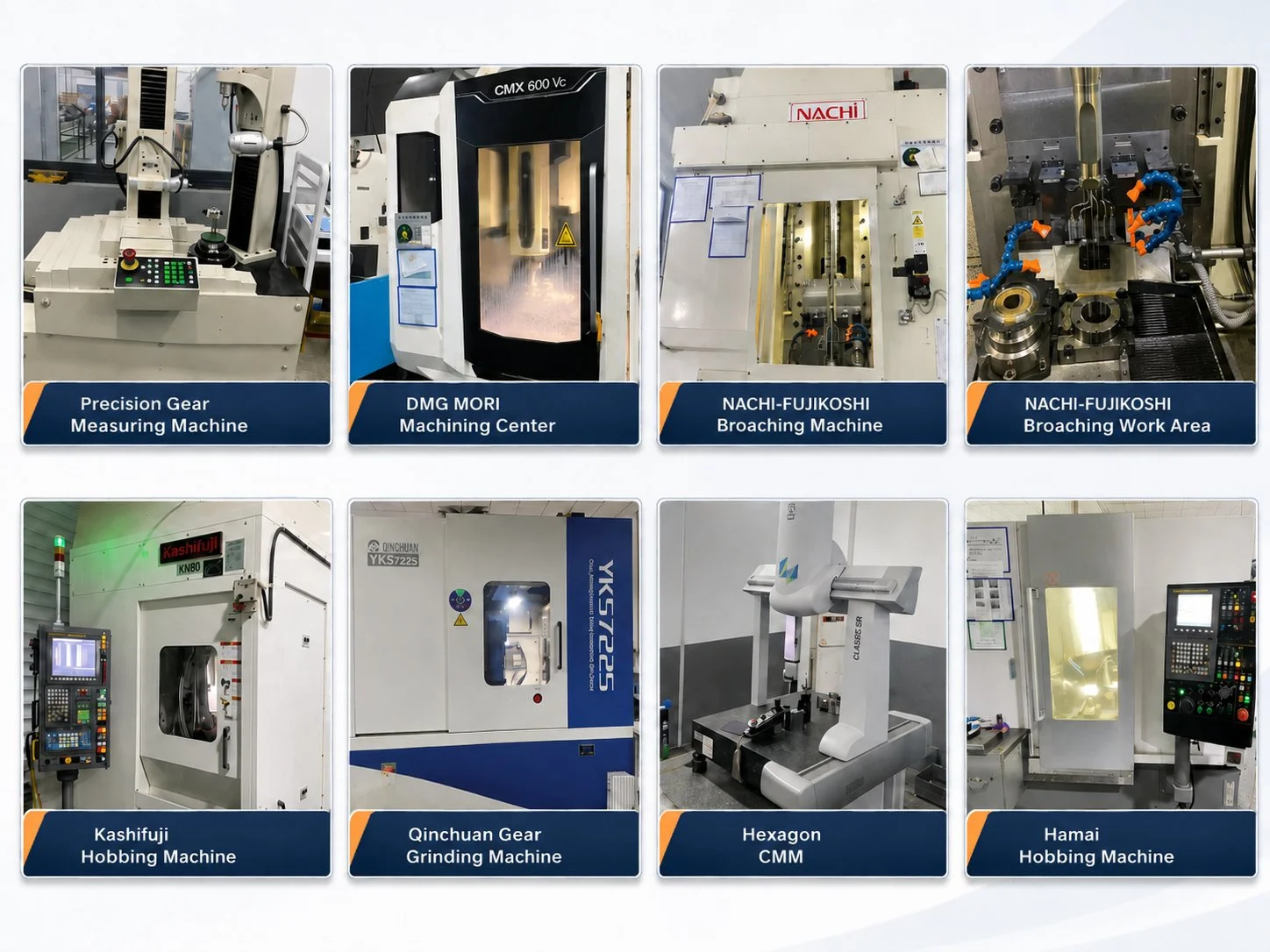
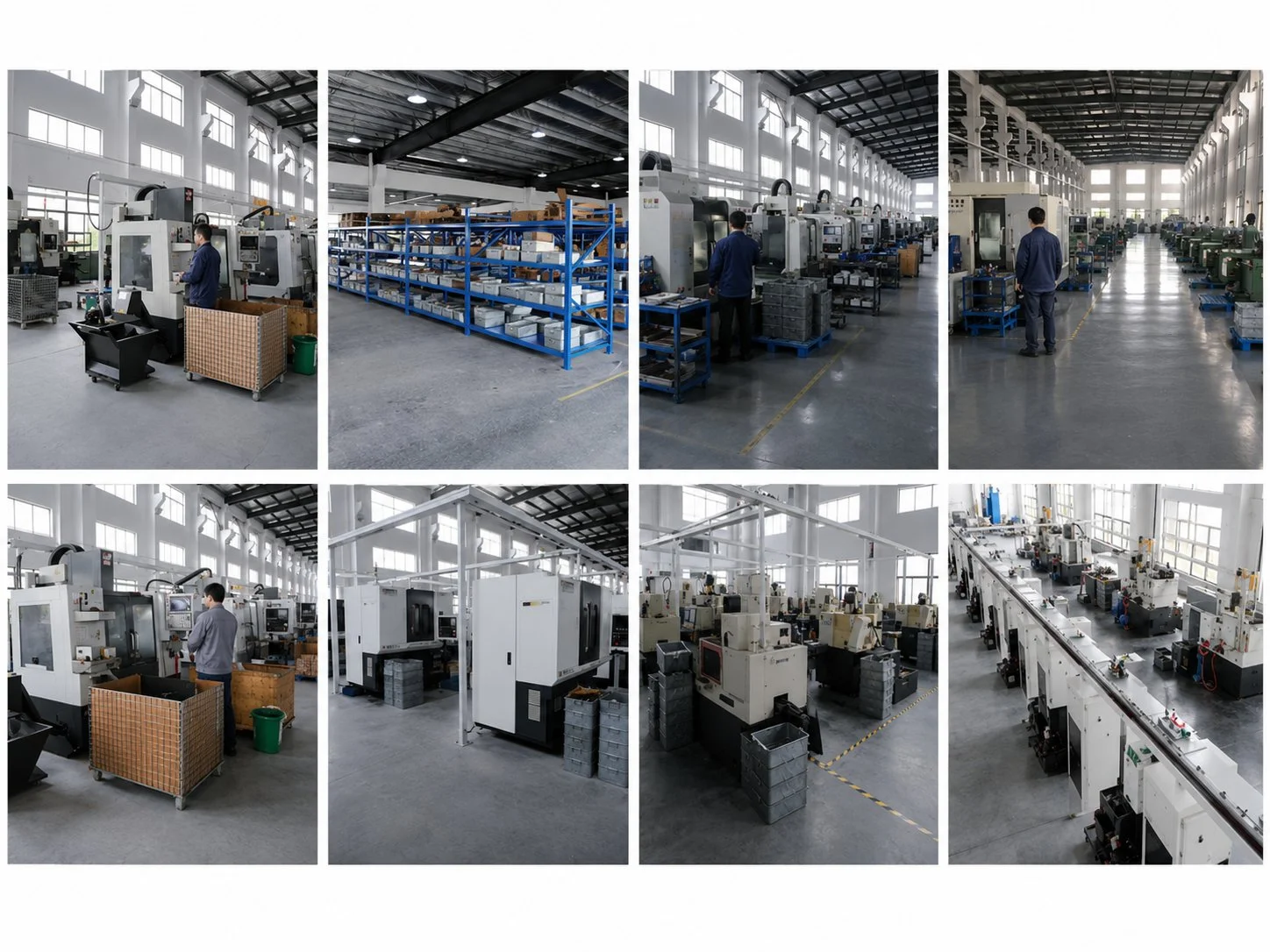
Manufacturing and Testing: Built for 25 Years of Deck Service
Common Tugger Winch Gearbox Failures and Prevention
| Режим отказа | Root Cause | Detection | Профилактика |
|---|---|---|---|
| Brake disc overheating | Continuous partial engagement during sustained line tension hold — disc slipping rather than fully locked | Burnt smell from brake area; reduced holding torque at next port call | Verify brake release pressure is fully applied before haul operations; inspect disc pack at each dry-dock |
| Input shaft seal wear | High-pressure wash-down forcing seawater past a lip seal not rated for directional pressure | Milky oil appearance; water in oil sample at monthly check | Specify FKM floating face seal at input; avoid directing pressure washer jets directly at shaft seal area |
| Ring gear tooth wear | Prolonged operation with degraded oil — overextended oil change interval in high-cycle duty | Increasing noise at haul speed; metallic debris at drain plug | Change oil at 500 h in high-cycle tugger duty — shorter than standard 1,000 h interval |
| Hydraulic release circuit blockage | Contaminated hydraulic fluid or corrosion in release circuit — brake slow to release or fails to release | Sluggish brake response; gearbox overheating from brake drag during haul | Annual hydraulic circuit flush; use fire-resistant hydraulic fluid with anti-corrosion additives in offshore service |
| Housing paint delamination | Inadequate surface preparation before paint application — mill scale not fully removed from casting surfaces | Blistering paint at housing ribs; substrate corrosion visible at blisters within 2 years of installation | Specify Sa 2.5 blast standard before paint application; verify DFT at each coat before proceeding to next coat |
Why Shipbuilders and Vessel Operators Choose Korea Ever-Power for Tugger Winch Drives
Source Your Tugger Winch Drive Planetary Gearbox
Whether you are specifying new tugger winch drive gearboxes for a vessel under construction, replacing worn units on an operating vessel, or sourcing offshore platform winch drives for a hazardous area installation — Korea Ever-Power delivers marine-grade planetary winch drive gearboxes built for the full vessel design life. Send us your line pull, line speed, motor specification, and drum diameter for a free gearbox sizing, brake holding torque calculation, and dimensional drawing within 48 hours.
Редактировано Cxm