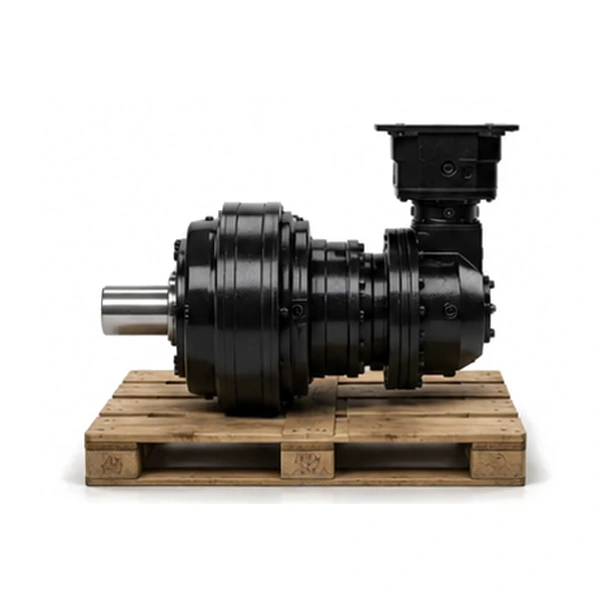
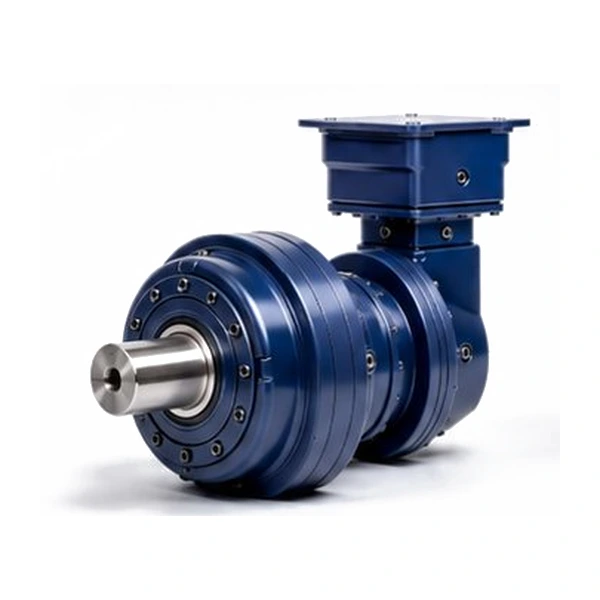
ZL150 Winch Drive Planetary Gearbox — 1-5 Stage
PEAK EXCEEDS 419W3 MAXIMUM
160,000 / 355,000
Continuous / Peak. The electric era passes the hydraulic ceiling.
The EP-ZL150 is the ninth model in the ZL electric planétová prevodovka pohonu navijaka series — and the one that conclusively overtakes the hydraulic mega-class. At 160,000 Nm continuous, it exceeds both the 414W3 (140,000 Nm) and the 415W3 (150,000 Nm). At 355,000 Nm peak, it surpasses the absolute ceiling of the entire 4xxW catalogue: the 419W3 at 330,000 Nm continuous. The electric era has produced a winch drive that the hydraulic era, at its maximum, cannot match at the transient level.
This does not make the 4xxW mega-class obsolete — the 414W3-419W3 models serve sustained multi-hour loading, Arctic ratings, integrated brakes, and FEM M6 certifications that the ZL series does not address. But for every application where the duty is cyclic, the operating temperature is standard, the brake is external, and the priority is the highest peak capacity from the lightest electric platform — the ZL150 is the answer the catalogue never had before.
ZL150 Electric Winch Drive Planetary Gearbox — Technical Parameters
| Trvalý krútiaci moment (N2xh=100 000) | 160,000 Nm (exceeds 414W3 and 415W3) |
| Maximálny krútiaci moment | 355,000 Nm (exceeds 419W3 catalogue max) |
| Rozsah prevodového pomeru | 3.83 to 4,256 (1-5 stages) |
| Maximálna vstupná rýchlosť | 5,000 rpm |
| Tepelný výkon (Pt) | 31 - 105 kW (varies by stage count) |
| Typ prevodového stupňa | Špirálová planétová prevodovka, 3-planétová, DIN 5-6 |
| Integrovaná brzda | Žiadna (motorová brzda alebo externá brzda) |
| Sealing / Housing | IP67+ FKM / QT600-3 |
| Materiál ozubeného kolesa | 20CrMnTi, HRC 58-62 |
The Overtake — 160,000 Nm Continuous and 355,000 Nm Peak from an Electric Platform
The ZL series progression through the mega-class torque range is now complete. A summary of the crossover points.
| ZL Model | ZL Cont. | ZL Peak | 4xxW Model Matched | Stav |
|---|---|---|---|---|
| ZL85 | 88,000 | 200,000 | 416W3 (200,000) | Peak = Cont. |
| ZL95 | 115,000 | 245,000 | 417W3 (250,000) | Peak ≈ Cont. |
| ZL120 | 133,000 | 280,000 | 414W3 (140,000) | Cont. at 95% |
| ZL150 | 160,000 | 355,000 | 419W3 (330,000) | Peak > Max 4xxW |
The ZL150 355,000 Nm peak exceeds the 419W3 330,000 Nm continuous — meaning for any crane or winch where the 330,000+ Nm loads are transient events lasting under 10 seconds, the ZL150 handles them from an electric platform without any 4xxW involvement. The 4xxW mega-class remains essential only for sustained multi-hour loads above 160,000 Nm — a narrowing band of applications as the electric transition accelerates.
355,000 Nm Peak — Beyond the Entire 4xxW Catalogue
The 419W3 at 330,000 Nm continuous is the absolute ceiling of the 4xxW hydraulic winch drive catalogue — the largest drum-integrated planetary gearbox Korea Ever-Power manufactures in the hydraulic series. The ZL150 peak of 355,000 Nm exceeds this ceiling by 25,000 Nm.
A 100 t electric crane operating at 120,000 Nm continuous drum torque (75% of ZL150 rated) encounters a grab impact at 2.5x: transient torque = 300,000 Nm. The ZL150 absorbs this within its 355,000 Nm peak with 15% margin. The equivalent scenario on a 419W3 at 330,000 Nm continuous would require the gearbox to operate at 91% of rated during the transient — within limits but with less margin. The ZL150 electric platform provides greater transient headroom than the largest hydraulic model at a fraction of the weight.
The ZL150 cannot sustain 330,000 Nm for hours. Its continuous limit is 160,000 Nm. For AHTS anchor chain holding at 200,000-300,000 Nm for 6-14 hour weather standby periods, or for ultra-deep mining production winding at 200,000+ Nm sustained, the 4xxW mega-class (416W3 at 200,000 Nm through 419W3 at 330,000 Nm) remains the only option. The ZL150 replaces the mega-class for cyclic duty; it complements the mega-class for sustained duty.
The applications that genuinely require sustained torque above 160,000 Nm for hours represent perhaps 5-10% of the global winch market by unit volume — the largest AHTS vessels, the deepest mine shafts, and permanent mooring systems. The remaining 90-95% operate in cyclic duty where the ZL150 (or the ZL120, ZL95, ZL85 at lower torques) provides equal or superior performance to the 4xxW equivalent. The hydraulic mega-class will continue to serve its niche, but the niche is shrinking. Contact Kórea Ever-Power for an application-specific comparison between the ZL150 and the 4xxW mega-class.
160,000 Nm — The Electric Winch Drive That Surpasses the Mega-Class Entry Point

Electric Mega-Class Crane Hoists (100-150 t SWL)
All-electric cranes at the largest SWL class where traditional mega-class hydraulic systems have been the only option. The ZL150 at ratio 80-200, 2-3 stage, with 800-1,200 kW motors at 5,000 rpm provides the hoist torque for 100-150 tonne lifts with the same transient headroom as the 419W3 hydraulic ceiling. The otočný pohon a wheel drive complete the all-electric mega-class crane platform.
Electric AHTS and Offshore Winches (Cyclic Duty)
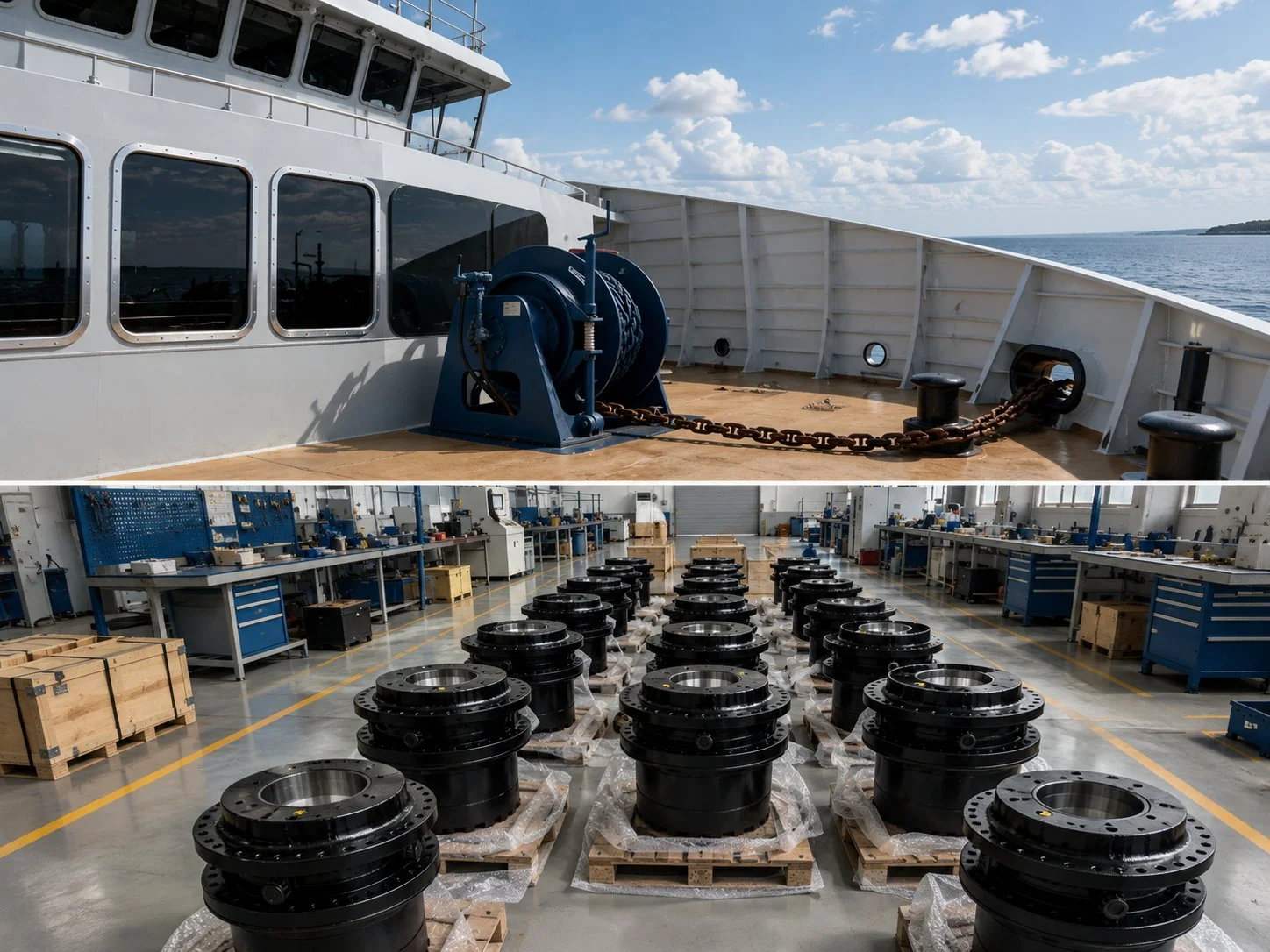
Electric AHTS main winches for anchor deployment and recovery where the operation is cyclic — deploy the anchor, hold briefly, recover, repeat — rather than the multi-hour sustained holding that requires the 4xxW mega-class. The ZL150 at 160,000 Nm continuous with 355,000 Nm peak provides the deployment torque and the anchor-setting shock absorption that the cyclic portion of AHTS operations demands. The pomocné pohony handle the tugger and guideline winches on the same electric vessel.
Electric Mining Main Production Winders (600-1,000 m)
Main production winders at mines with shaft depths of 600-1,000 metres where the combined skip, ore, and rope weight produces sustained drum torques up to 160,000 Nm. The ZL150 with 5,000 rpm input and 800-1,200 kW AC motors provides the winding torque with 20-35% regen energy recovery — eliminating the hydraulic infrastructure of the 414W3 and 415W3 while matching their continuous torque output.
The Complete Winch Drive Ecosystem
Electric Winch Drive Planetary Gearbox — ZL150 Mega-Class Overtake FAQ
Terénne správy
120 t all-electric crane on a next-generation offshore construction vessel. ZL150 at ratio 100, 2-stage, 1,100 kW PMSM at 4,500 rpm. The crane specification originally called for a 414W3 mega-class with dual hydraulic motors. The ZL150 replaced the entire hydraulic winch drive system — gearbox, motors, HPU, cooler, reservoir, hoses — with a single gearbox and a single electric motor. Weight saving at the crane head: 940 kg. The 355,000 Nm peak absorbed the proof-load test at 150 t x 1.25 = 187.5 t equivalent drum torque without any VFD protection event. This vessel is the first in our fleet where the crane machinery room has no hydraulic oil. The fire risk assessment score improved by two categories.
Main production winder at an 850-metre copper mine. ZL150 at ratio 300, 3-stage, 900 kW AC motor at 4,200 rpm. The skip carries 22 tonnes; rope weight at full depth is 4,600 kg. Sustained drum torque during loaded hoist: 148,000 Nm — 93% of ZL150 continuous. The original specification was a 414W3 mega-class at 140,000 Nm, but the mine engineering team calculated that the 414W3 would have been operating at 106% of continuous during loaded hoist — marginal. The ZL150 at 160,000 Nm provides the continuous capacity the 414W3 could not quite deliver, plus 20-35% regen recovery that the hydraulic system did not offer. Annual energy saving: projected USD 420,000 at current electricity rates.
Main anchor handling winch on an all-electric AHTS vessel, ZL150 at ratio 180, 3-stage, dual 600 kW AC motors. The vessel completed its first anchor deployment at 1,200 metres depth — the cyclic portion (deploy, set, recover) worked flawlessly with the 355,000 Nm peak absorbing the anchor-setting impact. However, during a 6-hour weather standby with the anchor chain held at 140,000 Nm (88% of ZL150 continuous), the oil temperature reached 79 deg C — close to the 85 deg C limit in still air. We added a forced-air fan on the drum housing that reduced the temperature to 68 deg C. The 4-star reflects this thermal learning: for AHTS operations where holding periods exceeding 2 hours at near-rated load are expected, the external cooling must be sized for sustained duty, not cyclic. The ZL150 data sheet correctly states the Pt values — but the AHTS integration guide should emphasise that anchor holding is sustained duty, not cyclic, regardless of how the deployment and recovery phases are classified.
Ďalšie informácie
| Redaktor | Cxm |
|---|
Súvisiace produkty
-
ZR75 Winch Drive Planetary Gearbox — Right-Angle
-
Planétová prevodovka s pohonom navijaka ZL200
-
ZL120 Winch Drive Planetary Gearbox
-
ZL45 Winch Drive Planetary Gearbox — 1-4 Stage
-
419W3 Planetová prevodovka s reduktorom pohonu navijaka
-

406BW3 Reduktor planétovej prevodovky s pohonom navijaka
-
406W planétová prevodovka s reduktorom pohonu navijaka
-
Planétová prevodovka s reduktorom pohonu navijaka 400W1