Wheel Drive Series — Airport Ground Support Equipment
Wheel Drive Planetary Gearbox for Mobile Boarding Bridges
A passenger boarding bridge must align its cabin opening with an aircraft door to within centimetres, hold that position rock-steady while hundreds of passengers cross it, and reposition for the next aircraft within minutes during the tight turnaround windows that airline schedules demand. The wheel drive planetary gearbox at the bridge undercarriage wheel must deliver this precision positioning thousands of times per year, in continuous outdoor exposure to aircraft engine exhaust heat, de-icing fluid, and the full range of airport climate conditions.
<8 arcmin backlash precision
15-20 cycles per gate per day
-30°C to +50°C all-weather rated
Passenger boarding bridges — also called jet bridges or aerobridges — perform a precision positioning task with safety and schedule consequences that few other wheel-mounted equipment applications share. The bridge rotunda end extends and the cabin end advances on a wheeled undercarriage drive, aligning the cabin opening with the aircraft passenger door across an alignment tolerance measured in centimetres, then holds this position absolutely steady while passengers cross between terminal and aircraft. A busy single-aisle gate may turn an aircraft 8 to 12 times per day, with the boarding bridge cycling through full extend, dock, undock, and retract sequences for every arrival and departure — accumulating well over 4,000 positioning cycles per year at a single gate. The wheel drive planetary gearbox at the bridge undercarriage drive wheel must deliver this positioning precision reliably across a 20 to 25 year bridge service life, in an outdoor environment exposed to jet engine exhaust heat, aircraft de-icing fluid runoff, and the full seasonal climate range of the airport location. Korea Ever-Power supplies planetary wheel drive gearboxes for passenger boarding bridge applications across the full range from compact regional gate bridges through wide-body dual-bridge installations.
The economics of boarding bridge reliability connect directly to the gate utilisation efficiency that determines airport and airline operating cost. A typical mid-size hub airport gate generates revenue and operational throughput proportional to the number of aircraft turns it can accommodate per day, and any boarding bridge malfunction that extends the docking sequence beyond its normal duration, or forces a gate change, consumes scarce gate capacity that the airport has limited ability to recover within the same operating day. Airlines calculate the cost of a single gate disruption not merely in terms of the immediate flight delay but in the downstream schedule impact across the connecting flights and crew rotations that depend on that aircraft maintaining its planned rotation — a cost structure that makes boarding bridge drive reliability a meaningfully larger economic concern than the modest capital cost of the gearbox itself might suggest.
Boarding Bridge Configurations and Drive Requirements
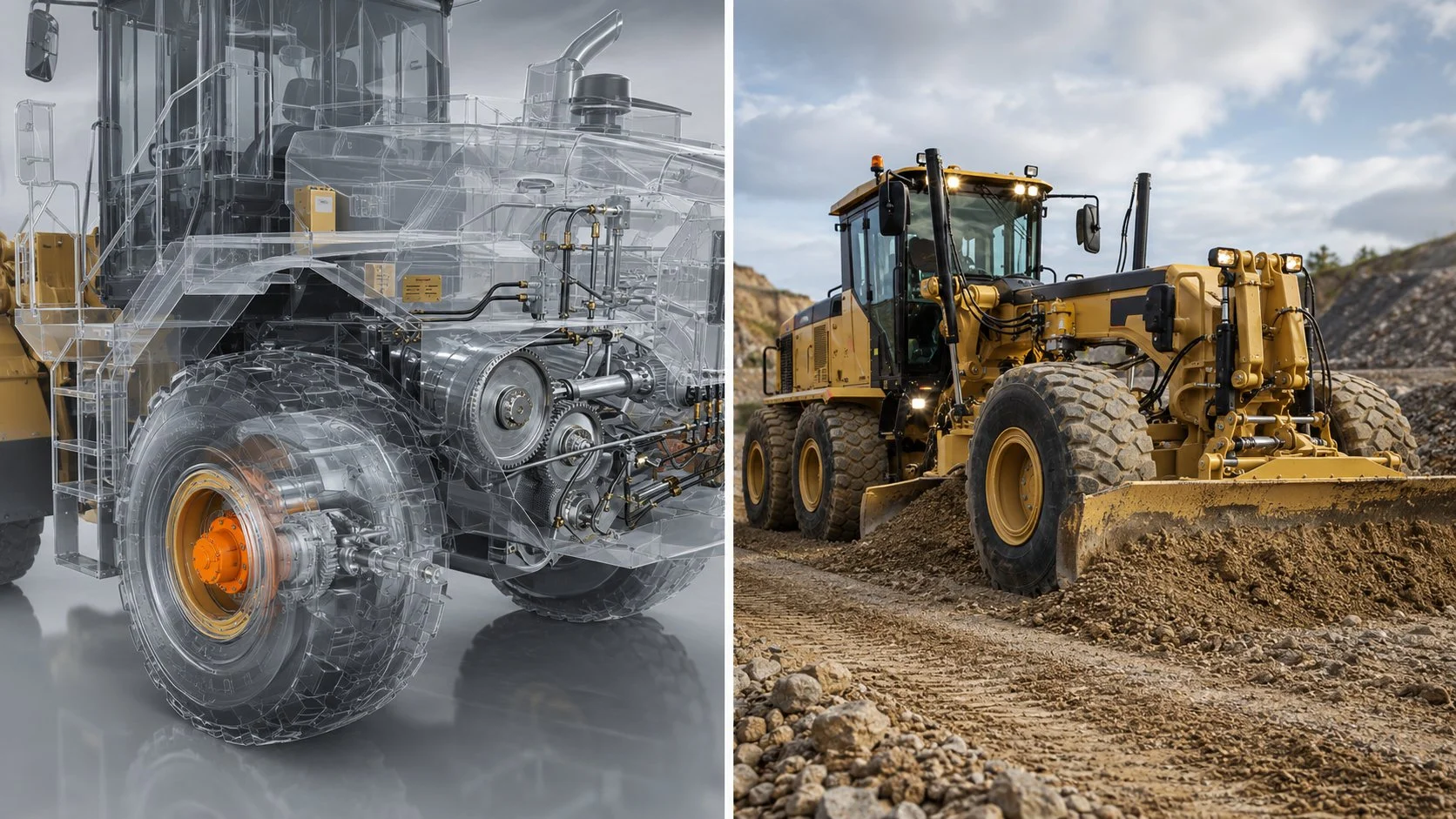
Regional and Narrow-Body Gate Bridges (1,500–4,000 Nm): The most common boarding bridge configuration, serving single-aisle aircraft at regional and domestic terminal gates. These bridges have a single wheeled undercarriage drive that extends and positions the bridge through a relatively modest range of telescoping extension and rotation, completing the docking sequence within the 3 to 5 minutes that efficient turnaround operations require. Drive torque of 1,500 to 4,000 Nm provides adequate positioning force for the bridge structure weight while maintaining the precision needed for accurate door alignment within the tight turnaround time window.
Wide-Body and Dual-Bridge Installations (3,000–8,000 Nm): Wide-body aircraft gates often use two boarding bridges simultaneously — one serving the forward door for standard boarding and a second serving an additional door for premium cabin boarding or for accelerated dual-door boarding operations on tight turnaround schedules. Each bridge in a dual installation requires independent drive control, with higher torque of 3,000 to 8,000 Nm accommodating the longer telescoping extension range and heavier structural mass that wide-body gate geometry typically requires compared to narrow-body single-bridge gates.
Apron-Drive and Remote Stand Bridges (2,000–6,000 Nm): Some airports use mobile boarding bridges that travel across the apron to remote aircraft parking stands not served by fixed terminal gate infrastructure, requiring the undercarriage drive to provide both the precision docking positioning of a standard gate bridge and the longer-distance apron travel capability of a ground service vehicle. This combined duty profile places additional demand on the wheel drive gearbox to perform reliably across both the slow-speed precision positioning mode and the higher-speed apron transit mode within a single drive specification.
Boarding bridge manufacturers and airport ground equipment integrators increasingly specify the same precision motion control standards developed for industrial automation when sourcing drive components for new bridge installations, reflecting the growing adoption of semi-automated and fully automated docking systems at major hub airports. These automated docking systems rely on the wheel drive gearbox to execute commanded positioning moves with the same fidelity that an automated guided vehicle or ASRS hoist requires, extending the precision motion control specifications already established elsewhere in the Korea Ever-Power product range into this airport-specific application.
Precision Positioning: Why Backlash Determines Docking Accuracy
The boarding bridge docking operation requires the cabin opening to align with the aircraft door within a tolerance specified by the bridge manufacturer and the airline ground operations procedure — typically a few centimetres of lateral and vertical alignment, achieved through a combination of bridge extension, rotation, and height adjustment drives working in coordination. The wheel drive gearbox controlling the undercarriage extension motion contributes directly to this alignment accuracy, and the same backlash-to-positioning-error relationship established for 3D warehouse ASRS hoists and lift elevator traction machines applies here at the bridge undercarriage scale.
Sub-8 Arcminute Backlash Specification
Korea Ever-Power boarding bridge wheel drive gearboxes are manufactured to the same sub-8 arcminute backlash specification used in precision positioning applications across the product range, ensuring the undercarriage drive wheel translates motor encoder commands into actual wheel motion without the lost-motion dead zone that higher-backlash gearboxes introduce during direction reversal at the final docking approach.
Creep Speed Final Approach
The bridge approaches the final docking position at a slow creep speed, with the operator or automated docking system fine-tuning position over the last 100 to 300 mm of travel. The low-backlash planetary stage enables smooth, judder-free creep motion at this critical final approach stage, where any stick-slip behaviour from a higher-backlash gearbox could cause overshoot or require multiple correction attempts that extend the docking time within a tight turnaround schedule.
Encoder Feedback Integration
Korea Ever-Power boarding bridge gearboxes include a precision encoder mounting provision concentric with the motor input shaft, providing the position feedback that modern bridge control systems use for semi-automated and fully automated docking sequences, an increasingly common feature on new bridge installations and retrofit upgrade programmes at major airports.
Holding Stability During Boarding
Once docked, the bridge must remain absolutely stationary while passengers cross, including any incidental loading from passenger movement and luggage. The self-locking characteristic of the high-ratio planetary stage, combined with the integrated holding brake, ensures the bridge position does not drift during the boarding process, maintaining the door seal integrity that passenger safety and weather protection require.
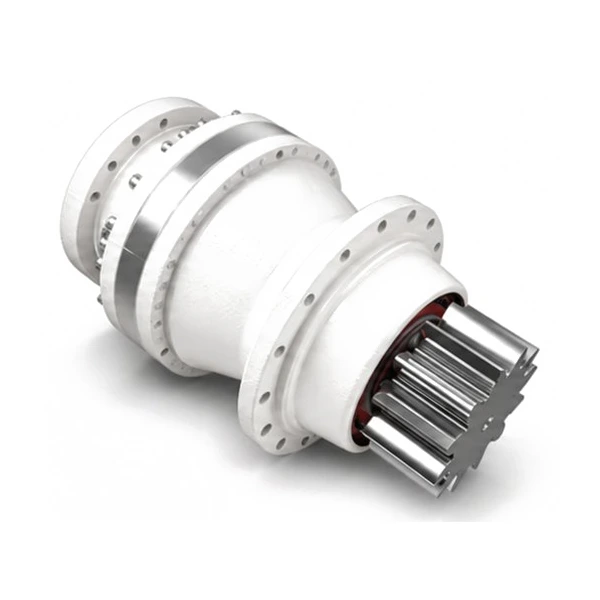
Korea Ever-Power Boarding Bridge Wheel Drive Selection Guide
| Модел | Излазни обртни момент | Фазе | Bridge Type | Негативна реакција | Печат |
|---|---|---|---|---|---|
| ZL02 | 1,500 – 4,000 Nm | 1–4 | Regional / narrow-body single bridge | < 8 arcmin | IP67 FKM |
| 602L2 | 3,000 – 6,000 Nm | 2 | Wide-body dual bridge | < 8 arcmin | IP67 FKM |
| 603L2A | 4,000 – 8,000 Nm | 2 | Apron-drive remote stand bridge | < 8 arcmin | IP67 FKM |
Airside Environmental Exposure: Heat, De-Icing Fluid, and All-Weather Operation
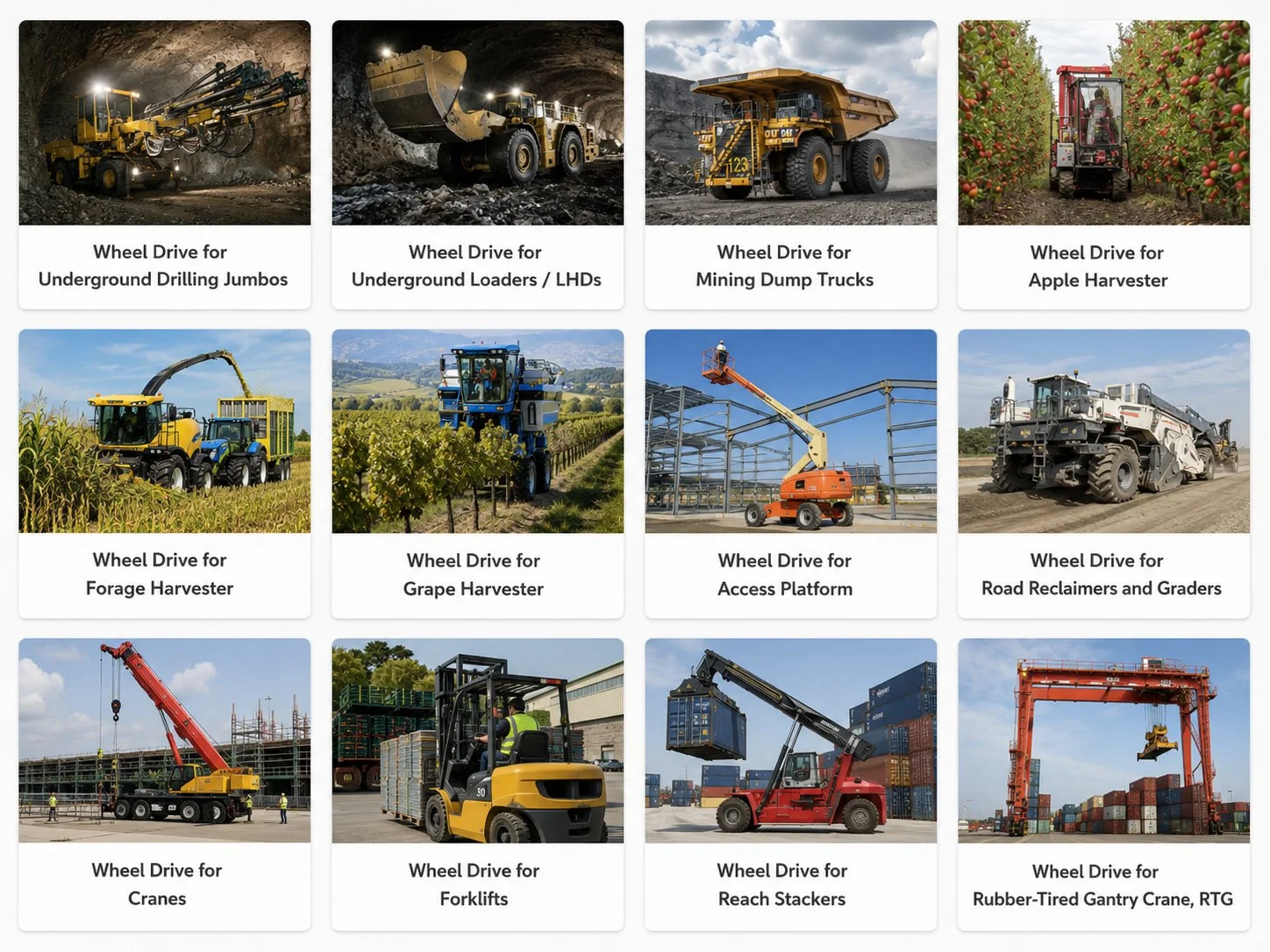
The airside environment surrounding a boarding bridge combines several exposure conditions not found together in most other ground equipment applications, requiring a sealing and thermal specification that addresses each simultaneously:
Jet Engine Exhaust Heat: Aircraft taxiing to and from the gate, and auxiliary power unit operation while parked, generate localised heat exposure at the gate area significantly above general ambient temperature. While the boarding bridge structure itself provides some standoff distance from direct exhaust exposure, the wheel drive gearbox at the undercarriage can experience elevated ambient temperatures during aircraft ground operations, and Korea Ever-Power boarding bridge gearbox thermal ratings account for this elevated localised heat exposure beyond the general airport climate range.
De-Icing Fluid Runoff: Airports in cold-climate regions apply aircraft de-icing and anti-icing fluid during winter operations, with runoff from this fluid application reaching the gate apron surface and contacting ground equipment including the boarding bridge undercarriage. De-icing fluids, typically glycol-based, present a different chemical exposure than the road salt or leachate chemistry addressed elsewhere in the Korea Ever-Power product range, and the FKM seal specification used in boarding bridge gearboxes provides the chemical compatibility needed for this glycol-based fluid exposure without seal degradation.
Continuous Outdoor All-Weather Operation: Unlike many wheel drive applications that operate primarily during favourable weather or can be sheltered during severe conditions, boarding bridges must operate reliably in active service regardless of rain, snow, wind, and temperature extremes, because aircraft turnaround schedules do not pause for weather short of conditions that halt all airport operations. Korea Ever-Power boarding bridge gearboxes are rated for the full -30°C to +50°C climate range to support continuous all-weather operation at any airport location worldwide.
Reliability and Maintenance: Why Bridge Downtime Disrupts Entire Gate Schedules
A boarding bridge that fails to dock correctly or becomes inoperable does not simply affect a single piece of equipment — it can prevent an aircraft from boarding or deplaning at its assigned gate, triggering a cascade of schedule disruption that may require the affected flight to be reassigned to an alternate gate if one is available, or delay the flight and every subsequent flight scheduled for that gate that day. This high-consequence failure mode places a premium on gearbox reliability that exceeds what the relatively modest torque and load requirements of boarding bridge applications might otherwise suggest.
Scheduled Preventive Maintenance: Korea Ever-Power recommends a scheduled preventive maintenance interval for boarding bridge wheel drive gearboxes coordinated with the airport ground equipment maintenance programme, including periodic backlash verification consistent with the precision positioning requirement, oil sampling, and visual seal inspection, planned to occur during scheduled gate downtime rather than requiring an unplanned gate closure.
Spare Unit Stocking Recommendation: For airports with significant gate counts, Korea Ever-Power recommends maintaining spare wheel drive gearbox units in ground equipment maintenance stock, enabling rapid exchange in the event of an unexpected failure rather than waiting for a replacement unit to be sourced and shipped, minimising the duration of any gate closure that a gearbox issue would otherwise cause.

Why Boarding Bridge Manufacturers and Airport Operators Choose Korea Ever-Power
<8 лучних минута
Backlash specification for precise docking alignment — eliminating overshoot and repeat-correction during final approach positioning
4,000+/yr
Annual positioning cycle endurance verified per gate, supporting the full 20 to 25 year boarding bridge service life
-30 to +50°C
Full all-weather climate range rating for continuous outdoor airside operation regardless of seasonal conditions
Запечаћено
For-life output bearings reducing periodic greasing burden across terminal-wide multi-gate maintenance programmes
Korea Ever-Power application engineers provide free wheel drive gearbox sizing for boarding bridge manufacturers and airport ground equipment programmes, evaluating bridge configuration, aircraft type served, and daily cycle count to recommend the appropriate torque rating and precision specification. Contact us with your bridge type, daily turnaround count, and airport climate for a free application review within 48 hours.
Source Your Boarding Bridge Wheel Drive Planetary Gearbox
Whether you are specifying drives for a new boarding bridge installation, sourcing replacement gearboxes for an airport terminal upgrade, or retrofitting existing bridges with precision encoder feedback for automated docking — Korea Ever-Power delivers low-backlash, all-weather rated planetary wheel drive gearboxes built for the precision and reliability that airport gate operations demand. Send us your bridge type, daily cycle count, and airport climate for a free application sizing within 48 hours.
Edit by Cxm