
What Makes the Crawler Crane Slewing Drive Unique Among All Crane Types
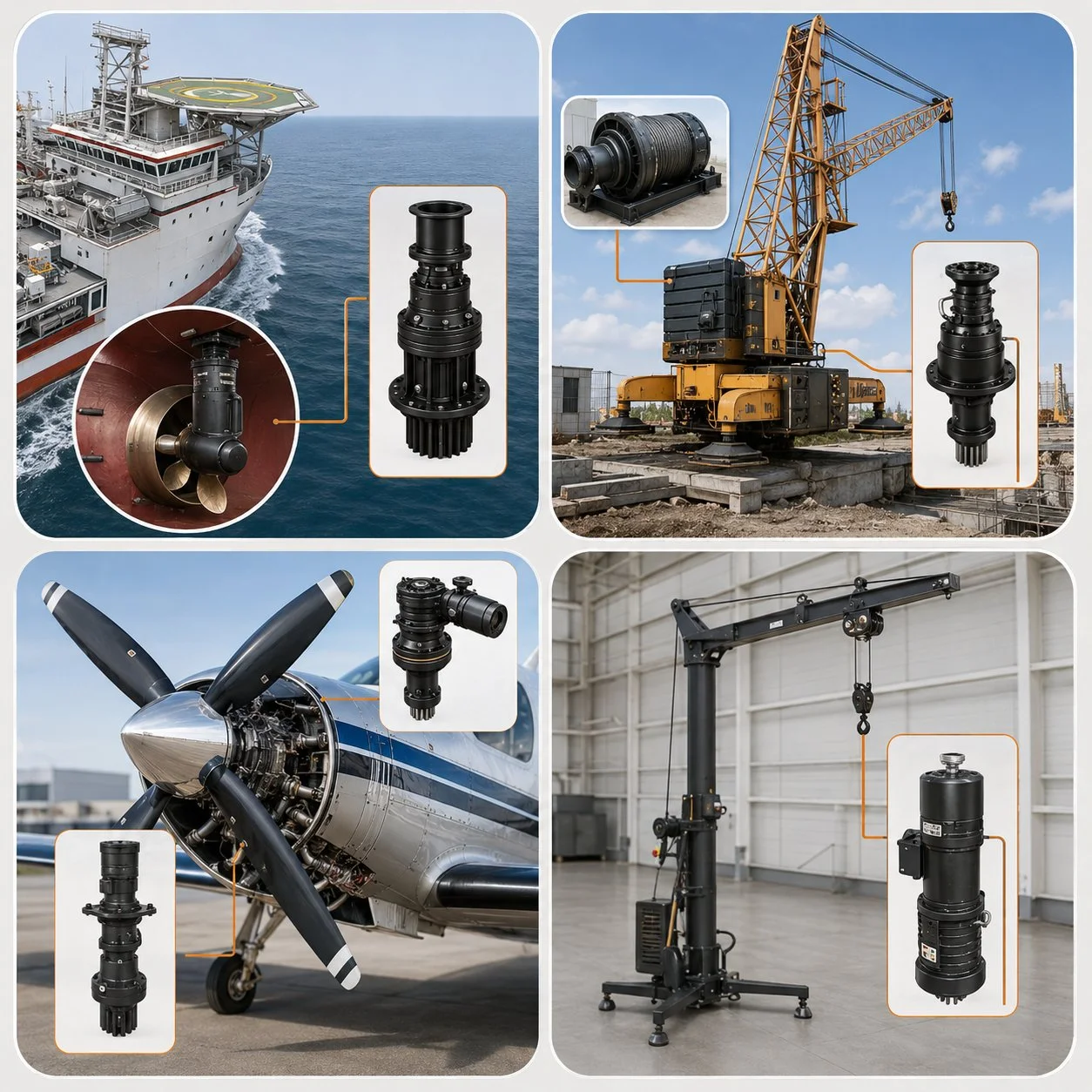
The crawler crane is the only mobile crane that operates without outriggers. The machine sits on two wide crawler tracks that distribute the weight and provide the stability footprint. This means the планетарни мењач са погоном окретања must manage the upper structure rotation within the stability envelope defined by the crawler geometry — and this envelope changes depending on the crawler orientation relative to the boom.
Additionally, crawler cranes can perform pick-and-carry operations — lifting a load and then traveling with it suspended while maintaining the ability to slew. No other crane type permits slewing during travel. The slewing drive must function while the undercarriage is in motion — introducing dynamic ground reactions, crawler pitch oscillation, and variable ground slope into the slewing torque calculation.
The stability envelope is not circular — it is rectangular, matching the crawler track layout. The tipping line over the front (between the tracks) is at the front edge of the tracks, giving a longer tipping radius. The tipping line over the side (perpendicular to the tracks) is at the outer edge of one track, giving a shorter radius. The load chart rates the crane at 20 to 30% lower capacity over the side than over the front. The slewing drive must have a speed ramp that decelerates smoothly as the boom approaches a side orientation — preventing dynamic slewing forces from adding to the overturning moment at the position of minimum stability.
The multi-drive configuration on heavy crawler cranes introduces additional complexity. Cranes above 200 tonnes typically use 2 to 4 slewing drives meshing with a single ring gear — similar to the TBM cutterhead arrangement but at lower drive count and higher per-drive torque. The drives must be synchronised to share the total torque evenly. On hydraulic systems, the synchronisation is achieved through matched motor displacements and a common supply manifold. On electric systems, each motor has its own VFD with current-matching software. Uneven load sharing — caused by different pinion backlash, different motor wear, or different oil temperature between drives — produces unbalanced ring gear tooth wear and accelerates the degradation of the most-loaded drive. Annual backlash measurement of each pinion and equalisation adjustment is standard practice on multi-drive crawler cranes.
The crawler crane assembly and disassembly process itself places unique demands on the slewing drive. Large crawler cranes are transported in components and assembled on site — the upper structure is lifted onto the lower structure and connected through the slewing ring. During this connection, the slewing drive pinions must be aligned with the ring gear teeth before the upper and lower structures are bolted together. Any misalignment during assembly produces initial gear contact errors that persist throughout the crane life. The assembly procedure should include a full slewing rotation test at minimum load before any rated lifting — verifying smooth pinion-ring mesh, correct brake engagement and release, and encoder calibration for the load-moment indicator.
Upper Structure Inertia — The Largest Rotating Mass in Mobile Equipment
The moment of inertia of a crawler crane upper structure is dominated by three components: the lattice boom (extending 30 to 120 metres from the slewing centre), the counterweight (positioned 5 to 15 metres behind the slewing centre), and the suspended load (at the boom tip radius). Together, these produce moments of inertia of 5,000,000 to 50,000,000 kg·m2 — orders of magnitude greater than an excavator (8,000 to 250,000 kg·m2) or a tower crane jib (200,000 to 4,000,000 kg·m2).
| Класа | Capacity (t) | Boom (m) | Inertia (M kg·m2) | Drives | Torque/Drive |
|---|---|---|---|---|---|
| Light (50–150 t) | 50–150 | 30–60 | 5–15 | 1 | 20k–50k Nm |
| Medium (200–600 t) | 200–600 | 50–90 | 15–35 | 2 | 40k–80k Nm |
| Heavy (600–3,500 t) | 600–3,500 | 80–120 | 30–50+ | 3–4 | 60k–150k Nm |
Counterweight position matters more than counterweight mass: A 200-tonne counterweight at 10 metres contributes 200,000 x 100 = 20,000,000 kg·m2. Moving the same counterweight to 12 metres increases the contribution to 28,800,000 kg·m2 — a 44% increase from a 2-metre position change. The slewing drive must be rated for the maximum counterweight radius, not the average.
The kinetic energy stored in a heavy crawler crane upper structure is substantial. A 500-tonne class crane with a moment of inertia of 30,000,000 kg·m2 rotating at 1 rpm stores approximately 165 kJ — equivalent to the kinetic energy of a car at 60 km/h. Decelerating this mass requires the slewing drive to absorb 165 kJ through the hydraulic motor back-pressure and gear friction. If the operator misjudges the stopping distance, the upper structure over-swings — and at a 30-metre boom radius, a 5-degree over-swing displaces the hook by 2.6 metres. On congested construction sites with tandem lifts or tight clearances, this over-swing can result in load collision, structural impact, or rigging damage.
The relationship between boom configuration and stopping distance is non-linear. A 120-metre boom with full counterweight has approximately 3 times the moment of inertia of a 60-metre boom with reduced counterweight — but the stopping distance is approximately 4 to 5 times greater because the longer boom also shifts the centre of gravity further from the slewing axis, increasing the effective inertia arm. Operators who have been trained on shorter-boom configurations frequently underestimate the stopping distance when the same crane is reconfigured with a longer boom. The lift planning should include a specific slewing-stop distance calculation for each boom configuration — and the load-moment indicator should display the calculated stopping distance to the operator in real time.
Pick-and-Carry Slewing — The Operation That Only Crawler Cranes Perform
A mobile crane on outriggers cannot travel with a load — the outriggers must be retracted and the load set down first. A crawler crane can lift a load, travel with it suspended, and slew while traveling. This is essential for heavy industrial construction where modules must be transported across a site and rotated into position.
During pick-and-carry, the slewing drive must function while the undercarriage is in motion. The crawler tracks oscillate vertically as they pass over uneven ground, producing pitch and roll movements of 1 to 3 degrees at the slewing ring. These oscillations add dynamic components to the slewing torque — similar to wave motion on an offshore crane, but at lower frequency with abrupt transitions as the crawlers cross obstacles.
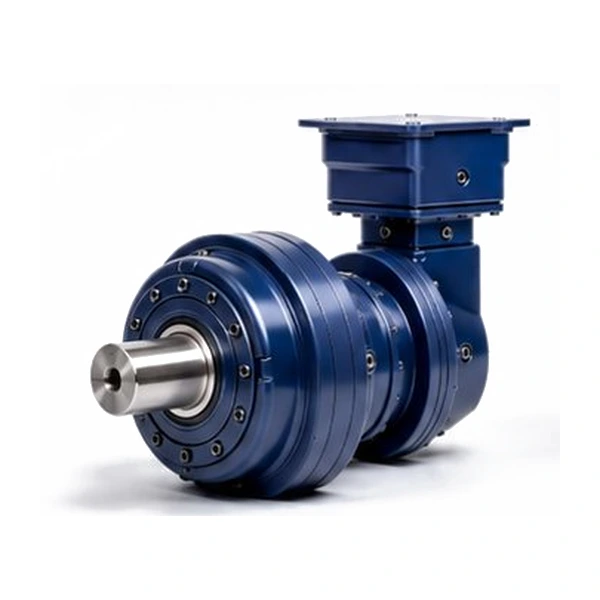
The планетарни мењач са погоном окретања must tolerate these ground-induced dynamic loads without bearing play or gear damage that would result from a drive designed only for stationary slewing. The bearing specification for pick-and-carry must include a dynamic impact factor of 1.3 to 1.5 times the stationary rating — accounting for the transient shock loads from ground obstacles that are transmitted through the crawler suspension to the slewing ring.
The travel path preparation is the most effective protection for the slewing drive during pick-and-carry. Levelled, compacted ground with timber mats reduces the impact severity by 60 to 80% compared to unprepared ground. On large industrial construction sites (refineries, power plants, LNG facilities), the travel path for crawler crane pick-and-carry is engineered as carefully as the crane lift plan — because a damaged slewing drive on a 1,000-tonne crawler crane can delay a critical path lift by weeks while the replacement is sourced, transported, and installed.
The pick-and-carry speed is typically limited to 0.5 to 1.5 km/h with the load suspended — much slower than the maximum travel speed of 1.5 to 3.0 km/h without a load. The speed limit exists because the suspended load acts as a pendulum during travel — and the ground-surface irregularities that produce track oscillation also excite the load pendulum. The combination of track oscillation and load swing produces a coupled dynamic system where the slewing ring bearing experiences multi-axis loading (vertical impact from the track + horizontal force from the load swing + rotational torque if the operator is simultaneously slewing). The bearing selection for pick-and-carry duty must account for all three simultaneous load axes — not just the dominant vertical load that governs stationary lifting.
Three Failure Modes Specific to Crawler Crane Slewing Drives
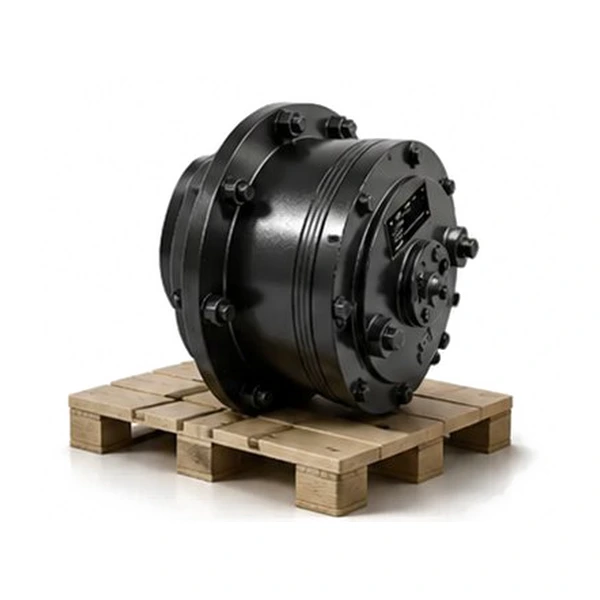
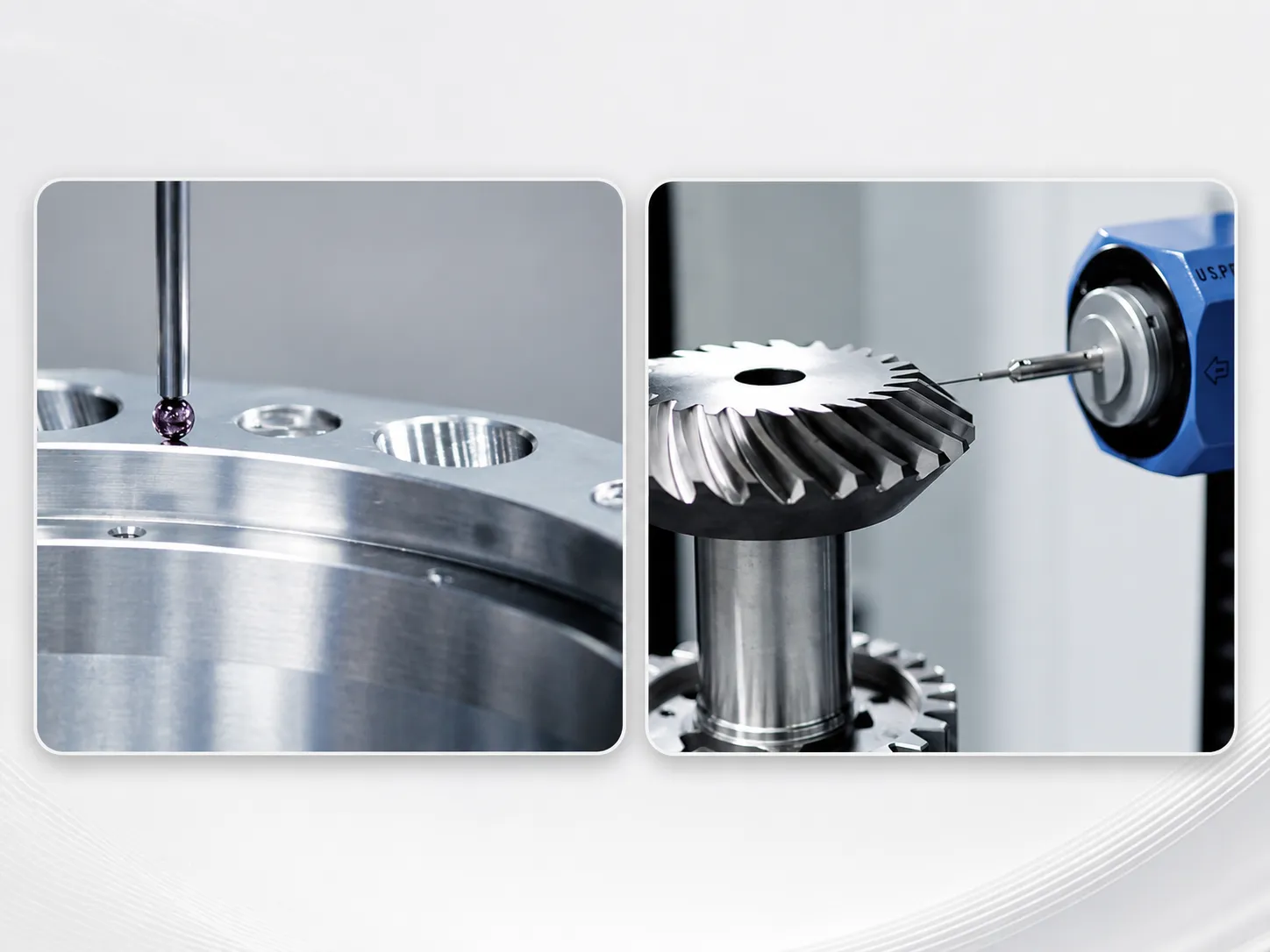
The counterweight generates a continuous overturning moment that loads the slewing ring bolts asymmetrically — tension on the counterweight side, compression on the boom side. During slewing, this pattern rotates around the ring, subjecting each bolt to alternating tension-compression with every revolution. Over 5,000 to 10,000 hours, this cyclic loading fatigues the bolt material at the head-shank radius. A single bolt failure increases adjacent bolt loads, potentially initiating a cascade. Bolt fatigue is the most common maintenance finding on crawler cranes above 200 tonnes — and the most dangerous if undetected. The failure typically initiates at the head-shank radius where the rolling transition (for rolled-thread bolts) or the machining step (for cut-thread bolts) produces a stress concentration. Rolled-thread bolts have 30 to 50% higher fatigue life than cut-thread bolts at the same preload — making thread rolling a specification requirement, not a manufacturing preference, for heavy crawler crane ring bolts. The bolt material must also be verified: bolts that are re-used from previous crane assemblies may have accumulated fatigue cycles from the prior project — and must be tested (magnetic particle or ultrasonic) before re-installation.
The kinetic energy of the upper structure at 1 rpm with 30 M kg·m2 inertia is 165 kJ. The slewing drive must absorb this through hydraulic back-pressure and gear friction. Over-swing of 5 degrees at 30-metre boom radius displaces the hook by 2.6 metres — a critical error on congested sites. Operators of heavy crawler cranes require specific training for the relationship between boom configuration (which changes the inertia) and stopping distance. A crane with a 120-metre boom and full counterweight has approximately 3 times the stopping distance of the same crane with a 60-metre boom and reduced counterweight — even at the same slewing speed.
During pick-and-carry, each crawler crossing an obstacle generates a vertical impact transmitted to the slewing ring. If the operator is simultaneously slewing, impact loads combine with slewing loads in a direction the bearing is not optimised to resist. Repeated impacts (50 to 200 per hour on unprepared ground) accumulate Brinelling damage — permanent indentations on the raceway that increase bearing noise, play, and rolling resistance. The damage is cumulative and irreversible — once the Brinelling marks are established, they accelerate further raceway wear even after the travel path is improved. The depth of the Brinelling indentation determines whether the damage is cosmetic (less than 0.01 mm — produces noise but no measurable play increase) or structural (greater than 0.05 mm — produces measurable play and accelerated spalling). For heavy-lift crawler cranes above 600 tonnes, even cosmetic Brinelling can affect the precision of tandem lifts where two cranes must coordinate within tight tolerances — because the bearing play from the indentations produces unpredictable angular position errors at the hook level.
Slewing Drive Planetary Gearbox for Crawler Cranes — Frequently Asked Questions
Korea Ever-Power provides crawler crane slewing drives from 20,000 to 150,000 Nm with inertia-rated gears, pick-and-carry bearing specifications, and multi-drive configurations.
Уредник: Cxm