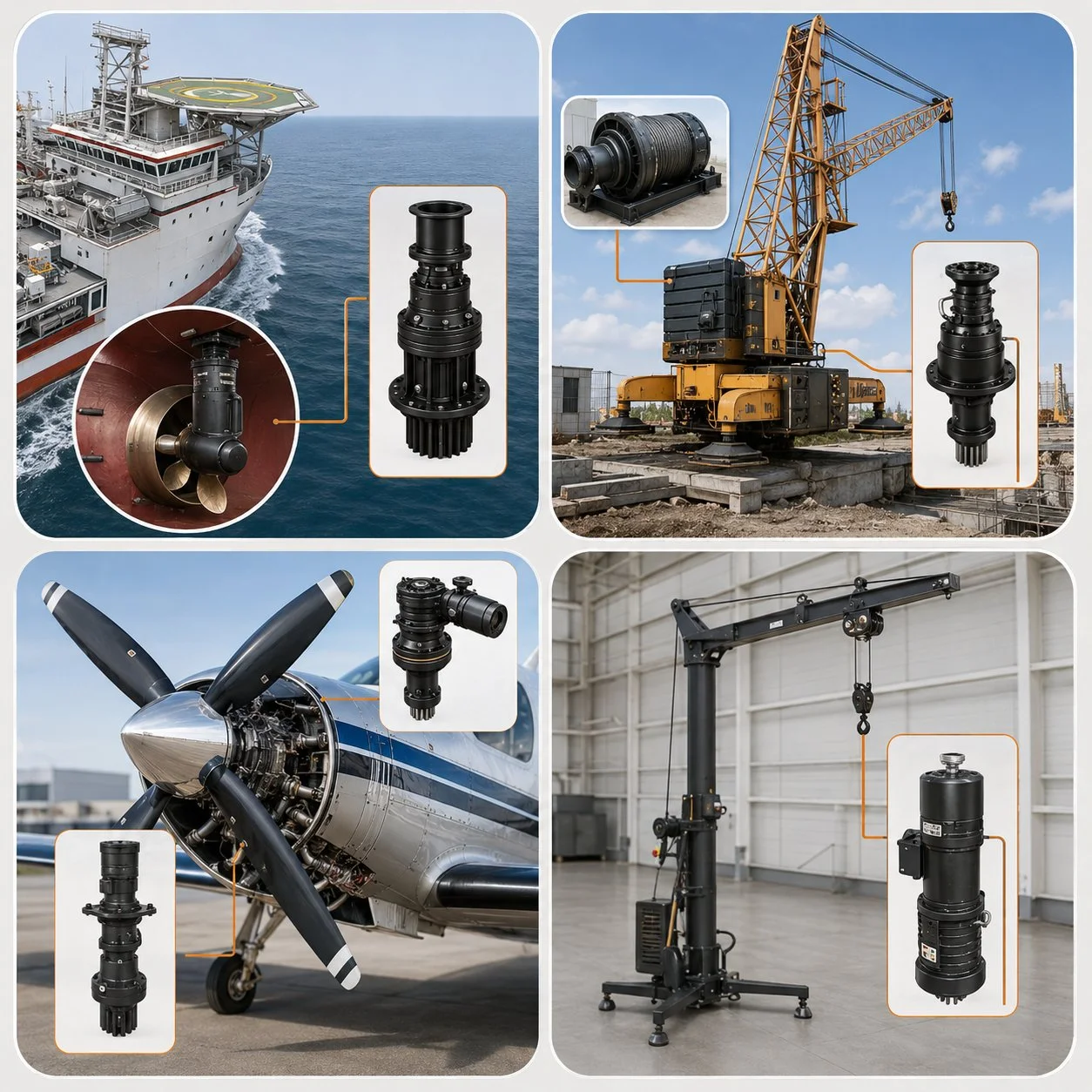
The Excavator Swing Cycle — Engineered for Starting and Stopping, Not Steady Rotation
Every other slewing drive in this series is designed primarily for steady-state rotation or precise positioning. The excavator slewing drive planetary gearbox is designed primarily for starting and stopping — because it spends more time accelerating and decelerating than rotating at constant speed.
A typical swing cycle: (1) accelerate from standstill to full swing speed in 0.5 to 1.5 seconds, (2) constant-speed swing through 60 to 120 degrees in 1 to 3 seconds, (3) decelerate to a stop at the dump or dig point in 0.5 to 1.5 seconds, (4) reverse and repeat. The acceleration and deceleration phases generate the highest torque demands and the highest thermal loads — consuming 70% of the total swing energy while occupying only 40% of the cycle time.
Counter-intuitively, the loaded swing (full bucket moving toward the dump point) requires LESS swing torque than the empty return. The reason: the operator swings slower with a full bucket to avoid spilling material. The empty return is faster and more aggressive — generating higher angular acceleration and therefore higher inertia torque. Experienced operators swing the empty return 30 to 50% faster than the loaded swing, and the slewing drive must accommodate this asymmetric duty without over-heating or over-stressing the gear teeth on the high-speed return direction.
The practical consequence of this asymmetric duty is that the swing drive gear teeth accumulate fatigue damage unevenly. The reverse-direction flanks (used during the faster empty return) experience higher peak contact stress than the forward-direction flanks (used during the slower loaded swing) — even though the torque direction is the same. Over 10,000+ hours, the reverse flanks may develop micro-pitting 20 to 40% sooner than the forward flanks. The gear must be rated for the worst-case flank condition, and the inspection protocol should specifically examine the reverse-direction flank surfaces — not just the visually accessible forward surfaces.
The relationship between swing angle and productivity is not linear. Excavator productivity (measured in tonnes per hour of material moved) is highest when the swing angle is minimised — an excavator swinging 60 degrees moves 30 to 40% more material per hour than the same machine swinging 120 degrees, because the swing time is the non-productive portion of the dig cycle. Site layout decisions (truck positioning, stockpile location) that reduce the swing angle by 30 degrees can increase productivity by 15 to 20% — while simultaneously reducing the per-cycle thermal load on the swing drive by the same percentage. The most effective swing drive protection is not engineering — it is site planning.
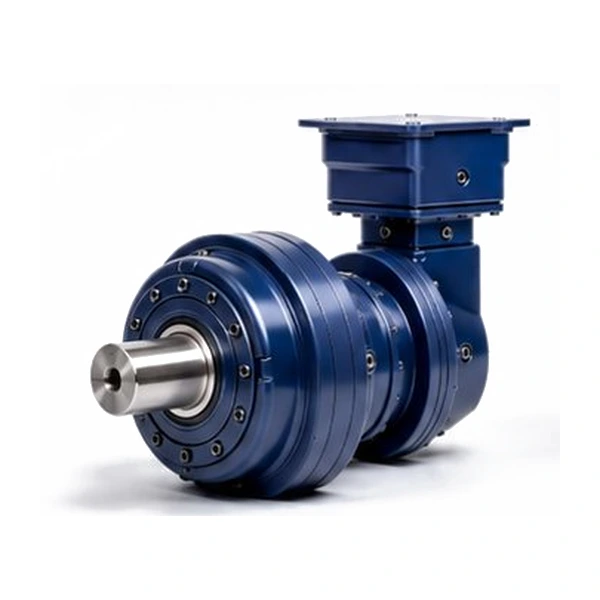

Swing Torque Engineering — Inertia, Not Load, Governs the Drive Specification
On a crane, slewing torque is dominated by the static load. On an excavator, it is dominated by inertia — the resistance of the upper structure to angular acceleration. Approximately 70% of the peak swing torque is consumed by inertia and only 30% by friction. This means a heavier counterweight or a longer boom has a larger effect on swing drive torque than a heavier bucket load.
| Class | Weight (t) | Inertia (kg·m2) | RPM | Peak Torque |
|---|---|---|---|---|
| Mini (1.5–6 t) | 1.5 – 6 | 500 – 3k | 8 – 12 | 3k – 8k Nm |
| Medium (12–25 t) | 12 – 25 | 8k – 30k | 9 – 12 | 12k – 35k Nm |
| Large (30–90 t) | 30 – 90 | 50k – 250k | 6 – 9 | 40k – 120k Nm |
| Mining (100–800 t) | 100 – 800 | 500k – 8M | 4 – 6 | 150k – 800k Nm |
The sizing methodology for excavator swing drives is therefore fundamentally different from crane slewing drives. A crane drive is sized by calculating the static overturning moment at the maximum load and radius. An excavator swing drive is sized by calculating the peak angular acceleration torque — which depends on the moment of inertia (controlled by counterweight mass and position), the target swing acceleration time (controlled by the operator and the hydraulic system), and the friction torque (controlled by the slewing bearing size and lubrication condition). The gear tooth rating must use the dynamic (reversing-duty) fatigue limit, not the unidirectional limit used for crane drives.
The counterweight design directly affects the swing drive specification — and the excavator designer faces a fundamental trade-off. A heavier counterweight improves digging stability (preventing the machine from tipping forward during heavy bucket loads) but increases the moment of inertia and therefore the swing torque. A lighter counterweight reduces swing torque and fuel consumption but decreases stability. Modern excavators use variable counterweight systems (removable counterweight modules) that allow the operator to optimise the balance for each job — but each configuration requires the swing drive to accommodate a different inertia value. The slewing drive must be rated for the maximum-counterweight configuration even if the machine operates in reduced-counterweight mode for 80% of its service life.
Dynamic Braking — Why the Swing Drive Generates More Heat Stopping Than Starting
At the end of every swing, the slewing drive must decelerate the upper structure from full swing speed to a complete stop — absorbing the kinetic energy stored in the rotating mass as heat in the hydraulic motor, the planetary gears, and the oil.
This 11.8 kWh of daily braking heat is continuous and unavoidable: every swing that starts must also stop. The thermal load is the primary factor limiting the oil change interval on excavator swing drives — at 100 degrees C, mineral oil oxidises 4 times faster than at 80 degrees C. An aggressive operator who runs 1,500 cycles per day (versus 800 for a moderate operator) generates nearly double the thermal load, reducing effective oil life by 60 to 75%. This is why excavator manufacturers increasingly specify synthetic swing drive oil as standard — synthetic PAO oils maintain stability at 100 degrees C for oil change intervals of 2,000 to 3,000 hours, versus 1,000 to 1,500 hours for mineral oil at the same temperature.
The economic impact of operator behaviour on swing drive life is substantial. An aggressive operator who reduces the swing drive service life from 12,000 to 8,000 hours by running at elevated temperatures costs the owner one additional swing drive replacement (USD 3,000 to 8,000 for a 20 to 30-tonne excavator) plus the oil change cost differential. Over the 15,000-hour machine life, this behaviour difference can add USD 10,000 to 25,000 in swing system maintenance — a hidden cost that is rarely tracked but directly attributable to operator technique. Modern telematics systems can monitor swing speed, cycle count, and oil temperature in real time — providing the data needed to identify and correct aggressive swing behaviour before it becomes a maintenance cost.
Swing Energy Recovery — Why Hybrid Excavators Target the Swing System First
The swing system consumes 25 to 35% of total excavator fuel — the second-largest energy consumer after the hydraulic main pumps. On machines in intensive truck-loading duty (swing angle exceeding 90 degrees per cycle), the swing can approach 40% of total fuel. This concentration of energy in a single, highly cyclical function makes the swing drive the most attractive target for energy recovery on hybrid and electric excavators.
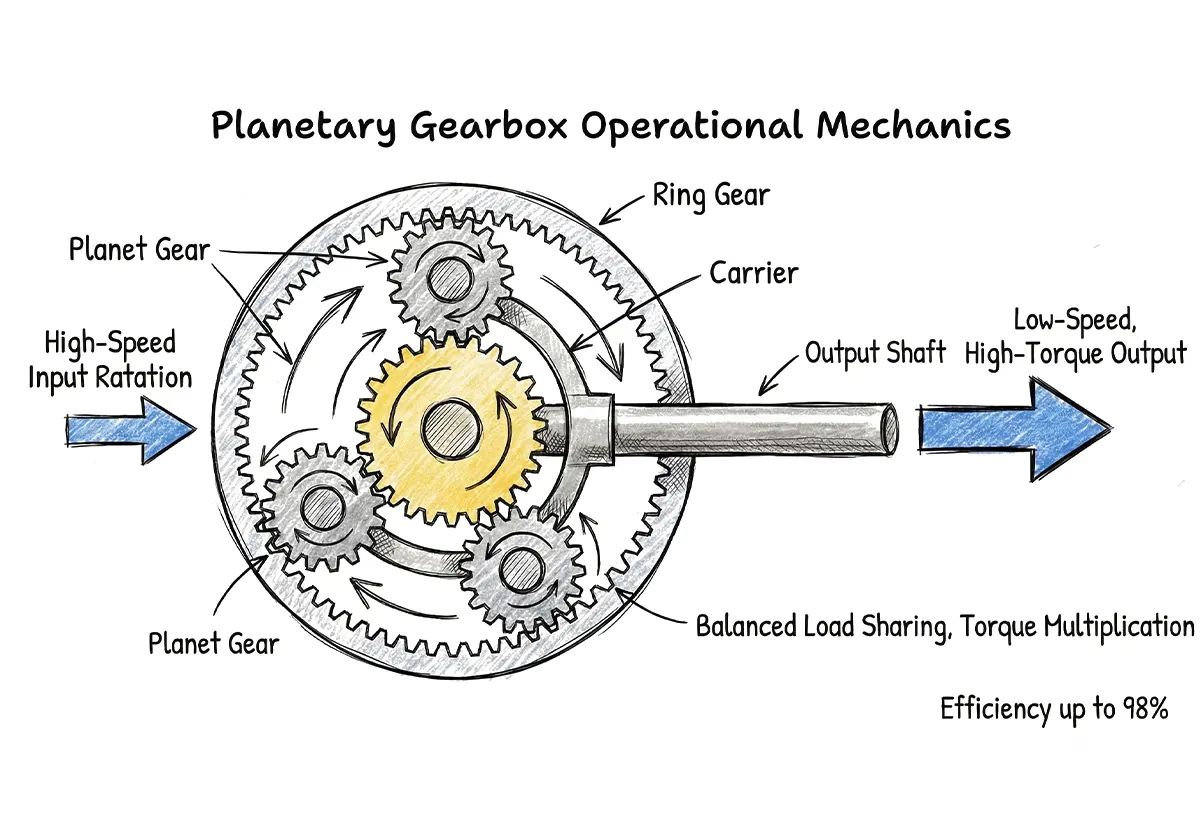
In a regenerative swing system, the slewing drive planetväxellåda operates with an electric swing motor replacing the traditional hydraulic motor. During acceleration, the motor drives the swing. During braking, the motor acts as a generator — converting kinetic energy to electrical energy stored in a supercapacitor or lithium battery. This recovered energy powers the next acceleration, reducing the engine load and achieving 15 to 25% total fuel reduction — the single largest fuel saving available from any individual system improvement on a conventional excavator.
The slewing drive planetary gearbox itself does not change for hybrid swing — the same gear ratios, bearings, and housing are used. What changes is the thermal duty: because the regenerative motor recovers 50 to 70% of the braking energy (instead of converting it entirely to heat), the oil temperature runs 15 to 25 degrees C lower. This reduced thermal stress extends oil life by 50 to 100% and may extend bearing and gear life by 20 to 30%.
The leading hybrid excavator designs (Komatsu HB series, Caterpillar 336F HEX, Kobelco SK210H) all use electric swing motors with supercapacitor or lithium-ion energy storage. The supercapacitor approach offers faster charge/discharge rates (matching the 15 to 25-second swing cycle) but lower energy density. The lithium-ion approach offers higher energy density but requires more complex thermal management. Both approaches use the same slewing drive planetary gearbox as the conventional hydraulic model — the gearbox is agnostic to the motor type. This backward compatibility means that the swing drive specification, spare parts, and maintenance procedures remain consistent across conventional and hybrid variants of the same excavator model.
The energy storage choice affects the swing drive duty cycle profile. Supercapacitors offer charge/discharge rates of 10 to 50 kW — matching the 35 kJ per swing cycle at the typical 15 to 25-second cycle time. Lithium-ion batteries offer higher energy density but slower charge rates, requiring a buffer period between swings. In practice, the supercapacitor approach dominates the 20 to 40-tonne excavator class because the rapid cycle rate demands instantaneous energy transfer that lithium chemistry cannot match without oversizing the battery. For mining-class excavators (100+ tonnes) with longer swing cycles (30 to 60 seconds), lithium-ion becomes viable because the longer cycle time provides adequate charge time.
The fuel saving from hybrid swing is not theoretical — it is measured and verified on production machines. Field data from fleet operators running both conventional and hybrid variants of the same excavator model consistently show 15 to 25% total fuel reduction on dig-and-load duty. On truck-loading duty with 90+ degree swing angles, the saving can reach 30% because the swing system consumes a larger fraction of total fuel on wider-angle cycles. The slewing drive planetary gearbox is identical in both variants — the fuel saving comes entirely from the electric motor and energy storage, not from any gearbox modification.
Three Failure Modes That Dominate Excavator Swing Drive Engineering
Every swing cycle imposes a full load reversal on the planet bearings. Over 3 to 5 million cycles in 10,000 to 15,000 hours, these reversals accumulate raceway fatigue far faster than steady-state loading. The L10 calculation must use the dynamic equivalent load for reversing duty — typically 1.3 to 1.5 times the mean load. A bearing sized using the steady-state (unidirectional) method will reach its calculated L10 life 30 to 50% sooner than predicted.
The cycle frequency is determined by the operator — an aggressive operator generates 1,500 cycles per day versus 800 for a moderate operator, nearly doubling the thermal load. The oil temperature difference can reach 15 to 25 degrees C between aggressive and moderate operation on the same machine. At 100+ degrees C, the oil oxidation rate doubles for every 10 degrees C increase, reducing effective oil life by 60 to 75%. This is an operator-behaviour failure mode, not a mechanical one — but the slewing drive must survive it.
The economic impact is substantial: an aggressive operator who reduces swing drive life from 12,000 to 8,000 hours costs the machine owner one additional drive replacement (USD 3,000 to 8,000 for a 20 to 30-tonne excavator) plus accelerated oil degradation costs. Over a 15,000-hour machine life, this behaviour difference can add USD 10,000 to 25,000 in swing system maintenance. Modern telematics systems can monitor swing speed, cycle count, and oil temperature in real time — providing the data needed to identify and correct aggressive swing behaviour before it becomes a maintenance cost.
The excavator pinion-ring gear mesh is exposed to dirt, sand, rain, and debris. Unlike the enclosed planetary stages, the exposed teeth rely on periodic grease for lubrication. Between applications (every 8 to 50 hours), the teeth run with diminishing film in an abrasive environment. Over 8,000 to 12,000 hours, profiles wear until backlash produces a perceptible clunk at each direction reversal — reducing positioning precision and accelerating internal gear wear from the transmitted shock. The cement-like paste that forms when fine soil mixes with grease and water is particularly damaging — it hardens between operating shifts and abrades the tooth surfaces during the first few swings of each working day before the fresh grease displaces the dried paste. Excavators working in cement, calcium-rich soite or alkaline environments (pH above 9) experience tooth wear at 2 to 3 times the rate of machines in neutral-pH soil — because the alkaline moisture attacks both the grease and the steel surface simultaneously.
Slewing Drive Planetary Gearbox for Excavators — Frequently Asked Questions
Korea Ever-Power provides excavator swing drive planetary gearboxes from 3,000 to 800,000 Nm with high-cycle bearings, integrated parking brakes, and thermal management. Provide your excavator model for a specification.
Redaktör: Cxm