414W3 Winch Drive Planetary Gearbox Reducer

FEM M6
ARCTIC -40 deg C
140,000 Nm
Where crane hoists end and industrial winding machines begin.
The EP-414W3 is not a scaled-up 413W3. It is a fundamentally different product built from heavier castings, larger-module gears, heavier-series bearings, and a housing designed for environments that the standard 4xxW series has never been asked to survive. The vinschdrivning planetväxellåda catalogue transitions here from crane hoists measured in tens of tonnes to industrial winding systems measured in hundreds — anchor handling tug supply (AHTS) vessels deploying 2,000-metre anchor chains, deep mine production winders cycling 20-tonne ore skips through kilometre-deep shafts, and Arctic mooring winches holding semi-submersible drilling rigs in position through polar storms.
Three firsts define the 414W3: the first FEM M6 rating (heavy continuous duty, up to 2 million load cycles), the first -40 deg C Arctic temperature rating, and the first housing mass exceeding one tonne. These are not incremental improvements — they mark the entrance to a tier where the engineering standards, the classification requirements, and the consequences of failure operate at a different scale from everything below.
414W3 Mega-Class Winch Drive — Technical Parameters
| Nominellt utgående vridmoment | 140,000 Nm |
| Gear ratio range | 80 to 300 (three-stage planetary) |
| Maximal ingångshastighet | 2,500 rpm |
| Maximal utgångshastighet | 12 rpm (FEM M6 heavy continuous duty) |
| Mekanisk effektivitet | ≥ 94% |
| Integrated parking brake | External braking system (motor brake + counterbalance valves) |
| Montering | Heavy-duty rotating housing flanges |
| Torrvikt | Approx. 1,250 kg |
| Smörjning | Oil bath splash, Arctic-grade synthetic EP gear oil |
| Driftstemperatur | -40 to +85 deg C (Arctic standard) |
From 42,500 to 140,000 Nm — What Changes When the Torque Triples
The 3.3x torque jump from the 413W3 is not achieved by simply enlarging the same design. Five fundamental engineering parameters change simultaneously.
Housing Material Upgrade
The 414W3 housing transitions from standard ductile iron to a high-strength alloy casting (GGG-60 or equivalent) with enhanced fatigue resistance at -40 deg C. Standard ductile iron becomes brittle below -20 deg C — the 414W3 housing material is impact-tested at -40 deg C to Charpy V-notch standards (DNV-OS-B101 or equivalent) to ensure it will not fracture under shock loading in Arctic conditions.
Gear Module Size
The gear module (tooth size) increases by approximately 50-60% compared to the 413W3. Larger teeth carry more load per tooth, and the increased root fillet radius resists bending fatigue at higher cyclic loading — which is why the 414W3 achieves FEM M6 (2 million cycles) versus M5 (1 million) on the smaller models. The larger module also shifts the maximum input speed downward to 2,500 rpm because tooth peripheral velocity must stay within safe limits.
Bearing Class
Output bearings transition to heavy-series tapered rollers with L10 life ratings calculated at 140,000 Nm continuous loading — requiring bearing bores approximately 40% larger in diameter than the 413W3. The input bearings are upgraded to accommodate the higher radial loads generated by the larger gear module. The entire bearing arrangement is designed for 30,000+ hours at M6 duty before the L10 statistical fatigue limit is reached.
Output Shaft Diameter
The output shaft carries the drum weight (potentially several tonnes), the cable weight (up to 5+ tonnes at 1,000 metres), and the suspended load as a bending moment. At 140,000 Nm drum torque with these loads, the shaft diameter is approximately 200-250 mm — up from 120-150 mm on the 413W3. The shaft material is heat-treated alloy steel with a surface hardness profile designed for both torsional and bending fatigue resistance.
FEM M5 to M6
The FEM M6 rating doubles the design cycle count (from approximately 1 million to 2 million load cycles) and increases the load spectrum severity factor. At M6, the gears, bearings, and shaft are designed for sustained heavy-duty production winding — 300-500 cycles per day at 80-100% of rated load. This is the duty cycle of a mining production hoist or an AHTS anchor handling winch, not an occasional-use crane. Contact Koreas ständiga makt for the detailed M6 load spectrum and cycle count specification.
-40 deg C — Engineering a Winch Drive for Polar Operations
The standard 4xxW operating range of -20 to +85 deg C covers 95% of global crane and winch applications. The 414W3 extends the cold end by 20 degrees — and that extension touches every component in the gearbox.
Arctic-Grade Lubricant
Standard SAE 80W-90 mineral gear oil becomes too viscous below -25 deg C, starving the bearings and gears of lubrication during cold starts. The 414W3 ships with SAE 75W-90 full synthetic Arctic-grade EP oil that maintains adequate fluidity down to -45 deg C. The pour point is below -50 deg C, and the viscosity index exceeds 160 — ensuring the oil reaches every bearing and gear tooth within 30 seconds of the first shaft rotation at -40 deg C.
Low-Temperature Seal Materials
Standard FKM (Viton) seals lose elasticity below -25 deg C and can crack at -40 deg C. The 414W3 uses FFKM (perfluoroelastomer) or silicone-compound seals rated to -60 deg C, maintaining the lip contact pressure that prevents oil leakage and water ingress throughout the Arctic temperature range. These seals cost 3-5 times more than standard FKM but are the only materials that survive freeze-thaw cycling at -40 deg C without hardening and leaking.
Charpy Impact-Tested Housing
At -40 deg C, standard ductile iron transitions from ductile to brittle fracture behaviour — a crack that would arrest in warm material propagates catastrophically in cold material. The 414W3 housing is Charpy V-notch impact tested at -40 deg C (minimum 27 J absorbed energy per DNV-OS-B101 or equivalent) to verify it will not fracture under the shock loads that AHTS anchor handling and mining skip winding produce. This test is a certification requirement for all structural components in Arctic offshore operations.
Cold-Start Procedure
After extended exposure to -40 deg C (overnight shutdown on an Arctic AHTS vessel), the 414W3 must be started gradually: run the motor at no-load idle speed for 5-10 minutes to circulate the oil and warm the bearings before applying load. Attempting to hoist a full load from a dead-cold start risks insufficient lubrication film at the gear tooth contacts — producing micro-pitting damage that accumulates with each cold event. Vessels operating in polar waters should consider an oil heating system (electric immersion heater in the sump) to maintain the gearbox above -20 deg C during shutdown.
140,000 Nm — The Machines That Anchor Platforms and Wind Ore

AHTS Anchor Handling Winches
Anchor handling tug supply vessels deploying and recovering anchors, anchor chains, and mooring wires for semi-submersible drilling rigs and floating production platforms. The 414W3 at ratio 120-200 provides the drum torque to haul 100-200 tonne anchor chain assemblies from 500-2,000 metres of water depth. The -40 deg C Arctic rating enables AHTS operations in the Barents Sea, Beaufort Sea, and Canadian Arctic — regions where conventional -20 deg C winch drives cannot be certified. The slewing drive positions the stern roller and the wheel drive powers the vessel chain stopper mechanisms.
Deep Mining Production Winders
Main production winders at mines with shaft depths of 500-1,200 metres, cycling 15-25 tonne ore skips at 300-500 cycles per day — the FEM M6 duty that the 414W3 is rated for. The combined weight of the skip, ore, and 1,000 metres of heavy-gauge rope can reach 50-70 tonnes at the deepest point. The 140,000 Nm drum torque handles this through ratio 200-300, and the external braking system (motor brake + counterbalance + drum brake) provides the multi-level redundancy that mine safety authorities mandate for production winding.
Arctic Offshore Mooring Systems
Mooring winches on Arctic drilling vessels, FPSOs, and ice-class construction vessels that must maintain station in sea ice, polar storms, and sub-zero air temperatures for months at a time. The 414W3 at ratio 80-120 provides the line tension to hold the vessel against ice drift forces of 500-2,000 kN, while the -40 deg C rating ensures the winch operates reliably through the 6-month Arctic winter without thermal derating. The 1,250 kg housing mass provides the thermal inertia to resist rapid temperature changes during blizzard events.
The Mega-Class Winch Drive Family
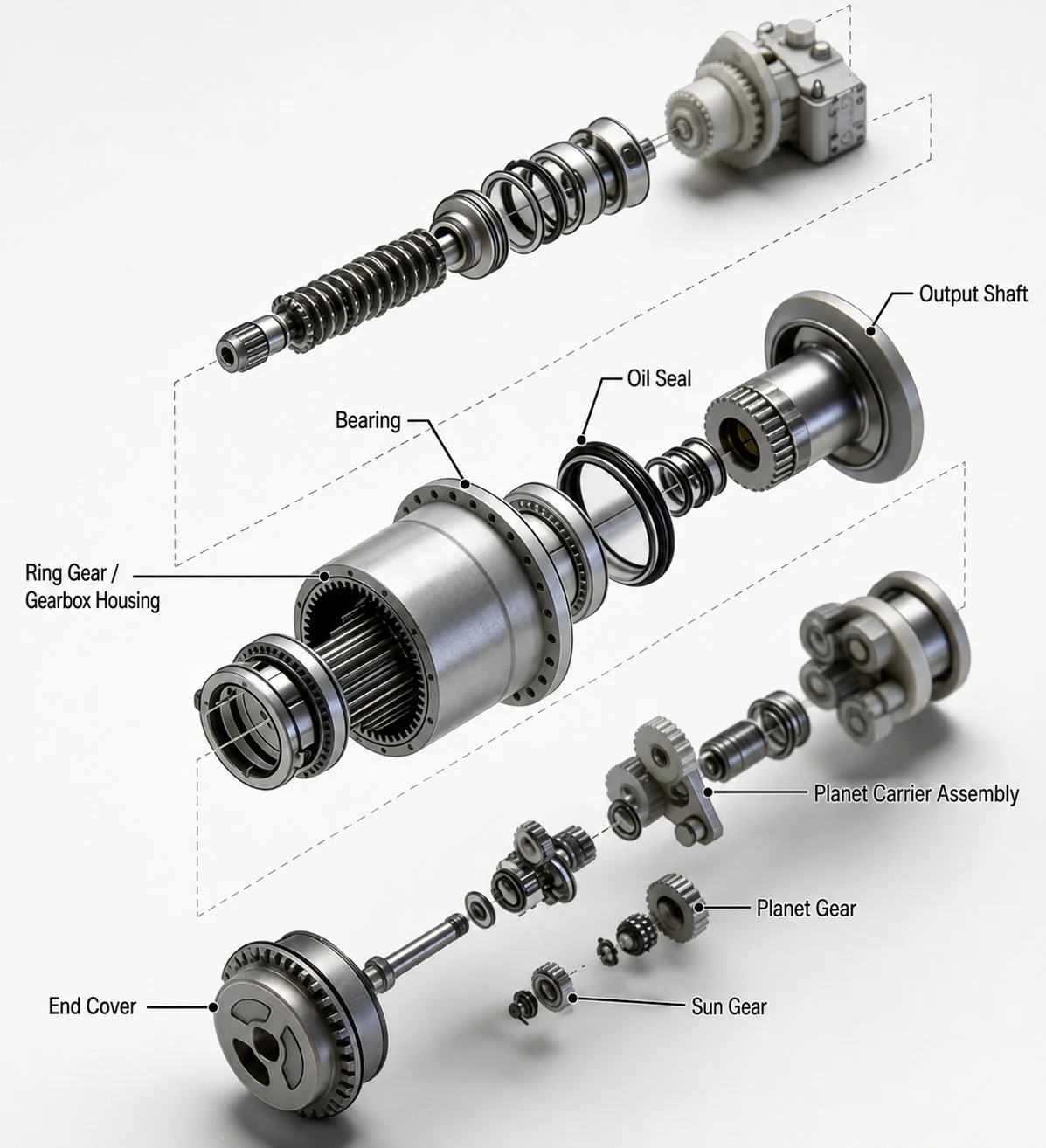
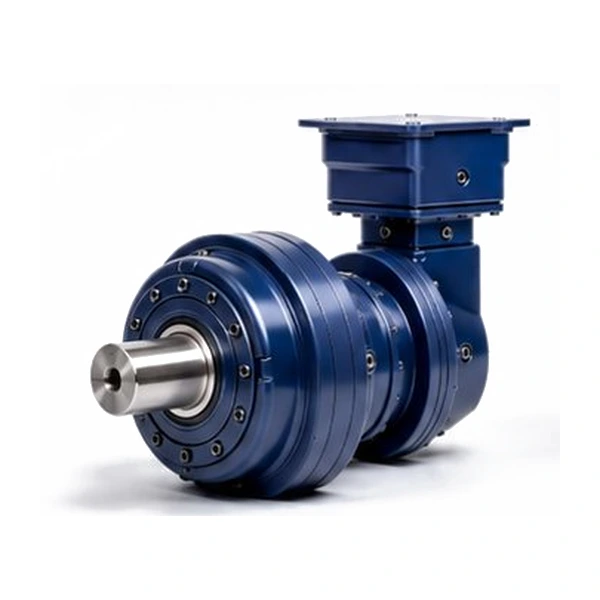
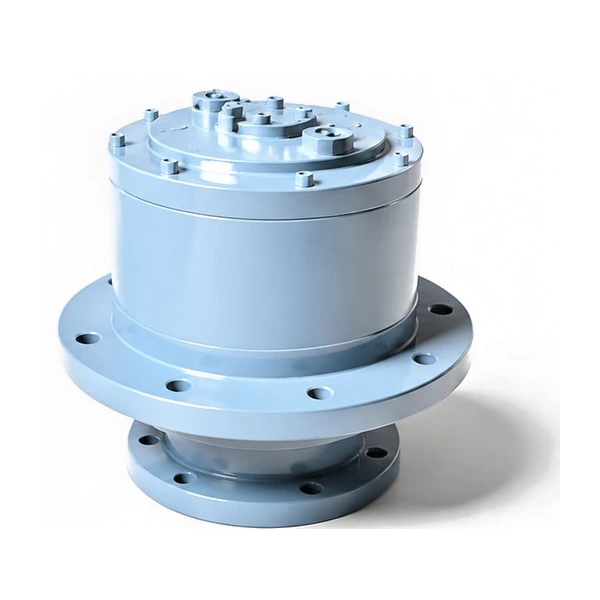
Winch Drive Planetary Gearbox — Mega-Class and Arctic Operations FAQ
Fältrapporter
Main anchor handling winch on a 250 t bollard pull AHTS operating in the Barents Sea. 414W3 at ratio 180, triple electric motor drive (3 x 450 kW AC induction). The -40 deg C rating was the non-negotiable specification — the vessel operates from November to April in conditions that routinely reach -35 deg C. The 414W3 completed its first Arctic season without a single cold-start issue. We maintain the oil sump above -15 deg C with the electric immersion heater during shutdown. Anchor chain recovery from 1,200 metres depth at 15 m/min — smooth, controlled, and the oil temperature stabilised at 62 deg C in -28 deg C ambient. DNV Winterisation notation survey passed without findings.
Production ore winder at a 950-metre deep gold mine, 414W3 at ratio 250, dual 600 kW electric motors. The winder cycles 20-tonne ore skips at 350 cycles per day — FEM M6 duty confirmed by cycle counter data. After 11 months (approximately 5,800 hours), oil analysis shows no bearing distress markers and vibration trending is flat. The M6 rating was the specification driver — the mine safety authority required a gearbox explicitly designed for production winding duty, not a crane hoist drive operating outside its rated duty class. The 414W3 M6 certificate satisfied this requirement directly. The 1,250 kg housing handles the shaft environment (40 deg C ambient at 950 metres, plus radiant heat from the ore body) with oil temperature stable at 72 deg C — within the +85 deg C limit with margin.
Mooring winch on an ice-class drilling vessel, 414W3 at ratio 100, constant-tension mooring mode. The vessel maintained station through 3 months of Kara Sea winter operations with ice drift forces exceeding 1,000 kN on the mooring lines. The 414W3 handled the dynamic tension fluctuations without any gear noise anomaly or oil temperature excursion. The 4-star is a commissioning lesson: the first cold start at -38 deg C (before the oil heater was commissioned) produced a transient high-pressure spike in the motor circuit because the cold oil viscosity created excessive back-pressure through the gearbox seals. After the oil heater was operational, all subsequent cold starts were smooth. The product documentation could benefit from a prominent warning that Arctic cold starts without oil pre-heating can produce system pressures exceeding normal operating limits — this was in the installation manual but not on the first page where the vessel engineer would see it during commissioning.
Ytterligare information
| Redaktör | Cxm |
|---|
Relaterade produkter
-
ZR55 Vinschdriven planetväxellåda — Rätvinklig
-
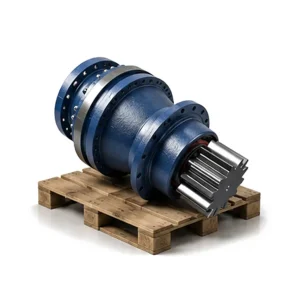
ZL75 Winch Drive Planetary Gearbox
-
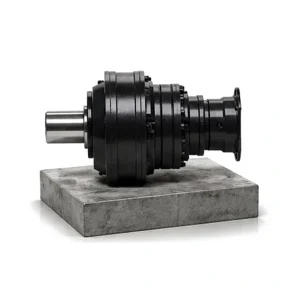
ZL35 Vinschdriven planetväxellåda — 1–4 steg
-
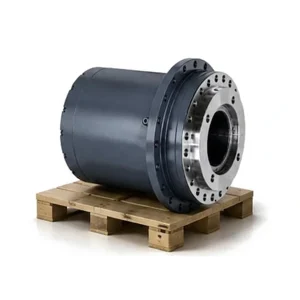
419W3 Vinschdriven planetväxellåda Reducer
-

415W3 vinschdriven planetväxellåda med reducerare
-
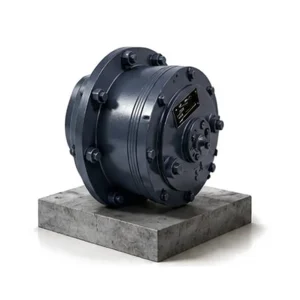
410W3 vinschdriven planetväxellåda med reducer
-

403W2 Vinschdriven planetväxellåda med reducerväxel — 2-stegs
-

401W1 Vinschdriven planetväxellåda med reducerväxel — Enstegs