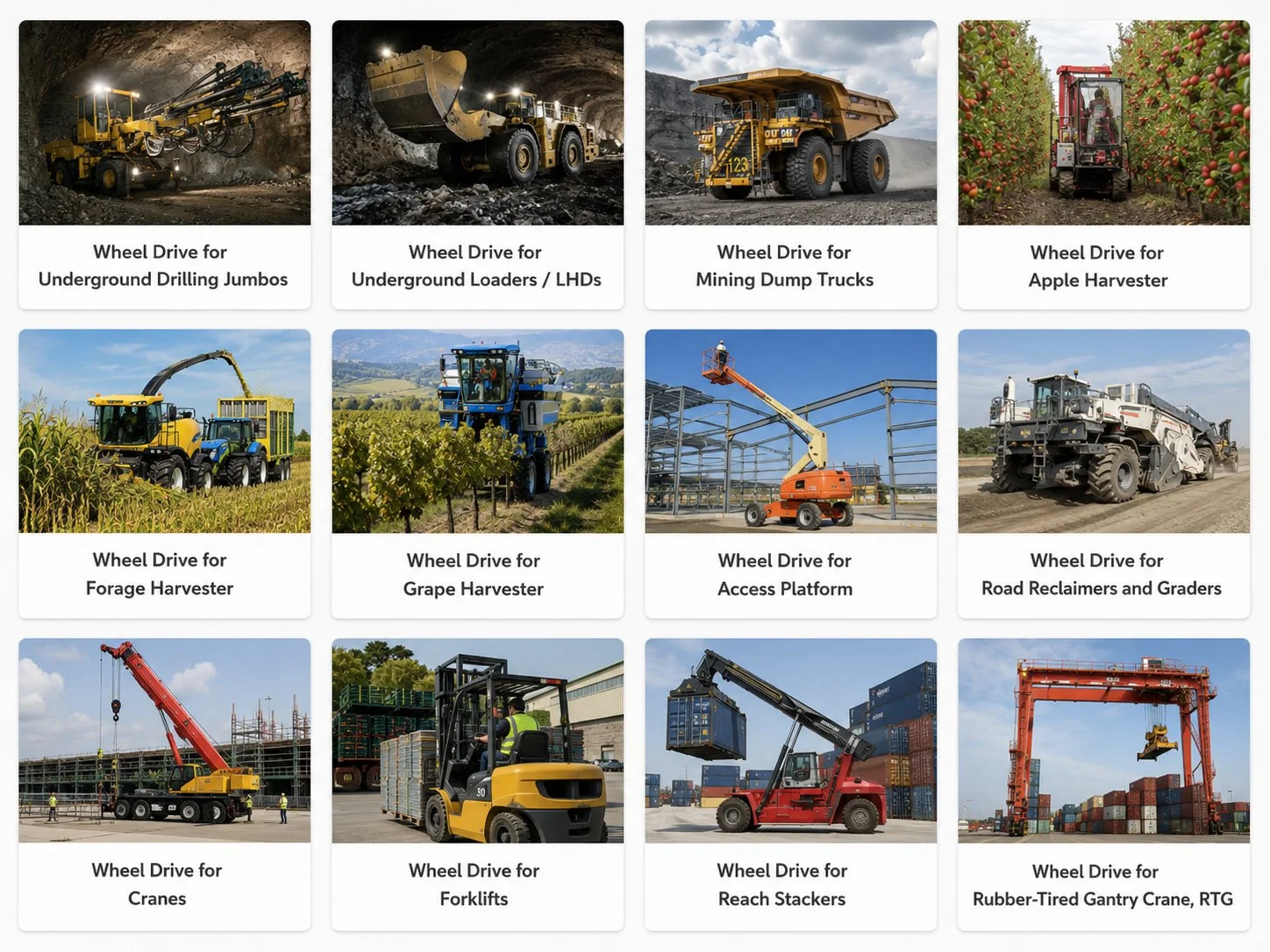
Why the Forage Harvester Wheel Drive Is Unlike Any Other Agricultural Drive System
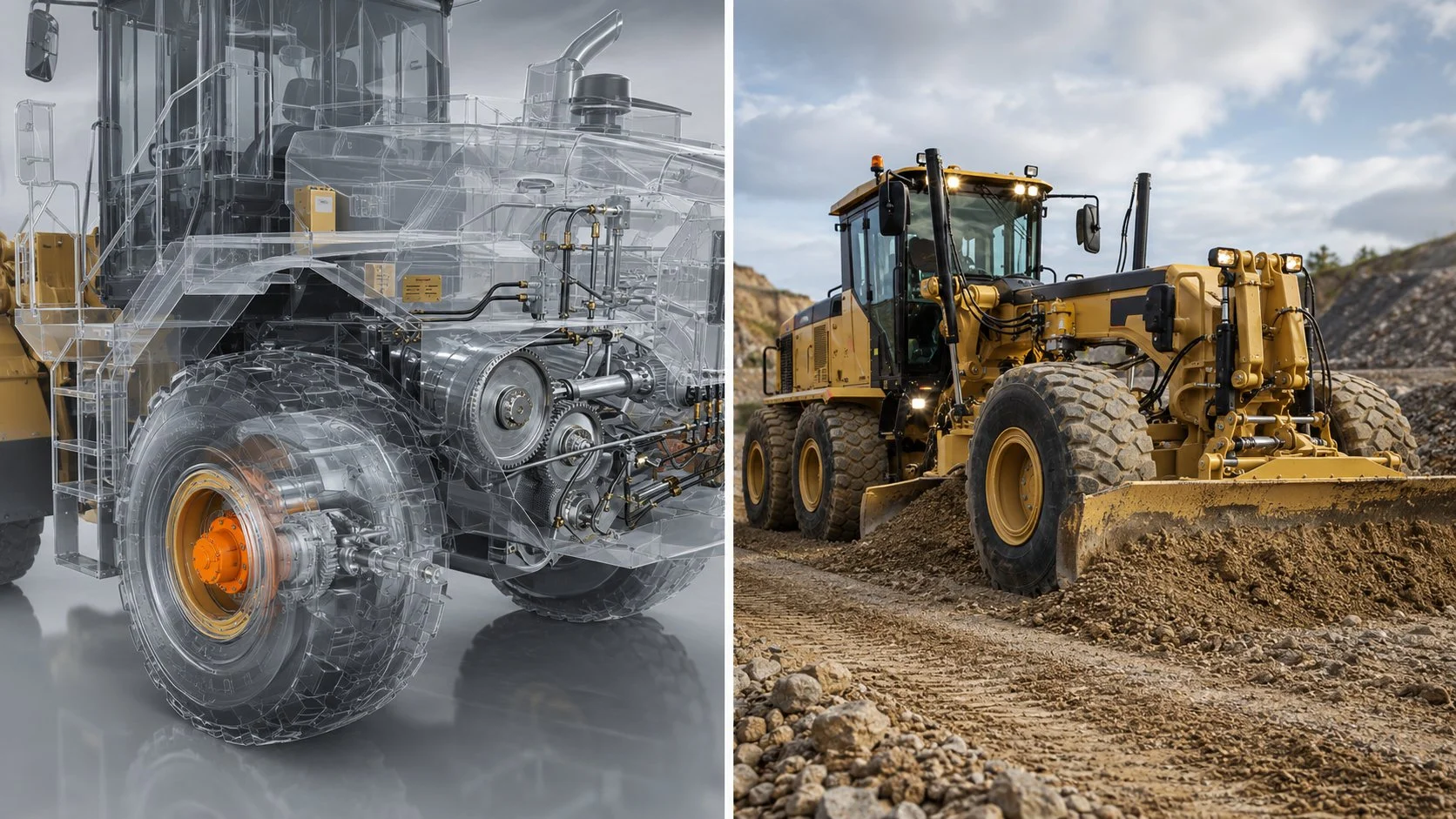
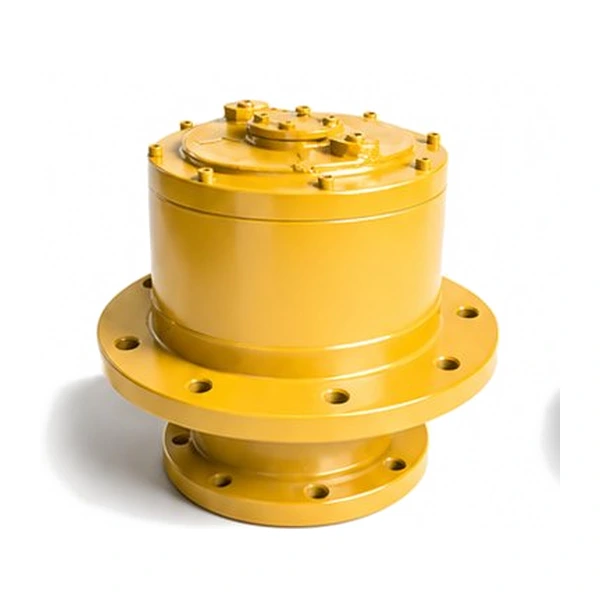
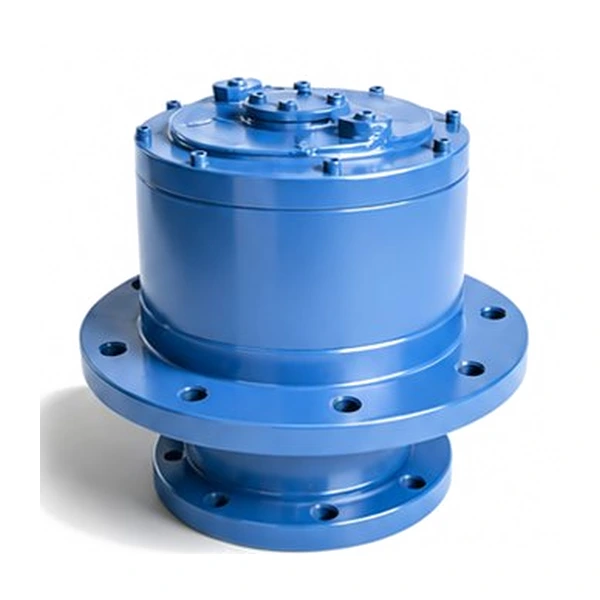
A combine harvester operates in dry conditions at grain maturity. A baler works in dry, cured hay. A forage harvester works in the worst field conditions of the entire agricultural year — late autumn, after weeks of rain, in standing maize or grass crops that trap moisture at the soil surface. The เกียร์ทดรอบแบบเฟืองดาวเคราะห์ขับเคลื่อนล้อ must deliver traction in conditions where every other machine has already left the field.
The power split on a forage harvester is fundamentally different from any other self-propelled machine. On a combine harvester, the threshing mechanism consumes 30 to 40% of engine power — leaving 60 to 70% for propulsion. On a forage harvester, the chopping drum, kernel processor, and accelerator together consume 60 to 80% of the engine power at full throughput — leaving only 20 to 40% for propulsion. A 900 HP forage harvester at full crop flow may have only 180 to 360 HP available for the wheel drives. This limited propulsion power must move an 18 to 25-tonne machine through wet soil that imposes rolling resistance coefficients of 0.08 to 0.15 — compared to 0.03 to 0.05 on dry stubble.
The consequence is that the wheel drive efficiency — the percentage of input hydraulic power that reaches the ground as tractive force — matters more on a forage harvester than on any other agricultural machine. A wheel drive with 92% efficiency versus 88% efficiency saves 4 percentage points — which translates to approximately 15 to 20 HP of additional traction from the same hydraulic input. In wet conditions, this 15 to 20 HP difference determines whether the machine maintains harvesting speed or bogs down and must reduce the crop feed rate.
The efficiency difference between wheel drive designs is primarily determined by the gear mesh quality and the bearing selection. Gears with DIN Class 6 tooth accuracy produce mesh losses of 0.5 to 1.0% per stage — achieving 97 to 98% efficiency per stage and 92 to 95% overall for a 2 to 3 stage planetary gearbox. Class 8 gears produce mesh losses of 1.0 to 2.0% per stage — achieving 88 to 92% overall. The bearing type also matters: tapered roller bearings have higher efficiency at low speed and high load (typical field conditions) than deep-groove ball bearings, but lower efficiency at high speed (road transfer). The optimal bearing arrangement for a forage harvester wheel drive uses tapered rollers on the output (wheel-side) stage and cylindrical rollers on the input (motor-side) stage — optimising efficiency for the dominant field-speed duty while maintaining acceptable road-speed performance.
Crop-Synchronised Speed Control — The Ground Speed Must Match the Feed Rate
The chopping drum on a forage harvester is designed for a specific crop throughput — measured in tonnes of fresh matter per hour. The ground speed determines the crop flow rate into the machine: speed x header width x crop density = throughput. If the ground speed is too high, the crop flow exceeds the chopper capacity — overloading the drum, increasing the risk of blockage, and producing coarsely chopped material that ferments poorly in the silage clamp. If the ground speed is too low, the machine is underutilised and the daily acreage falls below the contractor target.
| Crop | Density (t/ha) | Speed (km/h) | Throughput (t/h) | Drive Power |
|---|---|---|---|---|
| Grass (1st cut) | 25–40 | 8–15 | 60–120 | 120–200 kW |
| Maize (silage) | 40–60 | 5–10 | 100–200 | 200–350 kW |
| Whole-crop cereal | 30–50 | 6–12 | 80–150 | 150–280 kW |
Modern forage harvesters use automatic crop-flow feedback to adjust the ground speed. Sensors measure the chopping drum torque (proportional to crop flow rate), and the machine control system adjusts the hydrostatic pump displacement to accelerate or decelerate the machine — maintaining the drum at the target throughput. The wheel drive must respond to these continuous speed-change commands with minimal lag (less than 0.5 seconds from command to speed change) and without torque spikes that would cause wheel slip on the wet soil surface.
The speed variation range during harvesting is typically ±30 to 50% of the target speed — the machine continuously accelerates and decelerates as the crop density varies across the field. In a maize field with gaps (lodged areas, thin stands, headland turns), the ground speed can change from 4 to 10 km/h and back within a 50-metre distance. The wheel drive เกียร์ดาวเคราะห์ must transmit these speed changes smoothly through the gear mesh without introducing its own speed pulsation into the crop-flow control loop — any drive-induced speed variation is indistinguishable from a crop-density variation and causes the control system to respond incorrectly.
Headland turns at field ends impose the highest instantaneous torque demand on the wheel drive. The machine must decelerate, turn 180 degrees in a space constrained by the field boundary, and accelerate back into the crop — all in 15 to 30 seconds. During the turn, the inside wheel must slow or reverse while the outside wheel maintains full speed — requiring differential torque control between the left and right wheel drives. On machines with independent hydrostatic drives (one motor per wheel), this differential is provided by the hydraulic system. On machines with a single motor and a mechanical differential, the planetary gearbox must transmit the differential torque without shock loading the gear teeth at the direction-reversal point.
Wet-Field Traction and Soil Compaction — The Agronomic Limit on Wheel Drive Design
Forage harvesters operate at the worst time of year for soil conditions. Maize silage harvest occurs in late September to November — after the autumn rains have saturated the topsoil. Grass silage harvest occurs in May to June (first cut) through to October (later cuts), with multiple passes over the same field. The soil bearing capacity during these periods can fall to 100 to 200 kPa — below the contact pressure of a standard agricultural tyre on an 18-tonne machine.
Soil compaction from forage harvester traffic is a serious agronomic concern. Research from Wageningen University, Harper Adams, and USDA demonstrates that subsoil compaction (below 30 cm depth) from heavy harvest traffic can reduce crop yields by 5 to 15% for 5 to 10 years — because the compacted layer restricts root penetration and water drainage. This finding has driven the forage harvester industry toward lower ground pressure solutions: wider tyres (800 to 900 mm versus 600 to 700 mm), lower tyre inflation pressure (0.8 to 1.2 bar versus 1.5 to 2.0 bar), and rubber track conversions.
The wheel drive must accommodate these tyre and track configurations without modification. A wider tyre increases the ground contact area — but also increases the tyre rolling radius, which changes the gear ratio requirement for the same ground speed range. A track conversion replaces the rear wheels entirely with rubber tracks — requiring the wheel drive to interface with the track sprocket instead of the tyre hub, often at a different mounting geometry. The wheel drive output shaft, mounting flange, and brake must be compatible with both tyre and track configurations to allow the contractor to switch between configurations as field conditions demand.
The traction limit on wet soil is determined by the soil shear strength — not by the tyre grip coefficient used on hard surfaces. On saturated clay soil, the maximum traction force is approximately 0.3 to 0.5 times the vertical wheel load — regardless of tyre tread pattern or inflation pressure. At 0.4 coefficient on a 5-tonne rear axle load, the maximum traction per rear wheel is approximately 20 kN. The wheel drive must not deliver torque exceeding this traction limit — because excess torque simply spins the wheel, destroying the soil surface and creating ruts that impede the following transport vehicles (trailer tractors that carry the chopped material to the silage clamp).
Road Transfer — From 8 km/h Field Speed to 40 km/h Highway in the Same Gearbox
Self-propelled forage harvesters drive between fields on public roads — at speeds of 25 to 40 km/h depending on local regulations. This is 3 to 8 times the harvesting speed — and the wheel drive must cover both ranges through the same planetary gearbox without a mechanical range-change transmission.
At road transfer speed, the wheel drive operating point shifts from high-torque/low-speed (field) to low-torque/high-speed (road). The hydraulic motor runs at or near its maximum speed — where the volumetric efficiency is highest but the mechanical efficiency may decrease due to high-speed bearing and seal friction. The planetary gearbox bearings and gears experience higher rotational speed and lower torque — a duty cycle that generates more heat from churning losses (oil agitation by the high-speed gears) and less heat from tooth contact stress.
The braking requirement at road speed is also fundamentally different from the field requirement. In the field, the machine decelerates from 8 km/h to zero using the hydraulic motor back-pressure — gentle, proportional, and requiring minimal brake intervention. On the road, the machine must decelerate from 40 km/h in an emergency stop — requiring the full mechanical braking capacity of the wheel drive parking/service brake. The kinetic energy at 40 km/h is 25 times greater than at 8 km/h (proportional to the square of the speed) — meaning the brake must dissipate 25 times more energy in an emergency stop. The wheel drive brake disc, calliper, and friction material must be sized for this road-speed emergency case, not for the field-speed normal case.
Three Failure Modes Specific to Forage Harvester Wheel Drives
The wheel drive operates centimetres above wet soil — submerged in mud, crop juice, and water for the entire harvesting shift. The shaft seal lip runs against a surface coated with abrasive soil particles that act as a lapping compound, wearing the seal lip and shaft surface simultaneously. On wet maize silage harvest, the seal is exposed to a mixture of mud, maize stalk juice (pH 5.5 to 6.5, mildly acidic), and silage effluent — a chemically aggressive environment that degrades standard NBR seal material within 500 to 1,000 hours. Once the seal fails, contaminated water enters the gearbox and emulsifies the oil — destroying the lubricating film on the gears and bearings within 50 to 200 hours of continued operation.
In wet field conditions, the rolling resistance increases from 0.03–0.05 (dry stubble) to 0.08–0.15 (saturated soil) — doubling or tripling the continuous traction demand. The wheel drive operates at 80 to 100% of its rated torque for sustained periods (2 to 4 hours per field) instead of the 40 to 60% typical on dry ground. This sustained high-torque operation generates 2 to 3 times the normal heat in the gear mesh and bearings — raising the oil temperature to 90 to 110 degrees C. At these temperatures, standard mineral oil oxidises rapidly, and the viscosity decreases to the point where the gear and bearing oil film thickness falls below the minimum for full hydrodynamic lubrication.
Forage harvesters travel between fields on public roads at 25 to 40 km/h. At 18 tonnes and 40 km/h, the kinetic energy is approximately 1.1 MJ — all of which must be absorbed by the wheel drive brakes in an emergency stop. If the brakes are already hot from the previous stop (or from continuous drag-braking on a downhill road section), the brake pad temperature can exceed 350 to 400 degrees C — entering the fade zone where the friction coefficient decreases with increasing temperature. Brake fade on a fully loaded forage harvester on a public road is a catastrophic safety failure that has resulted in fatal accidents — making the brake thermal capacity the single most safety-critical specification parameter of the entire wheel drive assembly.
Wheel Drive Planetary Gearbox for Forage Harvesters — Frequently Asked Questions
Korea Ever-Power provides forage harvester wheel drives from 8,000 to 60,000 Nm with crop-synchronised response, wet-field sealing, and road-speed braking capacity.
บรรณาธิการ: Cxm