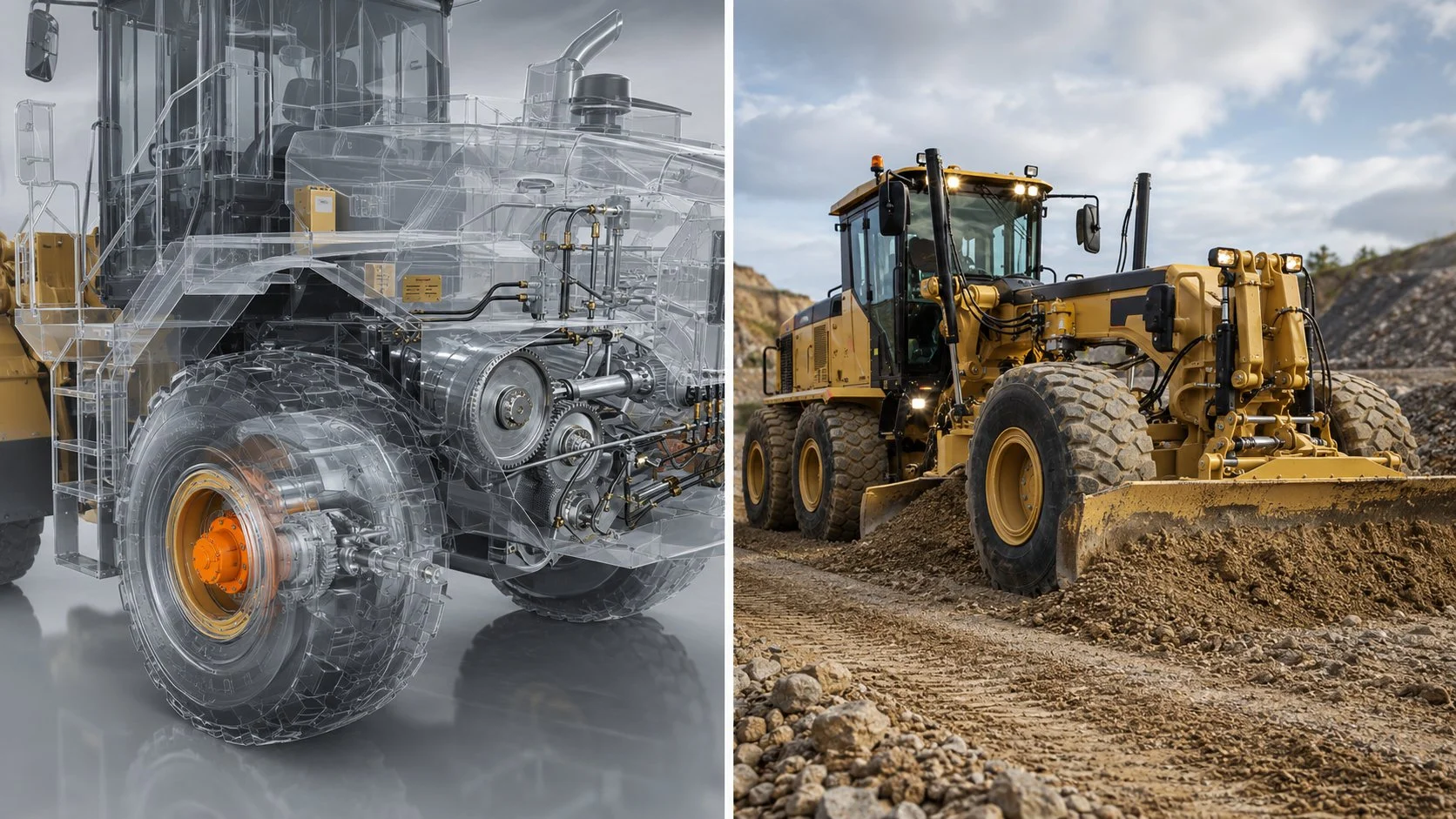
How Linear Move Irrigation Works — and Why the Wheel Drive Is the Structural Weak Link
A linear move (lateral move) irrigation system is a long pipe structure — 200 to 800 metres — supported by wheeled towers spaced 40 to 60 metres apart. The system moves in a straight line across a rectangular field, irrigating a strip as it travels. Water is supplied through a flexible hose from a canal or hydrant system along one edge of the field. Unlike a centre pivot (which rotates around a fixed point), a linear move covers rectangular fields without the unirrigated corners that pivots leave.
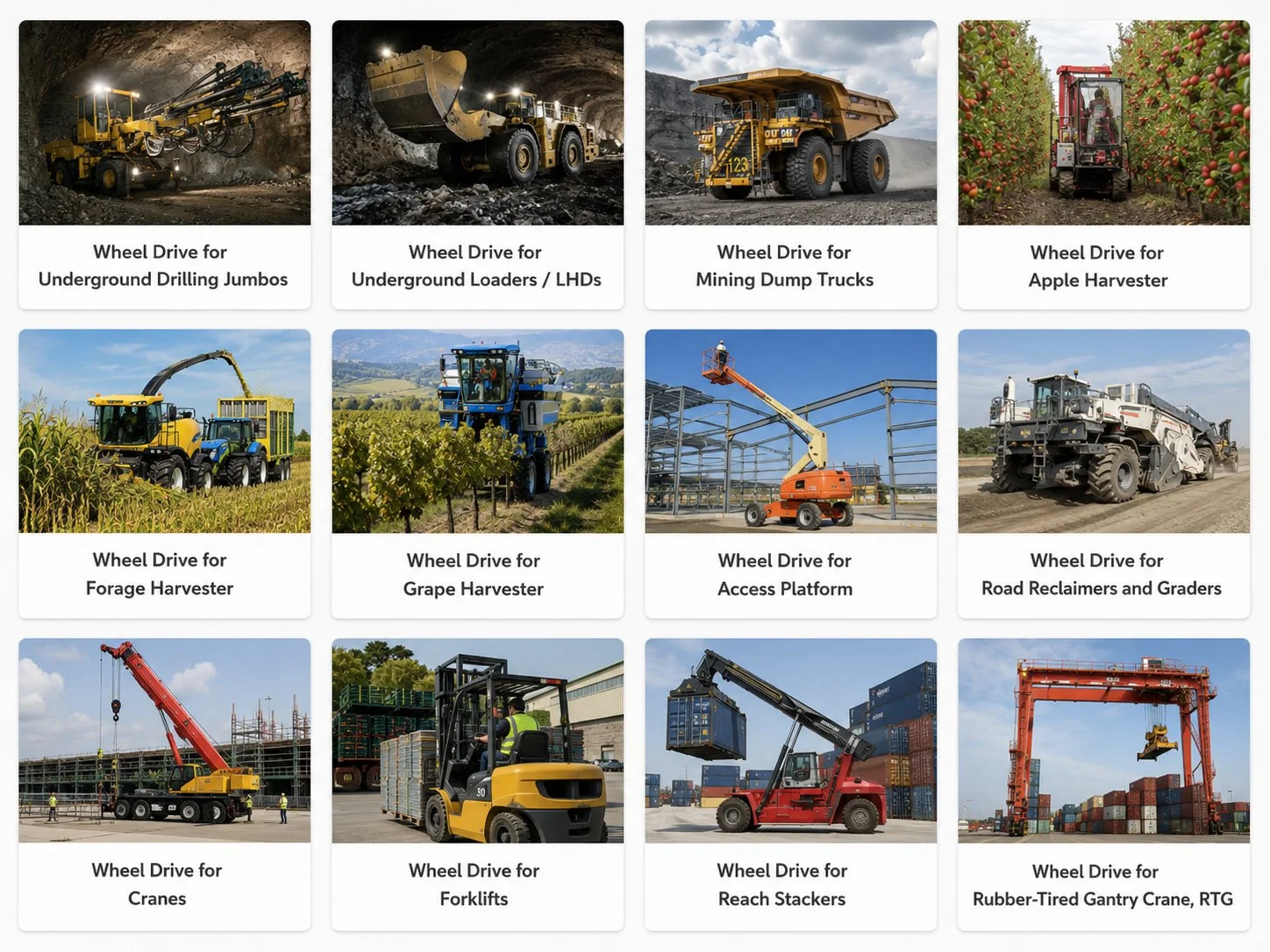
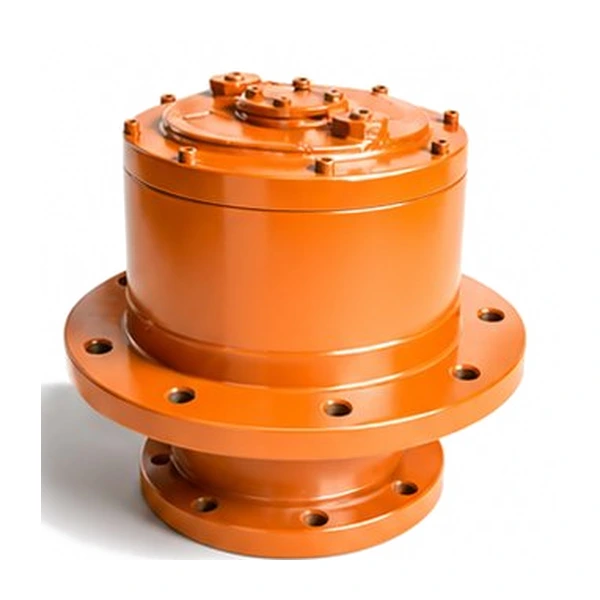
Each tower has its own เกียร์ทดรอบแบบเฟืองดาวเคราะห์ขับเคลื่อนล้อ powered by a small electric motor (0.37 to 1.5 kW). The gearbox reduces the motor speed from 1,400 to 1,700 rpm to a wheel speed of 0.5 to 3.0 rpm — a reduction ratio of 500:1 to 2,000:1. This is the highest gear ratio in the entire Wheel Drive series — and among the highest in any agricultural drive application. The ultra-high ratio is necessary because the motor must be small enough to run from the irrigation system electrical supply (typically 480 V three-phase or single-phase), and the output speed must be low enough to irrigate at the agronomically correct application rate.
The structural integrity of the entire irrigation system depends on the wheel drives maintaining synchronisation between all towers. If one tower falls behind (due to a slipping wheel, a failed motor, or a jammed gearbox), the pipe span between the lagging tower and its neighbours bends. The pipe can withstand 1 to 2 degrees of angular deflection — equivalent to 0.5 to 1.0 metre of tower misalignment over a 50-metre span. Beyond this limit, the pipe buckles, the sprinkler heads collide, and the structure can collapse — causing USD 20,000 to 100,000 in structural damage from a single tower-alignment failure.
Tower Alignment — The Speed Synchronisation Challenge
The tower alignment system uses a simple but elegant principle: one tower (the master, usually the outermost tower) runs continuously at a set speed, and all other towers start and stop to stay aligned with the master. Each tower has an alignment sensor (typically a mechanical arm or cable connected to the adjacent tower) that detects the angular deflection of the pipe span. When the span deflects beyond a threshold (0.3 to 0.5 degrees), the lagging tower starts; when the span returns to straight, the tower stops.
| พารามิเตอร์ | Centre Pivot | Linear Move | Drive Implication |
|---|---|---|---|
| Tower speed | Variable (outer faster) | All towers identical | Every gearbox must produce the same output speed |
| Start-stop cycles | Continuous (outer) | 10–60 per hour | Motor-brake engagement cycle loading |
| อัตราทดเกียร์ | 40:1 to 60:1 | 500:1 to 2,000:1 | Multi-stage planetary + worm or spur reduction |
This start-stop alignment method means the wheel drive motor and gearbox experience 10 to 60 start-stop cycles per hour — far more than any harvester wheel drive. Each start-stop cycle imposes an inrush current on the electric motor (5 to 8 times the running current for 0.2 to 0.5 seconds), a torque spike on the gearbox input shaft (the motor starting torque is 2 to 3 times the running torque), and a deceleration load on the motor brake (which engages when the motor is de-energised to prevent the tower from coasting). Over a 15 to 25 year life with 1,000 to 3,000 operating hours per year, the total start-stop cycle count reaches 10 to 180 million — a fatigue load that exceeds any other wheel drive application.
The gearbox output speed consistency between towers is critical. If two adjacent towers have gearboxes with different output speeds (due to manufacturing tolerance, wear, or oil viscosity differences), the faster tower will consistently lead and the slower tower will consistently lag — producing a systematic misalignment that the start-stop system must continuously correct. If the speed difference exceeds 2 to 3%, the correction cycles become so frequent that the lagging tower runs nearly continuously while the faster tower runs intermittently — overloading the lagging drive motor and reducing the irrigation uniformity. Gearbox manufacturing tolerance of ±1.0% on the output speed is the minimum specification for reliable tower alignment.
Wet-Soil Traction — Driving on Ground That You Just Irrigated
The linear move irrigation system irrigates as it travels — meaning the wheel drive must propel the tower through soil that has just received 10 to 50 mm of irrigation water. The topsoil in the immediate path of the wheels transitions from dry (before irrigation) to saturated (after irrigation) within the space of a single tower span. The wheel drive must provide traction on the wettest, softest ground in the field — because that is exactly where the wheels are positioned relative to the sprinklers.
The traction challenge is compounded by the tower weight distribution. Each tower supports a 40 to 60-metre pipe span weighing 2,000 to 4,000 kg — transmitted to the ground through two wheels on a single axle. The resulting ground pressure depends on the tyre size: standard irrigation tyres (11.2-24 or 14.9-24) at 1.0 to 1.5 bar inflation produce a ground pressure of 60 to 120 kPa. On clay soil after 30 mm of irrigation, the bearing capacity can fall to 80 to 150 kPa — marginal for the tower load. If the wheel sinks into the soil, the rolling resistance increases dramatically and the tower falls behind its neighbours — triggering the structural misalignment concern.
The solution is a combination of low ground pressure tyres (wider tyres at lower inflation), wheel-track management (pre-forming the wheel tracks with a tractor pass before the irrigation season to compact the path), and gearbox torque reserve (sizing the เกียร์ทดรอบแบบเฟืองดาวเคราะห์ขับเคลื่อนล้อ for the worst-case wet-soil rolling resistance, not the average). A gearbox that can deliver 150% of the nominal torque for sustained periods (30 to 60 minutes of heavy going) without overheating the motor provides the margin needed to pull through soft patches without stopping — because a stopped tower in mud is much harder to restart than a slow-moving tower.
In the most demanding soil conditions (heavy clay, high application rates, poorly drained fields), some operators install dual-wheel conversions on the tower drive — doubling the ground contact area and reducing the ground pressure by 40 to 50%. The wheel drive gearbox must accommodate this dual-wheel configuration without modification — because the gearbox output shaft drives a hub that splits the torque to both wheels through a common axle.
20-Year Field Life — Design for Decades of Autonomous Outdoor Operation
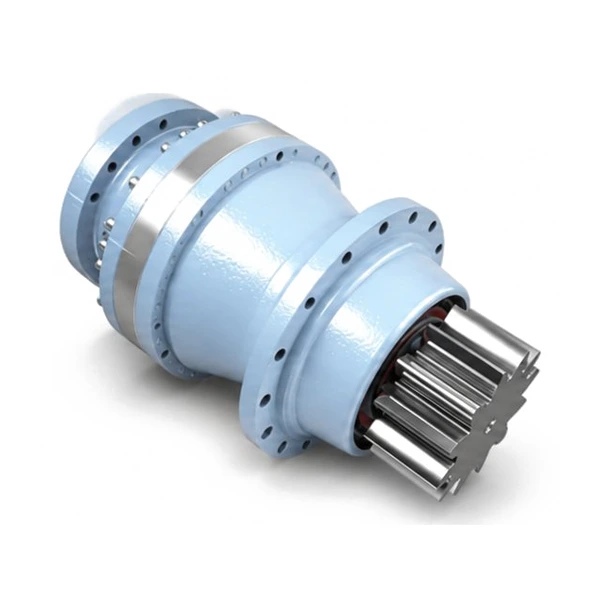
An irrigation system is a fixed infrastructure investment — like a building or a road — with an expected life of 15 to 25 years. The wheel drive planetary gearbox must last for this entire period with minimal maintenance, because the system operates autonomously (no daily operator) in an open field (no shelter) exposed to sun, rain, frost, dust, and humidity 365 days per year.
The maintenance access on a linear move is limited: the towers are in the middle of a cropped field — accessible only on foot or by ATV during the growing season. A wheel drive that requires a 500-hour oil change on a system that operates 1,500 hours per year needs 3 field visits per year just for the oil — multiplied by 8 to 12 towers = 24 to 36 individual gearbox services per year. This is why irrigation wheel drives are typically filled-for-life with synthetic oil — designed to operate for 8,000 to 15,000 hours (the full system life) without an oil change, assuming the seal integrity is maintained.
The seal must therefore last as long as the oil — 15 to 25 years of outdoor exposure. UV radiation degrades standard NBR seal material at a rate of 0.01 to 0.03 mm per year of surface cracking — and after 10 to 15 years, a UV-exposed NBR seal can develop through-wall cracks that allow water ingress. FKM (Viton) seals have 5 to 10 times the UV resistance of NBR — and HNBR (hydrogenated nitrile) offers a cost-effective intermediate option with 3 to 5 times the UV life. The seal material choice directly determines whether the gearbox reaches its 15 to 25 year design life without an in-field seal replacement — a task that requires lifting the tower, removing the wheel, and working on the ground in a muddy field.
Corrosion protection of the gearbox housing is equally important for achieving the 20-year target. The housing is exposed to irrigation water (which may contain dissolved salts, fertiliser residues, and soil minerals depending on the water source), UV radiation, and temperature cycling from -20 to +50 degrees C depending on the region. Standard industrial paint systems degrade after 5 to 8 years of continuous outdoor exposure — exposing the cast iron to corrosion. Epoxy-polyurethane two-coat systems with UV stabilisers extend the coating life to 15 to 20 years. Hot-dip galvanising provides 25+ years of corrosion protection and is increasingly specified for irrigation wheel drives in aggressive water-quality environments (high chloride, high sulphate, or recycled wastewater irrigation).
Three Failure Modes Specific to Linear Move Irrigation Wheel Drives
If two adjacent gearboxes differ in output speed by more than 2 to 3% (from manufacturing tolerance, differential wear, or oil viscosity variation), the faster tower consistently leads — forcing the alignment system to run the slower tower at higher duty cycle. Over months of operation, this asymmetric duty overheats the slower motor, wears the slower gearbox faster, and increases the speed difference further. The cascade produces a progressive misalignment that eventually exceeds the pipe span deflection limit — resulting in structural damage. A single mismatched gearbox can damage the spans on both sides of its tower, turning a USD 800 gearbox problem into a USD 20,000 to 50,000 structural repair.
The wheel drive gearbox is exposed to direct sunlight, rain, irrigation spray, frost, and humidity continuously for 15 to 25 years. Standard NBR seals develop UV-induced surface cracking after 8 to 12 years — allowing rainwater and irrigation water to enter the gearbox. Once water enters, it emulsifies the oil and initiates corrosion on the bearing raceways and gear surfaces. Because the system is filled-for-life (no scheduled oil changes), the water contamination may not be detected until the gearbox fails — typically 1 to 3 years after the initial water ingress. By this time, the corrosion damage is irreversible and the gearbox must be replaced.
The motor brake engages every time the alignment system stops the tower — 10 to 60 times per hour, accumulating 10 to 180 million cycles over the system life. The brake is typically a spring-applied, electrically released disc or shoe brake integrated into the motor housing. The brake friction material wears at a rate determined by the cycle count and the inertia it must absorb per stop. After 20 to 50 million cycles, the friction material may wear beyond the adjustment range — and the brake can no longer hold the tower against wind loads or slope-induced creep when the motor is de-energised. A tower that creeps during a wind event can misalign with its neighbours and trigger structural damage — identical to the gearbox speed-mismatch scenario but caused by the brake rather than the gearbox.
คำถามที่พบบ่อย
Korea Ever-Power provides irrigation wheel drives from 500 to 3,000 Nm with speed-matched tower synchronisation, UV-resistant seals, and 15 to 25-year design life.
บรรณาธิการ: Cxm