Winch Drive Series — Automated Parking & Vehicle Storage Equipment
Winch Drive Planetary Gearbox for Automated Parking Systems
An automated multi-level parking system must lift a 2-tonne vehicle on a steel pallet to a precise storage level, hold it securely for hours or days until the owner returns, and retrieve it within minutes on demand — performing this cycle thousands of times per year in a fully unattended facility where any positioning error or mechanical failure could leave a vehicle stranded or, in the worst case, generate a safety hazard for the building occupants below.
±5 mm level positioning accuracy
Indefinite static hold capability
10,000+ cycle annual rating
Automated multi-level parking systems — also known as automated vehicle storage and retrieval systems, mechanical parking, or puzzle parking depending on the specific configuration — have become a significant urban land-use solution in dense cities where surface parking and conventional ramped parking structures cannot accommodate the required vehicle capacity within available footprint. These systems use a vertical lift mechanism, conceptually similar to the 3D warehouse ASRS hoist already established in the Korea Ever-Power product range, to raise and lower vehicle-carrying pallets between storage levels that may stack 10 to 30 levels or more in a tower configuration, or arrange vehicles in a dense grid pattern requiring both vertical lift and horizontal shuttle motion to retrieve a specific vehicle from deep within the storage structure. The winch drive planetary gearbox in the lift mechanism must deliver the same precision positioning and high-cycle reliability established for warehouse ASRS applications, adapted to the indefinite static load holding requirement of parked vehicles that may remain stored for days, weeks, or in some long-term storage facilities, months at a time. Korea Ever-Power supplies planetary winch drive gearboxes for automated parking system lift mechanisms across tower, puzzle, and shuttle-based configurations.
The economics of automated parking system land use are compelling in dense urban environments — a properly designed automated tower can store significantly more vehicles per unit of building footprint than a conventional ramped parking structure of equivalent floor area, because automated systems eliminate the drive aisles, ramps, and turning radii that conventional parking requires for vehicles to be driven to and from individual spaces under their own power. This land-efficiency advantage has driven rapid growth in automated parking installations across major cities globally, particularly in mixed-use developments where parking competes directly with revenue-generating retail, office, or residential floor area for the same valuable urban land.
Automated Parking System Configurations and Lift Requirements
Tower-Type Lift Systems (1,500–4,000 Nm): Vertical tower systems use a central elevator-like lift to move vehicle pallets between storage levels stacked directly above one another, with the lift mechanism conceptually similar to a goods elevator but sized and configured for vehicle pallet loads of 2,000 to 2,500 kg per pallet. A tower system serving 15 to 20 storage levels accumulates significant daily cycle counts in high-turnover applications such as commercial parking facilities or transit-oriented developments, with each retrieval cycle requiring the lift to travel from its current position to the target level, position precisely for pallet transfer, and return.
Puzzle Parking Systems (1,000–3,000 Nm): Puzzle parking arranges vehicles in a dense grid with one or more empty positions that allow vehicles to shuffle laterally and vertically to retrieve a target vehicle, similar in operating principle to a sliding puzzle. Each retrieval may require multiple sequential lift and shuttle moves to clear a path to the target vehicle, meaning the lift drive gearbox accumulates a higher cycle count per retrieval than a direct tower system, but typically at lower individual lift heights since puzzle systems are often configured for fewer levels than tower systems.
Shuttle and Carousel Systems (2,000–6,000 Nm): Larger automated parking facilities use a combination of vertical lift and horizontal shuttle or carousel mechanisms to access a deep grid of storage positions from a limited number of vertical lift shafts, similar in architecture to the goods-to-person shuttle systems used in advanced warehouse fulfilment operations. The vertical lift drive in these systems must coordinate precisely with the horizontal shuttle drive to ensure the pallet transfer between the lift and shuttle mechanisms occurs at exactly the correct position, requiring the same precision positioning specification established throughout the warehouse and lift elevator product range.
Indefinite Static Hold: The Defining Engineering Challenge
A vehicle parked in an automated system may remain in its storage position for hours during a typical daily commuter cycle, but in some applications — long-term airport parking, vehicle storage for collectors, or low-turnover residential facilities — a vehicle may remain stored for weeks or months without movement. This indefinite static holding requirement, combined with the absolute need to prevent any uncontrolled vehicle descent during the hold period, places specific demands on the winch drive gearbox holding brake that differ from applications where the load is held only briefly between active motion phases.
Fail-Safe Brake for Extended Static Hold
Korea Ever-Power automated parking lift gearboxes use the same spring-applied SAHR brake design established throughout the product range, ensuring the parked vehicle position is held securely by mechanical spring force whenever the lift is not actively moving — including during a power outage that might otherwise leave a vehicle unsupported if the brake depended on continuous power to remain engaged.
Precise Level Positioning for Pallet Transfer
The vehicle pallet must align precisely with the storage level structure to allow the pallet transfer mechanism — typically a roller or conveyor system — to move the pallet horizontally on and off the lift platform. Korea Ever-Power parking system lift gearboxes use the same sub-8 arcminute backlash specification established for warehouse ASRS and lift elevator applications, ensuring the lift stops at precisely the correct level position for reliable pallet transfer on every cycle.
Self-Locking Ratio as Secondary Protection
Consistent with the dual-protection philosophy applied throughout the high-consequence applications in the Korea Ever-Power product range, automated parking lift gearboxes use high-ratio planetary stages above the self-locking threshold, providing a secondary mechanical resistance to back-driving even in the unlikely event that the primary brake were to fail, an important consideration given that automated parking facilities typically operate unattended without staff present to respond to an unexpected condition.
Load Monitoring for Overweight Detection
Automated parking systems must verify that a vehicle does not exceed the rated pallet weight limit before committing to a storage cycle, since an overweight vehicle could exceed the gearbox and structural design margins. Korea Ever-Power parking lift gearboxes support torque-based load monitoring integration, providing the facility control system with the data needed to detect an overweight condition before the lift cycle begins.
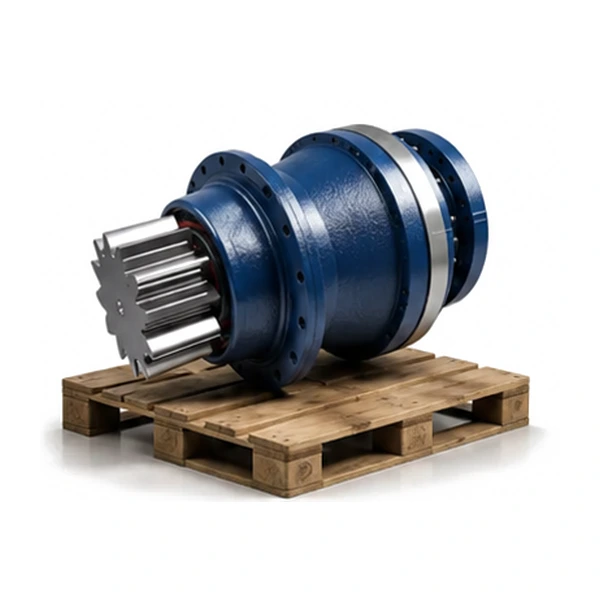
Korea Ever-Power Automated Parking System Winch Drive Selection Guide
| แบบอย่าง | แรงบิดเอาต์พุต | เวที | System Type | กระแสต่อต้าน | Cycle Rating |
|---|---|---|---|---|---|
| ZL30 | 1,000 – 2,500 Nm | 1–4 | Puzzle parking, small tower | < 8 arcmin | 8M cycles |
| ZR55 | 2,000 – 4,000 Nm | 2–5 | Standard tower lift | < 8 arcmin | 8M cycles |
| 407AW | 3,000 – 6,000 Nm | 2–3 | Shuttle / carousel, heavy pallet | < 8 arcmin | 8M cycles |
Reliability for Unattended Operation: When No Staff Are Present to Respond

Most automated parking facilities operate without continuous on-site staff, with vehicle owners interacting with the system through an unattended retrieval terminal rather than a human attendant. A lift mechanism fault that occurs while the facility is unattended must either fail in a manner that is inherently safe and does not require immediate intervention, or must trigger a remote notification to a maintenance provider who can respond before the situation affects facility operation or vehicle owner access.
Remote Condition Monitoring: Korea Ever-Power parking lift gearboxes include oil temperature and optional vibration sensor port provisions compatible with the remote monitoring systems that automated parking facility operators increasingly use to track equipment health across unattended sites, enabling proactive maintenance scheduling before a developing issue causes an unplanned service interruption.
Graceful Degradation Under Partial Fault: In multi-lift facilities, Korea Ever-Power recommends a control system architecture that can route retrieval requests to alternate lift mechanisms if one lift develops a fault condition, maintaining partial facility operation while the affected lift awaits maintenance attention, rather than a single-point-of-failure design where any lift fault halts the entire facility.
Scheduled Preventive Maintenance Around Facility Operating Hours: Korea Ever-Power recommends scheduling routine gearbox maintenance — oil sampling, backlash verification, brake holding test — during low-demand overnight or off-peak periods identified from facility usage data, minimising the impact of planned maintenance on vehicle owner access while still maintaining the inspection regime that reliable long-term operation requires.
Common Automated Parking Lift Drive Issues and Prevention
| Issue | สาเหตุหลัก | Detection | Prevention |
|---|---|---|---|
| Pallet misalignment at level stop | Backlash increase from gear wear causing the lift to stop slightly off the precise transfer position | Pallet transfer mechanism jams or fails intermittently at a specific level over repeated cycles | Periodic backlash verification; calibrate level positions during scheduled maintenance |
| Brake drag — extended idle | Brake disc surface developing minor adhesion after extended idle periods between lift cycles in low-turnover facilities | Slightly elevated motor current on first movement after an extended idle period | Specify low-static-friction disc treatment for facilities with long average dwell times between cycles |
| Gear wear acceleration — overweight vehicles | Vehicles exceeding the rated pallet weight limit accepted without adequate load verification | Gear noise increase and accelerated wear pattern inconsistent with the rated duty cycle | Implement reliable load verification before accepting a vehicle into the system; enforce posted weight limits |
Fire Safety and Emergency Evacuation Integration
Building codes governing automated parking facilities typically require specific fire safety provisions given the enclosed nature of these structures and the fuel and battery hazards present in stored vehicles, with the lift mechanism playing a role in several aspects of the facility fire safety design that the winch drive gearbox specification must support.
Emergency Power Operation: Some jurisdictions require automated parking lift mechanisms to retain limited operational capability under emergency backup power, allowing vehicles to be retrieved during a power interruption that is not itself a fire emergency. Korea Ever-Power parking lift gearboxes operate normally under reduced-voltage emergency generator power within the motor manufacturer specified operating range, supporting this backup operation requirement without a specialised gearbox variant.
Fail-Safe Position Hold During Fire Events: In the event of a fire alarm condition, most automated parking facility designs call for the lift system to complete any in-progress cycle to a safe position and then hold, rather than attempting further vehicle movement during an active fire event. The fail-safe SAHR brake design ensures the lift holds its position securely whenever the control system commands a stop, supporting this safety behaviour without relying on continuous power to maintain the held position.
Electric Vehicle Charging Considerations: The growing proportion of electric vehicles in automated parking facilities introduces battery thermal event considerations that some facility designs address through specific storage zone segregation or enhanced fire suppression. While these considerations primarily affect the facility fire protection design rather than the winch drive gearbox specification directly, Korea Ever-Power can advise on lift mechanism positioning and access considerations that support facility-level electric vehicle fire safety strategies.
Why Automated Parking System Manufacturers Choose Korea Ever-Power
Indefinite
Static hold capability — spring-applied fail-safe brake plus self-locking ratio for vehicles stored days to months
<8 อาร์คนาที
Backlash specification for precise pallet transfer alignment at every storage level on every cycle
8M cycles
Rated gear tooth fatigue life supporting high-turnover commercial parking facility duty cycles
Sealed
For-life output bearings reducing the maintenance burden for unattended facility operators
Korea Ever-Power application engineers provide free winch drive gearbox sizing for automated parking system manufacturers, evaluating pallet capacity, system height, and expected daily cycle volume to recommend the appropriate torque rating and fatigue specification. Contact us with your system type, maximum vehicle weight, number of levels, and expected daily cycles for a free application review within 48 hours.
Source Your Automated Parking System Winch Drive Planetary Gearbox
Whether you are specifying lift drives for a new automated parking tower, a puzzle parking installation, or a shuttle-based dense storage system — Korea Ever-Power delivers precision-positioning, fail-safe planetary winch drive gearboxes built for the indefinite static hold and unattended reliability that automated vehicle storage demands. Send us your system type, vehicle weight rating, and daily cycle volume for a free application sizing within 48 hours.
Edit by Cxm