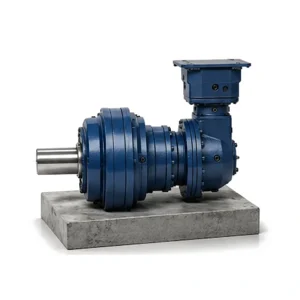
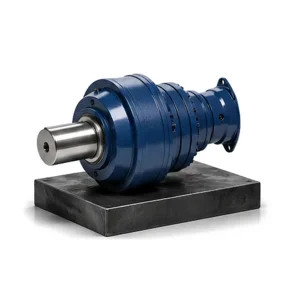
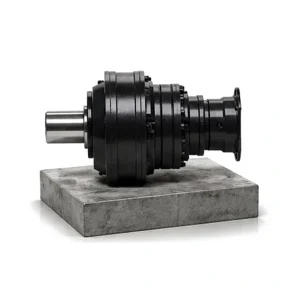
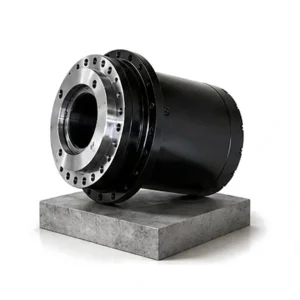
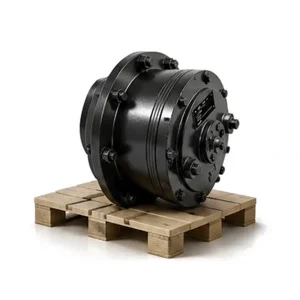
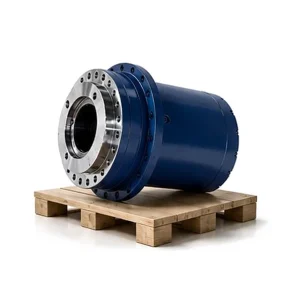
ZL30 Winch Drive Planetary Gearbox
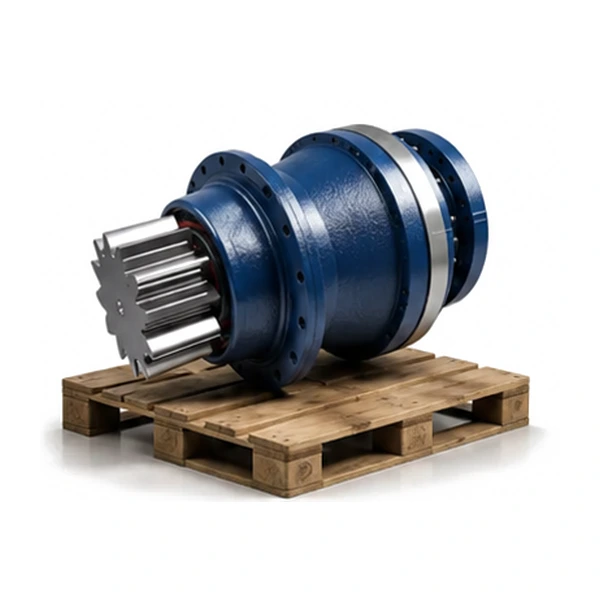
ZL30
The catalogue splits here.
每一个 winch drive planetary gearbox below the ZL30 was built for the hydraulic era. The ZL30 and every ZL model above it are built for the electric era — 4,000 rpm, helical gears, DIN 5-6 accuracy, and a peak-to-continuous ratio that changes how shock loads are handled.
Helical DIN 5-6
IP67+
Pt 15-46 kW
The ZL30 is the entry point to a ten-model ZL winch drive family spanning from 27,000 Nm to 175,000 Nm — running parallel to the 4xxW series at overlapping torque levels but with a fundamentally different internal architecture. Where the 4xxW series uses straight-cut gears at 1,000-3,500 rpm input and 25 rpm maximum output, the ZL30 uses helical-cut gears at 4,000 rpm input with ratio coverage from 4 to 1,259 across 1-4 planetary stages. The result is a winch drive that pairs directly with PMSM servo motors, AC induction drives, and high-speed BLDC motors — the propulsion technology that is replacing hydraulics on every new-build crane, marine winch, and industrial hoist platform entering service today.
ZL30 Electric Winch Drive Planetary Gearbox — Technical Parameters
| Continuous torque (N2xh=100,000) | 27,000 Nm |
| Peak torque | 75,500 Nm (2.8x continuous) |
| Gear ratio range | 4 to 1,259 (1-4 stages) |
| Maximum input speed | 4000转/分 |
| Thermal power (Pt) | 15 - 46 kW (F/M, varies by stage) |
| Gear type | Helical planetary, 3-planet, DIN 5-6 |
| Integrated brake | None (motor brake or external brake) |
| Sealing | Multi-lip FKM, IP67+ |
| Housing | Ductile iron QT600-3 |
| 齿轮材料 | 20CrMnTi, HRC 58-62 |
Two Architecture Families — Why the Winch Drive Catalogue Has a 4xxW Series AND a ZL Series
The 4xxW and ZL winch drive series overlap in torque — the 407W3 at 26,000 Nm and the ZL30 at 27,000 Nm deliver nearly identical output. The overlap is deliberate: both serve machines at the same load class, but through different propulsion technologies.
| 范围 | 4xxW Series | ZL Series |
|---|---|---|
| Designed for | Hydraulic motors | Electric motors |
| 输入速度 | 1,000-3,500 rpm | 4,000-5,000 rpm |
| Gear type | Straight-cut | Helical (40% quieter) |
| Gear accuracy | 标准 | DIN 5-6 |
| Peak / continuous | ~2.0x | 2.8x |
| Integrated brake | Yes (most models) | No (motor/external) |
| Stage count | 1-3 | 1-4 (or 1-5) |
| Ratio range (ZL30 vs 407W3) | 63-136 | 4-1,259 |
| Regen braking | Not applicable | Full compatibility |
| Sealing | Standard oil seals | IP67+ FKM |
The vessel or mine has an existing hydraulic power unit. The applicable standard requires an in-drum brake (4xxW has it; ZL does not). The fleet is standardised on 4xxW and cross-compatibility matters. The operating environment is above -25 deg C.
The winch is powered by an electric motor (AC induction, PMSM, BLDC). Regenerative braking energy recovery is part of the energy strategy. Low noise matters (helical gears). The application needs ratios below 60 or above 300 (outside 4xxW range). The VFD provides electronic braking and the motor has an integrated electromagnetic brake.
Peak 75,500 Nm at 27,000 Nm Continuous — Why the 2.8:1 Ratio Changes Shock-Load Engineering
The 4xxW series offers approximately 2:1 peak-to-continuous. The ZL30 offers 2.8:1. That 40% increase in peak headroom means the ZL30 at 27,000 Nm continuous can absorb the same shock loads as a 4xxW model rated at approximately 37,500 Nm continuous — because the peak capacity (75,500 Nm) exceeds the 4xxW peak at that torque level.
A grab crane strike produces torque spikes of 180-250% of continuous rated load. At 27,000 Nm continuous x 2.5 = 67,500 Nm peak demand. The ZL30 peak of 75,500 Nm covers this with 12% margin. A 4xxW model at 27,000 Nm continuous (similar to the 407W3 at 26,000 Nm) would peak at approximately 52,000 Nm — insufficient for the 67,500 Nm spike. The ZL30 handles grab duty that the equivalent 4xxW model cannot.
Marine winches handling towing wires, mooring lines, and anchor wires experience snatch loads when the cable goes from slack to taut. These transients can reach 2.5-3.0 times the steady-state tension for 50-200 milliseconds. The ZL30 75,500 Nm peak absorbs snatch events up to 2.8x the continuous rating without exceeding the gear tooth bending limit — allowing the winch designer to size the gearbox based on the continuous duty requirement rather than the worst-case transient.
When the electric motor brake engages at full hoisting speed to perform an emergency stop, the motor deceleration torque plus the suspended load inertia produce a combined torque at the gearbox output that can exceed 2x the steady-state lifting torque. The ZL30 2.8:1 peak ratio provides the margin for these emergency events without gear damage — and the electric motor VFD can be programmed to limit the deceleration rate so the combined torque stays within the 75,500 Nm envelope.
ZL30 — The Electric Winch Drive for the Next Generation of Crane Hoists

Electric Crane Hoists (10-25 t SWL)
Battery-electric and mains-electric crane hoists replacing hydraulic systems on new-build mobile cranes, tower cranes, and offshore platform cranes. The ZL30 at ratio 40-100 paired with a 100-250 kW PMSM motor provides the hoisting torque with 40% lower noise than the equivalent 4xxW hydraulic system, plus regen braking that recovers 15-25% of the lowering energy. The slewing drive handles the crane rotation on the same electric platform.
Electric Marine Deck Winches
All-electric or hybrid-electric vessel deck winches for mooring, towing, and cargo handling. The ZL30 at ratio 80-200 paired with a 50-150 kW AC induction motor eliminates the hydraulic power unit, oil reservoir, and associated piping — reducing the deck equipment weight by 30-40% and eliminating the environmental risk of hydraulic oil spills on deck. The IP67+ sealing handles the marine environment, and the helical gears keep the noise below the crew comfort limits for winches mounted near accommodation.
Automated Industrial Hoists
Servo-motor-driven overhead hoists in manufacturing, warehousing, and logistics centres where precise load positioning and automated cycle control are essential. The ZL30 DIN 5-6 accuracy preserves the motor encoder resolution through the gear reduction, enabling the PLC to command the hoist position to sub-millimetre accuracy. The 4-stage option at ratios 500-1,259 provides ultra-slow precision for final component placement in automated assembly lines.
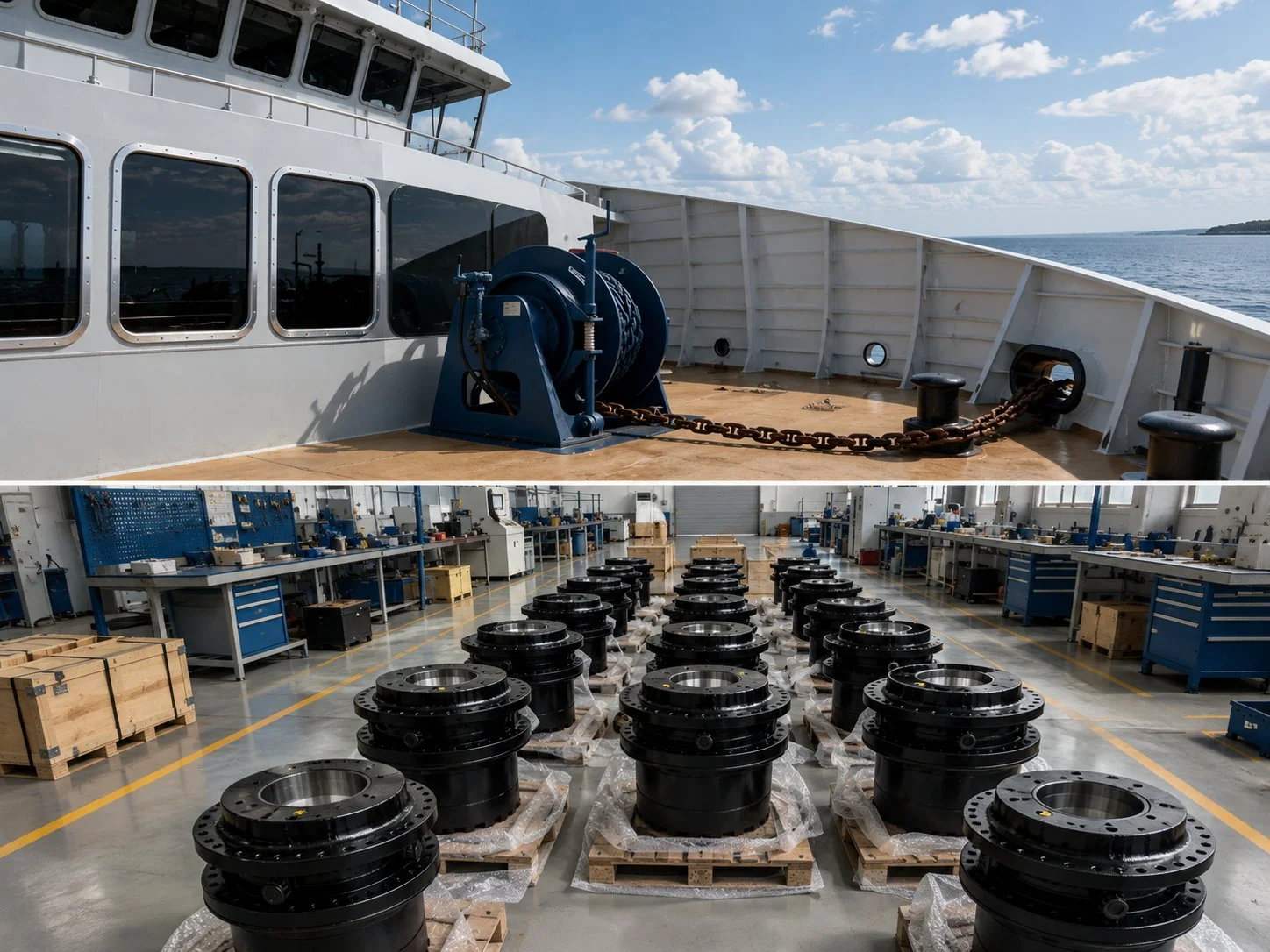
The ZL Electric Winch Drive Family

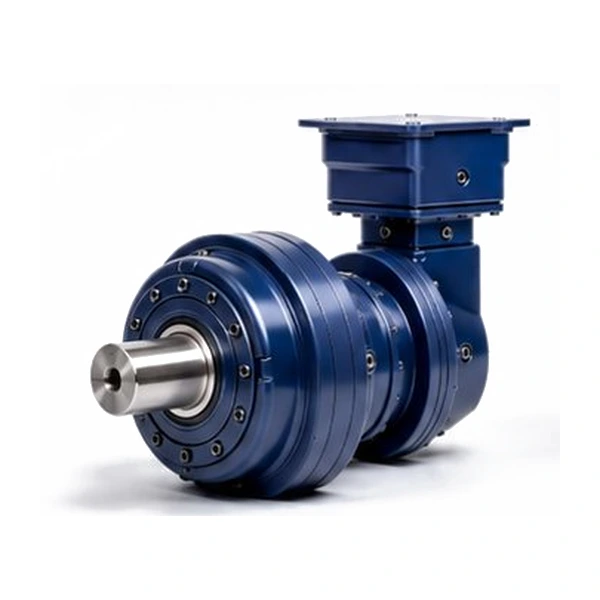
Electric Winch Drive Planetary Gearbox — ZL Series FAQ
Field Reports
All-electric 20 t mobile crane, main hoist, ZL30 at ratio 65, paired with a 200 kW PMSM motor and VFD. The hoist noise reduction compared to our hydraulic baseline was exactly what the ZL30 data sheet predicted: 10 dB(A) lower at the operator station. Regen braking recovers 19% of the lowering energy to the battery — extending the crane battery range by approximately 12% over a typical construction day cycle. The 75,500 Nm peak handled every grab-release and snatch-load event during our 6-month field trial without any vibration anomaly or oil temperature excursion. We are standardising the ZL30 across the electric crane product line.
All-electric mooring winch on a hybrid-electric coastal ferry. ZL30 at ratio 120, 75 kW AC induction motor. The winch eliminated the hydraulic power unit that occupied 2.4 m² of engine room floor space and 180 kg of weight. The ZL30 plus motor total weight is 95 kg less than the previous hydraulic winch assembly. The IP67+ sealing has survived 14 months of salt water deck wash without any seal degradation. Mooring line snatch loads during berthing in crosswinds — measured at 2.3x steady-state — were absorbed within the ZL30 peak capacity without any audible or tactile indication of stress. The ferry operator is converting all 4 mooring winches to ZL30 during the next dry-dock.
Automated overhead hoist in a heavy-parts warehouse, ZL30 at ratio 400 (4-stage), 30 kW PMSM servo motor. The hoist positions 5-tonne engine blocks onto machining fixtures at 0.5 mm accuracy — measured by laser tracker, confirmed over 2,000 placement cycles. The DIN 5-6 gear accuracy preserves the motor encoder resolution through the 4-stage reduction, which is essential for our closed-loop position control. The 4-star is a dimensional observation: the 4-stage ZL30 is approximately 40 mm longer axially than the 2-stage at the same housing diameter, which required a minor drum housing modification on our existing hoist frame. Having the per-stage dimensional addition published in the catalogue data sheet would have caught this during the specification phase.
其他信息
| 编辑 | CXM |
|---|