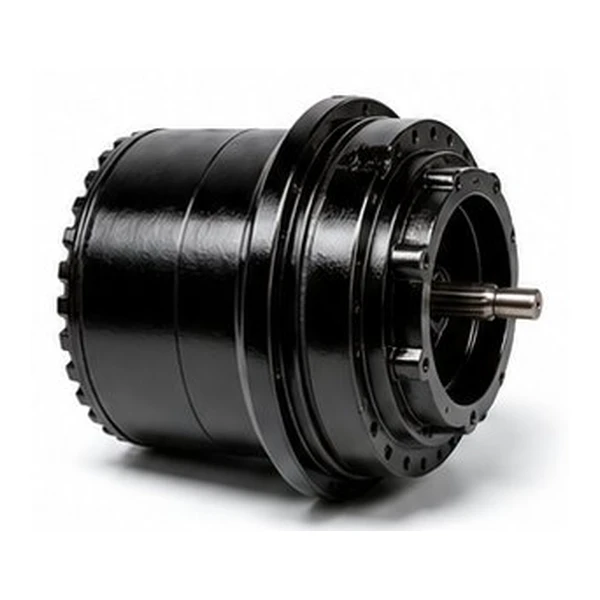
علبة تروس كوكبية دوارة ZR19 - مخروطية كوكبية بزاوية قائمة، من 2 إلى 5 مراحل

EP-ZR19 — 25% Above Headline Torque, 47 Ratios Across 4 Stage Counts
ال EP-ZR19 slewing drive planetary gearbox occupies a unique position in the سلسلة محركات الدوران ZR: its specification table shows 20,600 Nm continuous output torque and 45,000 Nm peak — 25% and 7% higher than the published headline figures of 16,500 Nm and 42,000 Nm respectively. This margin exists because the ZR19 internal bevel input pair (R16, R10, R06 sub-variants) is sized conservatively for this frame, delivering actual performance that comfortably exceeds the catalogue promise.
With 47 discrete gear ratios across 2-stage through 5-stage configurations, the ZR19 covers a ratio range from 13.29 to 1,808. Only two torque tiers exist (20,600 Nm and 17,200 Nm), compared to the three-tier de-rating structure of the adjacent ZR16 — meaning a higher proportion of the ZR19 ratio table delivers full-rated torque.
DIN 5-6
من -40 إلى +80 درجة مئوية
2500 دورة في الدقيقة كحد أقصى
ZR19 Technical Parameters — 47 Ratio Configurations
Continuous torque at N2 x h = 100,000 hours. The ZR19 uses a simplified two-tier torque structure: 20,600 Nm at lower ratios, de-rating to 17,200 Nm at higher ratios within each stage count. All configurations share 2,500 rpm maximum input speed. Type codes include R16, R10, or R06 bevel sub-variant suffixes.
2-Stage — ZR19**2 / R16 (2 Ratios)
| نسبة | عزم الدوران المستمر (نيوتن متر) | أقصى عزم دوران (نيوتن متر) | أقصى عدد دورات في الدقيقة | Pt F/M (كيلوواط) |
|---|---|---|---|---|
| 13.29 | 20,600 | 45,000 | 2,500 | 18.5 / 24.5 |
| 18.22 | 17,200 | 38,500 | 2,500 | 18.5 / 24.5 |
3-Stage — ZR19**3 / R10 (7 Ratios)
| نسبة | عزم الدوران المستمر (نيوتن متر) | أقصى عزم دوران (نيوتن متر) | أقصى عدد دورات في الدقيقة | Pt F/M (كيلوواط) |
|---|---|---|---|---|
| 43.43 | 20,600 | 45,000 | 2,500 | 11.5 / 13.5 |
| 51.27 | 20,600 | 45,000 | 2,500 | 11.5 / 13.5 |
| 64.30 | 20,600 | 45,000 | 2,500 | 11.5 / 13.5 |
| 70.28 | 20,600 | 45,000 | 2,500 | 11.5 / 13.5 |
| 88.15 | 17,200 | 38,500 | 2,500 | 11.5 / 13.5 |
| 102.53 | 17,200 | 38,500 | 2,500 | 11.5 / 13.5 |
| 124.03 | 17,200 | 38,500 | 2,500 | 11.5 / 13.5 |
4-Stage — ZR19**4 / R06 (16 Ratios)
| نطاق النسبة | عدد | عزم الدوران المستمر (نيوتن متر) | أقصى عزم دوران (نيوتن متر) | Pt F/M (كيلوواط) |
|---|---|---|---|---|
| 109.70 – 279.71 | 10 | 20,600 | 45,000 | 9.5 / 12.5 |
| 305.73 – 539.52 | 6 | 17,200 | 38,500 | 9.5 / 12.5 |
5-Stage — ZR19**5 / R06 (22 Ratios)
| نطاق النسبة | عدد | عزم الدوران المستمر (نيوتن متر) | أقصى عزم دوران (نيوتن متر) | Pt F/M (كيلوواط) |
|---|---|---|---|---|
| 381.75 – 1,441.42 | 18 | 20,600 | 45,000 | 8.0 / 11.5 |
| 1,516.50 – 1,807.55 | 4 | 17,200 | 38,500 | 8.0 / 11.5 |
Full per-ratio data sheets for 4-stage and 5-stage tables available on request. 82% of all ZR19 ratios (39 of 47) deliver the full 20,600 Nm continuous torque without de-rating.
Vibration Monitoring — Catching Problems Before They Become Failures
At the 20,600 Nm torque class, unplanned downtime is expensive — a failed slewing drive on a wind turbine or tunnel boring machine can halt an entire project for weeks. Vibration-based condition monitoring transforms the ZR19 from a replace-on-failure component into a predictively managed asset.
Sensor Placement
Mount a triaxial accelerometer on the ZR19 housing near the output bearing (the highest-load bearing in the assembly). A second sensor on the input bevel stage housing captures the bevel mesh signature. Use ICP-type sensors with a frequency range of 0.5-10 kHz and minimum sensitivity of 100 mV/g. Magnetic mounting pads are acceptable for periodic spot checks; permanent stud-mounting is required for continuous online monitoring.
Baseline Measurement
Record a vibration baseline within the first 100 operating hours at the most common operating speed and load. The baseline captures the normal gear mesh frequency signature, bearing pass frequencies, and structural resonances of the installation. All future measurements are compared against this baseline. Without a baseline, it is impossible to distinguish normal vibration from developing faults.
Alarm Thresholds and Trending
Set the alert threshold at 2x baseline velocity (mm/s RMS). Set the alarm threshold at 4x baseline. A gradual increase in vibration amplitude at a specific frequency over weeks or months indicates wear progression — schedule an inspection at the next planned maintenance window. A sudden step-change indicates an acute event (tooth fracture, bearing cage failure) — shut down and inspect immediately. Trend overall velocity, gear mesh amplitude, and bearing defect frequencies separately.
Where the ZR19 Fits — Applications in the 17,000-20,600 Nm Range
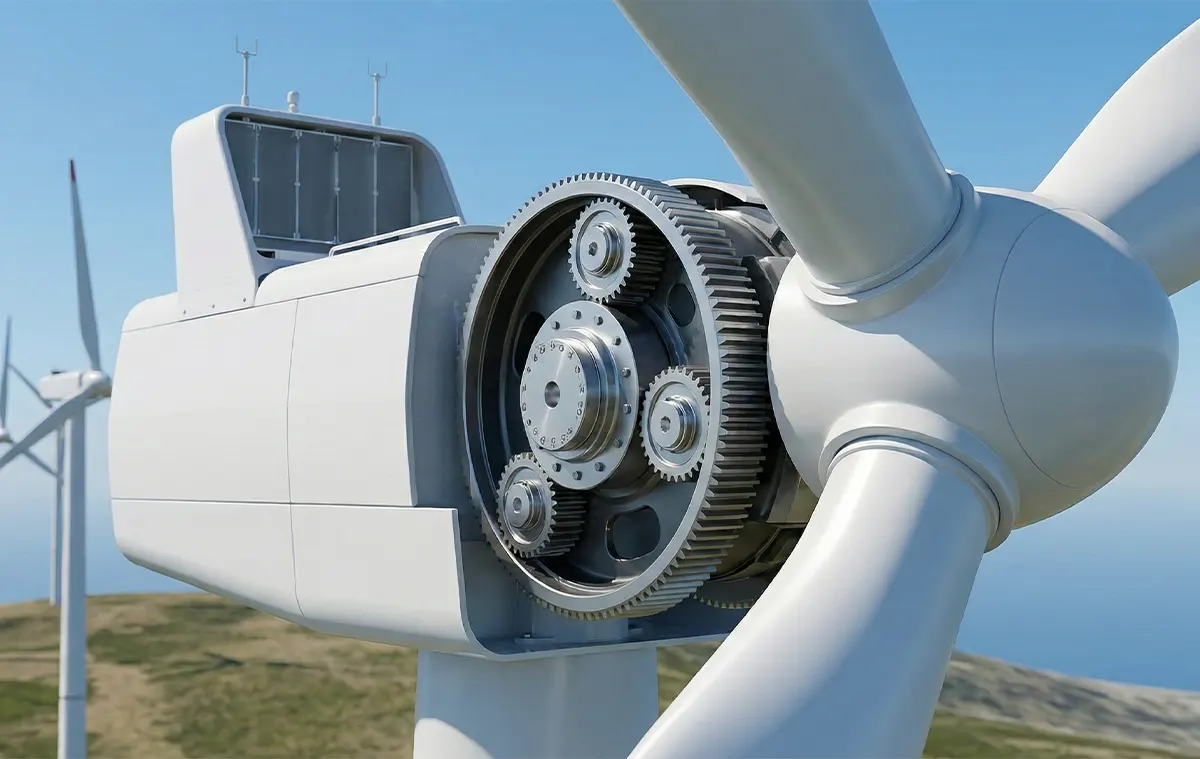
Wind Turbine Yaw Systems (1-3 MW Class)
Megawatt-class wind turbines with rotor diameters of 60-100 metres require nacelle yaw torques of 12,000-20,000 Nm per drive unit. The ZR19 3-stage at ratios 43:1-70:1 provides the torque-speed combination these yaw mechanisms demand, with the 45,000 Nm peak rating absorbing storm-load transients. Typical MW-class yaw systems use 4-8 ZR19 units equally spaced around the tower-top yaw bearing, each driven by a 7.5-15 kW electric motor through a VFD.
Tunnel Boring Machine Auxiliary Drives
TBM segment erector rotation, thrust cylinder ring positioning, and shield articulation mechanisms generate sustained slewing torques in the 15,000-20,000 Nm range under extremely confined and wet conditions. The ZR19 4-stage at ratios 110:1-280:1 provides the controlled low-speed rotation these mechanisms require, while the IP67 sealed housing resists the groundwater, bentonite slurry, and aggregate abrasion present inside the TBM shield.
Heavy Industrial Positioners and Rotary Kilns
Large-diameter rotary kiln support rollers, cement plant clinker cooler rotation drives, and heavy welding positioners for pressure vessel fabrication require sustained high torque at very low output speeds (0.1-5 rpm). The ZR19 5-stage at ratios 382:1-1,808:1 covers this speed range directly from a standard 4-pole IEC motor without any external reduction stage, simplifying the drive package and reducing the number of potential failure points.
Transportation, Storage and Long-Term Preservation
The ZR19 weighs approximately 180-250 kg depending on configuration and brake option. Proper handling, storage, and preservation practices protect the precision gear surfaces, seals, and coatings between delivery and installation — which can span months on large infrastructure projects.
Handling and Lifting
Use the cast lifting eye-bolts only. Never lift by the output shaft, input shaft, or brake housing. Minimum lifting capacity 400 kg (1.5x safety factor). Secure the unit horizontally during crane transport to prevent the output shaft from acting as a pendulum that could damage the output seal. Use nylon slings or padded chains to avoid scratching the housing coating.
Short-Term Storage (Under 6 Months)
Store indoors in a dry, ventilated area. Leave the factory oil fill in place — it provides corrosion protection for the internal gear and bearing surfaces. Cover the input and output shaft openings with the factory-fitted protective caps. Do not remove these caps until the moment of motor or pinion installation. Rotate the input shaft by hand 10 turns every 30 days to redistribute the oil film on bearing surfaces.
Long-Term Storage (6-24 Months)
Apply VCI (Volatile Corrosion Inhibitor) spray to all exposed machined surfaces (shaft ends, flange faces, bolt holes). Seal the breather valve port with a VCI-treated plug. Wrap the entire unit in VCI barrier paper or film. Store on a wooden pallet in a temperature-controlled warehouse (5-40 deg C, under 70% relative humidity). Perform the 30-day shaft rotation even during long-term storage.
فحص ما قبل التركيب
Before mounting, verify: oil level is at the correct mark, no visible seal damage or oil weep, shaft rotates freely by hand without grinding or catching, breather valve is clear, and mounting flange surface is free of rust or impact damage. If the unit has been stored for more than 12 months, drain and refill the oil before commissioning. Contact فريقنا الهندسي for guidance on units stored beyond 24 months.
المنتجات ذات الصلة


الأسئلة الشائعة
آراء العملاء
We maintain 22 turbines across two wind farms and have been replacing yaw drives with ZR19**3 units over the past 18 months. The retrofit is straightforward — the mounting interface matches the OEM bolt pattern with a standard adapter ring. Performance at -22 deg C winter operation has been reliable with the VG 150 oil specification. We installed vibration sensors on the first four replacements per the manual and so far the trending data looks stable. The biggest practical benefit is having one part number for all 22 turbines instead of the three different OEM models we were previously stocking.
Segment erector drive on a metro tunnel project. The unit operated inside the TBM shield for 14 months at approximately 45 deg C average ambient. We performed the oil analysis at every oil change and the particle counts stayed within normal limits throughout. The IP67 seal has held up in an environment where everything gets coated in bentonite slurry within days. No complaints.
Rotary kiln support roller drive, ZR19**5 at 973.56 ratio. The drive replaced a chain-and-sprocket arrangement that required re-tensioning every two weeks in the kiln house dust environment. The ZR19 has been running for 10 months maintenance-free other than the scheduled oil change. One observation: we received the unit with the breather valve assembled but not the VCI storage caps, so the exposed shaft ends had light surface oxidation after sitting in our warehouse for three months before installation. It cleaned up without issue but better packaging for long storage would be an improvement.
معلومات إضافية
| محرر | Cxm |
|---|
المنتجات ذات الصلة
-
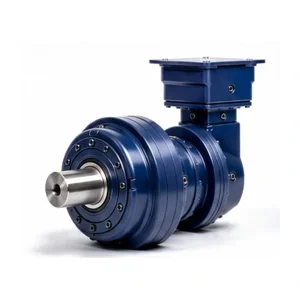
علبة تروس كوكبية دوارة ZR45 - تروس مخروطية كوكبية بزاوية قائمة، 3-5 مراحل
-

علبة تروس كوكبية دوارة ZR35 - تروس مخروطية كوكبية بزاوية قائمة، 3-5 مراحل
-
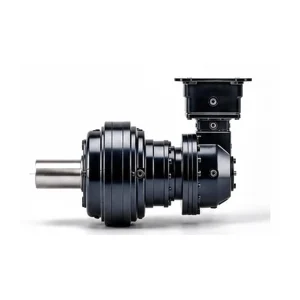
علبة تروس كوكبية دوارة ZR30 — تروس مخروطية كوكبية بزاوية قائمة، من 2 إلى 5 مراحل
-

علبة تروس كوكبية دوارة ZR03 - تروس مخروطية كوكبية بزاوية قائمة، من مرحلتين إلى أربع مراحل
-
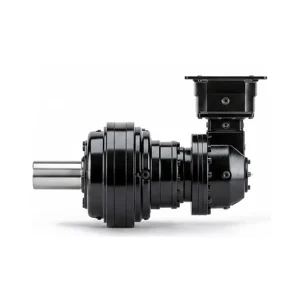
علبة تروس كوكبية دوارة ZR02 - مخروطية كوكبية بزاوية قائمة، 2-3 مراحل
-
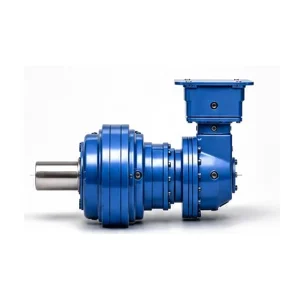
علبة تروس كوكبية دوارة ZR24 — تروس مخروطية كوكبية بزاوية قائمة، من 2 إلى 5 مراحل
-

علبة تروس كوكبية ذات محرك دوار ZR10 — مخروطية كوكبية بزاوية قائمة
-
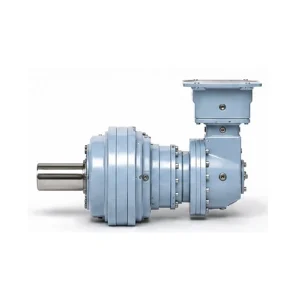
علبة تروس كوكبية ذات محرك دوار ZR01 - مخروطية كوكبية بزاوية قائمة