Five Requirements That Make Food Processing the Most Demanding Gearbox Environment in Industrial Automation
The Korean food and beverage manufacturing sector — the world’s sixth largest by output — operates under HACCP (Hazard Analysis and Critical Control Points) protocols mandated by the Korea Ministry of Food and Drug Safety and aligned with EU Regulation 852/2004 and US FDA 21 CFR Part 110. These protocols create mechanical design requirements that no other industrial application imposes simultaneously on a precision servo gearbox.
HACCP-certified food lines wash down 1–6 times per day with sodium hydroxide (NaOH, 1–3%), peracetic acid (PAA, 0.1–0.3%), chlorine solutions (200–1,000 ppm), and quaternary ammonium compounds — all at water temperatures of 60–85°C and pressures of 2–8 bar. IP54 (splash protection) fails under direct jet exposure within 2,000 hours. The only viable specification is IP65 (EP-ZDS), which withstands the IPX5 standard test: 6.3mm nozzle, 12.5 L/min, sustained from any direction.
Standard NBR (nitrile) seals — the default in most industrial gearboxes — swell and harden in contact with peracetic acid, losing sealing force within 500–1,000 wash cycles. FKM (Viton) seals, standard in EP-ZDS, resist the full range of food industry disinfectants including peracetic acid, chlorine, and caustic soda, at operating temperatures up to 200°C. This single material choice is the difference between a seal that lasts 20,000 hours and one that fails in 12 months.
NSF International classifies food-grade lubricants under three categories: H1 (incidental food contact acceptable), H2 (no food contact), and H3 (direct food contact). EP series uses H2-equivalent PAO synthetic grease — suitable for food processing when the gearbox is positioned outside the direct product contact zone. For gearboxes in the product contact zone, NSF H1 grease is available on special order (reduces rated life by approximately 30% due to lower EP additive loading in H1-approved formulations).
EHEDG (European Hygienic Engineering & Design Group) guidelines prohibit horizontal surfaces where water pools, dead-zone recesses where product and bacteria accumulate, and external threaded fastener heads that trap food particles. EP-ZDS aluminium housings provide smooth external surfaces without protruding features — adequate for splash-zone installation. For direct zone-1 food contact installation, consult Korea Ever-Power application engineering for stainless housing options or shroud designs.
A single food processing facility can require gearboxes that operate at −25°C in a freeze tunnel and survive 85°C washdown water within the same shift. EP series rated operating range −25°C to +90°C housing temperature covers this full range — provided the brief washdown thermal shock (typically 5–15 minutes) does not exceed the seal temperature limit. FKM seals (rated to 200°C) have no issue with CIP/SIP temperature. The PAO grease remains functional through the full −25°C to +90°C operating range without modification.
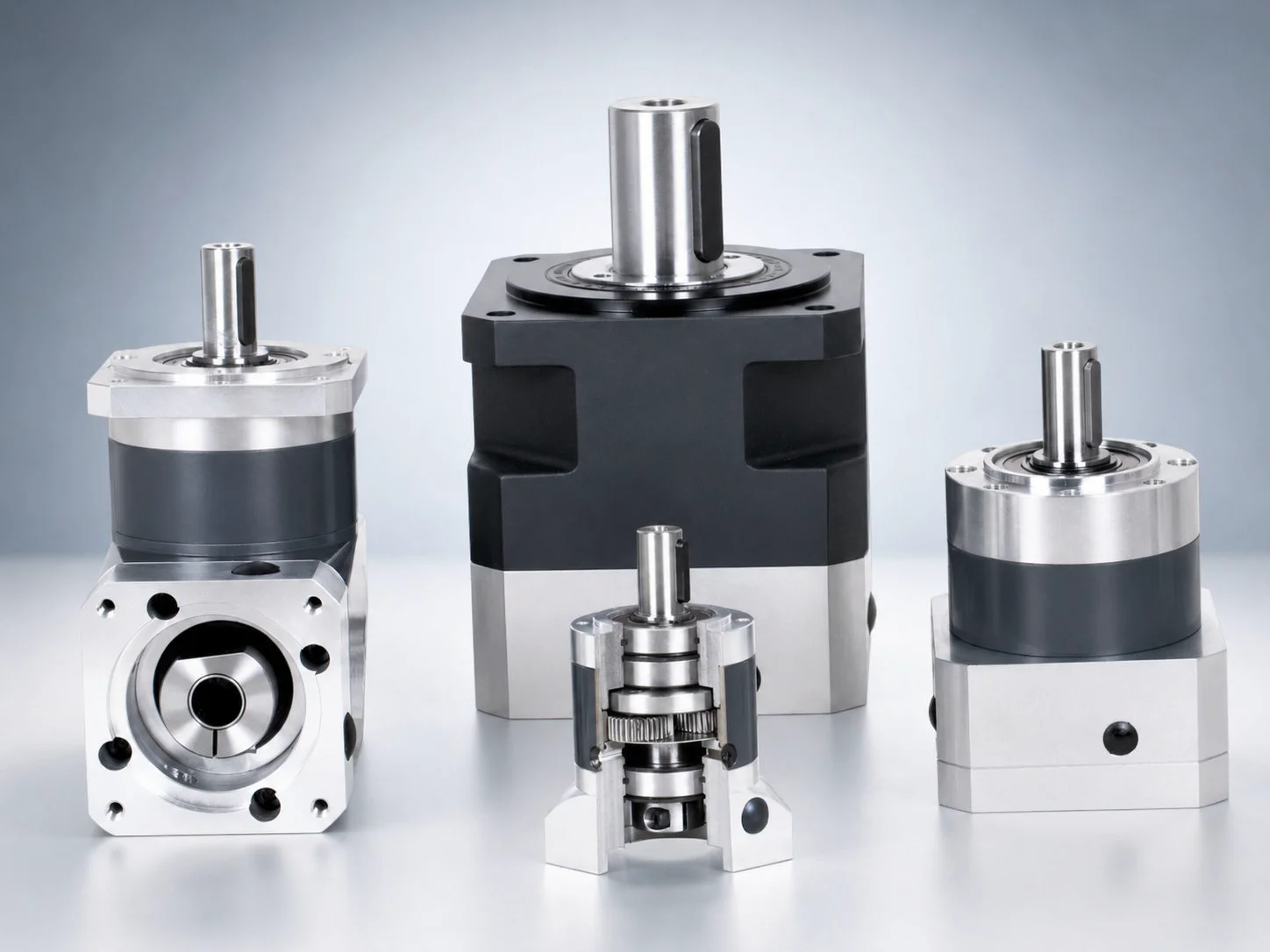
The IP Rating Hierarchy for Food Environments — IP54, IP65, IP67, and IP69K Explained
Four IP ratings appear in food processing equipment specifications, each corresponding to a different level of liquid protection. The choice is determined by the actual water exposure profile of the gearbox — not the general environment of the production area. A gearbox mounted above the product line in an enclosed housing may require only IP54 in a facility that otherwise demands IP65 everywhere.
Test: 10-litre bucket spray at 0.07 L/s. Protects against random directional splash but cannot withstand the sustained pressure-hose contact of HACCP washdown. In daily washdown environments, IP54 seal joints allow progressive water ingress that emulsifies the sealed lubricant within 2,000 hours. Not suitable for any food processing zone with scheduled washdown. EP-ZDE/ZDF/ZDWE/ZDWF rating.
Test: 6.3mm nozzle, 12.5 L/min at 3m distance, from any direction for 1 min per face. This matches the profile of standard HACCP hose-down at 2–6 bar from normal operating distance. The minimum specification for any food processing gearbox in a HACCP-certified washdown zone. EP-ZDS series rating — the only EP series product rated IP65.
Test: 30 minutes immersion at 1m depth. Required for gearboxes on conveyor drives that pass through water tanks or cleaning baths, or for drives at floor level in facilities with standing water accumulation. EP series standard does not include IP67 — consult Korea Ever-Power for alternative sealed solutions where IP67 is required.
ISO 11158 test: 80°C water at 80–100 bar, 14–16 L/min, at 10–15cm distance. This represents the most aggressive industrial pressure-washing condition — used in meat processing, dairy production, and EU-certified export facilities. IP69K requires specialised sealing design beyond standard industrial gearboxes. EP-ZDS (IP65) is not IP69K rated; for IP69K requirements, supplementary mechanical sealing or shroud enclosure is needed around the EP-ZDS unit.
Korean regulatory context: Korea’s MFDS (Ministry of Food and Drug Safety) regulations under the Food Sanitation Act (식품위생법) and the Korean HACCP standard (HACCP 인증) require all food production equipment, including drives and gearboxes, to be designed for cleanability with no surfaces that promote microbial growth. IP65 sealing and smooth exterior housing surfaces are the practical minimum to comply. Korean food processing OEMs exporting to EU markets must additionally comply with EC 1935/2004 (materials in contact with food) — which may require NSF H1 lubricant and stainless steel housing in some configurations.
Seal Material Compatibility — FKM, NBR, and EPDM Against the Four Food Disinfectant Chemistries
The output shaft lip seal is the single most critical component in a food processing gearbox — it is the boundary between the external washdown environment and the sealed grease cavity. Getting the seal material wrong means lubricant contamination within months. The four primary disinfectant chemistries used in Korean food processing facilities impose different compatibility requirements on seal elastomers.
| Disinfectant | Typical Conc. | Temp | NBR (Nitrile) Standard industrial |
FKM (Viton) EP-ZDS standard |
EPDM Alternative |
Food Industry Use |
|---|---|---|---|---|---|---|
| Sodium Hydroxide (NaOH) | 1–3% | 60–80°C | ⚠ Moderate | ✅ Bien | ✅ Excellent | CIP step 1; protein/fat removal; dairy, meat |
| Peracetic Acid (PAA) | 0.1–0.3% | 15–40°C | ❌ Poor | ✅ Bien | ✅ Bien | CIP disinfection; widely used in beverage, dairy, meat |
| Sodium Hypochlorite (Chlorine) | 200–1,000 ppm | 20–50°C | ⚠ Moderate | ✅ Excellent | ✅ Bien | Produce washing, general disinfection; seafood, bakery |
| Quaternary Ammonium (QAC) | 200–400 ppm | 20–50°C | ✅ Bien | ✅ Bien | ✅ Bien | Surface disinfection; pharmacy, food dry areas |
| Hot water (CIP/SIP) | — | 60–85°C | ⚠ to 100°C | ✅ to 200°C | ✅ to 150°C | All food processing; thermal disinfection step |
EP-ZDS units are available with either NBR or FKM output shaft lip seals. The standard production seal is NBR unless FKM is specified. For all food processing applications, specify FKM seals in the order — state “FKM lip seal / Viton seal” in the specification. FKM seals add a modest cost premium (typically 5–8% of unit price) and represent the single most important specification decision for long-term food processing reliability. An EP-ZDS unit with NBR seals in a peracetic acid environment will fail the same as an IP54 unit — the housing IP65 rating is meaningless if the seal material is incompatible with the washdown chemistry.
Total Cost of Ownership — Why IP65 Costs Less Than IP54 in Food Processing
The cost premium of an EP-ZDS (IP65) unit over an EP-ZDE (IP54) unit of equivalent torque class is typically 35–50%. In a clean indoor servo automation application, this premium has no return — IP54 will last 20,000 hours with no performance difference. In a HACCP washdown food processing environment, the same IP54 unit will require replacement approximately every 2,000 hours. The TCO calculation is not close.
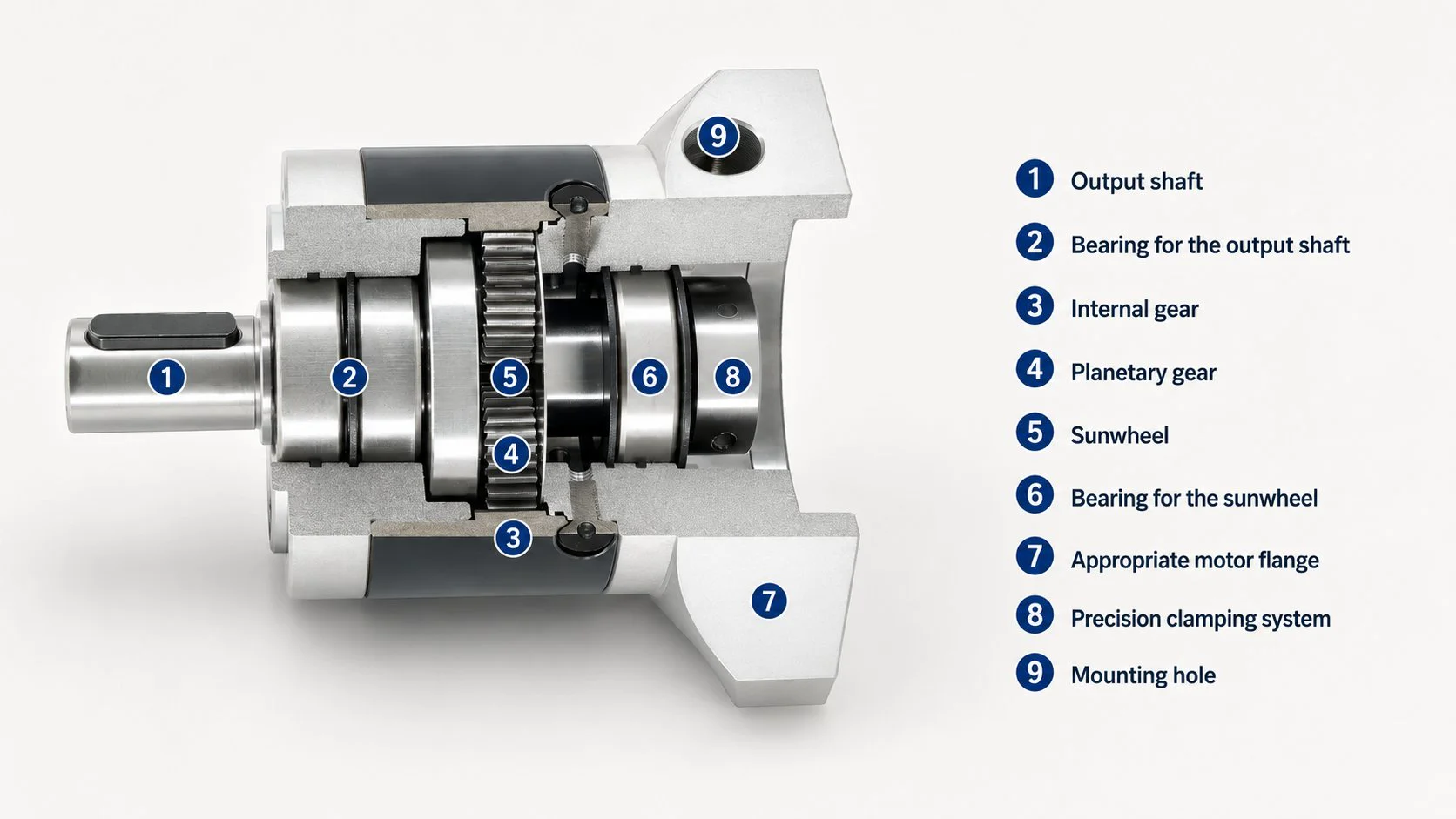
The hidden cost of IP54 failure in food environments: When an IP54 gearbox seal fails in a food processing line, the consequence is not just the replacement cost. A seal failure in a food contact zone triggers a HACCP critical control point deviation — which in Korean food manufacturing requires documented investigation, potential product hold and sampling, regulatory notification in some cases, and cleaning/sanitation revalidation before the line can restart. The total cost of a single unplanned gearbox-related food safety event is $30,000–$150,000 in a Korean facility with KFDA HACCP certification. The IP65 premium is 40% of unit cost.
Application-by-Application Guide — Eight Food Processing Drive Types
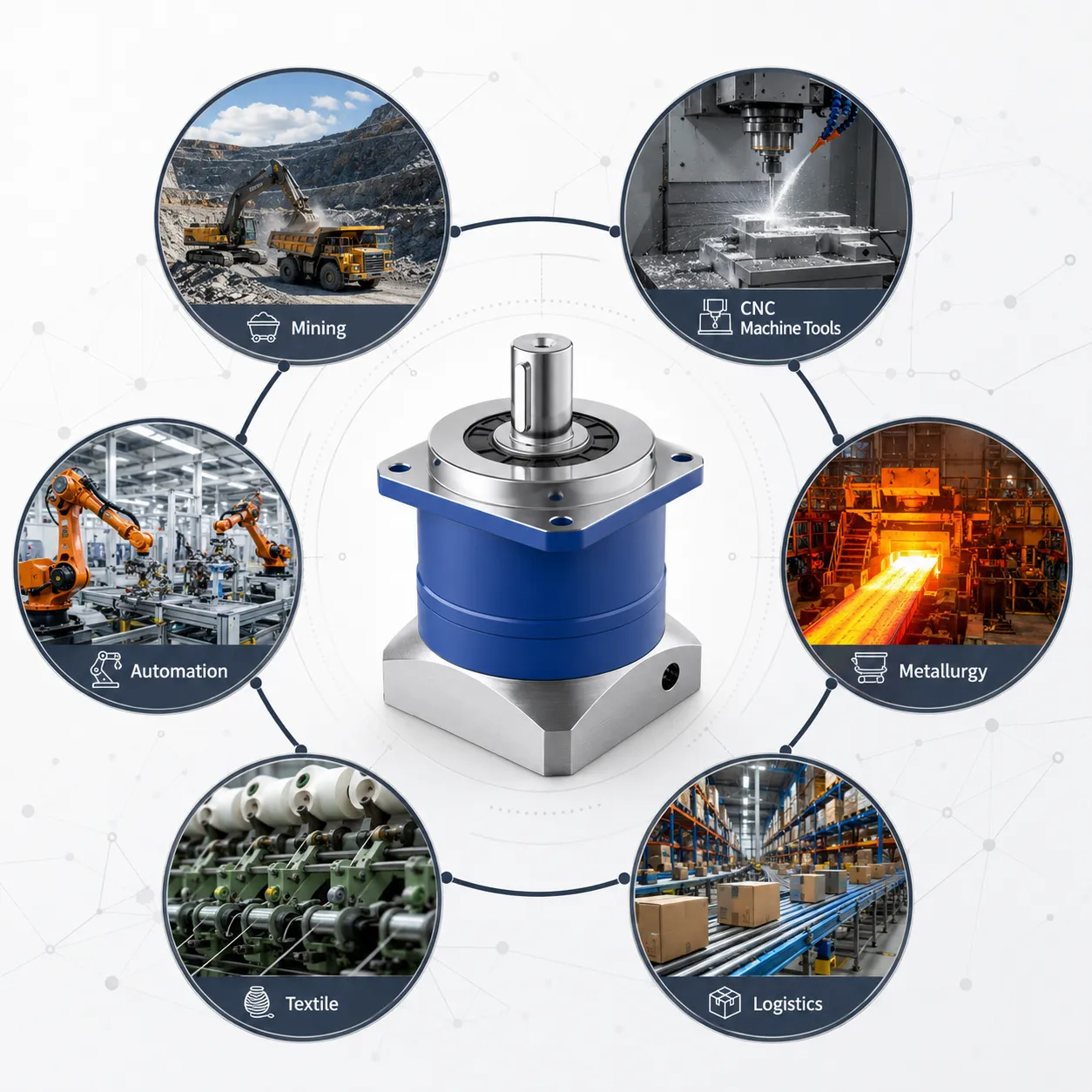
Food processing machinery uses servo-driven planetary gearboxes in eight distinct application categories, each with different torque, speed, and accuracy priorities. The following covers the most common configurations in Korean food and beverage manufacturing lines.
BELT/CHAIN
Food conveyors run continuously in high-humidity or wet environments with periodic washdown. The drive is typically at one end of the conveyor, often in direct washdown exposure. Torque: 30–200 N·m depending on belt width and load. Speed: 5–30 rpm output for most food conveyor applications.
AGITATOR
Dough mixers, paste agitators, and slurry mixers require the highest output torques in food processing — often 200–800 N·m at 5–30 rpm output. At 3,000 rpm motor speed and 20 rpm output, the ratio is 150:1 (3-stage territory). The gearbox is in direct splash exposure from the product and from tank washdown. For mixing torques above 500 N·m, EP-ZDS-142 or EP-ZDS-190 at 3-stage (via two-unit cascade or direct 3-stage) is required.
MACHINE
Piston-type and rotary filling machines index 30–120 cycles per minute. The servo axis controls piston stroke — the gearbox backlash directly affects dose volume repeatability. Each 1 arcmin of backlash at the piston drive creates approximately 0.2% dose variation at a 10:1 gear ratio. For ±0.5% dose accuracy, backlash must be <8 arcmin. CIP cycles between production runs require IP65 if the drive is inside the fill cabinet.
INDEXER
Rotary packaging indexers (star wheels, rotary tables) index to ±0.5° repeatability at 20–60 stations per minute. The drive is typically in the dry packaging zone — away from the wet food zone — where IP54 is adequate if the packaging zone is not washed down with the food line. Indexing accuracy is defined by backlash: <8 arcmin gives 0.13° of dead band, well within ±0.5° tolerance.
SCREW FEEDER
Auger screw feeders for powder, granule, and viscous product dosing operate at 5–30 rpm with torques of 100–400 N·m. The servo system controls rotational angle to achieve dose weight accuracy (typically ±0.5–2%). The auger is inside the product zone — the drive is just outside, subject to CIP washdown. High ratio (25–64:1) is typical; verify EP series rated torque at the selected ratio covers the maximum product resistance torque with SF=2.0.
SEALING
Capping turrets apply closures at 60–300 caps per minute. The servo must deliver accurate torque (to prevent under-torque leaks and over-torque cracks) rather than position. Backlash is less critical than torque accuracy. Speed priority (60–120 rpm output) means lower ratios (5:1 to 10:1). The drive is typically in a partially enclosed area away from direct washdown — IP54 may be adequate, but IP65 is always safer for 24/7 food lines.
APPLICATOR
Label dispenser roll drives operate at 200–600 rpm output with torques of 10–30 N·m. Speed accuracy controls label pitch and placement. Typically installed in the dry packaging zone with no direct washdown exposure. EP-ZDE-60 or EP-ZDE-80 at 3:1 to 8:1 is the standard specification — small, light, efficient, with sufficient speed range. IP54 is typically adequate in the dry label application zone.
TUNNEL
Conveyor drives inside IQF freeze tunnels operate at −35°C to −25°C ambient. EP series rated to −25°C minimum with PAO grease — which remains fluid at low temperatures without modification. Start-up from cold: use reduced-speed warm-up for 2–3 minutes before applying full load. Condensation forms on the gearbox as it exits the freeze tunnel — IP65 prevents moisture ingress during thermal cycling. FKM seals maintain their sealing force at low temperatures (superior to NBR which stiffens at −15°C).
Complete Food Processing EP Series Selection Matrix
| Application | T_req (N·m) |
n_out (rpm) |
Ratio i | IP | Seal | Recommended EP | Key Driver |
|---|---|---|---|---|---|---|---|
| Wet zone conveyor | 50–200 | 10–30 | 16–20:1 | IP65 | FKM | EP-ZDS-115 | Daily washdown |
| Dough mixer (50L) | 300–500 | 20–30 | 100:1 | IP65 | FKM | EP-ZDS-115, 3-stage | High torque + washdown |
| Filling machine, dry zone | 20–60 | 15–30 | 10–16:1 | IP54 | NBR | EP-ZDE-80/120 | Dose accuracy; BL<8 |
| Filling machine, wet zone | 30–80 | 15–30 | 10–16:1 | IP65 | FKM | EP-ZDS-115 | IP65 + dose accuracy |
| Packaging indexer | 50–120 | 20–60 | 16:1 | IP54 | NBR | EP-ZDE-120 | Index accuracy ±0.5° |
| Auger screw feeder | 100–300 | 5–20 | 25–64:1 | IP65 | FKM | EP-ZDS-115, 2-stage | High torque + dose weight |
| Capping / sealing | 20–60 | 60–120 | 5–10:1 | IP54/65 | NBR/FKM | EP-ZDE-80 | Speed + torque control |
| Label applicator | 10–25 | 200–400 | 3–8:1 | IP54 | NBR | EP-ZDE-60 | High speed, light load |
| Freeze tunnel conveyor | 50–150 | 5–20 | 16:1 | IP65 | FKM | EP-ZDS-115 | −25°C + condensation IP65 |
Food Processing Gearbox Specification Checklist — Six Parameters to Verify
Identify the washdown pressure, frequency, and chemicals used in the gearbox installation zone. Any direct-jet washdown (HACCP hose-down): specify IP65 (EP-ZDS). Mist-only or no washdown in the gearbox zone: IP54 (EP-ZDE) acceptable.
Identify primary disinfectant: PAA, NaOH, chlorine, or QAC. If PAA or high-concentration chlorine: FKM seals mandatory — specify explicitly in order. If NaOH or QAC only: NBR acceptable. When uncertain: always specify FKM.
If gearbox is positioned where lubricant leakage could contact food (Zone 1): specify NSF H1 food-grade grease (reduces rated life ~30%). If gearbox is in splash zone or completely separated from product (Zone 2/3): standard EP series grease acceptable. Document the zone classification in the HACCP plan.
Verify the gearbox operating temperature range covers the application: −25°C (freeze tunnel minimum) to +90°C (housing temperature at rated load). For CIP/SIP: confirm that washdown temperature ≤ FKM seal limit (200°C) — always satisfied. For −25°C start: reduce start-up load for 2–3 min warm-up.
Calculate peak drive torque at maximum product resistance (high-viscosity batch filling, dough mixer start-up). Apply SF=2.0 for standard food processing. High-viscosity mixers may need SF=2.5. Verify EP series rated torque at the selected ratio. For ratios above 64:1: three-stage EP or two-unit cascade required.
Inspect output shaft seal monthly in washdown zones (rather than standard 500h interval). Any grease visible outside the housing = immediate investigation. Record housing temperature at each inspection — temperature rise in IP65 unit is an early indicator of bearing wear despite sealed housing integrity.
Korea Ever-Power application engineering provides food processing gearbox specifications including IP rating assessment, FKM seal confirmation, food-grade lubricant availability, and NSF H1 grease options. Provide your application type, washdown protocol, disinfectant chemistry, and operating temperature range for a complete EP series recommendation in Korean and English.
Afficher les spécifications →
Éditeur : Cxm