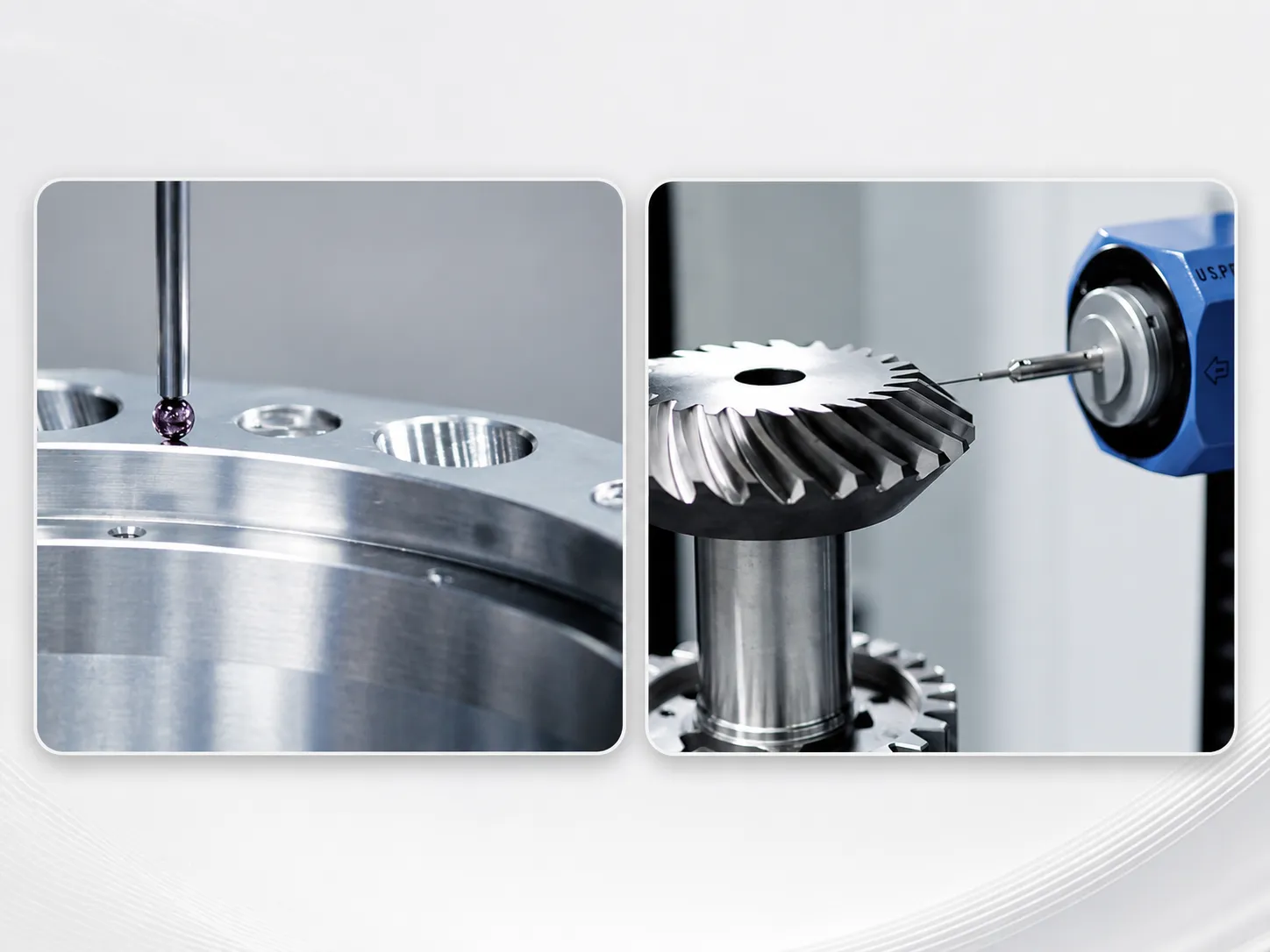
सर्वो मोटर नहीं, बल्कि गियरबॉक्स अक्ष की सटीकता को नियंत्रित करता है।
गियरबॉक्स के बिना एक सर्वो मोटर 1,000-5,000 आरपीएम की गति से चलती है और इसका आउटपुट टॉर्क कम होता है - जो कि अधिकांश औद्योगिक अक्षों की आवश्यकता से बहुत कम है। एक प्लेनेटरी गियरबॉक्स उस उच्च गति, कम टॉर्क वाले इनपुट को लोड की आवश्यकता के अनुसार कम गति, उच्च टॉर्क वाले आउटपुट में परिवर्तित करता है, साथ ही कॉम्पैक्ट मोटर रोटर और अक्सर भारी लोड के बीच जड़त्व के असंतुलन को भी दूर करता है।
जब इंजीनियर चयन करते हैं सर्वो मोटर के लिए परिशुद्धता ग्रहीय गियरबॉक्स सही ढंग से चयन करने पर, परिणाम स्वरूप एक बंद-लूप अक्ष प्राप्त होता है जिसमें दोहराने योग्य स्थिति निर्धारण, कुशल ऊर्जा रूपांतरण और वर्षों में मापा जाने वाला सेवा जीवन होता है। गलत चयन करने पर, तीन प्रकार की विफलताएँ हावी हो जाती हैं:
①
गियरबॉक्स द्वारा अधिकतम भार सीमा से अधिक भार उठाना → दांतों के किनारों का घिसाव → कुछ ही महीनों में स्थिति में विचलन
②
जड़त्वीय असंतुलन के कारण मोटर को प्रत्येक त्वरण चक्र पर रेटेड करंट का 3-5 गुना करंट प्रवाहित करना पड़ता है।
③
उच्च जड़त्व अनुपात के कारण दोलन उत्पन्न होता है जिसे किसी भी पीआईडी समायोजन द्वारा पूरी तरह से ठीक नहीं किया जा सकता है।
नीचे दिया गया पांच-चरण वाला प्लेनेटरी गियरबॉक्स चयन ढांचा प्रत्येक पैरामीटर को सही क्रम में समझाता है — टॉर्क से शुरू होकर, फिर अनुपात, फिर बैकलैश ग्रेड, फिर जड़त्व और अंत में भौतिक इंटरफ़ेस तक। चरणों को छोड़ना या क्रम को उलट देना कोरियाई मशीन डिजाइन में सर्वो अक्ष विनिर्देश त्रुटियों का सबसे आम कारण है।
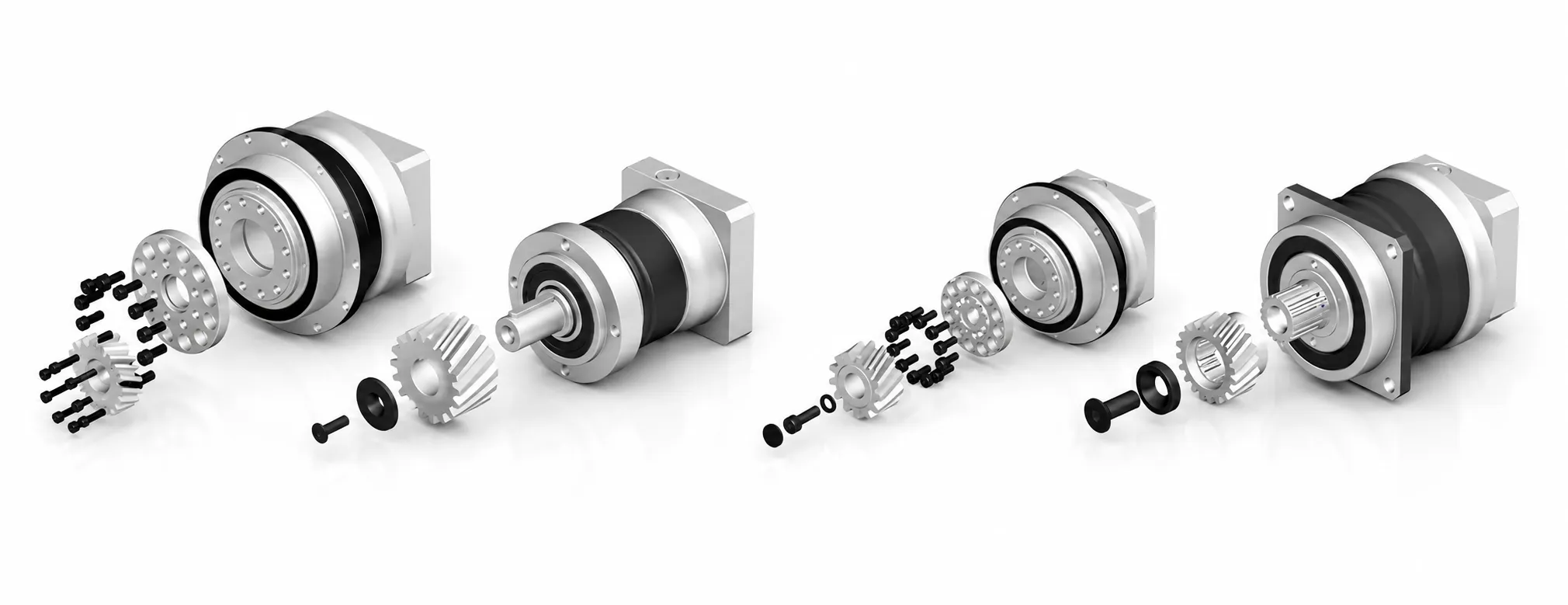
5-चरणीय चयन ढांचा
चरण 1 — आवश्यक आउटपुट टॉर्क की गणना करें
आउटपुट टॉर्क पहला पैरामीटर है जिसे निर्धारित करना आवश्यक है क्योंकि यह गियरबॉक्स फ्रेम के आकार और टॉर्क रेटिंग दोनों को निर्धारित करता है। प्रत्येक अक्ष के लिए दो टॉर्क मान मायने रखते हैं: निरंतर रेटेड टॉर्क (T2N) जिसे गियरबॉक्स पूरे उत्पादन चक्र के दौरान संभालता है, और चोटी कंठी त्वरण और मंदी के दौरान (T2B) होने वाली घटना। चरम भार निरंतर भार के दो से तीन गुना तक पहुँच सकता है, और केवल निरंतर कार्य के लिए डिज़ाइन किया गया गियरबॉक्स बार-बार चरम भार के तहत गियर के दांतों के तेजी से घिसने का शिकार होगा।
आउटपुट टॉर्क सूत्र
i = गियर अनुपात
η = दक्षता (≥0.97 एकल-चरण, ≥0.94 द्वि-चरण)
सुरक्षा गुणांक लागू करें: 1.5 × निरंतर भार · 2.0 × झटके वाले भार
उदाहरण सहित: एक कोरियाई पैकेजिंग मशीन के क्रॉस-सील जॉ को जॉ शाफ्ट पर 85 N·m का निरंतर बल चाहिए। सर्वो मोटर निर्धारित गति पर 8.5 N·m बल प्रदान करता है। आवश्यक अनुपात: 85 / (8.5 × 0.97) ≈ 10:1। जॉ इम्पैक्ट के लिए 2.5 गुना पीक फैक्टर लागू करने पर गियरबॉक्स को 212 N·m पीक बल सहन करना होगा। चयनित गियरबॉक्स में i=10 पर T2B ≥ 212 N·m होना चाहिए।
अनुप्रयोग प्रकार के अनुसार आउटपुट टॉर्क संदर्भ
| आवेदन | निरंतर टॉर्कः |
चोटी कारक |
न्यूनतम रेटिंग गियरबॉक्स T2N |
|---|---|---|---|
| कोबोट जॉइंट (10 किलो का आर्म) | 20–80 एन·एम | 2.0× | 40–160 एन·एम |
| सीएनसी रोटरी टेबल (सामान्य) | 100–800 एन·एम | 1.5× | 150–1,200 एन·एम |
| पैकेजिंग क्रॉस-सील जबड़ा | 30–150 एन·एम | 2.5× | 75–375 एन·एम |
| कन्वेयर हेड ड्राइव | 50–500 एन·एम | 1.3× | 65–650 एन·एम |
| सोलर ट्रैकर अज़ीमुथ अक्ष | 500–3,000 एन·एम | 1.2× | 600–3,600 एन·एम |
यहां दिखाए गए सुरक्षा कारक प्रारंभिक बिंदु हैं — हमेशा अपने संपूर्ण कार्य चक्र विश्लेषण से इनकी पुष्टि करें।
चरण 2 — गियर अनुपात निर्धारित करें
गियर अनुपात मोटर की गति को अपेक्षित आउटपुट गति से जोड़ता है। गणना सीधी-सादी है: i = मोटर की निर्धारित गति (rpm) ÷ आवश्यक आउटपुट गति (rpm)3,000 आरपीएम पर चलने वाली एक सर्वो मोटर, जो 150 आरपीएम पर घूमने वाले आउटपुट शाफ्ट को चलाती है, के लिए 20:1 के अनुपात की आवश्यकता होती है। अधिकांश इंजीनियर इस बात को कम आंकते हैं कि अनुपात के चरण संख्या का चुनाव (एकल-चरण बनाम दो-चरण) मोटर की दक्षता और जड़त्व दोनों को कैसे प्रभावित करता है।
- उच्चतम दक्षता: ≥97%
- सबसे छोटी अक्षीय आवास गहराई
- अधिकतम अनुमत इनपुट गति
- तीव्र गति के लिए सर्वोत्तम जड़त्व अनुपात
- धीमे अक्षों के लिए व्यापक अनुपात सीमा
- दक्षता ≥94%
- लंबा हाउसिंग — अक्षीय स्थान की जाँच करें
- परावर्तित जड़त्व में तीव्र गिरावट आती है (i² लाभ)
- एक इकाई में 10,000:1 तक का अनुपात
- दक्षता ≥90–92% (3–4 चरण)
- भारी औद्योगिक और ऊर्जा अनुप्रयोग
- बड़े फ्रेम साइज (AH/AHK/AFHK सीरीज)
i=5 पर, 500 g·cm² का भार जड़त्व मोटर पर 20 g·cm² के रूप में परावर्तित होता है। i=3 पर, वही भार 55.5 g·cm² के रूप में परावर्तित होता है। उच्च अनुपात परावर्तित जड़त्व को काफी कम कर देते हैं — यही कारण है कि भारी भार के लिए 10:1 का अनुपात लगभग हमेशा 3:1 के अनुपात की तुलना में बेहतर सर्वो डायनामिक्स उत्पन्न करता है, भले ही गति की आवश्यकता दोनों में से किसी एक की अनुमति देती हो।
The ईपी-एबी प्रेसिजन इनलाइन श्रृंखला यह i=3–10 की संपूर्ण सिंगल-स्टेज रेंज और i=12 से i=100 तक के प्रत्येक टू-स्टेज अनुपात को कवर करता है, जो 042 मिमी से 220 मिमी तक के सभी 11 फ्रेम आकारों में लागू होता है — जिससे उत्पाद परिवारों के बीच स्विच किए बिना सटीक अनुपात अनुकूलन की अनुमति मिलती है।
चरण 3 — सही बैकलैश ग्रेड का चयन करें
इनपुट शाफ्ट की दिशा उलट जाने पर आउटपुट शाफ्ट पर होने वाला कोणीय विचलन बैकलैश कहलाता है — यह गियर के आपस में जुड़े दांतों के बीच आवश्यक क्लीयरेंस के कारण होता है। विनिर्देश इकाई है आर्कमिनट (1 आर्कमिन = 1/60°)। तीन परिशुद्धता ग्रेड P0, P1 और P2 गियर निर्माण सहनशीलता बैंड को दर्शाते हैं: सख्त सहनशीलता कम बैकलैश उत्पन्न करती है और उच्च कीमत प्राप्त करती है। मुख्य अनुशासन सर्वो गियरबॉक्स बैकलैश चयन का उद्देश्य आपके आवेदन के लिए आवश्यक न्यूनतम ग्रेड निर्दिष्ट करना है - न कि उपलब्ध अधिकतम ग्रेड।
दो-चरणीय: ≤3 आर्कमिन
दो-चरणीय: ≤5 आर्कमिन
दो-चरणीय: ≤7 आर्कमिन
AFH 075+: ≤1′ मानक
आर्थिक: 6–8′
अनुप्रयोग-से-ग्रेड मिलान: नीचे दी गई तालिका सामान्य कोरियाई मशीन प्रकारों के लिए आवश्यक स्थिति सटीकता और संबंधित बैकलैश विनिर्देश दर्शाती है।
| आवेदन | आवश्यक सटीकता | श्रेणी | कोरिया एवर-पावर सीरीज़ |
|---|---|---|---|
| 5-अक्षीय टाइटेनियम मशीनिंग (एयरोस्पेस) | ±0.02° (1.2 आर्कमिन) | P0 | ईपी-एएफएच / ईपी-एबी पी0 |
| सहयोगी रोबोट (सभी जोड़) | ±0.02° (1.2 आर्कमिन) | P0 | ईपी-एबी पी0 |
| पैकेजिंग वीएफएफएस फॉर्मिंग ट्यूब ड्राइव | ±0.1° (6 आर्कमिन) | पी1 | ईपी-एएफ पी1 |
| सामान्य सर्वो पोजिशनर / टर्नटेबल | ±0.15° (9 आर्कमिन) | पी2 | ईपी-बीएबी पी2 |
| खाद्य कन्वेयर हेड ड्राइव | ±0.5° या उससे अधिक चौड़ा | किसी ग्रेड की आवश्यकता नहीं है | आर्थिक रेखा (6–8′) |
The ईपी-एएफएच अल्ट्रा-प्रेसिजन श्रृंखला यह अपने प्रतिघात के रूप में ≤1 आर्कमिन प्रतिघात प्रदान करता है मानत विशिष्टताएँ सभी फ्रेम और सभी अनुपातों में - अलग से P0 ग्रेड पदनाम की आवश्यकता के बिना। उन अनुप्रयोगों के लिए जहां सब-1-आर्कमिन अनिवार्य आवश्यकता है और 3,805 N·m तक के टॉर्क की आवश्यकता है, EP-AFH प्रत्यक्ष विनिर्देश है। दो-चरण बैकलैश संचय के बारे में नीचे दिए गए अक्सर पूछे जाने वाले प्रश्नों में बताया गया है।
चरण 4 — जड़त्व अनुपात की पुष्टि करें
सर्वो गियरबॉक्स के चयन में जड़त्व मिलान सबसे अधिक बार अनदेखा किया जाने वाला चरण है — और किसी नए अक्ष के अप्रत्याशित व्यवहार का सबसे बड़ा कारण भी यही माना जाता है। जड़त्व अनुपात की समस्या सीधी-सादी है: एक सर्वो मोटर रोटर का जड़त्व आमतौर पर 50–500 ग्राम·सेमी² होता है, जबकि जिस भार को उसे गति देनी होती है उसका जड़त्व हजारों ग्राम·सेमी² हो सकता है। गियरबॉक्स के बिना, मोटर अपने घूर्णीय समतुल्य से 50–100 गुना अधिक द्रव्यमान को घुमाने का प्रयास करती है — जिससे ओवरशूट, दोलन और अंततः एक ऐसा नियंत्रण लूप उत्पन्न होता है जिसे किसी भी गेन सेटिंग से स्थिर नहीं किया जा सकता।
परावर्तित जड़त्व सूत्र
i = गियर अनुपात
लक्ष्य: J_reflected / J_motor = 1:1 से 10:1
उदाहरण सहित: रोबोट की कोहनी अक्ष पर J_load = 800 g·cm², सर्वो मोटर J_rotor = 120 g·cm²:
i = 10 पर: J_reflected = 800/100 = 8 g·cm² → अनुपात 8/120 = 0.067:1 (उत्कृष्ट)
i = 3 पर: J_reflected = 800/9 = 88.9 g·cm² → अनुपात 88.9/120 = 0.74:1 (अच्छा)
यही कारण है कि अनुपात को 5:1 से बढ़ाकर 10:1 करने पर - भले ही दोनों ही गति प्राप्त कर सकें - अक्सर सर्वो प्रतिक्रिया में नाटकीय रूप से बेहतर परिणाम मिलते हैं: i² भाजक प्रभाव अनुपात के प्रत्येक दोगुने होने पर परावर्तित जड़त्व को 4 गुना कम कर देता है।
चरण 5 — फ्रेम का आकार, फ्लेंज का प्रकार और परिचालन तापमान की पुष्टि करें
फ्रेम का आकार (शरीर का व्यास)
फ्रेम का आकार भौतिक पैमाने को निर्धारित करता है: आउटपुट शाफ्ट का व्यास, रेडियल भार वहन क्षमता और माउंटिंग आयाम। आउटपुट टॉर्क की पुष्टि हो जाने के बाद, चयनित श्रृंखला के लिए टॉर्क रेटिंग तालिका से न्यूनतम फ्रेम आकार का पता लगाया जा सकता है। हमेशा यह सुनिश्चित करें कि चयनित फ्रेम की रेडियल भार वहन क्षमता (F_rad) शाफ्ट के सिरे पर लगने वाले वास्तविक रेडियल बल से अधिक हो — यह बेल्ट ड्राइव, गियर मेश और चेन स्प्रोकेट के लिए विशेष रूप से महत्वपूर्ण है जो सीधे आउटपुट शाफ्ट पर लगे होते हैं।
फ्लेंज ज्यामिति
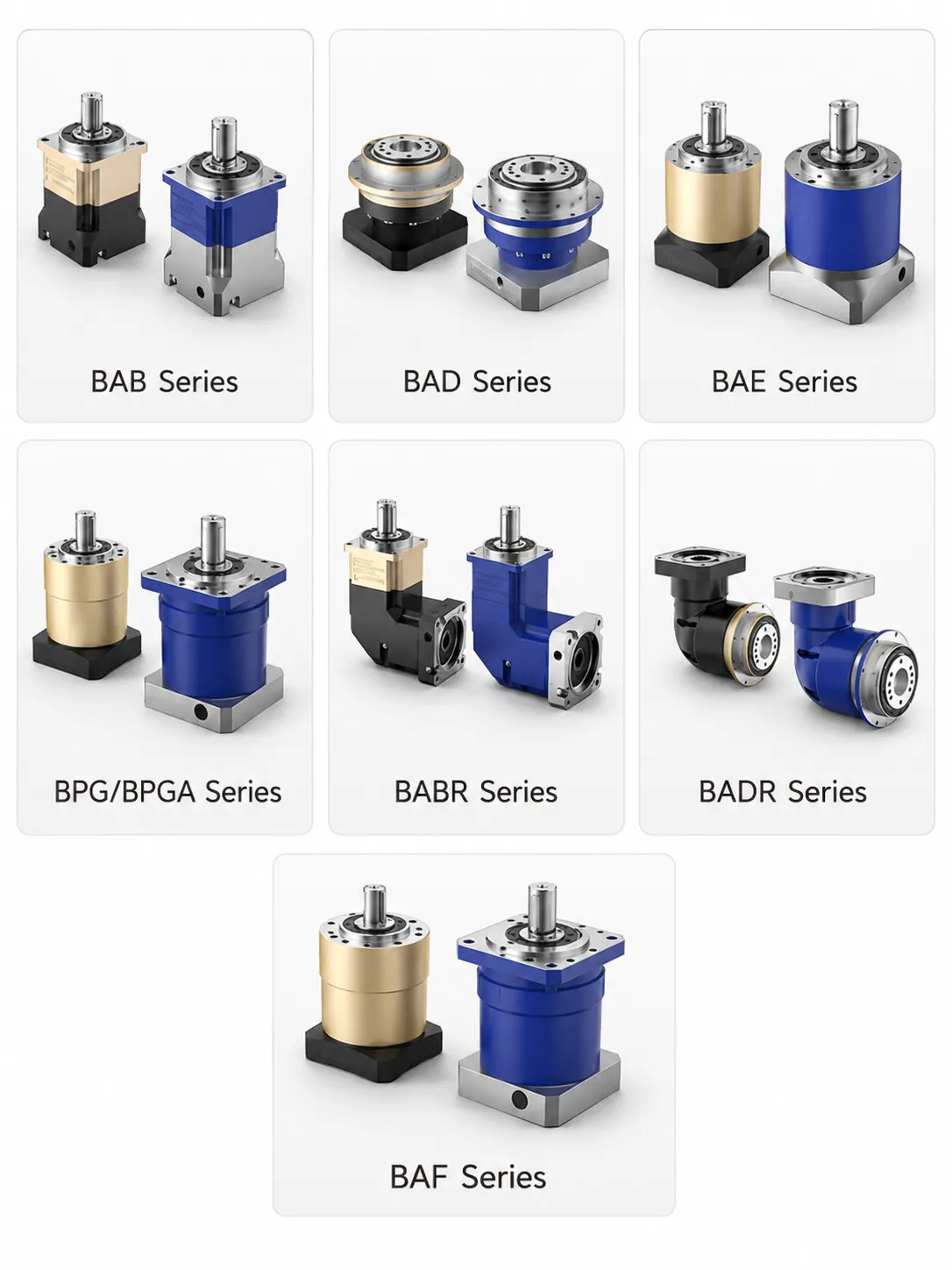
आउटपुट फ्लेंज का प्रकार यह निर्धारित करता है कि गियरबॉक्स मशीन संरचना पर कैसे माउंट होगा। वर्गाकार फ्लेंज (EP-AB, EP-AF, EP-ABR) मशीन बेड पर सीधे माउंटिंग के लिए सबसे आम हैं। गोल फ्लेंज (EP-AD, EP-ADS) बोर-माउंटेड रोटरी टेबल और स्पिंडल हेड के लिए उपयुक्त हैं। बड़े फ्लेंज (EP-AE, EP-AER) कन्वेयर हेड ड्राइव के लिए उच्चतर पलटने वाले बल के प्रतिरोध प्रदान करते हैं और कोरिया एवर-पावर रेंज में IP67 विकल्प वाली एकमात्र श्रृंखला हैं।
तापमान की रेंज
स्टैंडर्ड कोरिया एवर-पावर प्लेनेटरी सीरीज़ निम्नलिखित से संचालित होती है: -10 डिग्री सेल्सियस से +90 डिग्री सेल्सियस तकइसमें कोरिया की बाहरी औद्योगिक शीतकालीन परिस्थितियों को शामिल किया गया है। एकमात्र अपवाद यह है कि... ईपी-केएफ/केएच हाइपॉइड गियर श्रृंखलाजिसका गियर ऑयल विनिर्देश निचली सीमा को सीमित करता है न्यूनतम 0 डिग्री सेल्सियसकोरियाई सर्दियों में बाहरी प्रतिष्ठानों, कोल्ड-रूम अनुप्रयोगों, या किसी भी ऐसे वातावरण के लिए जहां तापमान 0 डिग्री सेल्सियस से नीचे गिर सकता है, KF/KH निर्दिष्ट न करें।
विनिर्देश इंजीनियरों की चूक - मरोड़ की कठोरता और सर्वो बैंडविड्थ
इंजीनियर बैकलैश ग्रेड और गियर अनुपात को सही ढंग से निर्दिष्ट करते हैं, फिर एक सर्वो अक्ष को चालू करते हैं जो उच्च बैंडविड्थ पर दोलन करता है या अस्वीकार्य सेटलिंग समय प्रदर्शित करता है। इनमें से कई मामलों में, कारण बैकलैश नहीं होता है - बल्कि अपर्याप्तता होती है। मरोड़ कठोरताबैकलैश और टॉर्सनल स्टिफ़नेस गियरबॉक्स के दो स्वतंत्र गुण हैं जो अक्ष प्रदर्शन के दो अलग-अलग पहलुओं को निर्धारित करते हैं, और एक प्लेनेटरी गियरबॉक्स चयन गाइड जो एक को दूसरे के बिना कवर करता है वह अधूरा है।
सर्वो प्रदर्शन के लिए मरोड़ कठोरता का वास्तव में क्या अर्थ है?
टॉर्शनल स्टिफ़नेस (C_T) वह टॉर्क है जो लोड के तहत गियरबॉक्स के इनपुट और आउटपुट शाफ्ट के बीच एक आर्कमिनट का कोणीय विक्षेपण उत्पन्न करने के लिए आवश्यक होता है — इसे N·m/arcmin में व्यक्त किया जाता है। उच्च टॉर्शनल स्टिफ़नेस वाला गियरबॉक्स न्यूनतम स्प्रिंग-बैक के साथ मोटर टॉर्क कमांड को लोड तक पहुंचाता है। कम टॉर्शनल स्टिफ़नेस वाला गियरबॉक्स ड्राइव ट्रेन में टॉर्शनल स्प्रिंग की तरह व्यवहार करता है: मोटर एनकोडर इनपुट स्थिति की सटीक रिपोर्ट देता है, लेकिन लोड एक अलग कोण पर होता है क्योंकि गियरबॉक्स बॉडी प्रत्यास्थ रूप से विक्षेपित होती है।
मोटर और लोड के बीच यह प्रत्यास्थ अनुपालन प्रति-अनुनाद आवृत्ति को परिभाषित करता है — वह आवृत्ति जिस पर मोटर और लोड विपरीत दिशा में दोलन करना शुरू करते हैं। इसका मूल सूत्र इस प्रकार है:
प्रथम मरोड़ अनुनाद आवृत्ति
J_motor = मोटर रोटर का जड़त्व (किलोग्राम·मीटर²)
J_load = आउटपुट शाफ्ट पर परावर्तित भार का जड़त्व (किलोग्राम·मीटर²)
सर्वो नियंत्रण बैंडविड्थ f_res से कम रहनी चाहिए — आमतौर पर लक्ष्य f_res ≥ 3 × बैंडविड्थ होता है।
उदाहरण सहित: एक रोबोट कोहनी अक्ष, जिसमें C_T = 80 N·m/arcmin (परिवर्तित: 274,960 N·m/rad), J_motor = 80 g·cm² = 8×10⁻⁵ kg·m², J_load परावर्तित = 12 g·cm² = 1.2×10⁻⁵ kg·m² है:
f_res = (1/2π) × √(274,960 × 95,833)
f_res = (1/2π) × √(2.635×10¹⁰) ≈ 258 हर्ट्ज़
f_res लगभग 258 Hz होने पर, यह अक्ष लगभग 86 Hz (258 ÷ 3) तक की सर्वो बैंडविड्थ को सपोर्ट कर सकता है — जो उच्च-प्रदर्शन वाले रोबोट जॉइंट कंट्रोल के लिए पर्याप्त है। यदि C_T को आधा करके 40 N·m/arcmin कर दिया जाए, तो f_res घटकर 182 Hz हो जाता है और उपयोग योग्य बैंडविड्थ की अधिकतम सीमा 60 Hz तक गिर जाती है, जो उच्च गति वाले पिक-एंड-प्लेस चक्रों के लिए अपर्याप्त हो सकती है।
बैकलैश बनाम टॉर्सनल स्टिफ़नेस — दो स्वतंत्र समस्याएं
इन दोनों विशिष्टताओं को कभी-कभी भ्रमित किया जाता है क्योंकि दोनों आउटपुट शाफ्ट पर कोणीय त्रुटि से संबंधित हैं - लेकिन वे पूरी तरह से अलग तंत्र से उत्पन्न होती हैं और सर्वो प्रदर्शन को अलग-अलग तरीकों से प्रभावित करती हैं।
| संपत्ति | प्रतिक्रिया | मरोड़ कठोरता |
|---|---|---|
| त्रुटि प्रकार | स्थिर — केवल उलटने पर | गतिशील — किसी भी प्रकार का टॉर्क परिवर्तन |
| गति प्रभावित | द्विदिश अक्ष | सभी अक्ष, सभी दिशाएँ |
| सर्वो प्रभाव | उलटफेर पर स्थिति त्रुटि | बैंडविड्थ सीमा (f_res) |
| सेवा में परिवर्तन | बढ़ता है (दांतों का घिसाव) | मामूली गिरावट (बेयरिंग घिसाव) |
| विनिर्देश इकाई | आर्समिन | एन·मी/आर्कमिन |
| द्वारा सुधार किया गया | गियर टॉलरेंस को और अधिक सटीक बनाना (P0>P1>P2) | बड़ा फ्रेम, अधिक मजबूत हाउसिंग और शाफ्ट |
यह अंतर बताता है कि क्यों बढ़े हुए आउटपुट शाफ्ट का उपयोग किया जाता है। ईपी-एएफ और ईपी-एएफआर उच्च-कठोरता श्रृंखला सर्वो प्रदर्शन में योगदान केवल रेडियल लोड क्षमता से कहीं अधिक है: अधिक व्यास वाले शाफ्ट का ध्रुवीय क्षेत्रफल आघूर्ण व्यास के समानुपाती होता है⁴, जो शाफ्ट की स्वयं की मरोड़ कठोरता में सीधे योगदान बढ़ाता है। समान फ्रेम आकार पर, EP-AF के बढ़े हुए शाफ्ट और EP-AB के मानक शाफ्ट के बीच व्यास के अंतर के आधार पर मरोड़ में योगदान 50–100% तक बढ़ सकता है।
जब आप निम्नलिखित स्थितियों में कोरिया एवर-पावर से C_T डेटा का अनुरोध करें:
- आवश्यक सर्वो बैंडविड्थ ≥ 40 हर्ट्ज़
- उच्च-चक्र प्रतिवर्ती अनुप्रयोग (पिक-एंड-प्लेस, क्रॉस-सील जॉ)
- कठोरता-मिलान वाले जोड़े की आवश्यकता वाला ड्यूल-ड्राइव गैन्ट्री
- लंबे शाफ्ट ओवरहैंग पर भारी भार लगाया गया है।
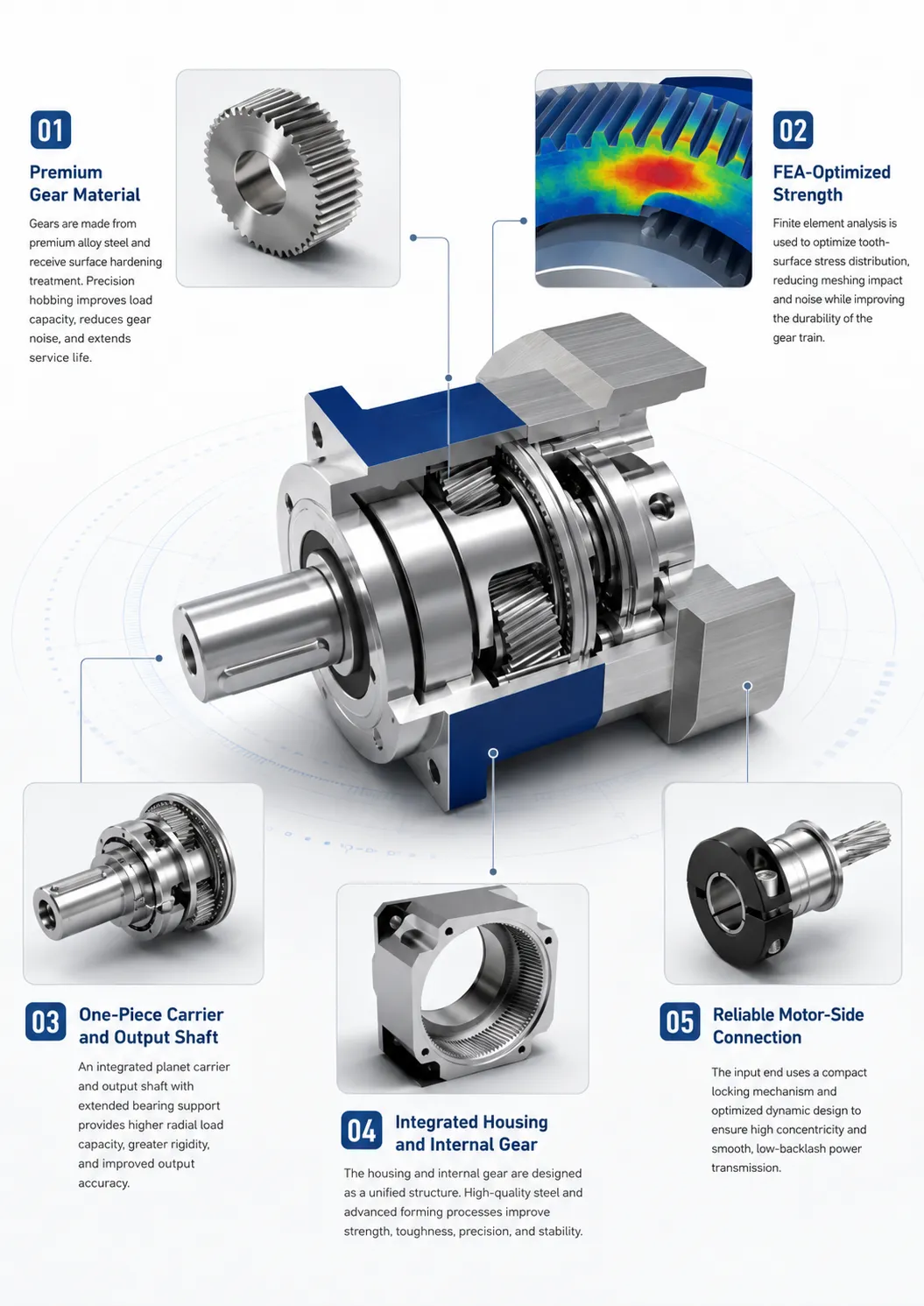
प्लेनेटरी गियरबॉक्स के चयन में होने वाली 6 सबसे आम गलतियाँ
केवल निरंतर टॉर्क के लिए साइजिंग
त्वरण और तीव्र झटकों के दौरान अधिकतम टॉर्क को अनदेखा करते हुए, 100 N·m निरंतर टॉर्क के लिए रेटेड गियरबॉक्स को 250 N·m के अधिकतम भार के संपर्क में लाने पर वह अपनी आपातकालीन स्टॉप टॉर्क रेटिंग तक पहुंच जाएगा और उसके गियर के दांत समय से पहले ही थक जाएंगे।
प्रत्येक अक्ष के लिए P0 निर्दिष्ट करना
प्रत्येक अक्ष को P0 ≤1 आर्कमिन के साथ अत्यधिक जटिल बनाने से उन अक्षों पर 20–40% इकाई लागत बढ़ जाती है जहाँ तकनीकी रूप से P1 या P2 पर्याप्त हैं, जबकि इससे कोई कार्यात्मक लाभ नहीं मिलता। P0 का प्रयोग केवल वहीं करें जहाँ स्थिति निर्धारण विनिर्देशन वास्तव में इसकी आवश्यकता हो।
जड़त्व गणना को छोड़ना
एक गियरबॉक्स जो टॉर्क और बैकलैश विनिर्देशों को पूरा करता है लेकिन मोटर पर 50:1 का जड़त्व अनुपात उत्पन्न करता है, एक अस्थिर सर्वो अक्ष उत्पन्न करेगा जिसे किसी भी प्रकार की पीआईडी ट्यूनिंग से ठीक नहीं किया जा सकता है। अनुपात चयन को अंतिम रूप देने से पहले J_reflected की गणना करें।
रेडियल लोड क्षमता को अनदेखा करना
आउटपुट शाफ्ट की रेडियल लोड रेटिंग की जाँच किए बिना केवल टॉर्क के आधार पर फ्रेम का आकार चुनना। बेल्ट ड्राइव, ओपन गियर मेश और शाफ्ट के सिरे पर लगे चेन स्प्रोकेट रेडियल बल लगाते हैं जो मानक शाफ्ट रेटिंग से अधिक हो सकते हैं - जिसके लिए EP-AF या उससे बड़े आकार के उच्च-कठोरता वाले विस्तारित शाफ्ट की आवश्यकता होती है। ईपी-एएफआर.
यह मानते हुए कि समकोण गियरबॉक्स बैकलैश को बढ़ाते हैं
P0/P1/P2 विनिर्देश के लिए ईपी-एबीआरEP-ADR और EP-AFR को समकोण आउटपुट शाफ्ट पर मापा जाता है, जिसमें बेवल स्टेज का योगदान पहले से ही शामिल होता है। उल्लिखित P0 ≤1 आर्कमिन कुल मान है, न कि केवल प्लेनेटरी स्टेज का - इसमें कोई अतिरिक्त बेवल पेनल्टी नहीं है।
0°C से नीचे KF/KH स्थापित करना
ईपी-केएफ/केएच हाइपॉइड श्रृंखला में गियर ऑयल का उपयोग किया जाता है जिसमें एक न्यूनतम परिचालन तापमान 0 °C0°C से कम तापमान पर संचालन से अपर्याप्त स्नेहन और गियर के तेजी से घिसने का खतरा होता है। कोरिया की सर्दियों में बाहरी अनुप्रयोगों या कोल्ड-रूम ड्राइव के लिए, मानक -10°C की निचली सीमा वाली किसी भी प्लेनेटरी सीरीज़ का चयन करें।
मशीन के प्रकार के आधार पर परिशुद्ध ग्रहीय गियरबॉक्स का चयन
नीचे दी गई त्वरित संदर्भ तालिका पांच चरणों वाले फ्रेमवर्क को प्रत्येक अनुप्रयोग के लिए एक विशिष्ट अनुशंसा में समेकित करती है। इसे प्रारंभिक बिंदु के रूप में उपयोग करें — अपने विशिष्ट डिज़ाइन के लिए पूर्ण टॉर्क, अनुपात, जड़त्व और इंटरफ़ेस गणना के साथ हमेशा इसकी पुष्टि करें।
| मशीन का प्रकार | अनुशंसित श्रृंखला | श्रेणी / विशिष्टता | मुख्य चयन कारण |
|---|---|---|---|
| 10 किलोग्राम का सहयोगी रोबोट (J1–J3) | ईपी-एबी 060–090 | P0 ≤1′ | सब-आर्कमिनट, कॉम्पैक्ट 042–090 मिमी फ्रेम |
| सीएनसी 5-एक्सिस रोटरी टेबल (टाइटेनियम) | ईपी-एएफएच 100–180 | मानक ≤1′ | ≤1 आर्कमिन मानक (कोई ग्रेड कोड नहीं), अधिकतम 3,805 N·m |
| पैकेजिंग बेल्ट-चालित निर्माण अक्ष | ईपी-एएफ पी1 / ईपी-एएफआर पी1 | P1 ≤3′ | उच्च त्रिज्या वाला विस्तारित शाफ्ट बेल्ट तनाव वहन करता है। |
| सामान्य कन्वेयर (प्रेरण मोटर) | आर्थिक रेखा पीई II | 6–8′ निश्चित | कन्वेयर गति नियंत्रण के लिए बैकलैश अप्रासंगिक है |
| सोलर ट्रैकर / पवन टरबाइन यॉ | ईपी-एएच/एएचके 4-मंच | 1–2′ / 10,000:1 | एकल सीलबंद इकाई में 10,000:1, −10 °C, 9,585 N·m |
| गैन्ट्री मशीन रैक रैखिक अक्ष | ईपी-एपी/एपीके कर्विक प्लेट | ≤1–2′ / 14,010 N·m | 1-स्क्रू सेल्फ-सेंट्रिंग पिनियन रिप्लेसमेंट |
सर्वो मोटर के लिए प्रेसिजन प्लैनेटरी गियरबॉक्स से संबंधित अक्सर पूछे जाने वाले प्रश्न
क्या आपको अपने एप्लिकेशन के लिए सही ईपी सीरीज़ चुनने में मदद चाहिए?
कोरिया एवर-पावर की कोरियाई एप्लीकेशन इंजीनियरिंग टीम टॉर्क गणना, अनुपात पुष्टि, जड़त्व अनुपात समीक्षा और श्रृंखला अनुशंसा - कोरियाई भाषा में, उसी कार्यदिवस में जवाब प्रदान करती है। सीधे उत्पाद अनुशंसा प्राप्त करने के लिए अपनी मोटर विनिर्देश, आवश्यक आउटपुट गति और अनुप्रयोग विवरण प्रदान करें।
संपादक: सीएक्सएम