407AW विंच ड्राइव प्लेनेटरी गियरबॉक्स रिड्यूसर
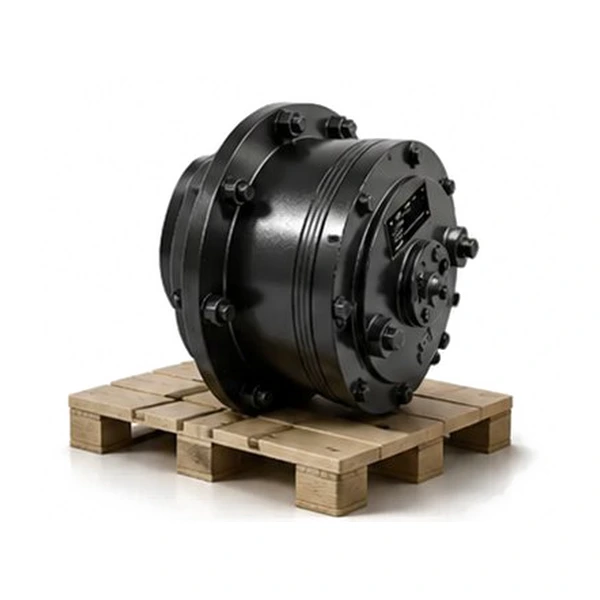
407AW — 18,000 Nm
430 or 530 Nm. You decide.
Every winch drive planetary gearbox below the 407AW forces a fixed brake torque onto the system design. The 407AW reverses this: the crane designer specifies the brake, and the gearbox is assembled to match. This is not a cosmetic option — it is the engineering threshold where loads become heavy enough and safety standards prescriptive enough that the brake holding calculation drives the gearbox specification rather than following it.
The 407AW is the entry point to the 407 family — alongside the 407W3 (26,000 Nm, ratios 63-136, 530 Nm brake). Where the 406 family topped out at 17,500 Nm in the three-stage 406BW3, the 407 housing frame steps up in diameter, bearing size, and gear module to deliver 18,000-26,000 Nm. The 407AW at 18,000 Nm with its wider ratio range (38-136 versus 63-136 for the 407W3) serves applications that need both the larger housing torque capacity and the flexibility to specify different hoist speeds — plus the option to choose the brake torque that precisely matches the regulatory requirement for the specific crane and load combination.
407AW Winch Drive Planetary Gearbox — Technical Parameters
| रेटेड आउटपुट टॉर्क | 18,000 Nm |
| Gear ratio range | 38 to 136 |
| Maximum input speed | 3,500 rpm |
| Maximum output speed | 25 rpm (FEM M5 continuous duty) |
| Mechanical efficiency | ≥ 95% |
| Parking brake (selectable) | 430 Nm or 530 Nm, multi-disc, hydraulic release |
| Brake at drum (430 Nm / r=87) | 37,410 Nm |
| Brake at drum (530 Nm / r=87) | 46,110 Nm |
| बढ़ते | Rotating housing flanges |
| Dry weight | Approx. 285 kg |
| स्नेहन | Oil bath splash, EP gear oil |
| परिचालन तापमान | -20 to +85 deg C |
430 or 530 Nm — How to Choose the Brake That Matches the Load
Below the 407AW, brake torque is fixed — the designer accepts it and works around it. The 407AW offers a choice because the machines at this torque level serve applications with genuinely different brake requirements. A 15-tonne offshore cargo crane and a 20-tonne container feeder crane may use the same gearbox torque rating but need different brake holding margins because the classification societies apply different safety factors.
430 Nm — Standard Hold
Produces 16,340-58,480 Nm at the drum across the ratio range. Adequate for general cargo cranes where the brake safety factor requirement is 1.5x the maximum suspended load. Provides a lighter spring pack, lower brake release pressure (22-28 bar), and longer brake disc life because the clamping force per disc is lower. The 430 Nm option shares brake components with the 406 family — simplifying spare parts if the fleet includes both 406 and 407AW units.
530 Nm — Enhanced Hold
Produces 20,140-72,080 Nm at the drum — 23% more holding capacity than the 430 Nm option at every ratio point. Required for applications where the classification society mandates a 2.0x or higher brake safety factor: offshore cranes with over-water personnel transfer, cranes operating in zone 2 explosive atmospheres, and any winch where the applicable standard demands enhanced brake holding as a condition of certification.
Calculate the maximum suspended load torque at the outermost cable layer. Multiply by the regulatory safety factor (1.5x standard, 2.0x enhanced). Divide by the gear ratio. If the result is below 430 Nm: specify 430. If between 430 and 530: specify 530. If above 530: step up to the 407W3 with its fixed 530 Nm brake at 26,000 Nm torque, or add an external secondary brake.
Where the 406 Family Ends and the 407 Family Begins
The 406BW3 at 17,500 Nm and the 407AW at 18,000 Nm overlap by 500 Nm. Why do both exist? Because they serve different integration constraints.
406BW3: maximum torque from the 406 housing
The 406BW3 pushes the 406 housing diameter to its structural limit at 17,500 Nm through three stages. Choose it when the drum housing is already designed around the 406 bolt pattern and cannot accommodate a larger unit. The 406BW3 is a drop-in upgrade for any crane currently using a 406AW or 406W.
407AW: the larger housing frame begins
The 407AW uses a larger housing diameter with heavier bearings and wider gears. At 18,000 Nm it delivers only 500 Nm more than the 406BW3, but with 30% more bearing capacity, 20% more thermal mass, and the selectable brake option. Choose it for new-build cranes where the drum can be designed from scratch around the 407 housing, or when the application needs the 530 Nm brake option that the 406 family cannot provide.
407W3: the heavy-duty ceiling
The 407W3 uses the 407 housing at maximum three-stage capacity: 26,000 Nm with a fixed 530 Nm brake. Choose it when the torque requirement exceeds the 407AW rating and the ratio falls within the 407W3 range of 63-136. Above 26,000 Nm, the catalogue transitions to the 410 family (37,500 Nm) with a different housing frame entirely.
18,000 Nm Winch Drive — Where Brake Specification Becomes a Design Variable

Heavy Offshore Platform Cranes (15-25 t SWL)
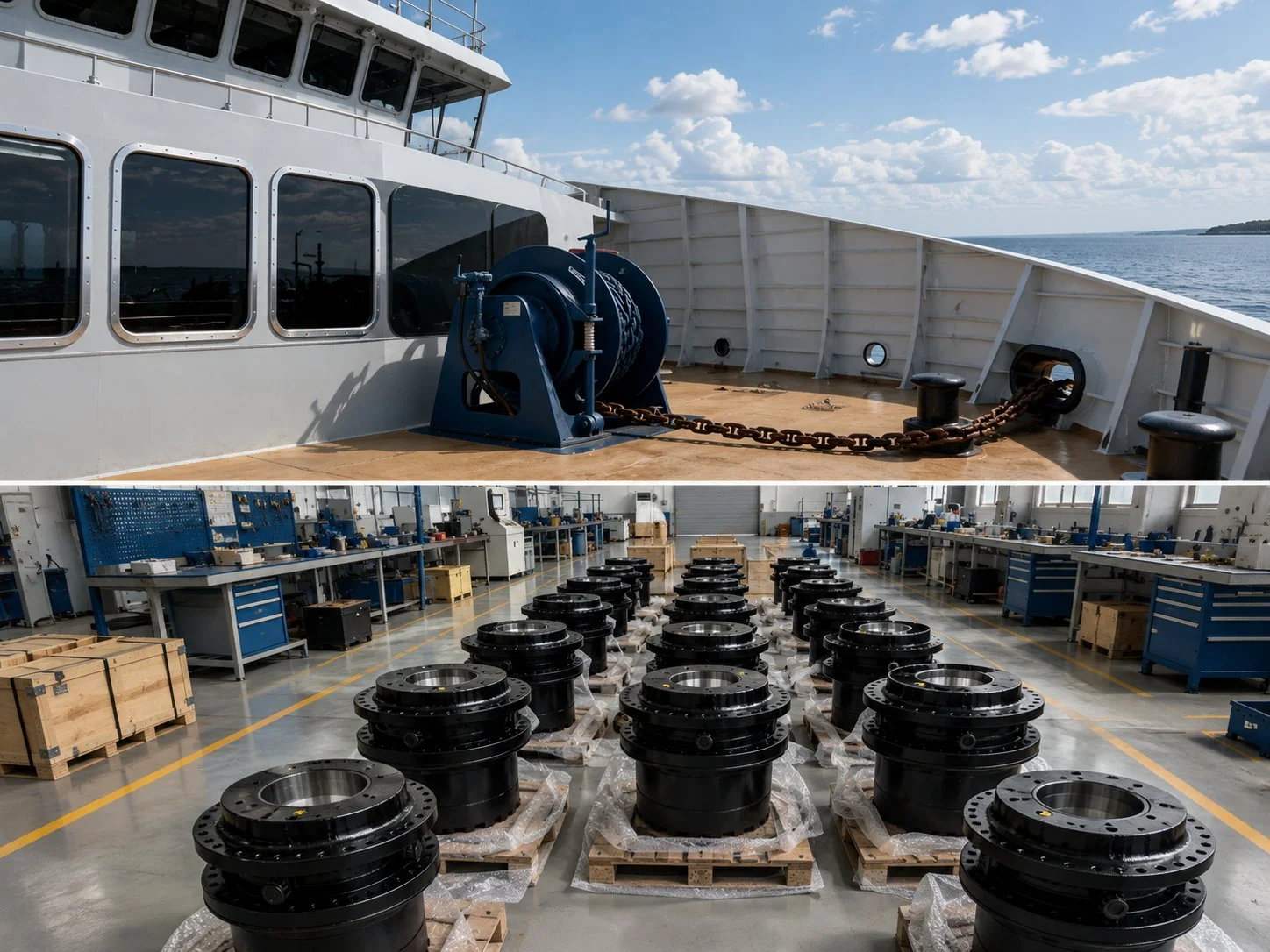
Main hoist on offshore cranes handling heavy subsea equipment, drilling consumables, and BOP components. The 530 Nm brake option provides the enhanced safety factor that DNV and Lloyd require for cranes performing lifts over personnel decks or critical equipment. The 407AW at ratio 60-100 delivers the hoist speed for productive cargo throughput while the selectable brake allows the crane OEM to match the certification requirement precisely — 430 Nm for standard cargo zones, 530 Nm for personnel and critical-zone operations — without changing the gearbox model.
Large Construction Tower Cranes
Main hoist mechanisms on large-capacity flat-top and luffing-jib tower cranes with maximum loads of 15-25 tonnes. The 407AW at ratio 80-136 provides the torque for heavy-load lifting at outer radius, and the 430 Nm brake is typically sufficient for construction crane standards (EN 14439). The slewing drive handles the crane rotation, and the wheel drive propels the trolley travel on the jib.
Container Feeder and Multi-Purpose Vessel Cranes
Ship-mounted cranes on container feeder vessels and multi-purpose cargo ships that handle 20-foot containers (up to 24 tonnes gross) in ports without shore cranes. The 407AW at ratio 40-60 provides the fast cycle speeds (30-45 m/min) these cranes need for competitive port turnaround. The 530 Nm brake option is specified when the vessel classification requires enhanced brake hold for operations in sea states above 1.5 m significant wave height — where dynamic load amplification increases the brake demand beyond the 430 Nm capacity.
Across the Winch Drive Range

Winch Drive Planetary Gearbox — Selectable Brake and Heavy Hoist FAQ
Field Reports
20 t SWL platform crane, 407AW with 530 Nm brake, ratio 75. The selectable brake was the feature that decided the specification. Our DNV-GL survey required a brake safety factor of 2.0 for lifts over the personnel deck. The 406 family 430 Nm brake at this ratio and drum diameter gave us SF = 1.7 — compliant at 1.5x but not at 2.0x. The 407AW 530 Nm brake gave us SF = 2.1. Without the 530 option, we would have needed to add an external secondary brake — adding cost, weight, hydraulic complexity, and a separate maintenance item. The 407AW solved the certification in one component.
Main hoist on a 20 t luffing-jib tower crane, 407AW with 430 Nm brake, ratio 100. The 430 Nm option was adequate for EN 14439 compliance and kept the brake release pressure within our existing 25-bar pilot circuit — the 530 Nm option would have required upgrading the pilot circuit to 38 bar, which cascades into pump changes, hose upgrades, and re-certification of the entire hydraulic system. Choosing 430 instead of 530 saved approximately EUR 8,000 per crane in hydraulic system modifications across our 60-unit annual production. The 407AW ability to specify the brake precisely matched our needs and avoided unnecessary over-engineering.
Ship-mounted crane on a 700 TEU container feeder, 407AW with 530 Nm brake, ratio 45. The crane handles 20-foot containers at 35 m/min in ports without shore cranes. Hoisting speed and load control are excellent — the operators transitioned from the previous crane model without retraining. The 4-star is a fleet management observation: we ordered 6 cranes for 3 vessels. Two with 430 Nm and four with 530 Nm based on different route classifications. The brake spring stacks are now mixed across the fleet spare parts inventory, and our maintenance team has raised the risk of installing a 430 spring stack into a crane that requires 530. Colour-coding or physical keying of the spring stacks to prevent mis-installation would eliminate this risk.
अतिरिक्त जानकारी
| संपादक | सीएक्सएम |
|---|
संबंधित उत्पाद
-
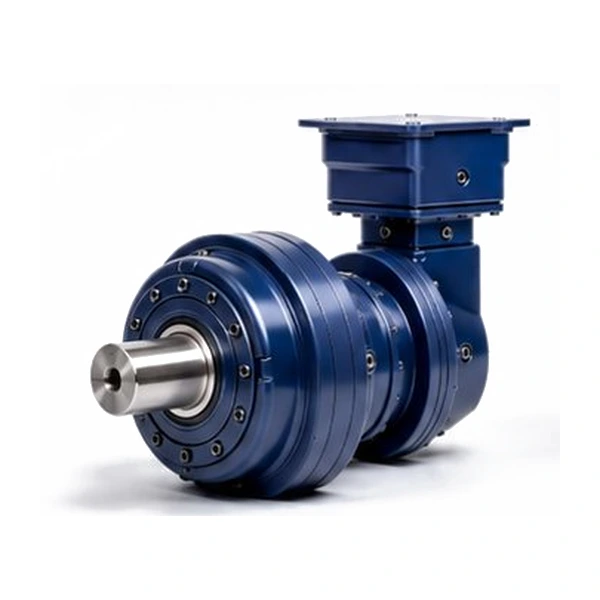
ZR55 Winch Drive Planetary Gearbox — Right-Angle
-
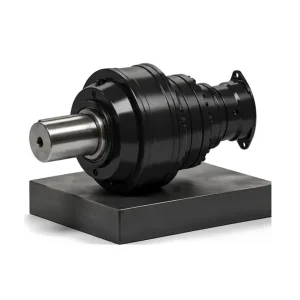
ZL200 Winch Drive Planetary Gearbox
-
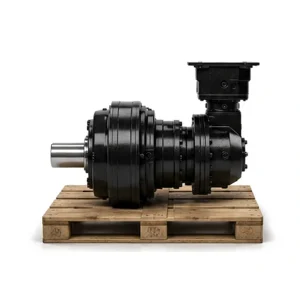
ZL150 Winch Drive Planetary Gearbox — 1-5 Stage
-

415W3 विंच ड्राइव प्लेनेटरी गियरबॉक्स रिड्यूसर
-
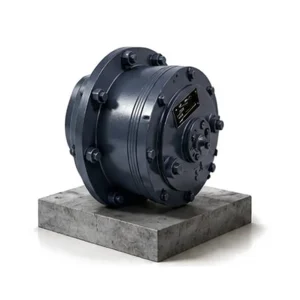
410W3 विंच ड्राइव प्लेनेटरी गियरबॉक्स रिड्यूसर
-
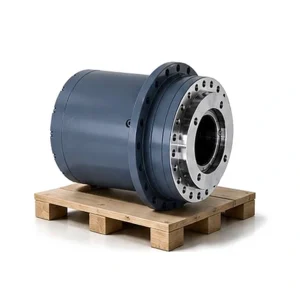
406W विंच ड्राइव प्लेनेटरी गियरबॉक्स रिड्यूसर
-

403W2 विंच ड्राइव प्लेनेटरी गियरबॉक्स रिड्यूसर — 2-स्टेज
-

401W1 विंच ड्राइव प्लेनेटरी गियरबॉक्स रिड्यूसर — सिंगल-स्टेज