Why Tracked Combines Are Replacing Wheeled Combines on Premium Farmland
Modern combine harvesters have grown to 25 to 38 tonnes when the grain tank is full — 3 to 5 times heavier than the machines of 30 years ago. On wheels, this weight concentrates into four or six tyre contact patches totalling 0.4 to 0.8 square metres, producing ground pressures of 150 to 300 kPa. At pressures above 100 kPa, subsoil compaction occurs below the tillage depth — damaging the soil structure that roots need to access water and nutrients. This compaction persists for 5 to 10 growing seasons, reducing crop yields by 5 to 15% per year on each compacted wheel track.
Rubber belt tracks distribute the same weight across 2.5 to 4.5 square metres — reducing ground pressure to 35 to 60 kPa. At these pressures, subsoil compaction is minimised or eliminated. The トラック駆動遊星歯車機構 that powers these tracks must deliver the same harvesting performance as a wheeled combine — same speed, same manoeuvrability, same reliability over a 10-day harvest window — while adding the constraint of soil preservation that wheeled machines do not address.
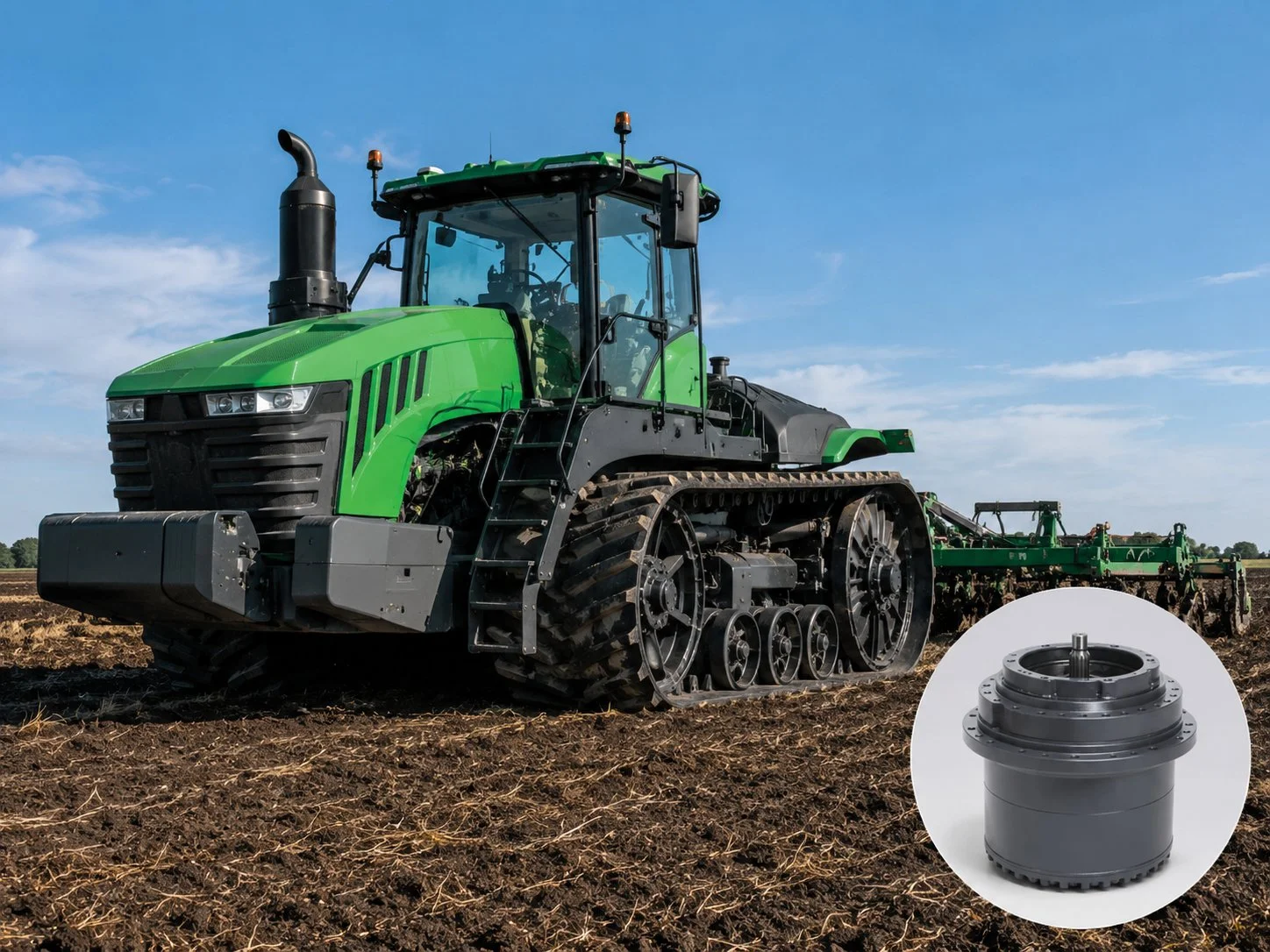
Tracked agricultural machinery reduces ground pressure by 5 to 8 times versus tyres — preserving the subsoil structure that determines the yield of the following season.
Soil Compaction Science — Why Ground Pressure Is Not Just an Equipment Specification
Soil compaction from heavy machinery reduces the void space (porosity) between soil particles. This porosity is where air and water reside — and where roots grow. Compaction below 300 mm depth (subsoil compaction) cannot be reversed by annual tillage and persists for years. The track drive ground pressure determines whether the combine contributes to or avoids this cumulative damage.
| 構成 | Ground Pressure | Subsoil Compaction | Yield Impact |
|---|---|---|---|
| Wheeled (single tyres) | 200 – 300 kPa | Severe (to 600 mm) | -10 to -15%/yr |
| Wheeled (dual/flotation) | 120 – 180 kPa | Moderate (to 400 mm) | -5 to -10%/yr |
| Rubber belt tracks | 35 – 60 kPa | Minimal (to 200 mm) | -0 to -3%/yr |
The economic case in one number: A 500-hectare wheat farm yielding 8 t/ha at USD 280/t generates USD 1.12 million per harvest. A 10% yield reduction from subsoil compaction costs USD 112,000 per year — and persists for 5 to 10 years. The lifetime compaction cost of one season of wheeled harvesting on wet soil can exceed USD 500,000 to 1,000,000. The tracked combine eliminates this risk — and the track drive planetary gearbox is the component that makes it mechanically possible.
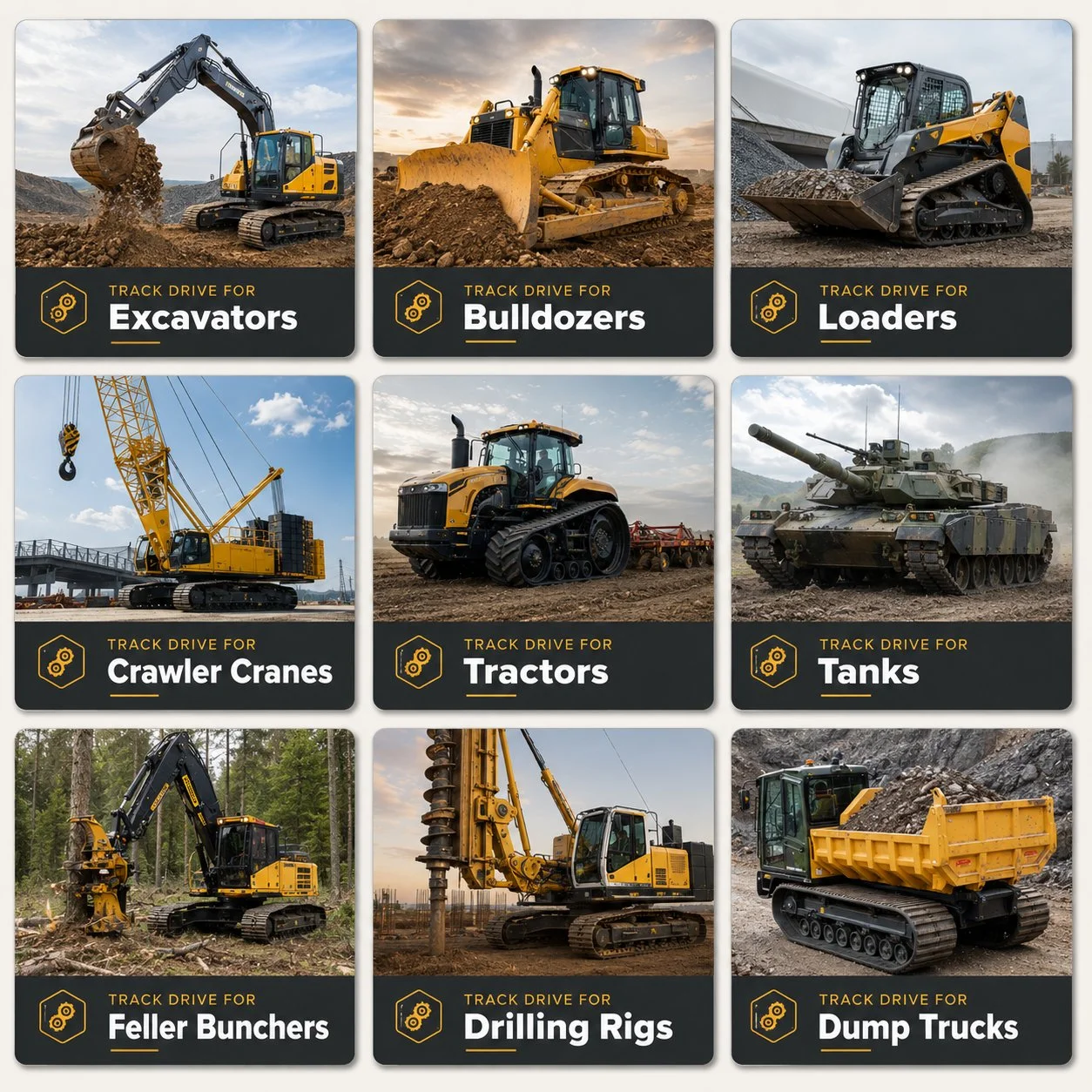
Planetary gear reduction converts hydraulic motor speed to controlled track belt speed. The precision of this conversion determines harvesting speed consistency and grain loss.
Harvest Speed Precision — How the Track Drive Controls Grain Loss
Combine harvesting speed directly affects grain loss. The header (cutting platform) and threshing system are calibrated for a specific ground speed — typically 5 to 7 km/h for wheat and 4 to 6 km/h for corn. If the track drive delivers inconsistent speed, the crop feed rate varies and the threshing system cannot maintain optimal separation efficiency.
The crop enters the header faster than the feed chain can gather it. Stalks are pushed forward and fold over without being cut. Grain heads shatter from impact and kernels fall to the ground before entering the combine. Header loss at 10% over-speed: 1 to 3% of total yield.
The threshing cylinder is underloaded. Straw passes through without sufficient impact to separate all kernels. Grain remains in the straw and exits the combine with the chaff. Separation loss at 15% under-speed: 2 to 4% of total yield.
The track drive speed consistency directly affects the economics of the harvest. A ±5% speed variation around the target can increase total grain loss by 2 to 5 percentage points — representing USD 15,000 to 55,000 in lost grain value on a 500-hectare wheat farm. The track drive must maintain ±3% speed consistency across varying soil conditions (soft patches, ruts, slopes) throughout the harvest day.
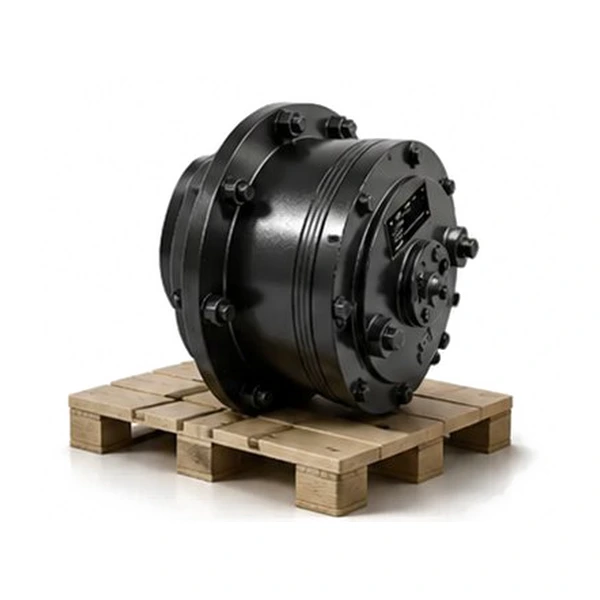
Precision gear mesh quality. DIN Class 6 or better gears in the track drive ensure the speed consistency that prevents grain loss from feed rate variation.
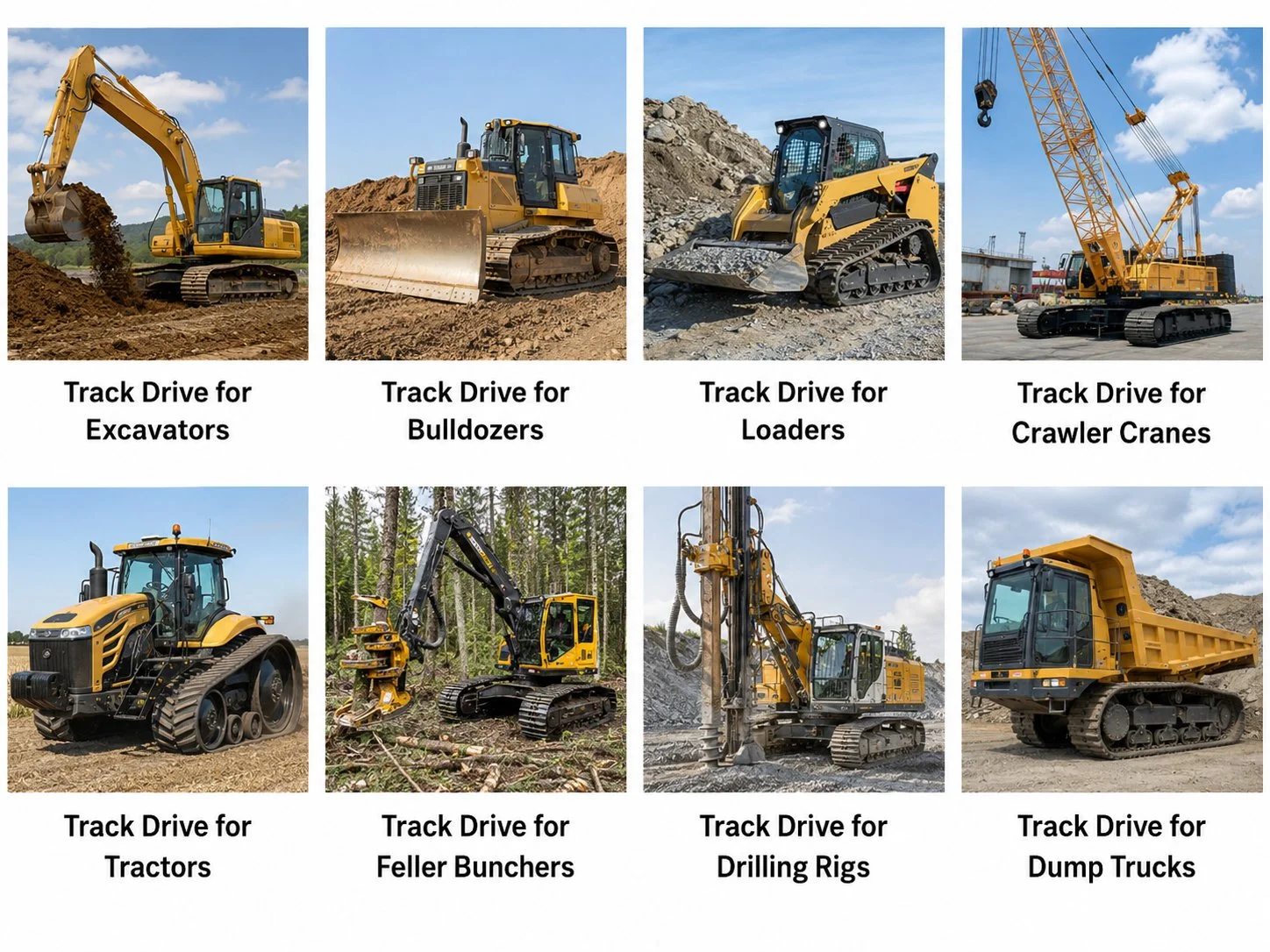
Combine Track Drive Sizing — Where Weight Changes During the Working Day
Unlike every other tracked machine in this series — where the operating weight is essentially constant — a combine harvester changes weight continuously as it fills and empties its grain tank. A 25-tonne empty combine becomes a 35-tonne loaded combine as the grain tank fills (8 to 12 tonnes of grain). The track drive must handle both extremes within every 20 to 40 minute fill cycle.
The variable-weight challenge: The 10-tonne weight swing between empty and full grain tank changes the rolling resistance by 40% — and the ground pressure by 40%. At full load on wet clay, the track drive operates at its rated torque. After unloading at the grain cart, the same track drive operates at 60% of rated torque for the next pass. This continuous cycling between 60% and 100% load produces a fatigue pattern different from constant-load machines (bulldozers, surface miners). The track drive must be rated for the full-load condition but optimised for efficiency at the 70 to 80% average load that represents the majority of the operating hours.
Rubber Belt Track Engineering — How the Track Type Affects the Drive Specification
Combine harvesters use rubber belt tracks — continuous rubber belts with internal steel cord reinforcement and moulded rubber drive lugs on the inner surface. This track type is fundamentally different from the steel chain-and-shoe tracks on excavators and bulldozers, and the differences affect the track drive specification directly.
Rubber belts require higher pre-tension than steel tracks to prevent slippage on the drive sprocket. This pre-tension generates a continuous radial load on the track drive output bearing — approximately 15 to 25 kN on a large combine — that the bearing must support in addition to the propulsion torque. Standard excavator track drives may not have output bearings rated for this sustained radial pre-load.
The rubber drive lugs on the belt inner surface engage with the sprocket teeth in a softer, more compliant mesh than steel-on-steel. This compliance reduces impact noise and vibration but introduces a small engagement delay — each lug deforms slightly before transmitting torque. At the 5 to 7 km/h harvesting speed, this engagement delay is negligible. But during rapid deceleration (end-of-row stop), the compliance can produce 10 to 20 mm of additional stopping distance compared to steel tracks.
Combines travel on public roads between fields at 20 to 30 km/h — far faster than any other tracked machine in this series. At 25 km/h, the track drive sprocket rotates at approximately 16 rpm — fast enough to build a full hydrodynamic oil film but also fast enough to generate significant heat over a 15 to 30 km road transfer. Extended road travel at maximum speed is the highest thermal load the combine track drive encounters — higher even than wet-field harvesting.
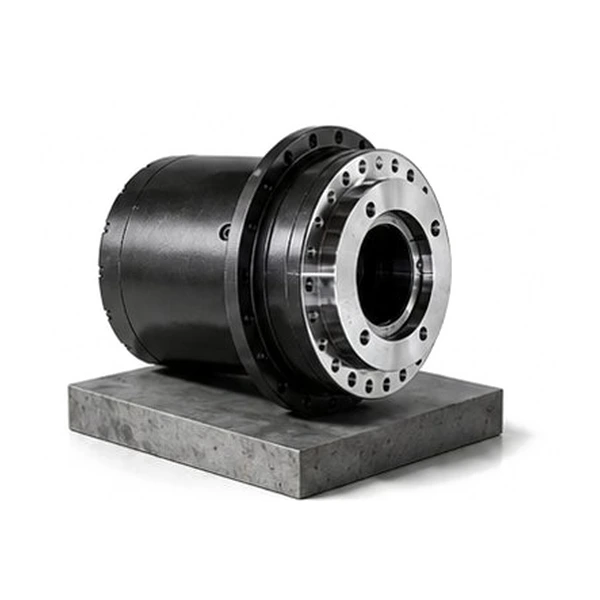
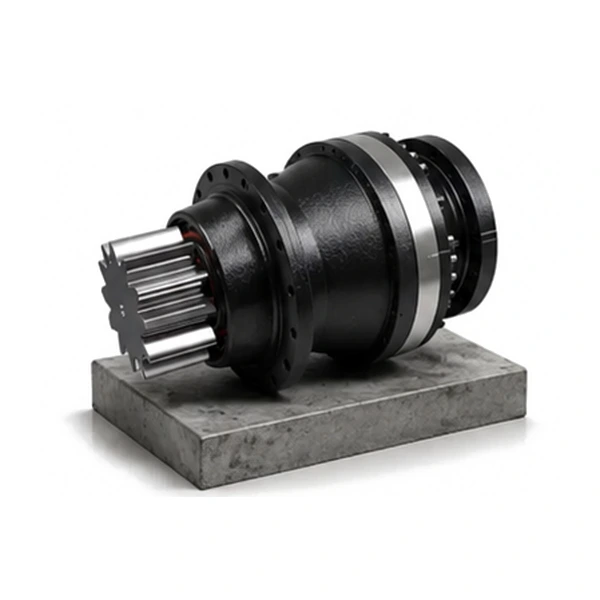
Planetary gearbox architectures. Combine track drives use 2-stage reductions at ratios of 30:1 to 60:1 — lower than excavators (80:1+) because of the higher travel and harvesting speeds.
Three Failure Modes That Affect Combine Harvester Track Drives
Like the crawler tractor (TD-08), the combine harvester operates seasonally — 200 to 600 hours per year, with 6 to 10 months of storage. The condensation-corrosion mechanism is identical, but the 35-tonne combine has a larger track drive with more bearing surface area exposed to moisture-laden oil. The pre-season oil change protocol is equally essential — and equally neglected on many farms.
The rubber belt track requires 15 to 25 kN of pre-tension to maintain positive engagement with the drive sprocket — a continuous radial load on the output bearing that steel-track machines do not experience (steel tracks are tensioned at much lower force by a hydraulic idler). On machines that run with excessive belt tension (common when operators over-tighten to prevent belt slip on wet ground), the output bearing radial load can exceed 30 kN — approaching the dynamic capacity of standard bearings and reducing the calculated bearing life from 10,000 hours to 3,000 to 5,000 hours.
Combines travel between fields on public roads at 20 to 30 km/h — 3 to 5 times the harvesting speed. At 25 km/h, the track drive operates at approximately 16 rpm (versus 4 to 6 rpm during harvesting). The higher speed generates proportionally more heat from gear mesh friction and oil churning. A 30-minute road transfer at 25 km/h can raise the oil temperature by 25 to 35 degrees C — approaching the thermal limit on hot summer days. Repeated field-to-field transfers during a busy harvest day can accumulate thermal damage that a single field session would not produce.
Track Drive Planetary Gearbox for Combine Harvesters — Frequently Asked Questions
Korea Ever-Power provides tracked combine harvester track drive planetary gearboxes from 6,000 to 18,000 Nm with rubber belt pre-tension rated bearings and increased thermal capacity for road transport. Provide your combine model and primary crop for a specification recommendation.
編集者: Cxm