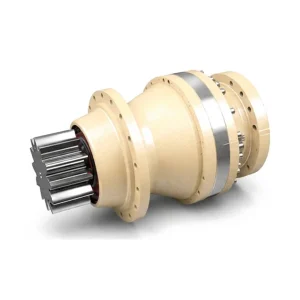
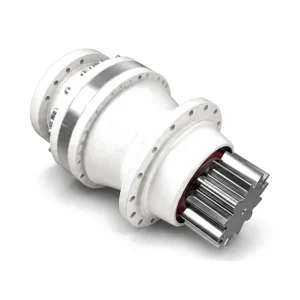
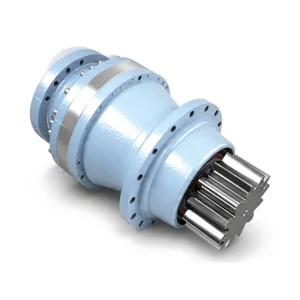
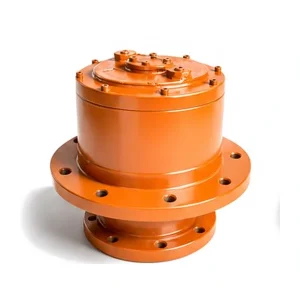
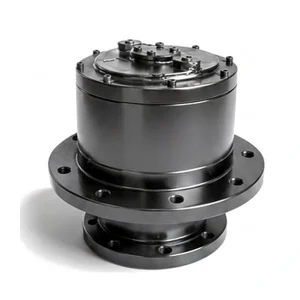
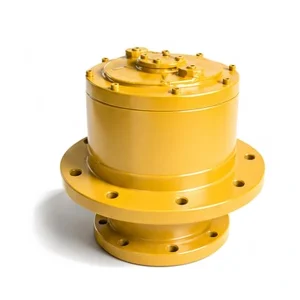
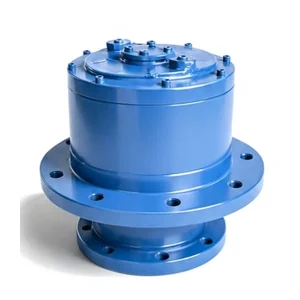
605L2 유성 기어 구동 기어박스 감속기
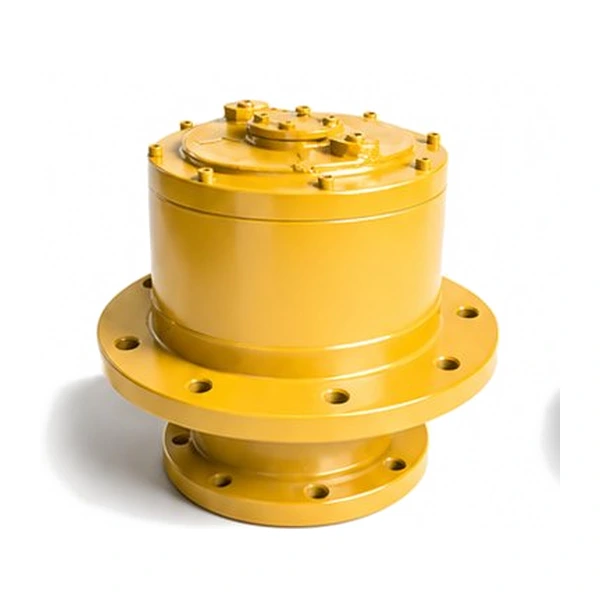
605L2 — Five Ratios Wide Enough to Replace a Two-Speed Motor
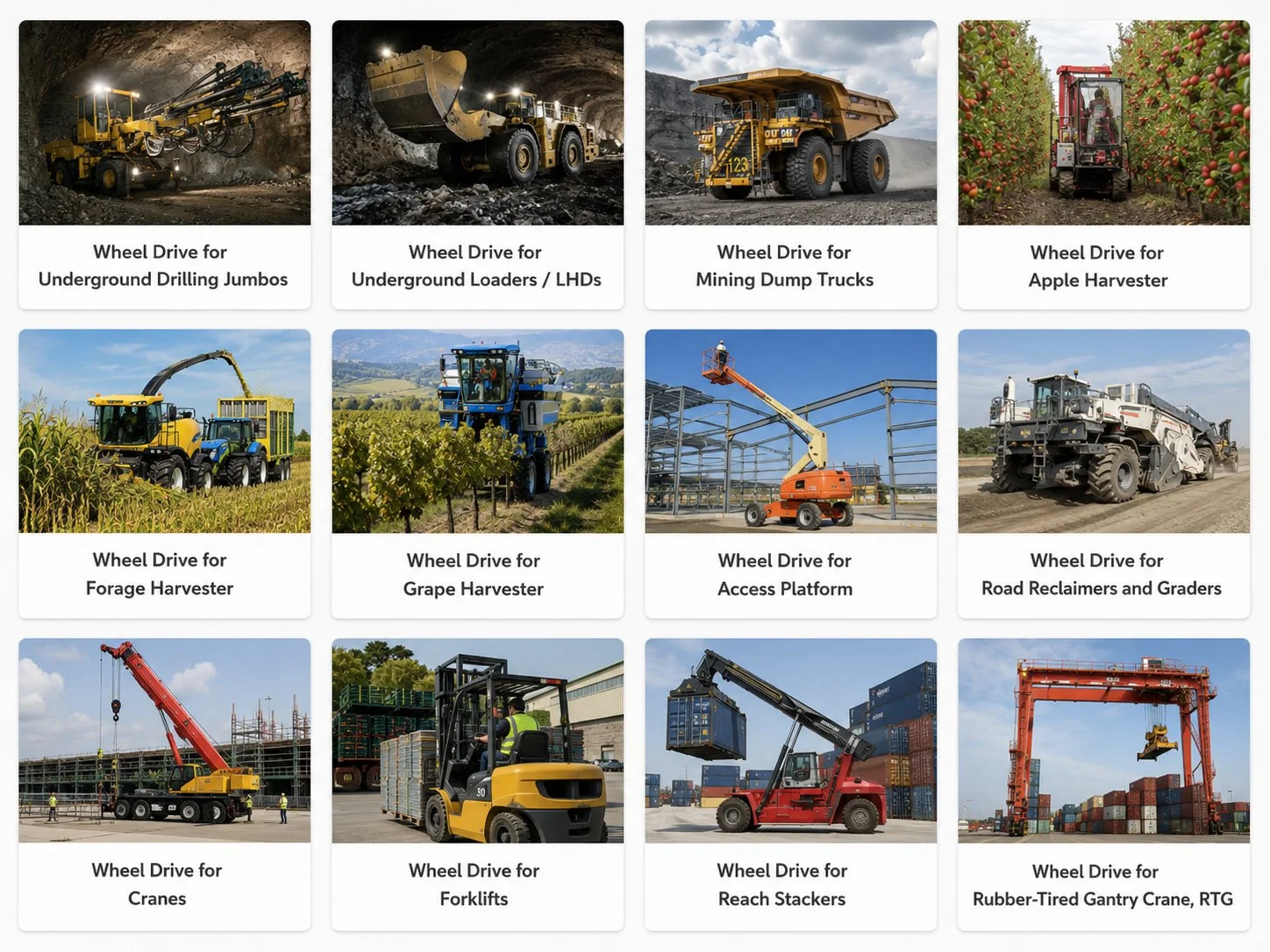
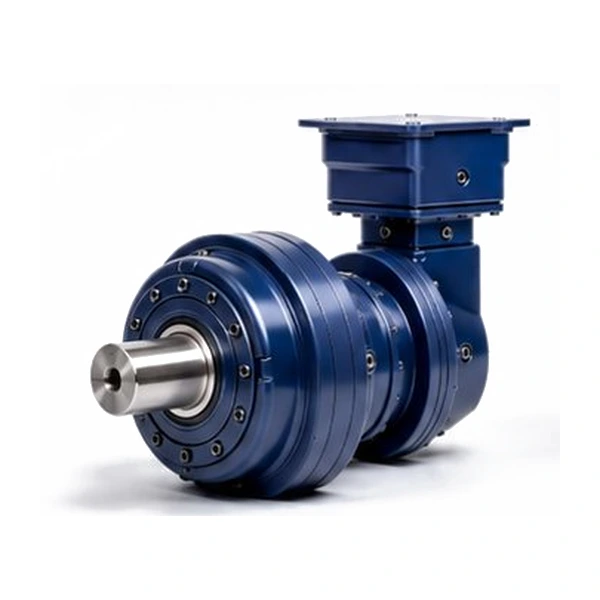
The EP-605L2 sits at the transition point in the 유성 기어 휠 구동 기어박스 range where torque capacity crosses from light-duty into serious industrial territory. At 7,000 Nm output, this wheel drive handles machines that move earth, lift steel, and push aircraft — work that demands not just raw torque but the right ratio to deliver it efficiently across a wide operating speed range.
What sets the 605L2 apart within the catalogue is the five-ratio spread from 22 to 53. That 2.4:1 ratio range means a machine equipped with the 605L2 at ratio 22 travels at more than double the ground speed of the same machine at ratio 53, while the torque at the tyre contact patch remains constant at 7,000 Nm. For OEM engineers designing hydrostatic drive systems, this spread is wide enough to select a single fixed-displacement motor that covers both the high-speed roading requirement and the low-speed earthmoving requirement — eliminating the cost and complexity of a two-speed motor with shift valving.
> 95% Efficiency
3,000 RPM
-25도에서 +85도 섭씨
Declutch
605L2 Planetary Wheel Drive — Full Specification
| 출력 토크(정격 최대) | 7,000 Nm |
| 기어비 | 22 | 27 | 30 | 42 | 53 |
| Planetary stages | 2 |
| 최대 입력 속도 | 3,000 rpm |
| 기계적 효율 | ≥ 95% |
| 주차 브레이크 | 220 - 310 Nm input-side, spring-applied, hydraulic release |
| 긴급 견인 | 수동 클러치 해제(프리휠 분리) |
| 휠 장착 | 회전 플랜지, SAE/ISO 볼트 서클 |
| 건조 중량 | Approx. 135 kg |
| 매끄럽게 하기 | 오일 배스 스플래시, API GL-5 EP 기어 오일 |
| 작동 온도 | -25°C ~ +85°C (바이톤 밀봉재 사용 가능) |
| 기어 재질 | 침탄 합금강, CNC 연삭, HRC 58-62 |
Designing the Complete Hydrostatic Wheel Drive System Around the 605L2
A planetary wheel drive gearbox is one component in a system. The pump, motor, valving, and filtration must be matched to the gearbox for the system to perform as intended. The following integration guide covers the critical sizing decisions for a closed-loop hydrostatic transmission using the 605L2.
Size the pump — start with engine power
The engine allocates a portion of its total output to the travel drive. On a typical 10-tonne wheel loader, 60-70% of engine power is available for propulsion (the remainder drives the loader hydraulics, steering, and auxiliaries). For a 75 kW engine at 65% allocation: 48.75 kW available. Size the pump for this input power at the maximum system pressure (typically 350-420 bar). A variable-displacement axial piston pump at 45-65 cc/rev is the standard choice.
Select the motor — match flow to speed
The motor displacement determines the shaft speed for a given pump flow. Target: motor speed at maximum travel speed should not exceed 3,000 rpm (the 605L2 input limit). For a machine needing 20 km/h at ratio 27 with 550 mm tyre radius: required output speed = 96.5 rpm, motor speed = 96.5 x 27 = 2,606 rpm. If the pump delivers 130 L/min at full displacement, motor displacement = 130,000 / 2,606 = 49.9 cc/rev. Standard motor: 50 cc/rev fixed displacement or 45-75 cc/rev variable displacement.
Verify braking and slope holding
The 605L2 integral brake produces 220-310 Nm at the input shaft. At ratio 27, the effective holding torque at the wheel is 220 x 27 = 5,940 Nm minimum. For a 10-tonne machine with 550 mm tyre radius, the holding force per wheel is 10,800 N, which holds the vehicle on a grade of approximately 11% per wheel (22% total for two-wheel drive, 44% for four-wheel drive). If the machine must park on steeper grades, specify the 310 Nm brake option and add counterbalance valves as a secondary holding mechanism in the hydraulic circuit.
Ground Conditions vs Wheel Drive Ratio — A Practical Matching Guide
The terrain determines the torque demand. The ratio determines how the motor delivers it. Matching the two correctly avoids the common failure of specifying a ratio for road speed and then discovering the machine cannot climb the stockpile it was designed to work on.
| Operating Environment | Rolling Resistance | Typical Grade | Recommended 605L2 Ratio | Max Speed (550 mm tyre) |
|---|---|---|---|---|
| Paved road, smooth concrete | 0.02 | 0-5% | 22 | 27.1 km/h |
| Compacted gravel, hardstand | 0.03 | 5-10% | 27 | 22.1 km/h |
| Firm earth, dry clay | 0.04 | 10-15% | 30 | 19.9 km/h |
| Soft soil, sand, wet earth | 0.08-0.12 | 15-20% | 42 | 14.2 km/h |
| Stockpile face, deep mud, steep ramp | 0.12-0.20 | 20-30% | 53 | 11.3 km/h |
Speeds calculated at 2,500 rpm motor input. Rolling resistance and grade are additive: a machine on soft soil (0.10) climbing a 15% grade requires the same tractive force as one on paved road (0.02) climbing a 25% grade. If the machine must handle multiple environments, select the ratio for the worst-case condition and accept the lower top speed on easy terrain.
Wheel Drive Applications at 7,000 Nm — Medium-Weight Machines That Work Hard
Wheel Loaders (8-12 Tonne Class)
The core application for the 605L2. Mid-size wheel loaders spend their working life alternating between low-speed bucket filling on a stockpile (ratio 42 or 53) and higher-speed loaded travel to the dump truck (ratio 27 or 30). The 605L2 five-ratio range eliminates the need for a two-speed motor or a powershift gearbox to cover both operating modes. Paired with a 50-63 cc/rev variable-displacement motor, the ratio choice locks in the optimal speed-torque point for the machine primary duty cycle.
Rough-Terrain Mobile Cranes (Wheeled)
Wheeled cranes with 10-25 tonne lifting capacity that must travel between lift sites on public roads and then creep into position on construction sites. The 605L2 at ratio 22 achieves road-legal travel speeds, while ratio 42 or 53 provides the controlled creep speed needed for precise crane positioning under load. The integral 220-310 Nm parking brake holds the crane on grades during outrigger setup without relying on the slewing drive brake for vehicle stability.
Airport Pushback Tractors and Ground Support
Towbarless pushback tractors for narrow-body and regional aircraft generate 5,000-7,000 Nm of sustained wheel torque during pushback operations, where the tractor must overcome the rolling resistance of both its own weight and the aircraft nosewheel assembly. The 605L2 at ratio 30 balances pushback speed (under 5 km/h for safety) with the traction force needed to move a 40-tonne aircraft on a wet apron. The declutch allows the tractor to be towed clear if it breaks down on an active taxiway.
전 범위에 걸친 유성 기어박스

Planetary Wheel Drive Gearbox — Engineering Questions for the 7,000 Nm Class
현장 보고서
We evaluated the 605L2 ratio 30 against two incumbent suppliers for our 10-tonne loader platform. Performance matched on the dynamometer. Where Ever-Power differentiated was on technical support during integration — they provided a complete hydraulic circuit schematic with valve sizing recommendations specific to our pump and motor combination, which none of the other suppliers offered without a paid engineering consultancy. The five ratios also gave us flexibility to offer a "quarry spec" variant (ratio 42) on the same base machine without any frame modification.
Pushback tractor for regional jet operations. Ratio 30 gives us the right balance between pushback torque and repositioning speed on the apron. The declutch feature was actually a specification requirement from our airport authority — any ground vehicle that could potentially block an active taxiway must be towable in under 60 seconds. The 605L2 declutch meets this. Oil changes every 6 months and brake inspection annually is all the maintenance we do. No issues in 19 months of operation.
Replacement wheel drive on a 15-tonne rough-terrain crane. The 605L2 ratio 22 is a direct mechanical swap for the OEM unit. Performance is indistinguishable from the original at roughly half the cost. The 4-star is because we needed the 310 Nm brake option and the first unit shipped with the 220 Nm version — an order processing error, not a product issue. The replacement arrived in 10 days and the 310 Nm brake does hold better on the 18% ramps at our precast yard. The unit itself is well-made.
추가 정보
| 편집자 | Cxm |
|---|