Winch Drive Series — Marine & Offshore Equipment
Winch Drive Planetary Gearbox for Offshore Platform
Fixed steel jackets, semi-submersible production platforms, tension-leg platforms, and FPSOs all rely on winch systems for platform crane operations, drilling equipment handling, pipe and riser management, and emergency escape and rescue. Every winch on an offshore production platform carries an additional requirement that no commercial vessel winch faces: the drive gearbox must operate safely in a potentially explosive atmosphere where hydrocarbon gas can be present at any time, requiring ATEX-rated design that covers not just the motor but the gearbox housing, seals, and lubricant specification.
ATEX Zone 1 / Zone 2 rated
IP68 offshore marine seal
API / NORSOK / DNV compliant
Offshore production platforms — whether fixed steel jacket structures in shallow water, semi-submersibles in water depths to 3,000 metres, or FPSOs moored on deepwater fields — operate in a regulatory and safety environment that imposes requirements on mechanical equipment far beyond those of any other marine application. The lier aandrijving planetaire tandwielkast on an offshore platform must simultaneously satisfy the mechanical performance requirements of a marine-grade lifting drive, the explosion protection requirements of IEC 60079 for equipment in hazardous areas, and the functional safety requirements of API RP 2D and NORSOK R-002 for offshore crane and lifting equipment. Korea Ever-Power supplies planetary winch drive gearboxes qualified for offshore platform service across the full application spectrum — from light utility crane auxiliary winches through heavy-duty drilling equipment handling winches on jackup and semi-submersible drilling rigs — with ATEX Zone 1 and Zone 2 certification, IP68 sealing, and fire-resistant hydraulic fluid compatibility as standard platform specifications.
Offshore Platform Winch Applications and Drive Requirements
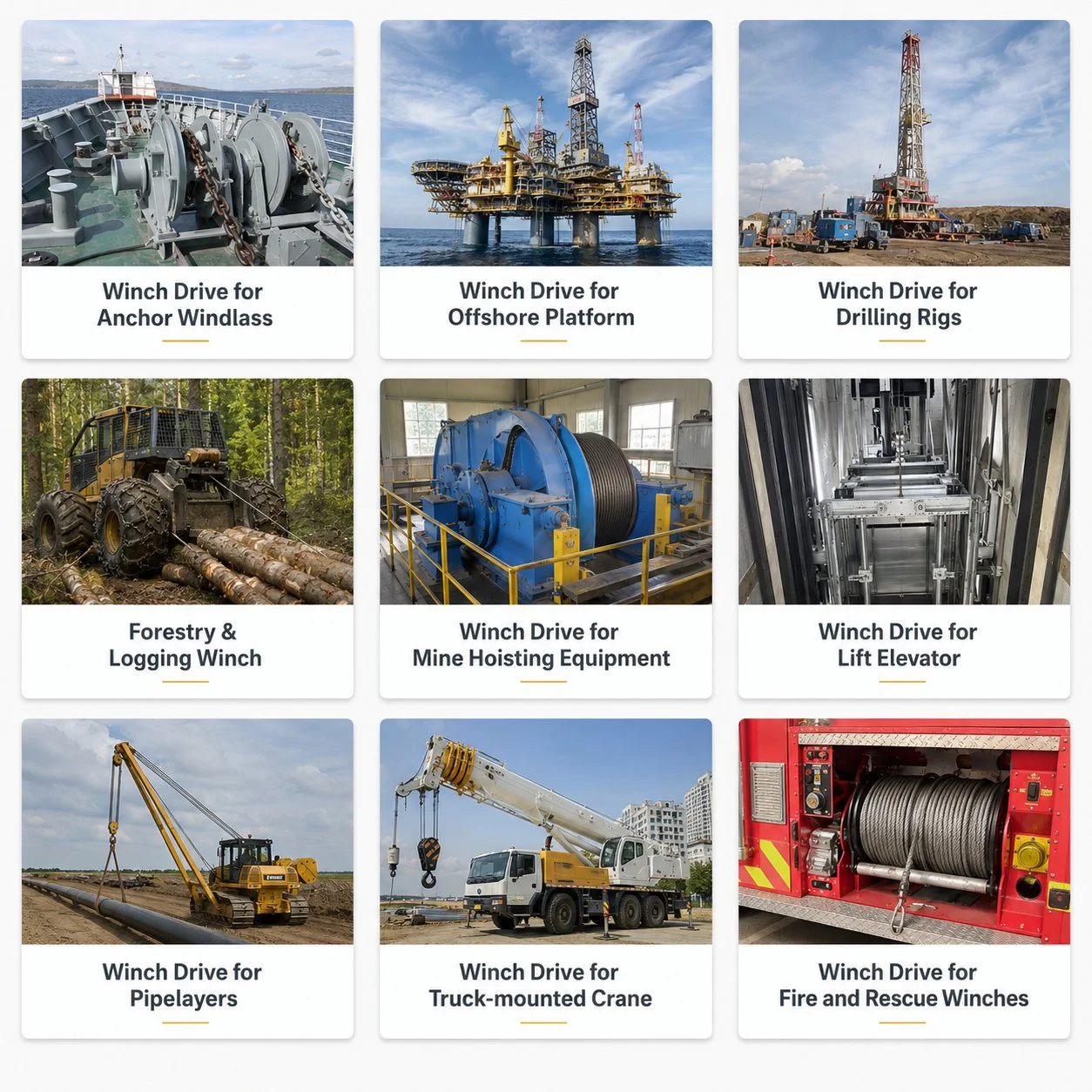
Platform Crane Main and Auxiliary Hoist (3,000–50,000 Nm): Every offshore platform carries at least one pedestal crane for supply vessel offloading, equipment installation, and maintenance lifting. Platform cranes range from 10-tonne capacity utility cranes on small unmanned platforms to 800-tonne capacity heavy-lift cranes on large production platforms and FPSO vessels. The main hoist winch gearbox must transmit the full rated hook load torque under continuous offshore crane duty — defined in API RP 2D as 25% of rated load at maximum speed, 100% of rated load at reduced speed, and 125% of rated load as a proof load test at no speed. The gearbox must hold this proof load statically with the holding brake engaged and the motor de-energised, without any movement, for the duration specified by the certifying authority.
Drilling Equipment Handling Winches (5,000–40,000 Nm): Jackup drilling rigs and semi-submersible drilling rigs use a range of winches beyond the main drawworks and travelling block — including the mousehole winch that lifts drill string sections during connection, the catwalk winch that moves pipe from the pipe rack to the rotary table area, and the riser handling winch that controls the deployment and retrieval of marine risers between the drilling vessel and the seabed wellhead. These winches operate within the drilling derrick structure — a Zone 1 ATEX area due to the proximity to wellhead hydrocarbon releases — requiring ATEX-certified gearboxes throughout.
Mooring and Anchor Handling Winches on FPSOs (8,000–50,000 Nm): FPSOs (floating production, storage, and offloading vessels) use chain or wire mooring systems to maintain station over the subsea production wells they serve. The mooring winches — or chain jacks — that tension the mooring lines must occasionally be operated for line adjustment during platform life, typically once every few years during mooring inspection campaigns. The low operation frequency does not reduce the ATEX or IP68 requirement: the gearbox must be ready to operate correctly after years of idle storage in the marine environment, requiring a lubricant and seal specification that maintains adequate protection during extended non-operation periods as well as during active service.
ATEX Hazardous Area Requirements for Platform Winch Gearboxes

IEC 60079 and the ATEX Directive divide offshore platform deck areas into hazardous zones based on the likelihood and duration of explosive gas atmosphere presence. Platform cranes and most winch equipment sit in Zone 1 (explosive atmosphere likely during normal operation) or Zone 2 (explosive atmosphere possible but not likely during normal operation). Each zone classification imposes specific equipment design requirements that go beyond what a standard marine-grade gearbox provides:
Surface Temperature — T4 Class
In Zone 1 and Zone 2 areas, the external surface temperature of any equipment must remain below the ignition temperature of the surrounding gas mixture at all times, including during gearbox overload events. For the hydrocarbon gas mixtures present on production platforms, the applicable temperature class is T4 — maximum surface temperature 135°C. Korea Ever-Power offshore platform winch gearboxes are thermally designed so that the maximum external surface temperature at 110% of rated torque and maximum ambient temperature (45°C) does not exceed 120°C, providing a 15°C margin below the T4 limit.
Stainless Flame Arrester Breather
The gearbox housing breather is a potential ignition path — if the internal oil mist ignites during an internal fault, the flame must not propagate to the external atmosphere through the breather opening. Korea Ever-Power ATEX-rated gearboxes are fitted with a stainless steel 316L sintered flame arrester on the breather outlet, rated to IEC 60079-1 for Group IIA gases (propane group) as the standard specification, with Group IIB (ethylene group) available for platforms processing ethylene-rich streams. The flame arrester is integrated with the desiccant breather assembly as a single replaceable unit.
Non-Sparking External Materials
In Zone 1 areas, impact between metal surfaces can generate sparks capable of igniting a surrounding gas mixture. External components that could be struck during normal operation — the drain plug, fill plug, breather assembly, and inspection cover — are manufactured from non-sparking aluminium bronze or stainless steel 316L rather than carbon steel. External fasteners are A4 stainless steel. The gearbox housing exterior paint is an anti-static formulation with surface resistivity below 10 GΩ per EN 13463-1, preventing electrostatic charge accumulation on the housing surface.
Fire-Resistant Hydraulic Fluid Compatibility
Offshore platform hydraulic systems frequently use fire-resistant hydraulic fluids — HFDU (polyol ester synthetic), HFDR (phosphate ester), or HFC (water-glycol) — instead of mineral oil to reduce fire risk from hydraulic line rupture near ignition sources. The SAHR brake release circuit of the winch gearbox contacts the platform hydraulic fluid directly. Korea Ever-Power offshore platform gearboxes use stainless steel 316L internal hydraulic circuits, PTFE-lined hose connections, and FKM O-ring seals throughout the brake release system — compatible with all three fire-resistant fluid types without the compatibility failures that occur when standard NBR seals contact phosphate ester fluids.
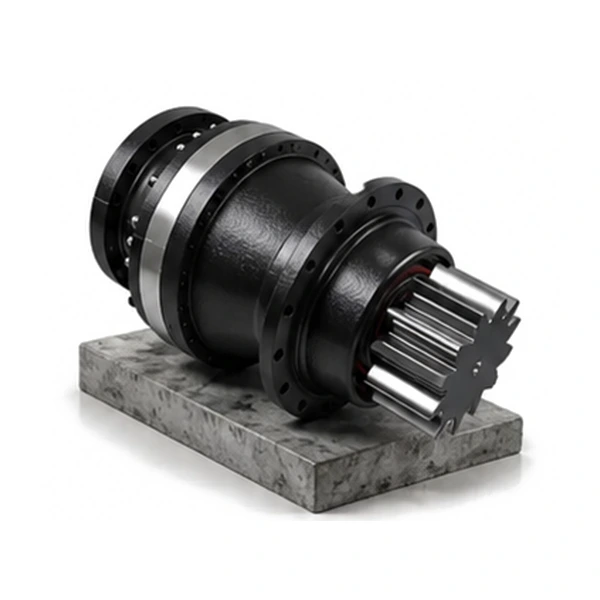
Korea Ever-Power Offshore Platform Winch Drive Selection Guide
| Model | Uitgangskoppel | Fasen | Verhoudingsbereik | Platform Application | ATEX Class | Zegel |
|---|---|---|---|---|---|---|
| ZL55 | 500 – 2,000 Nm | 1–5 | 3.7 – 3,497 | Utility crane, personnel basket | Zone 2 / T4 | IP67 FKM |
| ZR75 | 1,500 – 6,000 Nm | 2–5 | 5.1 – 4,884 | Platform crane auxiliary hoist | Zone 1 / T4 | IP68 FKM |
| 407AW | 3,000 – 10,000 Nm | 2–3 | 50 – 1,200 | Drilling rig pipe handling, mousehole | Zone 1 / T4 | IP68 FKM |
| 414W3 | 8,000 – 22,000 Nm | 3 | 100 – 2,500 | Platform crane main hoist, riser handling | Zone 1 / T4 | IP68 FKM |
| 417W3 | 15,000 – 35,000 Nm | 3 | 100 – 2,500 | Heavy crane main hoist, FPSO mooring | Zone 1 / T4 | IP68 FKM |
| 419W3 | 25.000 – 50.000 Nm | 3–4 | 200 – 5,000 | 800-tonne platform crane, deepwater mooring | Zone 1 / T4 | IP68 FKM |
API RP 2D and NORSOK R-002: Design Standards for Platform Crane Winch Drives
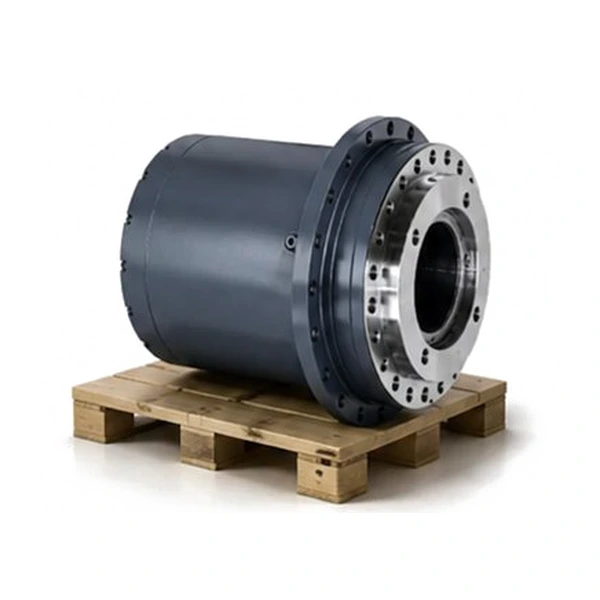
Drilling Rig Winch Drives: Derrick Zone 1 and High-Cycle Pipe Handling

FPSO Mooring and Riser Pull-in Winches: Long-Term Reliability in Unmanned Operation
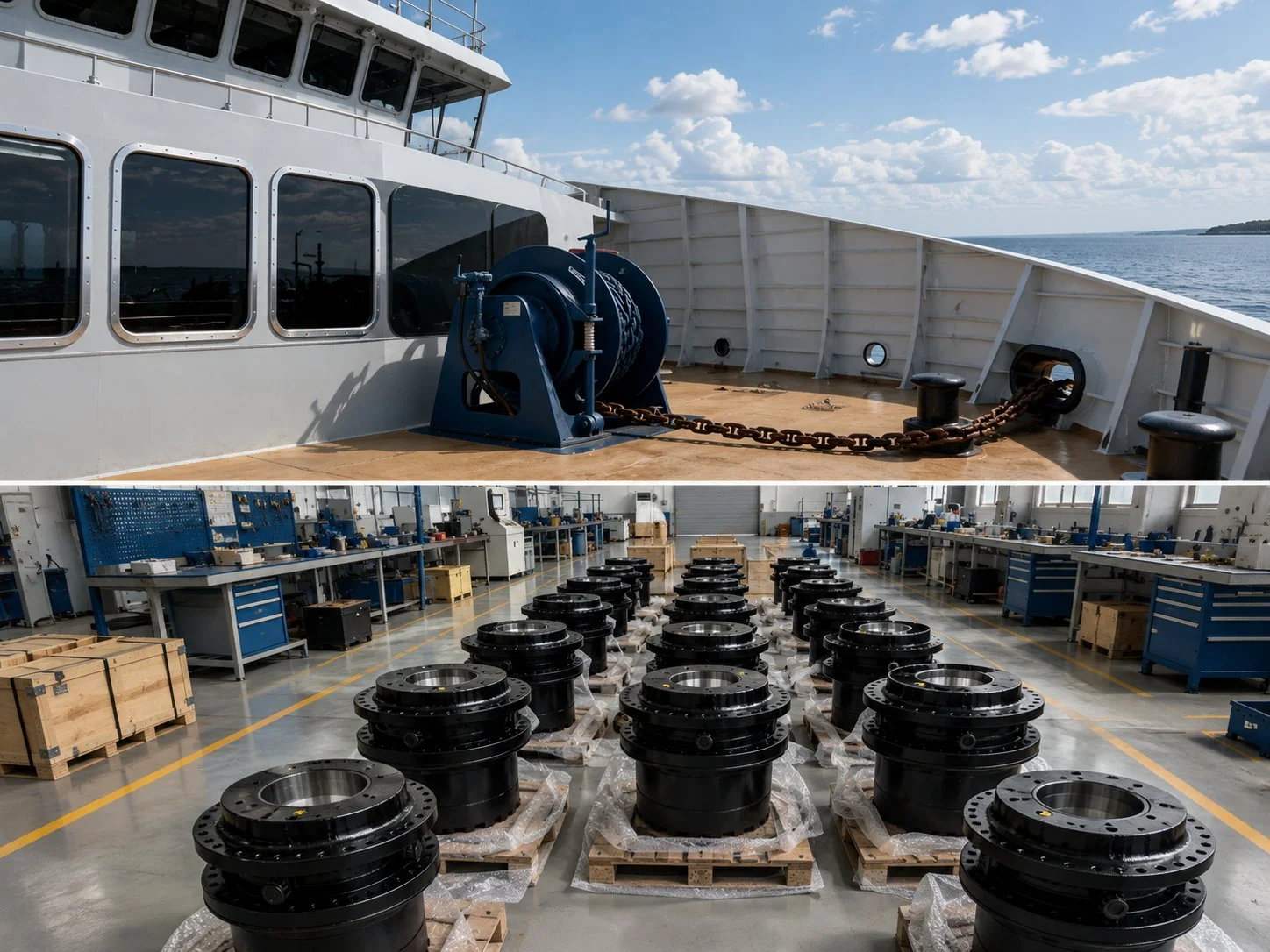
FPSOs are moored on location for periods of 5 to 25 years between dry-dock intervals, and the mooring winch or chain jack equipment that maintains their station may be operated only once every 3 to 5 years for mooring line inspection and adjustment. This operating profile — very infrequent operation after years of static exposure — imposes a unique preservation requirement on the winch drive gearbox that differs from any other application in the Korea Ever-Power product range.
Long-Term Lubricant Stability: A fully synthetic gear oil that provides excellent viscosity-temperature characteristics during active operation may separate, oxidise, or develop corrosion inhibitor depletion during 5 years of static storage in a tropical marine environment. Korea Ever-Power FPSO mooring winch gearboxes are filled as standard with a long-term storage-capable synthetic gear oil formulated with enhanced oxidation inhibitors and rust preventive additives — providing corrosion protection to DIN 51 360-2 standard during static storage periods and full rated lubrication immediately upon the first post-storage operation without requiring an oil change before the mooring winch is used.
Flexible Riser Pull-in Winches: During FPSO first oil commissioning, flexible risers and umbilicals connecting the FPSO to the subsea production manifold must be pulled in through the FPSO hull turret or I-tube and connected to the topside process equipment. The pull-in winch executes this operation once at commissioning — a single high-load, low-speed operation where the line pull may be 50 to 200 kN and the wire speed is 1 to 3 m/min. The winch drive gearbox must be capable of this full-rated operation immediately after up to 12 months of installation in the marine environment without pre-commissioning oil changes or test runs. Korea Ever-Power FPSO pull-in winch gearboxes undergo a full factory test, are filled with the long-term storage oil grade, and are sealed with tamper-evident caps on all connections — providing confidence that the gearbox will perform correctly at first commissioning operation.
Cathodic Protection Compatibility: FPSOs and fixed offshore platforms use impressed current cathodic protection (ICCP) systems to protect the hull and structural steel from seawater corrosion. The DC current flowing through the platform structure can cause stray current corrosion of gearbox housings and output shaft components if the gearbox is not electrically isolated from the platform structure. Korea Ever-Power FPSO and platform-mounted winch gearboxes include an electrically insulating flange at the gearbox-to-winch-frame mounting interface, with resistance above 1 MΩ verified during factory acceptance testing, preventing stray current paths from affecting the gearbox components.
Testing, Certification, and Third-Party Verification
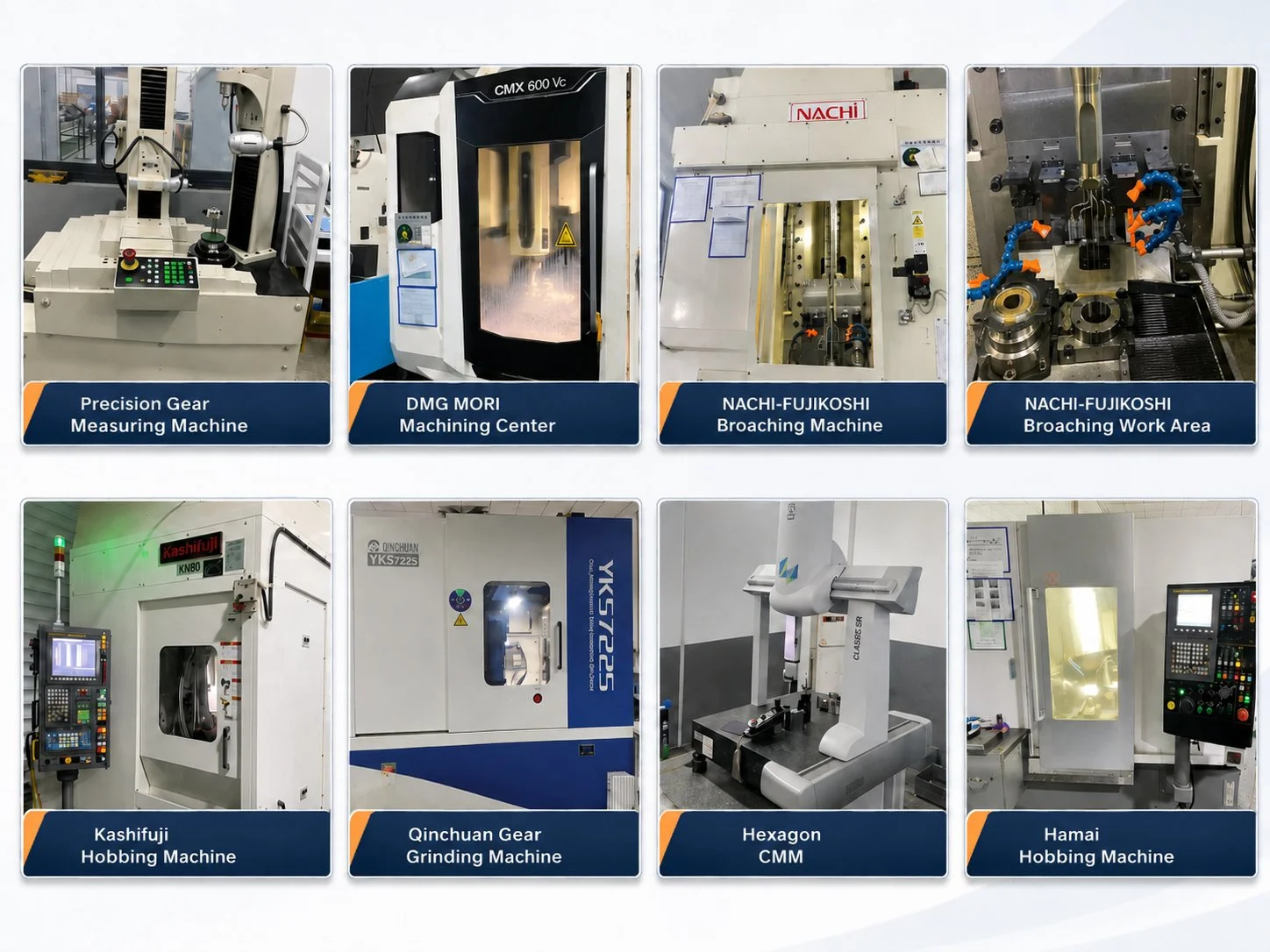
Offshore platform winch gearboxes require a more extensive certification and testing process than commercial marine winch drives, involving both the gearbox manufacturer and external certification bodies:
① ATEX Type Examination
IEC Ex/ATEX type examination by a notified body (SGS, Bureau Veritas, TUV) verifying the gearbox design meets IEC 60079-0 general requirements and the applicable protection concept standard. The type examination certificate covers the specific model, rating, and hazardous area zone classification.
② API RP 2D Load Test
Proof load test at 125% rated line pull with brake engaged, witnessed by the certifying authority (DNV, ABS, Lloyd Register, or independent inspection). Zero load movement required over 10-minute hold. Complete test report provided with shipment.
③ Surface Temperature Measurement
Gearbox run at 110% rated torque until thermal equilibrium at maximum ambient temperature. External surface temperature mapped by IR thermometer at 12 points on the housing. Maximum recorded temperature documented and compared to T4 limit of 135°C.
④ IP68 Pressure Test
All offshore platform units individually pressure tested — not batch sampling — at 0.15 bar for 60 minutes in water bath. Zero ingress required. Test record forms part of the permanent equipment dossier submitted to the certifying authority.
⑤ Stray Current Isolation
Insulation resistance measured across the mounting flange isolation interface using a 500V DC megohmmeter. Minimum 1 MΩ required. Result recorded in test documentation. Relevant for FPSO and platform-mounted units subject to cathodic protection stray current.
Manufacturing Standards for Offshore Platform Service

Common Platform Winch Gearbox Failures and Prevention
| Failure Mode | Hoofdoorzaak | Detection | Prevention |
|---|---|---|---|
| ATEX seal degradation | Phosphate ester hydraulic fluid contact with NBR seals in brake circuit — swelling and leakage within 6 months of service | Brake release circuit fluid leak; sluggish brake response; brake failure to release fully | Specify FKM seals and PTFE-lined hose throughout brake release circuit for all fire-resistant fluid platforms |
| Stray current corrosion | ICCP current flowing through gearbox housing — galvanic pitting of output shaft and housing bore surfaces | Pitting corrosion on output shaft and adjacent housing bore at annual inspection; reduced insulation resistance at mounting flange | Verify insulation resistance at mounting flange annually; replace insulating flange if resistance falls below 100 kΩ |
| Lubricant degradation in storage | Standard mineral oil oxidising and developing corrosion inhibitor depletion during multi-year FPSO storage between mooring operations | Corrosion on gear and bearing surfaces found at first post-storage inspection; viscosity out of specification in oil sample | Specify long-term storage synthetic oil at commissioning; conduct annual oil sample check even during non-operation periods |
| Brake dragging under API dynamic load | Brake sized to static rated load only — insufficient holding torque when API 1.3 dynamic factor is applied during wave-induced vessel motion | Chain slippage during load hold in moderate sea state; brake disc overheating from continuous slip | Size brake to 1.3 x static rated load as per NORSOK R-002; verify at proof load test with dynamic load factor applied |
| ELO circuit blockage | Emergency lowering oil reservoir valve corroded shut — gearbox brake cannot be released for emergency lowering | ELO function test failure at annual crane inspection; valve impossible to operate manually | Annual ELO function test with load suspended; use stainless steel valve and reservoir with annual corrosion inspection |
Why Offshore Platform Designers and Operators Choose Korea Ever-Power
Source Your Offshore Platform Winch Drive Planetary Gearbox
Whether you are specifying winch drives for a new offshore platform or drilling rig build, sourcing replacement gearboxes for platform crane certification renewal, or upgrading existing winches to meet current ATEX and API requirements — Korea Ever-Power delivers ATEX-certified, API-compliant planetary winch drive gearboxes built for the full offshore platform service life. Send us your area classification zone, rated line pull, motor type, and applicable standards for a free compliance review, gearbox sizing, and documentation package proposal within 48 hours.
Bewerking door Cxm