Five Types of Antenna That Rely on Slewing Drive Planetary Gearboxes
O caixa de engrenagens planetárias de acionamento de giro is the positioning mechanism for every steerable antenna larger than approximately 1 metre diameter — from airport surveillance radars to deep-space communication dishes. Each antenna type places different demands on the drive, but all share the requirement for angular precision far beyond any construction or energy application.
| Antenna Type | Dish (m) | Pointing (deg) | Velocidade | Duty |
|---|---|---|---|---|
| Satellite Earth Station | 3 – 15 | 0.01 – 0.05 | Very slow (tracking) | 24/7 continuous |
| Airport Surveillance | 4 – 10 | 0.1 – 0.3 | 4 – 15 rpm (continuous) | 24/7 continuous |
| Weather Radar | 3 – 8 | 0.1 – 0.5 | 2 – 6 rpm | 24/7 continuous |
| Military Tracking | 1 – 6 | 0.005 – 0.02 | Variable (0 to 60 deg/s) | Intermittent |
| Radio Telescope | 10 – 100 | 0.001 – 0.01 | Sidereal rate (0.004 deg/s) | Nightly observation |
Backlash Is the Enemy — Why Antenna Drives Require Near-Zero Gear Play
In a construction crane slewing drive, 10 to 15 arcminutes of backlash is acceptable — it produces a few centimetres of hook position uncertainty at the boom tip, easily accommodated by the operator. In a radar antenna, backlash directly translates to pointing error — and pointing error means the antenna beam misses its target.
For a satellite earth station tracking a geostationary satellite at 36,000 km: a 0.1-degree pointing error (6 arcminutes) displaces the beam centre by 63 km at the satellite — far outside the satellite transponder beam width. The signal is lost. For a military fire control radar: a 0.02-degree error (1.2 arcminutes) at 50 km range displaces the tracking point by 17 metres — enough to miss a small target entirely.
Backlash management strategy — dual-pinion anti-backlash: The most effective approach for high-precision antennas uses two slewing drives meshing with the same ring gear, each loaded against the other by a torsion spring or a constant-pressure hydraulic cylinder. One drive pushes clockwise, the other pushes counter-clockwise. The spring force keeps both pinions in constant contact with their respective tooth flanks — eliminating the dead zone that single-pinion systems exhibit during direction reversal. This dual-pinion arrangement is standard for satellite earth stations and military tracking radars, and adds 60 to 100% to the slewing drive cost — a premium that is justified by the pointing accuracy improvement.
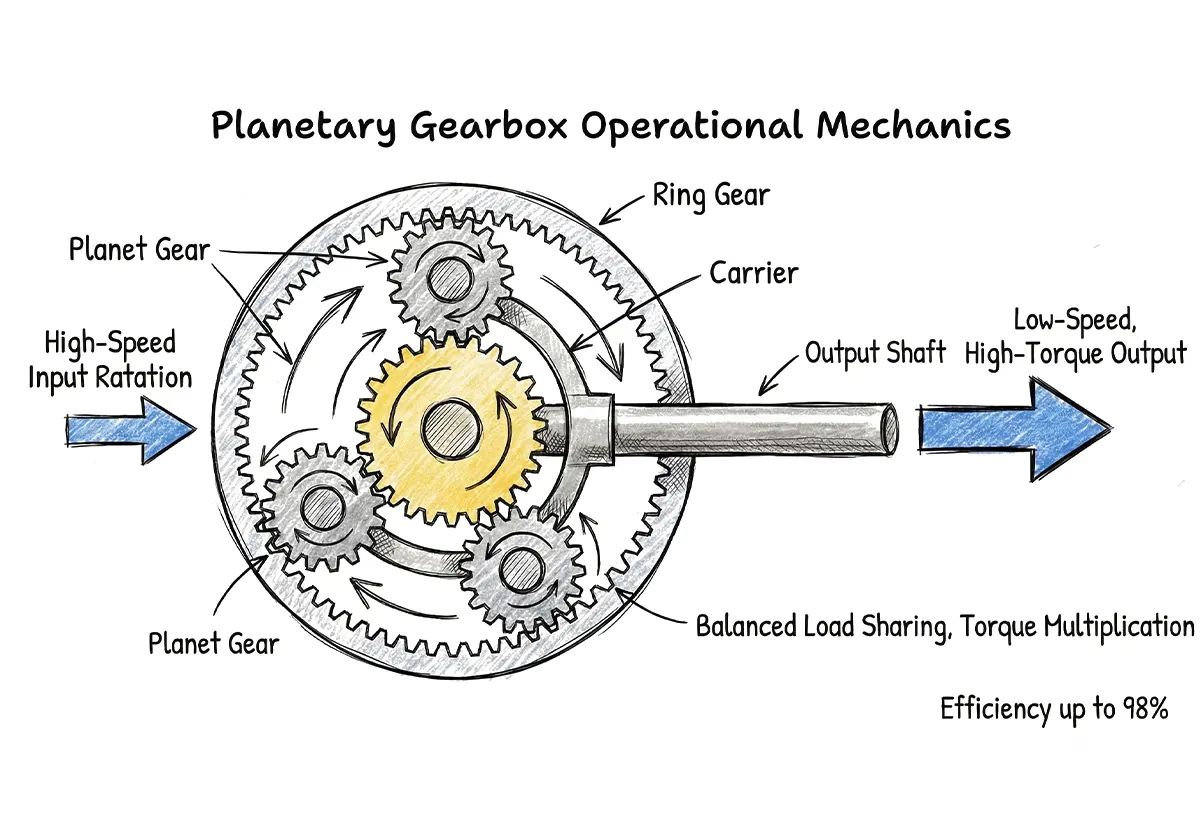
Planetary gear mesh. Radar antenna drives use DIN Class 4 to 5 gears with grinding finish — 2 to 3 quality grades higher than construction drives — to achieve the sub-arcminute backlash that pointing accuracy demands.
Continuous Rotation Duty — Airport Radars That Spin 24/7 for 20 Years
An airport surveillance radar (ASR) rotates continuously at 12 to 15 rpm — one full revolution every 4 to 5 seconds — 24 hours a day, 365 days a year, for 15 to 20 years between major overhauls. This is the most demanding continuous-rotation duty any slewing drive faces. In 20 years, the azimuth slewing drive completes approximately 63 to 158 million revolutions — orders of magnitude more than any construction or energy slewing drive.
At 15 rpm, each planet gear tooth in a 3-stage planetary reducer with a 600:1 ratio completes approximately 9,000 revolutions per minute at the sun gear. The bearing and gear tooth life calculations for this continuous high-speed duty are fundamentally different from the intermittent, low-speed duty of construction and energy slewing drives. The L10 bearing life must be calculated using continuous-duty load spectra, not the intermittent-duty spectra used for cranes and wind turbines.
The lubrication challenge of continuous rotation: At 15 rpm continuous, the slewing drive oil temperature stabilises at 40 to 60 degrees C above ambient — year-round. In a tropical airport installation at 40 degrees C ambient, the internal oil temperature can reach 100 degrees C continuously. The oil must maintain viscosity, film strength, and oxidation resistance at this temperature for 4,000 to 8,000 hour oil change intervals. Synthetic PAO (poly-alpha-olefin) oils are standard for continuous-rotation radar drives — mineral oils oxidise too rapidly at these sustained temperatures.

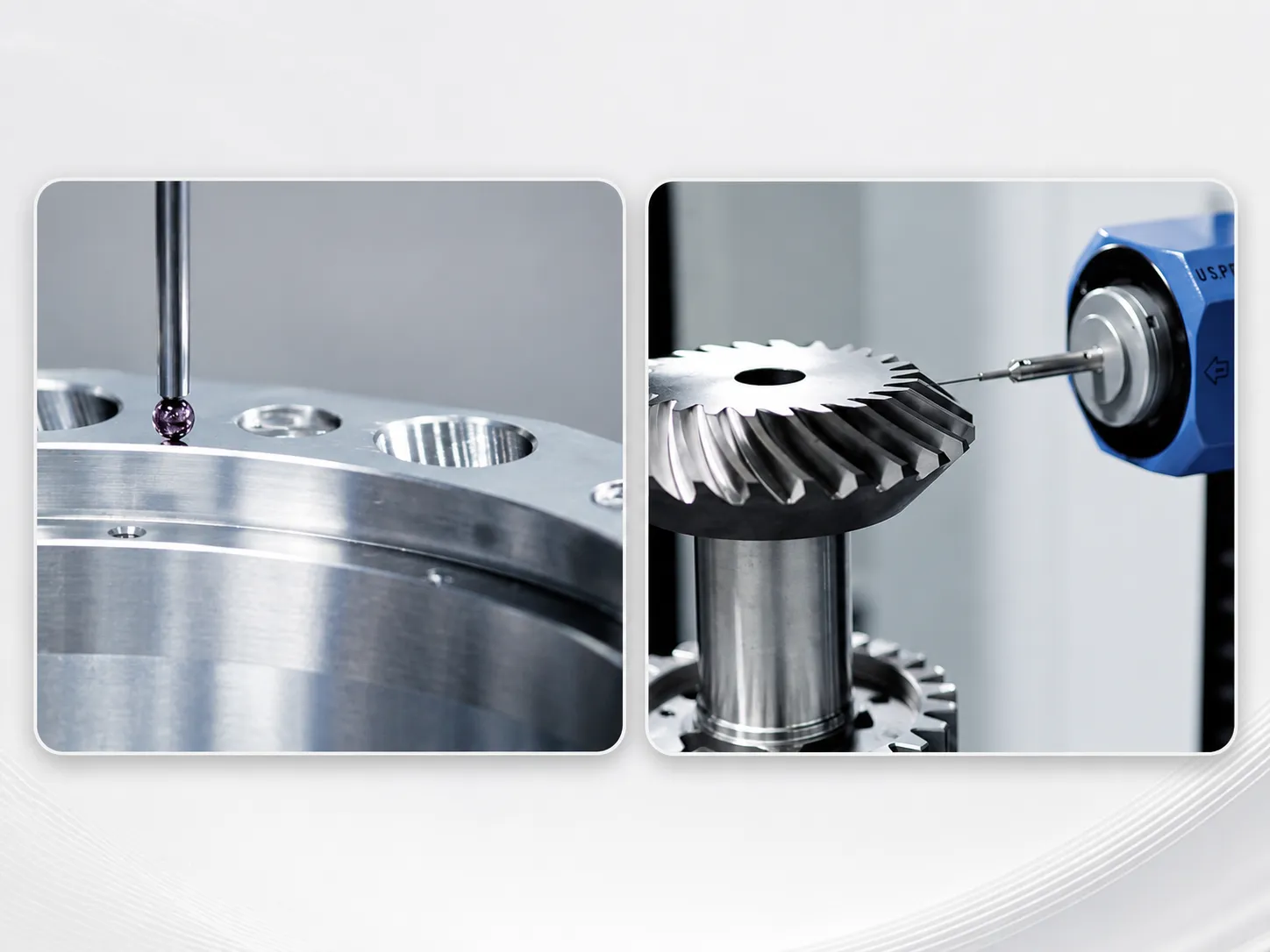
Top: Continuous-rotation slewing drive application. Bottom: Precision gear grinding — radar drives require the highest gear quality grades (DIN 4 to 5) for 20 years of uninterrupted rotation.

Electromagnetic Compatibility — Why a Radar Antenna Drive Must Be Electrically Silent
A radar antenna receives signals as weak as -120 dBm (one billionth of a billionth of a watt). Any electromagnetic noise generated by the slewing drive motor, the encoder, or the drive electronics can couple into the antenna feed and mask the target signal. The slewing drive system must comply with EMC (electromagnetic compatibility) requirements that are orders of magnitude stricter than any industrial drive standard.
DC brushless motors are preferred over brushed motors because brush arcing generates broadband electromagnetic noise. Variable-frequency drives (VFDs) for AC motors must use shielded cables and filtered outputs to prevent switching noise from radiating into the antenna sidelobes. In extreme cases, hydraulic motors (which generate zero electromagnetic emission) are used — accepting the lower positioning precision of hydraulic drive in exchange for complete electromagnetic silence.
Position feedback encoders mounted on the slewing drive output must provide resolution matching the pointing accuracy — typically 18 to 22 bit (262,144 to 4,194,304 counts per revolution). These high-resolution encoders use optical or magnetic sensing and generate low-level digital signals that must be shielded from the motor power cables. The encoder mounting interface on the slewing drive must provide rigid, vibration-free attachment with zero-backlash coupling to the output shaft.
The slewing drive housing must provide a continuous electrical ground path from the motor frame through the gearbox housing to the antenna pedestal — preventing ground loops that generate noise currents. All cable entries must use shielded connectors with 360-degree shield termination. The slewing ring bearing must maintain electrical continuity between the rotating and stationary parts to prevent charge accumulation and discharge arcing across the bearing rollers.
Three Failure Modes Unique to Radar Antenna Slewing Drives
Over 63 to 158 million revolutions (20 years of continuous airport radar duty), even DIN Class 5 gear teeth experience measurable profile wear. As tooth profiles wear, backlash increases from the delivery value (0.5 to 1.0 arcminutes) toward the replacement threshold (2 to 3 arcminutes). Once the backlash exceeds the antenna pointing error budget, the radar resolution degrades — targets that were previously separable merge into a single return, and the air traffic controller loses situational awareness. The backlash growth is gradual and undetectable without periodic measurement.
Large radar dishes (6 to 15 metres) are effective wind catchers — a 12-metre parabolic dish in a 150 km/h storm wind experiences a drag force of 80,000 to 150,000 N, producing overturning moments of 200 to 500 kN·m at the slewing bearing. The normal procedure is to stow the antenna (rotate the dish face-on to the wind and lock the brakes) before the storm arrives. If the storm arrives unexpectedly or the stow mechanism fails, the slewing drive must hold the dish in its current position against the full wind load. If it cannot hold, the dish rotates uncontrolled and the wind catches it broadside — generating forces that can bend the pedestal or rip the dish from its mount.
A degraded motor brush, a loose shield termination, or a VFD filter failure can inject broadband noise into the antenna sidelobe response. This noise appears as false targets on the radar display — stationary clutter that masks real targets. Because the noise source rotates with the antenna, it appears as a consistent return at a fixed range — making it difficult to distinguish from a genuine target at the same position. Operators may not recognise the false return as drive-generated interference until a systematic EMC survey is performed.
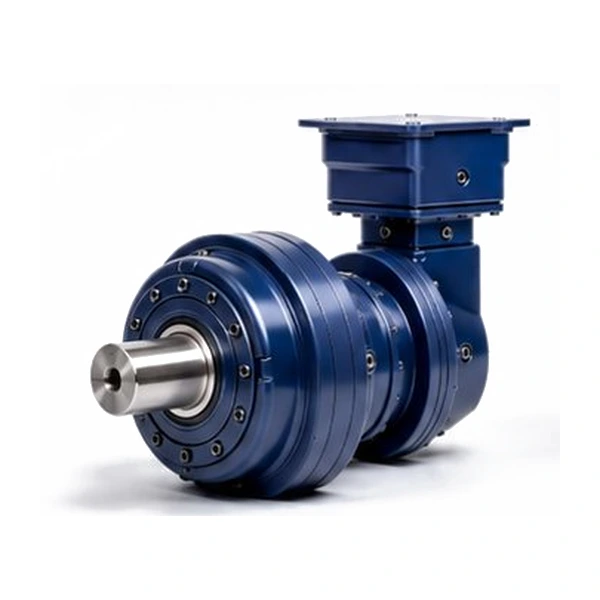
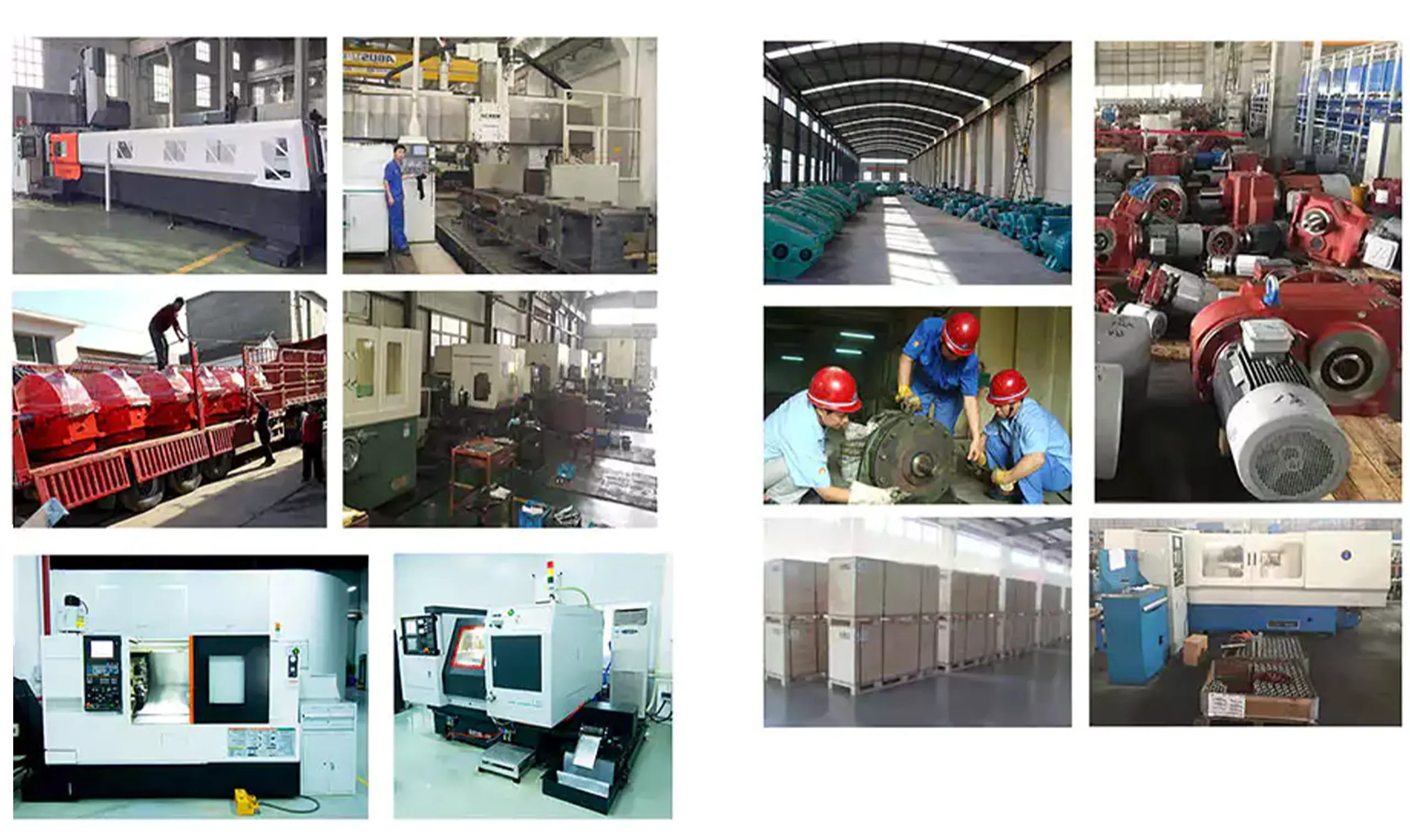
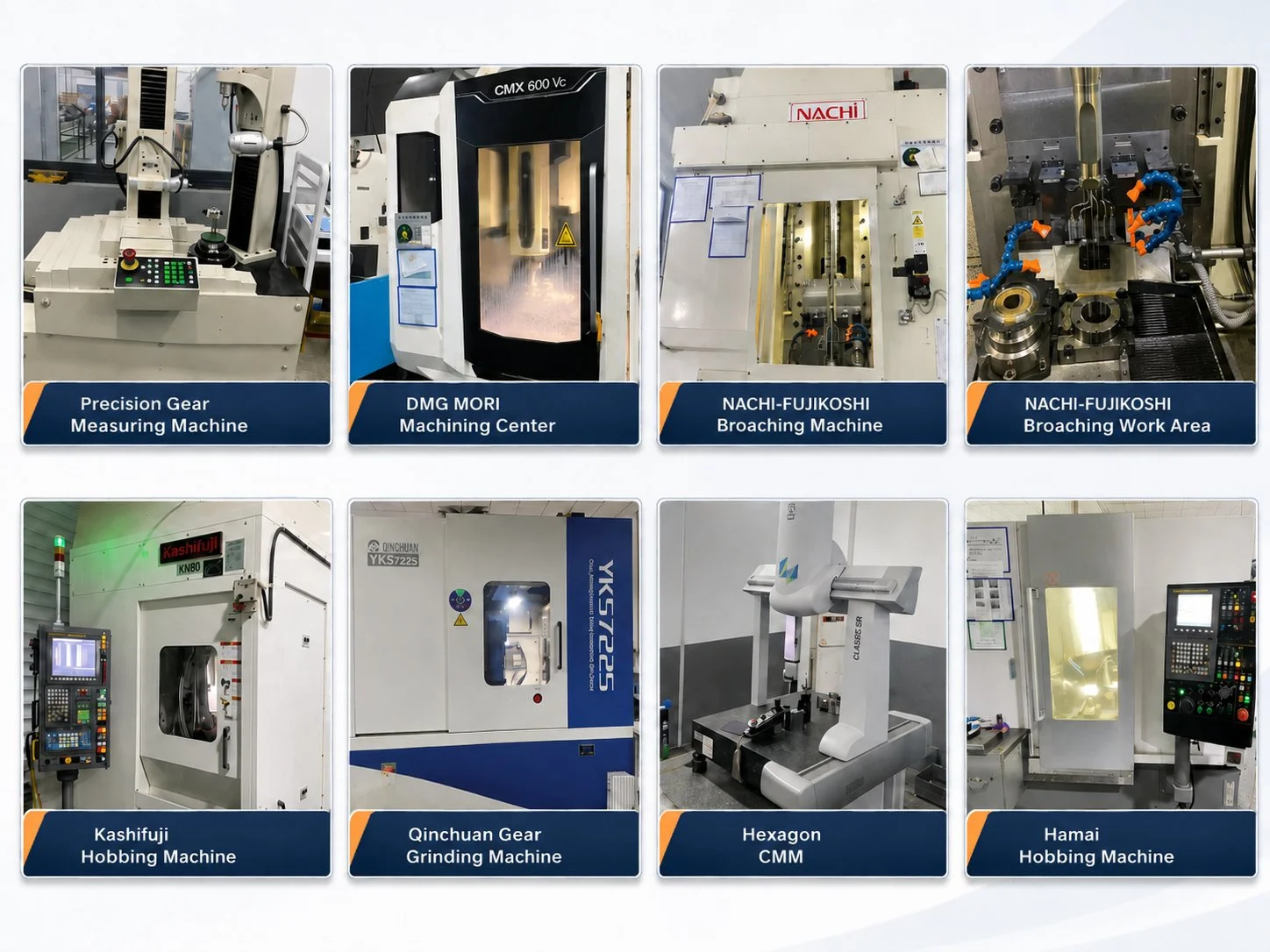
Top: ZR-series slewing drive — multi-stage precision planetary for antenna positioning. Bottom: Korea Ever-Power manufacturing facility with precision production lines for radar-grade drives.
Slewing Drive Planetary Gearbox for Radar Antennas — Frequently Asked Questions
Korea Ever-Power provides radar antenna slewing drive planetary gearboxes with sub-arcminute backlash, continuous-rotation ratings, and EMC-compliant housings. Provide your antenna type and pointing requirement for a precision specification.
Editor: Cxm