Where Slewing Drives Work on an Offshore Drilling Platform
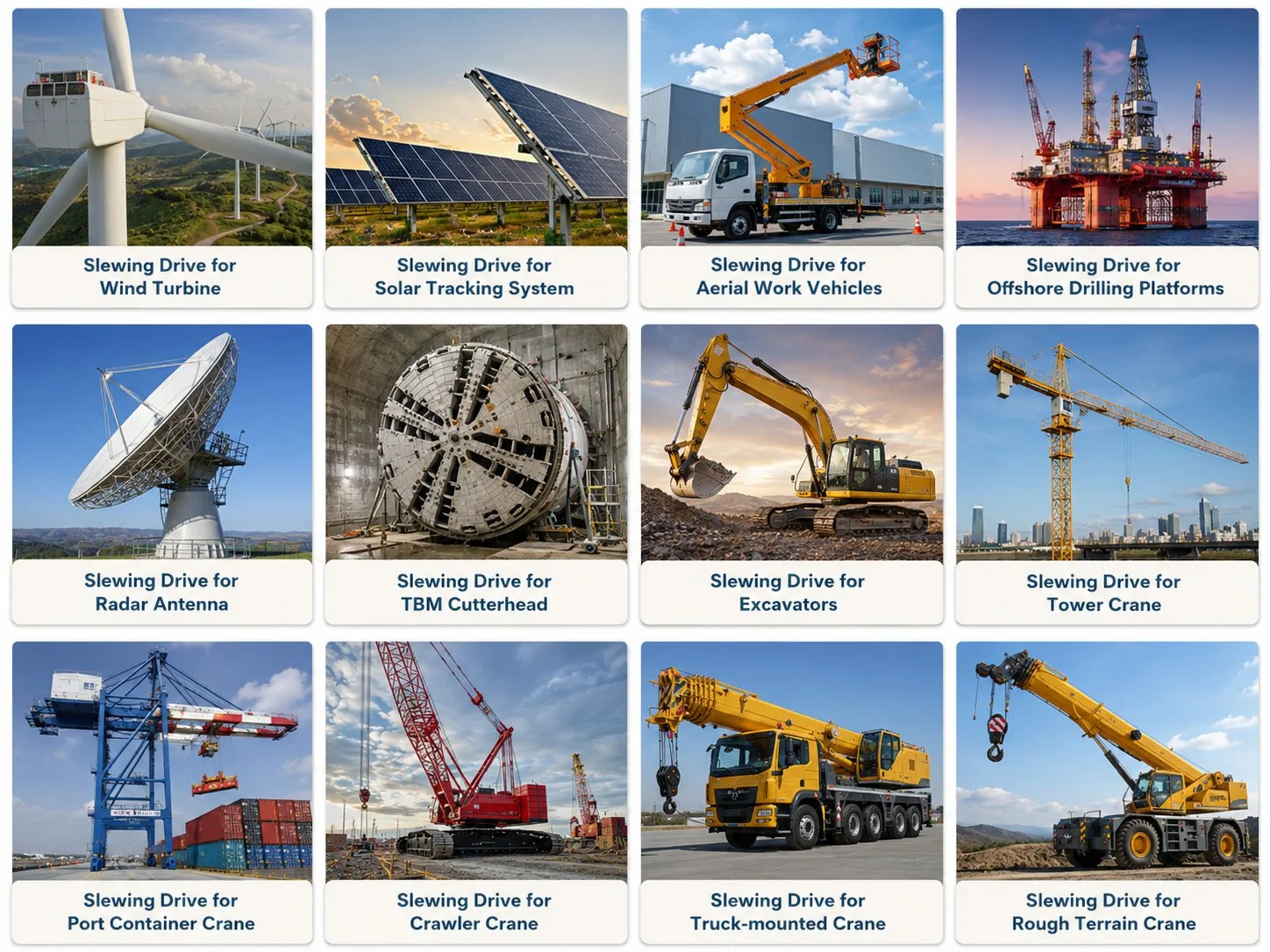
An offshore drilling platform — jack-up, semi-submersible, or drillship — uses slewing drive planetary gearboxes in multiple locations across the drilling and material-handling systems. Each location imposes a different combination of torque, speed, environment, and safety classification — but all share the common challenges of marine corrosion, wave motion, and restricted maintenance access.
Offshore pedestal cranes rotate on the platform deck to handle drill pipe, casing, equipment, and supply vessel cargo. The slewing drive must operate in continuous salt spray while handling loads of 20 to 150 tonnes at radii of 20 to 50 metres. Slewing torque: 30,000 to 120,000 Nm. The crane is the lifeline of the platform — if it cannot slew, the platform cannot receive supplies or handle pipe.
The iron roughneck (automated pipe wrench) and the pipe racking system use slewing drives to position drill pipe between the rack, the catwalk, and the well centre. These drives operate in the Zone 1 hazardous area — directly above the wellbore where hydrocarbon gas can be present. Slewing torque: 5,000 to 25,000 Nm. ATEX or IECEx certification is mandatory.
Some drilling systems use slewing drives for the rotary table indexing or the top drive service loop management — positioning the drill string torque equipment around the well centre. These drives operate under the highest vibration loads on the platform, transmitted from the drill string through the derrick structure. Slewing torque: 10,000 to 40,000 Nm.
The BOP transporter and test stump systems use slewing drives to rotate the 100 to 400 tonne blowout preventer stack during maintenance and testing. These are the heaviest loads any slewing drive on the platform handles — but they operate infrequently (every 2 to 4 weeks). Slewing torque: 80,000 to 200,000 Nm.
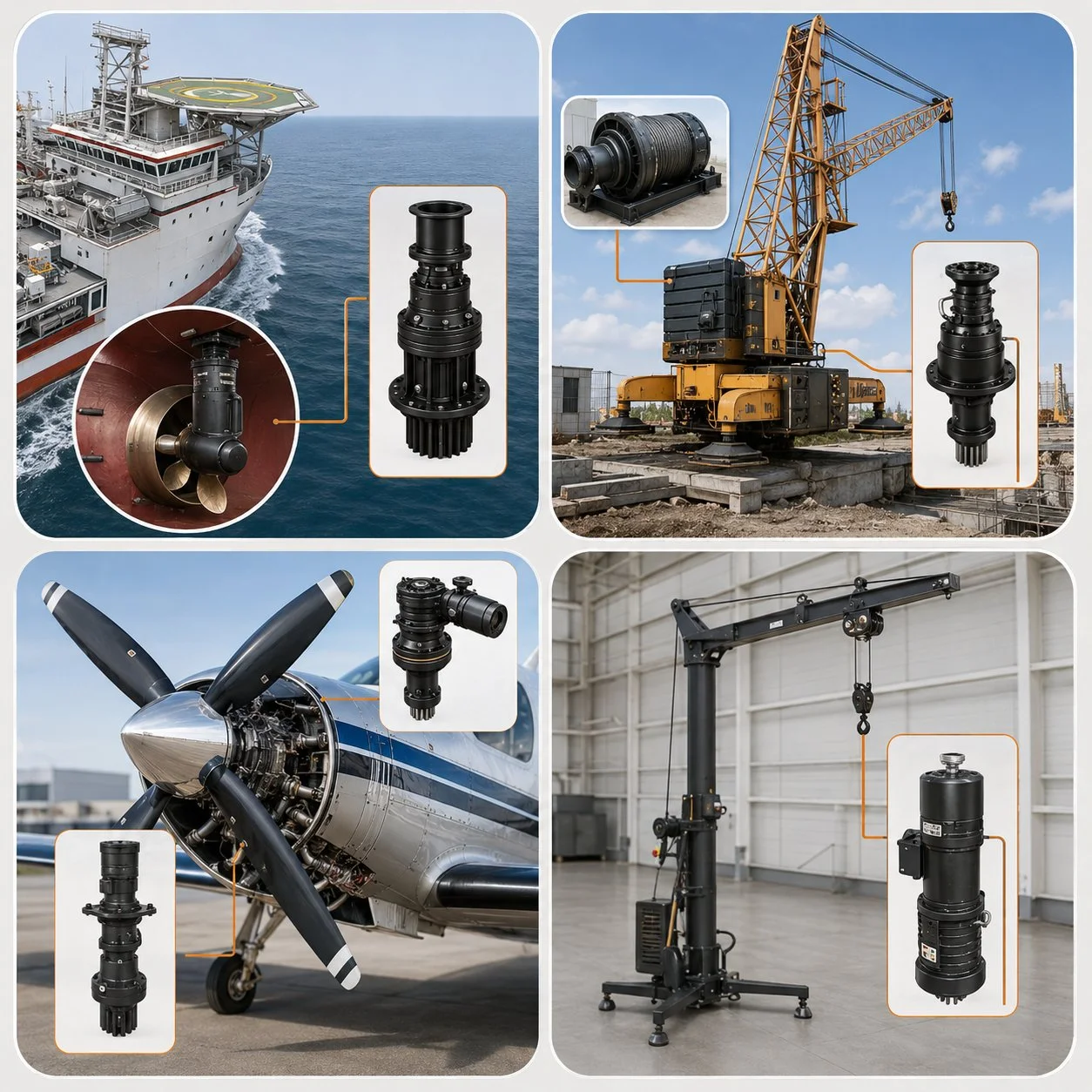
Slewing drive for offshore applications. Every unit must withstand continuous salt spray, wave-induced dynamic loading, and explosive atmosphere requirements — simultaneously, for 20 to 30 years.
Wave Motion — The Dynamic Foundation That Adds Gyroscopic and Inertial Loads to Every Slewing Operation
On land, a slewing drive rotates a load against gravity and friction. On an offshore platform, the slewing drive rotates a load against gravity, friction, AND the inertial forces generated by the platform motion. When the platform heaves (vertical motion) 3 metres in a 10-second wave period, every mass on the platform experiences an acceleration of approximately 0.3 g — increasing the effective weight of a 50-tonne crane load by 15 tonnes during the upward heave and reducing it by 15 tonnes during the downward heave.
When the platform pitches (angular motion) 5 degrees at the same period, the crane boom — which is 30 metres from the slewing centre — experiences a lateral acceleration that generates a dynamic overturning moment in addition to the static moment. This wave-induced dynamic moment oscillates with the wave period, continuously adding and subtracting from the steady-state slewing torque requirement.
| Sea State | Heave (m) | Pitch (deg) | Dynamic Load Factor | Slewing Torque Increase |
|---|---|---|---|---|
| Calm (Hs < 1 m) | 0.5 – 1.0 | 1 – 2 | 1.05 – 1.10 | +5 to +10% |
| Moderate (Hs 2 – 4 m) | 2 – 4 | 3 – 6 | 1.15 – 1.30 | +15 to +30% |
| Rough (Hs 4 – 8 m) | 4 – 8 | 6 – 10 | 1.30 – 1.60 | +30 to +60% |
Why land-based sizing formulas undersize offshore drives: The wave-induced dynamic load factor adds 15 to 60% to the slewing torque requirement compared to the same load and radius on land. A slewing drive that is adequately rated for an 80-tonne lift at 30-metre radius on land (approximately 23,500 Nm) is undersized for the same lift at the same radius on a platform in moderate seas — the dynamic factor increases the requirement to 27,000 to 30,500 Nm. Offshore slewing drives must be rated using the DNV or API dynamic load factors for the site-specific sea state, not the static land-based calculation.
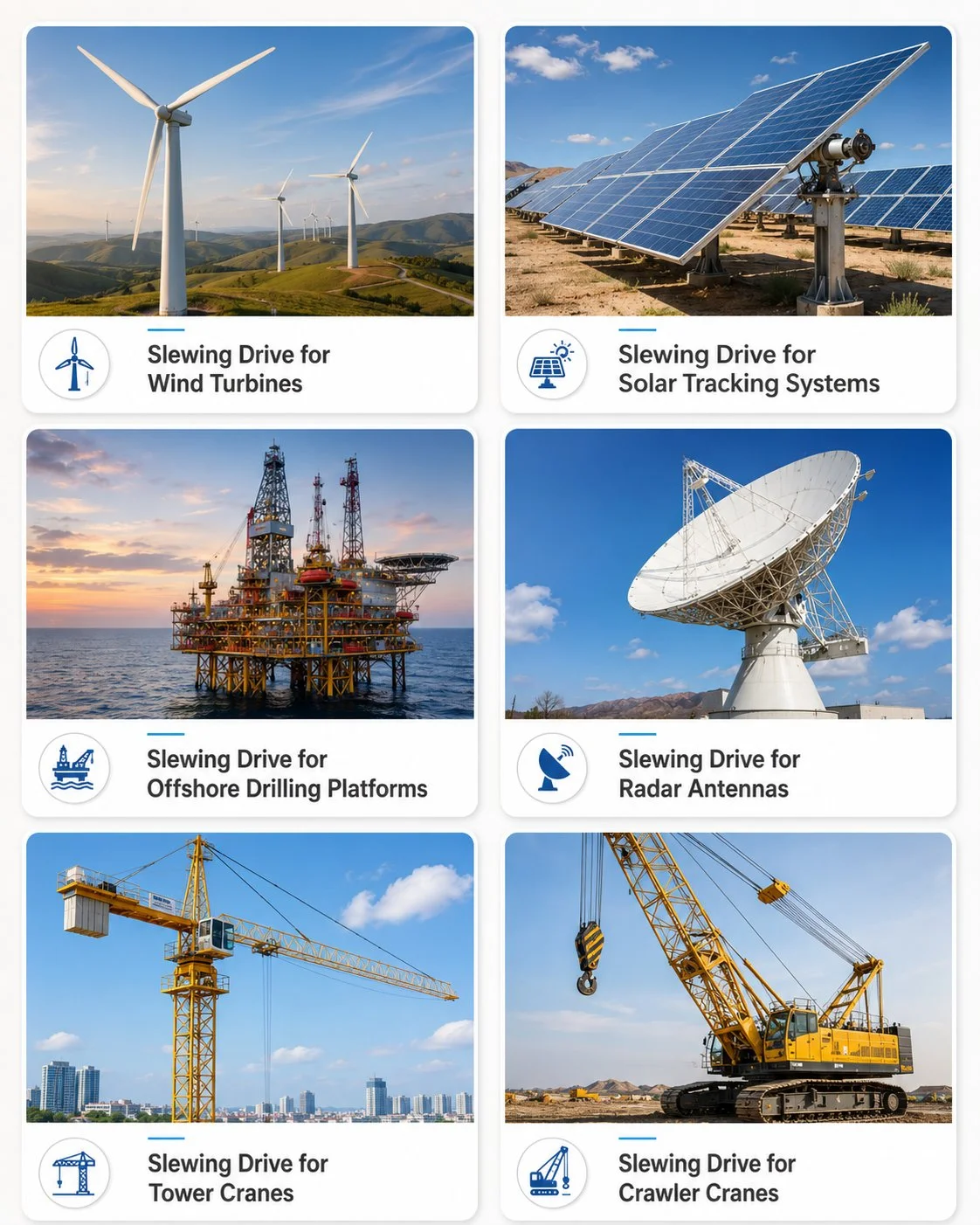
The slewing drive on an offshore platform must handle both the steady-state load AND the wave-induced dynamic load — increasing the total torque requirement by 15 to 60% compared to the identical operation on land.
ATEX and Explosive Atmosphere — The Requirement That Changes Everything About Material and Design Choices
On an offshore drilling platform, the drill floor and surrounding areas are classified as Zone 1 or Zone 2 hazardous atmospheres under ATEX (European Directive 2014/34/EU) or IECEx (international equivalent). In these zones, explosive gas-air mixtures can be present during normal operations (Zone 1) or during abnormal conditions (Zone 2). Any equipment operating in these zones — including slewing drives — must be designed to prevent ignition of the explosive atmosphere.
The external surface temperature of the slewing drive housing must not exceed the auto-ignition temperature of the gases present — typically 200 to 300 degrees C for hydrocarbon gases (T3 or T4 temperature class). This limit must be maintained under the worst-case operating condition: maximum torque, maximum ambient temperature, maximum solar radiation. The thermal design of the housing, the gear efficiency, and the lubricant type all affect the maximum surface temperature.
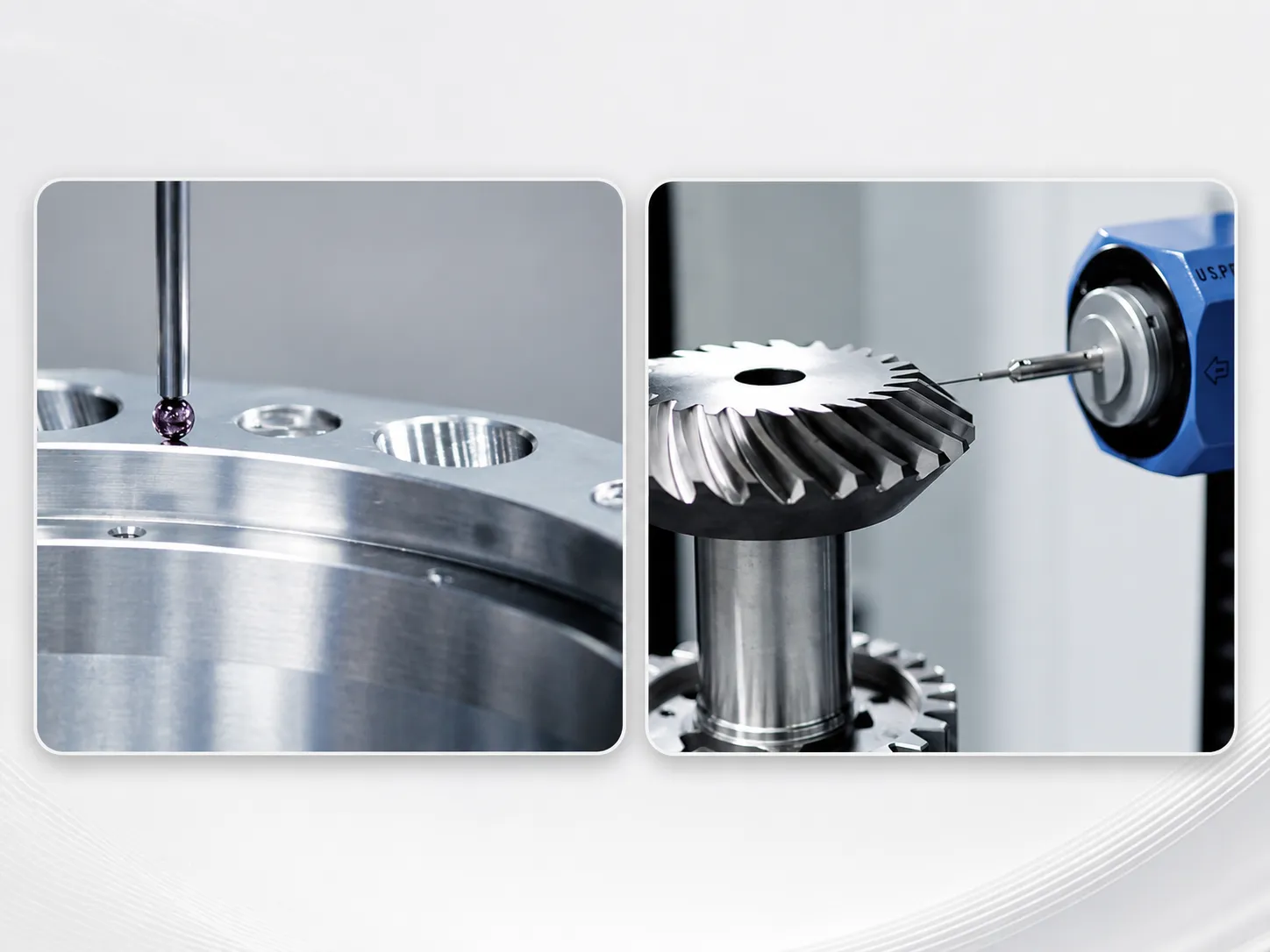
If any part of the slewing drive is exposed to the hazardous atmosphere (such as the pinion-ring gear mesh), the materials must not produce sparks from friction, impact, or mechanical failure. Standard carbon steel on carbon steel can produce sparks. ATEX-rated gear meshes may require non-sparking pinion materials (copper-nickel alloys, certain bronzes) or full enclosure of the gear mesh in a flameproof housing. The enclosure approach (Exd — flameproof) is the most common solution for slewing drives on drill floors.
An Exd-rated slewing drive encloses the entire gear mechanism and motor in a housing designed to contain any internal explosion without transmitting flame to the external atmosphere. The housing wall thickness, flange gap dimensions, and fastener torque must all comply with IEC 60079-1 — adding 20 to 40% to the housing weight and cost compared to a standard non-ATEX drive. The housing must be pressure-tested to 1.5 times the maximum explosion pressure before delivery.
Three Failure Modes Specific to Offshore Drilling Slewing Drives
The slewing bearing raceway — the hardened steel surface on which the bearing balls or rollers run — is the most corrosion-sensitive component in the offshore slewing drive. Salt spray penetrates through the bearing seal and mixes with the grease. Chloride ions in the salt water initiate pitting corrosion on the raceway surface. Each pit becomes a stress concentration that propagates into fatigue spalling under the rolling contact load. Unlike land-based slewing drives (where corrosion is negligible over 10 to 20 years), offshore bearing raceways can develop visible pitting within 3 to 5 years without adequate corrosion-inhibiting grease and seal maintenance.
Every wave cycle adds a dynamic torque component to the slewing drive load — 5 to 10 seconds per cycle, 6 to 12 cycles per minute, 24 hours per day. Over one year of continuous operation, the gear teeth experience 3 to 6 million additional stress cycles from wave motion alone — far exceeding the number of cycles from the actual slewing operations. The wave-induced fatigue is low-amplitude but high-cycle — the most damaging combination for case-hardened gear tooth surfaces. Standard land-based gear fatigue calculations understate the tooth life by 30 to 50% if wave-induced cycling is not included.
The flameproof (Exd) housing relies on precision-machined flange gaps to contain any internal ignition. These gaps must remain within the IEC 60079-1 dimensional tolerance for the entire service life. Salt corrosion, thermal cycling, and mechanical impact from routine platform operations can widen the flange gaps beyond the certified dimensions. Once the gap exceeds the maximum permitted value, the housing is no longer certified to contain an internal explosion — and the drive becomes a potential ignition source in the Zone 1 atmosphere. This degradation is invisible from outside the housing and can only be detected by dimensional inspection of the flange gap during a scheduled inspection.
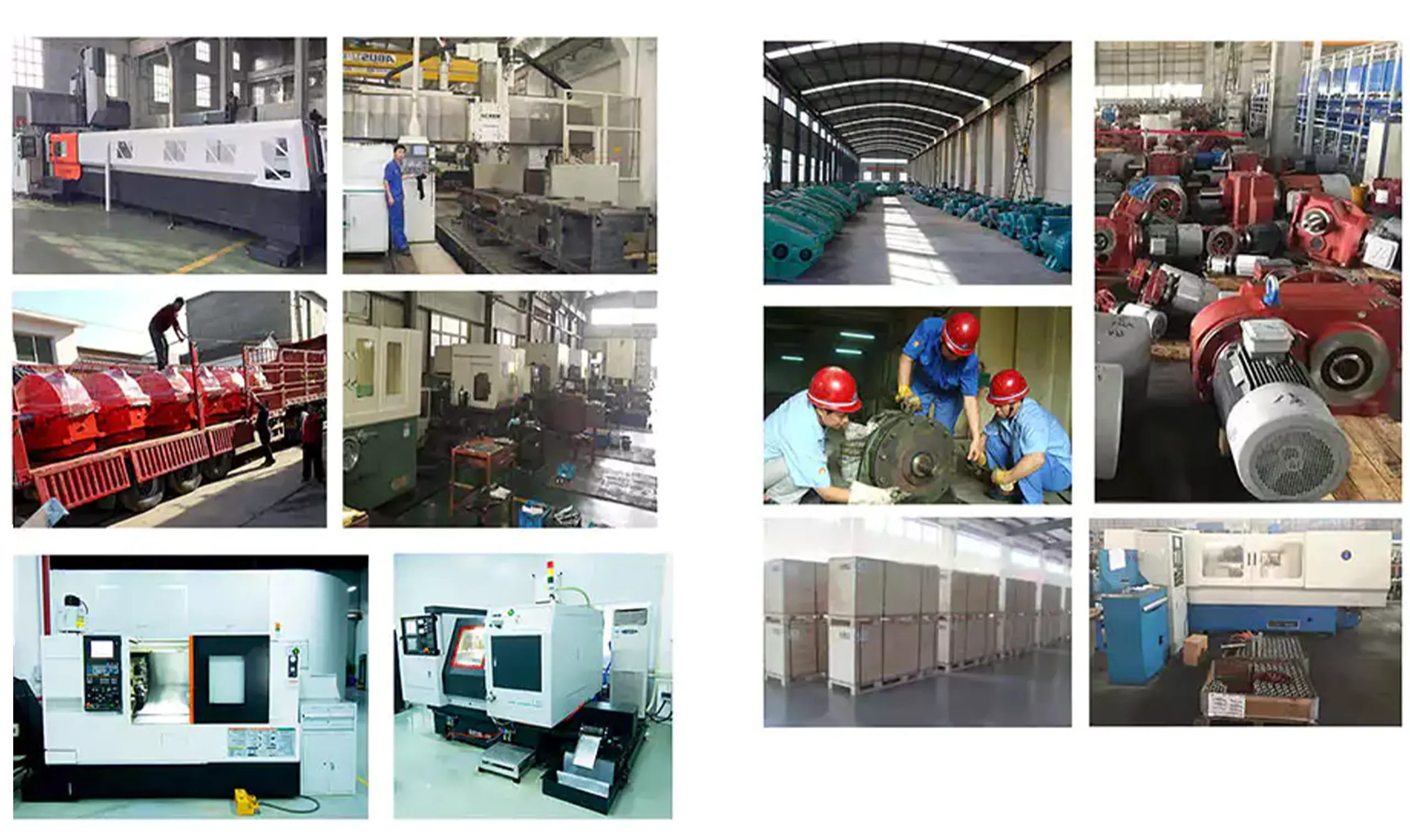
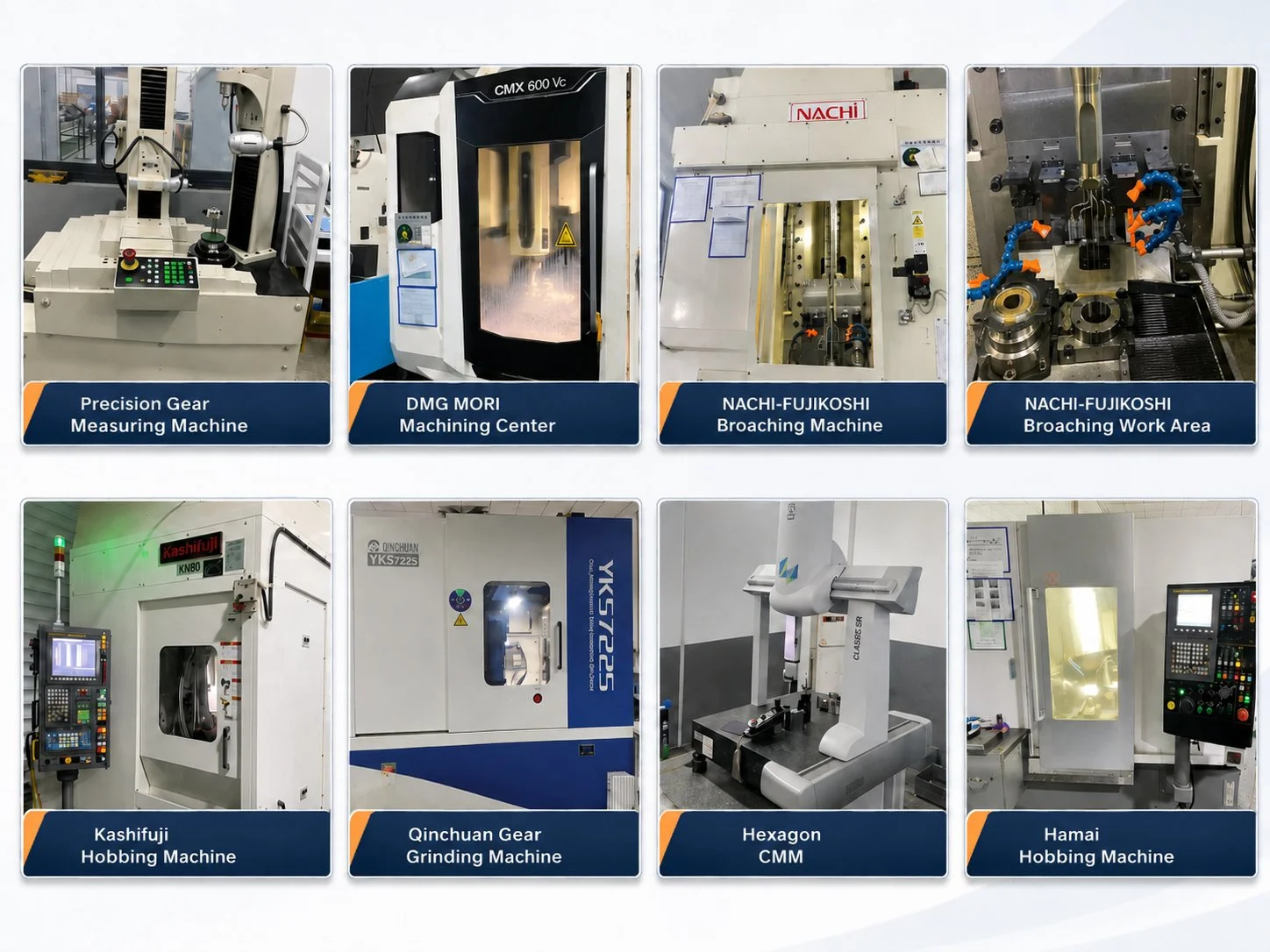
Top: Korea Ever-Power manufacturing facility. Bottom: Testing centre — offshore drives undergo marine-grade corrosion testing, ATEX housing pressure verification, and dynamic torque simulation before delivery.
Slewing Drive Planetary Gearbox for Offshore Drilling Platforms — Frequently Asked Questions
Korea Ever-Power provides offshore drilling platform slewing drive planetary gearboxes with DNV dynamic load ratings, C5-M marine coatings, and ATEX flameproof options from 5,000 to 200,000 Nm. Provide your platform type and equipment application for a marine-rated specification.
Redaktör: Cxm