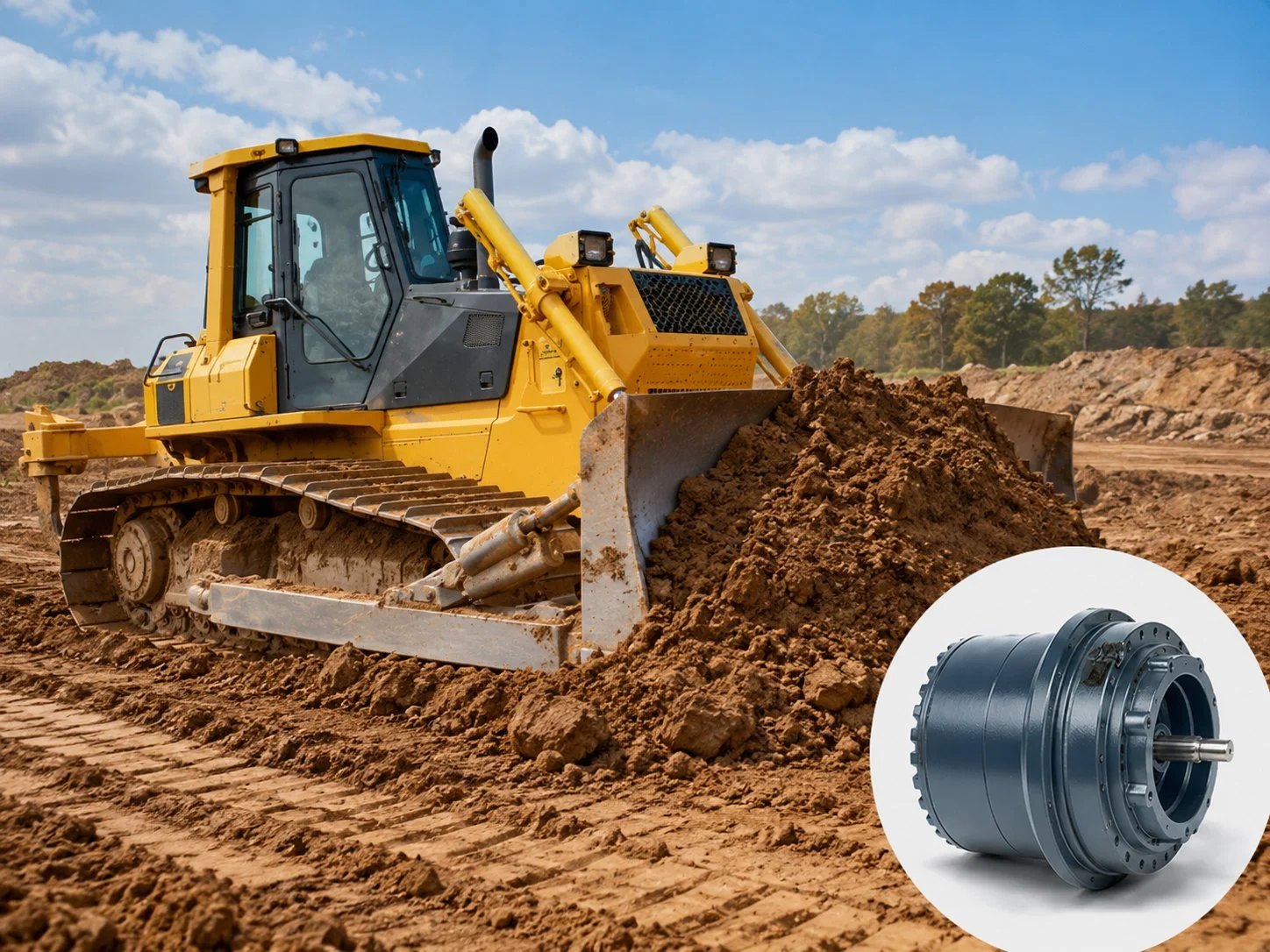
What Makes a Bulldozer Track Drive Different from Every Other Final Drive
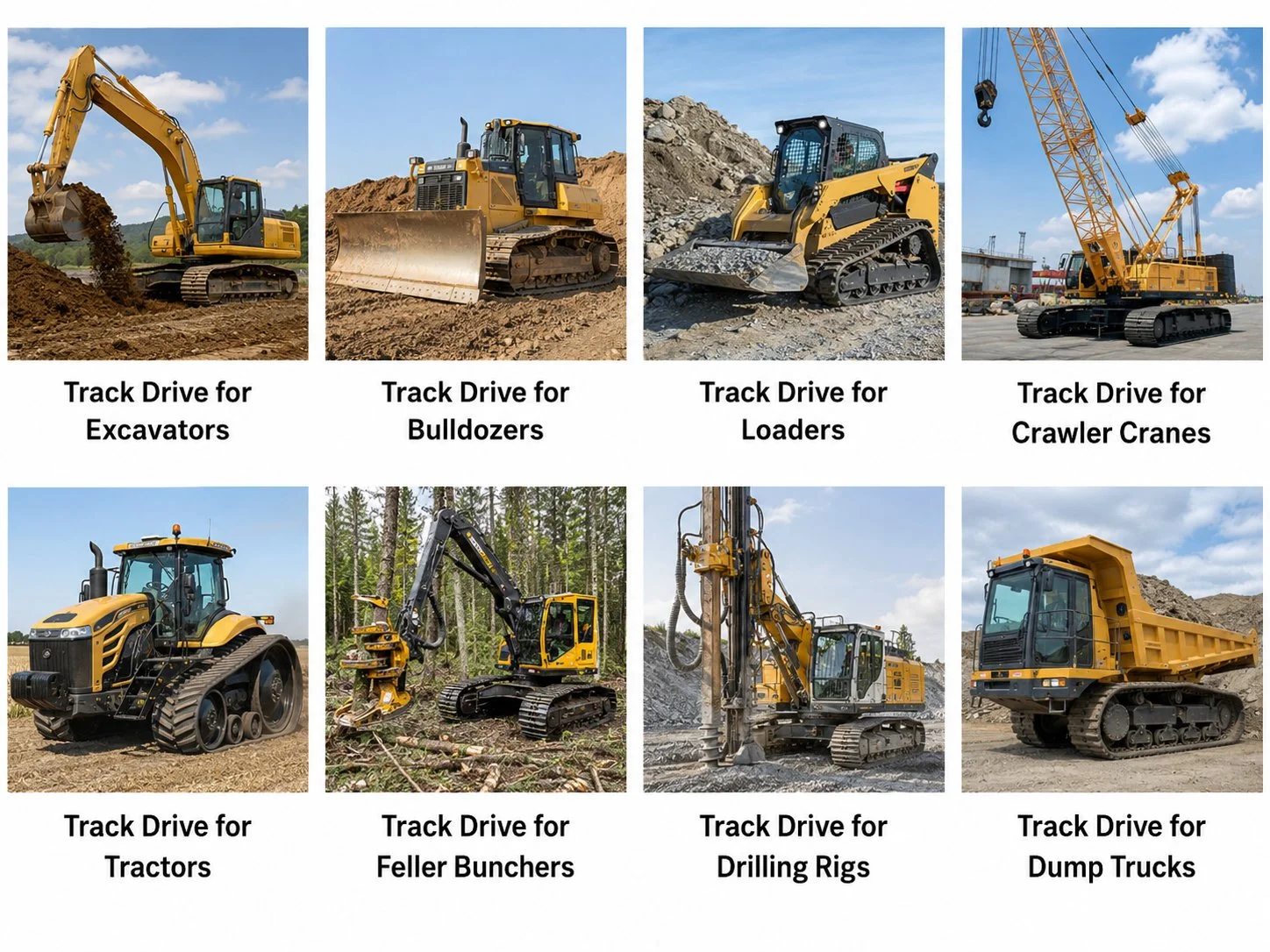
Every tracked machine — excavators, crawler cranes, compact loaders, drilling rigs — uses a track drive planetary gearbox to convert motor speed into sprocket torque. But the bulldozer places a unique combination of demands on this gearbox that no other machine replicates.
The fundamental difference is the blade. A bulldozer blade weighing 2,000 to 8,000 kg engages material at ground level, and the engine drives the tracks forward against the resistance of the material being pushed. This resistance — the drawbar pull — is sustained at near-maximum motor torque for the entire length of the push pass, typically 30 to 120 metres. The track drive gearbox transmits this sustained torque for 1 to 4 minutes continuously per pass, with only a brief relief during the return (empty blade, reverse travel).
Compare this to an excavator: the travel motor operates at full torque for a few seconds during repositioning, then idles completely while the upper structure swings, digs, and dumps. The excavator track drive duty cycle is 5 to 15% — the bulldozer track drive duty cycle is 60 to 85%. This difference in duty cycle is what makes the bulldozer the most thermally demanding application for any track drive planetary gearbox in the entire heavy equipment industry.
Duty Cycle Comparison
Drawbar Pull — The Force That Defines Bulldozer Track Drive Sizing
Drawbar pull is the net horizontal force available at the hitch point behind the machine after subtracting the rolling resistance of the tracks on the ground. It is the single most important number in bulldozer engineering — and the number the track drive planetary gearbox must sustain for the duration of every push pass.
The drawbar pull of a bulldozer is limited by the lower of two values: the engine torque delivered through the drivetrain to the tracks, or the maximum friction force between the tracks and the ground (traction limit). On firm ground, the engine power is usually the limiting factor. On loose or wet ground, the tracks slip before the engine reaches full power — the traction limit governs.
| Dozer Class | Weight (t) | Engine (kW) | Max Drawbar Pull (kN) | Track Drive Torque (Nm) | Sustained Duty |
|---|---|---|---|---|---|
| Small (D3 – D5) | 7 – 14 | 55 – 75 | 60 – 110 | 18,000 – 33,000 | 60 – 75% |
| Medium (D6 – D7) | 18 – 28 | 120 – 185 | 140 – 240 | 42,000 – 72,000 | 65 – 80% |
| Large (D8 – D9) | 35 – 52 | 230 – 310 | 280 – 420 | 84,000 – 126,000 | 70 – 85% |
| Mining (D10 – D11) | 65 – 115 | 430 – 700 | 500 – 850 | 150,000 – 255,000 | 75 – 85% |
Track drive torque calculated at sprocket PCD 600 mm (small/medium) and 750 mm (large/mining). Per-track values shown (total machine drawbar pull is split across two tracks). Sustained duty is the percentage of each operating hour that the track drive transmits torque at or above 70% of rated output.
Drawbar Pull Calculation — Sizing the Track Drive for a D7-Class Bulldozer
The worked example below demonstrates how to calculate the required track drive torque for a medium-class bulldozer in production dozing. Unlike the excavator gradeability calculation (which sizes for a brief climb), this calculation sizes for the sustained push load that the track drive must carry for minutes at a time.
The excavator SF of 2.0 accounts for brief but severe bidirectional shock loads (counter-rotation). The bulldozer SF of 1.75 accounts for less severe peaks but much longer sustained loading. The thermal consequence is inverted: the bulldozer track drive operates at 70 to 85% of its rated torque for minutes continuously, generating sustained heat that accumulates in the oil bath. The excavator track drive operates at 100% for seconds, then cools during idle. A bulldozer track drive sized for the correct torque but without adequate thermal capacity will overheat and degrade the gear oil — even though the instantaneous torque never exceeds the mechanical rating.
Thermal Management — The Challenge That Distinguishes Bulldozer Track Drives from All Others
A track drive planetary gearbox is an enclosed oil bath with no external cooling circuit. The only heat rejection path is conduction through the housing wall and convection from the housing surface to the surrounding air (or mud). In a bulldozer, the heat input is sustained and the heat rejection is limited — producing the highest steady-state operating temperatures of any track drive application.
At 42,000 Nm output through a 3-stage planetary reduction at 94% efficiency: heat = power x (1 – efficiency). At 37 rpm output: power = 42,000 x 37 x 2 x 3.14159 / 60 = 162.7 kW. Heat = 162.7 x 0.06 = 9.8 kW dissipated into the oil bath continuously during every push pass.
Typical oil volume: 3.0 litres. Specific heat of gear oil: approximately 1.8 kJ/(kg x K). Oil density: 0.88 kg/L. Thermal mass: 3.0 x 0.88 x 1.8 = 4.75 kJ/K. Temperature rise per minute at 9.8 kW: 9.8 x 60 / 4.75 = 124 degrees C per minute if no heat is rejected through the housing — which explains why adequate housing surface area and ground contact cooling are essential.
In practice, the housing rejects heat through conduction to the track frame and convection to air. The equilibrium oil temperature during sustained dozing is typically 80 to 100 degrees C in temperate climates and 90 to 115 degrees C in tropical climates. Above 110 degrees C, standard gear oil viscosity falls below the minimum for reliable gear tooth film — accelerating wear.
This is why bulldozer track drives use larger oil volumes (3 to 6 litres vs 1.5 to 3 litres for excavators at the same torque class), heavier housings with more surface area, and in some mining-class machines, external oil cooling loops that no other track drive application requires. The Korea Ever-Power planetary gearbox engineering team designs bulldozer-specific track drives with increased housing fin area, higher-temperature seal compounds, and synthetic oil specifications for tropical and desert applications.
Track Slip — The Deliberate Overload Condition That Bulldozers Impose on Their Final Drives
In most tracked machines, track slip is a failure condition — the tracks lose grip and the machine stops moving. In a bulldozer, controlled track slip is a normal operating condition. When the blade encounters hard material or a large obstacle, the operator maintains full throttle and allows the tracks to slip against the ground until the material yields or the machine is redirected. During slip, the track drive transmits full motor stall torque while the output sprocket rotates slowly or intermittently — the worst-case thermal condition for a planetary gearbox.
The hydraulic motor runs at full pressure (stall torque) while the sprocket barely moves. The planetary gears carry full tooth load at near-zero output speed. The oil is churned rather than circulated — generating heat without the cooling flow that normal rotation provides. The planet pin bearings see full radial load without the hydrodynamic oil wedge that depends on rotational speed. This is the condition that causes the most rapid bearing wear in bulldozer track drives.
Most track drive manufacturers rate their units for a maximum of 30 seconds of continuous stall (full torque, zero output speed). Beyond 30 seconds, the oil temperature in the vicinity of the planet bearings rises above the lubricant film failure threshold. Bulldozer operators routinely exceed this limit — 60 to 90 seconds of sustained slip is common when pushing frozen material or breaking through compacted layers. The track drive must be designed for this reality, not the theoretical limit.
Three Failure Modes Specific to Bulldozer Track Drives
The most common bulldozer-specific failure. Sustained operation at 80 to 100% torque for hours per shift raises the oil temperature above 100 degrees C. At these temperatures, the oil oxidises and loses viscosity. The gear tooth film thins. Micro-pitting begins on the planet gear flanks. Over 2,000 to 3,000 hours of hot operation, the pitting grows into spalling and the gearbox develops audible noise under load.
During track slip, the sprocket rotates slowly or stops while the motor torque remains at maximum. The planet gears carry full radial load but rotate too slowly to build the hydrodynamic oil wedge that normally separates the rollers from the raceway. The bearings operate in boundary lubrication — metal-to-metal contact through a thin residual oil film. Each slip event removes a microscopic layer of bearing surface. Accumulated over thousands of slip events per year, the bearing clearance grows until the planet gears wobble and contact the ring gear non-uniformly.
Bulldozers operate with the sprocket hub at or below ground level — often buried in the material being pushed. Sand, gravel, and crusite (crushed rock) particles enter the sprocket-to-track interface and act as a grinding compound. The sprocket teeth wear at 2 to 5 times the rate seen on excavators operating on the same material, because the bulldozer sprocket is continuously engaged with the track under load while the material surrounds it. When sprocket teeth wear past the service limit, the track chain engagement becomes unstable and the tracks can derail under side-loading.
Ripping Mode — The Second Duty Cycle That Doubles the Track Drive Torque Requirement
Most D6-class and larger bulldozers carry a rear-mounted ripper — a single or multi-shank tool that penetrates and fractures rock, frozen ground, or compacted material ahead of the blade. During ripping, the machine moves forward slowly (1.5 to 2.5 km/h) while the ripper shank drags through the ground at depths of 300 to 800 mm.
The ripping force adds directly to the drawbar pull requirement: the engine must overcome both the rolling resistance of the tracks AND the shearing resistance of the material being ripped. The combined force can reach 120 to 150% of the dozing-only drawbar pull — meaning the track drive may operate at 120 to 150% of the sustained dozing torque during ripping passes. This is the load case that determines the peak torque rating of the track drive, while the sustained dozing torque determines the continuous rating.
Sizing implication: A bulldozer track drive must be sized for two independent criteria: (1) the continuous torque must accommodate the sustained dozing drawbar pull at 75 to 85% duty cycle, AND (2) the peak torque must accommodate the combined dozing + ripping force at short-duration overload. A track drive that satisfies the dozing torque but cannot handle the ripping peak will trigger the hydraulic relief valve during ripping — limiting the ripping depth and reducing productivity by 20 to 30%.
Korea Ever-Power Track Drive Planetary Gearboxes for Bulldozer Applications
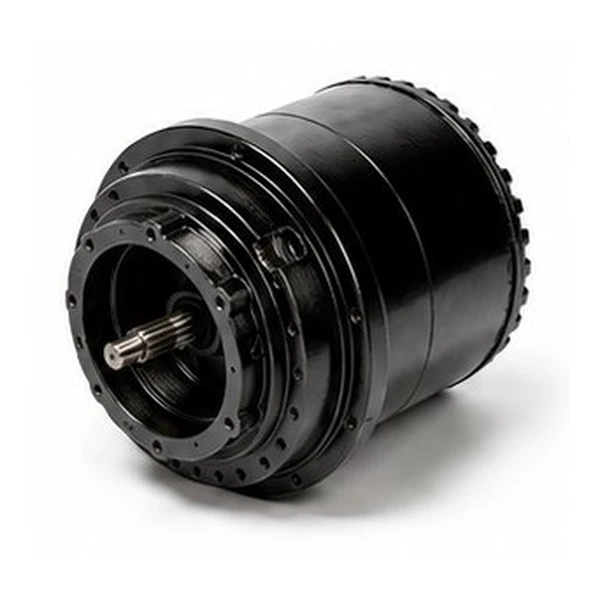 Track Drive Planetary Gearboxes →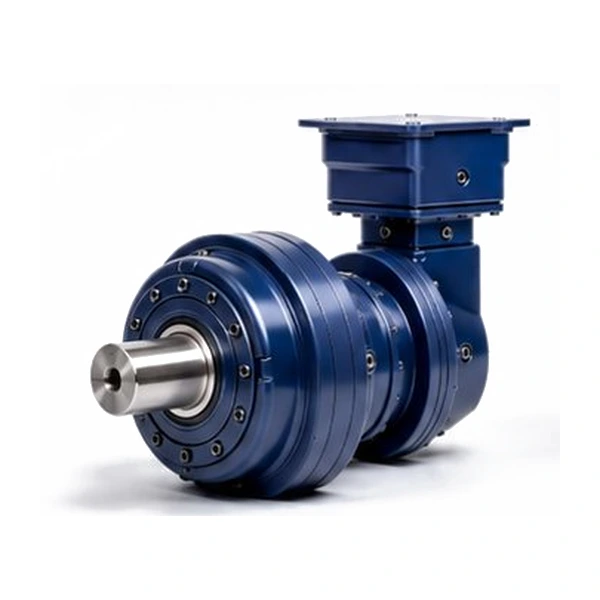
Track Drive Planetary Gearbox for Bulldozers — Frequently Asked Questions
Korea Ever-Power bulldozer track drive planetary gearboxes are thermal-rated for sustained dozing duty at 75 to 85% load factor — not just peak mechanical torque. Provide your dozer model, operating weight, and site conditions for a thermal suitability assessment and cross-reference recommendation at no charge.
Editor: Cxm