Why the Concrete Pump Slewing Drive Is Unlike Any Other Slewing Application
A crane slewing drive rotates the boom to position a hook — and the load hangs freely, self-centering under gravity. A concrete pump slewing drive planetary gearbox rotates the boom to position a rigid pipe — and the concrete flows through that pipe at 30 to 150 m3/h, producing pulsating forces that try to whip the boom sideways with every pump stroke. The crane boom carries a passive load. The concrete pump boom carries an active, pulsating load that fights the operator at every pour position.
This distinction — passive hanging load versus active pulsating flow — is what makes the concrete pump slewing drive a unique engineering problem. The slewing drive must simultaneously provide four capabilities that no other single slewing application demands together: (1) smooth, slow rotation for boom positioning, (2) rigid holding against overturning moment, (3) pulsation damping from the concrete delivery system, and (4) fine angular resolution at moment arms up to 60 metres.
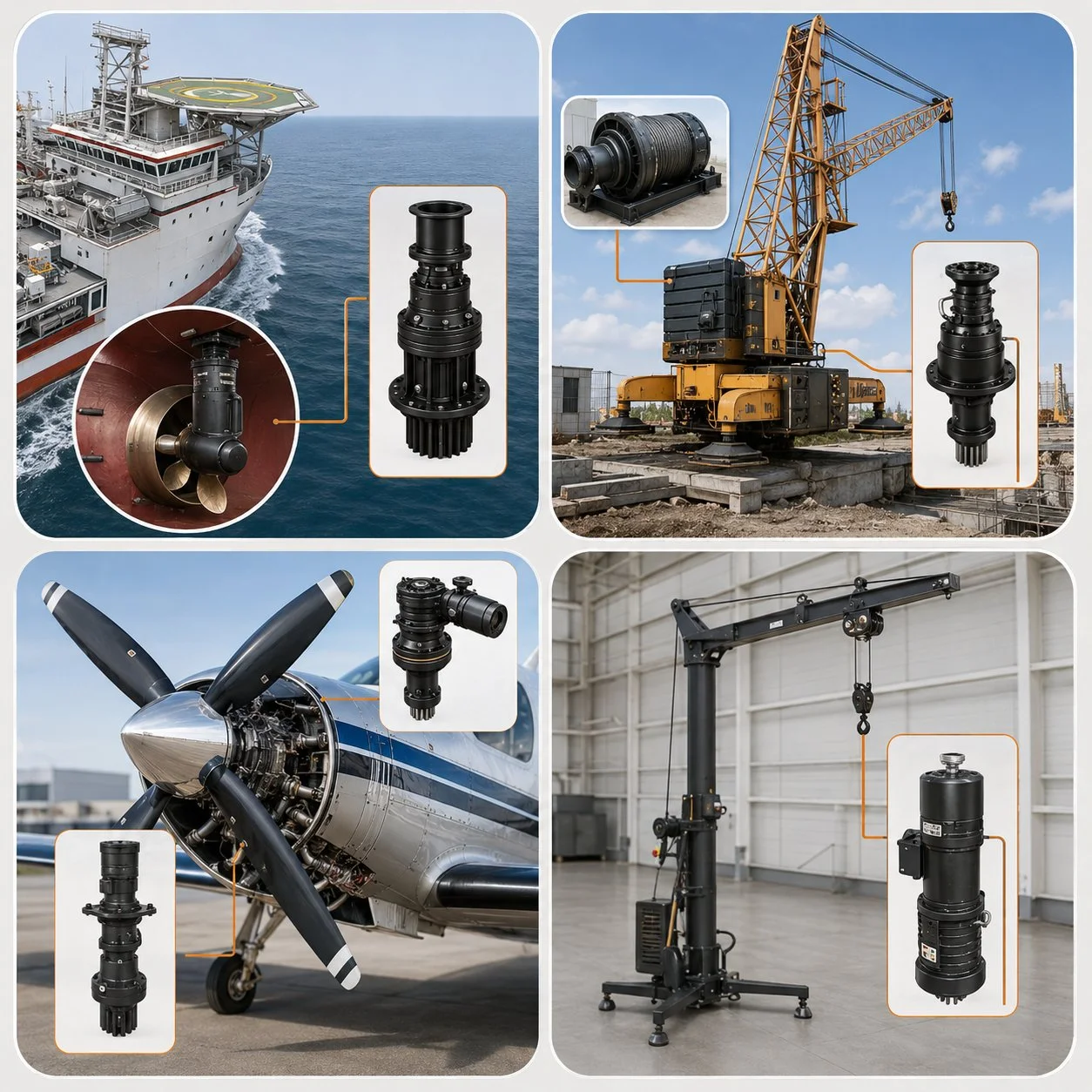
Slewing drive for boom rotation. The concrete pump slewing drive must control a 12 to 18-tonne boom at moment arms up to 60 metres — the longest lever arm of any mobile slewing application.
Overturning Moment — The Load Case That Sizes the Slewing Drive and Determines Truck Stability
When the boom is extended to its maximum reach and fully loaded with concrete, the combined weight of the boom, the pipeline, and the concrete inside it produces an overturning moment around the slewing centre. This moment tries to tip the truck off its outriggers. The slewing drive must (1) rotate the boom against this moment during positioning and (2) hold the boom at the pour angle against wind and pump pulsation.
| Boom Class | Reach (m) | Boom Mass (t) | Overturning (kN·m) | Slewing Torque |
|---|---|---|---|---|
| Short (20 – 32 m) | 20 – 32 | 4 – 7 | 200 – 450 | 5,000 – 10,000 Nm |
| Medium (36 – 47 m) | 36 – 47 | 8 – 13 | 500 – 900 | 12,000 – 22,000 Nm |
| Long (52 – 65 m) | 52 – 65 | 14 – 20 | 800 – 1,500 | 25,000 – 45,000 Nm |
Tip-angle sensitivity at maximum reach: A 58-metre boom with the tip at the placement point is equivalent to a 58-metre lever arm. At this radius, a 0.1-degree slewing error produces a tip displacement of 58,000 mm x tan(0.1 deg) = 101 mm. The slewing drive backlash must be low enough that the angular play at the slewing bearing does not consume a significant fraction of the 200 mm placement tolerance. At 10 arcminutes of slewing drive backlash: angular play = 0.167 degrees = 169 mm of tip wander — already 85% of the total budget. Concrete pump slewing drives therefore require backlash specifications tighter than crane slewing drives of the same torque class.
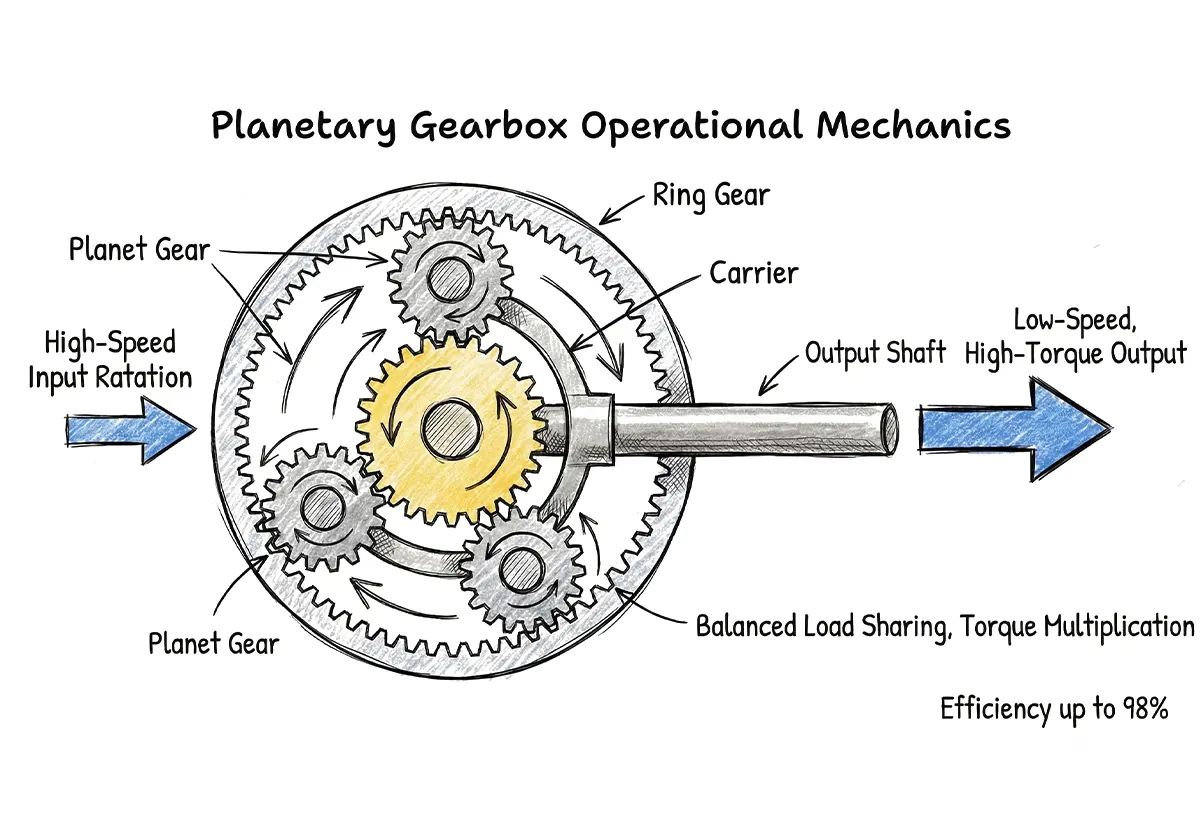
Concrete Pump Pulsation — The Dynamic Load That No Other Slewing Drive Encounters
A concrete pump delivers material through the boom pipeline using a twin-cylinder piston pump. Each piston stroke pushes a slug of concrete through the pipe — and at the transition between strokes (when one piston finishes and the other begins), there is a brief pressure spike and flow interruption. This produces a pulsating force at the pump frequency (15 to 30 strokes per minute) that acts on every bend and elbow in the boom pipeline.
The pulsation forces are transmitted through the boom structure to the slewing bearing and the slewing drive. Each pulsation event generates a lateral force impulse of 2,000 to 8,000 N at the boom tip — equivalent to a person pushing the boom tip sideways 15 to 30 times per minute, every minute, for the duration of the pour. The slewing drive must resist these impulses without allowing the boom to oscillate — any oscillation at the slewing centre is amplified by the 40 to 60 metre moment arm into large tip displacements.
Why pulsation matters more on longer booms: A 2,000 N lateral force at the boom tip on a 28-metre boom produces a slewing moment of 56 kN·m. The same 2,000 N force on a 58-metre boom produces 116 kN·m — twice the moment from the same pulsation force. Longer booms amplify the pulsation effect at the slewing drive. This is why long-reach concrete pump slewing drives require stiffer gear mesh, lower backlash, and higher torsional rigidity than short-reach pumps — even though the pump pulsation frequency and force are identical.

The slewing drive transmits both the steady overturning moment from boom weight and the dynamic pulsation forces from the concrete delivery system — simultaneously, for hours per pour.

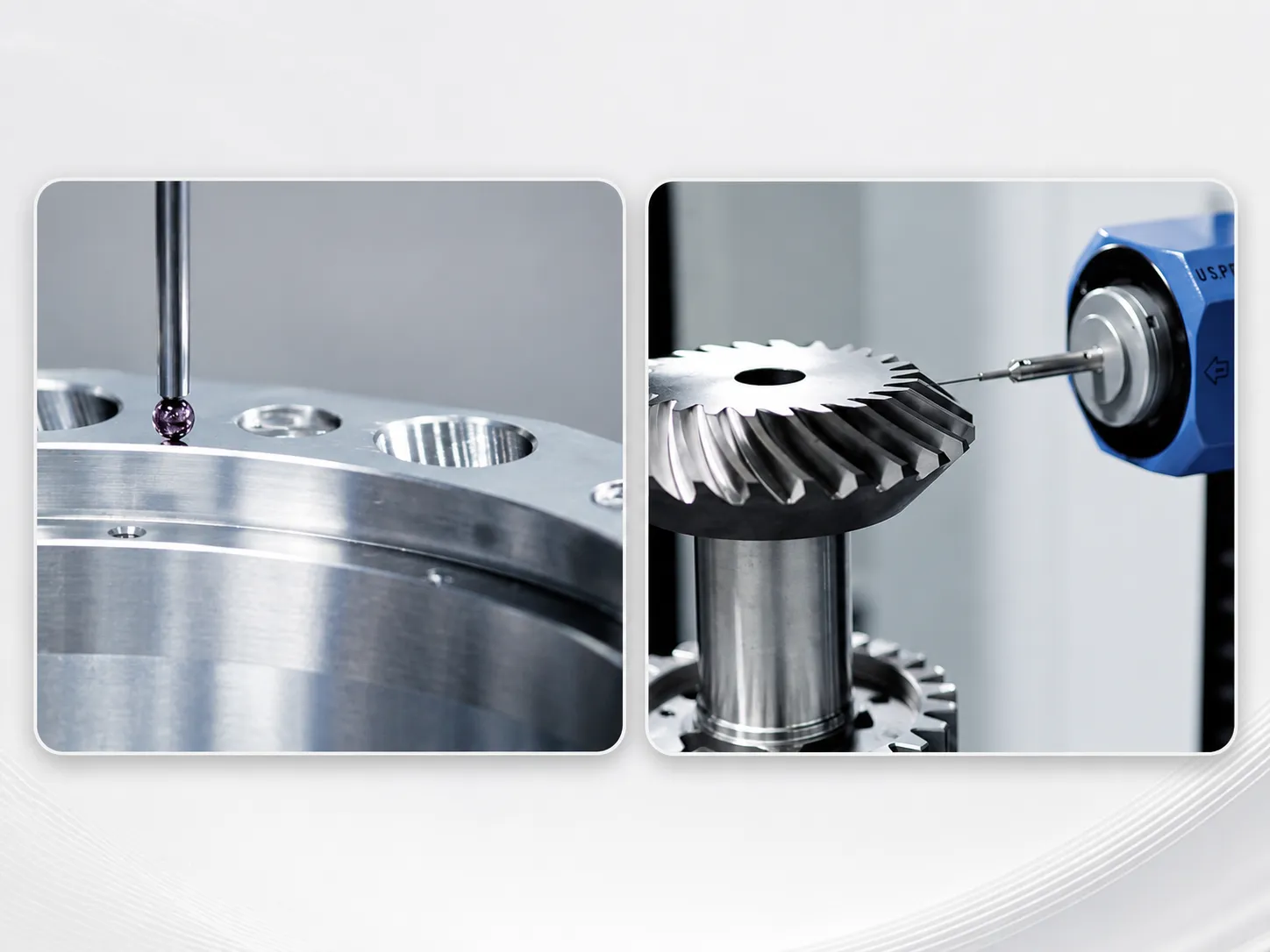
Slewing Speed and Smoothness — Why Concrete Pump Boom Rotation Must Be Slower Than Crane Rotation
A mobile crane can slew at 2 to 4 rpm without issue — the suspended load self-centres under gravity and the hook position stabilises within seconds. A concrete pump boom is rigid — there is no self-centring. Any rotational acceleration or deceleration at the slewing drive produces a corresponding lateral acceleration at the boom tip. On a 58-metre boom, even a gentle 0.5 rpm slewing speed produces a tip velocity of 3 m/s. A sudden stop from this speed generates a tip deceleration force that can bend the boom or stress the slewing bearing beyond its rated capacity.
The slewing drive must also provide proportional speed control — the operator uses a joystick or remote control to position the boom, and the slewing speed must be proportional to the joystick deflection from zero to maximum. Any dead zone, step change, or non-linearity in the speed response produces a jerky boom movement that is amplified at the tip. The Korea Ever-Power slewing drive planetary gearbox must mesh smoothly at the lowest pinion speeds — a requirement for gear tooth surface quality that exceeds standard crane slewing drive specifications.
Three Failure Modes That Affect Concrete Pump Slewing Drives
The concrete pump pulsation produces a 15 to 30 Hz lateral force oscillation at the slewing bearing. This oscillation rocks the bearing balls or rollers in a narrow contact band — the same fretting mechanism that affects wind turbine yaw bearings, but at 15 to 30 Hz instead of the gradual yaw corrections. Over 3,000 to 5,000 hours of pouring duty, the fretting produces raceway pitting that increases the slewing bearing play and reduces the boom positioning precision. The slewing drive gear mesh quality cannot compensate for worn bearing play — once the bearing is pitted, the entire slewing ring must be replaced.
The slewing drive pinion and the slewing ring gear teeth operate in an environment of concrete splash, cement dust, and washout water. Cement particles (calcium silicate, highly alkaline, pH 12 to 13) that enter the gear mesh act as an abrasive and a chemical contaminant simultaneously — grinding the tooth surfaces while the alkaline moisture attacks the grease and the steel surface. The exposed pinion-ring mesh on a concrete pump (unlike the enclosed gear mesh in a wind turbine yaw drive) has no housing protection from this contamination.
As the pinion teeth and slewing ring gear wear from contamination and pulsation loading, the backlash in the gear mesh increases. At 58-metre reach, each arcminute of additional backlash adds 17 mm of boom tip displacement uncertainty. A new slewing drive with 5 arcminutes of backlash produces 85 mm of tip uncertainty — within the 200 mm budget. After 5,000 hours of pouring duty, the backlash may grow to 15 arcminutes — producing 255 mm of tip uncertainty that exceeds the tolerance. The boom operator compensates by making smaller, slower positioning movements — reducing productivity by 10 to 20% before the slewing drive is finally replaced.
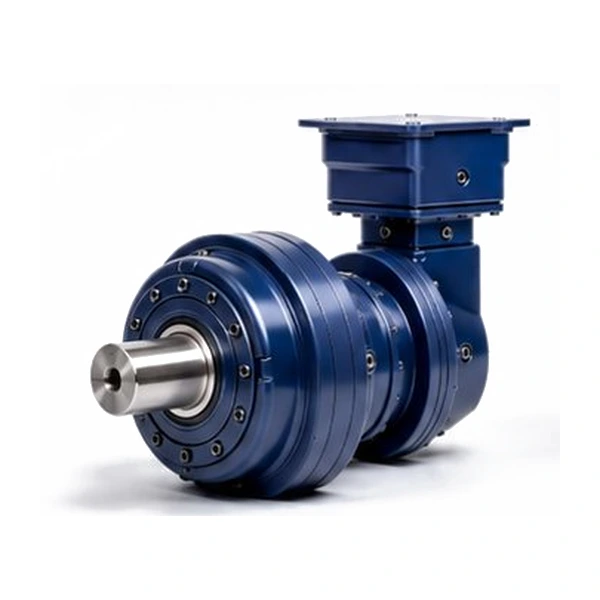
Top: Testing centre — every concrete pump slewing drive is backlash-tested before delivery. Bottom: ZR-series slewing drive unit.
Slewing Drive Planetary Gearbox for Concrete Pumps — Frequently Asked Questions
Korea Ever-Power provides concrete pump slewing drive planetary gearboxes from 5,000 to 45,000 Nm with low-backlash specifications and pulsation-rated bearings. Provide your pump model and boom length for a specification recommendation.
编辑:Cxm