Okvir za odabir u pet koraka na prvi pogled
A precizni planetarni mjenjač nalazi se direktno između vašeg servo motora i opterećenja mašine. Svaka neusklađenost u tom interfejsu - obrtni moment, inercija, konfiguracija ili IP zaštita - pojačava se kroz svaki ciklus rada mašine. Proces od pet koraka u nastavku je minimalno rigorozan pristup. Koraci 1 i 2 su mjesta gdje nastaje većina ranih kvarova; koraci 4 i 5 su mjesta gdje počinju problemi s instalacijom.
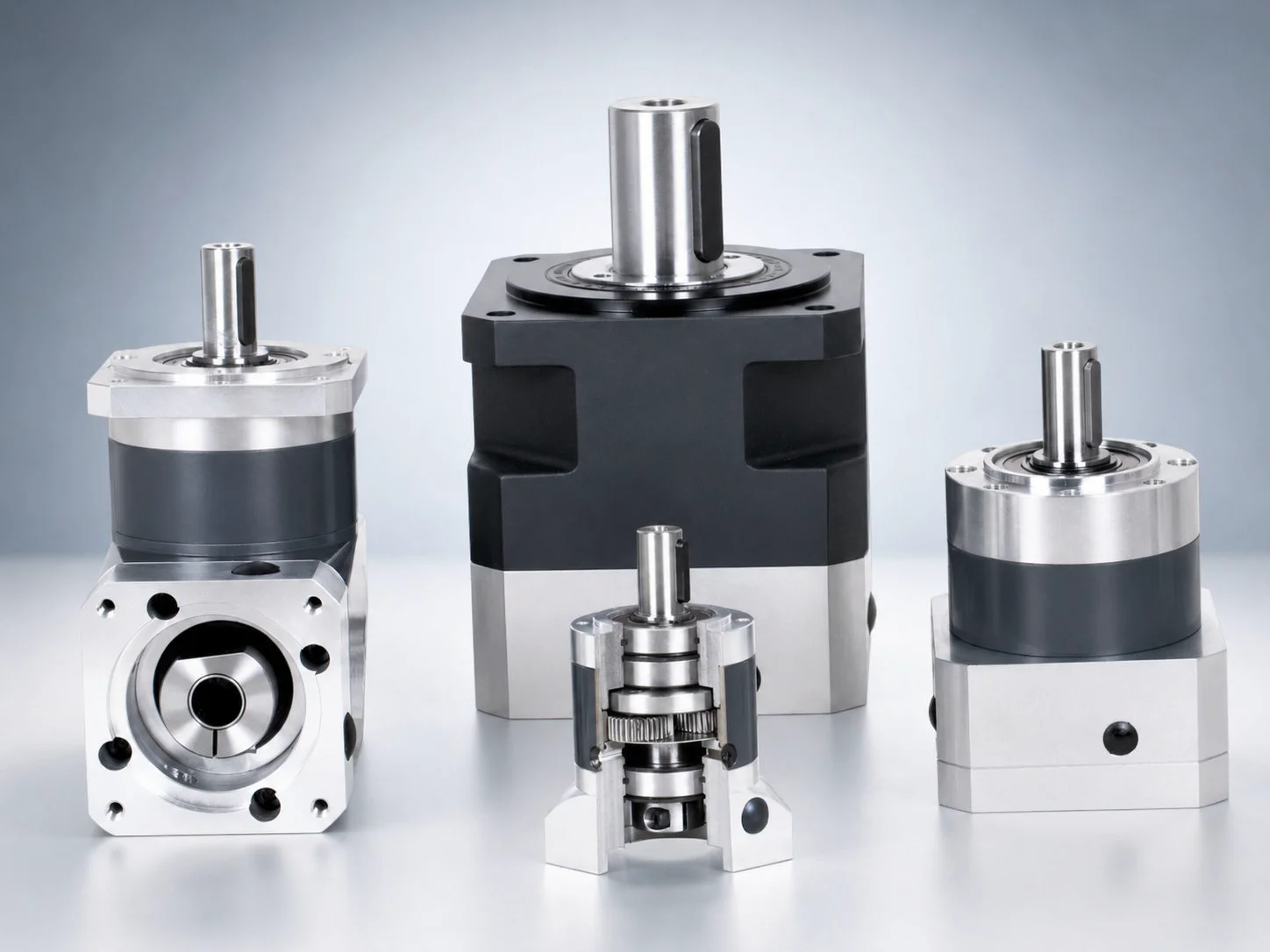
Korak 1 — Definirajte profil opterećenja i radni ciklus
Većina inženjera započinje planetarni mjenjač odabir pitanjem o nazivnom kontinuiranom obrtnom momentu njihovog servo motora, a zatim direktno usklađivanjem mjenjača s tim brojem. Taj pristup je nepotpun. Ono što mjenjač zapravo mora preživjeti je puni oblik zahtjeva za obrtnim momentom tokom vremena - ne samo prosjek.
Prije izračunavanja jednog broja, dokumentirajte sljedeća četiri elementa vašeg profila opterećenja:
Obrtni moment koji opterećenje zahtijeva tokom neprekidnog rada u stacionarnom stanju. Za robotsku ruku pri konstantnoj brzini, ovo je gravitacijski obrtni moment plus trenje. Ova vrijednost postavlja donju granicu termičkog dimenzioniranja.
Maksimalni obrtni moment potreban tokom ubrzanja, usporavanja ili udara. Za servo ose sa brzim ciklusima pozicioniranja, ovo je često 2–4× kontinuirani obrtni moment. Oznaka trenutnog zaustavljanja mjenjača mora biti veća od ove vrijednosti.
IEC i DIN standardi klasificiraju udarna opterećenja u tri nivoa. Za lagani udar (ujednačena transportna traka) primjenjuje se SF=1,0–1,25. Za umjereni udar (indeksirajući sto sa promjenama smjera) primjenjuje se SF=1,5–2,0. Za jaki udar (udarna presa, zaustavljanje robota u slučaju sudara) primjenjuje se SF=2,0–2,5.
Procenat svakog ciklusa tokom kojeg motor primjenjuje obrtni moment. Radni ciklus 60% sa periodom od 5 sekundi znači 3 sekunde uključeno, 2 sekunde isključeno. Ovo određuje termičko opterećenje mjenjača i maziva, posebno kod zatvorenih jedinica sa podmazivanjem tokom cijelog vijeka trajanja.
| Vrsta aplikacije | Klasa šoka | Tipični ED% | Preporučeni SF |
|---|---|---|---|
| Jednosmjerni transporter, ventilator, pumpa | Svjetlo | 80–100% | 1,0–1,25 |
| AGV pogonski točak, servo osa linije za pakovanje | Lagano-umjereno | 50–80% | 1,25–1,5 |
| CNC rotacijska osa, indeksni stol, zglob robotske ruke | Umjereno | 30–60% | 1,5–2,0 |
| Prijenos linije prese, osa robota otporna na koliziju | Umjereno–teško | 20–50% | 2,0–2,5 |
| Glavni pogon servo prese, prijenos jakih udara | Teško | <30% | 2.5+ |
Korak 2 — Izračunajte potreban izlazni obrtni moment sa servisnim faktorom (korak koji većina inženjera preskače)
Faktor servisiranja (SF) nije birokratska sigurnosna margina koju dodaju oprezni inženjeri. On uzima u obzir tri stvarna fizička fenomena koja jednostavan proračun nazivnog obrtnog momenta ne može obuhvatiti: varijacije opterećenja koje su brže od odziva servo motora u zatvorenoj petlji, termalne efekte na čvrstoću filma maziva pod različitim radnim ciklusima i asimetrije radnog ciklusa između faza ubrzanja i usporavanja koje stvaraju kumulativna opterećenja zamora ležajeva koja premašuju ono što podrazumijeva stalni kontinuirani obrtni moment.
Preskakanje faktora usluge je najčešći uzrok kvara mjenjača u ranoj fazi životnog vijeka u servo automatizacijskim sistemima, odgovoran za približno 40% preuranjenih kvarova u visokociklusnim servo aplikacijama.
Radni primjer — Osa ruke robota za automobilski transfer J2
Korejskom dobavljaču za autolimariju potreban je servo mjenjač za J2 (veliki krak) zglob 6-osnog transfernog robota. Servo motor je jedinica od 1,5 kW nazivne snage 3.000 o/min. Ciklus mašine uključuje brzo pozicioniranje s promjenom smjera (klasa umjerenih-teških udara). Odabrani faktor servisa: SF = 2,0.
Bez SF-a, inženjer bira mjenjač nazivnog obrtnog momenta od 71,9 N·m - jedinicu u rasponu EP-ZDE-60. Pri stvarnom vršnom obrtnom momentu tokom naglog kočenja (procijenjeno 2× kontinuirano = 143,8 N·m), mjenjač radi na 200% svog nazivnog opterećenja svaki put kada servo aktivira naglo zaustavljanje. Nakon nekoliko hiljada takvih događaja, započinje korozija boka planetarnog zupčanika. Zazor se povećava. Do osmog mjeseca osovina razvija oscilacije i potrebna je potpuna zamjena mjenjača. Ovo nije hipotetički slučaj - to je dokumentovani obrazac kvara korejskog Tier-1 slučaja spomenutog u uvodu.
Korak 3 — Odabir prijenosnog omjera i usklađivanje inercije
Prijenosni omjer a servo planetarni mjenjač istovremeno određuje dvije stvari: brzinu izlaznog vratila i reflektiranu inerciju opterećenja kako je vidi motor. Ispravno određivanje obrtnog momenta, ali pogrešna procjena inercije, znači da će se vaš servo pogon teško podesiti - i može oscilirati, preopteretiti ili izazvati kvarove zbog prekomjerne struje pri brzom ubrzanju čak i sa mehanički adekvatnim mjenjačem.
Donja tabela pokazuje kako promjena prijenosnog omjera transformira istu inerciju opterećenja u dramatično različite reflektirane vrijednosti na osovini motora. Zbog toga odabir prijenosnog omjera nije samo proračun brzine - to je primarna poluga za usklađivanje servo motora s mehaničkim opterećenjem.
| Prijenosni omjer i | Pozornica | J_reflektovano (kg·m²) * | Koeficijent inercije | Status podešavanja servo motora |
|---|---|---|---|---|
| 3:1 | 1 | 0.00222 | 2.2 : 1 | ✅ Idealno |
| 5:1 | 1 | 0.000800 | 0.8 : 1 | ✅ Dobro |
| 10:1 | 1 | 0.000200 | 0.2 : 1 | ⚠️ Prebrzo, spor odziv |
| 20:1 | 2 | 0.000050 | 0.05 : 1 | ❌ Nedovoljno iskorišten obrtni moment, slab odziv |
* Primjer: J_opterećenje = 0,02 kg·m², J_motor = 0,001 kg·m². Stvarne vrijednosti zavise od vaše specifične geometrije opterećenja i specifikacije motora.
Pojačanje Kv povratne petlje brzine servo pogona je efektivno ograničeno. Osa sporo reaguje na komande brzine i prebacuje se pri zaustavljanjima položaja. Povećanje proporcionalnog pojačanja radi kompenzacije uzrokuje mehaničku rezonancu - problem koji sam softver ne može u potpunosti riješiti jer potiče iz fizike neusklađenosti inercije pogonskog sklopa.
Za omjere u ovom rasponu, jedan planetarni stepen (EP-ZDE/ZDF/ZDWE/ZDWF, 1-stepeni) osigurava efikasnost od 96% (linijski) ili 94% (ulaz pod pravim uglom). Ovo je preferirani raspon za visokodinamičke servo ose - CNC ose za pomicanje, glave za lasersko rezanje i robote za preuzimanje i postavljanje - gdje su i omjer inercije i efikasnost podjednako važni.
Dvostepene jedinice su prikladne kada izlazna brzina mora biti vrlo niska (<200 o/min) pri nazivnoj brzini motora. Efikasnost pada na 94% (linijski) ili 92% (pod pravim uglom). Prihvatljive za AGV pogonske točkove, mjenjače paleta i solarne tragače gdje je gubitak efikasnosti manje kritičan od visokog omjera za multiplikaciju obrtnog momenta. Zazor je nešto širi nego kod jednostepenih.
Korak 4 — Odaberite pravu konfiguraciju (linijska vs. pravokutna, okrugla vs. kvadratna prirubnica)
Serija EP-ova Korea Ever-Power precizni planetarni mjenjači nudi četiri fizičke konfiguracije u pet proizvodnih linija. Svaka rješava specifičnu kombinaciju ograničenja instalacije. Ovo je strukturna odluka - a ne preferencija performansi - vođena geometrijom vaše mašine i dostupnim operacijama mašinske radionice.
| Serija | Ulaz motora | Izlazna prirubnica | Maks. obrtni moment | IP adresa | Najbolje za |
|---|---|---|---|---|---|
| EP-ZDE | Ugrađeno | Okruglo Φ | 800 N·m | IP54 | Standardne precizne servo ose — CNC, robot, laserski rezač |
| EP-ZDF | Ugrađeno | Kvadrat □ | 800 N·m | IP54 | Okviri za montažu na ploču — bez potrebe za bušenjem |
| EP-ZDWE | kosina od 90° | Okruglo Φ | 800 N·m | IP54 | 30–50% kraća aksijalna dubina — kompaktne glave mašina |
| EP-ZDWF | kosina od 90° | Kvadrat □ | 800 N·m | IP54 | AGV/AMR niskoprofilna šasija, zavareni okviri |
| EP-ZDS | Ugrađeno | Kvadrat □ | 1.800 N·m | IP65 | Teški robotski zglobovi, pogoni presa, prerada hrane, ispiranje |
Kompromis efikasnosti ulaza pod pravim uglom (ZDWE/ZDWF): Ulazni stepen sa konusnim zupčanikom od 90° dodaje gubitak efikasnosti od približno 2% u poređenju sa linijskom jedinicom iste veličine okvira. Za servo motor od 750 W koji radi 16 sati dnevno, ovo je jednako približno 15 W dodatnog generisanja toplote - zanemarljivo za većinu primjena. Za kontinuirani rad velike snage 24/7, provjerite termalni budžet koristeći formulu: P_heat = P_input × (1 − η), gdje je η = 0,92 za dvostepeni ZDWE/ZDWF.
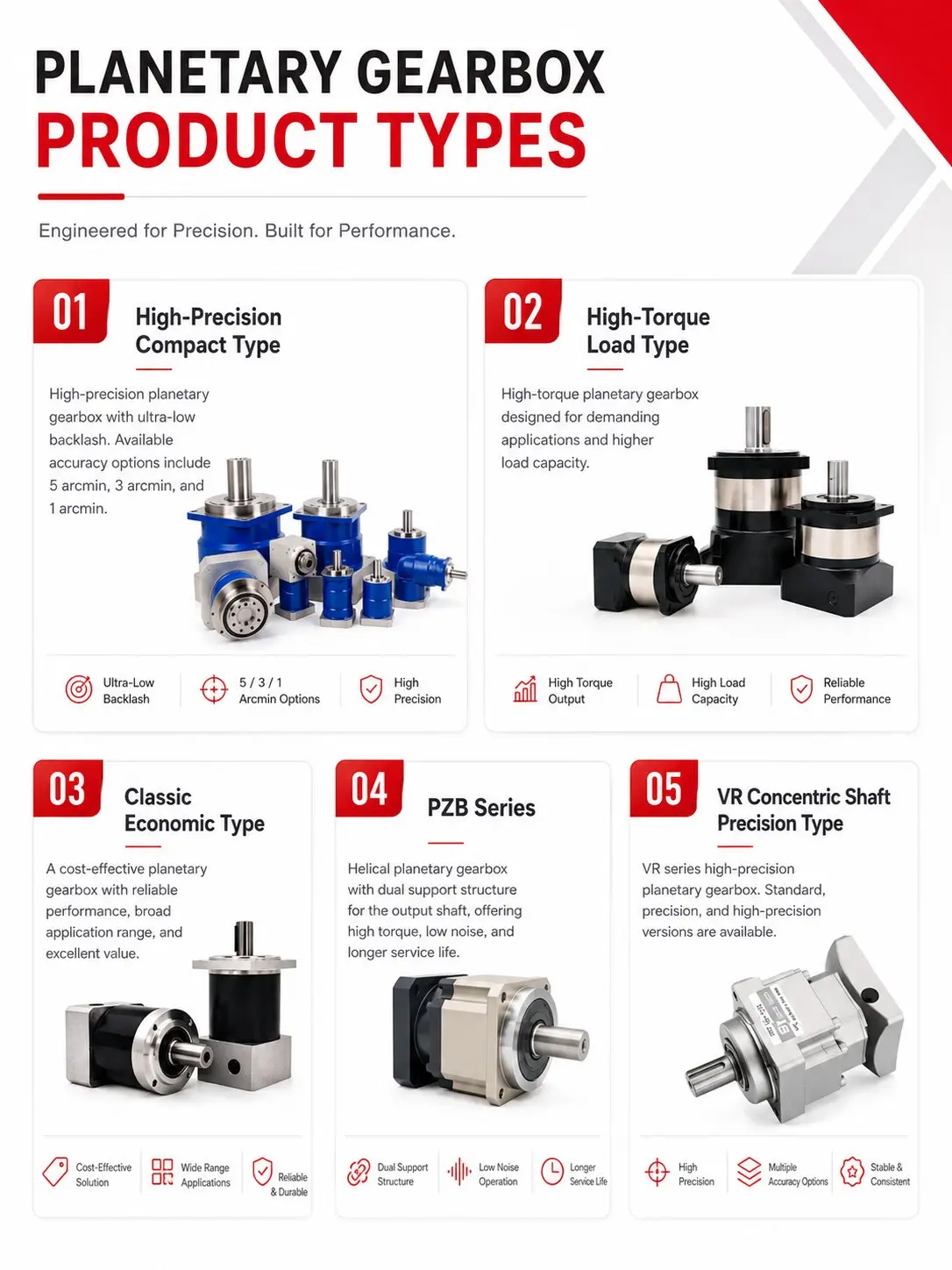
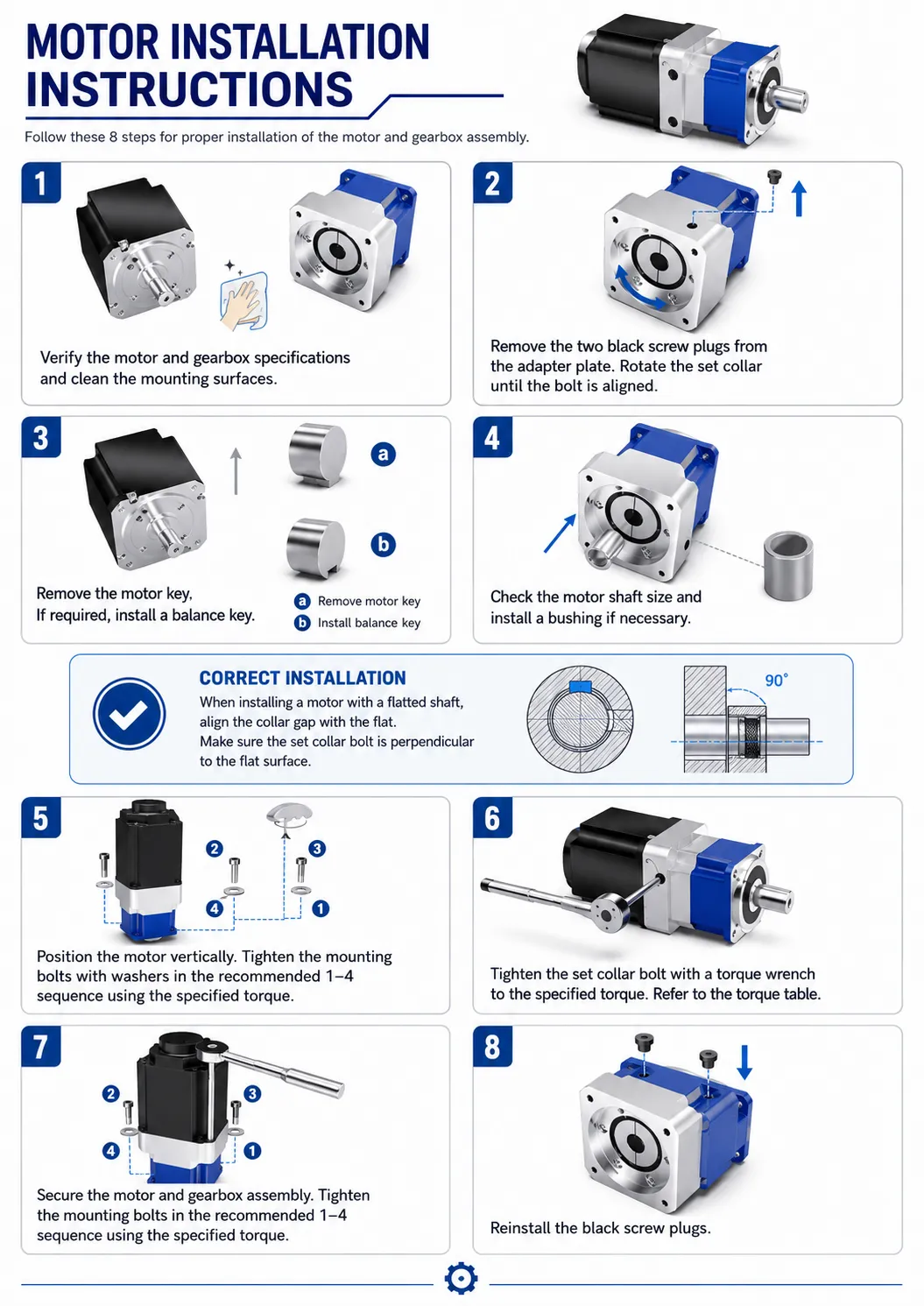
Korak 5 — Verifikacija motornog interfejsa: Kontrolna lista od 12 tačaka
A precizni planetarni reduktor zupčanika Ispravno dimenzionirani obrtni moment, omjer i konfiguracija mogu i dalje otkazati u radu u roku od nekoliko sedmica ako je spoj motora i mjenjača nepravilno specificiran. Greške na spoju se obično manifestuju kao povišene vibracije, rani kvar ulaznog ležaja, a u težim slučajevima i lom spojnice ulaznog vratila. Ova kontrolna lista od 12 tačaka pokriva svaku dimenziju spoja motora i mjenjača koja se mora provjeriti prije narudžbe.
Specifikacija zazora — Usklađivanje preciznosti sa zahtjevima primjene
Nakon što se potvrde obrtni moment, omjer i konfiguracija, provjerite da li je specifikacija zazora odabranog preciznog planetarnog mjenjača odgovarajuća za vaše zahtjeve tačnosti pozicioniranja. Zazor je ugaoni zazor na izlaznom vratilu kada se ulazni smjer promijeni - mjeri se u lučnim minutama (lucmin), gdje je 1 lucmin = 1/60 stepena.
Nemojte pretjerano specificirati zazor. Uređaj sa zazorom <1 lučna minuta može koštati 3-5 puta više od uređaja <8 lučnih minuta iste veličine okvira, bez mjerljivih poboljšanja performansi u primjenama koje se pozicioniraju u jednom smjeru ili gdje servo motor zatvorene petlje kompenzira doprinos zazora. Uskladite specifikaciju sa stvarnim zahtjevima:
Tri greške u dimenzioniranju koje direktno vode do ranog kvara
Najčešća greška. Mjenjač nazivnog obrtnog momenta u stacionarnom stanju izgleda da se poklapa na papiru. Pri prvom naglom zaustavljanju ili promjeni smjera pod punim opterećenjem, stvarni obrtni moment raste na 2-3× kontinuirano. Bez obrtnog momenta, jedinica radi na 200-300% svoje projektovane tačke. Nakon nekoliko hiljada takvih događaja, dolazi do zamora površine planetarnog zupčanika i povratni hod počinje brzo rasti.
Kada inercija opterećenja koja se reflektuje na motor premaši pet puta veću inerciju rotora motora, podešavanje petlje brzine servo motora postaje teško. Inženjeri koji povećavaju proporcionalno pojačanje radi kompenzacije stvaraju mehaničku rezonancu - problem koji se manifestuje kao oscilacija ose, zvučne vibracije i na kraju rani zamor ležaja planetarnog zupčanika usljed cikličkog preopterećenja na rezonantnoj frekvenciji. Softverski filteri pomažu, ali ne mogu u potpunosti riješiti osnovnu mehaničku neusklađenost.
IP54 zaštita planetarni mjenjač Otporan je na prskanje vode iz bilo kojeg smjera - ali ne štiti od direktnog mlaza vode. Korejski pogoni za preradu hrane, koji su u skladu s HACCP protokolima, primjenjuju pranje crijevima pod visokim pritiskom na sve površine mašina, uključujući i mjenjače. Tokom 6-18 mjeseci, čak i zaptivke sa IP54 zaštitom degradiraju se pod ponovljenim ciklusima hemijskog čišćenja. Prodor vode emulgira doživotno mazivo, uništavajući film masti i dramatično ubrzavajući habanje ležajeva. Temperatura kućišta mjenjača raste, buka se povećava, a nazivni vijek trajanja od 20.000 sati može se postići za manje od 5.000 sati.
Sažetak odabira i sljedeći koraci
Tim za inženjering aplikacija kompanije Korea Ever-Power pruža podršku pri odabiru mjenjača - uključujući verifikaciju faktora servisa, proračun omjera inercije i potvrdu interfejsa motora - na korejskom i engleskom jeziku za korejske proizvođače originalne opreme. Navedite model vašeg servo motora, parametre opterećenja i ograničenja instalacije kako biste dobili kompletnu preporuku za odabir besplatno.
Urednik: Cxm