ZR30 Slewing Drive Planetary Gearbox — Tuo nga Anggulo nga Bevel-Planetary, 2-5 ka Yugto
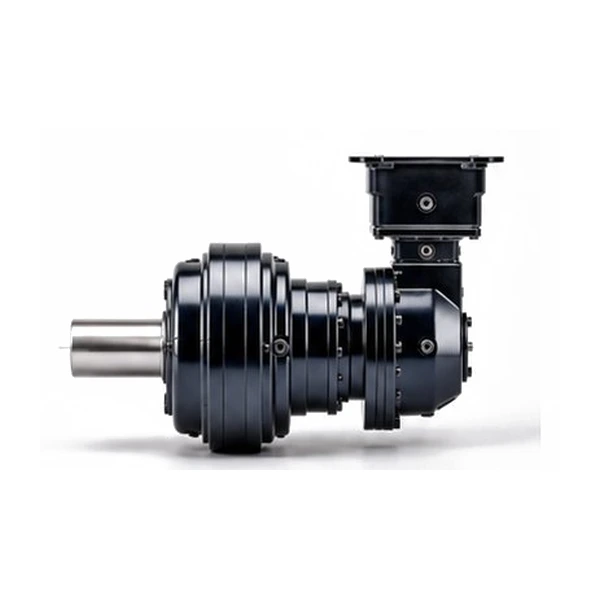
EP-ZR30 — 32,000 Nm Padayon, 58 ka Ratio sa 3,053:1
Ang EP-ZR30 nahimutang direkta sa ubos sa flagship ZR45 sa Serye sa ZR slewing drive ug naghatag sa dili mahimo sa ZR45: usa ka halapad nga kapilian sa 58 ka gear ratio sa lima ka yugto nga mga configuration. Kung ang ZR45 nag-focus sa tulo ka gi-optimize nga ratio points para sa pinakabug-at nga mga karga, ang ZR30 naghatag sa gikinahanglan nga ratio density kung ang tukma nga speed matching sama ka importante sa raw torque capacity.
Sa 32,000 Nm nga padayon ug 55,000 Nm nga peak — 19% nga labaw sa gipatik nga headline nga 27,000 Nm — ang ZR30 makasagubang sa padayon nga slewing loads sa dagkong mga excavator, shipyard gantry cranes, ug heavy mining conveyor head drives. Tulo ka torque tiers (32,000 / 31,000 / 25,000 Nm) ang hinay-hinay nga mohinay sa ratio table, diin ang 67% sa tanang ratios (39 sa 58) naghatag sa tibuok 32,000 Nm nga walay pagkunhod.
DIN 5-6
-40 hangtod +80 degrees Celsius
2,500 RPM nga Kinatas-an
Mga Teknikal nga Parametro sa ZR30 — 58 ka Konfigurasyon sa Ratio
Padayon nga torque sa N2 xh = 100,000 ka oras. Tulo ka torque tiers (32,000 / 31,000 / 25,000 Nm) ang magamit sa tanang stage counts. Ang mga type code naglakip sa R16, R10, o R06 bevel sub-variant suffixes. Ang tanang configurations adunay 2,500 rpm maximum input speed.
2-Yugto — ZR30**2 / R16 (3 ka Ratio)
| Ratio | Padayon nga Torque (Nm) | Max. nga Torque (Nm) | Kinatas-ang RPM | Pt F/M (kW) |
|---|---|---|---|---|
| 14.19 | 32,000 | 55,000 | 2,500 | 26.5 / 38.0 |
| 18.22 | 25,000 | 46,800 | 2,500 | 26.5 / 38.0 |
| 21.62 | 25,000 | 46,800 | 2,500 | 26.5 / 38.0 |
3-Yugto — ZR30**3 / R10 (10 ka Ratio)
| Ratio | Padayon nga Torque (Nm) | Max. nga Torque (Nm) | Kinatas-ang RPM | Pt F/M (kW) |
|---|---|---|---|---|
| 43.43 | 32,000 | 55,000 | 2,500 | 11.5 / 13.5 |
| 51.27 | 32,000 | 55,000 | 2,500 | 11.5 / 13.5 |
| 64.30 | 32,000 | 55,000 | 2,500 | 11.5 / 13.5 |
| 70.28 | 32,000 | 55,000 | 2,500 | 11.5 / 13.5 |
| 85.36 | 31,000 | 55,000 | 2,500 | 11.5 / 13.5 |
| 88.15 | 31,000 | 55,000 | 2,500 | 11.5 / 13.5 |
| 102.53 | 25,000 | 46,800 | 2,500 | 11.5 / 13.5 |
| 109.68 | 25,000 | 46,800 | 2,500 | 11.5 / 13.5 |
| 124.03 | 25,000 | 46,800 | 2,500 | 11.5 / 13.5 |
| 132.89 | 25,000 | 46,800 | 2,500 | 11.5 / 13.5 |
4-Yugto — ZR30**4 / R06 (20 ka Ratio) ug 5-Yugto — ZR30**5 / R06 (25 ka Ratio)
Gihiusang katingbanan para sa 45 ka taas nga ratio nga mga konpigurasyon. Tulo ka torque tier ang magamit sulod sa matag ihap sa yugto.
| Entablado | Sakop sa Ratio | Ihap | Padayon nga Torque (Nm) | Kinatumyan (Nm) | Pt F/M (kW) |
|---|---|---|---|---|---|
| 4-Yugto | 109.70 – 209.57 | 8 | 32,000 | 55,000 | 9.5 / 12.5 |
| 222.63 – 305.73 | 6 | 31,000 | 55,000 | 9.5 / 12.5 | |
| 329.61 – 615.47 | 6 | 25,000 | 46,800 | 9.5 / 12.5 | |
| 5-Yugto | 381.75 – 776.16 | 9 | 32,000 | 55,000 | 8.0 / 11.5 |
| 804.81 – 1,286.91 | 8 | 31,000 | 55,000 | 8.0 / 11.5 | |
| 1,318.65 – 3,052.94 | 8 | 25,000 | 46,800 | 8.0 / 11.5 |
Ang kompletong per-ratio data sheets anaa kon hangyoon gikan sa Inhenyerya sa Korea nga Ever-Power.
Metalurhiya sa mga Gamit — Ngano nga Importante ang 20CrMnTi sa HRC 58-62 sa 32,000 Nm
Sa 32,000 Nm torque class, ang presyur sa pagkontak sa nawong sa ngipon sa gear molapas sa 1,500 MPa sa naandan nga basehan. Ang pagpili sa gear steel, giladmon sa heat treatment, ug surface finish direktang nagtino kung ang mga kilid sa ngipon makasugakod ba niini nga presyur sulod sa 20,000 ka oras o magsugod sa pag-pitting sulod sa 5,000. Ang ZR30 naggamit ug metallurgical approach nga napamatud-an sa liboan ka mga yunit sa ZR series.
Usa ka chromium-manganese-titanium carburising steel nga adunay 0.17-0.23% carbon, 1.0-1.3% manganese, ug 0.8-1.1% chromium. Ang titanium nga gidugang (0.04-0.10%) nagpino sa istruktura sa lugas atol sa carburising, nga nagpatunghag mas parehas ug mas gahi nga case layer kaysa sa yano nga CrMn steels. Kini nga komposisyon nagbalanse sa katig-a sa case (surface wear resistance) ug sa core toughness (resistensya sa tooth root bending fatigue).
Ang mga gears gi-carburize sa 920-940 deg C sulod sa 8-14 ka oras (depende sa gidak-on sa module) sa usa ka kontroladong endothermic atmosphere aron makab-ot ang giladmon sa case nga 1.2-2.0 mm. Ang carburized surface moabot sa 0.8-1.0% carbon content, nga mausab ngadto sa high-carbon martensite atol sa quenching. Ang giladmon sa case gipamatud-an pinaagi sa microhardness traverse sa usa ka destructive test sample gikan sa matag heat-treatment batch.
Pag-quench sa lana gikan sa 820-840 deg C gisundan sa low-temperature tempering sa 160-200 deg C. Ang resulta nga katig-a sa nawong sa HRC 58-62 naghatag sa resistensya sa contact fatigue nga gikinahanglan alang sa 100,000-oras nga L10 nga kinabuhi sa rated load. Ang core hardness nagpabilin sa HRC 30-40, nga naghatag sa ductility sa pagsuhop sa shock loads nga walay brittle fracture sa gamot sa ngipon.
Human sa heat treatment, ang mga kilid sa ngipon gigaling gamit ang mga CNC gear grinders nga nagsunod sa DIN 5-6 accuracy class. Ang paggaling mokuha sa heat treatment distortion layer ug moresulta sa surface finish nga Ra 0.4-0.8 micrometres. Kini nga kalidad sa finish makapakunhod sa running-in wear period ug makapaubos sa steady-state operating noise kon itandi sa hobbed-only gears, nga kasagaran makaabot sa DIN 8-10.
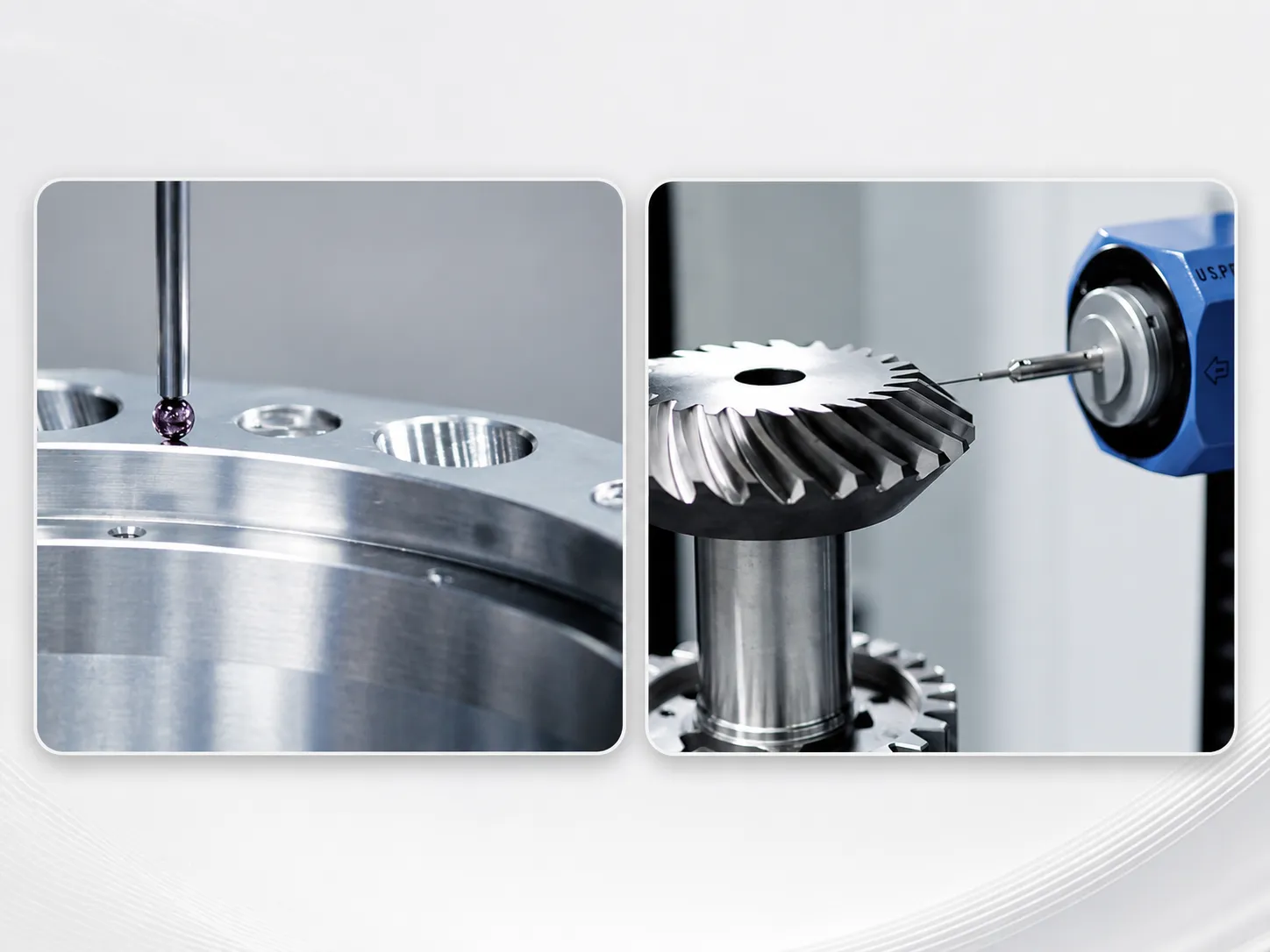
Paggaling sa profile human sa carburising ug quenching
Mga Aplikasyon sa 25,000-32,000 Nm Operating Window
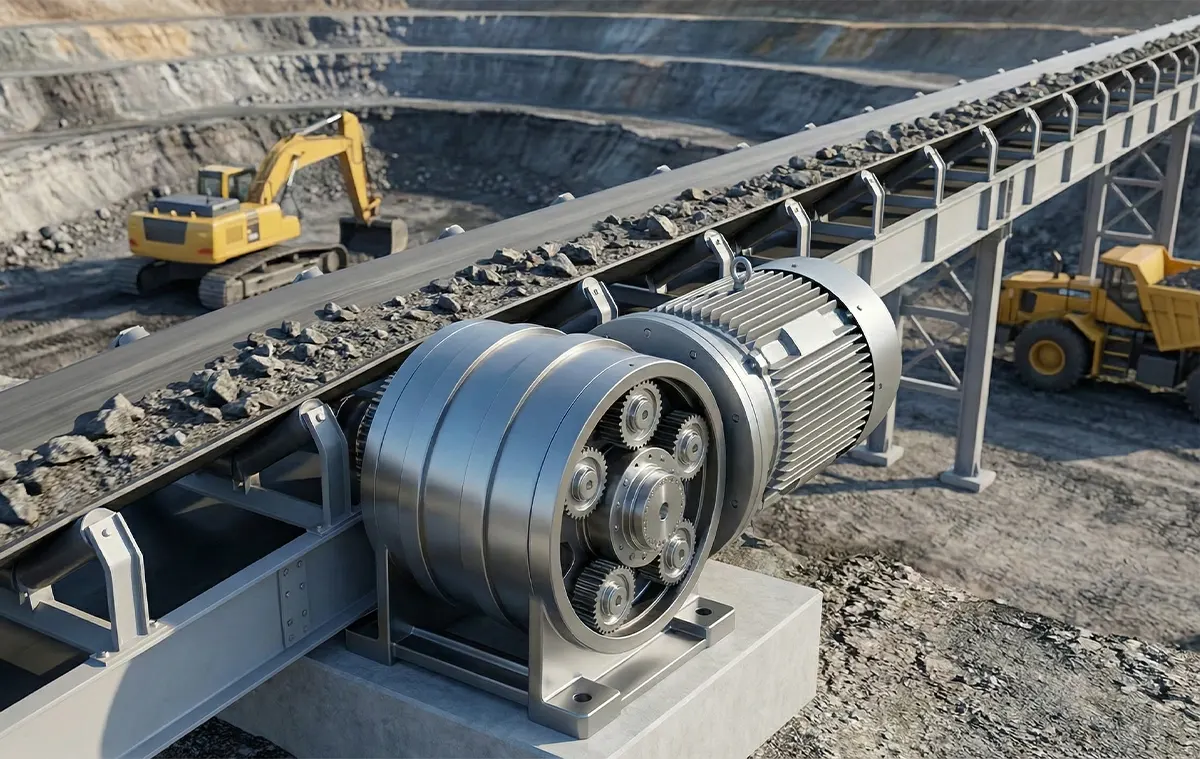
Mga Dagkong Excavator (Klase nga 35-50 Tonelada)
Ang mga hydraulic excavator nga naa sa 35-50 tonelada nga operating weight range makamugna og padayon nga upper-structure slewing torques nga 20,000-32,000 Nm atol sa production digging. Ang ZR30**2 sa ratio nga 14.19 nga gimaneho sa 200-250 cc/rev axial piston motor sa 350 bar naghatag sa high-speed rotation ug 55,000 Nm peak capacity nga gikinahanglan niining mga makina para sa agresibo nga loading cycles. Ang Serye sa pagmaneho sa track sa EP-SE nagahatag ug katugbang nga propulsyon sa undercarriage.
Mga Gantry Crane sa Shipyard ug mga Goliath Crane
Ang mga goliath crane ug hull-block transporter sa shipyard nga may kapasidad sa pag-alsa nga 200-600 ka tonelada nagkinahanglan og slewing torques nga 25,000-30,000 Nm para sa kontroladong boom o gantry rotation. Ang ZR30 3-stage sa ratios nga 51:1-70:1 naghatag sa torque density nga gikinahanglan niining mga crane sa gidak-on sa frame nga mohaom sulod sa hugot nga mechanical envelopes sa mga pedestal sa shipyard crane. Ang 58-ratio selection nagsiguro sa labing maayong speed match nga walay pagkunhod sa eksternal nga tulin mga yugto.
Mga Drive ug Stacker sa Conveyor Head sa Pagmina
Ang mga mekanismo sa overland conveyor stacker ug reclaimer slewing sa mga operasyon sa open-pit mining nagtuyok ubos sa kanunay nga radial loading gikan sa boom self-weight plus material flow forces. Ang ZR30 5-stage sa ratios nga 800:1-1,800:1 naghatag og ultra-low-speed boom rotation sa tibuok 31,000 Nm nga padayon, samtang ang IP67 sealing mosukol sa abog sa iron ore, coal fines, ug seasonal rainfall nga komon sa mga surface mining sites.
Dali nga Pag-refer sa Pag-troubleshoot — Sintomas, Hinungdan, Aksyon
Ang mosunod nga giya naglangkob sa labing komon nga mga obserbasyon sa uma ug sa ilang posibleng mga hinungdan. Kanunay nga palonga ang drive ug imbestigaha sa dili pa ipadayon ang operasyon kung adunay bisan hain niini nga mga sintomas nga makita.
| Sintomas | Posibleng Hinungdan | Girekomendar nga Aksyon |
|---|---|---|
| Dili normal nga kasaba — pag-klik sa metal sa mesh frequency | Dili igo nga pinion-to-ring backlash (binding), langyaw nga butang sa mesh zone, o liki nga ngipon | Hunonga ug susiha pag-ayo ang mga ngipon sa pinion. Susiha ang backlash gamit ang dial indicator. Kon ang ngipon nabuak o nabuak, kuhaa ang unit para sa factory assessment. |
| Sobra nga temperatura sa puy-anan (>100 deg C nga nawong) | Ang gahum sa input sa motor milapas sa Pt rating, ubos ra kaayo ang lebel sa lana, sayop nga viscosity sa lana, o nabara nga balbula sa pagginhawa | Susiha dayon ang lebel sa lana. Susiha ang balbula sa breather kon aduna bay bara. Sukda ang kuryente sa motor ug itandi sa kalkulasyon sa thermal duty. Kon magpadayon ang problema human sa pagtul-id, idugang ang fan cooling o pakunhuran ang duty cycle. |
| Tag-as sa lana sa output seal | Pagkaguba sa ngabil sa seal, kaagnasan sa ibabaw sa shaft ubos sa seal contact band, o sobra nga internal pressure gikan sa nabara nga breather | Hawani una ang balbula sa breather (ang kasagarang hinungdan). Kon magpadayon ang pagtulo, kinahanglan nga ilisan ang output seal. Susiha ang nawong sa shaft ubos sa seal — kon adunay corrosion pitting, kinahanglan nga pasinawon o tabunan ang shaft sa dili pa butangan og bag-ong seal. |
| Nagkadaghang reaksyon sa paglabay sa panahon | Normal nga pagkaguba sa gear mesh sa output pinion-to-ring interface (dili ang internal gearbox wear) | I-adjust pag-usab ang radial nga posisyon sa gearbox aron mabalik ang saktong pinion-to-ring backlash (0.08-0.20 mm). Ang ZR30 internal gears dili masukod nga madaot sa rated load sulod sa 20,000-oras nga service interval; ang dugang nga backlash halos kanunay anaa sa external pinion-ring interface. |
| Pagtaas sa vibration nga walay pagbag-o sa kasaba | Pagluag sa mounting bolt, pag-uga sa pundasyon, o pagkaguba sa bearing | I-usab ang torque sa tanang mounting bolts sumala sa espesipikasyon. Kon magpadayon ang pagkurog, pagkuha og sample sa lana para sa particle analysis ug i-iskedyul ang bearing inspection sa sunod nga maintenance window. |
Mga May Kalabutan nga Produkto
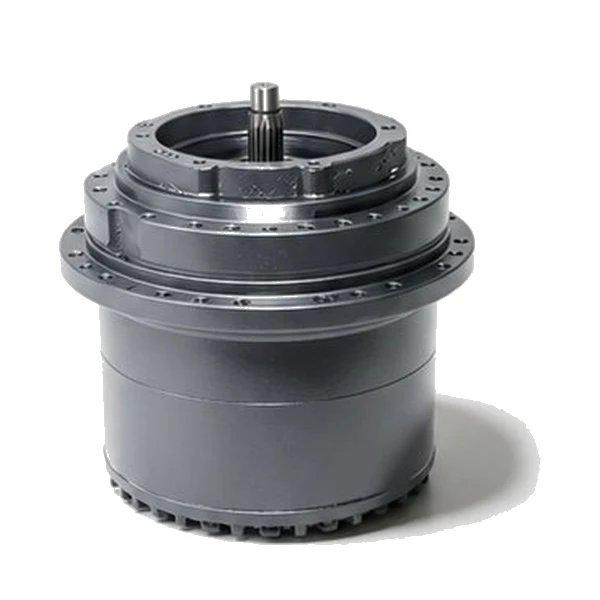
 Mga Planetary Gearbox nga Taas og Precision →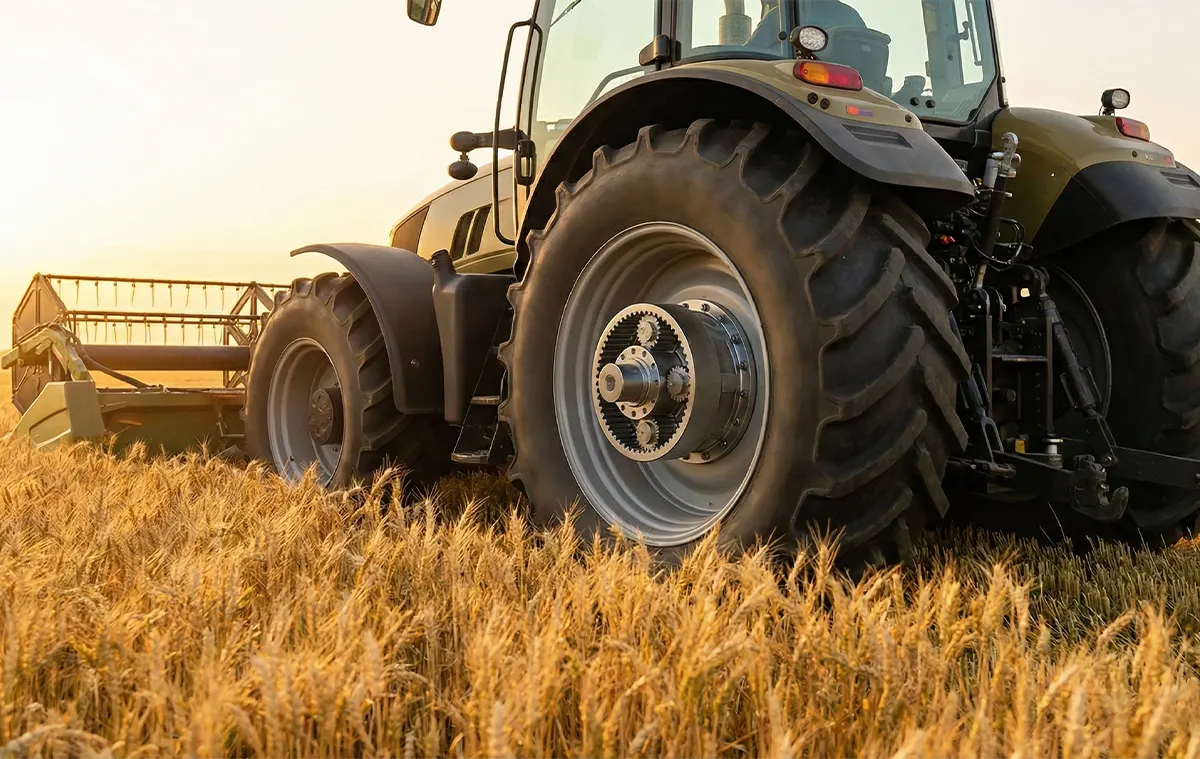
Mga Kanunayng Gipangutana nga Pangutana
Feedback sa Kustomer
Pag-ilis sa stacker-reclaimer slewing drive sa usa ka operasyon sa iron ore. Ang miaging unit usa ka daan nga European brand nga wala na gihimo. Ang Ever-Power mitakdo sa mounting dimensions gikan sa daan nga drawing ug naghatag og ZR30**5 sa 867.63 ratio nga mi-bolt in nga walay pagbag-o. Nagdagan og 14 ka oras kada adlaw sa mga kondisyon sa red dust. Ang oil analysis sa 3,000-hour mark nagpakita og mas ubos nga particle counts kaysa sa daan nga unit sa parehas nga interval. Natagbaw kaayo sa metalurhiya ug kalidad sa pagkagama.
Goliath crane slewing, ZR30**3 sa 64.30 ratio. Ang yunit nagserbisyo na sulod sa 11 ka bulan sa among 400-toneladang hull-block transporter. Lig-on ang performance ug ang thermal behavior nahiuyon sa gitagna sa pabrika — ang temperatura sa sump mo-stabilize sa 72 deg C ubos sa padayon nga pagtrabaho, sulod sa mga limitasyon. Ang kalidad sa gear grinding makita gikan sa ubos nga lebel sa kasaba. Namatikdan sa among quality inspector nga ang mga sertipiko sa materyal hingpit ug nakab-ot ang among internal traceability requirements nga walay dugang nga mga hangyo.
Ang excavator slewing drive swap sa usa ka 42-toneladang makina. Maayo ang performance sa ZR30**2 ug ang hydraulic BF02 interface haom kaayo. Ang unit motimbang og mga 260 kg ug ang pagbutang niini sa ibabaw nga istruktura niining partikular nga makina nanginahanglan og pipila ka mamugnaong rigging tungod kay hugot ang access hatch. Ang akong sugyot sa Ever-Power: paghatag og girekomendar nga rigging diagram para sa komon nga mga modelo sa excavator sa installation manual. Kana makadaginot og daghang oras para sa mga mekaniko nga unang higayon nga nag-instalar niini.
Dugang nga impormasyon
| Editor | Cxm |
|---|
Mga may kalabutan nga produkto
-
ZR45 Slewing Drive Planetary Gearbox — Tuo nga Anggulo nga Bevel-Planetary, 3-5 ka Yugto
-
ZR19 Slewing Drive Planetary Gearbox — Right-Angle Bevel-Planetary, 2-5 Stage
-
ZR16 Slewing Drive Planetary Gearbox — Tuo nga Anggulo nga Bevel-Planetary, 2-5 ka Yugto
-
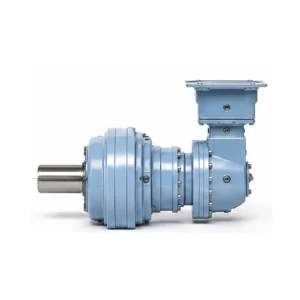
ZR07 Slewing Drive Planetary Gearbox — Tuo nga Anggulo nga Bevel-Planetary, 2-4 ka Yugto
-

ZR03 Slewing Drive Planetary Gearbox — Tuo nga Anggulo nga Bevel-Planetary, 2-4 ka Yugto
-
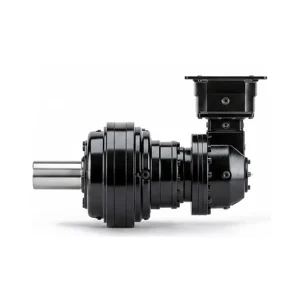
ZR02 Slewing Drive Planetary Gearbox — Right-Angle Bevel-Planetary, 2-3 Stage
-
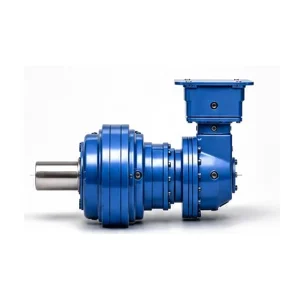
ZR24 Slewing Drive Planetary Gearbox — Right-Angle Bevel-Planetary, 2-5 Stage
-

ZR10 Slewing Drive Planetary Gearbox — Tuo nga Anggulo nga Bevel-Planetary