615L3 Planetary Wheel Drive Gearbox Reducer — 3-Stage

615L3
60,000 Nm. 480 kg. Nothing above it.
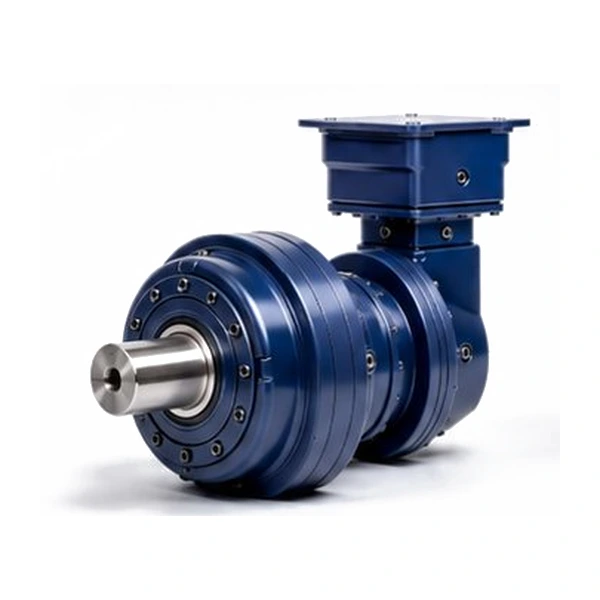
The EP-615L3 is where the planetary wheel drive gearbox concept reaches its practical upper boundary. At 60,000 Nm — 33% more torque than the 613L3 and 3.5 times the output of the mid-range 607 — the 615L3 serves machines so large that a single wheel drive failure doesn't just stop one vehicle. It blocks a haul road, delays a vessel loading, or halts a once-in-a-decade heavy lift operation. The engineering at this level is about eliminating the possibility of that failure, not just reducing its probability.
The 1,000 Nm multi-disc parking brake is unique to the 615L3 — no other model in the catalogue offers it. Through the 108:1 gear ratio, this brake produces 108,000 Nm of holding torque at the wheel: enough to hold a 300-tonne mining truck on a 25% grade with the engine off and no hydraulic pressure anywhere in the system. The Viton-sealed, carburised-steel, 480 kg housing is designed for 20,000-hour intervals between overhauls under the most severe continuous-duty conditions the mining and heavy transport industries can impose.

3,000 RPM
-25 to +85 deg C
Declutch
615L3 Flagship Wheel Drive — Technical Parameters
| Output torque (rated max) | 60,000 Nm |
| Gear ratio | 108 : 1 (fixed, three-stage) |
| Planetary stages | 3 |
| Maximum input speed | 3,000 rpm |
| Mechanical efficiency | ≥ 93% |
| Parking brake | 300 - 1,000 Nm, multi-disc, hydraulic release (catalogue maximum) |
| Emergency towing | Manual declutch (free-wheel disconnect) |
| Wheel mounting | Rotating flange, SAE/Universal bolt circle |
| Dry weight | Approx. 480 kg |
| Lubrication | Oil bath splash, API GL-5 EP gear oil |
| Operating temperature | -25 to +85 deg C (Viton seals available) |
| Gear material | Carburised alloy steel, CNC ground, HRC 58-62 |
Engineering Around a Half-Tonne Wheel Drive — What 480 kg Changes
A 480 kg wheel drive is no longer a bolt-on component. It is a structural member that affects axle design, suspension geometry, unsprung mass dynamics, and service logistics. Treating the 615L3 as a scaled-up version of a lighter drive is an engineering error that leads to inadequate mounting structures and expensive field redesigns.
Four 615L3 units add 1,920 kg to the vehicle unsprung mass — almost two tonnes that must be accounted for in the axle load calculation. On mining trucks where axle load limits are imposed by haul road structural capacity, this 1,920 kg directly reduces the payload capacity by the same amount. The vehicle chassis designer must optimise the axle structure to carry the 615L3 mass without exceeding the road bearing capacity or the tyre load rating.
The mounting flange bolts carry not only the output torque reaction (60,000 Nm tangential) but also the 480 kg gravitational load (4,709 N downward) plus the dynamic loads from road surface impacts. The combined bolt loading — torque, shear, and bending — requires a mounting flange at least 30% thicker than what the torque reaction alone would demand. Use Grade 10.9 or 12.9 bolts with Nordlock washers or equivalent anti-vibration locking.
On suspension-equipped vehicles, the 480 kg per corner is significant unsprung mass. Higher unsprung mass reduces the suspension ability to maintain tyre contact on rough surfaces, which affects both traction and component fatigue. Mining trucks operating on poorly maintained haul roads should specify the heaviest available suspension damping to counteract the 615L3 mass contribution. On rigid-frame (non-suspended) vehicles, the issue is instead transmitted vibration to the chassis — address with elastomeric mounting pads between the axle housing and the frame.
A 480 kg unit requires a crane with minimum 1,000 kg capacity at the working radius. On remote mining sites, the service crane must be able to reach the wheel hub while the truck is jacked or supported on stands. A dedicated lifting cradle — matched to the 615L3 housing geometry and supplied by Korea Ever-Power on request — reduces the two-crane-plus-four-person replacement to a one-crane-plus-two-person operation, saving approximately 2 hours per unit changeover.
1,000 Nm — The Largest Brake in the Planetary Wheel Drive Catalogue
The 615L3 is the only model that offers a 1,000 Nm parking brake option. Through the 108:1 gear ratio, this brake produces 108,000 Nm of holding torque at the wheel — a number so large it requires context to interpret.
| Scenario | Vehicle GVW | Tyre Radius | Driven Wheels | Max Holdable Grade |
|---|---|---|---|---|
| 100t mining truck (6WD) | 200 t | 900 mm | 6 | 37% |
| 150t mining truck (8WD) | 300 t | 1,000 mm | 8 | 29% |
| RTG crane (8WD) | 150 t | 700 mm | 8 | 66% |
| Heavy SPMT (32 wheels) | 800 t | 600 mm | 32 | 74% |
Calculation: max holdable grade = (1,000 x 108 x driven wheels) / (GVW x 9.81 x tyre radius) x tyre radius. In every scenario, the brake capacity exceeds the tyre adhesion limit (typically 30-40% on dry gravel). The brake is never the weak link — the tyre-to-ground friction coefficient is always reached first.
60,000 Nm — The Ceiling of Planetary Wheel Drive Engineering
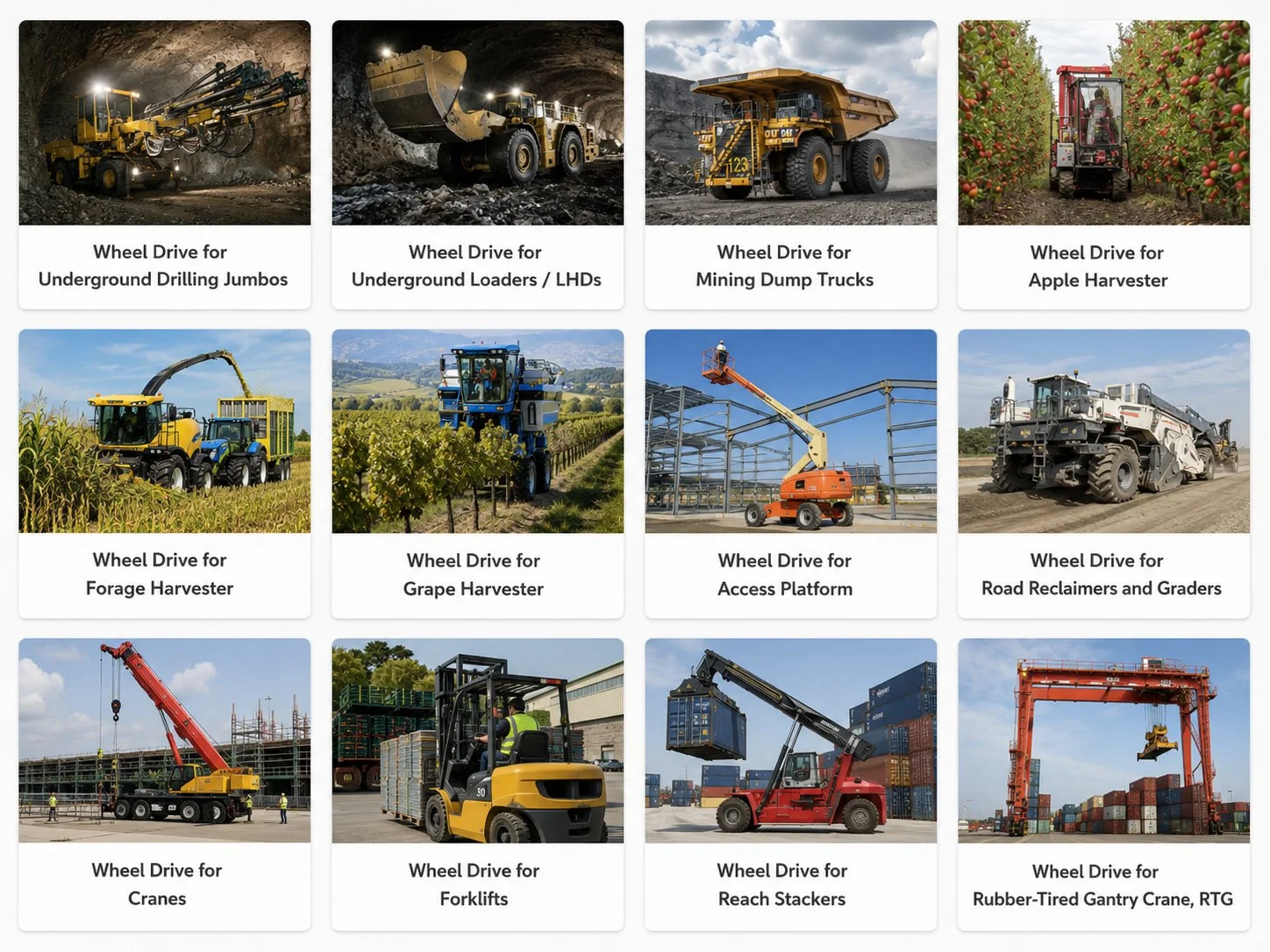
Ultra-Class Mining Haul Trucks (100-150 t Payload)
The largest diesel-hydraulic haul trucks in production mining. Six or eight 615L3 units per truck producing a combined tractive effort of 360,000-480,000 N — enough to climb a 25% loaded haul road at 3-5 km/h with a 200-300 tonne GVW. The 1,000 Nm brake holds the fully loaded truck on any grade the haul road surface can physically support. These trucks operate 20-22 hours per day, 350 days per year, in conditions where a wheel drive failure blocks the primary revenue-generating haul cycle.
Rubber-Tyred Gantry Cranes (RTG)
RTG cranes with 40-65 tonne lifting capacity that travel on pneumatic tyres along container stacking rows in port terminals. Each RTG uses 8 wheel drives (4 per gantry leg) to propel a 120-160 tonne crane structure along the stacking lane at 2-4 km/h under load. The 615L3 at ratio 108 provides controlled creep speed and precise positioning for container stacking accuracy. The slewing drive planetary gearbox handles the crane trolley and hoist rotation on the same port equipment platform.
Ultra-Heavy SPMT Configurations (600-1,000 t)
The heaviest self-propelled modular transporter configurations — carrying offshore platform modules, nuclear power plant components, and complete bridge superstructures. Where the 613L3 at 45,000 Nm serves loads up to 600 tonnes, the 615L3 extends the SPMT capability to 1,000 tonnes by providing 33% more torque per wheel position. With 32-48 wheel drives per trailer configuration, the total available tractive force reaches 960,000-1,440,000 N — enough to move the heaviest indivisible loads manufactured anywhere in the world.
The Complete Heavy-Duty Planetary Gearbox Ecosystem

Flagship Planetary Wheel Drive Gearbox — 60,000 Nm FAQ
Field Reports
Prototype evaluation on our 120-tonne payload mining truck. Eight 615L3 units, 1,000 Nm brake option. The truck climbs our 23% test grade fully loaded at 4.8 km/h — matching the performance specification within 2%. The 1,000 Nm brake holds on the same grade with engine off and all hydraulic pressure dumped. We measured brake release at 28 bar, which is comfortably within our pilot circuit capacity. Oil analysis at 3,000 hours (prototype accelerated test) showed iron particles within threshold. We have signed the production contract for 48 units covering the first six trucks.
RTG crane fleet, 16 units on two cranes, 615L3 with 800 Nm brake. The cranes travel along 400-metre stacking lanes and position containers to within 50 mm tolerance. The 615L3 creep speed smoothness at 0.5 km/h under a loaded spreader is noticeably better than the previous Japanese-brand drives — the operators say the crane "doesn't jerk at the end of travel." Oil changes every 2,000 hours, 18 months in service on the first crane, zero unscheduled maintenance events. We are ordering a third crane with the same specification.
48 units on SPMT trailer sets for an 850-tonne offshore topside module transport. The lift went perfectly — transport distance 2.4 km from fabrication hall to quay, 5 hours at 0.4 km/h average. The 615L3 provided smooth, controllable power throughout, including a 3% cross-slope section where the hydraulic system had to compensate for the lateral weight shift. The 4-star rating is purely about logistics: the 480 kg per unit meant we needed a dedicated 20-foot container and forklift at the port to handle the 48-unit delivery. The lighter 613L3 units on our other trailer sets can be stacked on pallets and moved by hand truck. At this weight class, the handling logistics become a project management consideration. Product performance was flawless.
Additional information
| Editor | Cxm |
|---|
Related products
-
ZL02 Wheel Drive Planetary Gearbox
-
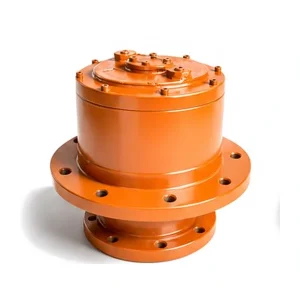
609L2, L3 Planetary Wheel Drive Gearbox
-
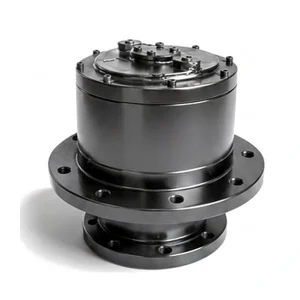
607L2, L3 Planetary Wheel Drive Gearbox Reducer
-
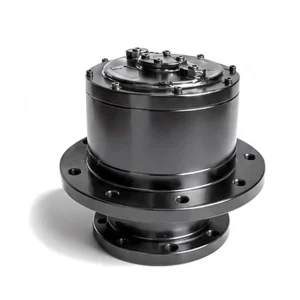
606L2, L3 Planetary Wheel Drive Gearbox Reducer
-
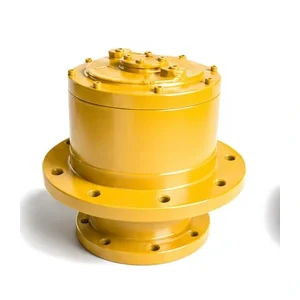
602L2 Planetary Wheel Drive Gearbox Reducer
-
610L2, L3 Planetary Wheel Drive Gearbox Reducer
-
603L2B Planetary Wheel Drive Gearbox Reducer — 2-Stage
-

601L1A Planetary Wheel Drive Gearbox — Single-Stage