413W3 Winch Drive Planetary Gearbox Reducer

413W3 — 42,500 Nm and the First 610 Nm Brake in the Catalogue
Every เกียร์ทดรอบแบบเฟืองดาวเคราะห์สำหรับขับเคลื่อนวินช์ below the 413W3 uses a brake rated at 530 Nm or less. The EP-413W3 is where that ceiling breaks. The 610 Nm multi-disc brake is not simply a stronger spring pack in the same housing — it is a redesigned brake assembly with a larger piston diameter, additional friction discs, and a heavier Belleville spring stack that produces 15% more clamping force than the 530 Nm design.
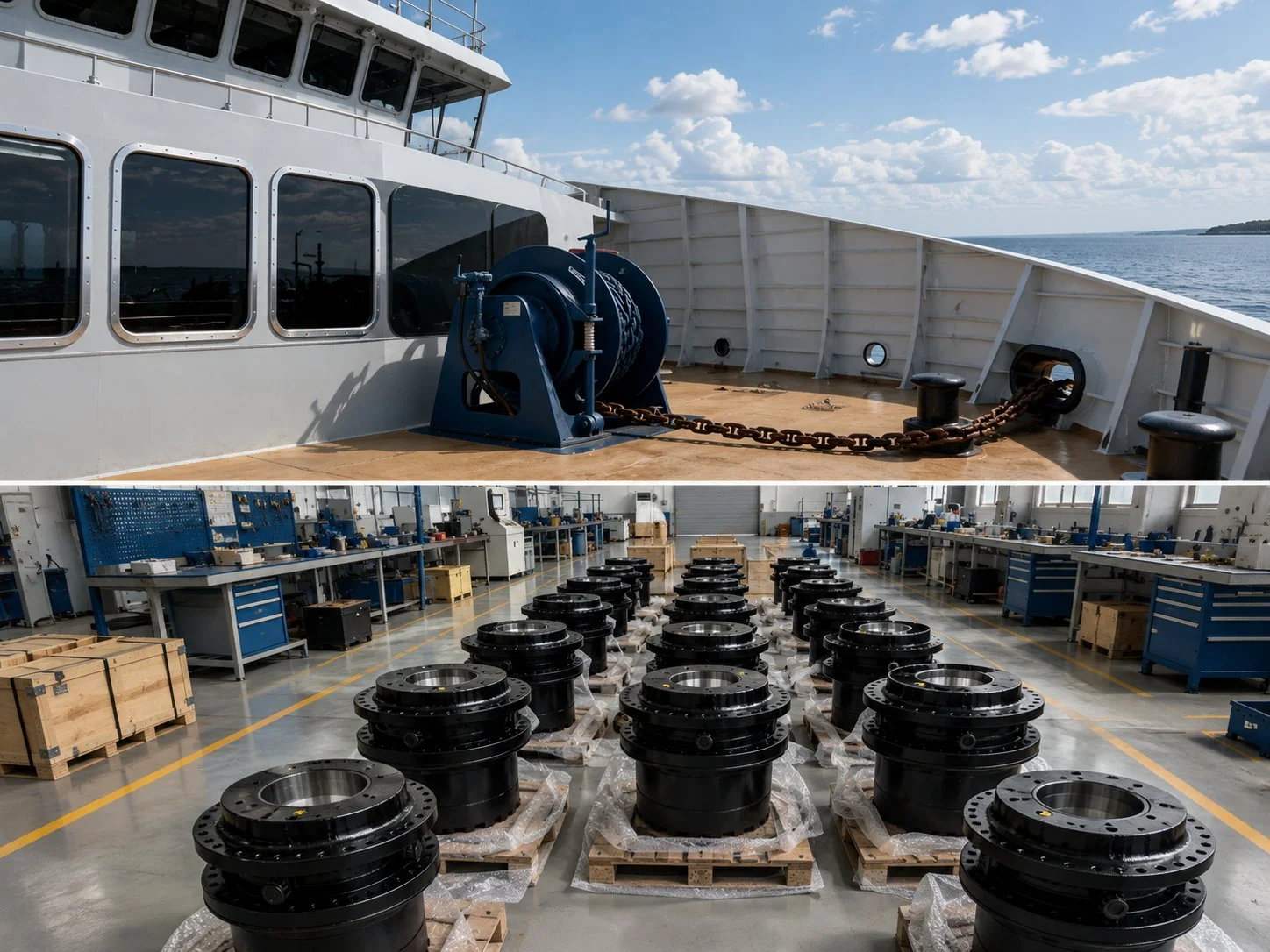
At 42,500 Nm through ratios 86-172 and 450 kg dry weight, the 413W3 serves the ultra-heavy tier: offshore construction vessel main hoists handling 40-60 tonne subsea structures, mining production winders cycling 15-tonne ore skips through 400-metre shafts at sustained duty rates, and the largest construction tower cranes where the main hoist torque requirement exceeds everything the 407 and 410 families can provide.
3,500 RPM
95% Eff.
413W3 Winch Drive Planetary Gearbox — Technical Parameters
| แรงบิดเอาต์พุตที่กำหนด | 42,500 Nm |
| ช่วงอัตราทดเกียร์ | 86 to 172 (three-stage planetary) |
| ความเร็วอินพุตสูงสุด | 3,500 รอบต่อนาที |
| ความเร็วเอาต์พุตสูงสุด | 25 รอบต่อนาที (FEM M5 ใช้งานต่อเนื่อง) |
| ประสิทธิภาพเชิงกล | ≥ 95% |
| เบรกมือ | 610 Nm, multi-disc, spring-applied, hydraulic release |
| Brake at drum (ratio-dependent) | 52,460 Nm (r=86) to 104,920 Nm (r=172) |
| การติดตั้ง | Rotating housing flanges |
| น้ำหนักแห้ง | Approx. 450 kg |
| การหล่อลื่น | Oil bath splash, EP gear oil |
| อุณหภูมิในการทำงาน | -20 ถึง +85 องศาเซลเซียส |
Above 530 Nm — What Changed in the Brake Design to Reach 610
The 530 Nm brake used across the 407-410 families reached its architectural limit — stronger springs within the same piston diameter would require release pressures beyond the capacity of standard pilot circuits. The 413W3 610 Nm brake solves this through three physical changes, not one.
Larger Piston Diameter
The brake piston diameter increases by approximately 15% compared to the 530 Nm design. A larger piston means the same hydraulic release pressure produces more force — keeping the release pressure within the 30-40 bar range that standard pilot circuits provide, despite the stronger spring pack. Without this diameter increase, the 610 Nm spring pack would require 45-50 bar to release — exceeding many crane hydraulic systems.
Additional Friction Disc
The 610 Nm brake stack contains one additional friction disc compared to the 530 Nm design. The extra disc increases the total friction surface area by approximately 20%, which means the same clamping force produces more holding torque per unit of spring compression. The additional disc also reduces the contact pressure per disc face, extending the disc life — a critical consideration at the torque levels where the 413W3 operates.
Redesigned Spring Stack
The Belleville disc spring stack uses a different disc thickness and stacking arrangement to produce 15% more force at the same deflection range. The spring rate curve is matched to the larger piston so that the release characteristic (progressive engagement, not snap-on) is maintained. This ensures the 610 Nm brake engages with the same controlled, progressive torque ramp as the 530 Nm design — preventing shock loading of the cable and suspended load during emergency stops.
The 610 Nm brake assembly is NOT interchangeable with the 430/530 Nm assemblies used in the 406-410 families. The piston, disc stack, spring pack, and housing bore are all different dimensions. Do not attempt to install 530 Nm components into a 413W3 — the brake torque will be approximately 15% below specification, which may violate the crane certification safety factor.
Ratios 86-172 — The Machines at 42,500 Nm Are All Slow-Hoist Applications
The 413W3 ratio range starts at 86 — higher than the 410W3 minimum of 62. This is not a geometric constraint. It is an acknowledgement that no machine operating at 42,500 Nm of drum torque needs a fast hoist speed.
The motor argument
At ratio 62, the motor input torque would be 42,500 / 62 = 685 Nm — requiring over 1,200 cc/rev at 350 bar. No standard single-shaft motor produces this. Even a dual-motor Y-adapter would need two 600 cc/rev motors — at the absolute ceiling of axial piston technology. At ratio 86, the input torque drops to 494 Nm — achievable with dual 440 cc/rev motors, which are large but available catalogue items. The ratio floor of 86 exists because the motors below this ratio are impractically large.
The application argument
At ratio 86 on a 600 mm PCD drum with 3,000 rpm motor input: drum speed = 34.9 rpm, line speed = 65.8 m/min. This is already faster than any 40-tonne crane hoist actually operates — real-world heavy lifting at this load class runs at 5-20 m/min. The ratio range of 86-172 covers every practical hoisting speed for loads in the 30-60 tonne class. Ratios below 86 would produce line speeds that no crane operator or classification standard would permit at these load weights.
42,500 Nm — Where the 610 Nm Brake Meets Ultra-Heavy Lifting

Offshore Construction Vessel Main Hoists (40-60 t)
Main hoist on dedicated offshore construction cranes deploying large subsea structures — Christmas trees, manifolds, and protection frames — at water depths up to 500 metres. The 610 Nm brake provides the enhanced holding capacity that classification societies (DNV, BV, ABS) require when the combined weight of the payload and 500 metres of wire rope exceeds the 530 Nm brake holding envelope of the 410W3. The ระบบขับเคลื่อนแบบหมุน handles the crane rotation on the same vessel.
Mining Production Hoists
Ore skip winders and cage hoists at mines with shaft depths of 300-500 metres and production rates of 200-400 skip cycles per day. The 413W3 at ratio 120-172 delivers the drum torque for 10-15 tonne skip loads plus the cable weight at full depth, while the 610 Nm brake holds the loaded skip at any point in the shaft — including the emergency stop scenario where the skip must halt instantly during free-fall descent after a control system failure. Mining safety regulations treat the brake as the last barrier against a skip drop — the 610 Nm design margin exists for this reason.
Heavy Industrial Overhead Cranes (30-50 t)
Main hoist mechanisms on heavy-duty overhead travelling cranes in steelworks, power stations, and heavy manufacturing plants handling 30-50 tonne loads at FEM M5-M6 duty rates. The 413W3 at ratio 86-110 provides the torque for production lifting, and the 610 Nm brake holds loads suspended during the extended holding periods that steelworks operations demand — sometimes 30+ minutes while furnace tapping, ladle positioning, or mould preparation is completed.
The Ultra-Heavy Winch Drive Catalogue
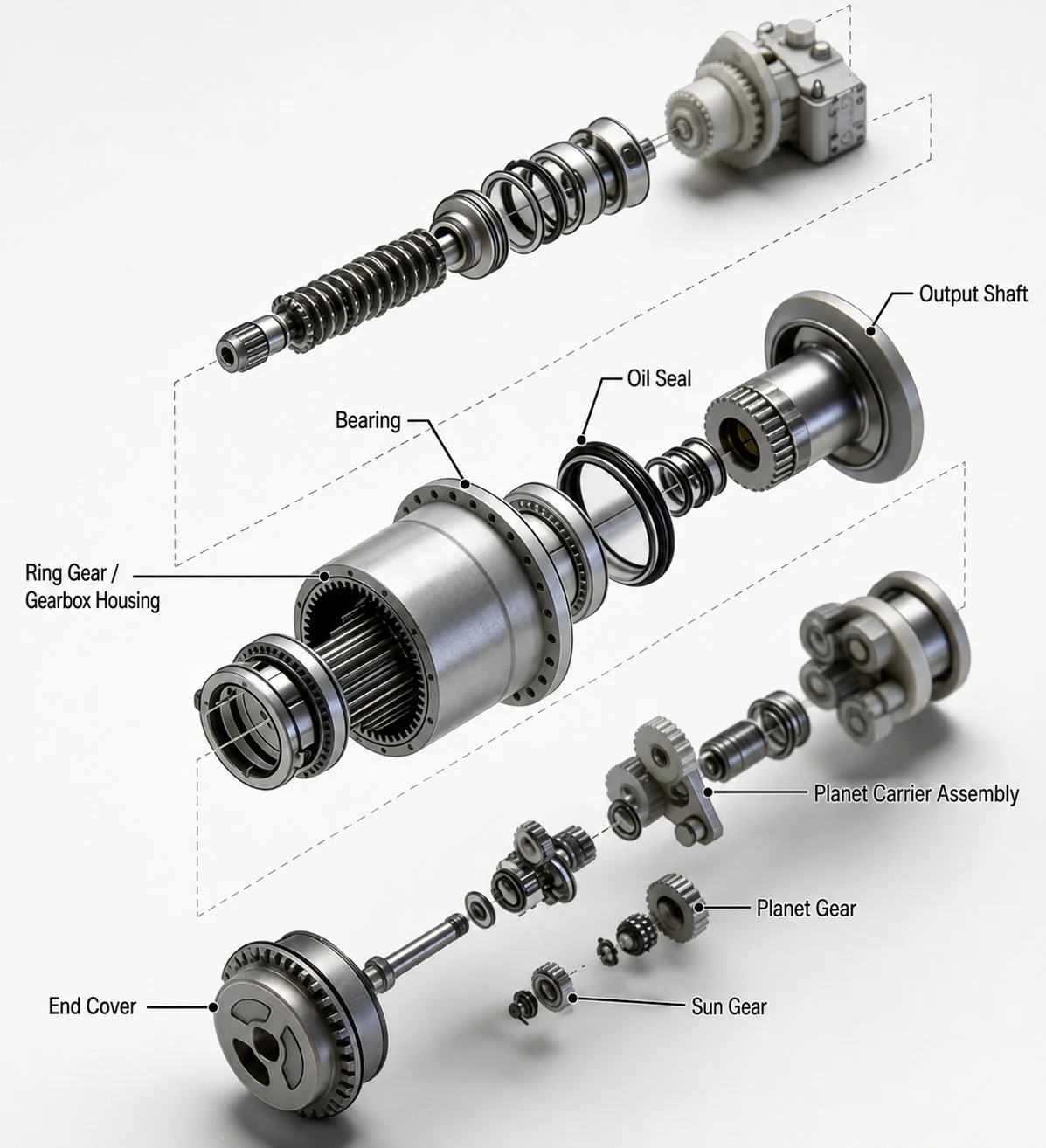
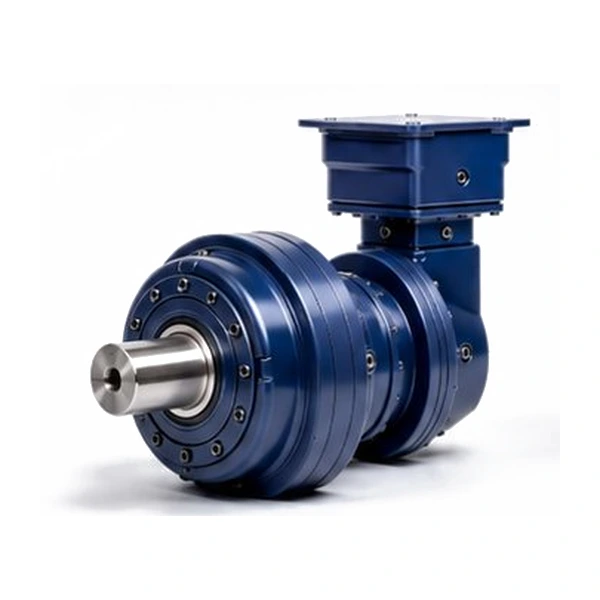
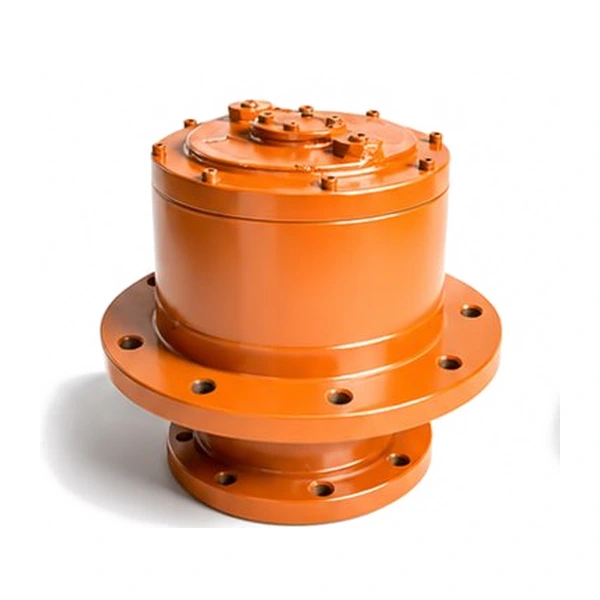
Winch Drive Planetary Gearbox — Ultra-Heavy 610 Nm Brake FAQ
รายงานภาคสนาม
50 t main hoist on an offshore construction vessel, 413W3 at ratio 140, dual motors. The 610 Nm brake was the specification driver — our DNV-GL surveyor calculated that the 410W3 530 Nm brake at this drum diameter and water depth (400 metres, 2,600 kg rope weight) gave a brake SF of 1.78. Our company standard requires 2.0 minimum. The 413W3 610 Nm brake gave us SF = 2.06 — compliant with 3% margin. The gearbox has completed two major installation campaigns totalling 4,200 operating hours. Oil analysis trending clean, brake holding test within 2% of factory data. The 610 Nm brake justified the housing upgrade from the 410 frame.
Production skip hoist at a copper mine, 420-metre shaft depth, 12-tonne skip, 300 cycles per day. 413W3 at ratio 150. The mine safety authority specifically required the 610 Nm brake class for our skip weight plus rope weight at full depth — the calculation showed 530 Nm was marginally compliant at SF = 1.55 but our inspector wanted 2.0 minimum for ore skips that share the shaft with personnel cages on separate schedules. The 610 Nm brake at ratio 150 gives us SF = 2.4. After 7,500 hours of 3-shift operation, the brake discs are at 70% remaining thickness — on track for replacement at approximately 11,000 hours, consistent with the duty cycle prediction.
40 t overhead crane in a steelworks hot bay, 413W3 at ratio 95. The crane holds 35-tonne ladles suspended for 20-40 minutes per heat while the furnace is tapped. The 610 Nm brake handles this extended static hold without drift — verified by laser position measurement over a 45-minute test hold. Mechanically the unit is performing well after 10 months. The 4-star reflects the operating environment: the ambient temperature in the hot bay reaches 55-60 deg C during casting, which pushes the gearbox oil temperature to 78-82 deg C — close to the 85 deg C limit. We installed an air-blast cooler on the drum housing to maintain oil temperature below 70 deg C. For steelworks applications, a published thermal derating chart for ambient temperatures above 40 deg C would help maintenance engineers like me specify the cooling requirement during the design phase rather than discovering it during commissioning.
ข้อมูลเพิ่มเติม
| บรรณาธิการ | ซีเอ็กซ์เอ็ม |
|---|
ผลิตภัณฑ์ที่เกี่ยวข้อง
-
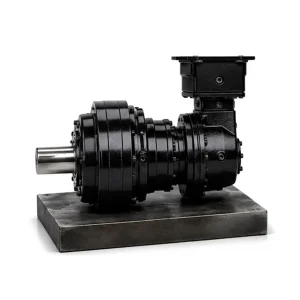
เกียร์ทดรอบแบบเฟืองดาวเคราะห์สำหรับขับเคลื่อนวินช์ ZR75 — แบบมุมฉาก
-
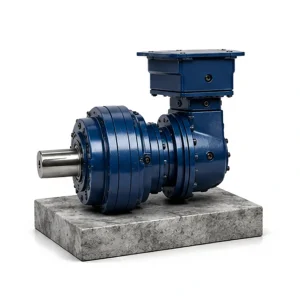
เกียร์ทดรอบแบบเฟืองดาวเคราะห์สำหรับขับเคลื่อนวินช์ ZR55 — แบบมุมฉาก
-
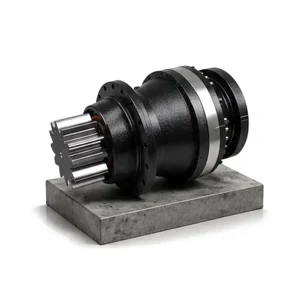
ZL85 Winch Drive Planetary Gearbox
-

416W3 ชุดเกียร์ทดรอบแบบเฟืองดาวเคราะห์สำหรับขับวินช์
-

415W3 ชุดเกียร์ทดรอบแบบเฟืองดาวเคราะห์สำหรับขับวินช์
-
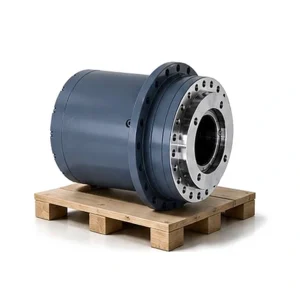
เกียร์ทดรอบแบบเฟืองดาวเคราะห์สำหรับขับวินช์ 406W
-

เกียร์ทดรอบแบบเฟืองดาวเคราะห์สำหรับขับวินช์ 405 วัตต์
-

401W1 ชุดเกียร์ทดรอบแบบเฟืองดาวเคราะห์สำหรับขับเคลื่อนวินช์ — แบบขั้นตอนเดียว