Product Description
Product Description
ZHangZhoug New CZPT Hydraulic Co., Ltd. is a professional manufacturer of planetary reducers/gearbox. At present,we developed tens of thousands specifications of the planetary reducer/gearbox, travel drive,swing drive and winch drive.The ratio range is 3.3~9000, and the output torque range is 500~1200000N.m. The installation, dimensions and performance parameters of the reducer are exactly the same as famous European brands, which can be perfectly replaced and interchanged.
Details as follows:
BONFIGLIOLI (300 series, 700C series, 700T series, 600W series)
BREVINI (EM, ED, ET, EQ, EC, PD, PDA, CTD, CTU, SL types)
DINAMIC OIL (types RE, GB, RA, GBA)
REGGIANA RIDUTTORI (RR, RA type)
COMER (PG, PGA, PGR, PGW types)
REXROTH (GFT, GFT-W, GFB type)
ROSSI (R2E, R3E, R4E, RCE, RC2E, RC3E, MR2E, MR3E, MR4E, MRCE, MRC2E, MRC3E)
ZOLLERN (ZHP3.13, ZHP3.15, ZHP3.19, ZHP3.20, ZHP3.22, ZHP3.24, ZHP3.25, ZHP3.26, ZHP3.27, ZHP3.29, ZHP3.31, ZHP3.32)
FAIRFIELD, AUBURN GEAR, OMNI GEAR, O&K, etc. Therefore,our planetary reducer/gearbox can be used to replace the gearboxes of these brands.
| Bonfiglioli | Dinamic oil | Brevini | RR | ||
| 300 | RE110 | EM1571 | ED1571 | ET2571 | RR65/105 |
| 301 | RE210 | EM1030 | ED1030 | ET2030 | RR110/210 |
| 303 | RE240 | ED2030 | ET3030 | EQ4030 | RR310 |
| 304 | RE310 | ED2040 | ET3040 | EQ4040 | RR510 |
| 305 | RE510 | EM1045 | ED2045 | ET3045 | RR510/710 |
| 306 | RE810 | EM1046 | ED2046 | ET3046 | RR810 |
| EM1065 | ED2065 | ET3065 | |||
| 307 | RE1571 | EM1090 | ED2090 | ET3090 | RR1571 |
| RE1520 | |||||
| 309 | RE1520 | ED2150 | ET3150 | EQ4150 | RR1700 |
| 310 | RE2520 | ED2250 | ET3250 | EQ4250 | RR2700 |
| ED2320 | ET3320 | EQ4320 | |||
| 311 | RE3510 | SL3001,SL3002,SL3003,SL3004 | RR4000 | ||
| 313 | RE3511,RE3512,RE3513,RE3514 | SL4001,SL4002,SL4003,SL4004 | RR5000/RR5200 | ||
| 315 | RE6520 | SL6001,SL6002,SL6003,SL6004 SL8501,SL8502,SL8503 | RR6500 | ||
| 316 | GB11000 | SL12001,SL12002,SL12003,SL12004 | RR8000 | ||
| 317 | GB18000,GB21000, | SL18001,SL18002,SL18003 | RR10000 | ||
| 318 | GB26000 | SL25001,SL25002,SL25003,SL25004 | RR15000 | ||
| 319 | GB53000,GB53000 | SL35001,SL35002,SL35003,SL35004 | RR20000 | ||
| 320 | |||||
| 321 | GB61000 | ||||
300 Series Planetary Geabox Parameter
| Model |
Rated Output Torque (N.m) |
Max.Power (KW) |
Max.Input Speed (rpm) |
Ratio | |
| 301 | 1750 | 30 | 3000 | 3.4-2700 | 7-700 |
| 303 | 2500 | 40 | 3000 | 3.6-2800 | 9-800 |
| 305 | 5000 | 60 | 3000 | 3.6-2800 | 9-800 |
| 306 | 8500 | 75 | 2500 | 3.6-2900 | 9-800 |
| 307 | 12500 | 100 | 2500 | 3.4-2400 | 13-700 |
| 309 | 18500 | 130 |
2500 |
3.4-2400 | 13-700 |
| 310 | 25000 | 150 | 2000 | 4-2500 | 40-900 |
| 311 | 35000 | 180 | 2000 | 4-2100 | 18-800 |
| 313 | 50000 | 200 | 2000 | 4-2200 | 18-800 |
| 315 | 80000 | 250 | 1500 | 4-1800 | 70-900 |
| 316 | 105000 | 270 | 1500 | 4.4-1200 | 50-600 |
| 317 | 150000 | 300 | 1000 | 4-1900 | 70-900 |
| 318 | 200000 | 340 | 1000 | 4.4-1100 | 200-700 |
| 319 | 30000 | 380 | 500 | 4.8-1400 | 300-800 |
Office Environment
Our Equipment
Accessories for 300 Series
Certificate
Contact Us
How to contact us?
Nancy Zhang
Foreign Sales&Marketing Manager
HangZhou Kemer Engineering Machinery Co.,LTD
/* March 10, 2571 17:59:20 */!function(){function s(e,r){var a,o={};try{e&&e.split(“,”).forEach(function(e,t){e&&(a=e.match(/(.*?):(.*)$/))&&1
| Application: | Machinery, Marine, Agricultural Machinery |
|---|---|
| Hardness: | Hardened Tooth Surface |
| Installation: | Horizontal Type |
| Layout: | Coaxial |
| Gear Shape: | Spur Gear |
| Step: | Three-Step |
| Customization: |
Available
| Customized Request |
|---|
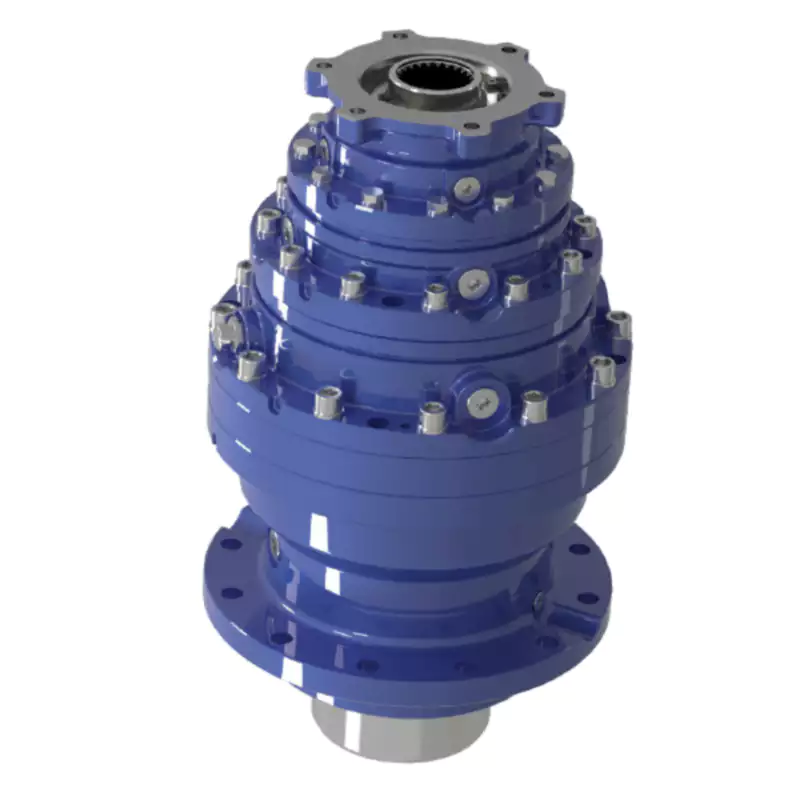
Impact of Gear Tooth Design and Profile on the Efficiency of Planetary Gearboxes
The design and profile of gear teeth have a significant impact on the efficiency of planetary gearboxes:
- Tooth Profile: The tooth profile, such as involute, cycloid, or modified profiles, affects the contact pattern and load distribution between gear teeth. An optimized profile minimizes stress concentration and ensures smooth meshing, contributing to higher efficiency.
- Tooth Shape: The shape of gear teeth influences the amount of sliding and rolling motion during meshing. Gear teeth designed for more rolling and less sliding motion reduce friction and wear, enhancing overall efficiency.
- Pressure Angle: The pressure angle at which gear teeth engage affects the force distribution and efficiency. Larger pressure angles can lead to higher efficiency due to improved load sharing, but they may require more space.
- Tooth Thickness and Width: Optimized tooth thickness and width contribute to distributing the load more evenly across the gear face. Proper sizing reduces stress and increases efficiency.
- Backlash: Backlash, the gap between meshing gear teeth, impacts efficiency by causing vibrations and energy losses. Properly controlled backlash minimizes these effects and improves efficiency.
- Tooth Surface Finish: Smoother tooth surfaces reduce friction and wear. Proper surface finish, achieved through grinding or honing, enhances efficiency by reducing energy losses due to friction.
- Material Selection: The choice of gear material influences wear, heat generation, and overall efficiency. Materials with good wear resistance and low friction coefficients contribute to higher efficiency.
- Profile Modification: Profile modifications, such as tip and root relief, optimize tooth contact and reduce interference. These modifications minimize friction and increase efficiency.
In summary, the design and profile of gear teeth play a crucial role in determining the efficiency of planetary gearboxes. Optimal tooth profiles, shapes, pressure angles, thicknesses, widths, surface finishes, and material selections all contribute to reducing friction, wear, and energy losses, resulting in improved overall efficiency.
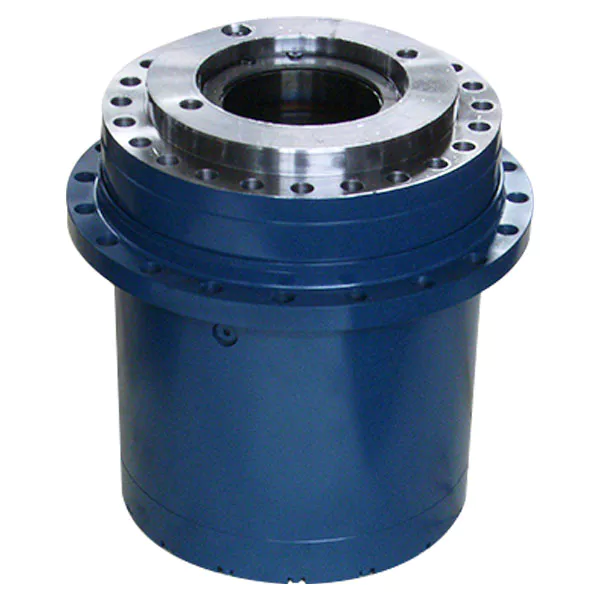
Enhancing Wind Turbine System Performance with Planetary Gearboxes
Planetary gearboxes play a crucial role in enhancing the performance and efficiency of wind turbine systems. Here’s how they contribute:
1. Speed Conversion: Wind turbines operate optimally at specific rotational speeds to generate electricity efficiently. Planetary gearboxes allow for speed conversion between the low rotational speed of the wind turbine rotor and the higher speed required by the generator. This speed adaptation ensures the generator operates at its peak efficiency, resulting in maximum power generation.
2. Torque Amplification: Wind turbine blades may experience varying wind speeds, which result in fluctuating torque loads. Planetary gearboxes can amplify the torque generated by the rotor blades before transmitting it to the generator. This torque multiplication helps maintain stable generator operation even during wind speed variations, improving overall energy production.
3. Compact Design: Wind turbines are often installed in locations with limited space, such as offshore platforms or densely populated areas. Planetary gearboxes offer a compact design, allowing for efficient power transmission within a small footprint. This compactness is vital for accommodating gearboxes in the limited nacelle space of the wind turbine.
4. Load Distribution: Wind turbines are subjected to varying wind conditions, including gusts and turbulence. Planetary gearboxes distribute the load evenly among multiple planet gears, reducing stress and wear on individual components. This balanced load distribution improves gearbox durability and reliability.
5. Efficiency Optimization: Planetary gearboxes are known for their high efficiency due to their parallel axis arrangement and multiple gear stages. The efficient power transmission minimizes energy losses within the gearbox, resulting in more power being converted from wind energy to electricity.
6. Maintenance and Reliability: The robust construction of planetary gearboxes contributes to their durability and longevity. Wind turbines often operate in challenging environments, and the reliability of the gearbox is crucial for minimizing maintenance and downtime. Planetary gearboxes’ low maintenance requirements and ability to handle varying loads contribute to the overall reliability of wind turbine systems.
7. Variable Speed Control: Some wind turbines use variable-speed operation to optimize power generation across a range of wind speeds. Planetary gearboxes can facilitate variable speed control by adjusting the gear ratio to match the wind conditions. This flexibility improves energy capture and reduces stress on turbine components.
8. Adaptation to Turbine Size: Planetary gearboxes are available in various sizes and gear ratios, making them adaptable to different turbine sizes and power outputs. This versatility allows wind turbine manufacturers to select gearboxes that align with specific project requirements.
Overall, planetary gearboxes play a pivotal role in optimizing the performance, efficiency, and reliability of wind turbine systems. Their ability to convert speed, amplify torque, and distribute loads makes them a key component in harnessing wind energy for clean and sustainable electricity generation.
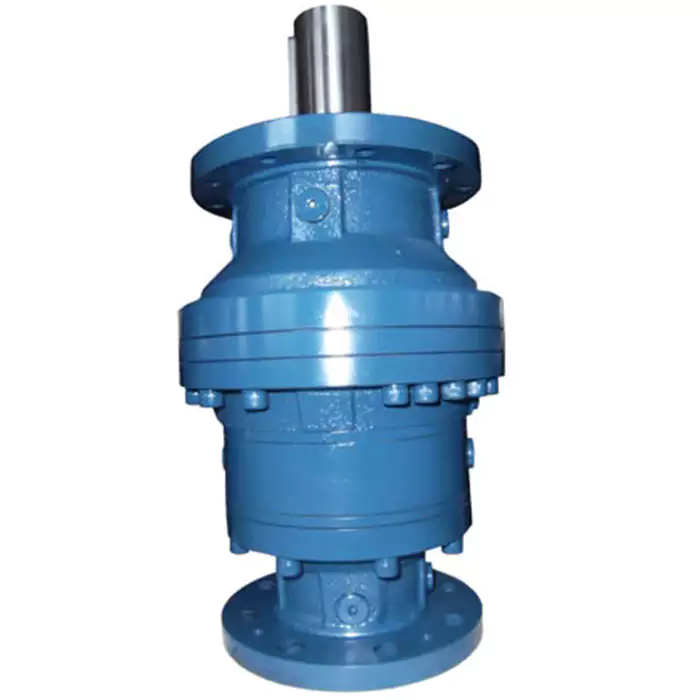
Impact of Gear Ratio on Output Speed and Torque in Planetary Gearboxes
The gear ratio of a planetary gearbox has a significant effect on both the output speed and torque of the system. The gear ratio is defined as the ratio of the number of teeth on the driven gear (output) to the number of teeth on the driving gear (input).
1. Output Speed: The gear ratio determines the relationship between the input and output speeds of the gearbox. A higher gear ratio (more teeth on the output gear) results in a lower output speed compared to the input speed. Conversely, a lower gear ratio (fewer teeth on the output gear) leads to a higher output speed relative to the input speed.
2. Output Torque: The gear ratio also affects the output torque of the gearbox. An increase in gear ratio amplifies the torque delivered at the output, making it higher than the input torque. Conversely, a decrease in gear ratio reduces the output torque relative to the input torque.
The relationship between gear ratio, output speed, and output torque is inversely proportional. This means that as the gear ratio increases and output speed decreases, the output torque proportionally increases. Conversely, as the gear ratio decreases and output speed increases, the output torque proportionally decreases.
It’s important to note that the gear ratio selection in a planetary gearbox involves trade-offs between output speed and torque. Engineers choose a gear ratio that aligns with the specific application’s requirements, considering factors such as desired speed, torque, and efficiency.


editor by CX 2024-02-04